
Chapter 13 New Ideas The Renaissance Learning Objectives
Chapter 13 New Ideas: The Renaissance • Learning Objectives: • • • Describe what “Renaissance” means Explain how movable type helped spread knowledge Identify four important people of Renaissance Explain the Reformation Identify two leaders of Reformation Language Objectives: • Practice defining, understanding new words • Practice reading aloud • Summarize main ideas • Practice writing lecture notes
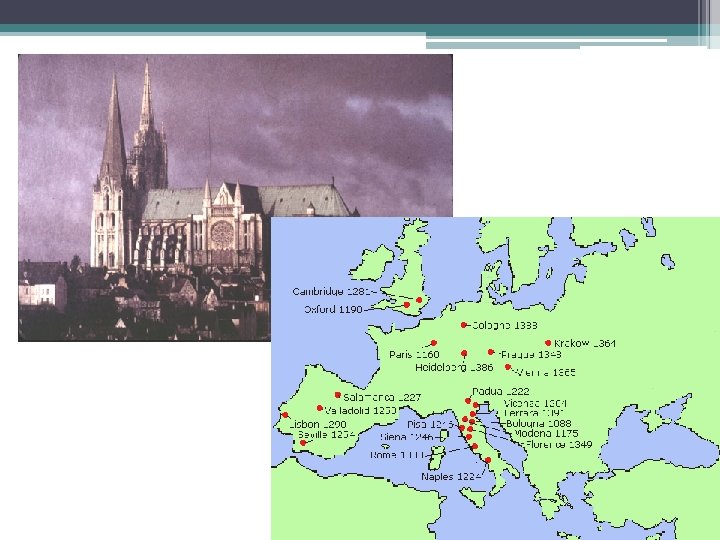
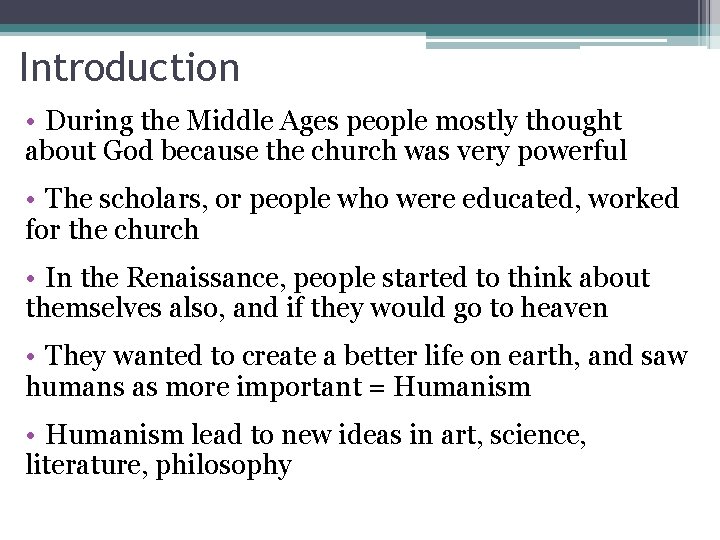
Introduction • The Middle Ages are sometimes called the Dark Ages because people didn’t think about the culture or learning of the Greeks and Romans • During the Middle Ages, Christianity united the people of Western Europe and great universities and cathedrals were built • Around 1300, after the Middle Ages, trade and travel increased, and new ideas exploded in Europe • This time period is the Renaissance = “rebirth” or “awakening”
Introduction • During the Middle Ages people mostly thought about God because the church was very powerful • The scholars, or people who were educated, worked for the church • In the Renaissance, people started to think about themselves also, and if they would go to heaven • They wanted to create a better life on earth, and saw humans as more important = Humanism • Humanism lead to new ideas in art, science, literature, philosophy
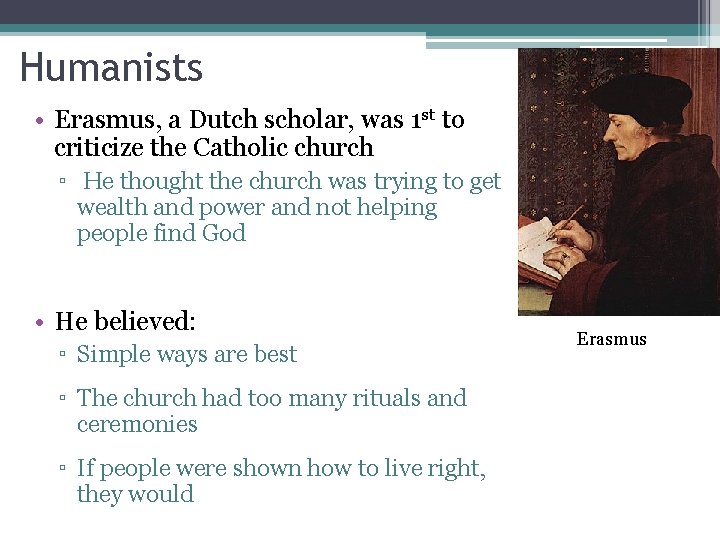
Humanists • Erasmus, a Dutch scholar, was 1 st to criticize the Catholic church ▫ He thought the church was trying to get wealth and power and not helping people find God • He believed: ▫ Simple ways are best ▫ The church had too many rituals and ceremonies ▫ If people were shown how to live right, they would Erasmus
Renaissance Art • Began in Italy • Spread northwest across Europe • People liked beautiful things, including what craftworkers made, and art – statues, paintings • New interest in Greek, Roman art, architecture ▫ First they copied, then improved it • Artists tried to make people in art look more realistic – used live models • Patrons gave financial support to artists so they could improve • Some of the world’s best artists lived during Renaissance
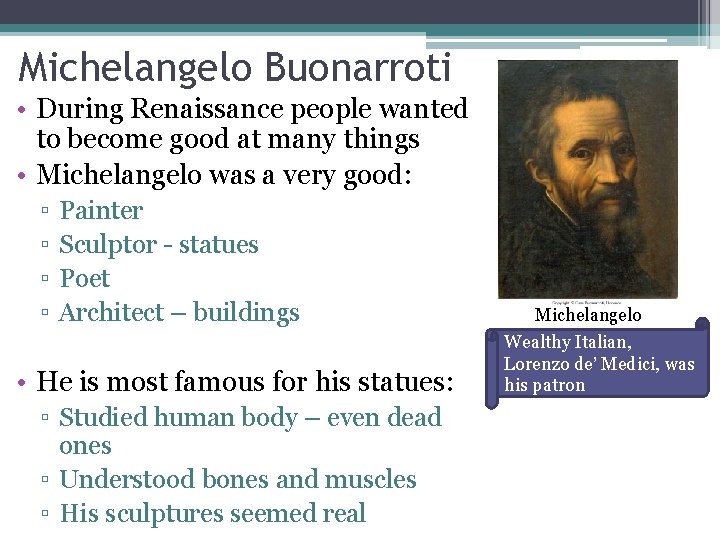
Michelangelo Buonarroti • During Renaissance people wanted to become good at many things • Michelangelo was a very good: ▫ ▫ Painter Sculptor - statues Poet Architect – buildings • He is most famous for his statues: ▫ Studied human body – even dead ones ▫ Understood bones and muscles ▫ His sculptures seemed real Michelangelo Wealthy Italian, Lorenzo de’ Medici, was his patron
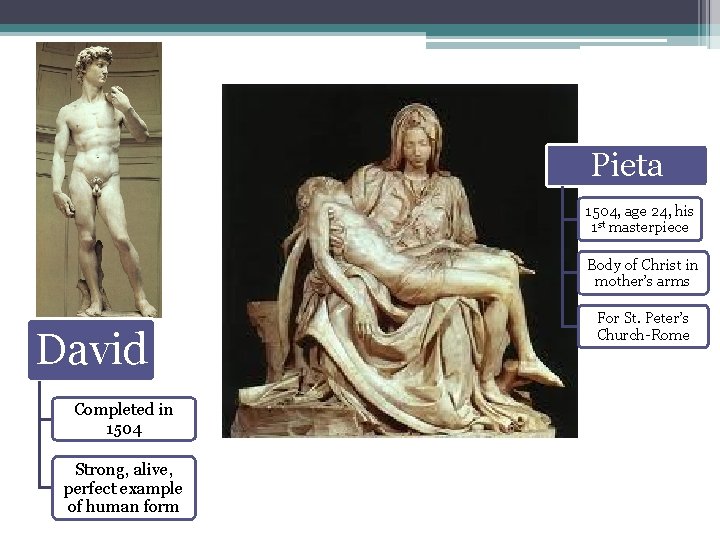
Pieta 1504, age 24, his 1 st masterpiece Body of Christ in mother’s arms David Completed in 1504 Strong, alive, perfect example of human form For St. Peter’s Church-Rome
Michelangelo Buonarroti • Pope hired him to paint Sistine Chapel ceiling in Rome ▫ Series of pictures from the Bible ▫ 300 figures on 60 -foot high ceiling ▫ Painted lying on his back on a platform tied with ropes ▫ Worked on it for 4 years ▫ Helped rebuild St. Peter’s Church – for God ▫ Died at 90
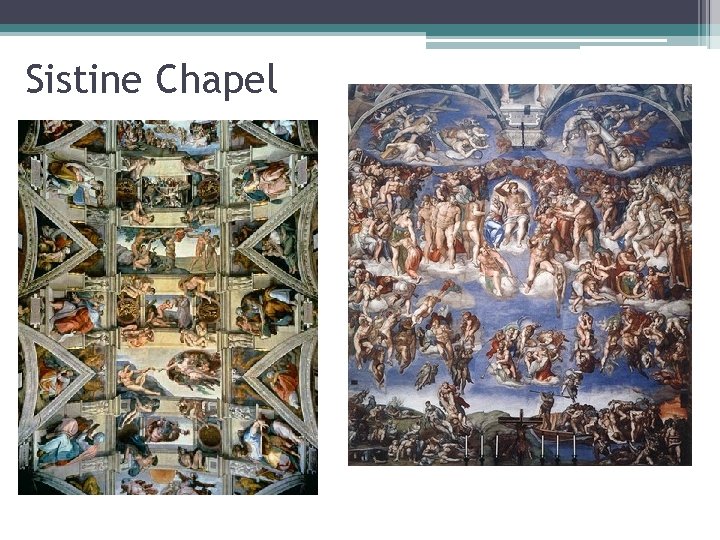
Sistine Chapel
Education and Learning Middle Ages Renaissance • Writing all by hand • Books on parchment paper made from animal skin • Books were beautiful, but expensive • Very few books • Only wealthy people could afford them • Most written in Latin – ancient Rome, language of the church • All Scholars were clergy – church leaders • Learning at churches • Church dominated learning • Secrets of making paper come to Europe from Moors • Gutenberg, German printer, discovered movable type for printing • Movable type = letters molded onto small metal blocks • Letters can be moved to spell out words • They were inked and pressed onto paper • Could now print a whole page at once • Books got cheaper, made faster, translated into local languages • Many people could now read Greek, Roman stories, history
Education and Learning • With Gutenberg Bible, people could read the Bible for themselves and weren’t dependent on the Catholic church to tell them what it said • It was translated into English, French, Italian, German Leads to • • More schools open Grammar schools taught Greek and Latin grammar New universities People studied the world in addition to religion
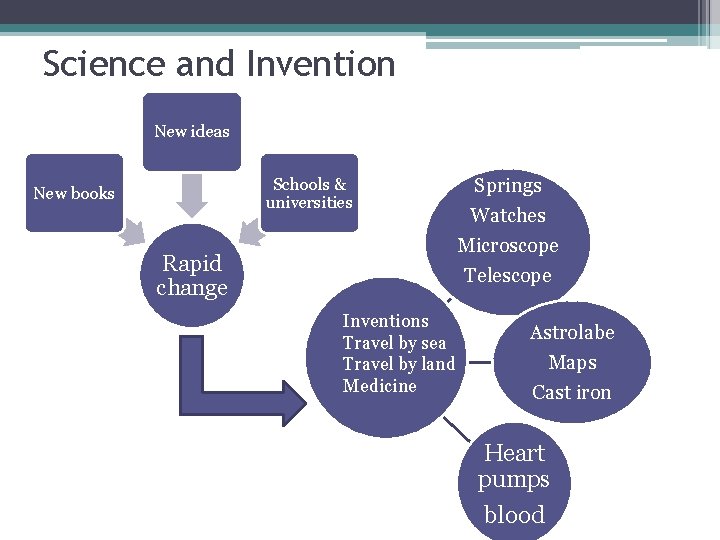
Science and Invention New ideas Schools & universities New books Springs Watches Microscope Rapid change Telescope Inventions Travel by sea • Inventions Travel by land • Navigation Medicine • Medicine Astrolabe Maps Cast iron Heart pumps blood
Center of the Universe • Many new, great scientific discoveries were made in Astronomy – the study of the universe ▫ New ideas about the motions of the Earth and stars, and mankind’s place in the universe • Many people, and the church did not agree with these new ideas • Throughout time, people believed the Earth was the center of the universe, and that the sun, moon and planets revolved around the Earth • Copernicus said all planets, including Earth, revolved around the sun.
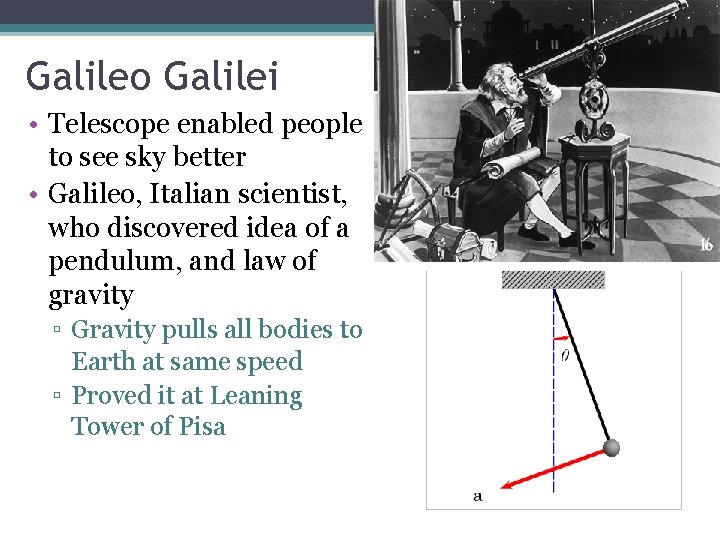
Galileo Galilei • Telescope enabled people to see sky better • Galileo, Italian scientist, who discovered idea of a pendulum, and law of gravity ▫ Gravity pulls all bodies to Earth at same speed ▫ Proved it at Leaning Tower of Pisa
Galileo Galilei • Galileo’s ideas went against what the Greek philosopher Aristotle taught • Many people were angry at Galileo • Other discoveries: ▫ Moon did not have its own light – it reflects light ▫ Jupiter has moons ▫ Milky Way – mass of stars • Discoveries supported Copernicus’s theory that Earth was not at center of universe – but revolved around the sun like all other planets • The Catholic church forced him to give up these ideas, and watched him for the rest of his life
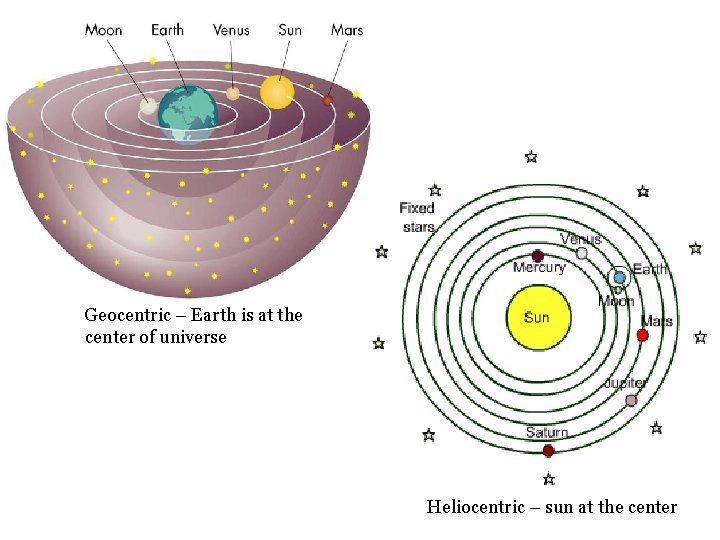
Geocentric – Earth is at the center of universe Heliocentric – sun at the center
The Renaissance Man • What is a Renaissance Man? ▫ ▫ ▫ ▫ Many kinds of knowledge, talents, skills Enjoy art, write poetry, play an instrument Read, write, speak Latin and other languages Know politics Ride horses, be good at sports, fight well Proper manners, grace Well educated and well “rounded” Leonardo da Vinci – one of best examples of Renaissance Man
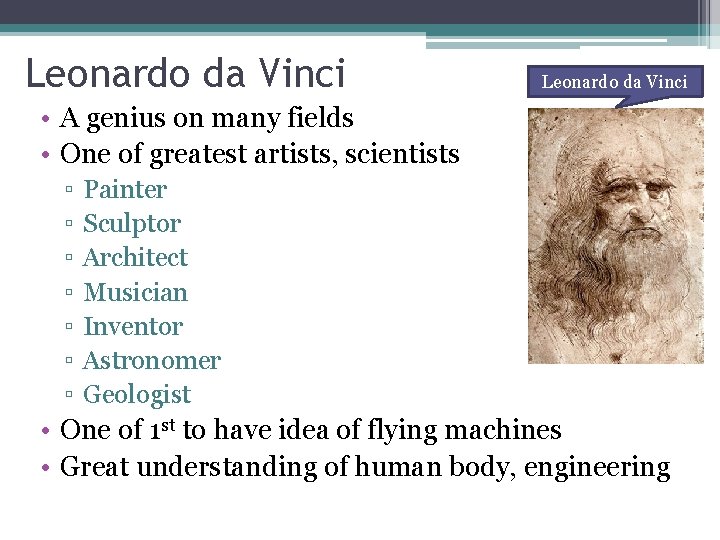
Leonardo da Vinci • A genius on many fields • One of greatest artists, scientists ▫ ▫ ▫ ▫ Painter Sculptor Architect Musician Inventor Astronomer Geologist • One of 1 st to have idea of flying machines • Great understanding of human body, engineering
Leonardo da Vinci • Understood the way things worked, the way things join together and form a whole • Mona Lisa is one of most famous paintings ▫ Hangs in the Louvre Museum in Paris • • Served Duke of Milan, Italy Government of Florence, Italy King Francis I invited him to live in France He used his talents all together, was very curious, and his art seemed real
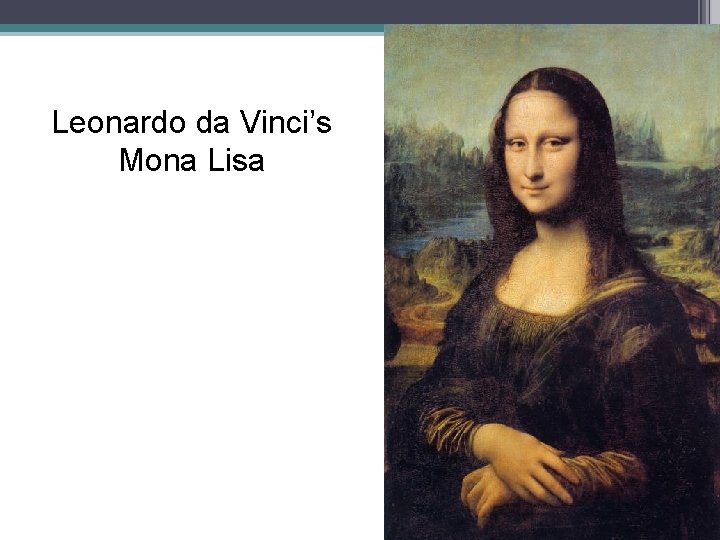
Leonardo da Vinci’s Mona Lisa
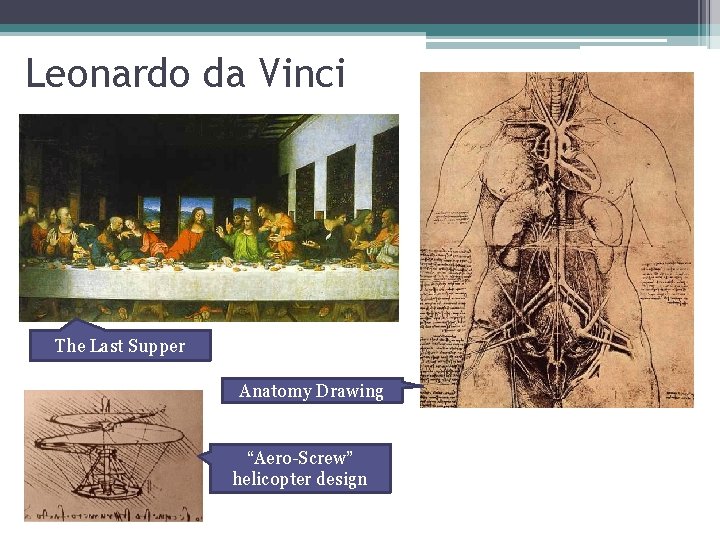
Leonardo da Vinci The Last Supper Anatomy Drawing “Aero-Screw” helicopter design
The Reformation Ø During Middle Ages Ø Most Western Europeans are Roman Catholic Ø Church is very powerful, owns land, collects taxes Ø Popes, bishops, priests are wealthy Ø During Renaissance Ø People begin questioning ways of the church Ø Ø Why are they so wealthy – unlike Jesus? Why should they have so much power? Why so many rituals, ceremonies? Why aren’t they simple, like Jesus? Ø These questions lead to reform movement=change
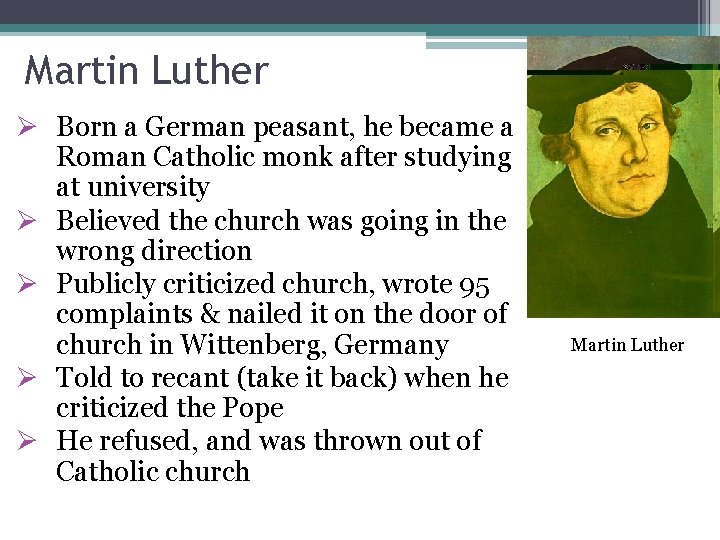
Martin Luther Ø Born a German peasant, he became a Roman Catholic monk after studying at university Ø Believed the church was going in the wrong direction Ø Publicly criticized church, wrote 95 complaints & nailed it on the door of church in Wittenberg, Germany Ø Told to recant (take it back) when he criticized the Pope Ø He refused, and was thrown out of Catholic church Martin Luther
Martin Luther Ø Emperor Charles V declared him an outlaw Ø Anyone can kill him without punishment Ø Some princes supported Luther Ø Hid Luther in a castle Ø Gained enough supporters to start a new church Ø Lutheranism: simplified religion – based upon Bible Ø Catholic Church said no one should practice Lutheranism Ø The princes who protested came to be called Protestants Ø Others in Europe started Protestant churches
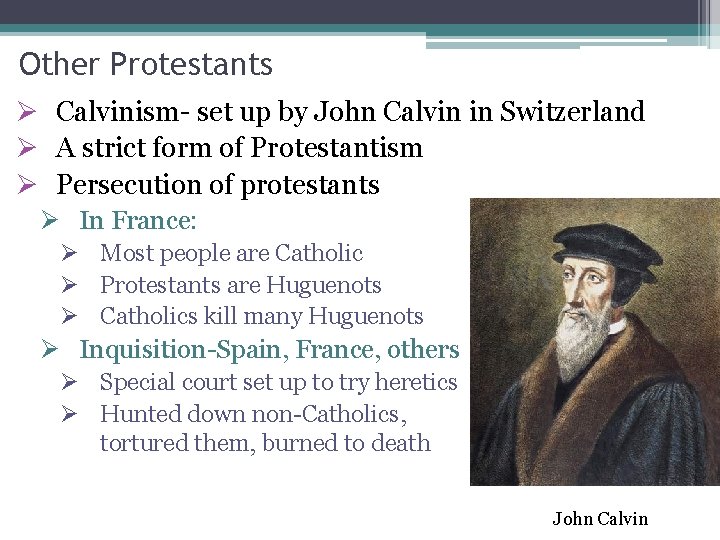
Other Protestants Ø Calvinism- set up by John Calvin in Switzerland Ø A strict form of Protestantism Ø Persecution of protestants Ø In France: Ø Most people are Catholic Ø Protestants are Huguenots Ø Catholics kill many Huguenots Ø Inquisition-Spain, France, others Ø Special court set up to try heretics Ø Hunted down non-Catholics, tortured them, burned to death John Calvin
The Counter Reformation • Many people wanted to make change (reform) inside the Catholic Church, instead of starting new religions ▫ This movement was called the Counter Reformation ▫ Pope sets up meeting “Council of Trent” to keep Catholic followers �Listed beliefs of church and insisted people obey �Also approved new Catholic religious orders – one was Society of Jesus - Jesuits
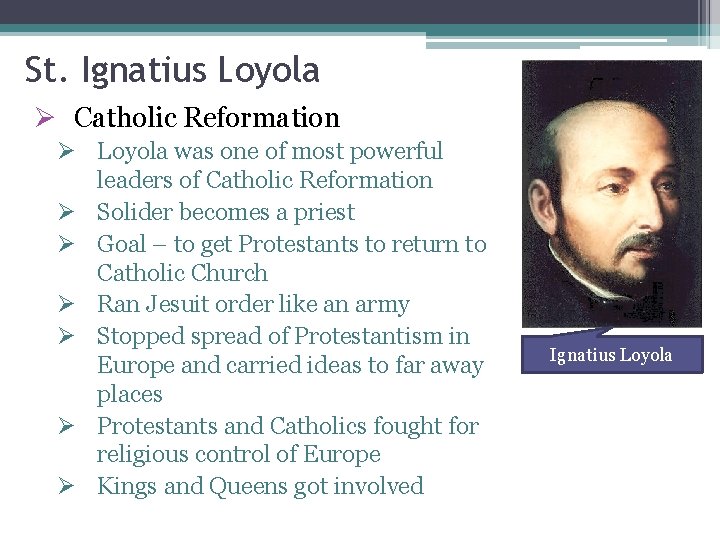
St. Ignatius Loyola Ø Catholic Reformation Ø Loyola was one of most powerful leaders of Catholic Reformation Ø Solider becomes a priest Ø Goal – to get Protestants to return to Catholic Church Ø Ran Jesuit order like an army Ø Stopped spread of Protestantism in Europe and carried ideas to far away places Ø Protestants and Catholics fought for religious control of Europe Ø Kings and Queens got involved Ignatius Loyola
- Slides: 28