
Chapter 13 Meiosis Sexual Reproduction AP Biology Modified
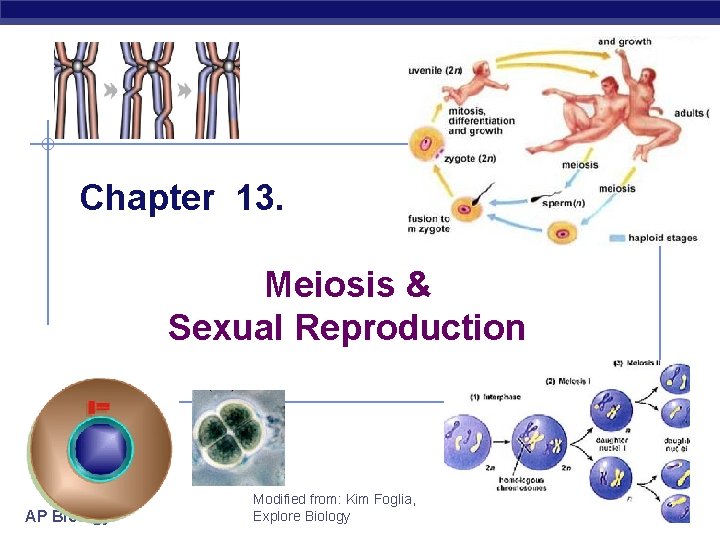
Chapter 13. Meiosis & Sexual Reproduction AP Biology Modified from: Kim Foglia, Explore Biology
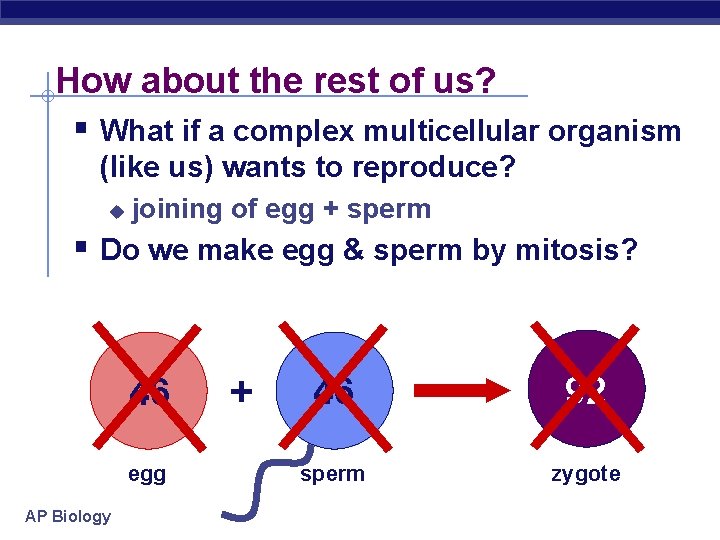
How about the rest of us? § What if a complex multicellular organism (like us) wants to reproduce? u joining of egg + sperm § Do we make egg & sperm by mitosis? 46 egg AP Biology + 46 92 sperm zygote
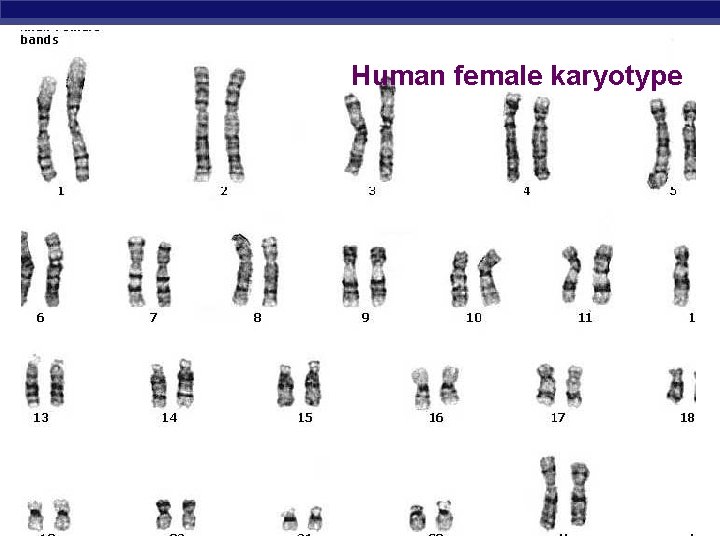
Human female karyotype AP Biology
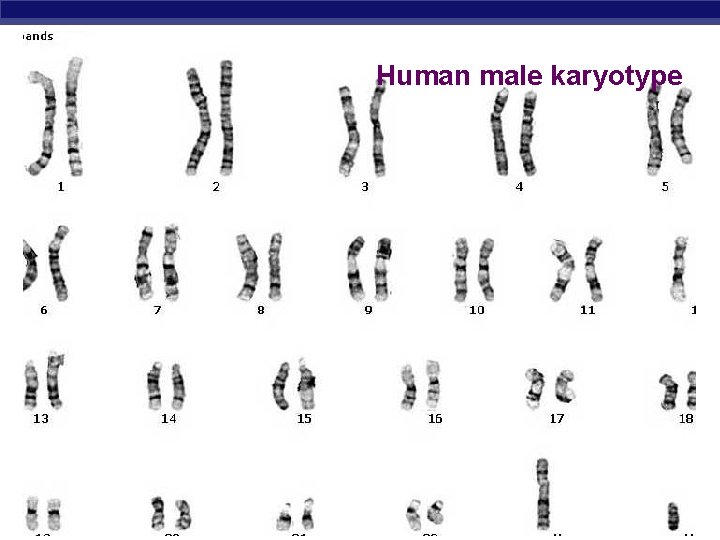
Human male karyotype AP Biology
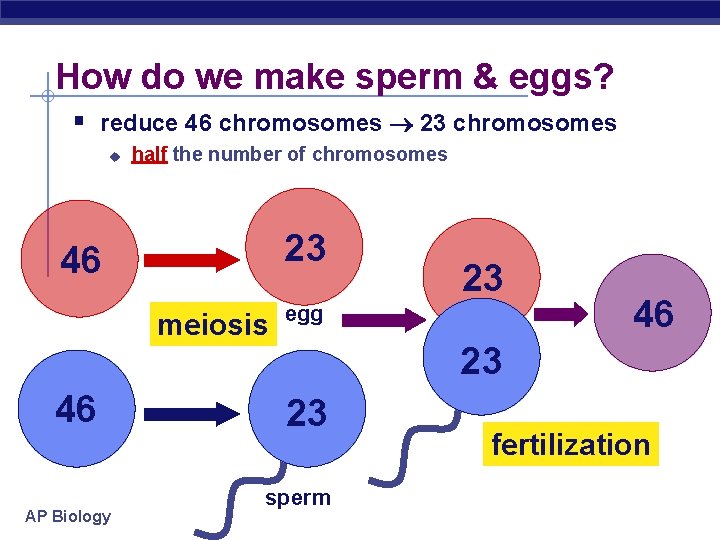
How do we make sperm & eggs? § reduce 46 chromosomes 23 chromosomes u half the number of chromosomes 23 46 meiosis 46 AP Biology 23 egg 46 23 23 sperm fertilization
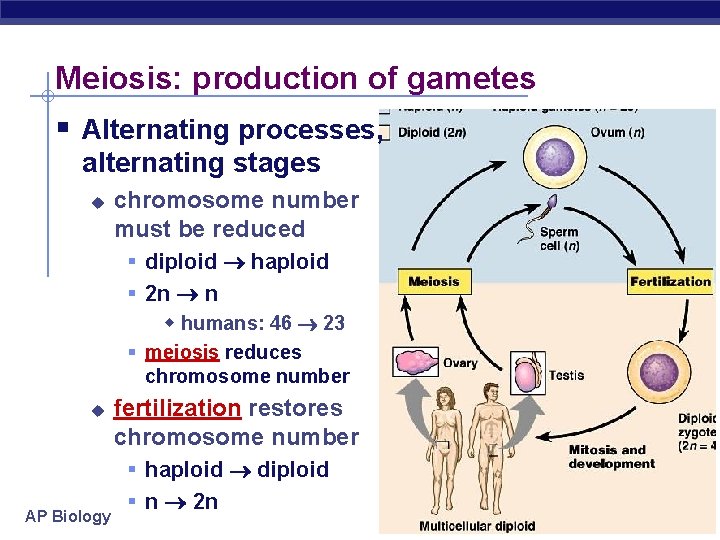
Meiosis: production of gametes § Alternating processes, alternating stages u chromosome number must be reduced § diploid haploid § 2 n n w humans: 46 23 § meiosis reduces chromosome number u AP Biology fertilization restores chromosome number § haploid diploid § n 2 n
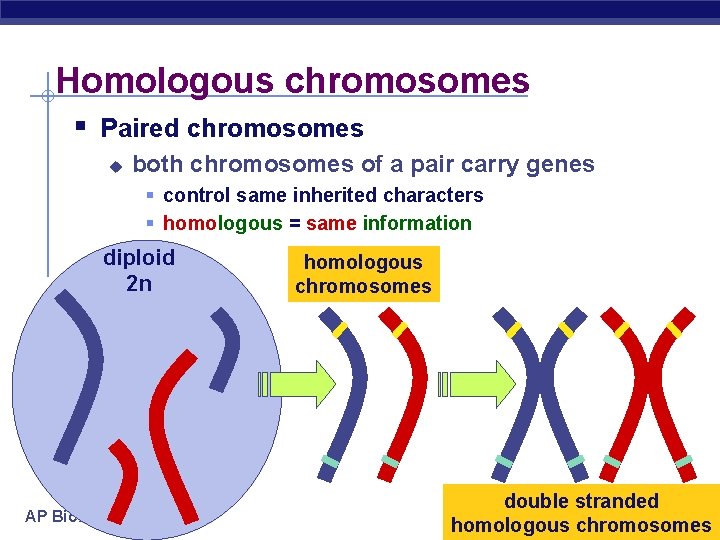
Homologous chromosomes § Paired chromosomes u both chromosomes of a pair carry genes § control same inherited characters § homologous = same information diploid 2 n AP Biology homologous chromosomes double stranded homologous chromosomes
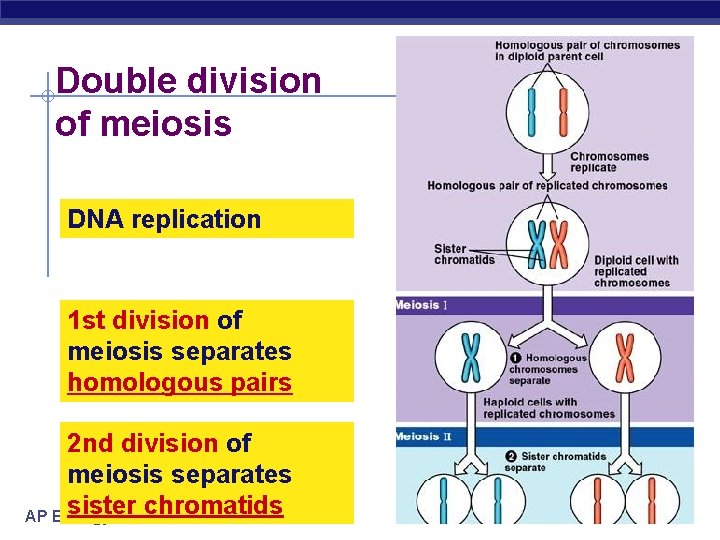
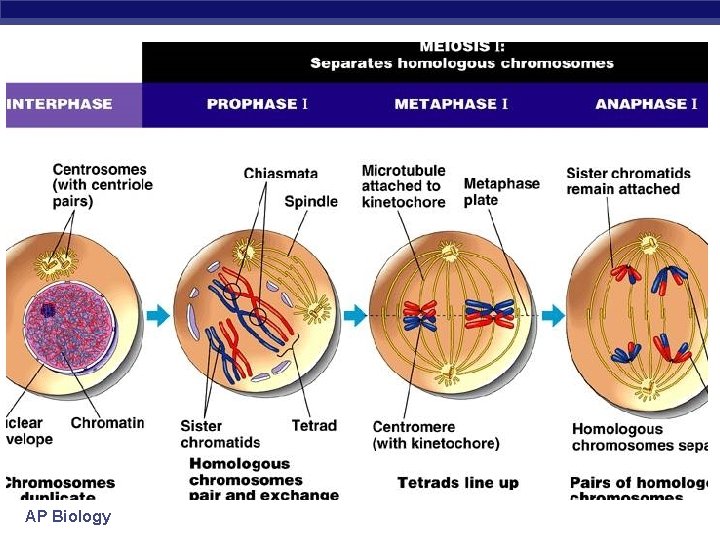
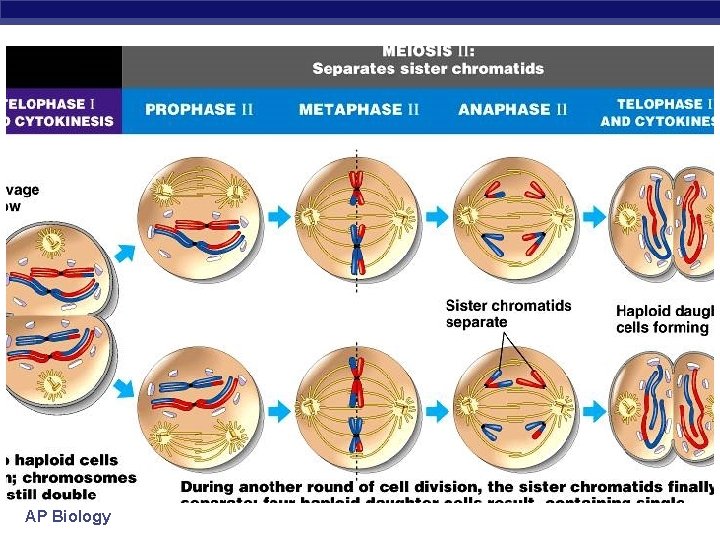
Double division of meiosis DNA replication 1 st division of meiosis separates homologous pairs 2 nd division of meiosis separates sister chromatids AP Biology
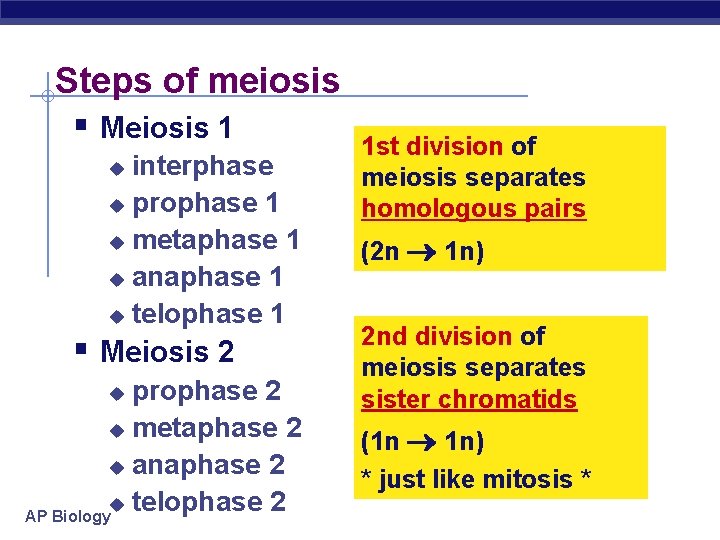
Steps of meiosis § Meiosis 1 interphase u prophase 1 u metaphase 1 u anaphase 1 u telophase 1 u § Meiosis 2 prophase 2 u metaphase 2 u anaphase 2 u telophase 2 AP Biology u 1 st division of meiosis separates homologous pairs (2 n 1 n) 2 nd division of meiosis separates sister chromatids (1 n 1 n) * just like mitosis *
AP Biology
AP Biology
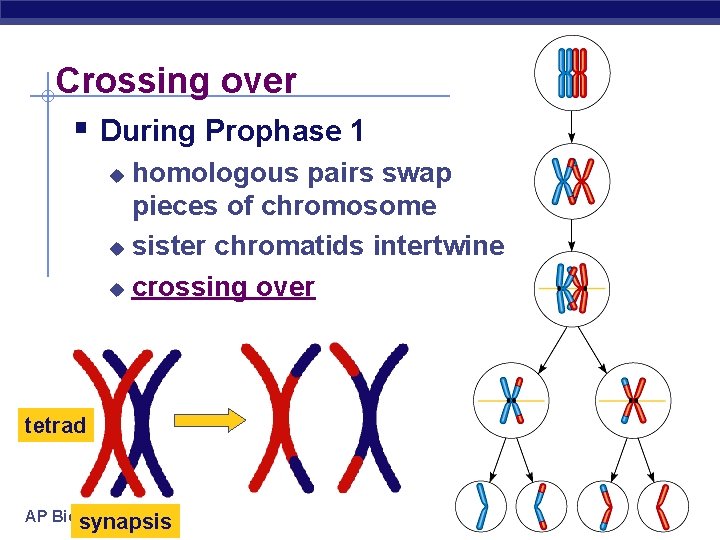
Crossing over § During Prophase 1 homologous pairs swap pieces of chromosome u sister chromatids intertwine u crossing over u tetrad AP Biology synapsis

Crossing over § 3 steps What are the advantages of sexual reproduction? cross over u breakage of DNA u re-fusing of DNA u § New combinations of traits AP Biology
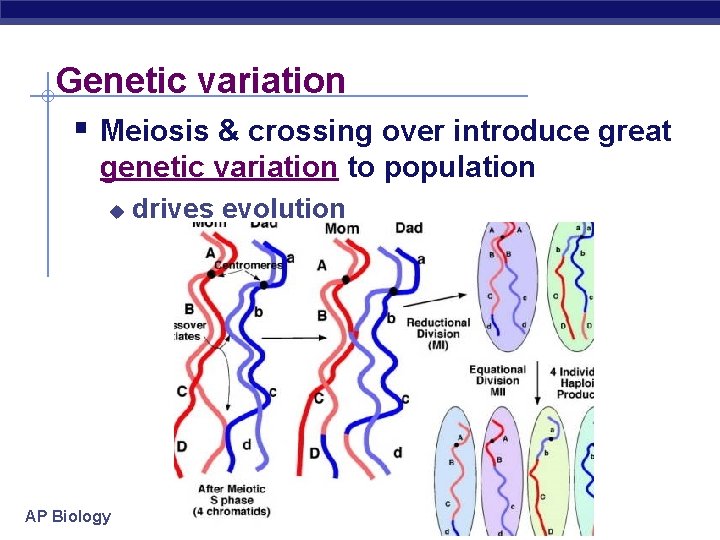
Genetic variation § Meiosis & crossing over introduce great genetic variation to population u AP Biology drives evolution
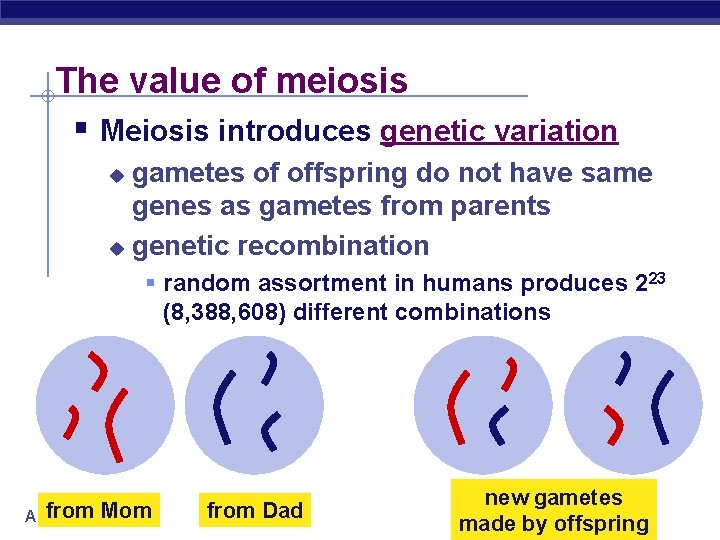
The value of meiosis § Meiosis introduces genetic variation gametes of offspring do not have same genes as gametes from parents u genetic recombination u § random assortment in humans produces 223 (8, 388, 608) different combinations Mom APfrom Biology from Dad new gametes made by offspring
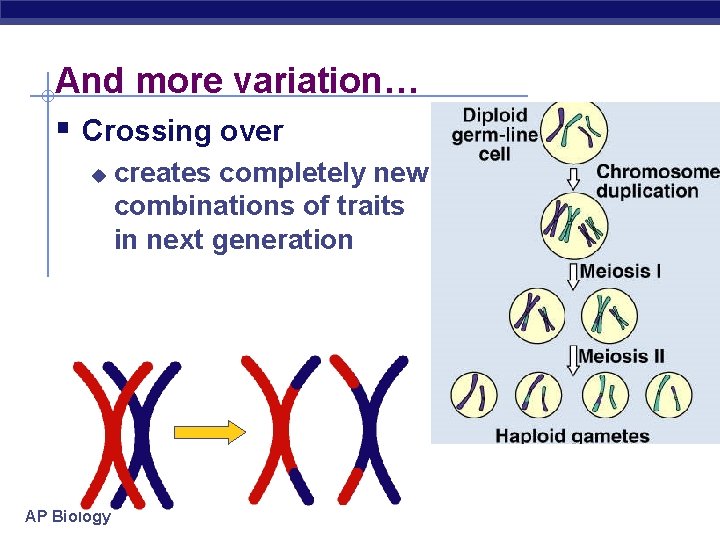
And more variation… § Crossing over u AP Biology creates completely new combinations of traits in next generation
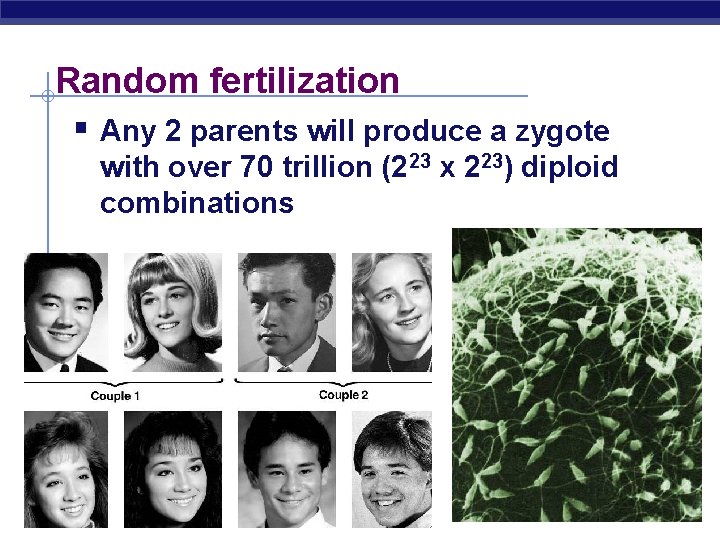
Random fertilization § Any 2 parents will produce a zygote with over 70 trillion (223 x 223) diploid combinations AP Biology
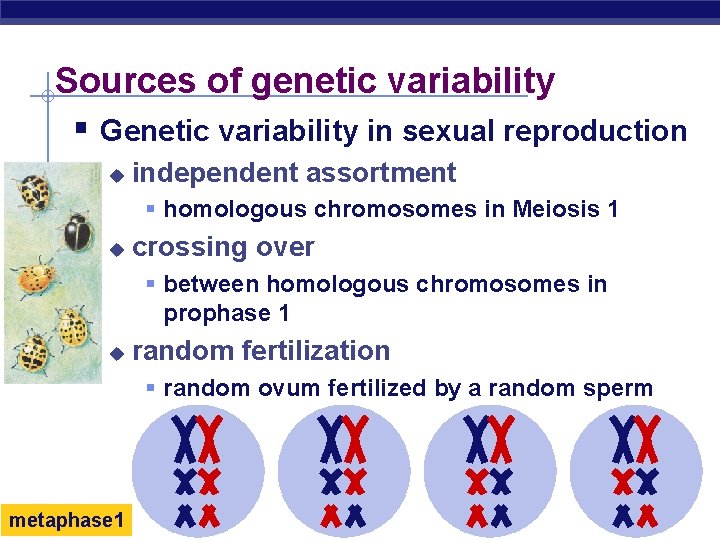
Sources of genetic variability § Genetic variability in sexual reproduction u independent assortment § homologous chromosomes in Meiosis 1 u crossing over § between homologous chromosomes in prophase 1 u random fertilization § random ovum fertilized by a random sperm AP Biology metaphase 1
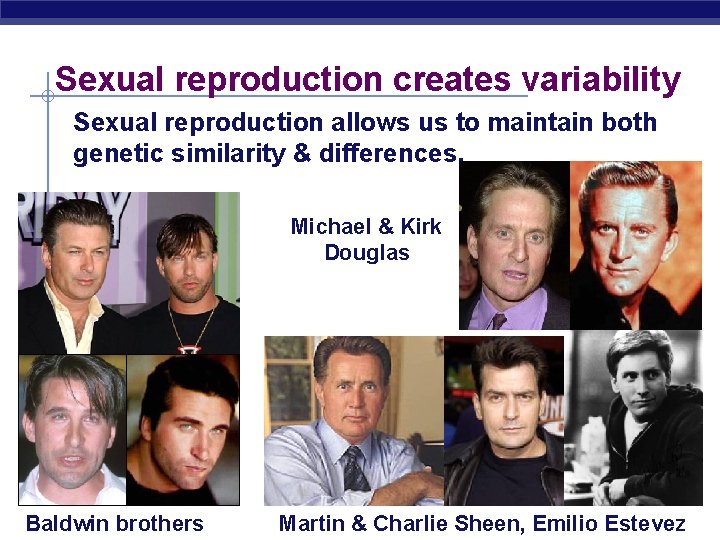
Sexual reproduction creates variability Sexual reproduction allows us to maintain both genetic similarity & differences. Michael & Kirk Douglas AP Biology Baldwin brothers Martin & Charlie Sheen, Emilio Estevez
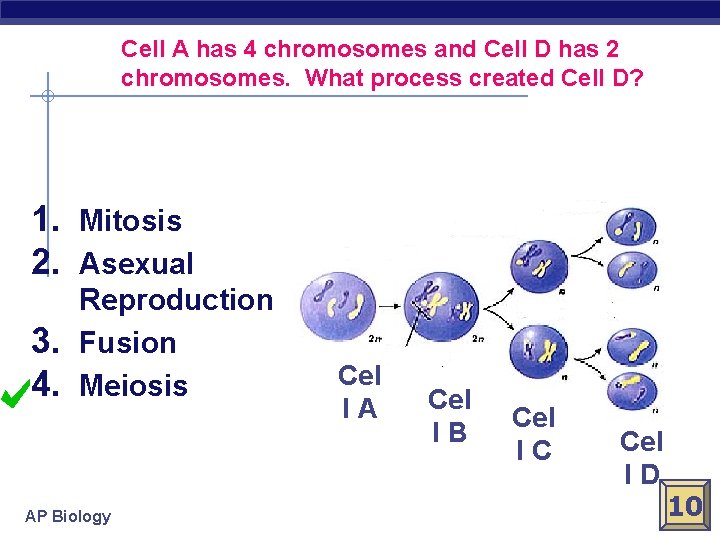
Cell A has 4 chromosomes and Cell D has 2 chromosomes. What process created Cell D? 1. Mitosis 2. Asexual 3. 4. Reproduction Fusion Meiosis AP Biology Cel l. A Cel l. B Cel l. C Cel l. D 10
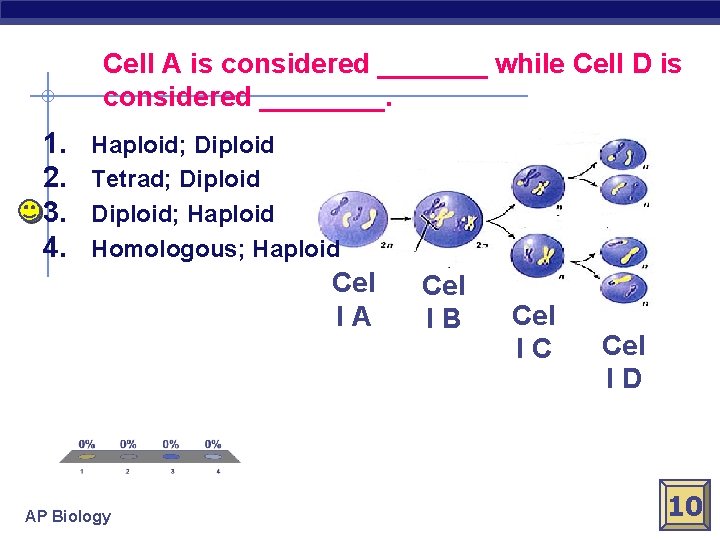
Cell A is considered _______ while Cell D is considered ____. 1. 2. 3. 4. Haploid; Diploid Tetrad; Diploid; Haploid Homologous; Haploid Cel l. A AP Biology Cel l. B Cel l. C Cel l. D 10
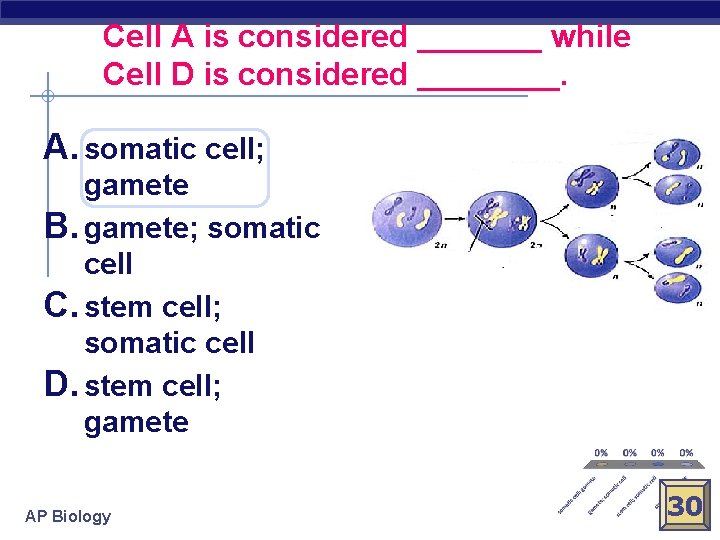
Cell A is considered _______ while Cell D is considered ____. A. somatic cell; gamete B. gamete; somatic cell C. stem cell; somatic cell D. stem cell; gamete AP Biology 30
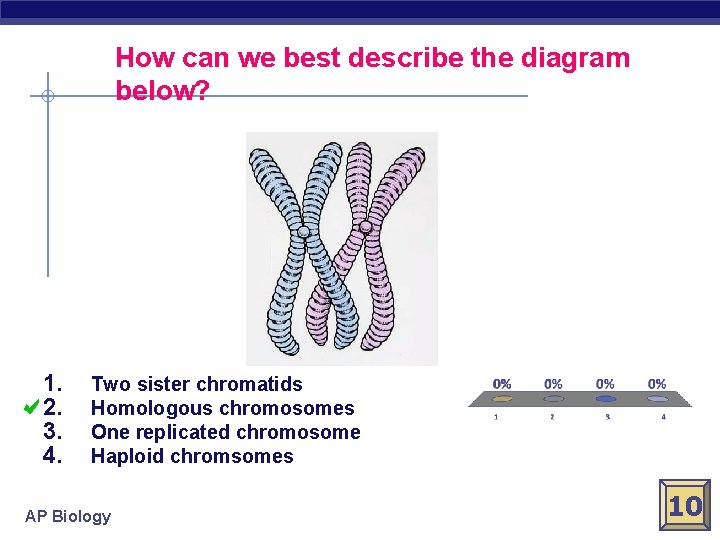
How can we best describe the diagram below? 1. 2. 3. 4. Two sister chromatids Homologous chromosomes One replicated chromosome Haploid chromsomes AP Biology 10
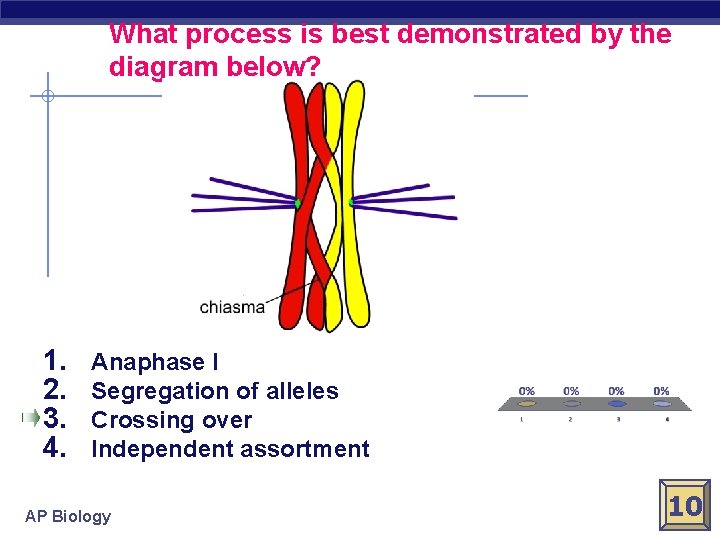
What process is best demonstrated by the diagram below? 1. 2. 3. 4. Anaphase I Segregation of alleles Crossing over Independent assortment AP Biology 10
Which of the following leads to genetic variation during meiosis? A. Crossing Over B. DNA replication C. Independent assortment 1. 2. 3. 4. 5. D. Mitotic spindle formation All of the above (A, B, C, D) A&B A&D A, B, & D A&C AP Biology 10
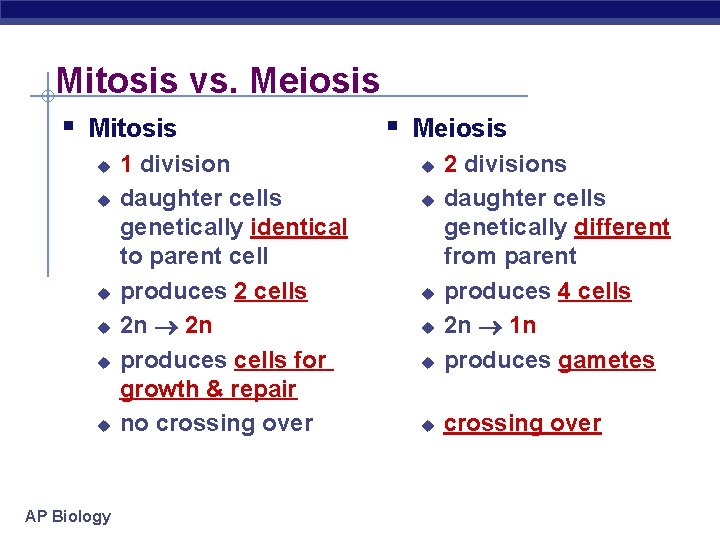
Mitosis vs. Meiosis § Mitosis u u u AP Biology 1 division daughter cells genetically identical to parent cell produces 2 cells 2 n produces cells for growth & repair no crossing over § Meiosis u 2 divisions daughter cells genetically different from parent produces 4 cells 2 n 1 n produces gametes u crossing over u u
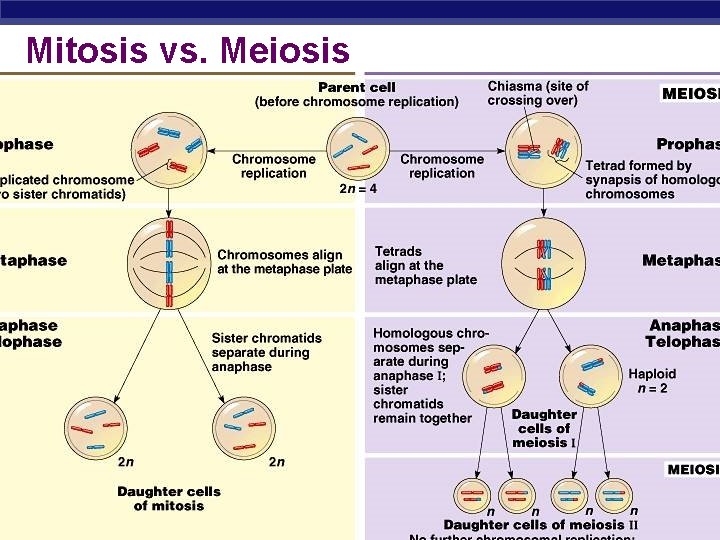
Mitosis vs. Meiosis AP Biology
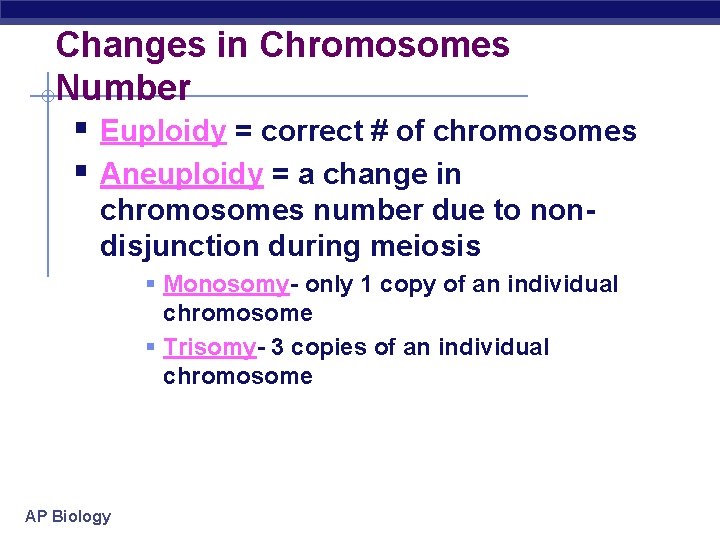
Changes in Chromosomes Number § Euploidy = correct # of chromosomes § Aneuploidy = a change in chromosomes number due to nondisjunction during meiosis § Monosomy- only 1 copy of an individual chromosome § Trisomy- 3 copies of an individual chromosome AP Biology
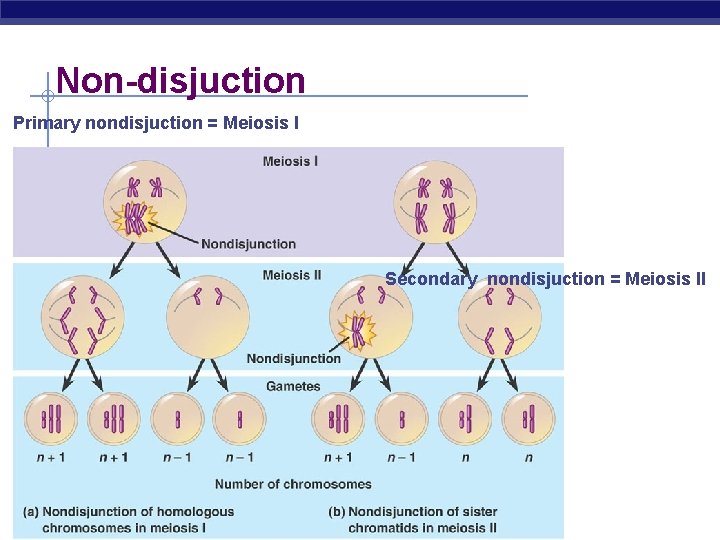
Non-disjuction Primary nondisjuction = Meiosis I Secondary nondisjuction = Meiosis II AP Biology
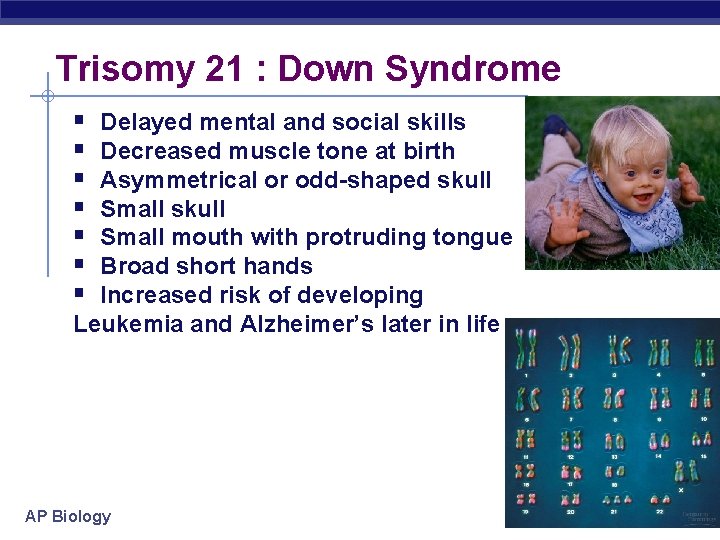
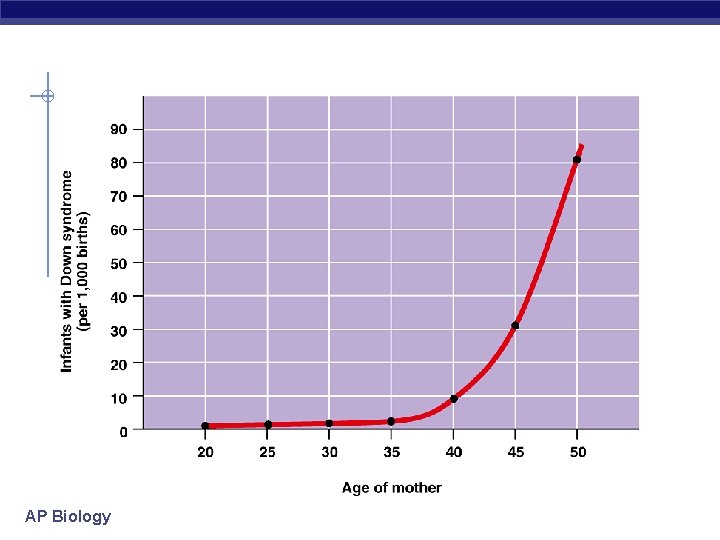
Trisomy 21 : Down Syndrome § § § § Delayed mental and social skills Decreased muscle tone at birth Asymmetrical or odd-shaped skull Small mouth with protruding tongue Broad short hands Increased risk of developing Leukemia and Alzheimer’s later in life AP Biology
AP Biology
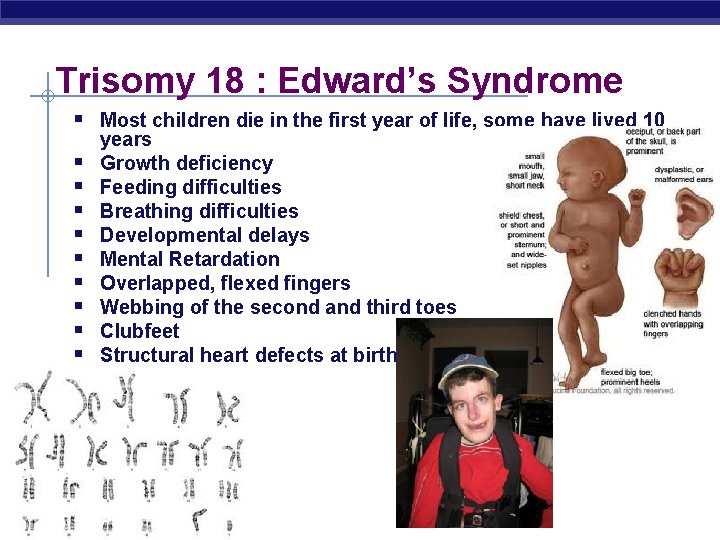
Trisomy 18 : Edward’s Syndrome § Most children die in the first year of life, some have lived 10 § § § § § years Growth deficiency Feeding difficulties Breathing difficulties Developmental delays Mental Retardation Overlapped, flexed fingers Webbing of the second and third toes Clubfeet Structural heart defects at birth AP Biology
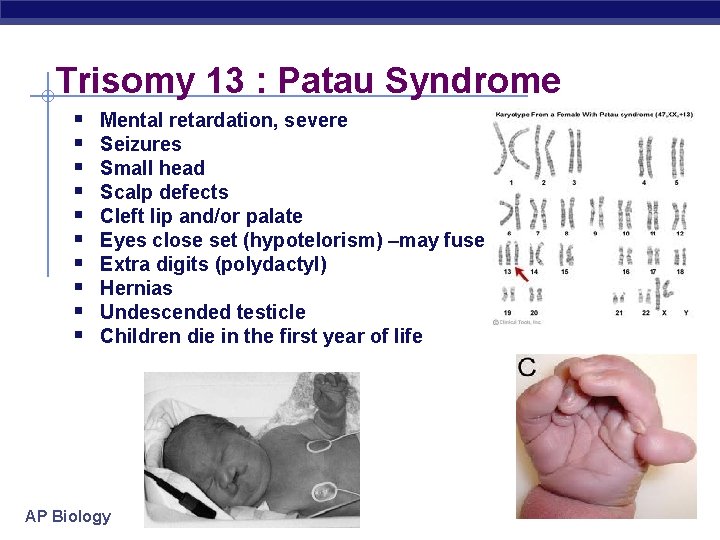
Trisomy 13 : Patau Syndrome § § § § § Mental retardation, severe Seizures Small head Scalp defects Cleft lip and/or palate Eyes close set (hypotelorism) –may fuse Extra digits (polydactyl) Hernias Undescended testicle Children die in the first year of life AP Biology
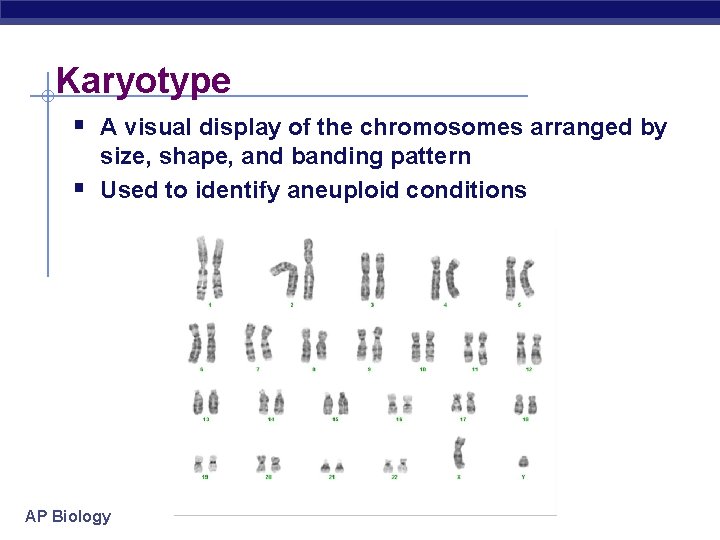
Karyotype § A visual display of the chromosomes arranged by § size, shape, and banding pattern Used to identify aneuploid conditions AP Biology
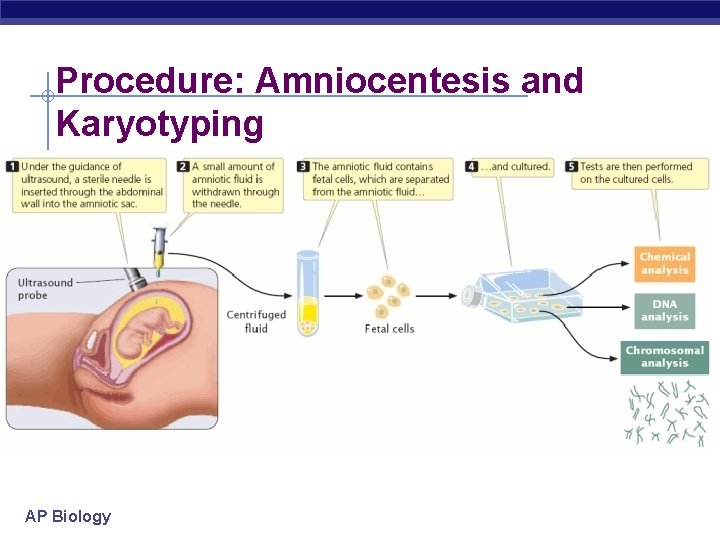
Procedure: Amniocentesis and Karyotyping AP Biology
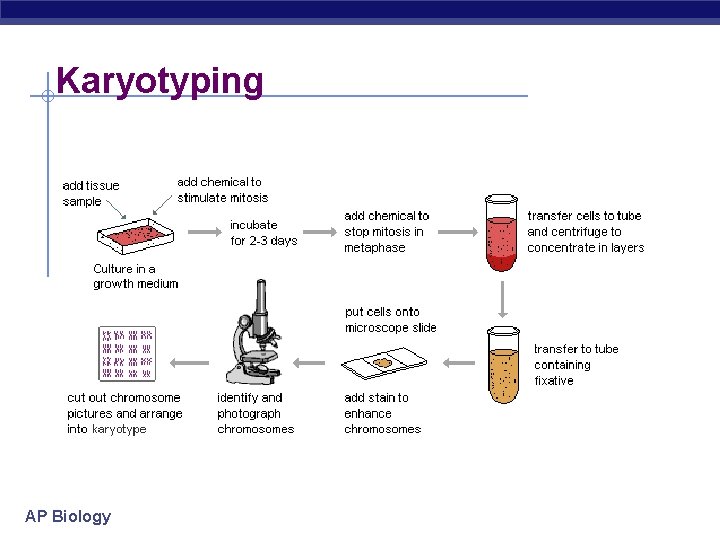
Karyotyping AP Biology
Changes in Sex Chromosome # § § § Turners Syndrome (XO) – missing Barr Body Kleinfelter’s Syndrome (XXY) Swyer Syndrome (XY female) La Chapelle Syndrome (XX male) Poly-X Females (XXX, XXXX) Jacob’s Syndrome (XYY males) -SRY gene (located on short arm of Y chromosome) -hormone= testis-determining factor -Barr Body – Inactive X chromosome (XX) AP Biology
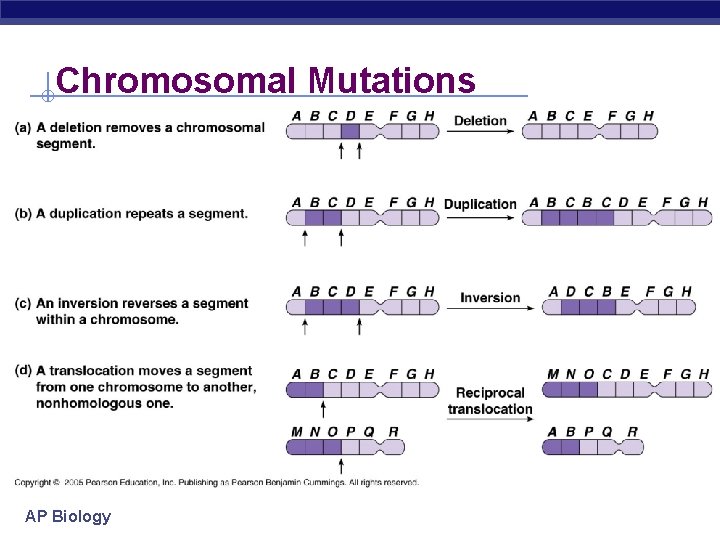
Chromosomal Mutations AP Biology
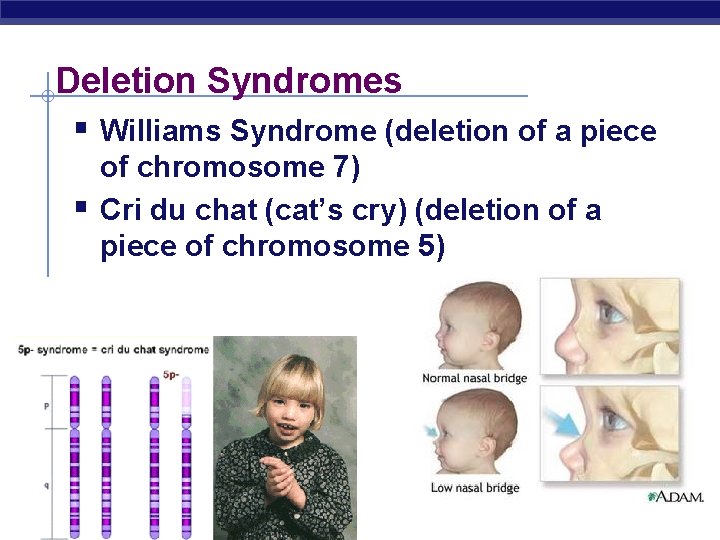
Deletion Syndromes § Williams Syndrome (deletion of a piece § of chromosome 7) Cri du chat (cat’s cry) (deletion of a piece of chromosome 5) AP Biology
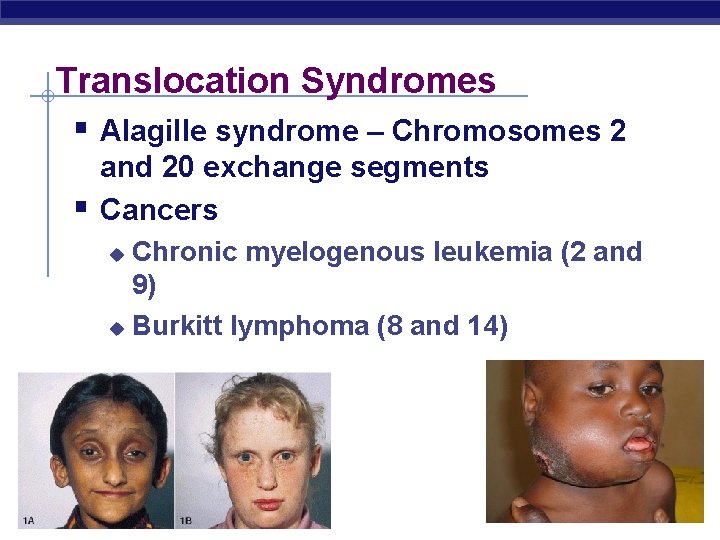
Translocation Syndromes § Alagille syndrome – Chromosomes 2 § and 20 exchange segments Cancers Chronic myelogenous leukemia (2 and 9) u Burkitt lymphoma (8 and 14) u AP Biology
What are the DISadvantages of sexual reproduction? Any Questions? ? AP Biology
- Slides: 41