
Chapter 13 Meiosis Sexual Reproduction AP Biology Cell
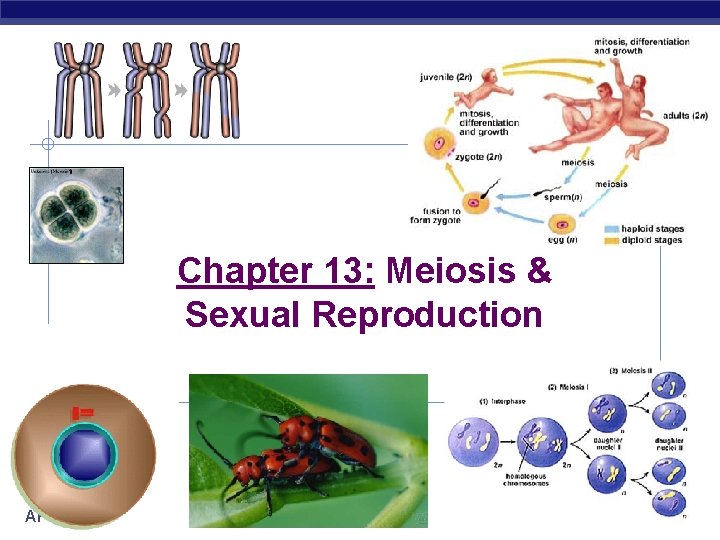
Chapter 13: Meiosis & Sexual Reproduction AP Biology
Cell division / Asexual reproduction Mitosis produce cells with same information identical daughter cells exact copies clones same amount of DNA same number of chromosomes same genetic information AP Biology
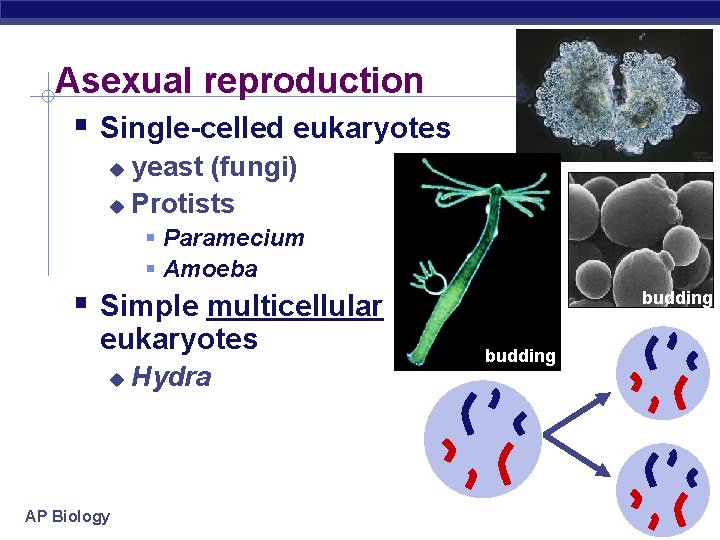
Asexual reproduction Single-celled eukaryotes yeast (fungi) Protists Paramecium Amoeba Simple multicellular eukaryotes AP Biology Hydra budding
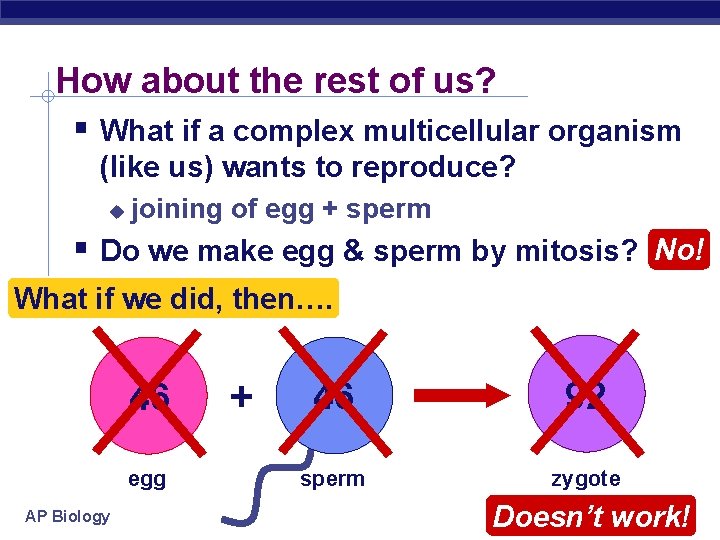
How about the rest of us? What if a complex multicellular organism (like us) wants to reproduce? joining of egg + sperm Do we make egg & sperm by mitosis? No! What if we did, then…. 46 egg AP Biology + 46 92 sperm zygote Doesn’t work!
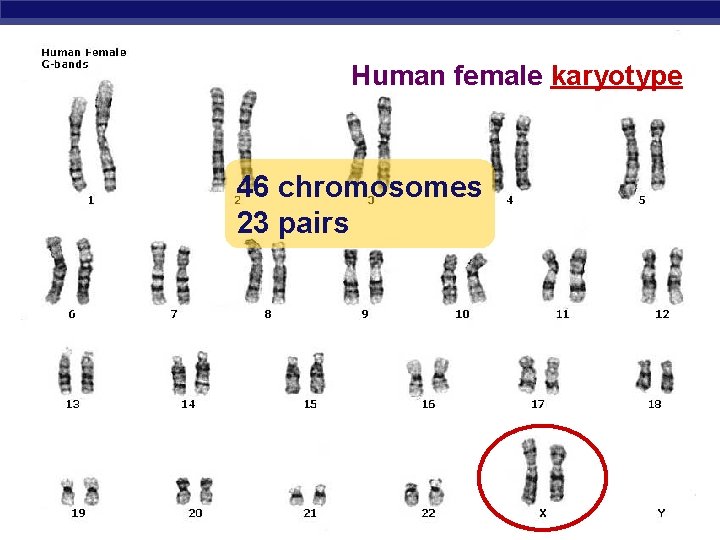
Human female karyotype 46 chromosomes 23 pairs AP Biology
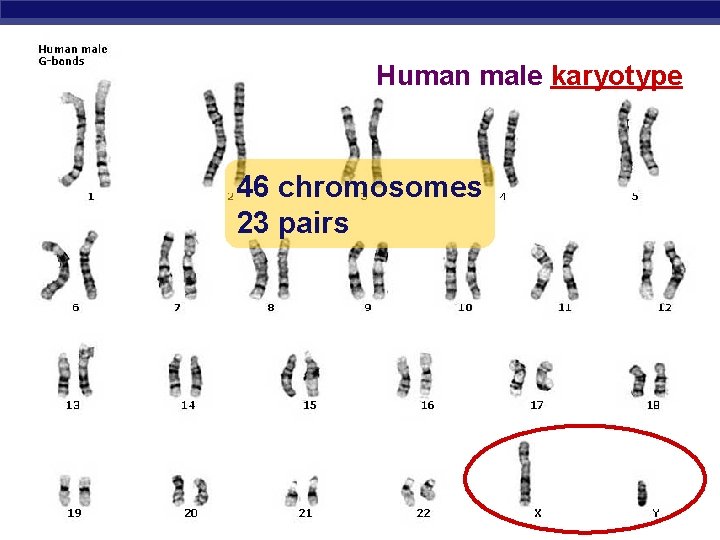
Human male karyotype 46 chromosomes 23 pairs AP Biology
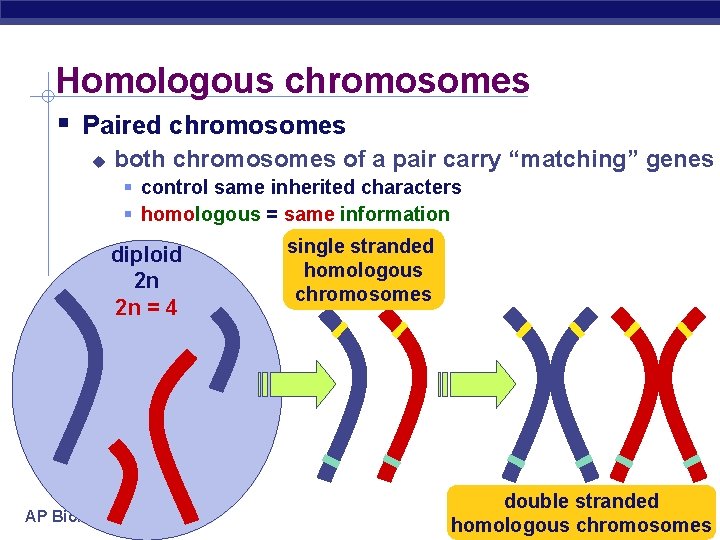
Homologous chromosomes Paired chromosomes both chromosomes of a pair carry “matching” genes control same inherited characters homologous = same information diploid 2 n 2 n = 4 AP Biology single stranded homologous chromosomes double stranded homologous chromosomes
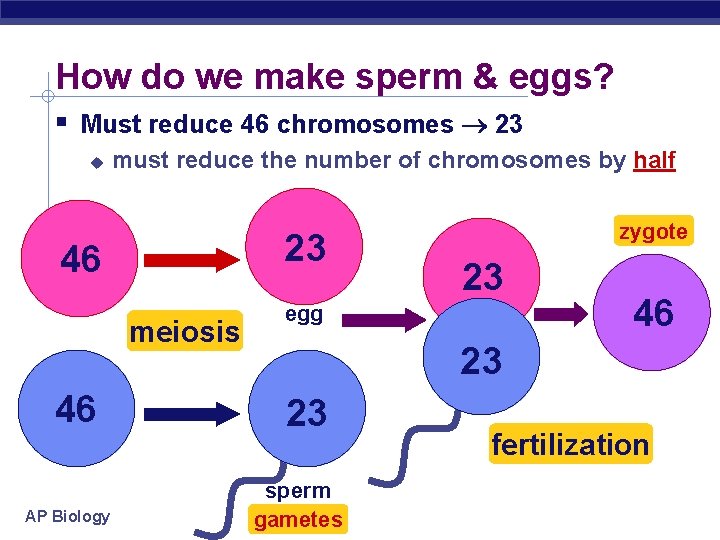
How do we make sperm & eggs? Must reduce 46 chromosomes 23 must reduce the number of chromosomes by half 23 46 meiosis 46 AP Biology zygote 23 egg 46 23 23 sperm gametes fertilization
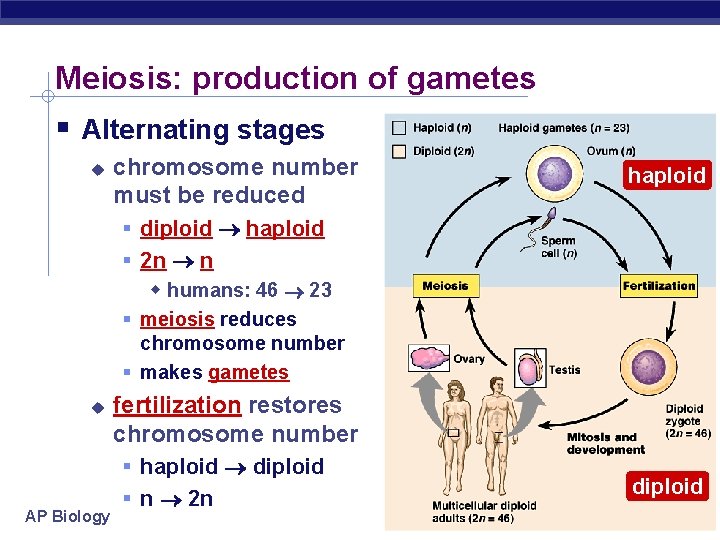
Meiosis: production of gametes Alternating stages chromosome number must be reduced haploid diploid haploid 2 n n humans: 46 23 meiosis reduces chromosome number makes gametes AP Biology fertilization restores chromosome number haploid diploid n 2 n diploid

Sexual reproduction lifecycle 2 copies diploid 2 n 1 copy haploid 1 n gametes AP Biology fertilization meiosis 1 copy haploid 1 n gametes
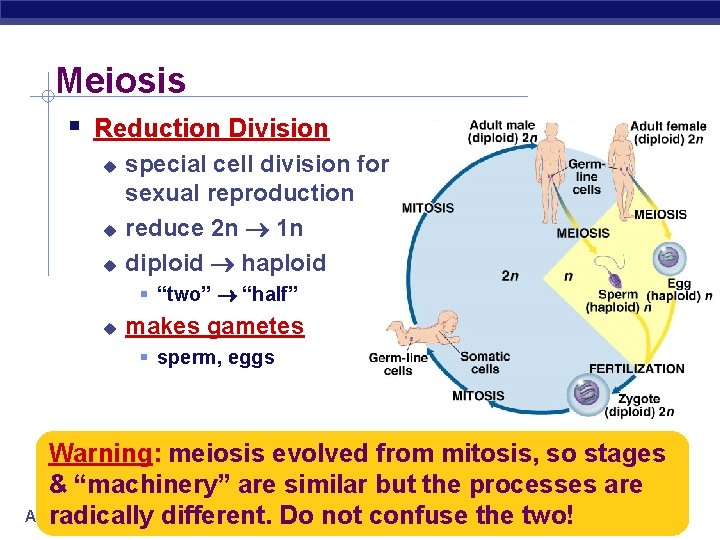
Meiosis Reduction Division special cell division for sexual reproduction reduce 2 n 1 n diploid haploid “two” “half” makes gametes sperm, eggs Warning: meiosis evolved from mitosis, so stages & “machinery” are similar but the processes are AP radically Biology different. Do not confuse the two!
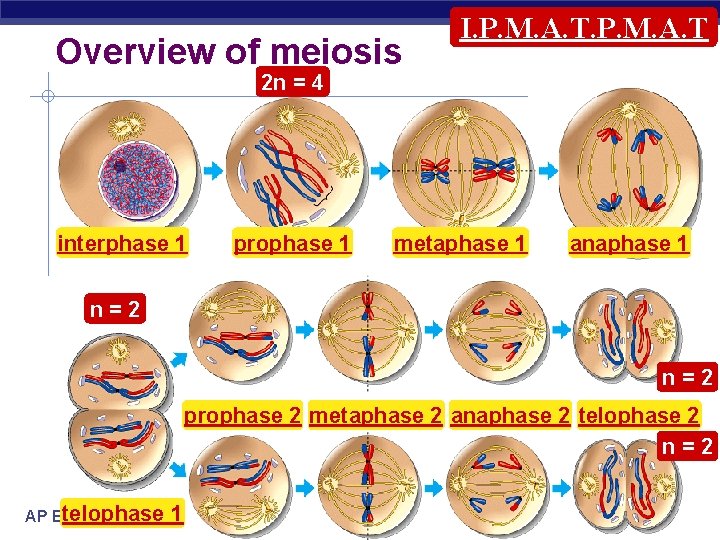
Overview of meiosis I. P. M. A. T 2 n = 4 interphase 1 prophase 1 metaphase 1 anaphase 1 n=2 prophase 2 metaphase 2 anaphase 2 telophase 2 n=2 telophase AP Biology 1
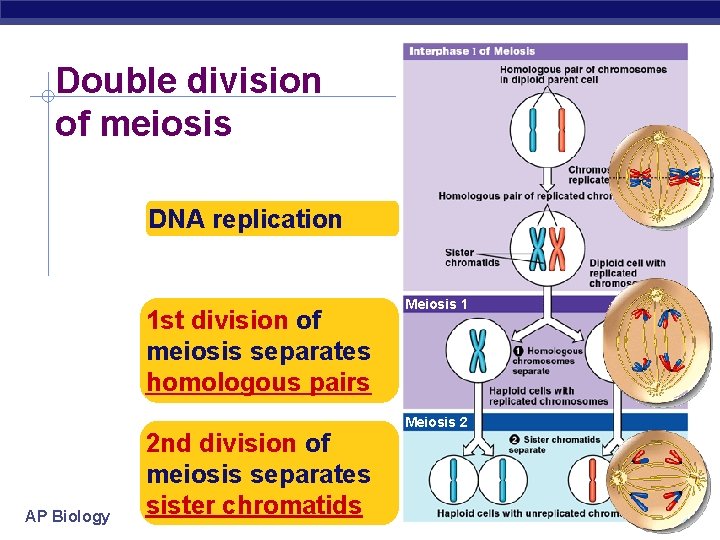
Double division of meiosis DNA replication 1 st division of meiosis separates homologous pairs AP Biology 2 nd division of meiosis separates sister chromatids Meiosis 1 Meiosis 2
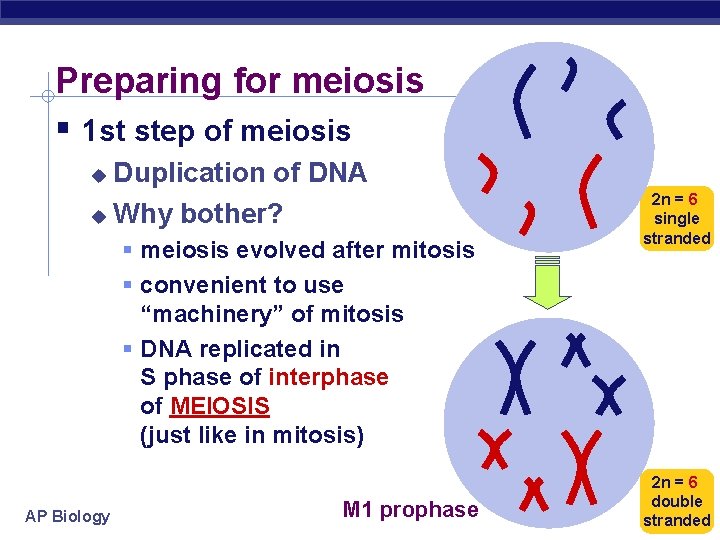
Preparing for meiosis 1 st step of meiosis Duplication of DNA Why bother? meiosis evolved after mitosis convenient to use “machinery” of mitosis DNA replicated in S phase of interphase of MEIOSIS (just like in mitosis) AP Biology M 1 prophase 2 n = 6 single stranded 2 n = 6 double stranded
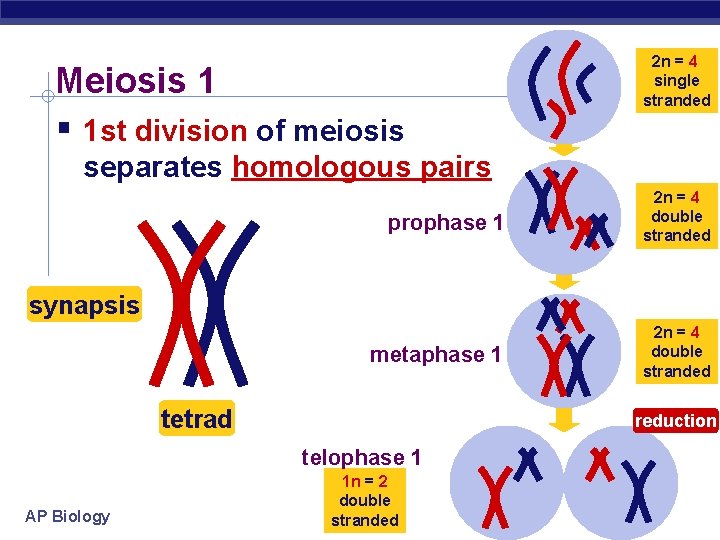
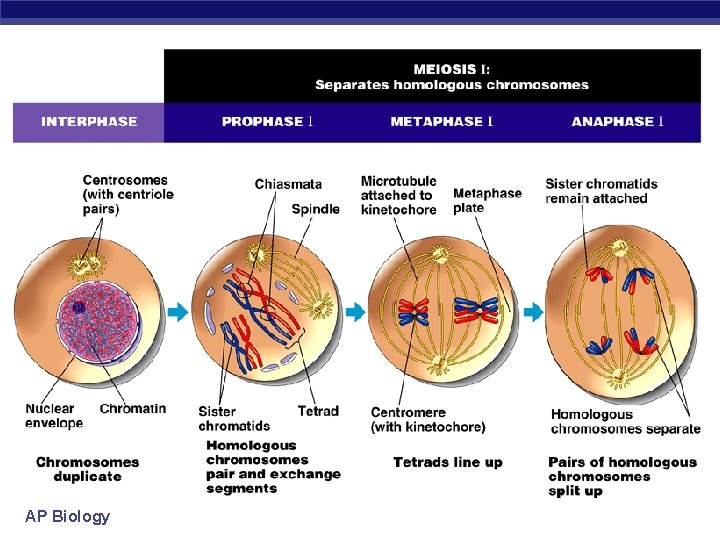
Meiosis 1 1 st division of meiosis 2 n = 4 single stranded separates homologous pairs prophase 1 2 n = 4 double stranded metaphase 1 2 n = 4 double stranded synapsis tetrad reduction telophase 1 AP Biology 1 n = 2 double stranded
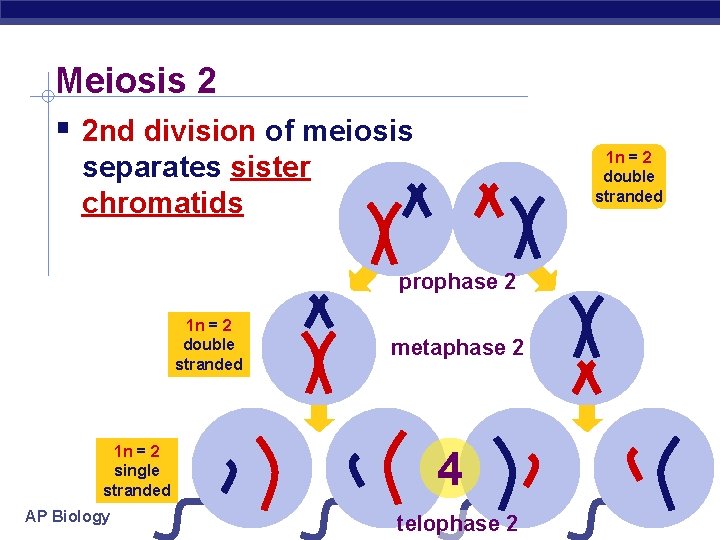
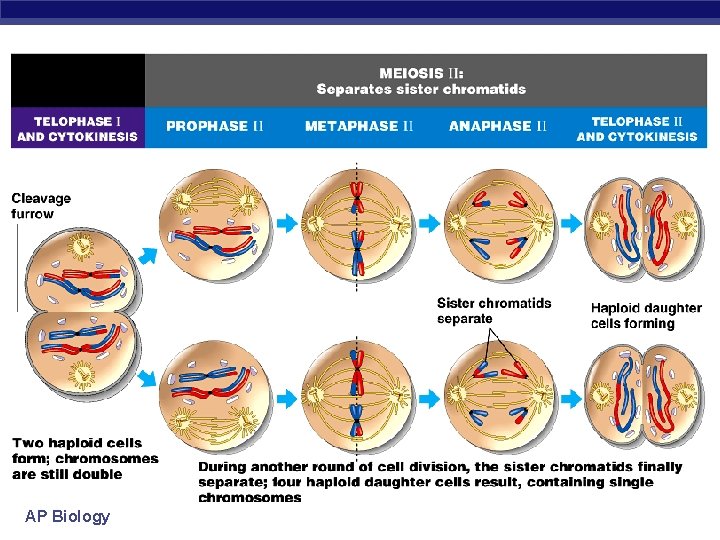
Meiosis 2 2 nd division of meiosis 1 n = 2 double stranded separates sister chromatids prophase 2 1 n = 2 double stranded 1 n = 2 single stranded AP Biology metaphase 2 4 telophase 2
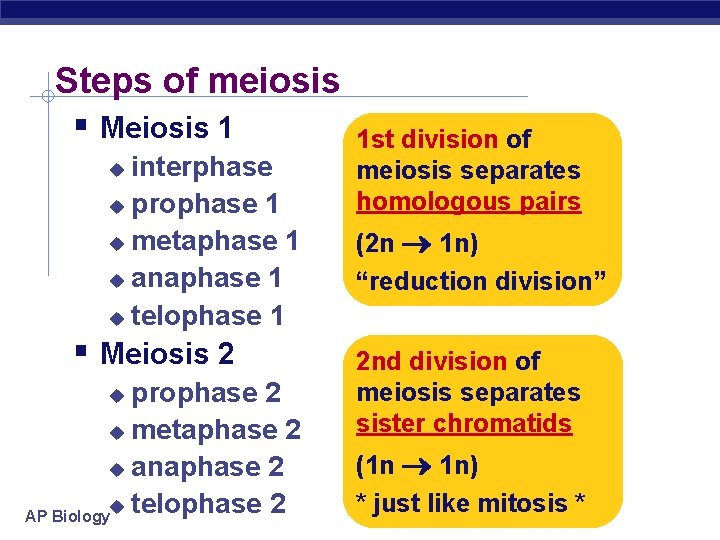
Steps of meiosis Meiosis 1 interphase prophase 1 metaphase 1 anaphase 1 telophase 1 Meiosis 2 prophase 2 metaphase 2 anaphase 2 telophase 2 AP Biology 1 st division of meiosis separates homologous pairs (2 n 1 n) “reduction division” 2 nd division of meiosis separates sister chromatids (1 n 1 n) * just like mitosis *
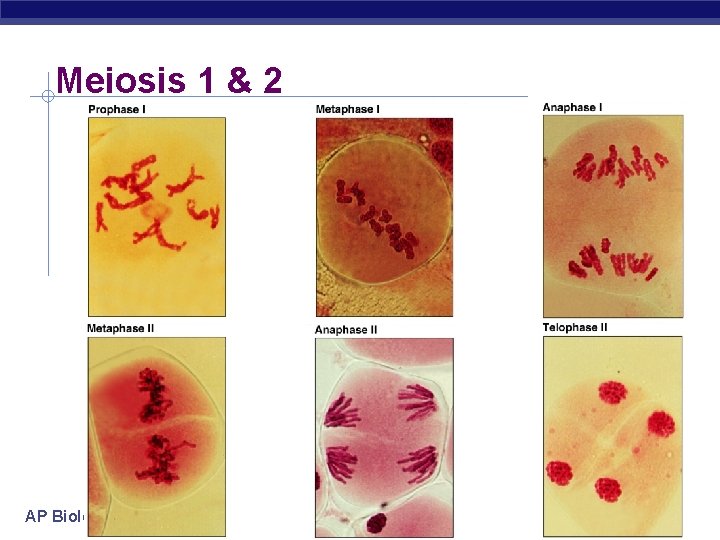
Meiosis 1 & 2 AP Biology
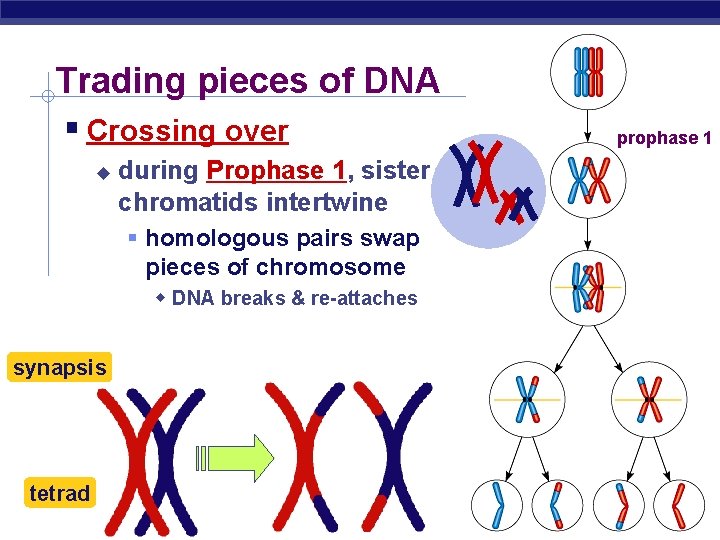
Trading pieces of DNA Crossing over during Prophase 1, sister chromatids intertwine homologous pairs swap pieces of chromosome DNA breaks & re-attaches synapsis tetrad AP Biology prophase 1
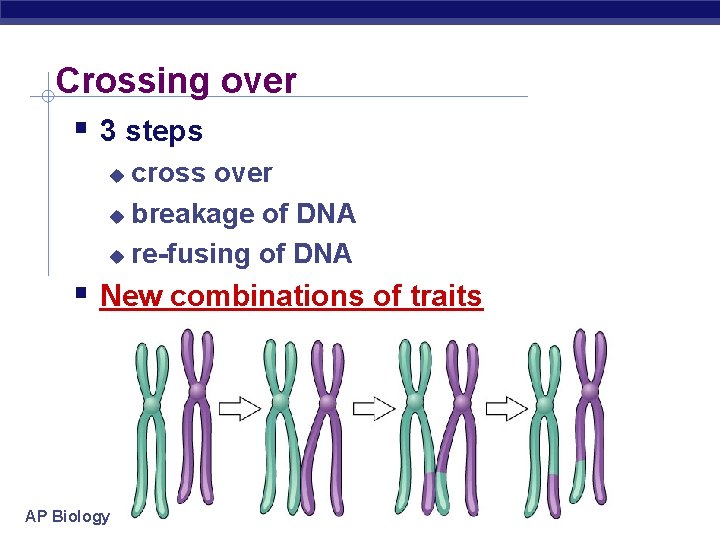
Crossing over 3 steps cross over breakage of DNA re-fusing of DNA New combinations of traits AP Biology
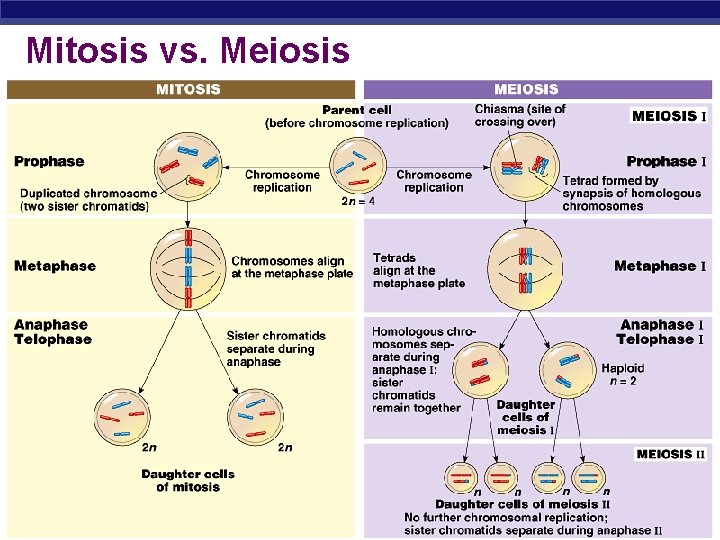
Mitosis vs. Meiosis AP Biology
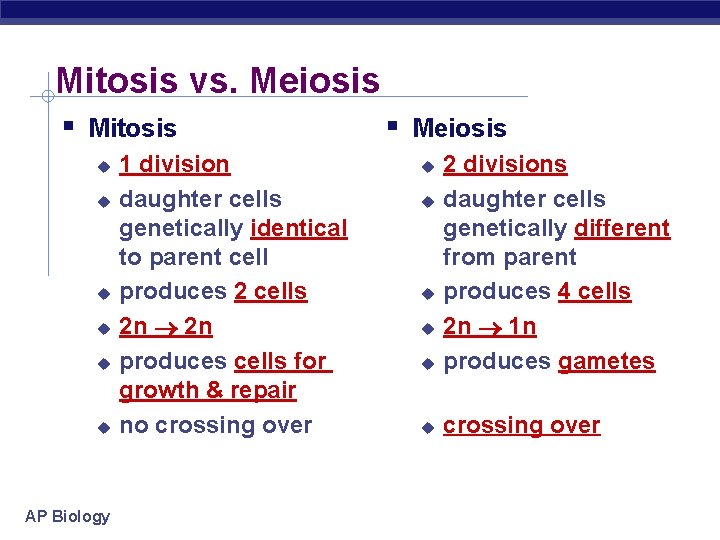
Mitosis vs. Meiosis Mitosis AP Biology 1 division daughter cells genetically identical to parent cell produces 2 cells 2 n produces cells for growth & repair no crossing over Meiosis 2 divisions daughter cells genetically different from parent produces 4 cells 2 n 1 n produces gametes crossing over
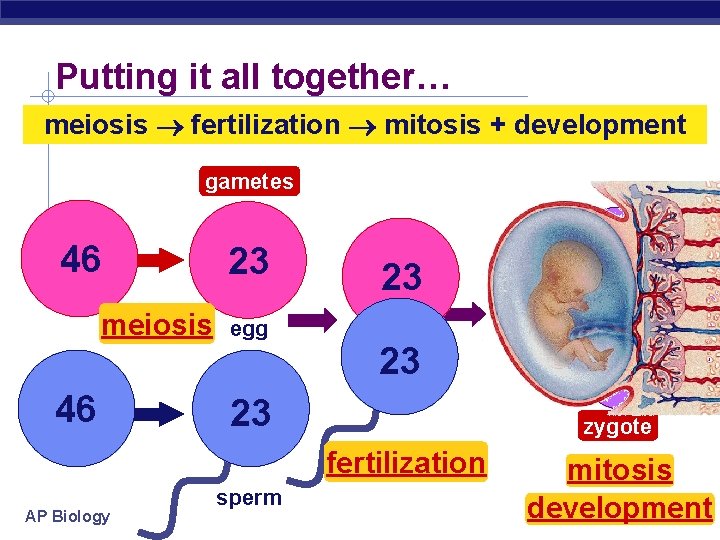
Putting it all together… meiosis fertilization mitosis + development gametes 46 meiosis 46 23 egg 23 23 23 zygote fertilization AP Biology sperm 46 46 46 mitosis development
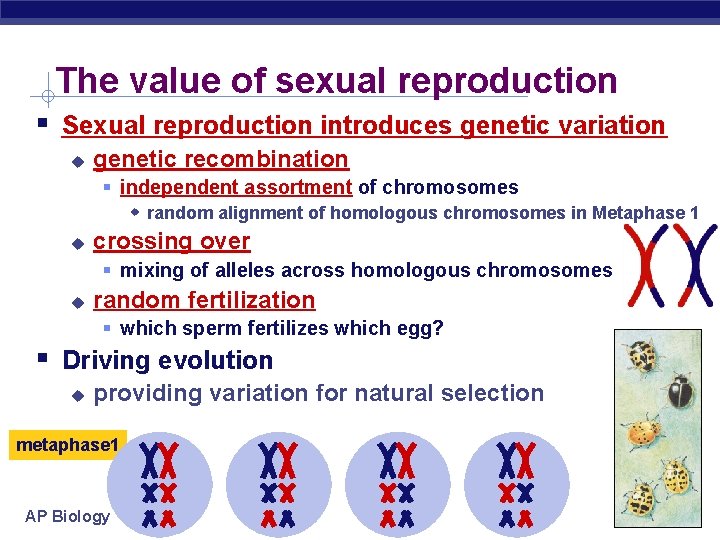
The value of sexual reproduction Sexual reproduction introduces genetic variation genetic recombination independent assortment of chromosomes random alignment of homologous chromosomes in Metaphase 1 crossing over mixing of alleles across homologous chromosomes random fertilization which sperm fertilizes which egg? Driving evolution providing variation for natural selection metaphase 1 AP Biology
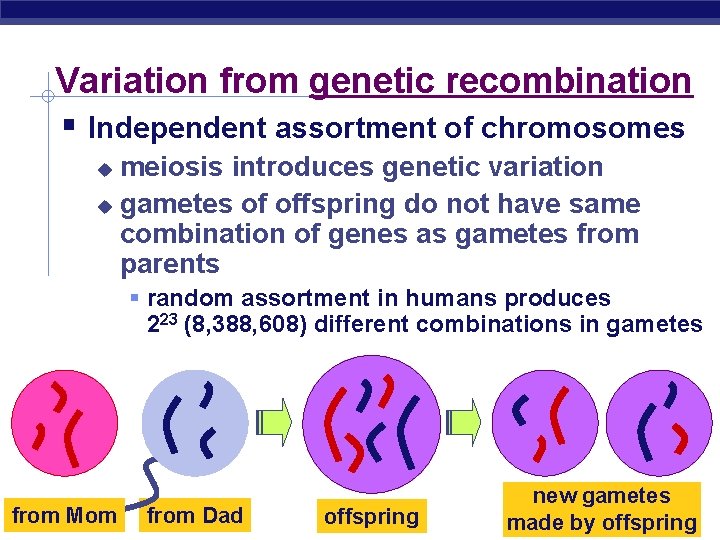
Variation from genetic recombination Independent assortment of chromosomes meiosis introduces genetic variation gametes of offspring do not have same combination of genes as gametes from parents random assortment in humans produces 223 (8, 388, 608) different combinations in gametes AP Biology from Mom from Dad offspring new gametes made by offspring

Variation from crossing over Crossing over creates completely new combinations of traits on each chromosome creates an infinite variety in gametes AP Biology
Variation from random fertilization Sperm + Egg = ? AP Biology any 2 parents will produce a zygote with over 70 trillion (223 x 223) possible diploid combinations
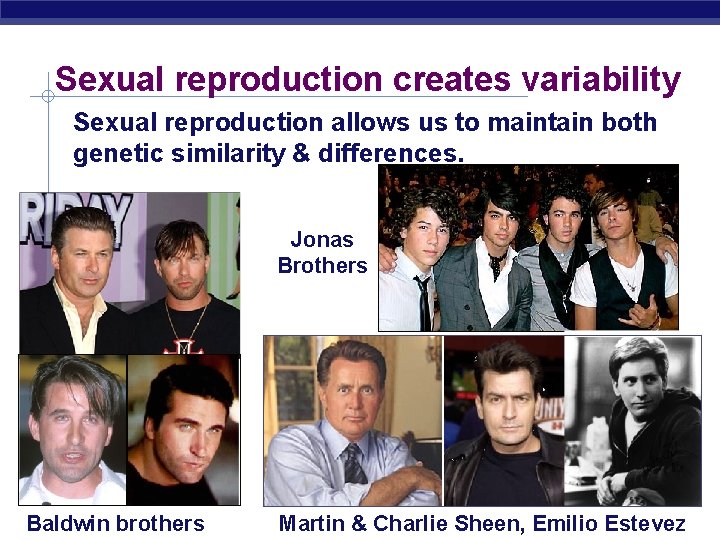
Sexual reproduction creates variability Sexual reproduction allows us to maintain both genetic similarity & differences. Jonas Brothers AP Biology Baldwin brothers Martin & Charlie Sheen, Emilio Estevez
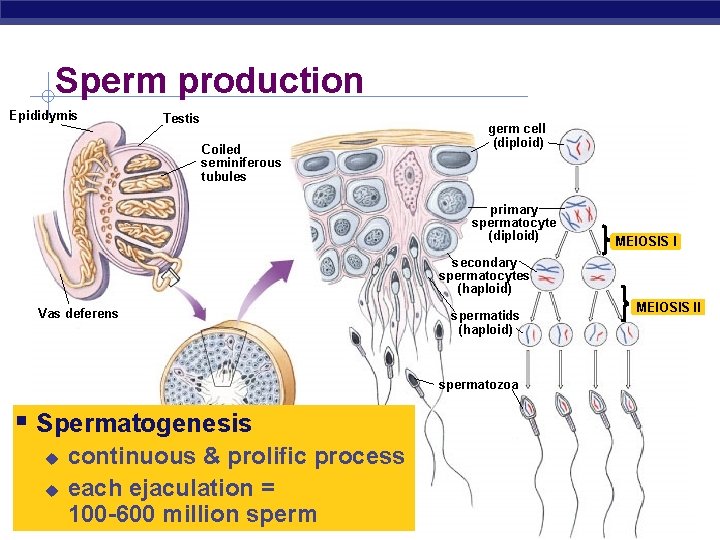
Sperm production Epididymis Testis Coiled seminiferous tubules germ cell (diploid) primary spermatocyte (diploid) MEIOSIS I secondary spermatocytes (haploid) Vas deferens spermatids (haploid) spermatozoa Spermatogenesis continuous & prolific process Cross-section of seminiferous tubule each ejaculation = 100 -600 million sperm AP Biology MEIOSIS II
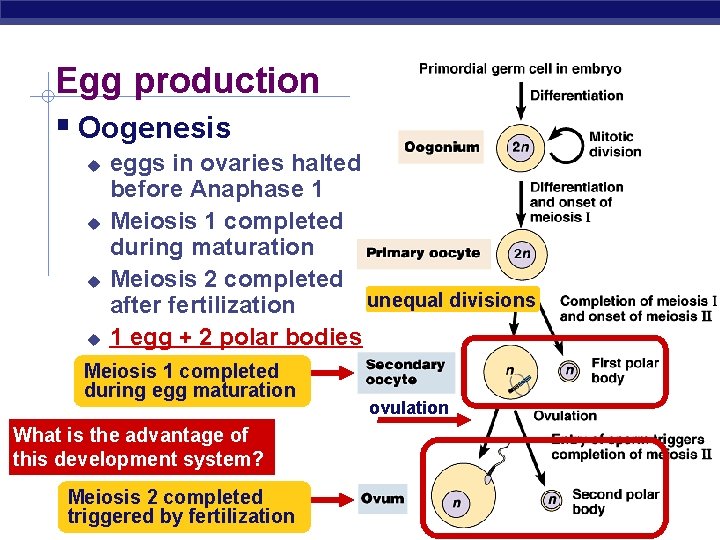
Egg production Oogenesis eggs in ovaries halted before Anaphase 1 Meiosis 1 completed during maturation Meiosis 2 completed unequal divisions after fertilization 1 egg + 2 polar bodies Meiosis 1 completed during egg maturation What is the advantage of this development system? Meiosis 2 completed AP Biology triggered by fertilization ovulation
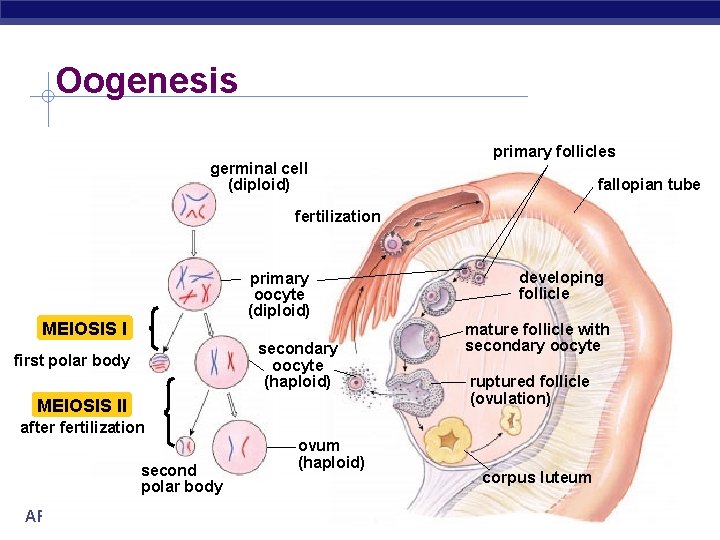
Oogenesis germinal cell (diploid) primary follicles fallopian tube fertilization primary oocyte (diploid) MEIOSIS I secondary oocyte (haploid) first polar body MEIOSIS II developing follicle mature follicle with secondary oocyte ruptured follicle (ovulation) after fertilization second polar body AP Biology ovum (haploid) corpus luteum
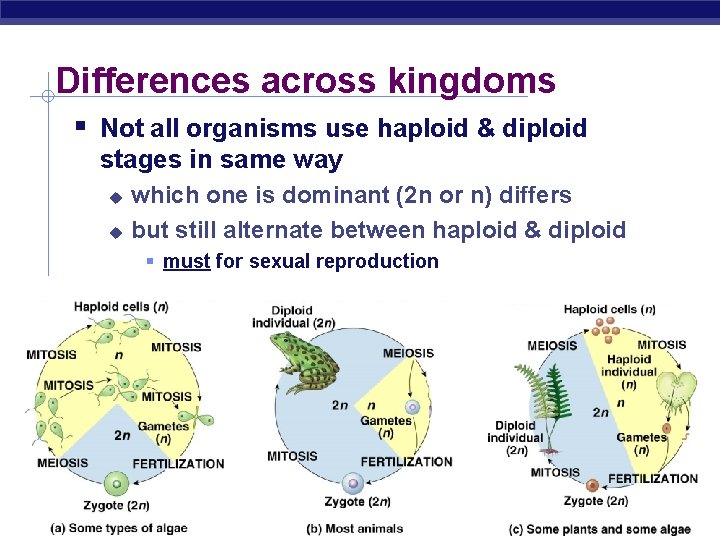
Differences across kingdoms Not all organisms use haploid & diploid stages in same way which one is dominant (2 n or n) differs but still alternate between haploid & diploid must for sexual reproduction AP Biology
AP Biology
AP Biology
- Slides: 34