
Chapter 13 Meiosis Sexual Reproduction AP Biology 2005
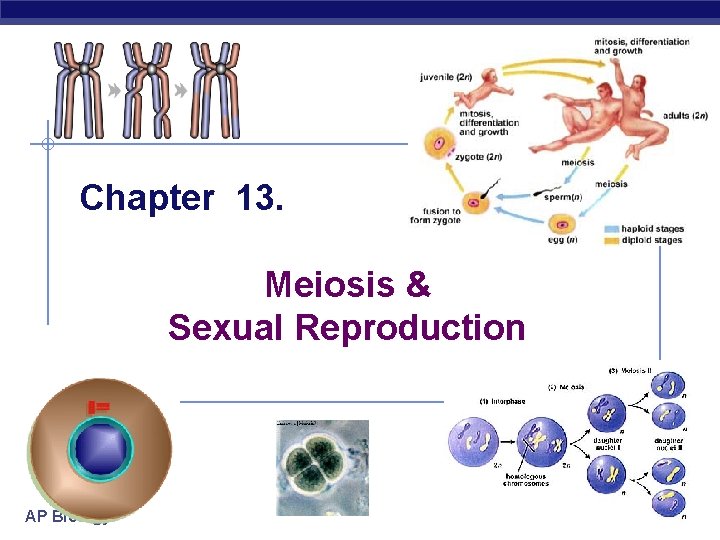
Chapter 13. Meiosis & Sexual Reproduction AP Biology 2005 -2006
Cell division / Asexual reproduction § Mitosis u produce cells with same information § identical daughter cells u exact copies § clones u same amount of DNA § same number of chromosomes § same genetic information AP Biology Aaaargh! I’m seeing double! 2005 -2006
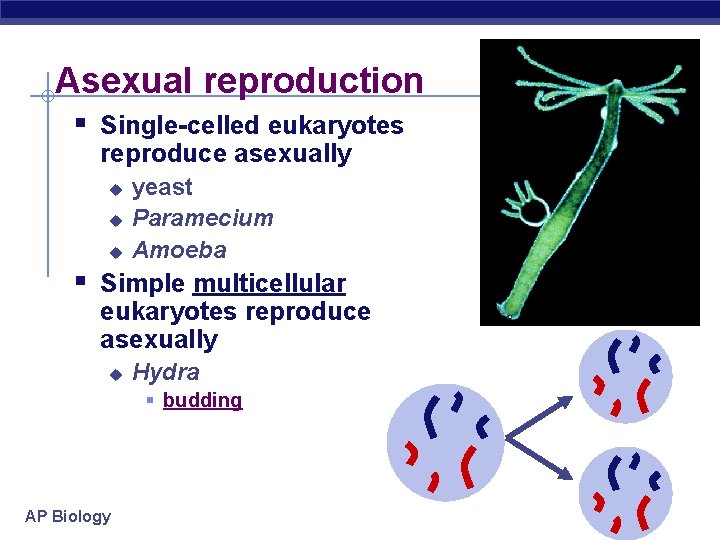
Asexual reproduction § Single-celled eukaryotes reproduce asexually u u u yeast Paramecium Amoeba § Simple multicellular eukaryotes reproduce asexually u Hydra § budding AP Biology 2005 -2006
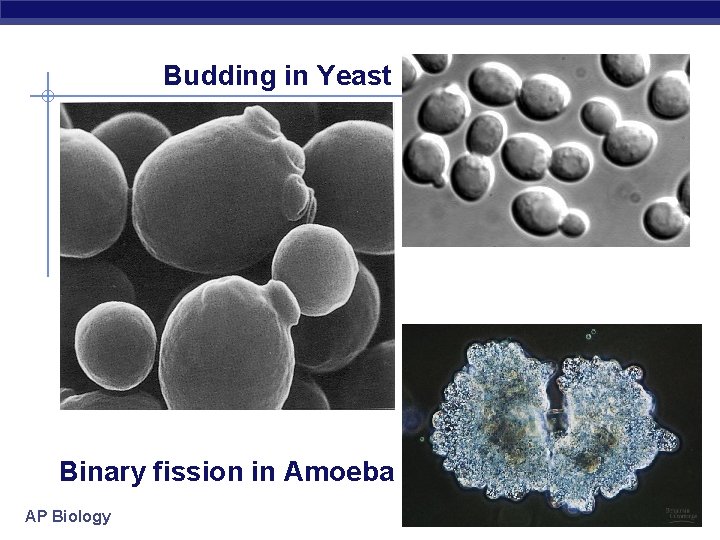
Budding in Yeast Binary fission in Amoeba AP Biology 2005 -2006
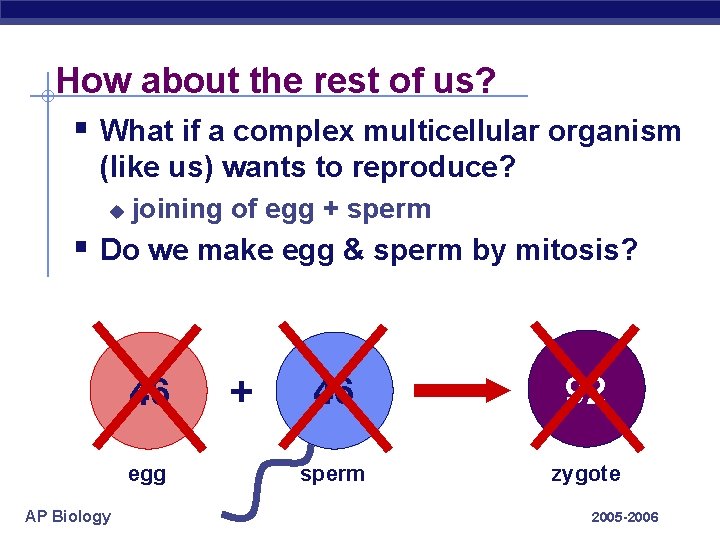
How about the rest of us? § What if a complex multicellular organism (like us) wants to reproduce? u joining of egg + sperm § Do we make egg & sperm by mitosis? 46 egg AP Biology + 46 92 sperm zygote 2005 -2006
Sets of Chromosomes in Human Cells • Human somatic cells (any cell other than a • • • gamete) have 23 pairs of chromosomes A karyotype is an ordered display of the pairs of chromosomes from a cell The two chromosomes in each pair are called homologous chromosomes, or homologs Chromosomes in a homologous pair are the same length and carry genes controlling the same inherited characters AP Biology Copyright © 2008 Pearson Education Inc. , publishing as Pearson Benjamin Cummings

Human female karyotype AP Biology 2005 -2006
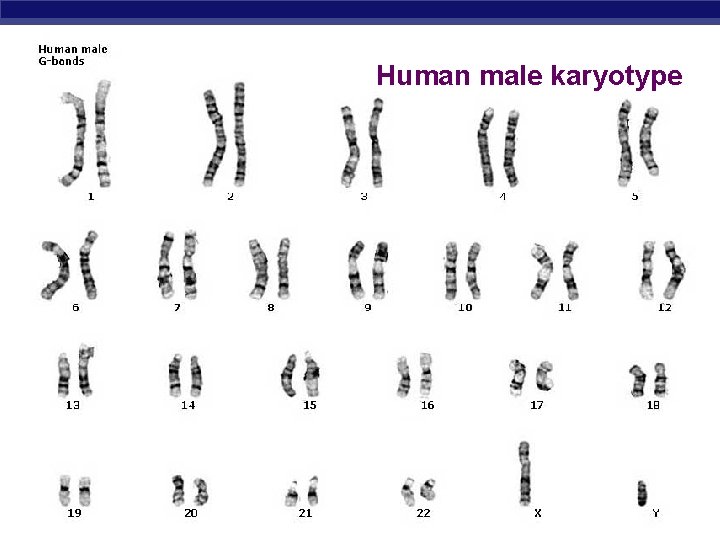
Human male karyotype AP Biology 2005 -2006
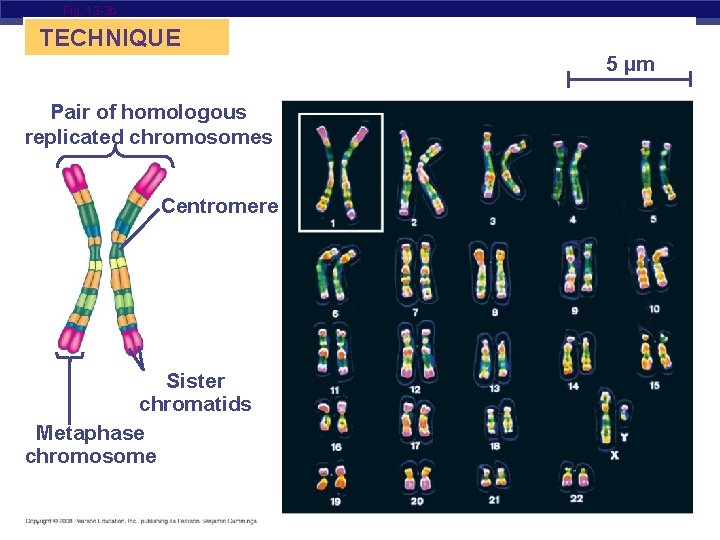
Fig. 13 -3 b TECHNIQUE 5 µm Pair of homologous replicated chromosomes Centromere Sister chromatids Metaphase chromosome AP Biology
• Each pair of homologous chromosomes • • • includes one chromosome from each parent The 46 chromosomes in a human somatic cell are two sets of 23: one from the mother and one from the father A diploid cell (2 n) has two sets of chromosomes For humans, the diploid number is 46 (2 n = 46) AP Biology Copyright © 2008 Pearson Education Inc. , publishing as Pearson Benjamin Cummings
• A gamete (sperm or egg) contains a single • • set of chromosomes, and is haploid (n) For humans, the haploid number is 23 (n = 23) Each set of 23 consists of 22 autosomes and a single sex chromosome In an unfertilized egg (ovum), the sex chromosome is X In a sperm cell, the sex chromosome may be either X or Y AP Biology Copyright © 2008 Pearson Education Inc. , publishing as Pearson Benjamin Cummings
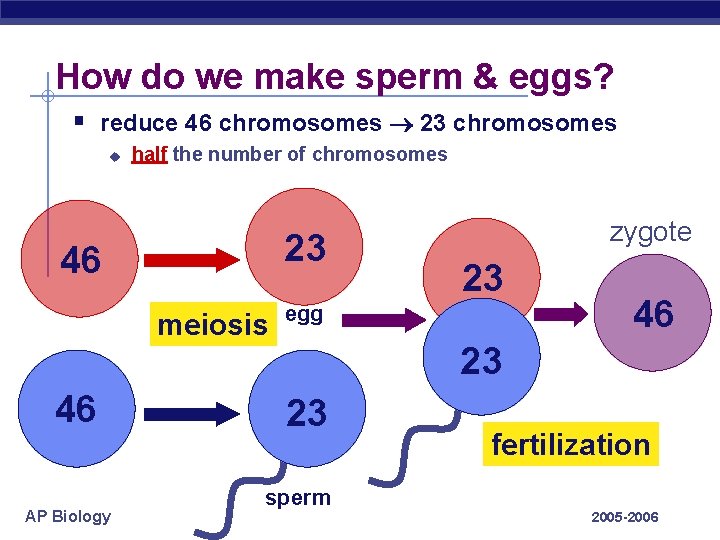
How do we make sperm & eggs? § reduce 46 chromosomes 23 chromosomes u half the number of chromosomes 23 46 meiosis 46 AP Biology zygote 23 egg 46 23 23 fertilization sperm 2005 -2006
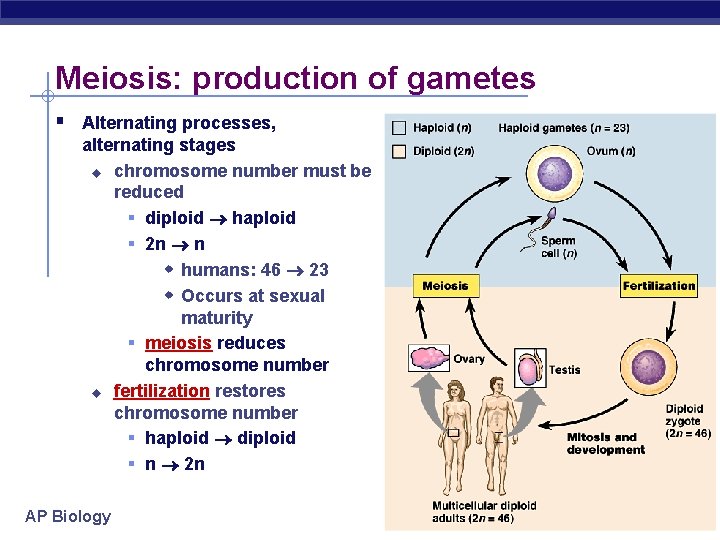
Meiosis: production of gametes § Alternating processes, alternating stages u chromosome number must be reduced § diploid haploid § 2 n n w humans: 46 23 w Occurs at sexual maturity § meiosis reduces chromosome number u fertilization restores chromosome number § haploid diploid § n 2 n AP Biology 2005 -2006
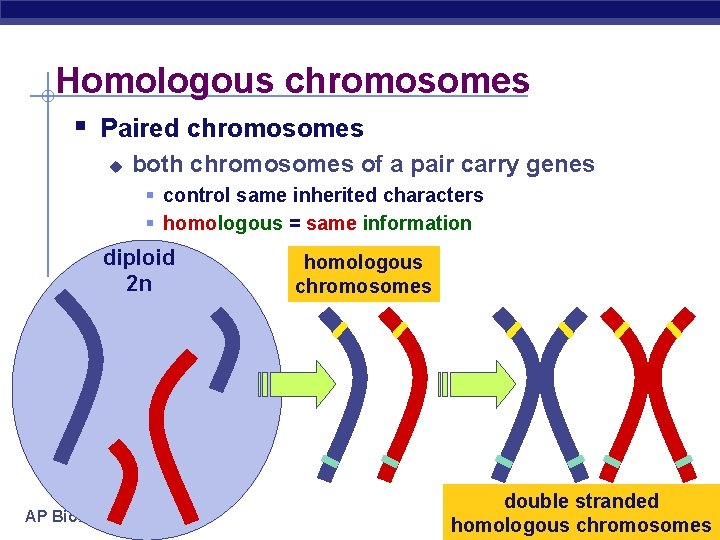
Homologous chromosomes § Paired chromosomes u both chromosomes of a pair carry genes § control same inherited characters § homologous = same information diploid 2 n AP Biology homologous chromosomes double stranded 2005 -2006 homologous chromosomes

Sexual reproduction: Fertilization from Mom AP Biology - 1 copy - haploid - 1 n from Dad - 2 copies - diploid - 2 n 2005 -2006
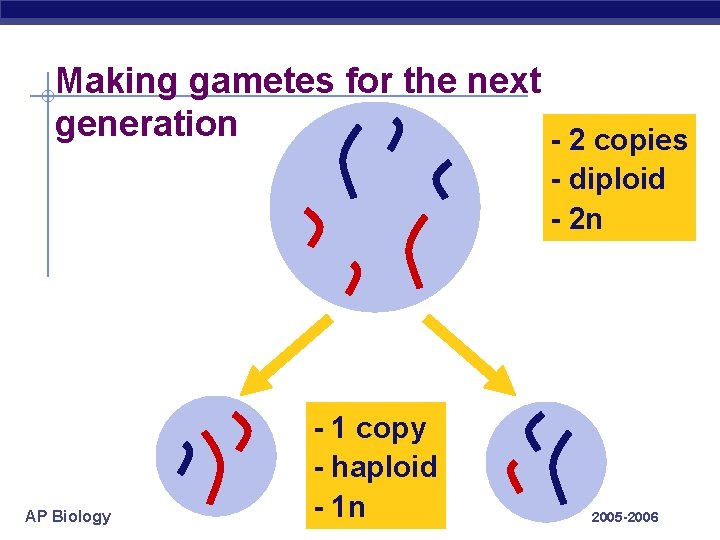
Making gametes for the next generation - 2 copies - diploid - 2 n AP Biology - 1 copy - haploid - 1 n 2005 -2006
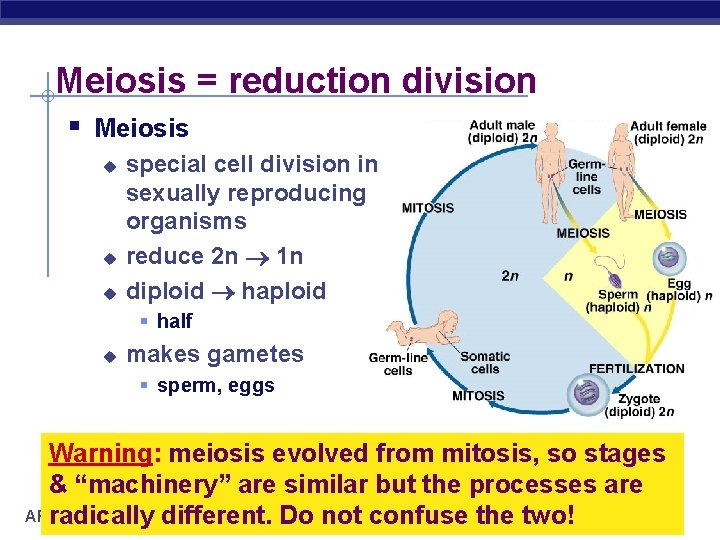
Meiosis = reduction division § Meiosis u u u special cell division in sexually reproducing organisms reduce 2 n 1 n diploid haploid § half u makes gametes § sperm, eggs Warning: meiosis evolved from mitosis, so stages & “machinery” are similar but the processes are AP radically Biology different. Do not confuse the two! 2005 -2006
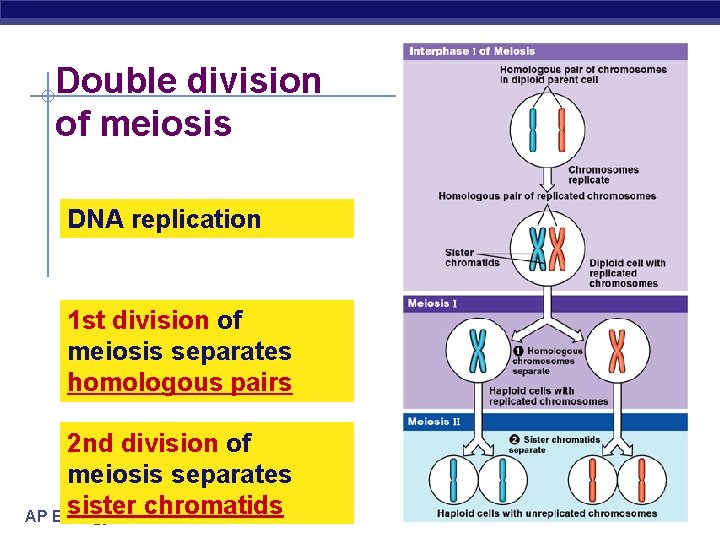
Double division of meiosis DNA replication 1 st division of meiosis separates homologous pairs 2 nd division of meiosis separates sister chromatids AP Biology 2005 -2006
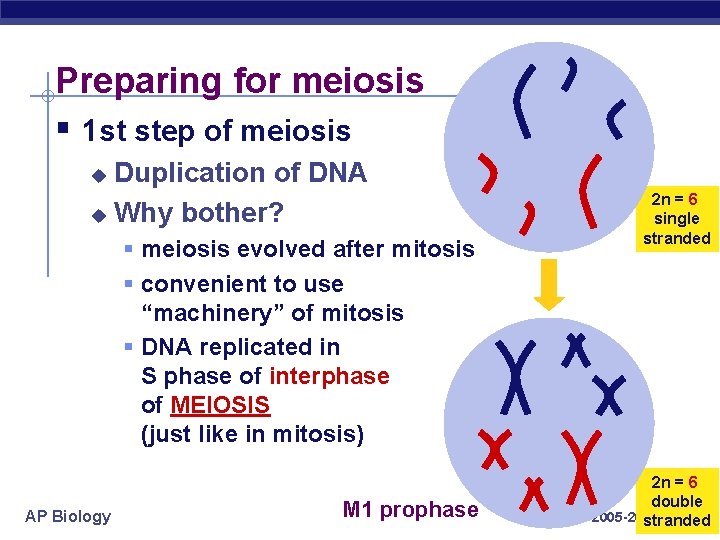
Preparing for meiosis § 1 st step of meiosis Duplication of DNA u Why bother? u § meiosis evolved after mitosis § convenient to use “machinery” of mitosis § DNA replicated in S phase of interphase of MEIOSIS (just like in mitosis) AP Biology M 1 prophase 2 n = 6 single stranded 2 n = 6 double 2005 -2006 stranded

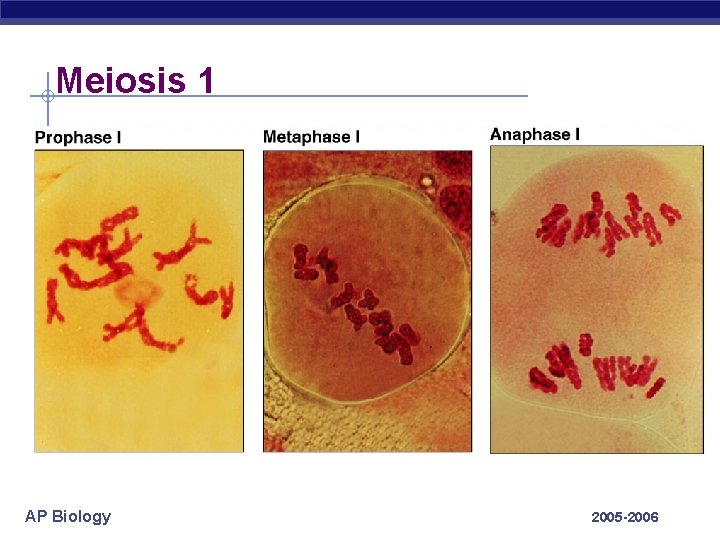
Preparing for meiosis § 1 st division of meiosis separates homologous pairs synapsis tetrad AP Biology 2 n = 4 single stranded prophase 1 2 n = 4 double stranded metaphase 1 2 n = 4 double stranded telophase 1 1 n = 2 double stranded 2005 -2006
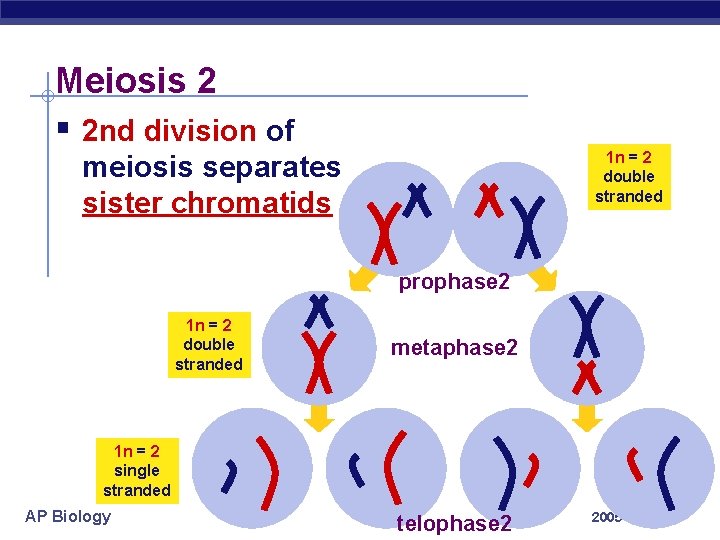
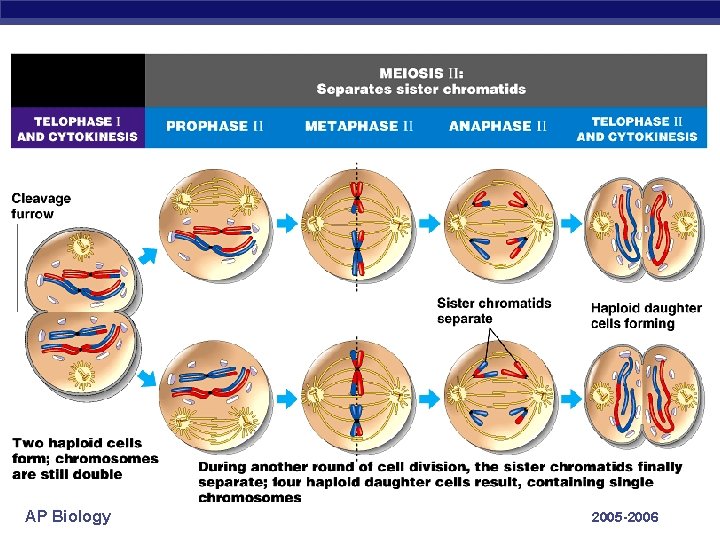
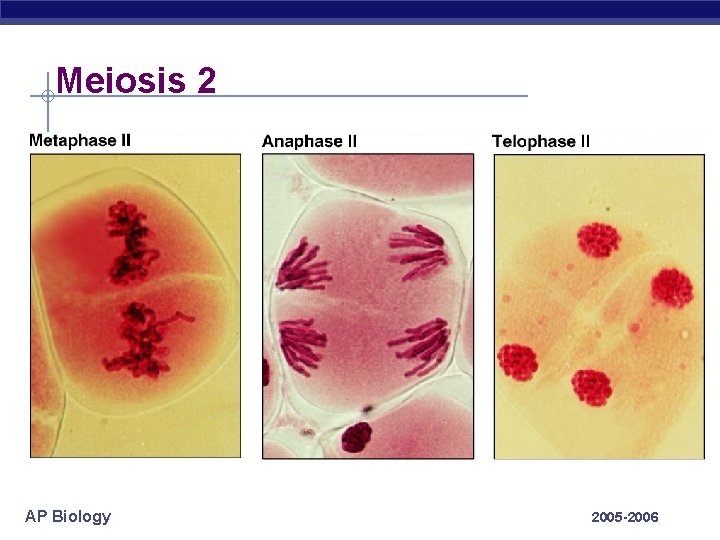
Meiosis 2 § 2 nd division of 1 n = 2 double stranded meiosis separates sister chromatids prophase 2 1 n = 2 double stranded metaphase 2 1 n = 2 single stranded AP Biology telophase 2 2005 -2006
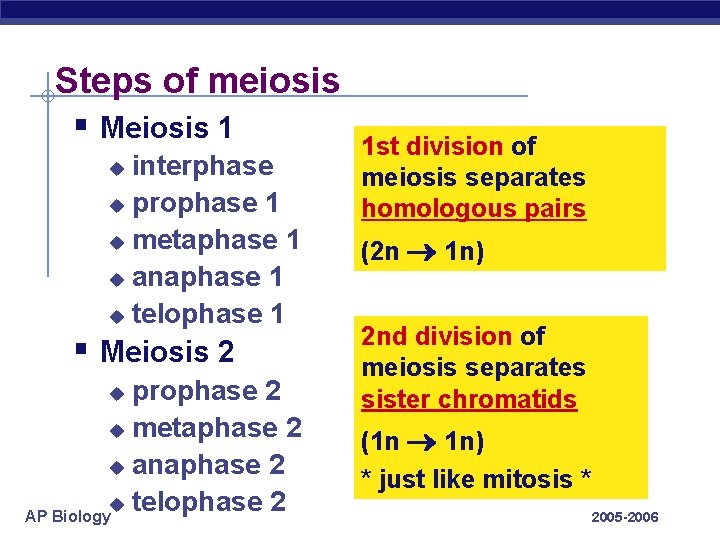
Steps of meiosis § Meiosis 1 interphase u prophase 1 u metaphase 1 u anaphase 1 u telophase 1 u § Meiosis 2 prophase 2 u metaphase 2 u anaphase 2 u telophase 2 AP Biology u 1 st division of meiosis separates homologous pairs (2 n 1 n) 2 nd division of meiosis separates sister chromatids (1 n 1 n) * just like mitosis * 2005 -2006
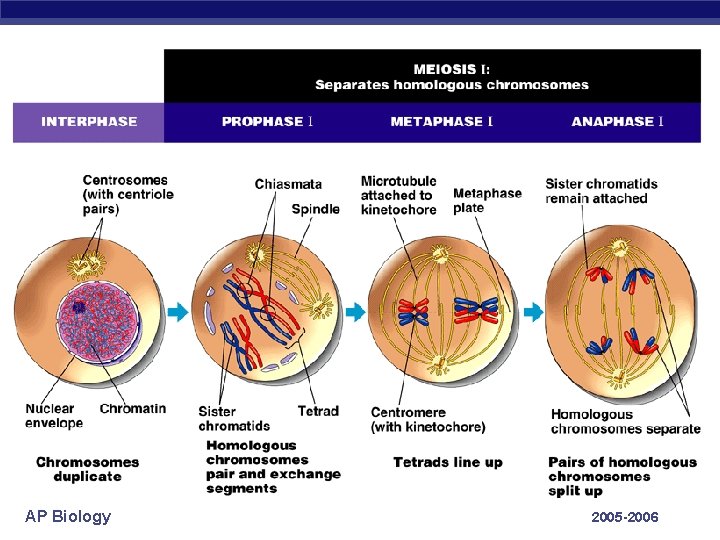
AP Biology 2005 -2006
AP Biology 2005 -2006
Meiosis 1 AP Biology 2005 -2006
Meiosis 2 AP Biology 2005 -2006
Mitosis vs. Meiosis AP Biology 2005 -2006
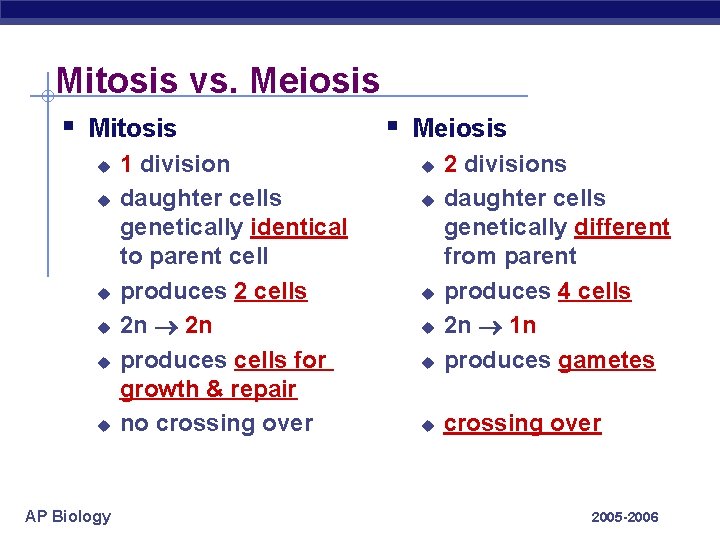
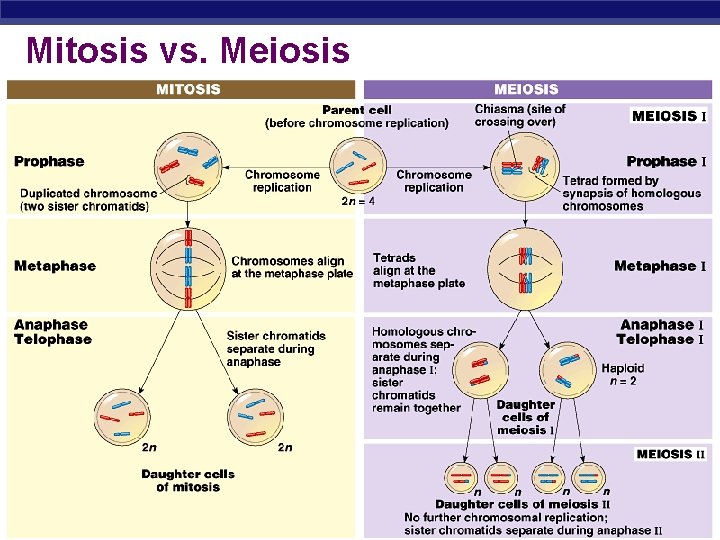
Mitosis vs. Meiosis § Mitosis u u u AP Biology 1 division daughter cells genetically identical to parent cell produces 2 cells 2 n produces cells for growth & repair no crossing over § Meiosis u 2 divisions daughter cells genetically different from parent produces 4 cells 2 n 1 n produces gametes u crossing over u u 2005 -2006
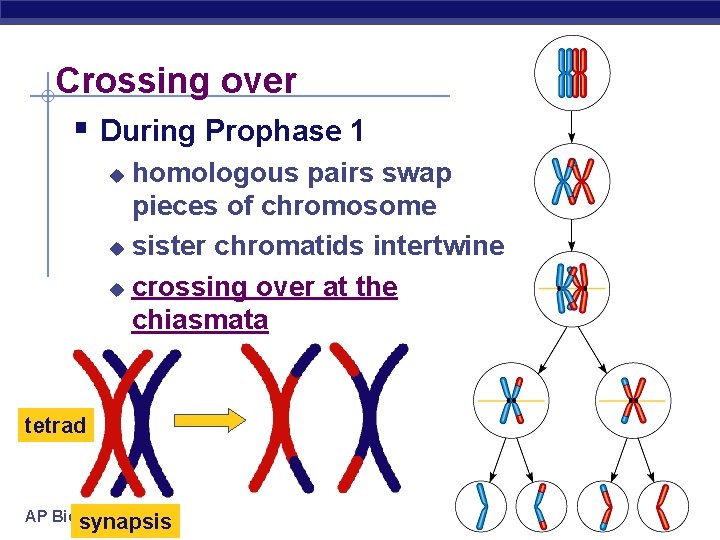
Crossing over § During Prophase 1 homologous pairs swap pieces of chromosome u sister chromatids intertwine u crossing over at the chiasmata u tetrad AP Biology synapsis 2005 -2006
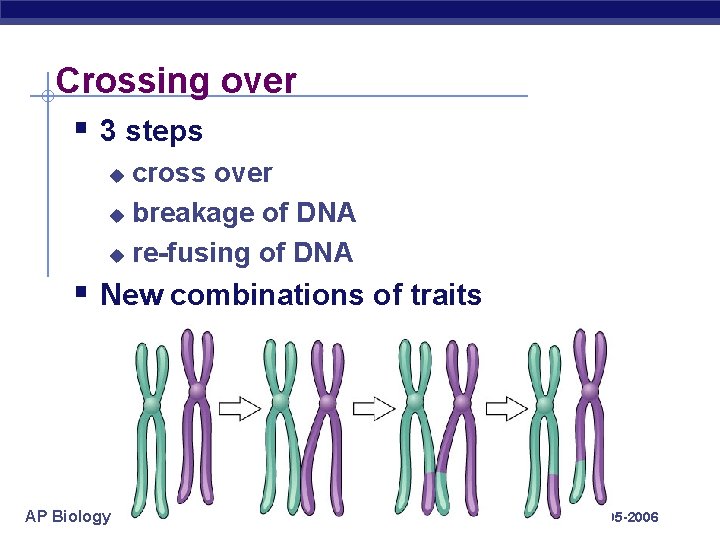
Crossing over § 3 steps cross over u breakage of DNA u re-fusing of DNA u § New combinations of traits AP Biology 2005 -2006
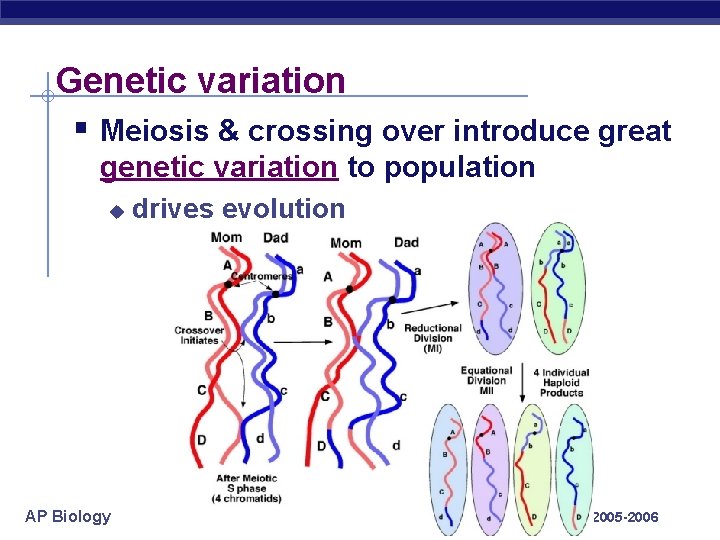
Genetic variation § Meiosis & crossing over introduce great genetic variation to population u AP Biology drives evolution 2005 -2006
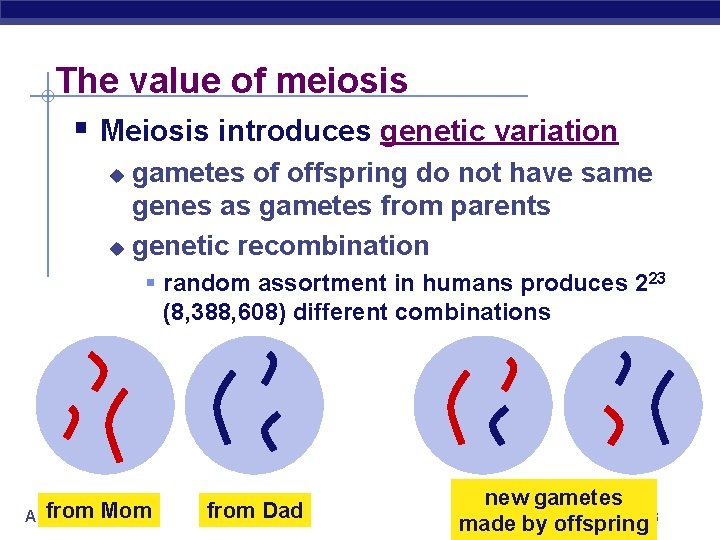
The value of meiosis § Meiosis introduces genetic variation gametes of offspring do not have same genes as gametes from parents u genetic recombination u § random assortment in humans produces 223 (8, 388, 608) different combinations Mom APfrom Biology from Dad new gametes 2005 -2006 made by offspring
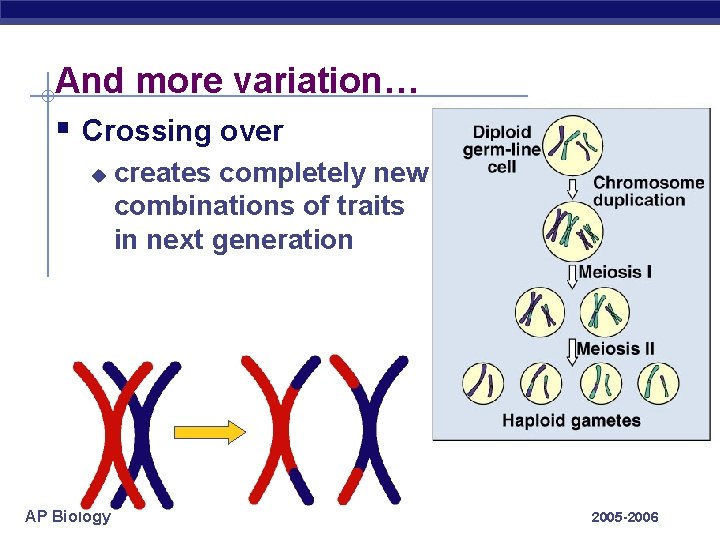
And more variation… § Crossing over u AP Biology creates completely new combinations of traits in next generation 2005 -2006

Random fertilization § Any 2 parents will produce a zygote with over 70 trillion (223 x 223) diploid combinations AP Biology 2005 -2006
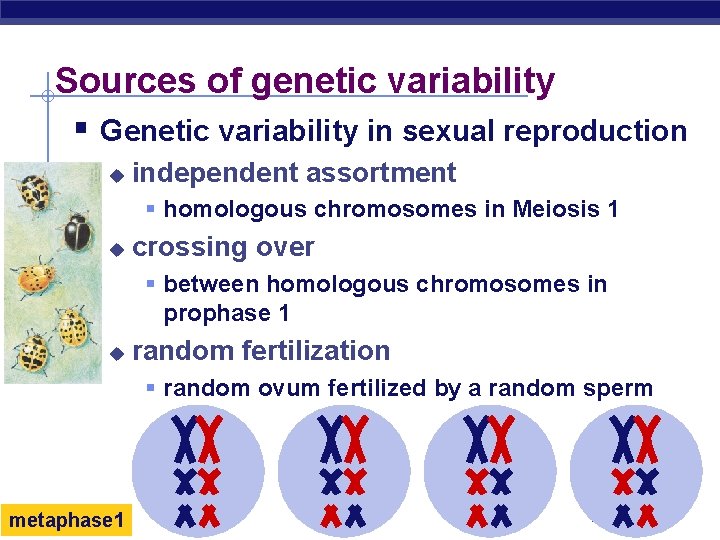
Sources of genetic variability § Genetic variability in sexual reproduction u independent assortment § homologous chromosomes in Meiosis 1 u crossing over § between homologous chromosomes in prophase 1 u random fertilization § random ovum fertilized by a random sperm AP Biology metaphase 1 2005 -2006
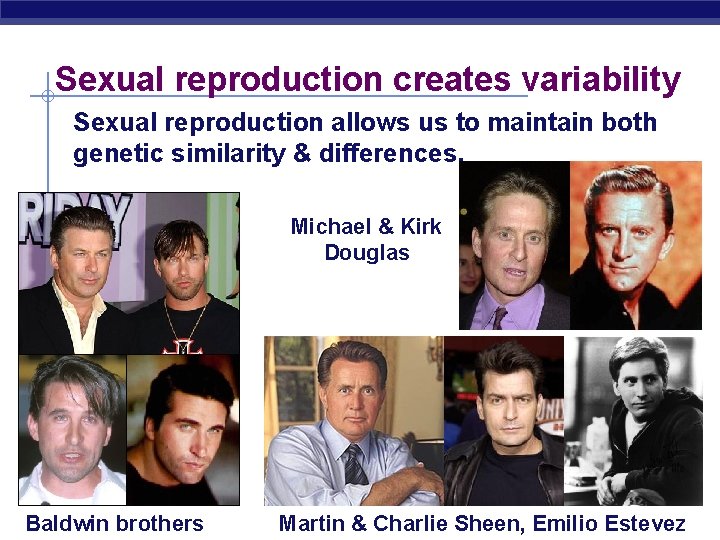
Sexual reproduction creates variability Sexual reproduction allows us to maintain both genetic similarity & differences. Michael & Kirk Douglas AP Biology Baldwin brothers Martin & Charlie Sheen, Emilio 2005 -2006 Estevez
- Slides: 36