
Chapter 13 Managing Change and Innovation Learning Objectives
Chapter 13: Managing Change and Innovation
Learning Objectives • Forces for change • “Calm waters” versus “white-water rapids” metaphors • Change agents • Types of change • Why people resist change • Techniques for reducing resistance to change • Innovation versus creativity • Stimulating and nurturing innovation
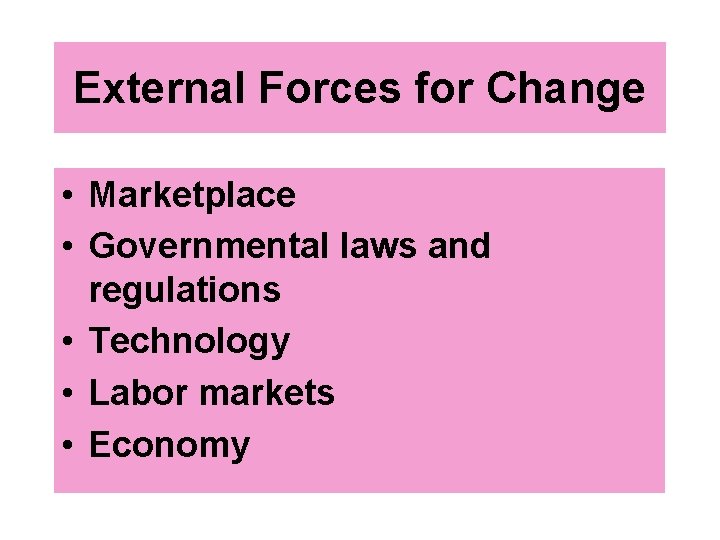
External Forces for Change • Marketplace • Governmental laws and regulations • Technology • Labor markets • Economy

What Can Change? Structure People Technology
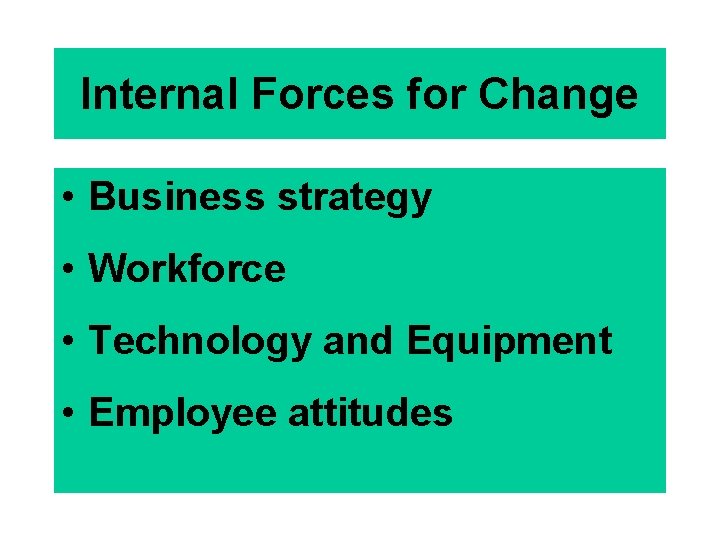
Internal Forces for Change • Business strategy • Workforce • Technology and Equipment • Employee attitudes

Change Agents • What are “change agents”? • Who can be a change agent? • External vs. internal change agents • Evolution of change agents
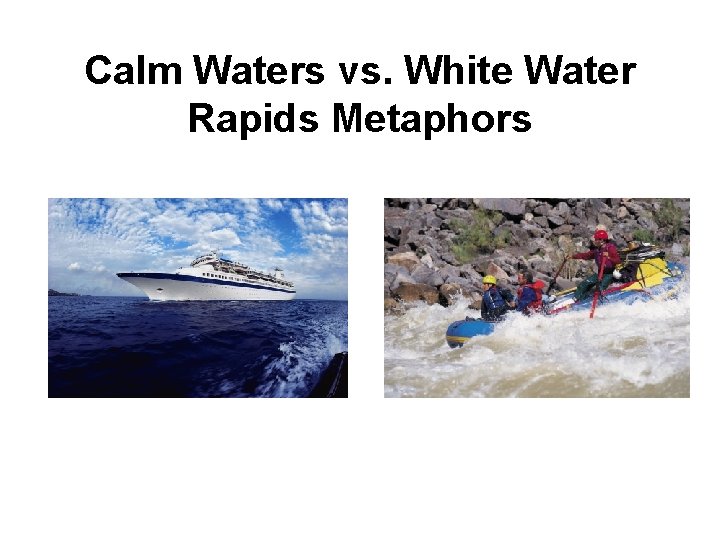
Calm Waters vs. White Water Rapids Metaphors
The Change Process • The Calm Waters Metaphor – Change viewed as a break in the organization’s equilibrium state • Unfreezing the status quo • Changing to a new state • Refreezing to make the change permanent • White-Water Rapids Metaphor – No stability and predictability – Organizations must constantly change to survive
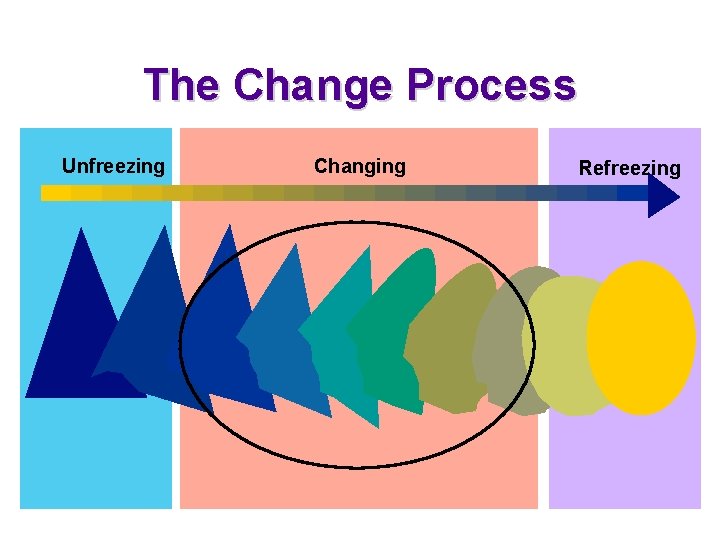
The Change Process Unfreezing Changing Refreezing
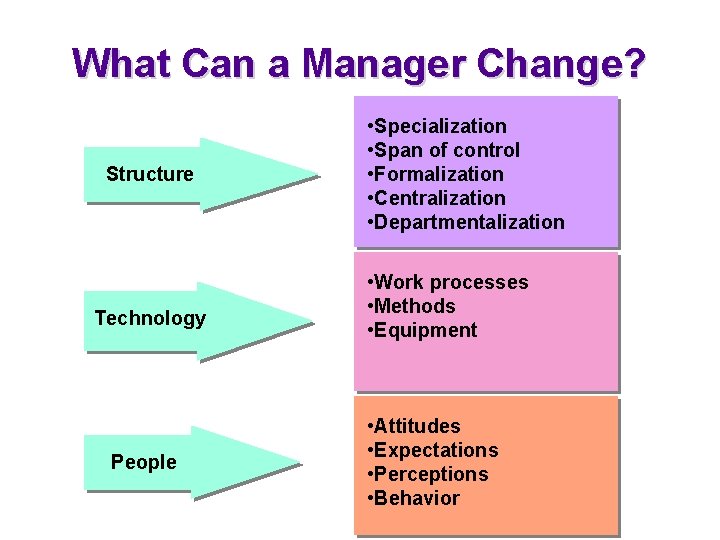
What Can a Manager Change? Structure Technology People • Specialization • Span of control • Formalization • Centralization • Departmentalization • Work processes • Methods • Equipment • Attitudes • Expectations • Perceptions • Behavior
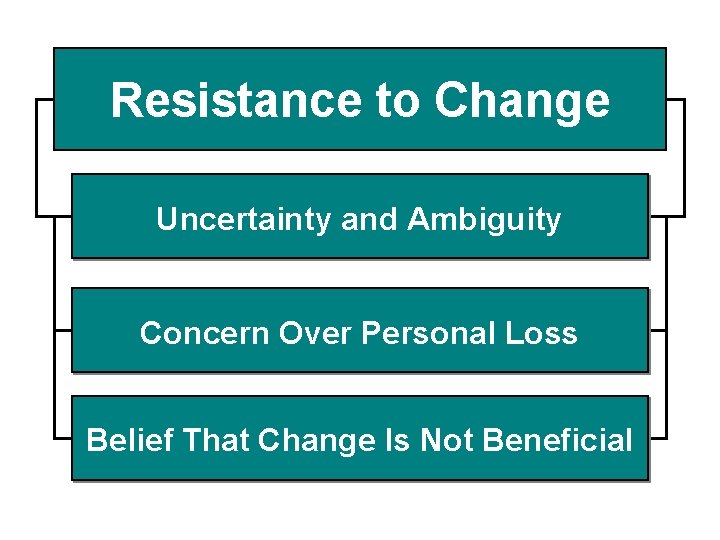
Resistance to Change Uncertainty and Ambiguity Concern Over Personal Loss Belief That Change Is Not Beneficial
Fear of Change
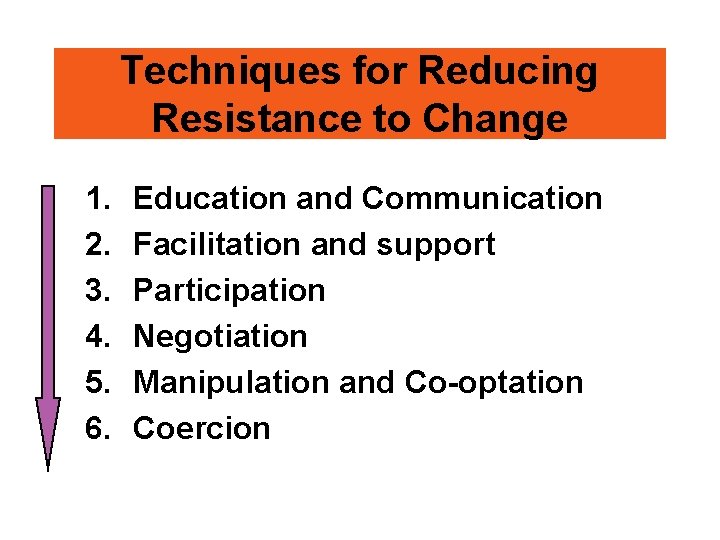
Techniques for Reducing Resistance to Change 1. 2. 3. 4. 5. 6. Education and Communication Facilitation and support Participation Negotiation Manipulation and Co-optation Coercion
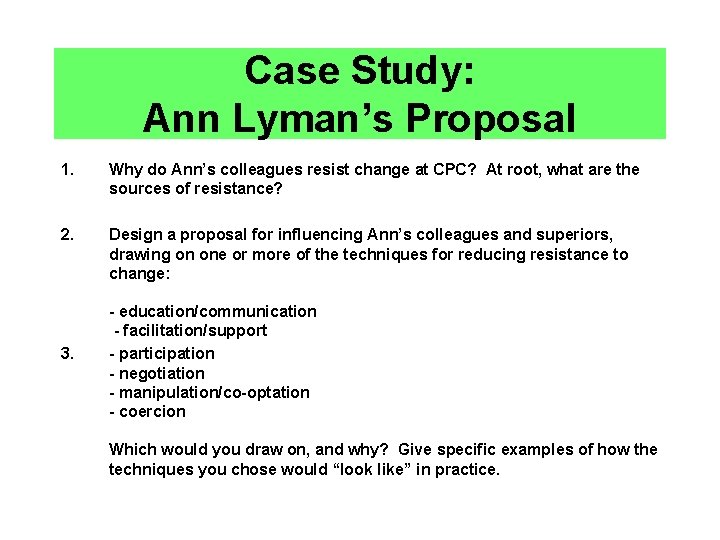
Case Study: Ann Lyman’s Proposal 1. Why do Ann’s colleagues resist change at CPC? At root, what are the sources of resistance? 2. Design a proposal for influencing Ann’s colleagues and superiors, drawing on one or more of the techniques for reducing resistance to change: 3. - education/communication - facilitation/support - participation - negotiation - manipulation/co-optation - coercion Which would you draw on, and why? Give specific examples of how the techniques you chose would “look like” in practice.
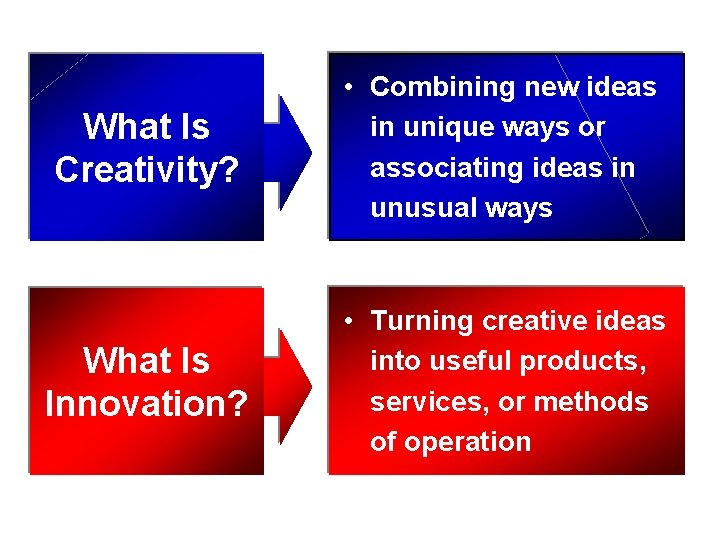
What Is Creativity? • Combining new ideas in unique ways or associating ideas in unusual ways What Is Innovation? • Turning creative ideas into useful products, services, or methods of operation

Three Sets of Variables That Stimulate Innovation Structural Cultural Human Resources
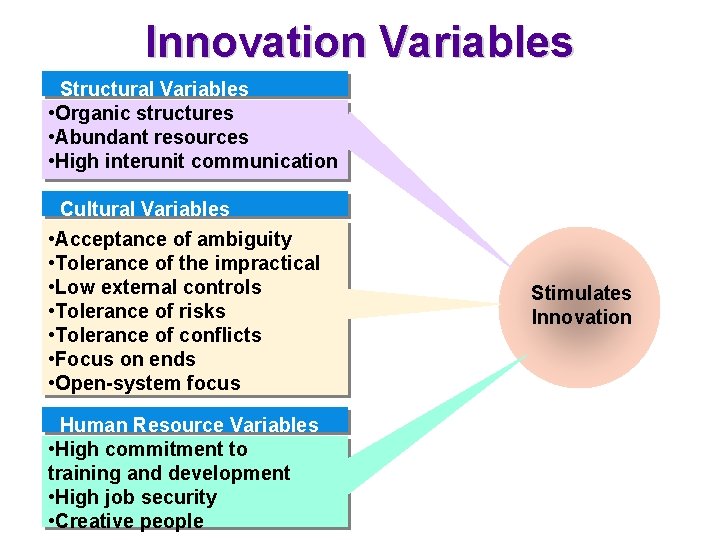
Innovation Variables Structural Variables • Organic structures • Abundant resources • High interunit communication Cultural Variables • Acceptance of ambiguity • Tolerance of the impractical • Low external controls • Tolerance of risks • Tolerance of conflicts • Focus on ends • Open-system focus Human Resource Variables • High commitment to training and development • High job security • Creative people Stimulates Innovation
IDEO Video • How does IDEO stimulate creativity and innovation? Look for aspects of: – Culture – Structure – Human resources – ANYTHING ELSE!!
- Slides: 18