
Chapter 13 Lipids Lipids Lipids a heterogeneous class





- Slides: 38
Chapter 13 Lipids
Lipids • Lipids: a heterogeneous class of naturally occurring organic compounds classified together on the basis of common solubility properties • insoluble in water, but soluble in organic solvents including diethyl ether, dichloromethane, and acetone • Lipids include • fatty acids, triacylglycerols, sphingolipids, phosphoacylglycerols, and glycolipids • lipid-soluble vitamins • prostaglandins, leukotrienes, and thromboxanes • cholesterol, steroid hormones, and bile acids
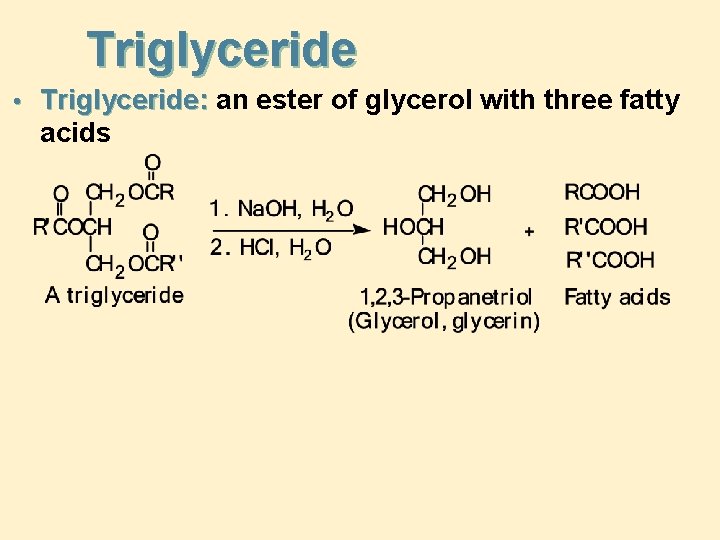
Triglyceride • Triglyceride: an ester of glycerol with three fatty acids
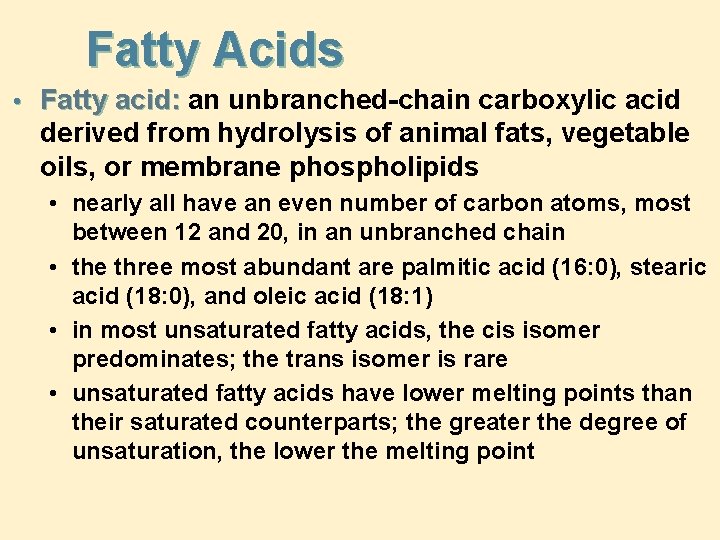
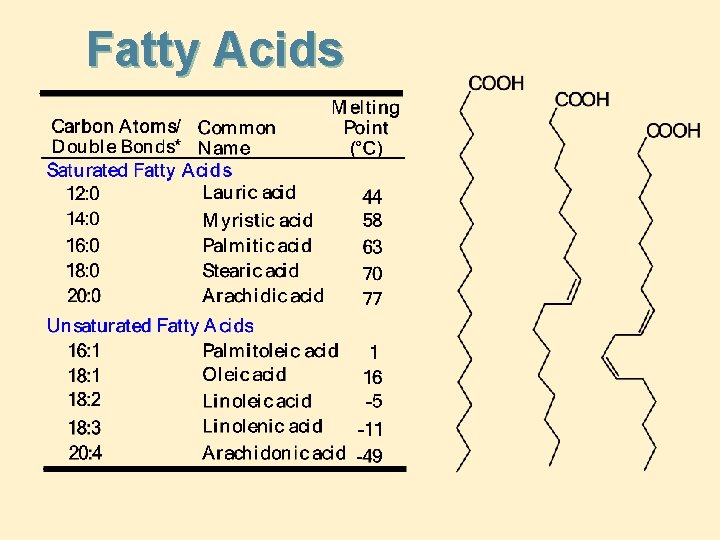
Fatty Acids • Fatty acid: an unbranched-chain carboxylic acid derived from hydrolysis of animal fats, vegetable oils, or membrane phospholipids • nearly all have an even number of carbon atoms, most between 12 and 20, in an unbranched chain • the three most abundant are palmitic acid (16: 0), stearic acid (18: 0), and oleic acid (18: 1) • in most unsaturated fatty acids, the cis isomer predominates; the trans isomer is rare • unsaturated fatty acids have lower melting points than their saturated counterparts; the greater the degree of unsaturation, the lower the melting point
Fatty Acids
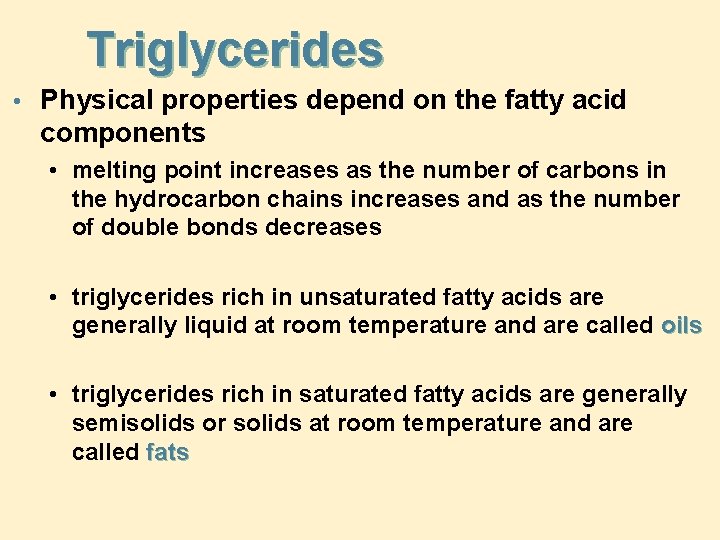
Triglycerides • Physical properties depend on the fatty acid components • melting point increases as the number of carbons in the hydrocarbon chains increases and as the number of double bonds decreases • triglycerides rich in unsaturated fatty acids are generally liquid at room temperature and are called oils • triglycerides rich in saturated fatty acids are generally semisolids or solids at room temperature and are called fats
Triglycerides • The lower melting points of triglycerides rich in unsaturated fatty acids are related to differences in their three-dimensional shape • hydrocarbon chains of saturated fatty acids can lie parallel with strong London dispersion forces between their chains; they pack into well-ordered, compact crystalline forms and melt above room temperature • because of the cis configuration of the double bonds in unsaturated fatty acids, their hydrocarbon chains have a less ordered structure and London dispersion forces between them are weaker; these triglycerides have melting points below room temperature
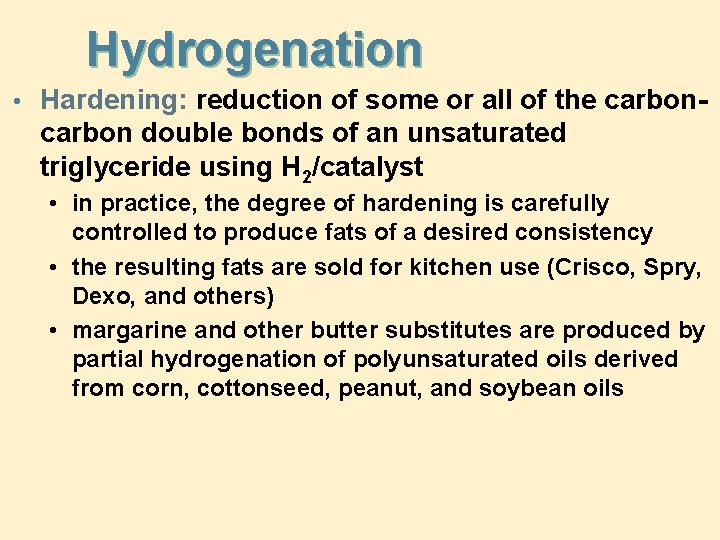
Hydrogenation • Hardening: reduction of some or all of the carbon- carbon double bonds of an unsaturated triglyceride using H 2/catalyst • in practice, the degree of hardening is carefully controlled to produce fats of a desired consistency • the resulting fats are sold for kitchen use (Crisco, Spry, Dexo, and others) • margarine and other butter substitutes are produced by partial hydrogenation of polyunsaturated oils derived from corn, cottonseed, peanut, and soybean oils
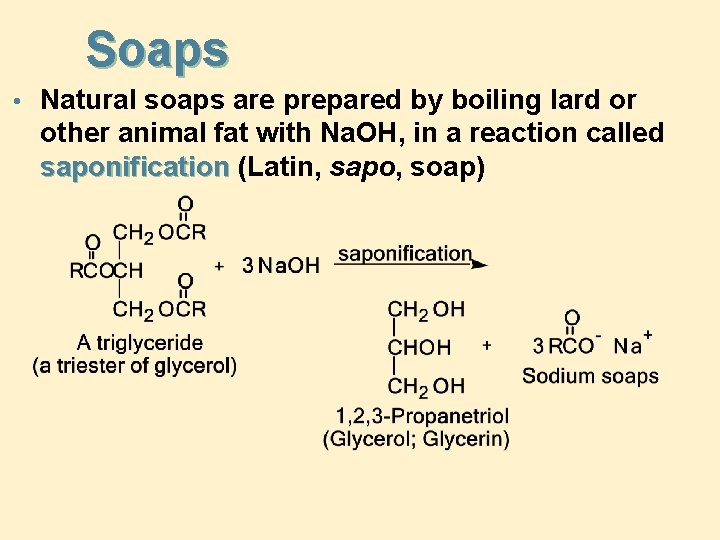
Soaps • Natural soaps are prepared by boiling lard or other animal fat with Na. OH, in a reaction called saponification (Latin, sapo, soap)
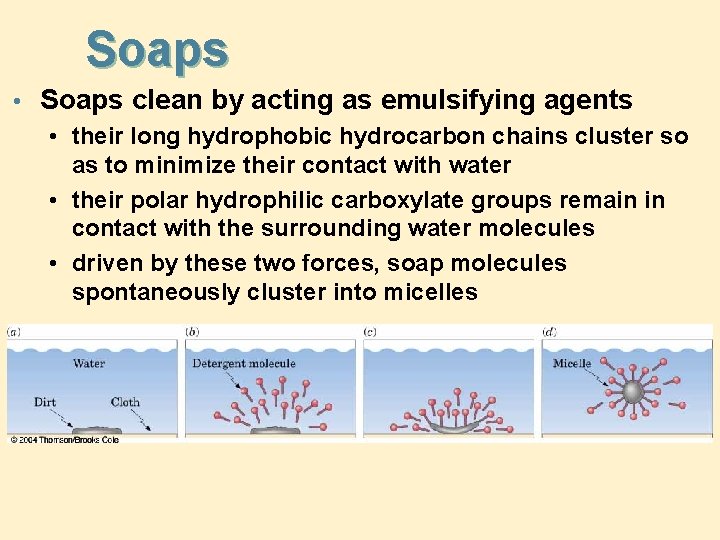
Soaps • Soaps clean by acting as emulsifying agents • their long hydrophobic hydrocarbon chains cluster so as to minimize their contact with water • their polar hydrophilic carboxylate groups remain in contact with the surrounding water molecules • driven by these two forces, soap molecules spontaneously cluster into micelles
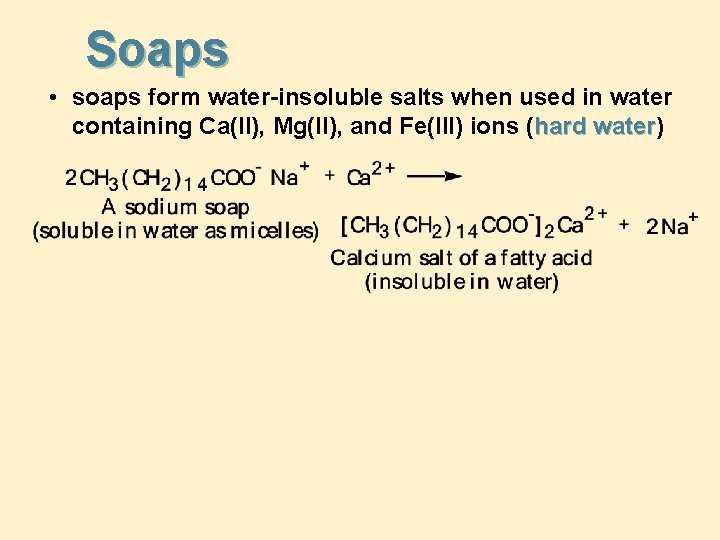
Soaps • soaps form water-insoluble salts when used in water containing Ca(II), Mg(II), and Fe(III) ions (hard water) water
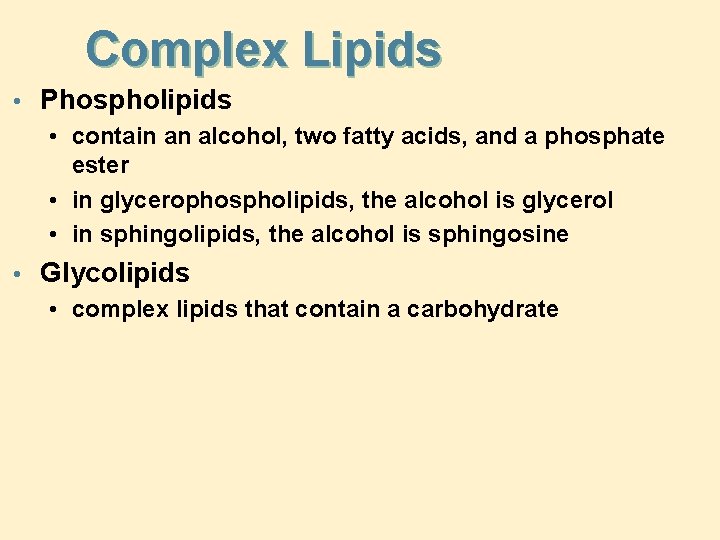
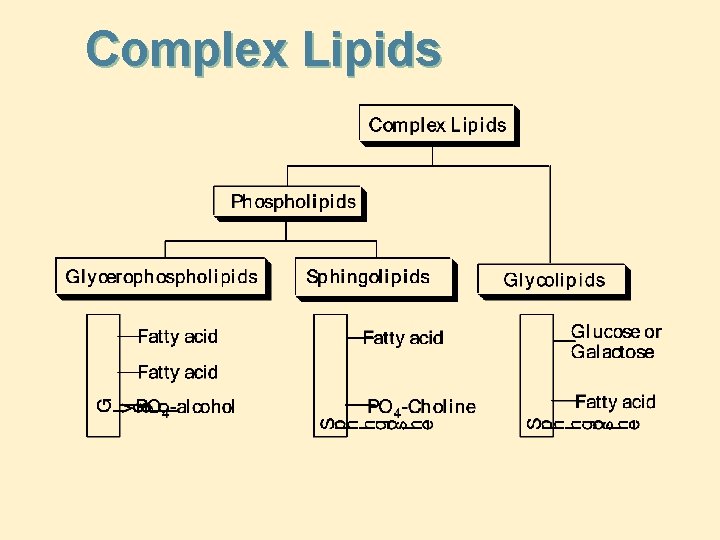
Complex Lipids • Phospholipids • contain an alcohol, two fatty acids, and a phosphate ester • in glycerophospholipids, the alcohol is glycerol • in sphingolipids, the alcohol is sphingosine • Glycolipids • complex lipids that contain a carbohydrate
Complex Lipids
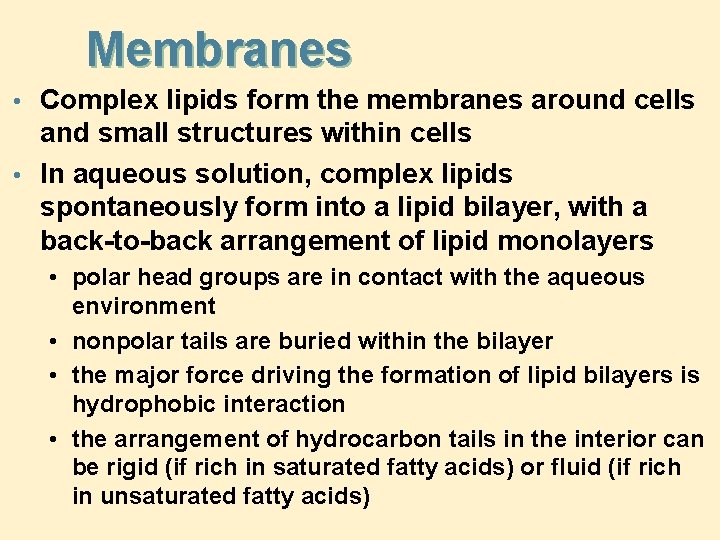
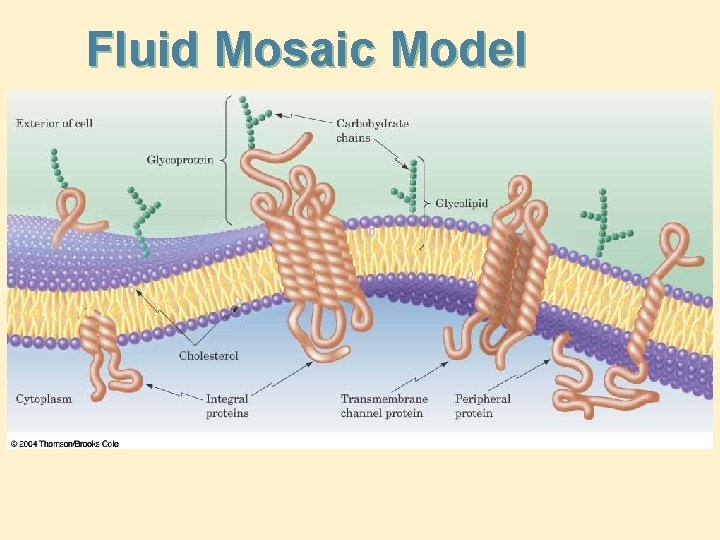
Membranes • Complex lipids form the membranes around cells and small structures within cells • In aqueous solution, complex lipids spontaneously form into a lipid bilayer, with a back-to-back arrangement of lipid monolayers • polar head groups are in contact with the aqueous environment • nonpolar tails are buried within the bilayer • the major force driving the formation of lipid bilayers is hydrophobic interaction • the arrangement of hydrocarbon tails in the interior can be rigid (if rich in saturated fatty acids) or fluid (if rich in unsaturated fatty acids)
Fluid Mosaic Model
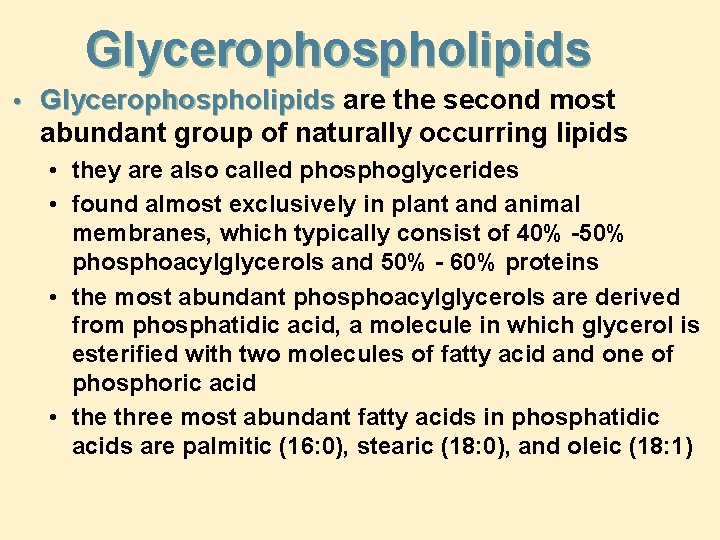
Glycerophospholipids • Glycerophospholipids are the second most abundant group of naturally occurring lipids • they are also called phosphoglycerides • found almost exclusively in plant and animal membranes, which typically consist of 40% -50% phosphoacylglycerols and 50% - 60% proteins • the most abundant phosphoacylglycerols are derived from phosphatidic acid, a molecule in which glycerol is esterified with two molecules of fatty acid and one of phosphoric acid • the three most abundant fatty acids in phosphatidic acids are palmitic (16: 0), stearic (18: 0), and oleic (18: 1)
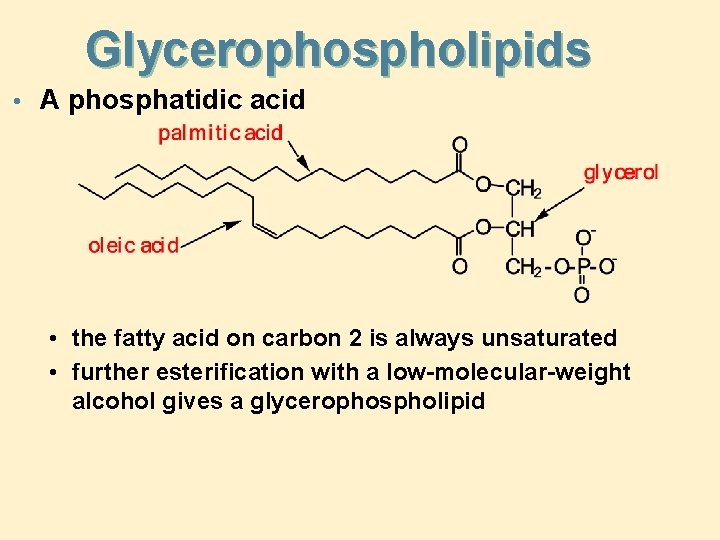
Glycerophospholipids • A phosphatidic acid • the fatty acid on carbon 2 is always unsaturated • further esterification with a low-molecular-weight alcohol gives a glycerophospholipid
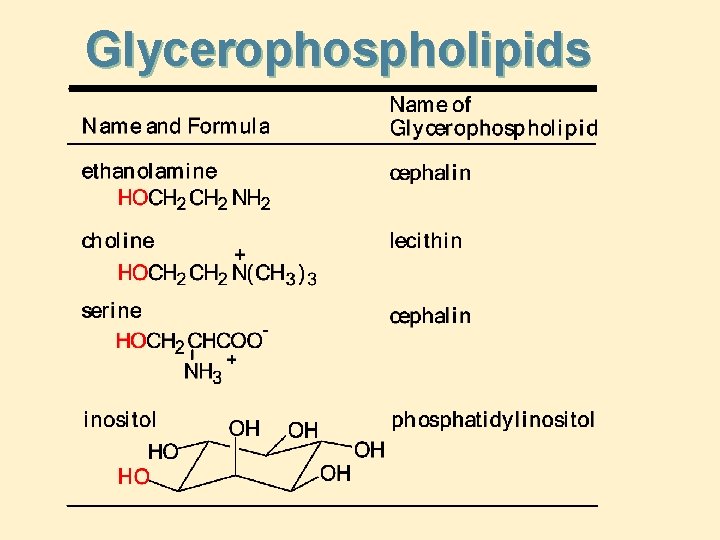
Glycerophospholipids
Glycerophospholipids • a lecithin
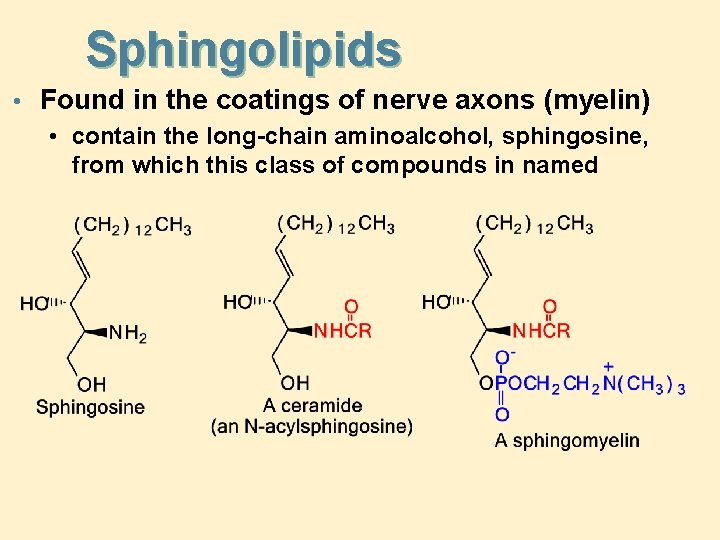
Sphingolipids • Found in the coatings of nerve axons (myelin) • contain the long-chain aminoalcohol, sphingosine, from which this class of compounds in named
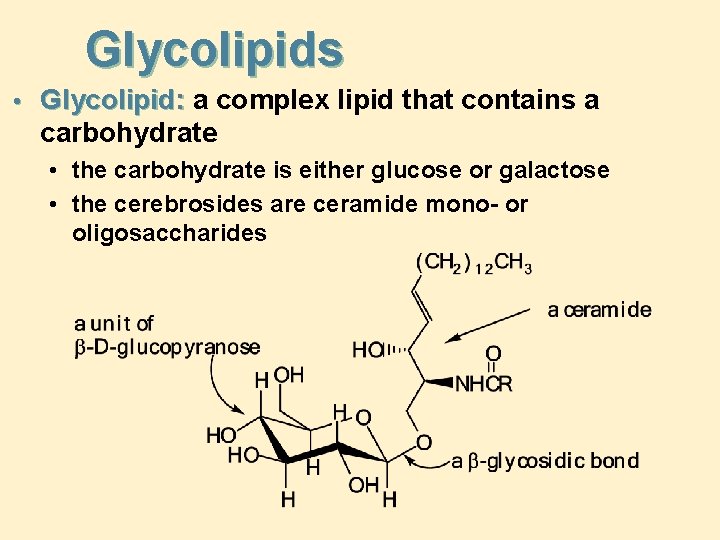
Glycolipids • Glycolipid: a complex lipid that contains a carbohydrate • the carbohydrate is either glucose or galactose • the cerebrosides are ceramide mono- or oligosaccharides
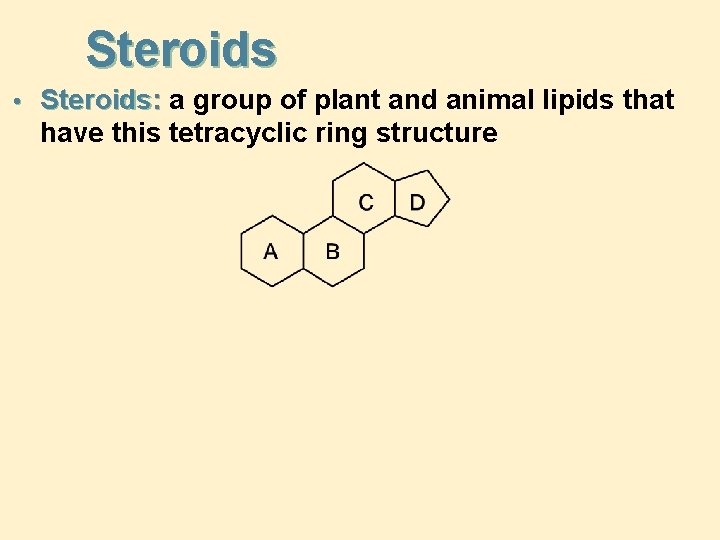
Steroids • Steroids: a group of plant and animal lipids that have this tetracyclic ring structure
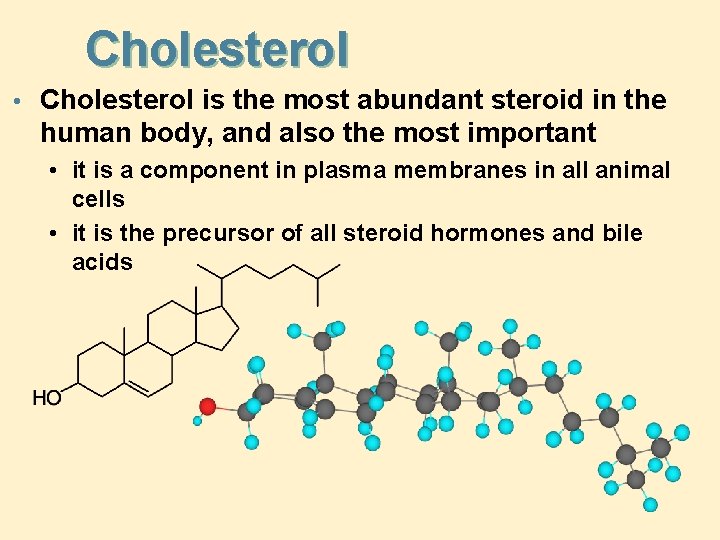
Cholesterol • Cholesterol is the most abundant steroid in the human body, and also the most important • it is a component in plasma membranes in all animal cells • it is the precursor of all steroid hormones and bile acids
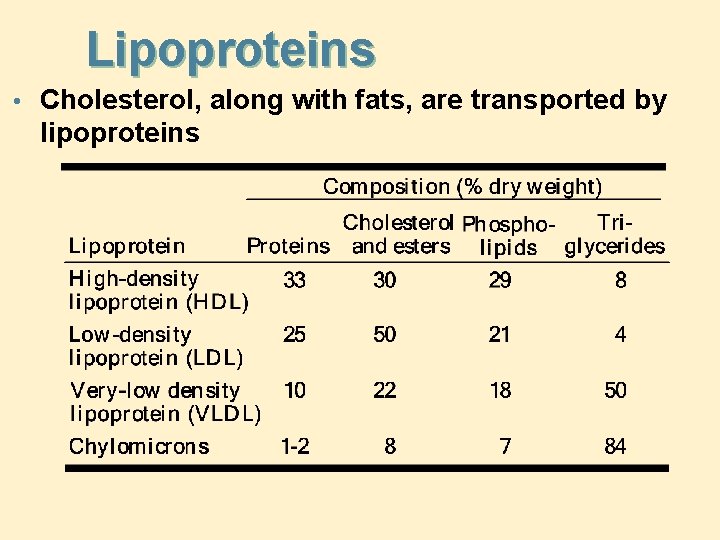
Lipoproteins • Cholesterol, along with fats, are transported by lipoproteins
Lipoproteins • Schematic of a low-density lipoprotein
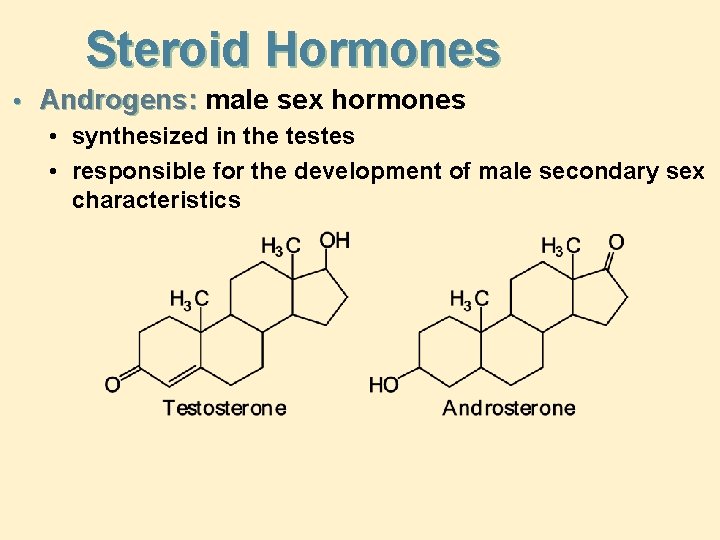
Steroid Hormones • Androgens: male sex hormones • synthesized in the testes • responsible for the development of male secondary sex characteristics
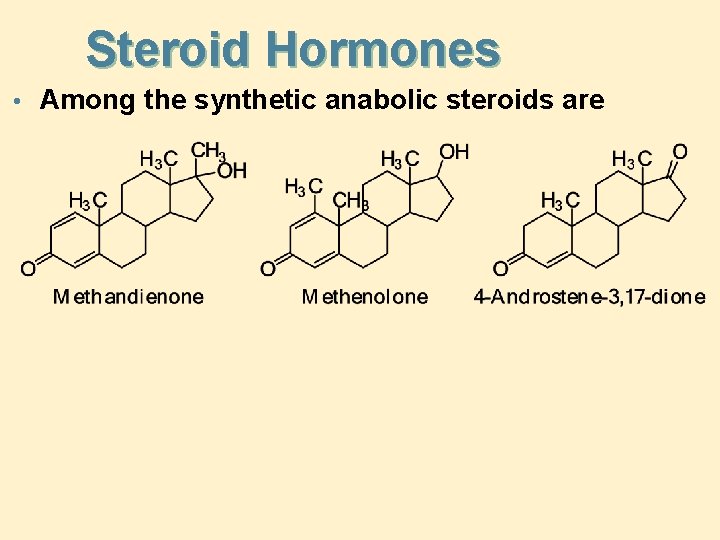
Steroid Hormones • Among the synthetic anabolic steroids are
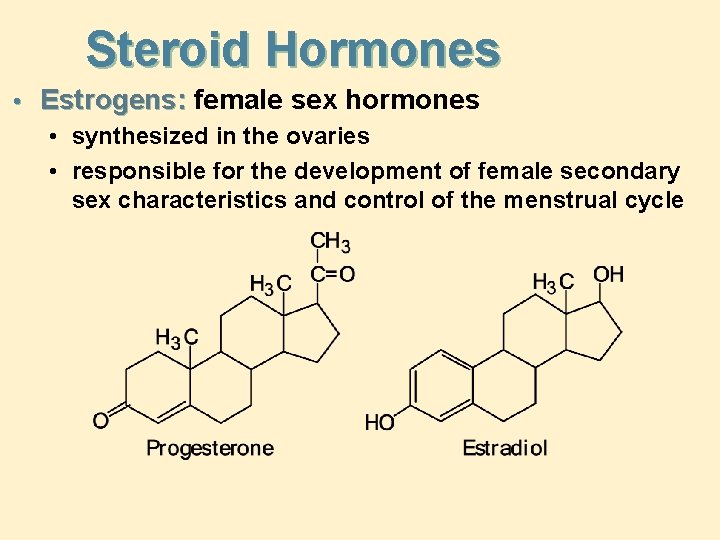
Steroid Hormones • Estrogens: female sex hormones • synthesized in the ovaries • responsible for the development of female secondary sex characteristics and control of the menstrual cycle
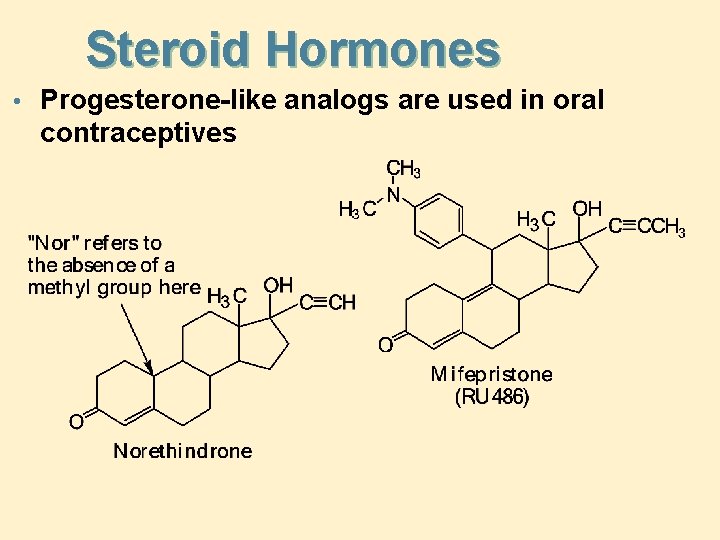
Steroid Hormones • Progesterone-like analogs are used in oral contraceptives
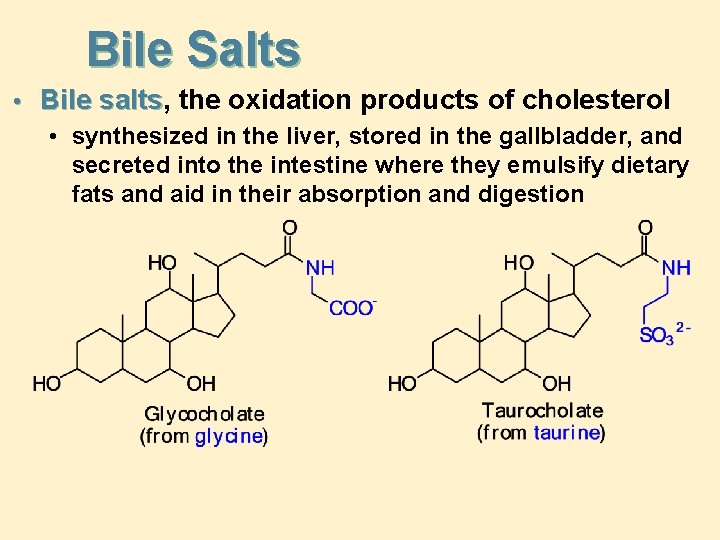
Bile Salts • Bile salts, salts the oxidation products of cholesterol • synthesized in the liver, stored in the gallbladder, and secreted into the intestine where they emulsify dietary fats and aid in their absorption and digestion
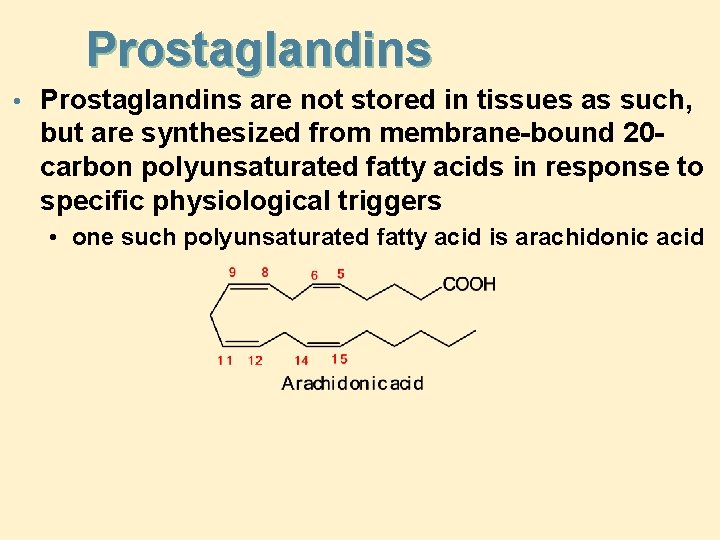
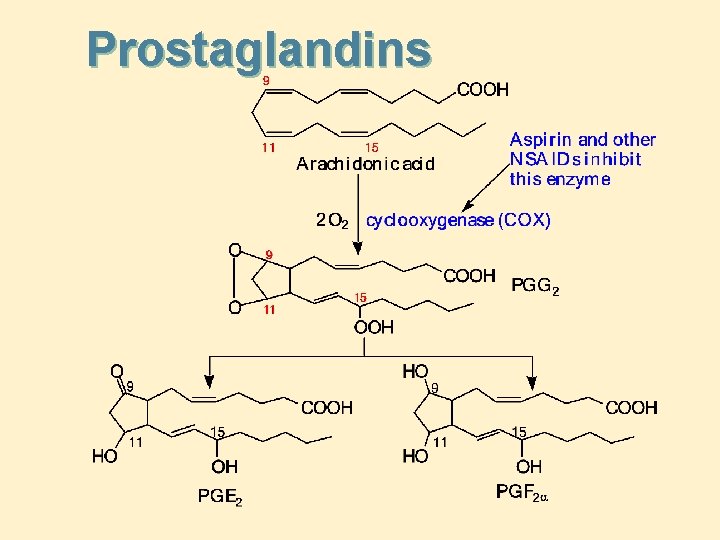
Prostaglandins • Prostaglandins are not stored in tissues as such, but are synthesized from membrane-bound 20 carbon polyunsaturated fatty acids in response to specific physiological triggers • one such polyunsaturated fatty acid is arachidonic acid
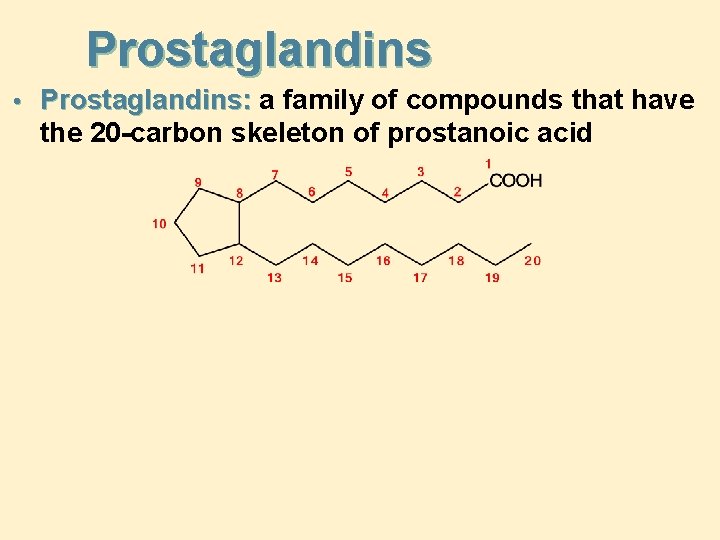
Prostaglandins • Prostaglandins: a family of compounds that have the 20 -carbon skeleton of prostanoic acid
Prostaglandins • Some prostaglandins are always present in the body and they have a variety of functions: - lower blood pressure by relaxing the muscles around the blood vessels - Stimulate uterine contractions and induce labor. • Other short-lived prostaglandins are produced by injured tissues and are responsible for various physiological responses, including pain, swelling and fever.
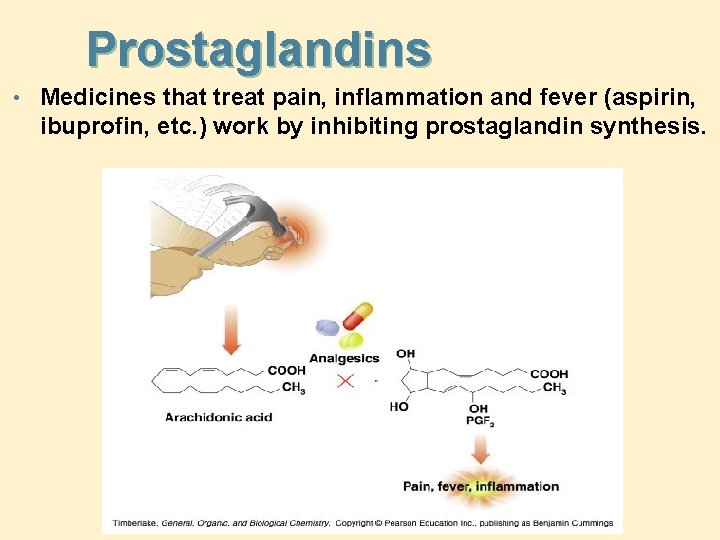
Prostaglandins • Medicines that treat pain, inflammation and fever (aspirin, ibuprofin, etc. ) work by inhibiting prostaglandin synthesis.
Prostaglandins
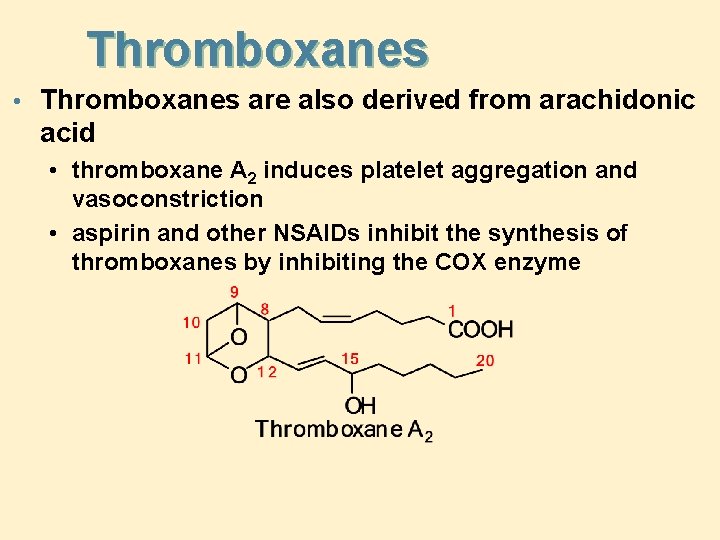
Thromboxanes • Thromboxanes are also derived from arachidonic acid • thromboxane A 2 induces platelet aggregation and vasoconstriction • aspirin and other NSAIDs inhibit the synthesis of thromboxanes by inhibiting the COX enzyme
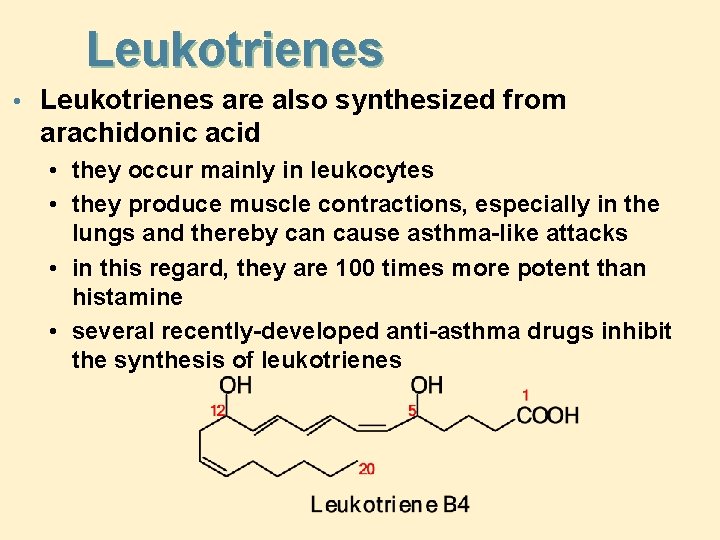
Leukotrienes • Leukotrienes are also synthesized from arachidonic acid • they occur mainly in leukocytes • they produce muscle contractions, especially in the lungs and thereby can cause asthma-like attacks • in this regard, they are 100 times more potent than histamine • several recently-developed anti-asthma drugs inhibit the synthesis of leukotrienes
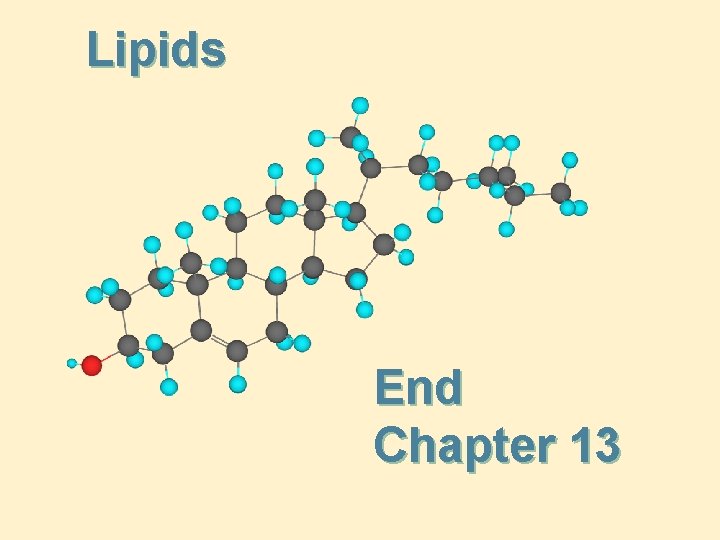
Lipids End Chapter 13