
Chapter 13 Lec 2 The Circulatory System Blood
Chapter 13 Lec #2 The Circulatory System
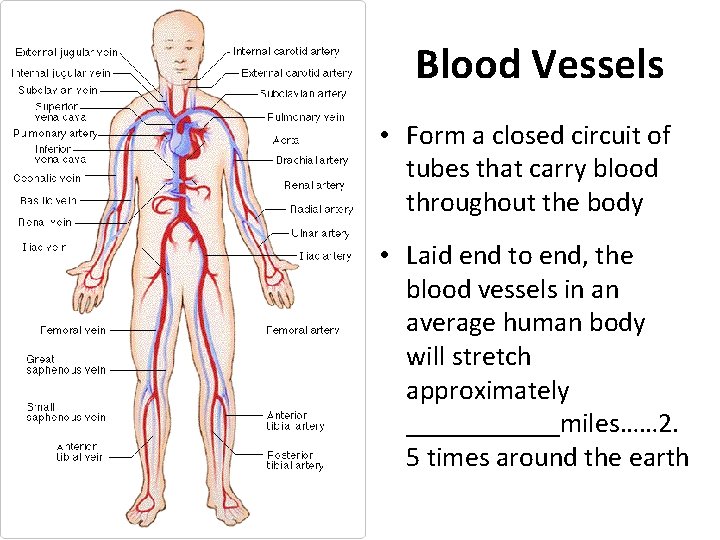
Blood Vessels • Form a closed circuit of tubes that carry blood throughout the body • Laid end to end, the blood vessels in an average human body will stretch approximately ______miles…… 2. 5 times around the earth
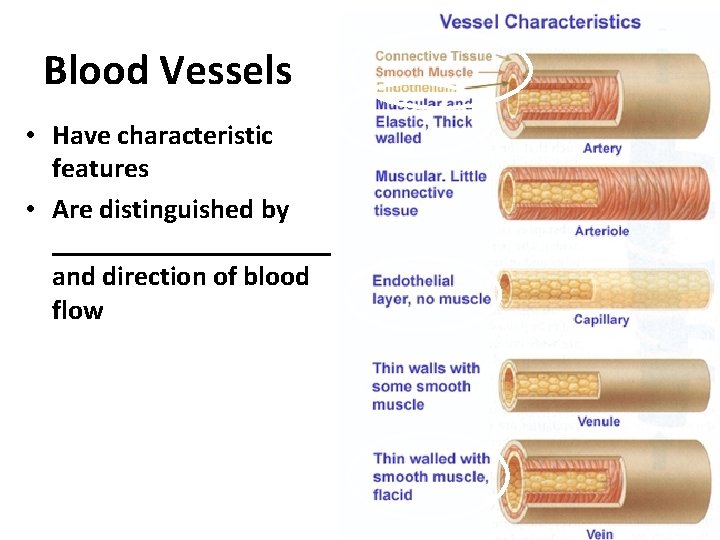
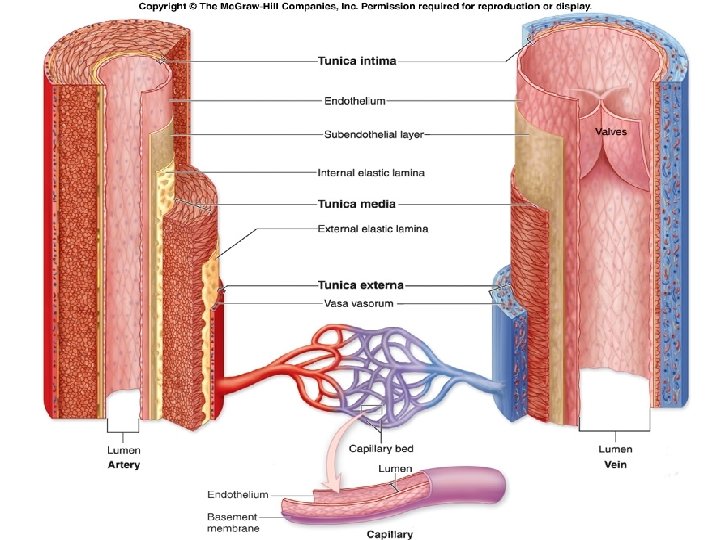
Blood Vessels • Have characteristic features • Are distinguished by __________ and direction of blood flow
Blood Vessels • Arteries – Receive blood from ______________ – Take blood away from the heart – Usually carry oxygenated blood – _______________ – Withstand greater blood pressure – ______________ – Connect to capillaries – Aorta is the largest artery
Blood Vessels • Veins – Transport blood away from capillaries – Carry blood toward heart – Take blood to _____ – ______________ – Thinner vessel walls with less smooth muscles than arteries – Can stretch a great deal – Have larger diameters – Usually carry de-oxygenated blood – ____________is the largest vein
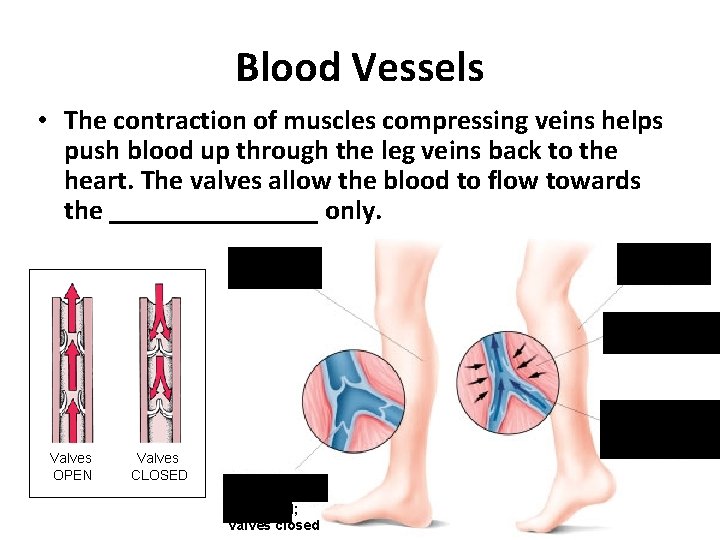
Blood Vessels • The contraction of muscles compressing veins helps push blood up through the leg veins back to the heart. The valves allow the blood to flow towards the ________ only. Calf muscle relaxed Calf muscle contracts Muscle squeezes veins Valves OPEN Veins constrict; blood moves; valves open Valves CLOSED Veins dialated; blood still; valves closed
Blood Vessels • Capillaries – ________ of blood vessels – Only one cell thick (epithelial cell) – Connect arteries to veins – Bring oxygen and nutrients to cells – Removes CO 2, urea, and other wastes from cells – Where blood is under low pressure and moving ________
Blood Vessels • A network of capillaries runs close to the cells in every part of the body. The capillaries have very thin walls which allows nutrients to diffuse through into the tissues and waste products to filter back into the capillaries.
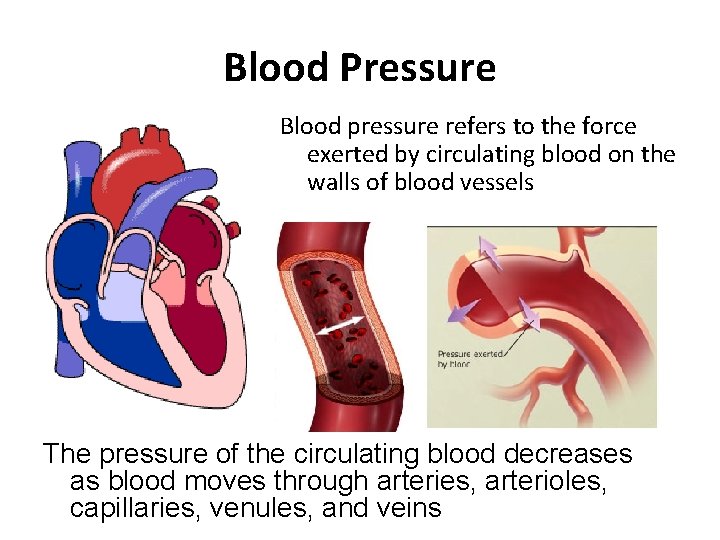
Blood Pressure Blood pressure refers to the force exerted by circulating blood on the walls of blood vessels The pressure of the circulating blood decreases as blood moves through arteries, arterioles, capillaries, venules, and veins
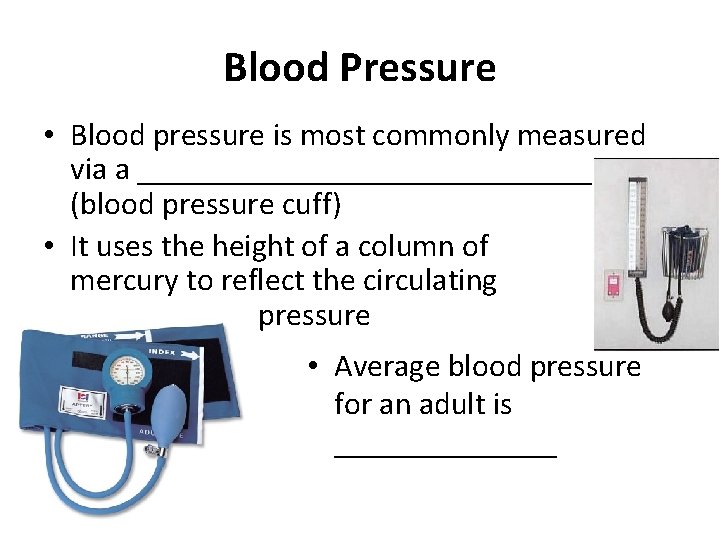
Blood Pressure • Blood pressure is most commonly measured via a _______________ (blood pressure cuff) • It uses the height of a column of mercury to reflect the circulating pressure • Average blood pressure for an adult is _______
Blood Pressure ____________is defined as the maximum pressure in the arteries exerted during ventricular contraction (which occurs near the beginning of the cardiac cycle) ____________is the minimum pressure exerted when ventricles relax and fill (at the resting phase or end of the cardiac cycle) Blood pressure readings = ____
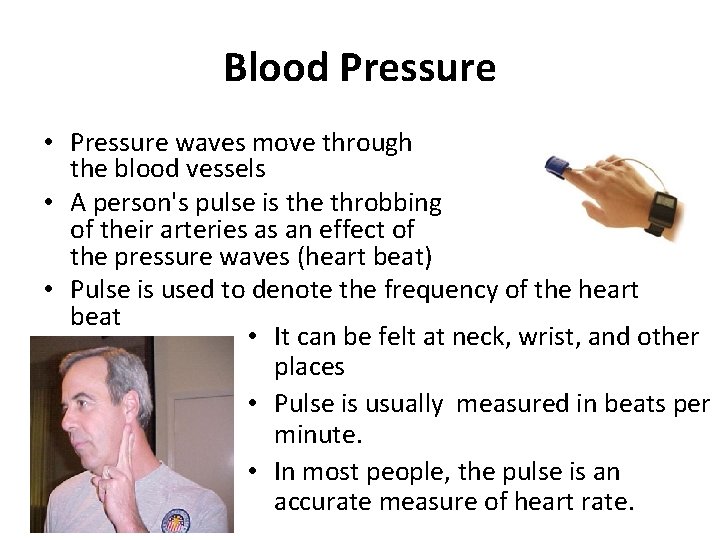
Blood Pressure • Pressure waves move through the blood vessels • A person's pulse is the throbbing of their arteries as an effect of the pressure waves (heart beat) • Pulse is used to denote the frequency of the heart beat • It can be felt at neck, wrist, and other places • Pulse is usually measured in beats per minute. • In most people, the pulse is an accurate measure of heart rate.
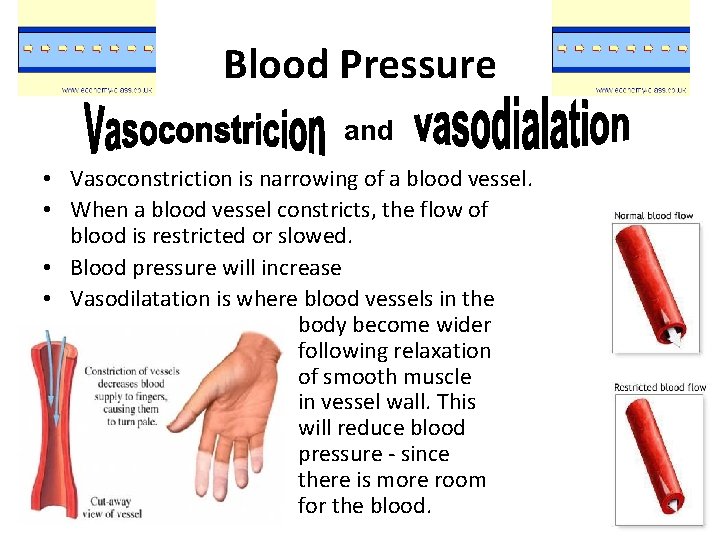
Blood Pressure and • Vasoconstriction is narrowing of a blood vessel. • When a blood vessel constricts, the flow of blood is restricted or slowed. • Blood pressure will increase • Vasodilatation is where blood vessels in the body become wider following relaxation of smooth muscle in vessel wall. This will reduce blood pressure - since there is more room for the blood.
- Slides: 14