
Chapter 13 Fluid Pressure Force vs Pressure Force
- Slides: 19
Chapter 13 Fluid Pressure
Force vs. Pressure • Force is any push or pull exerted on an object. • What is pressure? – the result of a force distributed over an area
Why is a theater seat more comfortable than a bike seat? • In a theater seat there is the same force applied over a greater area.
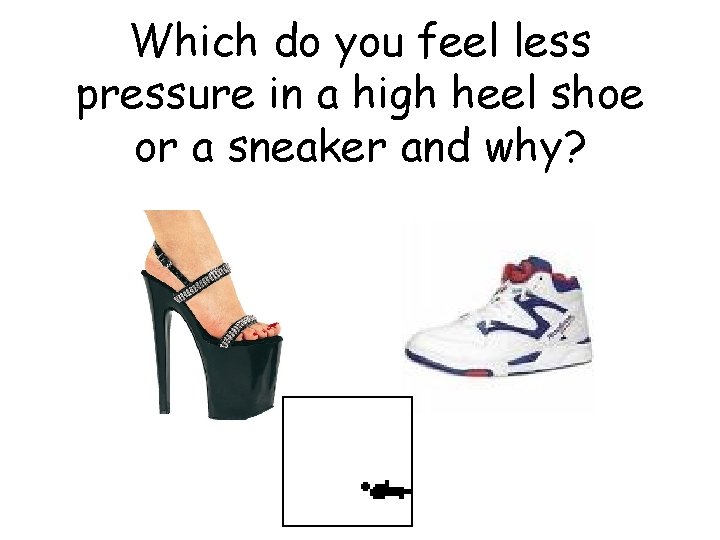
Which do you feel less pressure in a high heel shoe or a sneaker and why?
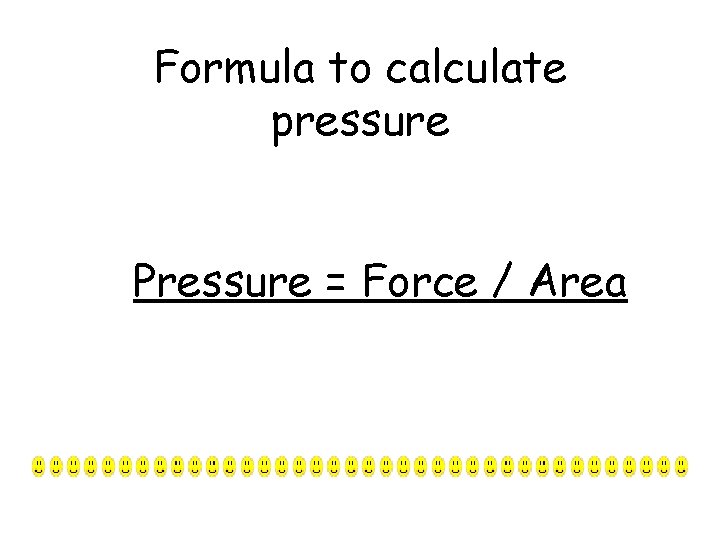
Formula to calculate pressure Pressure = Force / Area
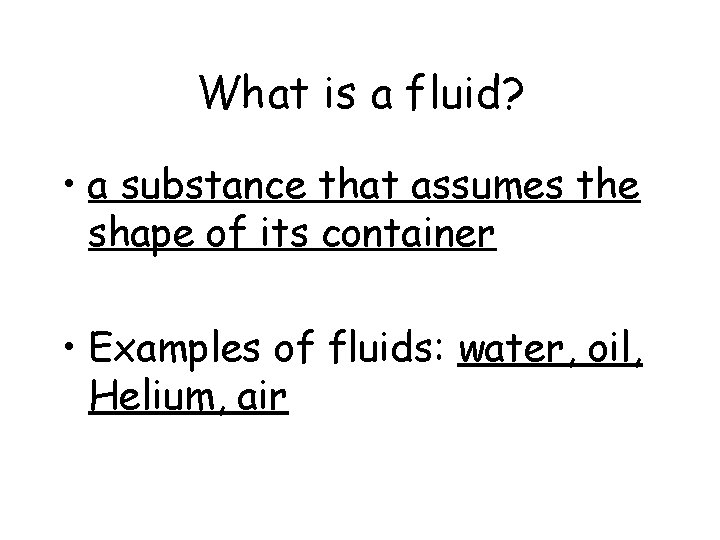
What is a fluid? • a substance that assumes the shape of its container • Examples of fluids: water, oil, Helium, air
Fluids exert pressure! What happens when you try to touch the bottom in a deep pool?
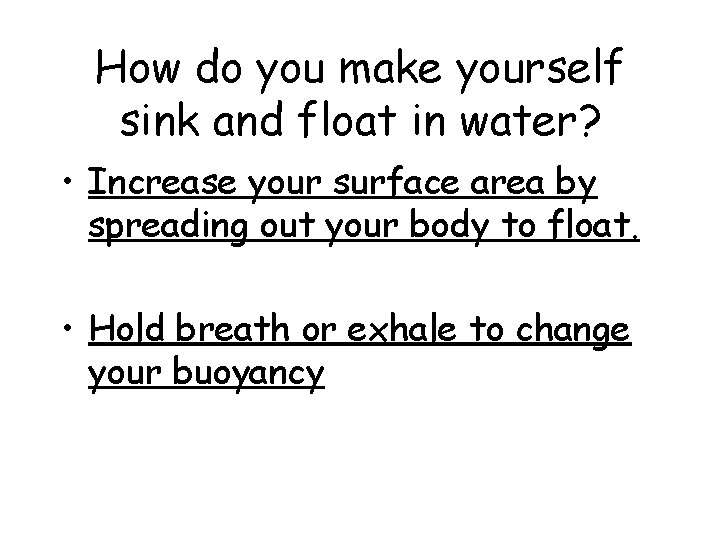
How do you make yourself sink and float in water? • Increase your surface area by spreading out your body to float. • Hold breath or exhale to change your buoyancy
Water Pressure • Water pressure increases as depth increases. • The pressure in a fluid at any given depth is constant, and it is exerted equally in all directions. • The pressure of a fluid that is not moving depends on the depth and the type of fluid.
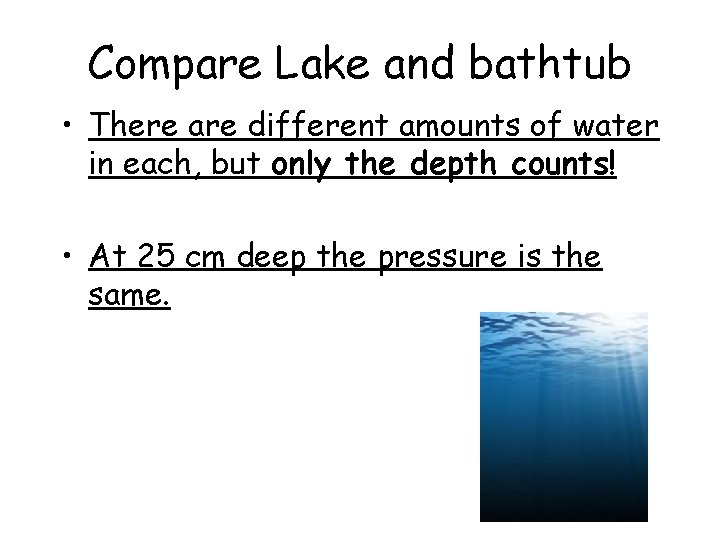
Compare Lake and bathtub • There are different amounts of water in each, but only the depth counts! • At 25 cm deep the pressure is the same.
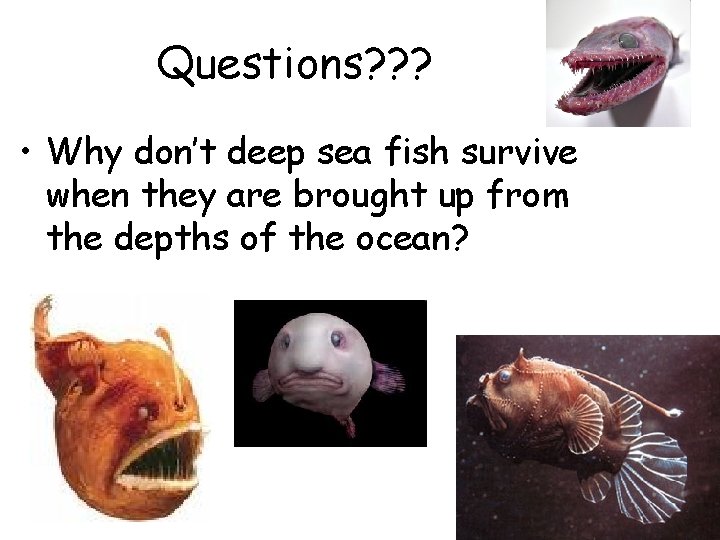
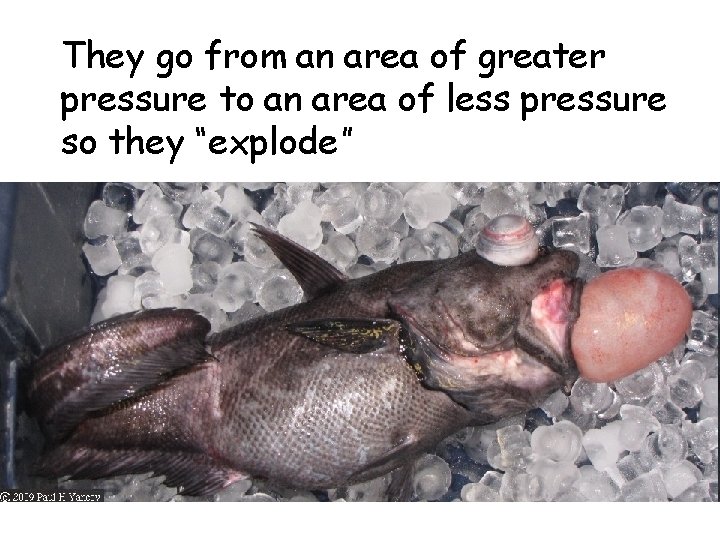
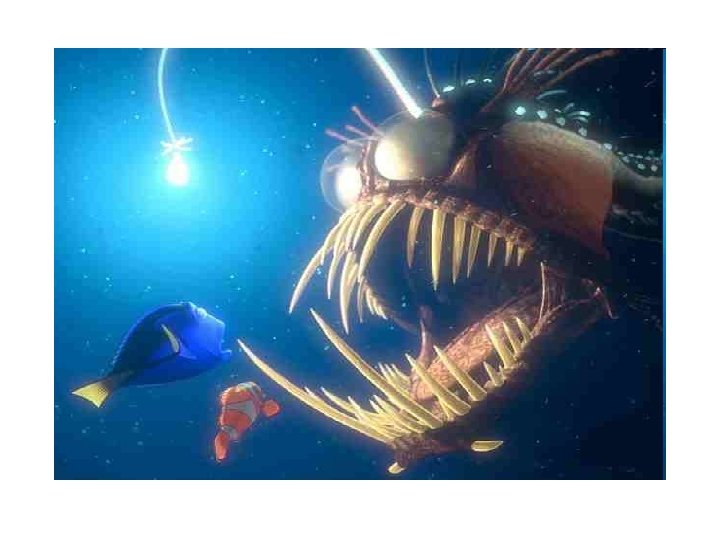
Questions? ? ? • Why don’t deep sea fish survive when they are brought up from the depths of the ocean?
They go from an area of greater pressure to an area of less pressure so they “explode”
• Why do Scuba divers have to regulate their pressure when going up and down the water column?
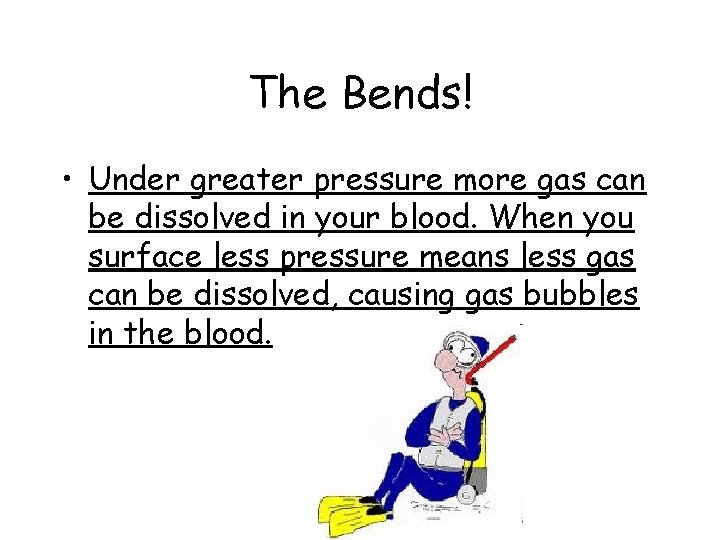
The Bends! • Under greater pressure more gas can be dissolved in your blood. When you surface less pressure means less gas can be dissolved, causing gas bubbles in the blood.
Air pressure and the Atmosphere Think of the atmosphere as a giant ocean filled with air
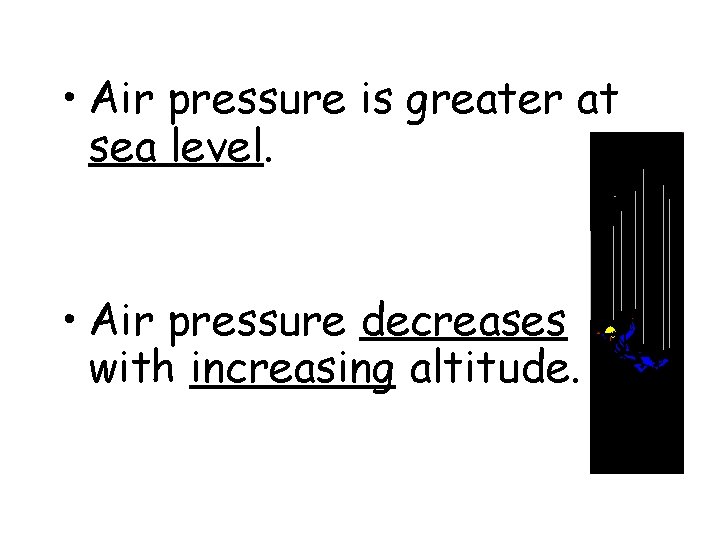
• Air pressure is greater at sea level. • Air pressure decreases with increasing altitude.
Questions? ? ? • Why do planes need to pressurize their cabins?
Higher altitudes mean less oxygen for every breath we take. This could lead to sluggish thinking, dimmed vision, loss of consciousness, and ultimately death