
Chapter 13 Drugs for Muscles and Joint Disease
- Slides: 30
Chapter 13 Drugs for Muscles and Joint Disease and Pain
Muscles and Joints • Bones of the skeletal system provide framework of the body – Are connected at joints • Joint: place of union or junction between 2 or more bones • Skeletal muscles: provide movement at joints, contractile tissues
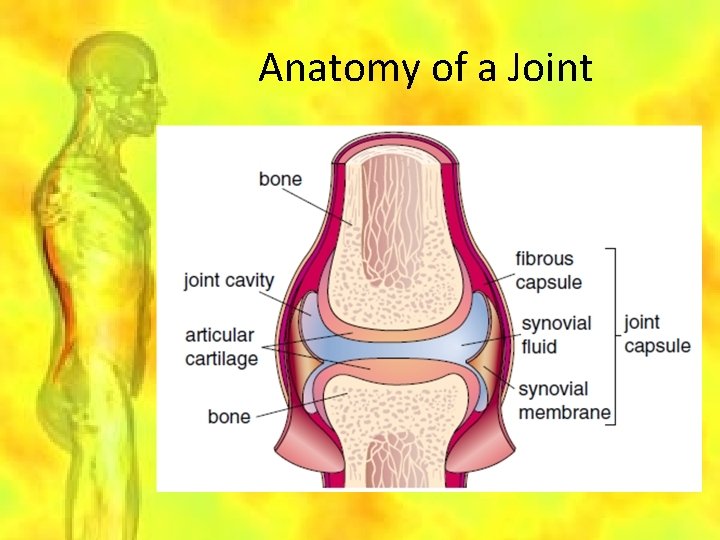
Anatomy of a Joint
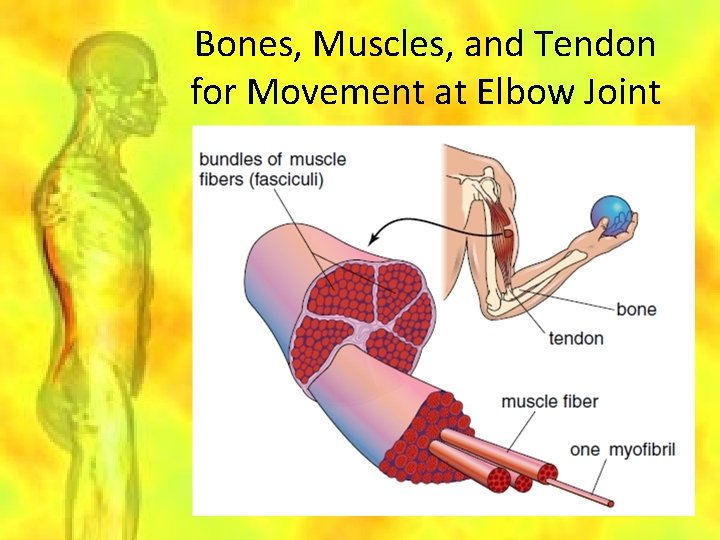
Bones, Muscles, and Tendon for Movement at Elbow Joint
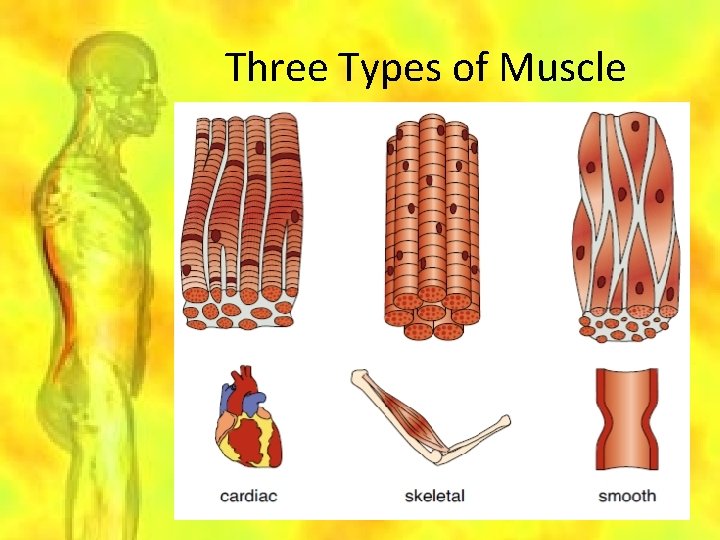
Three Types of Muscle
Muscle Relaxants • Skeletal muscle contractions voluntarily • Neurotransmitter acetylcholine (Ach) – binds with receptors on muscle cell membrane – calcium is released, causing a contraction • Relaxation occurs when ACh is broken down by acetylcholinesterase
Muscle Relaxants Medications • Acts on motor neurons or at neuromuscular junction • Block normal muscle function by – Blocking release of ACh – Preventing destruction of Ach – Preventing ACh from reaching receptors
Dispensing Issues of Muscle Relaxants • To avoid drug interactions, drug history needed before administering • Technician often obtains drug history • Sedative properties cause patient to relax, reducing reflex impulse conduction
Side Effects of Muscle Relaxants • • • Sedation Reduced mental alertness Reduced motor abilities GI upset Avoid alcohol when taking these drugs
carisoprodol (Soma) • Skeletal muscle relaxant subject to abuse • Scheduled substance in many states • Causes drowsiness and dizziness • Toxicity risk increases with alcohol or other CNS depressants
cyclobenzapine (Flexeril) • Centrally acting skeletal muscle relaxant related to TCAs • Treats muscle spasms associated with acute musculoskeletal conditions • Onset of action is within 1 hour • Not to be used more than 2 to 3 weeks
Discussion Most muscle relaxants are not controlled substances, so why are they highly abused? They are abused due to the relaxing feeling that patients have from taking them.
Inflammation and Swelling • Analgesics used to relieve pain • Nonnarcotic analgesic used for mild-tomoderate pain, inflammation, and fever • Two types of pain – Somatic: dull, throbbing pain from skin, muscle, or bone – Visceral: sharp, stabbing pain from organs
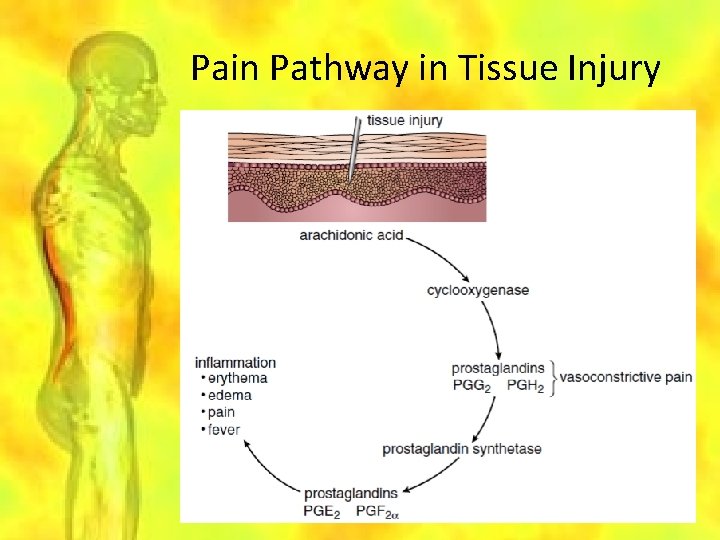
Inflammation • Pain pathway in tissue injury • PGs can cause inflammation, tissue damage, and fever • Nonnarcotic analgesics interrupt pathway, inhibiting enzyme to synthesize PGs – Relieves inflammation and pain – Reduces fever
Pain Pathway in Tissue Injury
NSAIDs • Properties of nonsteroidal antiinflammatory drugs (NSAIDs) – Analgesic (pain relieving) – Anti-inflammatory – Antipyretic (fever reducing) • Prototype NSAID is aspirin
Therapeutic Uses of NSAIDs • Inflammation and pain of arthritis and rheumatism • Headache • Menstrual cramps • Backache • • Muscle aches Flu Fever Gouty arthritis
Mechanism of Action of NSAIDs • Inhibit PG synthesis in inflamed tissues • Prevents sensitization of pain receptors • Generally act peripherally, not centrally like other pain killers
The GI System and NSAIDs • Primary side effect is GI upset • One in five chronic NSAID users develop some type of GI gastropathy • Many patients need to take a proton pump inhibitor with NSAIDs
Side Effects of NSAIDs • • Nausea Abdominal cramps Heartburn Ulcers Indigestion Kidney damage Acute renal failure Fluid retention Hypertension Hyperkalemia Liver abnormalities • Bone marrow depression • Tinnitus and others • •
Interactions with NSAIDs • Other NSAIDs including aspirin • Beta blockers • Cyclosporine • Digoxin • Diuretics • Methotrexate • Oral hypoglycemics • Warfarin
Tips for NSAID Users • • Take with food Use antacids or proton pump inhibitor Do not use gastric irritants (ETOH) Stop NSAID before any surgical procedure Use the lowest possible dose Be aware of side effects Take sufficient fluids If sensitive to aspirin, avoid NSAIDs
Precautions of NSAIDs • Concurrent use with multiple NSAIDs, including aspirin, should be discouraged – Could lead to additive or synergistic toxicity • Use of NSAIDs and opiates may be synergistic • Considerable patient-to-patient variability to different NSAIDs
ibuprofen (Advil, Motrin) • Controls fever well • Can be alternated with aspirin • OTC: 200 mg tablet, caplet, or capsule (solids) • Rx: 400 mg, 600 mg, and 800 mg solids (tablets)
naproxen (Naprosyn) • Least risky NSAID for cardiovascular events • Used in lowest effective dose for least amount of time
COX-2 Inhibitors • 2 enzymes critical in inflammation process • Cyclooxygenase-1 (COX-1): extensive role in body, including protecting GI lining • Cyclooxygenase-2 (COX-2): pain, inflammation • Drugs only block the COX-2 enzyme which is induced during inflammation
Therapeutic Uses of COX-2 Inhibitors • • Rheumatoid arthritis Osteoarthritis Menstrual cramps Acute pain
celecoxib (Celebrex) • First COX-2 inhibitor to be approved • GI upset is primary side effect • Only COX-2 inhibitor on the market – All others recalled by FDA
Dispensing Issues of celecoxib (Celebrex) • Technician—attach the label “Take with Food” • Beware of cross-sensitivity with sulfonamides • May increase cardiovascular risk • Look-alike and sound-alike – Celebrex – Cerebyx (anticonvulsant)
allopurinol (Zyloprim) • Used to prevent gout attacks • Liver function should be monitored • Used with caution with diuretics