
Chapter 13 Consumer Influence and the Diffusion of




- Slides: 40
Chapter 13 Consumer Influence and the Diffusion of Innovations Consumer Behaviour Canadian Edition Schiffman/Kanuk/Das
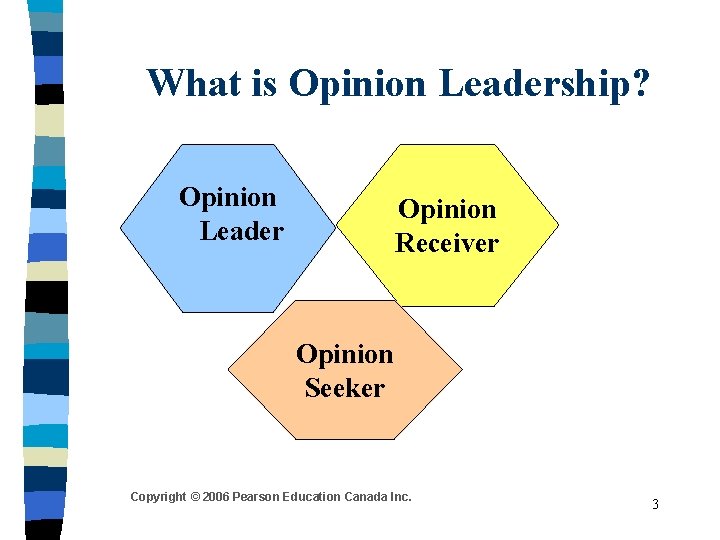
Opinion Leadership n The process by which one person (the opinion leader) informally influences the consumption actions or attitudes of others who may be opinion seekers or opinion recipients Copyright © 2006 Pearson Education Canada Inc. 2
What is Opinion Leadership? Opinion Leader Opinion Receiver Opinion Seeker Copyright © 2006 Pearson Education Canada Inc. 3
Special Issues n Opinion leaders are four times more likely to be asked about political issues, three times more likely to be asked about computers or investments, and twice as likely to be asked about restaurants n Information seekers seek a “strong-tie” source when they know little about a topic, and “weak-tie” sources when they have some knowledge Copyright © 2006 Pearson Education Canada Inc. 4
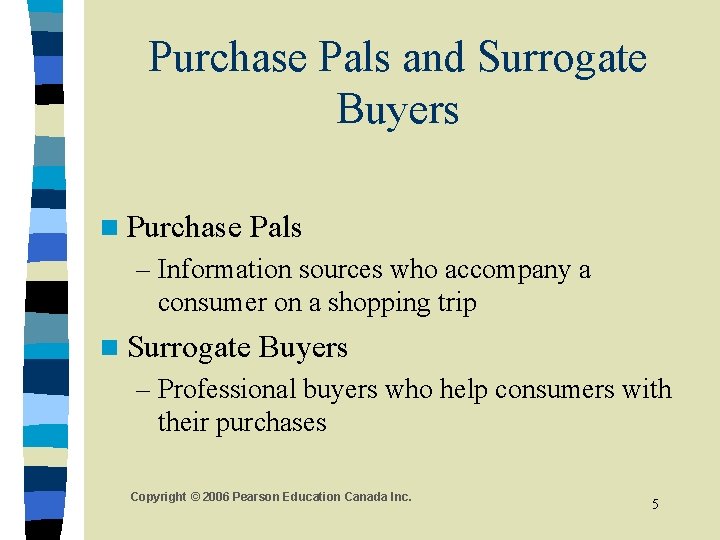
Purchase Pals and Surrogate Buyers n Purchase Pals – Information sources who accompany a consumer on a shopping trip n Surrogate Buyers – Professional buyers who help consumers with their purchases Copyright © 2006 Pearson Education Canada Inc. 5
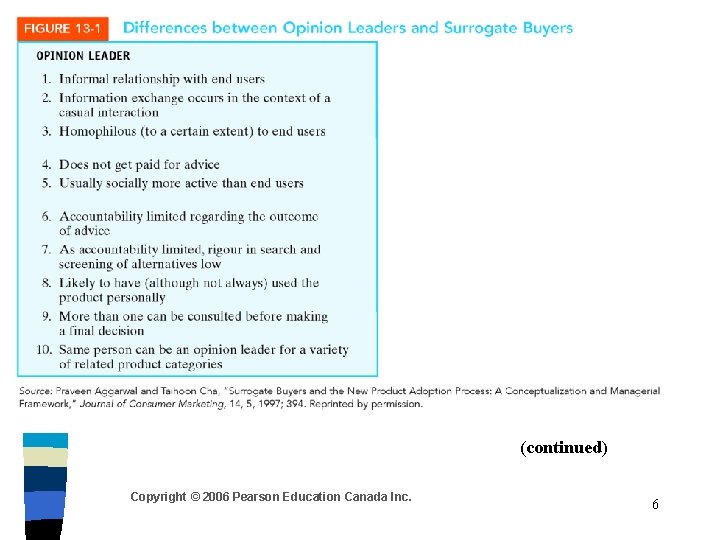
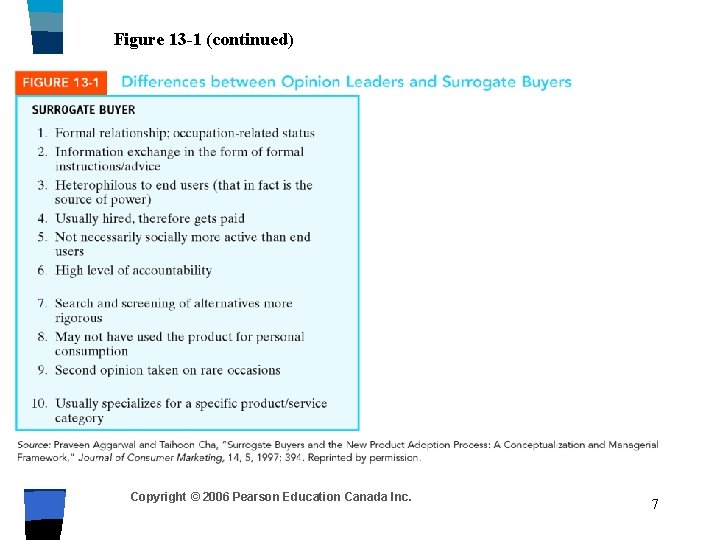
(continued) Copyright © 2006 Pearson Education Canada Inc. 6
Figure 13 -1 (continued) Copyright © 2006 Pearson Education Canada Inc. 7
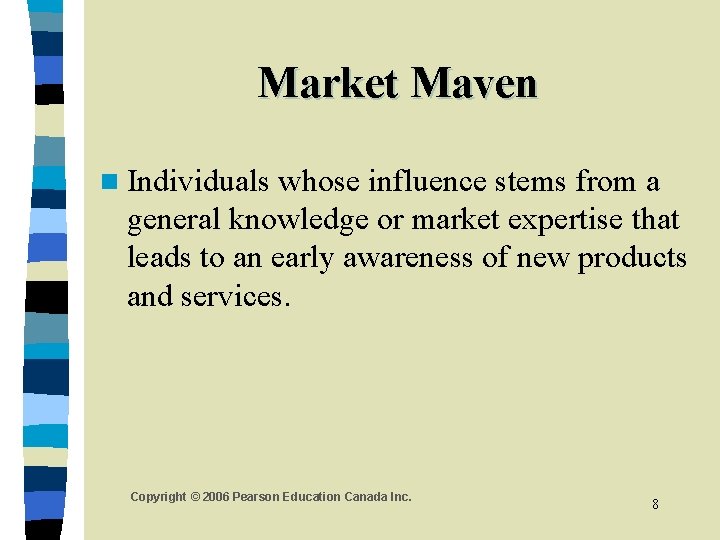
Market Maven n Individuals whose influence stems from a general knowledge or market expertise that leads to an early awareness of new products and services. Copyright © 2006 Pearson Education Canada Inc. 8
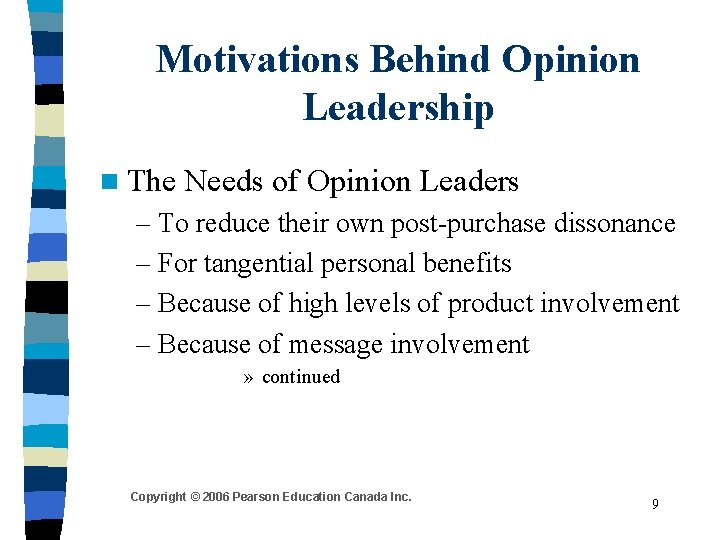
Motivations Behind Opinion Leadership n The Needs of Opinion Leaders – To reduce their own post-purchase dissonance – For tangential personal benefits – Because of high levels of product involvement – Because of message involvement » continued Copyright © 2006 Pearson Education Canada Inc. 9
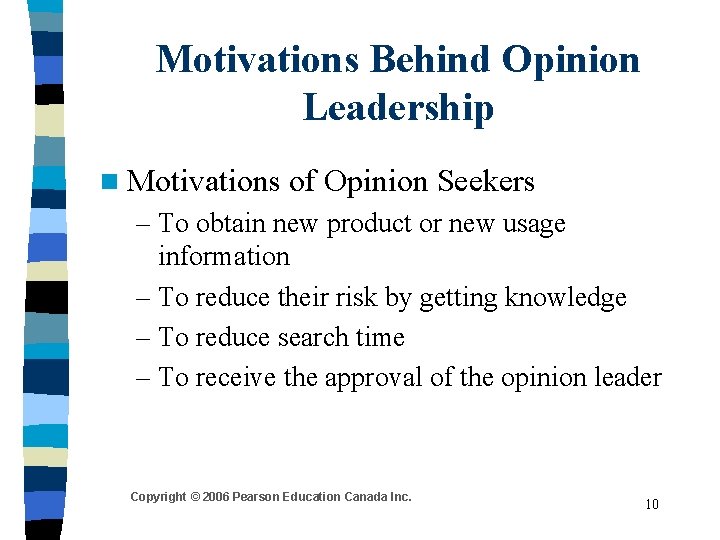
Motivations Behind Opinion Leadership n Motivations of Opinion Seekers – To obtain new product or new usage information – To reduce their risk by getting knowledge – To reduce search time – To receive the approval of the opinion leader Copyright © 2006 Pearson Education Canada Inc. 10
Reasons for the Effectiveness of Opinion Leadership n Credibility n Positive and Negative Product Information n Information and Advice n Opinion Leadership Is Category-Specific n Opinion Leadership Is a Two-way Street Copyright © 2006 Pearson Education Canada Inc. 11
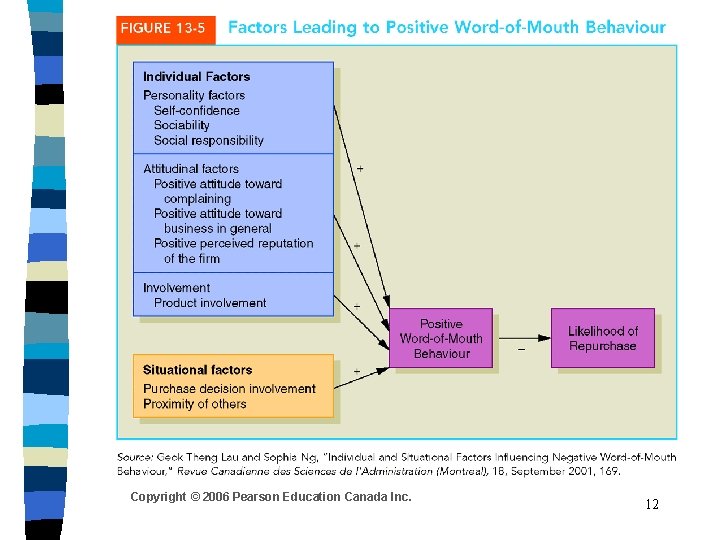
Copyright © 2006 Pearson Education Canada Inc. 12
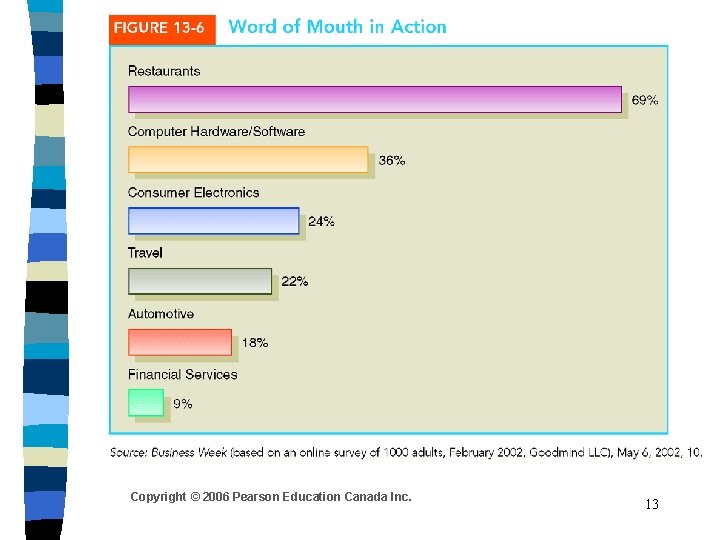
Copyright © 2006 Pearson Education Canada Inc. 13
Copyright © 2006 Pearson Education Canada Inc. 14
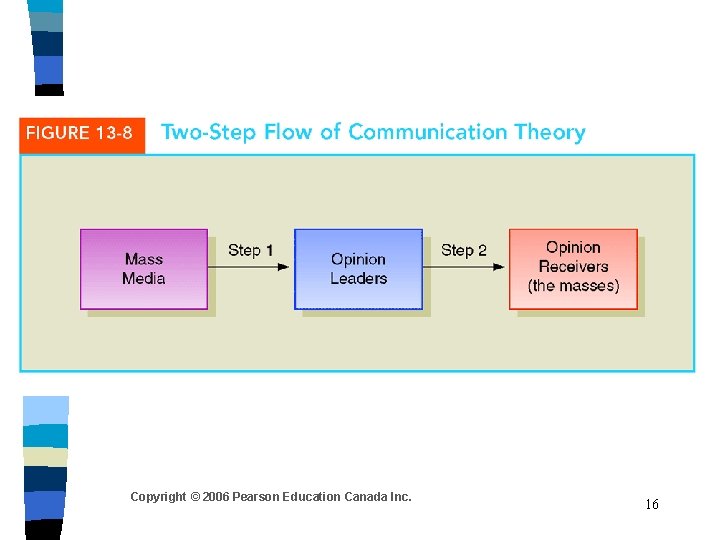
The Interpersonal Flow of Communication n Two-Step Flow – A communication model that portrays opinion leaders as direct receivers of information from mass media sources who, in turn, interpret and transmit this information. n Multi-step Flow – A revision of the traditional two-step theory that shows multiple communication flows Copyright © 2006 Pearson Education Canada Inc. 15
Copyright © 2006 Pearson Education Canada Inc. 16
Copyright © 2006 Pearson Education Canada Inc. 17
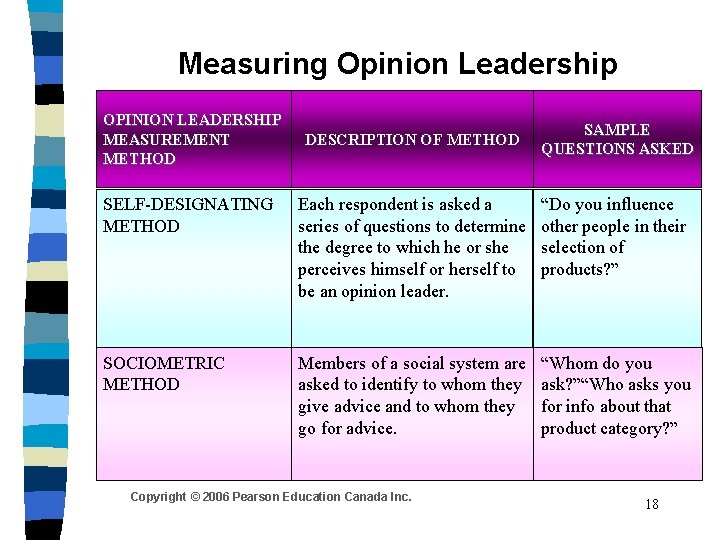
Measuring Opinion Leadership OPINION LEADERSHIP MEASUREMENT METHOD DESCRIPTION OF METHOD SAMPLE QUESTIONS ASKED SELF-DESIGNATING METHOD Each respondent is asked a series of questions to determine the degree to which he or she perceives himself or herself to be an opinion leader. “Do you influence other people in their selection of products? ” SOCIOMETRIC METHOD Members of a social system are asked to identify to whom they give advice and to whom they go for advice. “Whom do you ask? ”“Who asks you for info about that product category? ” Copyright © 2006 Pearson Education Canada Inc. 18
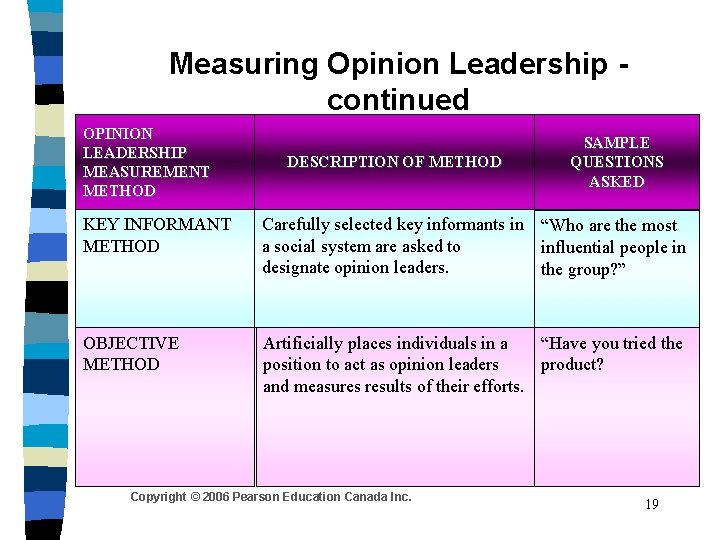
Measuring Opinion Leadership continued OPINION LEADERSHIP MEASUREMENT METHOD DESCRIPTION OF METHOD SAMPLE QUESTIONS ASKED KEY INFORMANT METHOD Carefully selected key informants in “Who are the most a social system are asked to influential people in designate opinion leaders. the group? ” OBJECTIVE METHOD Artificially places individuals in a “Have you tried the position to act as opinion leaders product? and measures results of their efforts. Copyright © 2006 Pearson Education Canada Inc. 19
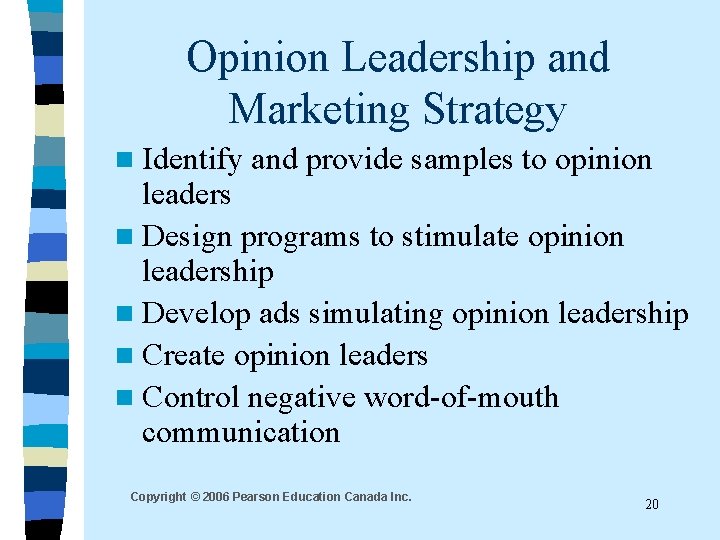
Opinion Leadership and Marketing Strategy n Identify and provide samples to opinion leaders n Design programs to stimulate opinion leadership n Develop ads simulating opinion leadership n Create opinion leaders n Control negative word-of-mouth communication Copyright © 2006 Pearson Education Canada Inc. 20
Diffusion Process n The process by which the acceptance of an innovation is spread by communication to members of social system over a period of time. Copyright © 2006 Pearson Education Canada Inc. 21
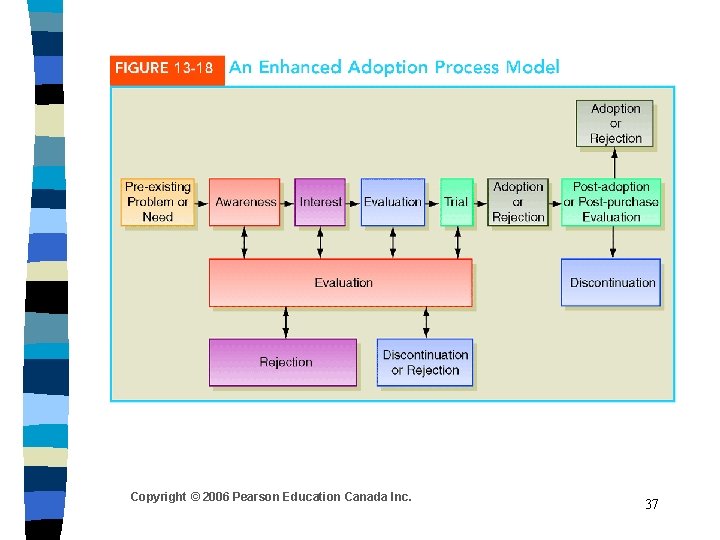
Adoption Process n The stages through which an individual consumer passes in arriving at a decision to try (or not to try), to continue using (or discontinue using) a new product. Copyright © 2006 Pearson Education Canada Inc. 22
Defining Innovations n Firm-oriented definitions n Product-oriented definitions n Market-oriented definitions n Consumer-oriented definitions Copyright © 2006 Pearson Education Canada Inc. 23
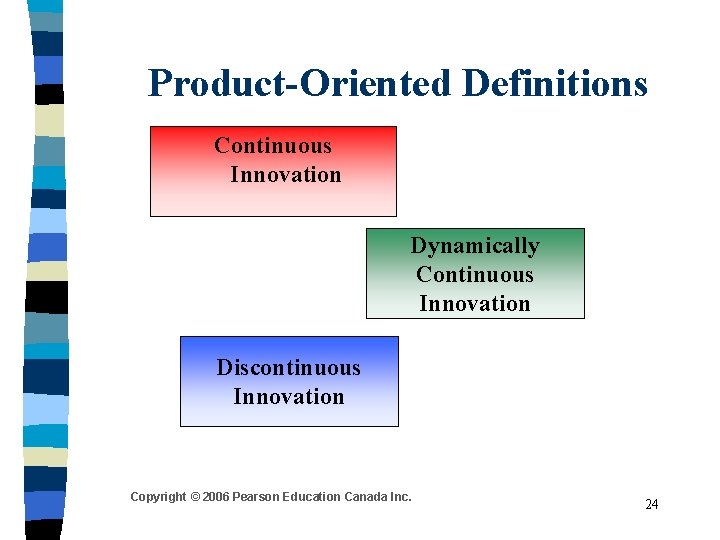
Product-Oriented Definitions Continuous Innovation Dynamically Continuous Innovation Discontinuous Innovation Copyright © 2006 Pearson Education Canada Inc. 24
Factors That Affect the Diffusion of Innovations n The Innovation n The Channels of Communication n The Social System n Time Copyright © 2006 Pearson Education Canada Inc. 25
Product Characteristics That Influence Diffusion n Relative Advantage n Compatibility n Complexity n Trialability n Observability n Felt Need n Risk Copyright © 2006 Pearson Education Canada Inc. 26
Social System and Diffusion n Does the target market have: – A positive attitude towards change? – Technological skill? – A general respect for education and science? – A focus on rational and ordered social relationship? – An outreach perspective? – The ability to accept different roles? Copyright © 2006 Pearson Education Canada Inc. 27
Time and Diffusion n Purchase Time n Adopter Categories n Rate of Adoption Copyright © 2006 Pearson Education Canada Inc. 28
Adopter Categories n. A sequence of categories that describes how early (or late) a consumer adopts a new product in relation to other adopters. Copyright © 2006 Pearson Education Canada Inc. 29
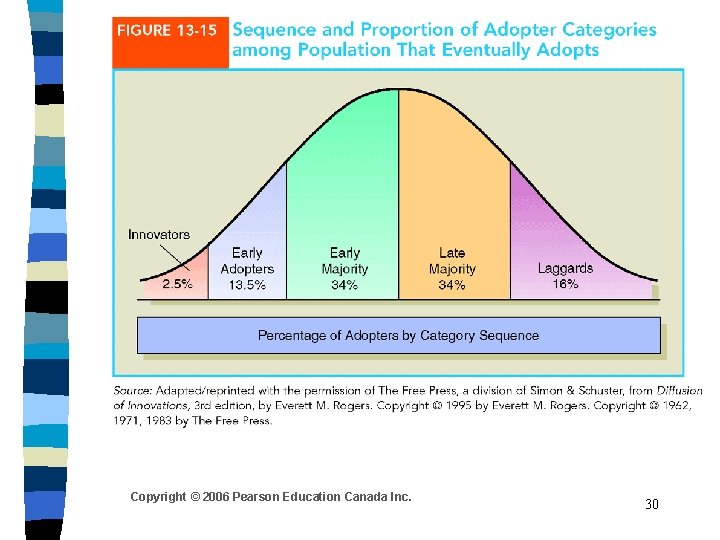
Copyright © 2006 Pearson Education Canada Inc. 30
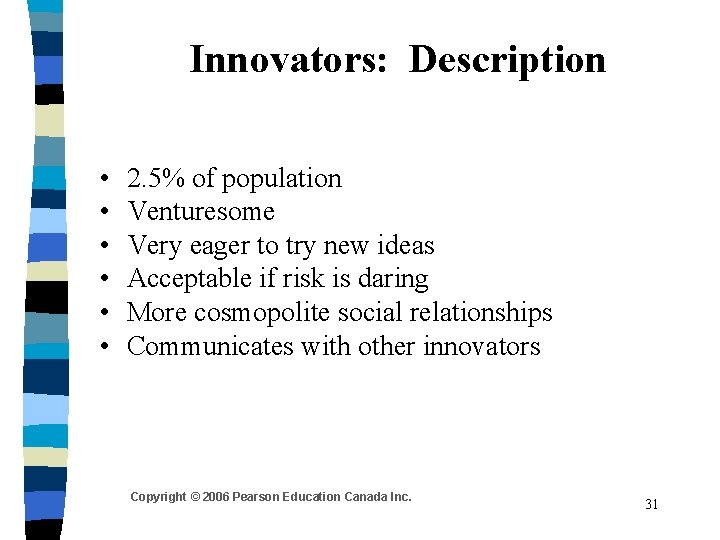
Innovators: Description • • • 2. 5% of population Venturesome Very eager to try new ideas Acceptable if risk is daring More cosmopolite social relationships Communicates with other innovators Copyright © 2006 Pearson Education Canada Inc. 31
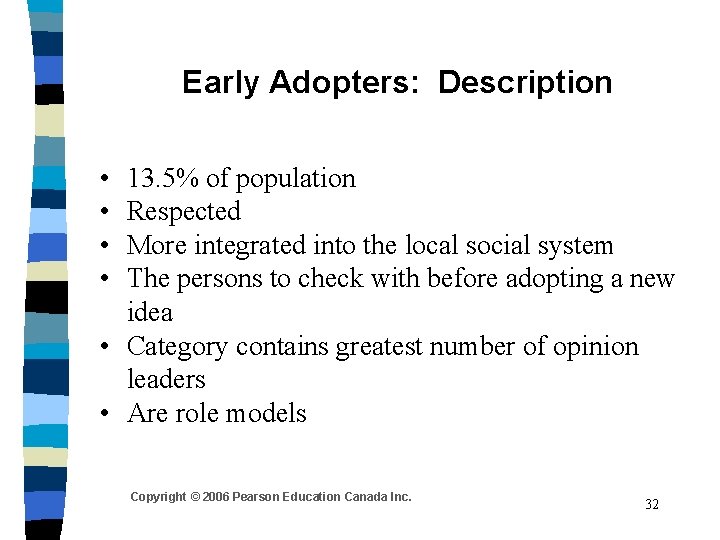
Early Adopters: Description • • 13. 5% of population Respected More integrated into the local social system The persons to check with before adopting a new idea • Category contains greatest number of opinion leaders • Are role models Copyright © 2006 Pearson Education Canada Inc. 32
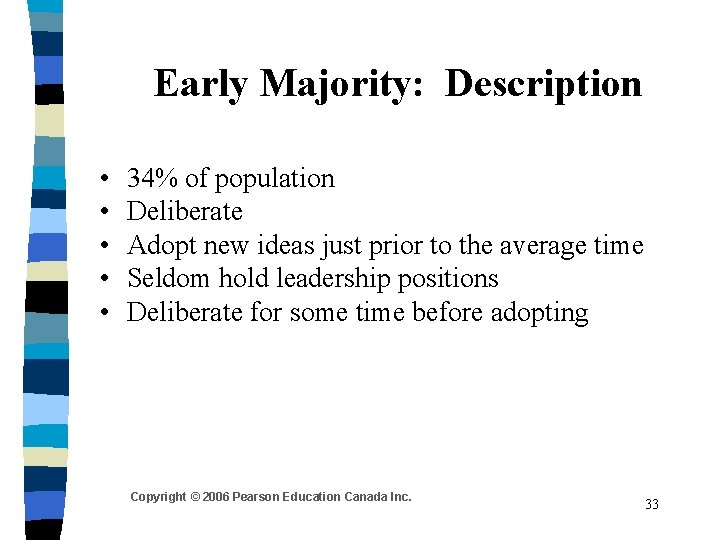
Early Majority: Description • • • 34% of population Deliberate Adopt new ideas just prior to the average time Seldom hold leadership positions Deliberate for some time before adopting Copyright © 2006 Pearson Education Canada Inc. 33
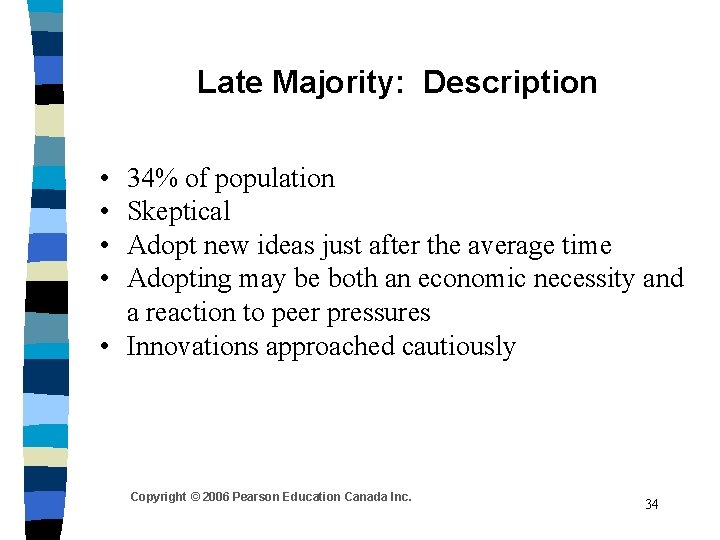
Late Majority: Description • • 34% of population Skeptical Adopt new ideas just after the average time Adopting may be both an economic necessity and a reaction to peer pressures • Innovations approached cautiously Copyright © 2006 Pearson Education Canada Inc. 34
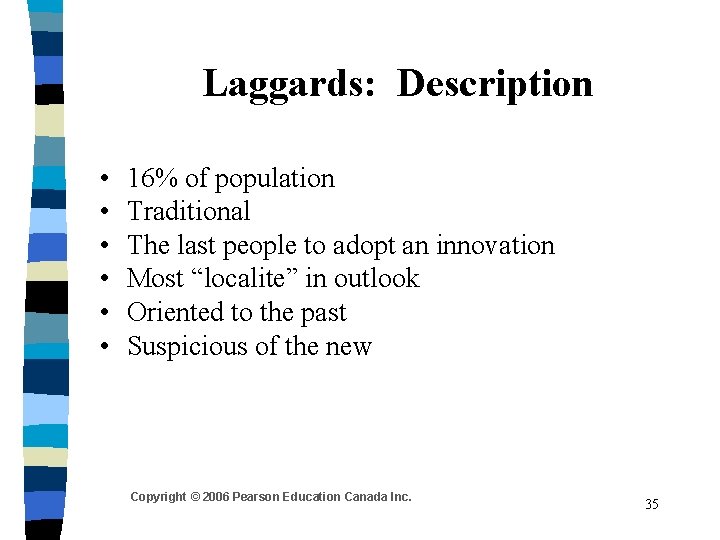
Laggards: Description • • • 16% of population Traditional The last people to adopt an innovation Most “localite” in outlook Oriented to the past Suspicious of the new Copyright © 2006 Pearson Education Canada Inc. 35
Rate of Adoption n Insert Figure 13 -16 A, B and C as small graphs; if that is not possible, then have one or two of them. Copyright © 2006 Pearson Education Canada Inc. 36
Copyright © 2006 Pearson Education Canada Inc. 37
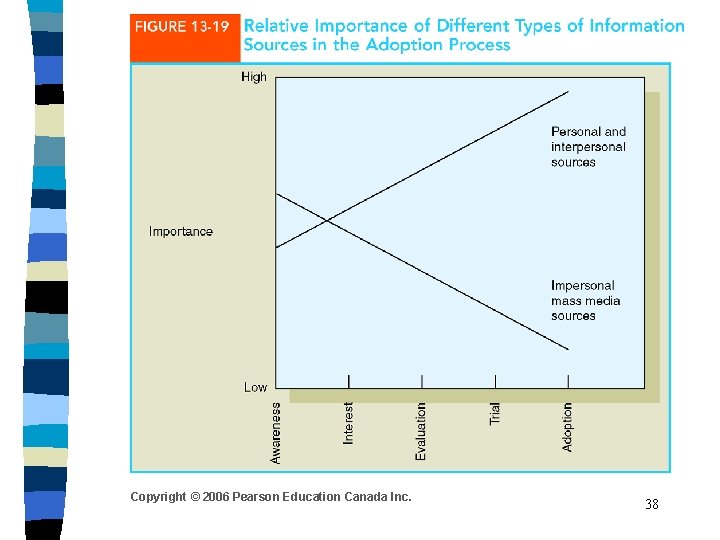
Copyright © 2006 Pearson Education Canada Inc. 38
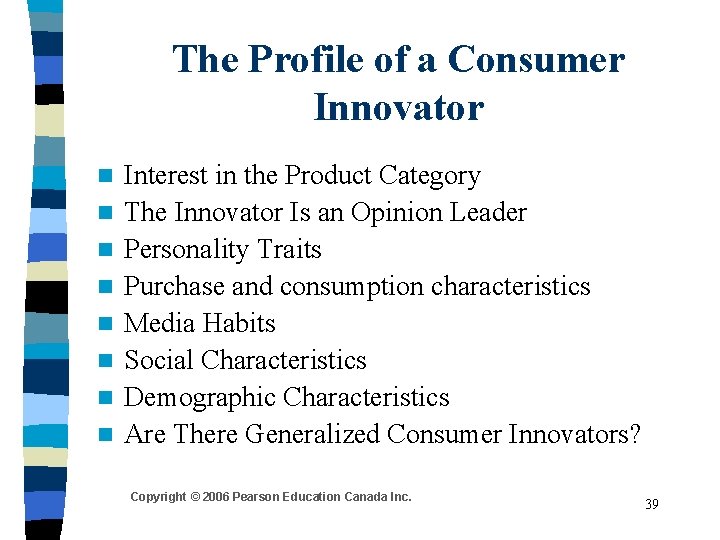
The Profile of a Consumer Innovator n n n n Interest in the Product Category The Innovator Is an Opinion Leader Personality Traits Purchase and consumption characteristics Media Habits Social Characteristics Demographic Characteristics Are There Generalized Consumer Innovators? Copyright © 2006 Pearson Education Canada Inc. 39
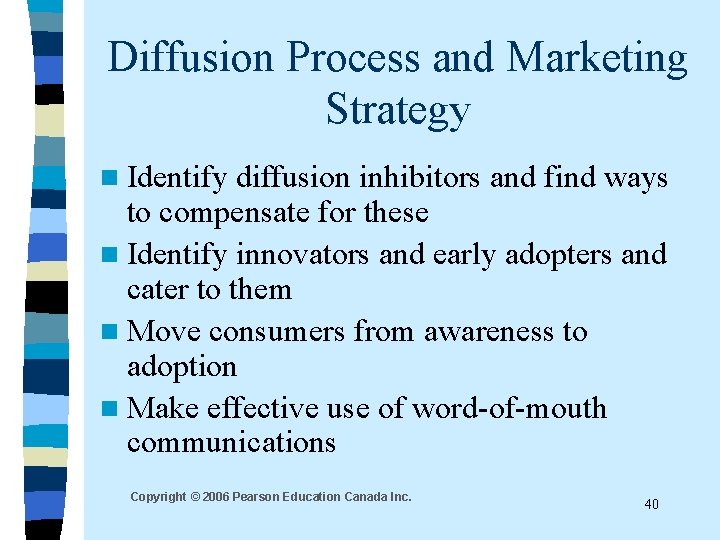
Diffusion Process and Marketing Strategy n Identify diffusion inhibitors and find ways to compensate for these n Identify innovators and early adopters and cater to them n Move consumers from awareness to adoption n Make effective use of word-of-mouth communications Copyright © 2006 Pearson Education Canada Inc. 40