
CHAPTER 13 Biological Productivity and Energy Transfer www
CHAPTER 13 Biological Productivity and Energy Transfer www. iupui. edu/~g 115/assets/mod 16/Ch 13_Lecture. ppt © 2011 Pearson Education, Inc.
Chapter Overview • Productivity is the same as photosynthesis, which is affected by sunlight and nutrients. • Productivity is globally and seasonally variable. • Feeding relationships are represented by food chains and food webs. • Oceans are being overfished. © 2011 Pearson Education, Inc.
Primary Productivity • Primary productivity is the rate at which energy is stored in organic matter. • Photosynthesis uses solar radiation. • Chemosynthesis uses chemical reactions. • 99. 9% of the ocean’s biomass relies directly or indirectly on photosynthesis for food. © 2011 Pearson Education, Inc.
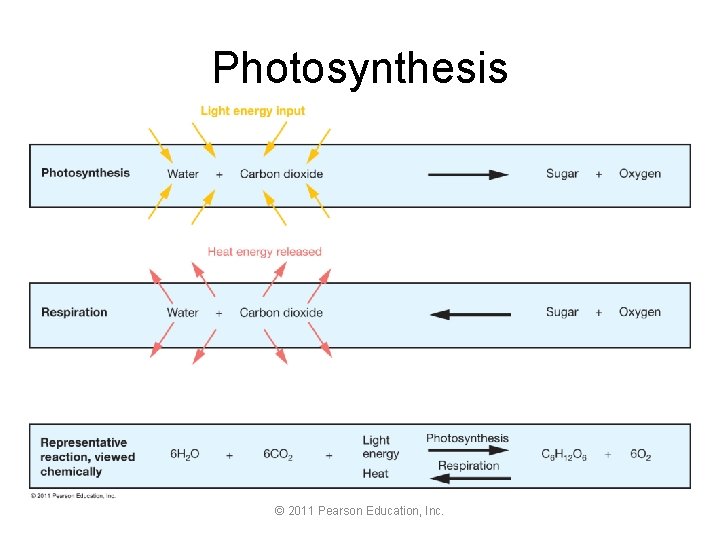
Photosynthesis © 2011 Pearson Education, Inc.
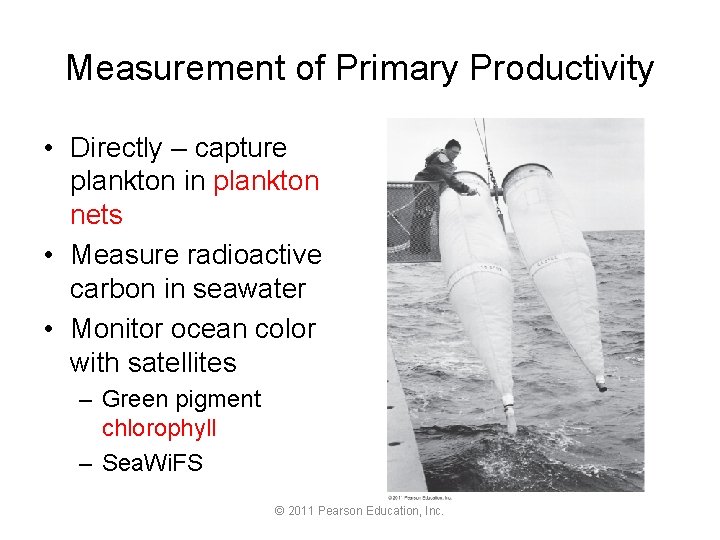
Measurement of Primary Productivity • Directly – capture plankton in plankton nets • Measure radioactive carbon in seawater • Monitor ocean color with satellites – Green pigment chlorophyll – Sea. Wi. FS © 2011 Pearson Education, Inc.
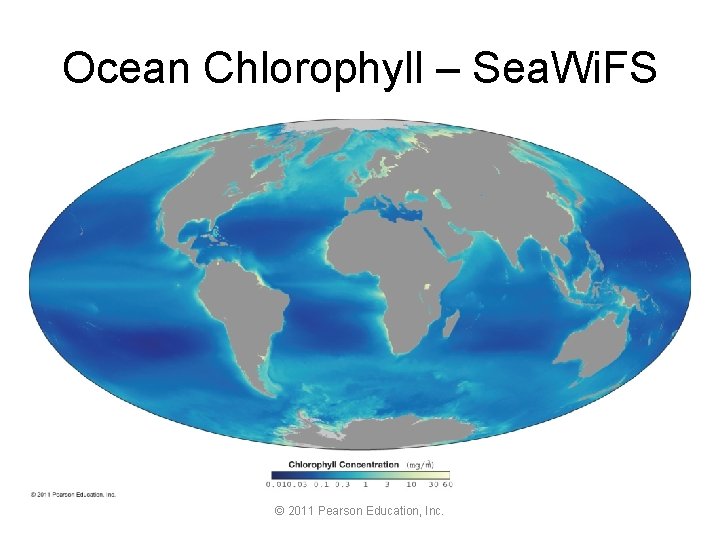
Ocean Chlorophyll – Sea. Wi. FS © 2011 Pearson Education, Inc.
Factors Affecting Primary Productivity • Nutrient availability – Nitrate, phosphorous, iron, silica – Most from river runoff – Productivity high along continental margins – Redfield ratio – C: N: P © 2011 Pearson Education, Inc.
Factors Affecting Primary Productivity • Solar radiation – Uppermost surface seawater and shallow seafloor – Compensation depth – net photosynthesis becomes zero – Euphotic zone—from surface to about 100 meters (330 feet) © 2011 Pearson Education, Inc.
Light Transmission in Ocean Water • Visible light of the electromagnetic spectrum • Blue wavelengths penetrate deepest • Longer wavelengths (red, orange) absorbed first © 2011 Pearson Education, Inc.
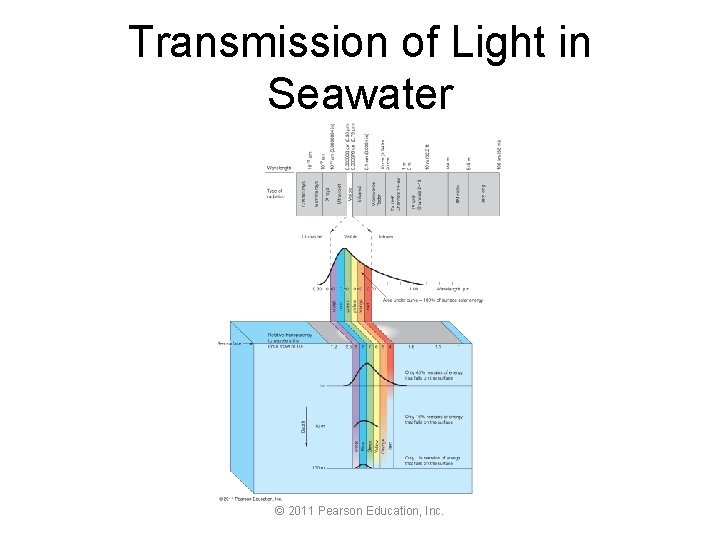
Transmission of Light in Seawater © 2011 Pearson Education, Inc.
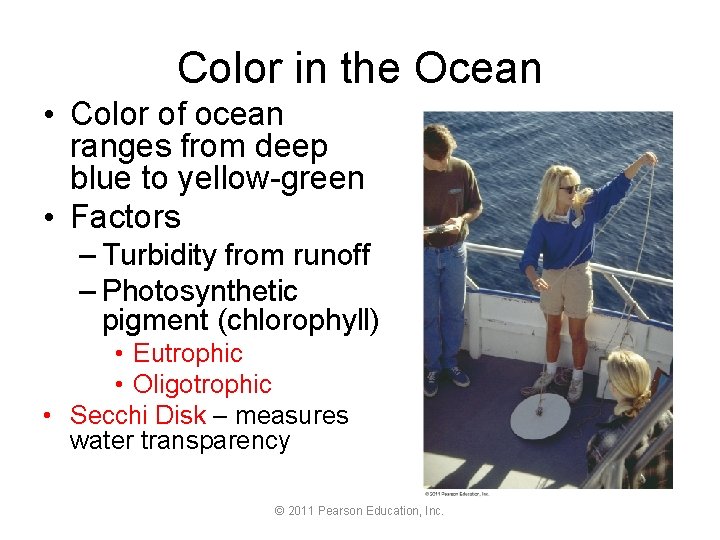
Color in the Ocean • Color of ocean ranges from deep blue to yellow-green • Factors – Turbidity from runoff – Photosynthetic pigment (chlorophyll) • Eutrophic • Oligotrophic • Secchi Disk – measures water transparency © 2011 Pearson Education, Inc.
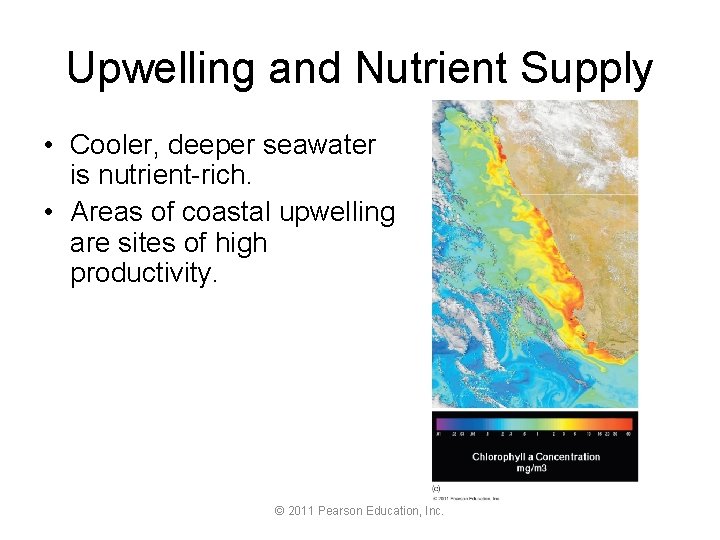
Upwelling and Nutrient Supply • Cooler, deeper seawater is nutrient-rich. • Areas of coastal upwelling are sites of high productivity. © 2011 Pearson Education, Inc.
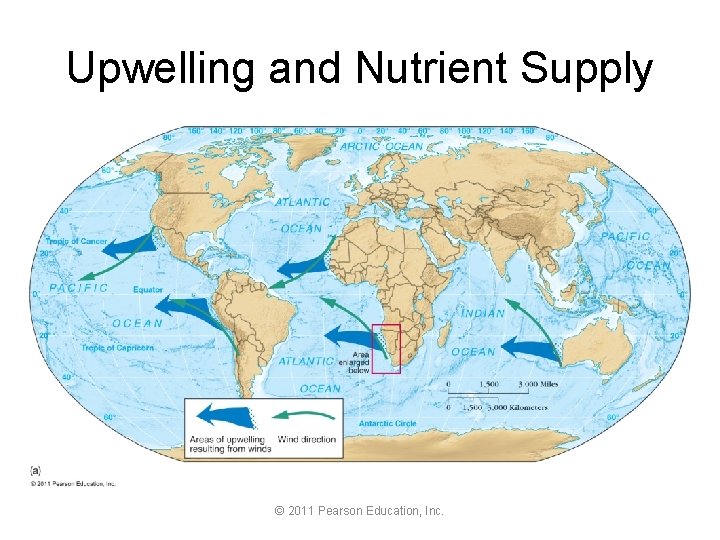
Upwelling and Nutrient Supply © 2011 Pearson Education, Inc.
Types of Photosynthetic Marine Organisms • Anthophyta – Seed-bearing plants • Macroscopic (large) algae • Microscopic (small) algae • Photosynthetic bacteria © 2011 Pearson Education, Inc.
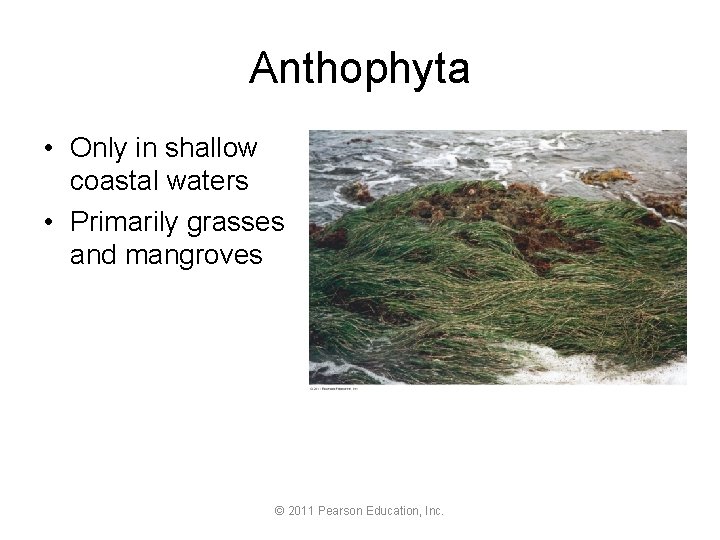
Anthophyta • Only in shallow coastal waters • Primarily grasses and mangroves © 2011 Pearson Education, Inc.
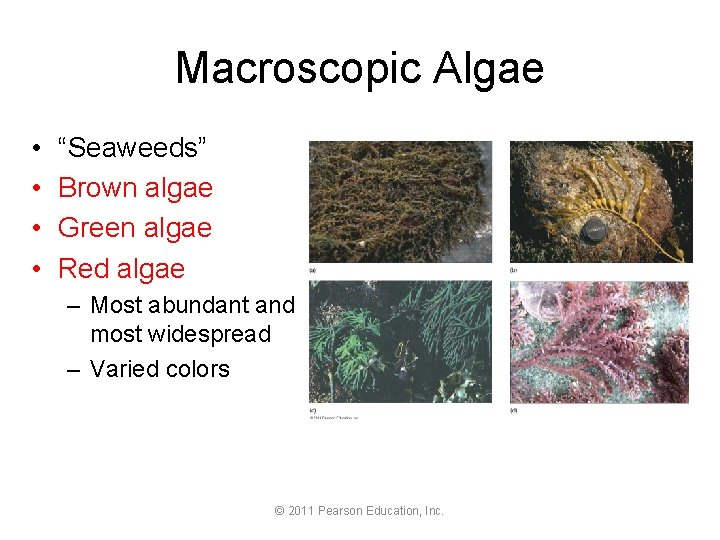
Macroscopic Algae • • “Seaweeds” Brown algae Green algae Red algae – Most abundant and most widespread – Varied colors © 2011 Pearson Education, Inc.
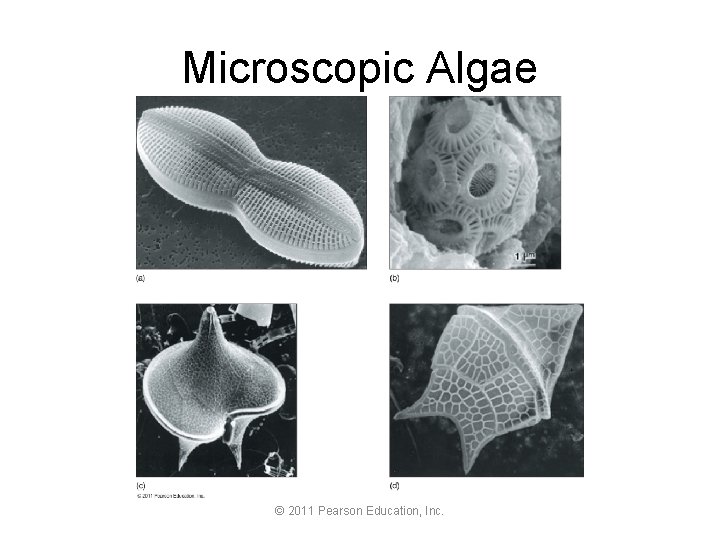
Microscopic Algae • Produce food for 99% of marine animals • Most planktonic • Golden algae – Diatoms – tests made of silica – Coccolithophores – plates of calcium carbonate • Dinoflagellates – Red tide (harmful algal bloom) – Toxins – Fish kills – Human illness © 2011 Pearson Education, Inc.
Microscopic Algae © 2011 Pearson Education, Inc.
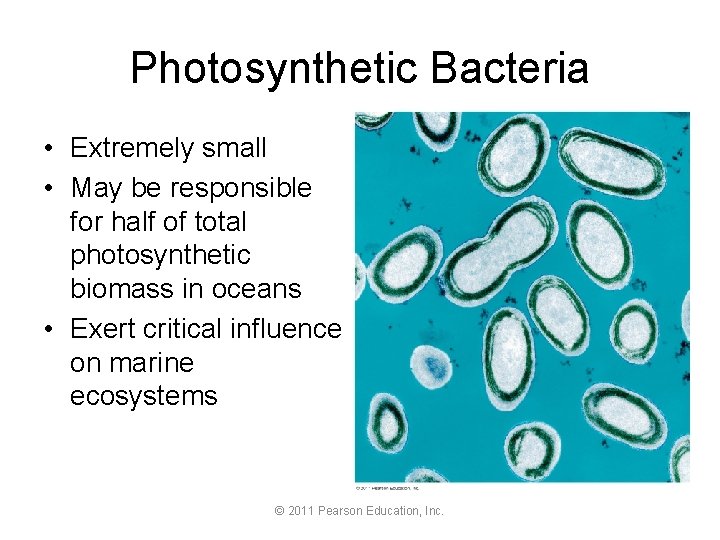
Photosynthetic Bacteria • Extremely small • May be responsible for half of total photosynthetic biomass in oceans • Exert critical influence on marine ecosystems © 2011 Pearson Education, Inc.
Regional Primary Productivity Variations • Values range from 1 g. C/m 2/year to 4000 g. C/m 2/year based on: – Uneven distribution of nutrients – Changes in availability of sunlight • 90% of biomass from euphotic zone decomposes before descending © 2011 Pearson Education, Inc.
Regional Primary Productivity Variations • Only 1% of organic matter is not decomposed in the deep ocean. • Biological pump – moves material from euphotic zone to sea floor • Subtropical gyre thermoclines and pycnoclines prevent the resupply of nutrients to the surface. © 2011 Pearson Education, Inc.
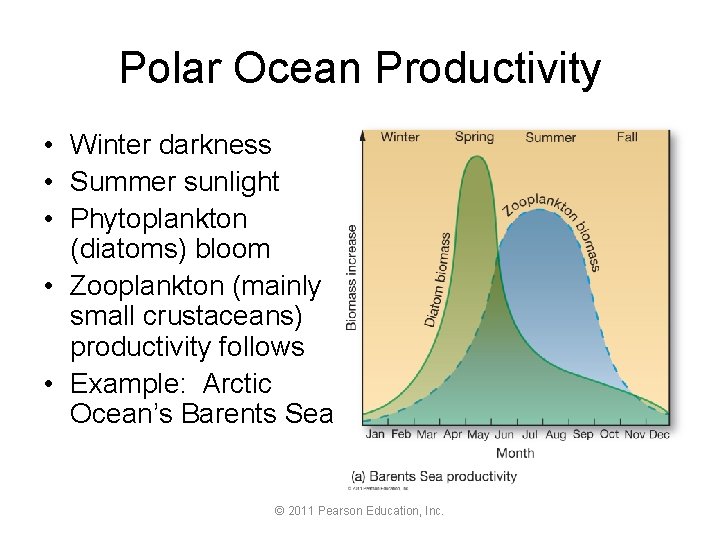
Polar Ocean Productivity • Winter darkness • Summer sunlight • Phytoplankton (diatoms) bloom • Zooplankton (mainly small crustaceans) productivity follows • Example: Arctic Ocean’s Barents Sea © 2011 Pearson Education, Inc.
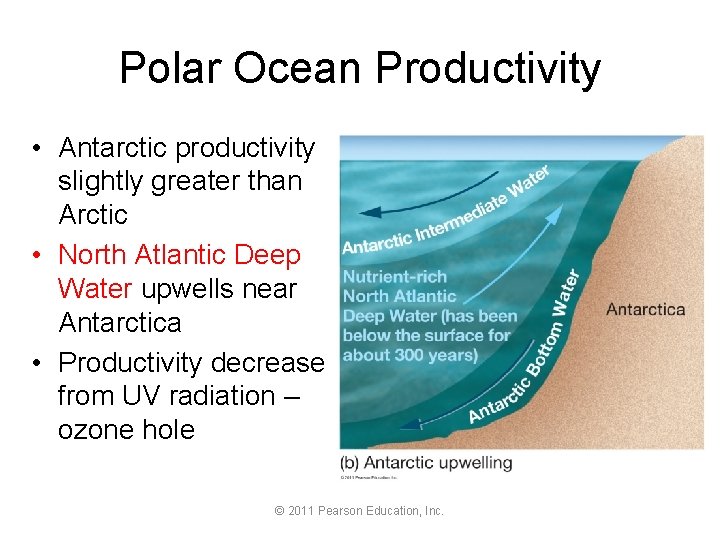
Polar Ocean Productivity • Antarctic productivity slightly greater than Arctic • North Atlantic Deep Water upwells near Antarctica • Productivity decrease from UV radiation – ozone hole © 2011 Pearson Education, Inc.
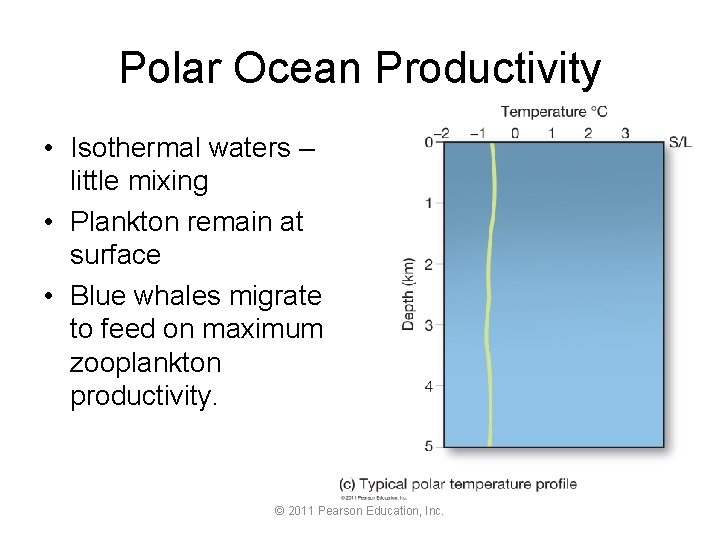
Polar Ocean Productivity • Isothermal waters – little mixing • Plankton remain at surface • Blue whales migrate to feed on maximum zooplankton productivity. © 2011 Pearson Education, Inc.
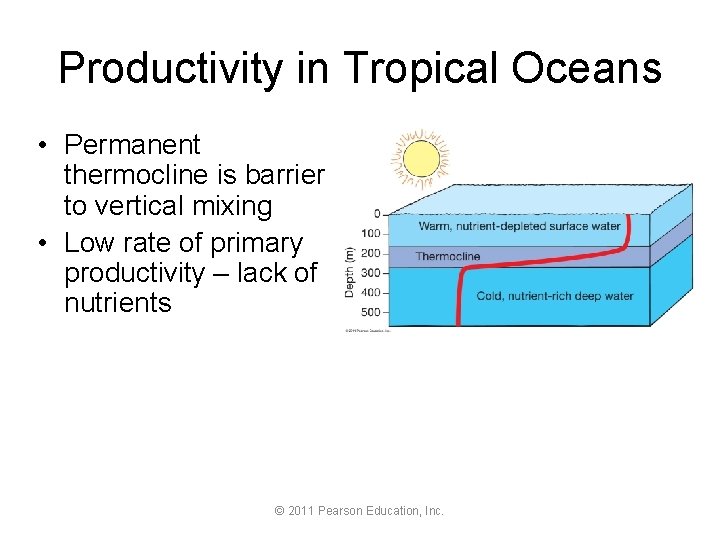
Productivity in Tropical Oceans • Permanent thermocline is barrier to vertical mixing • Low rate of primary productivity – lack of nutrients © 2011 Pearson Education, Inc.
Productivity in Tropical Oceans • High primary productivity in areas of – Equatorial upwelling – Coastal upwelling – Coral reefs • Symbiotic algae • Recycle nutrients within the ecosystem © 2011 Pearson Education, Inc.
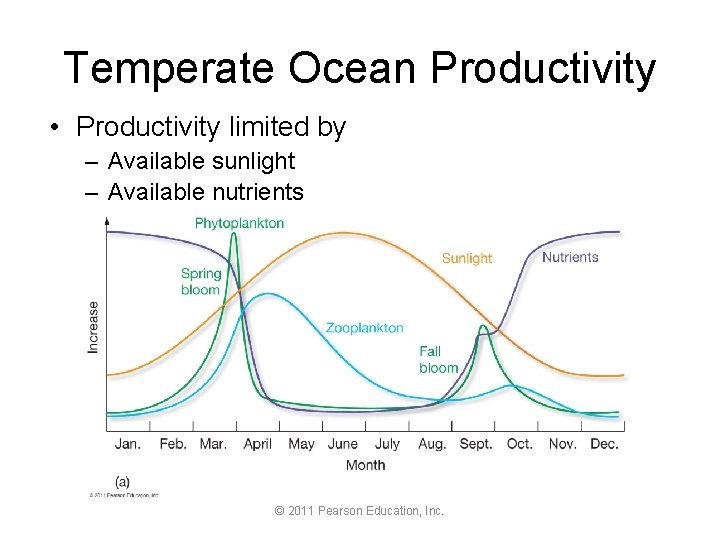
Temperate Ocean Productivity • Productivity limited by – Available sunlight – Available nutrients © 2011 Pearson Education, Inc.
Temperate Ocean Productivity • Highly seasonal pattern • Winter low – Many nutrients, little sunlight • Spring high – Spring bloom • Summer low – Few nutrients, abundant sunlight • Fall high – Fall bloom © 2011 Pearson Education, Inc.
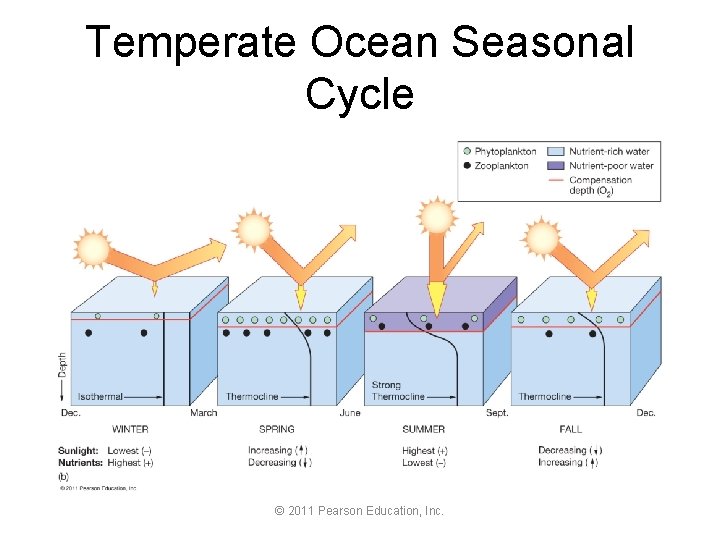
Temperate Ocean Seasonal Cycle © 2011 Pearson Education, Inc.
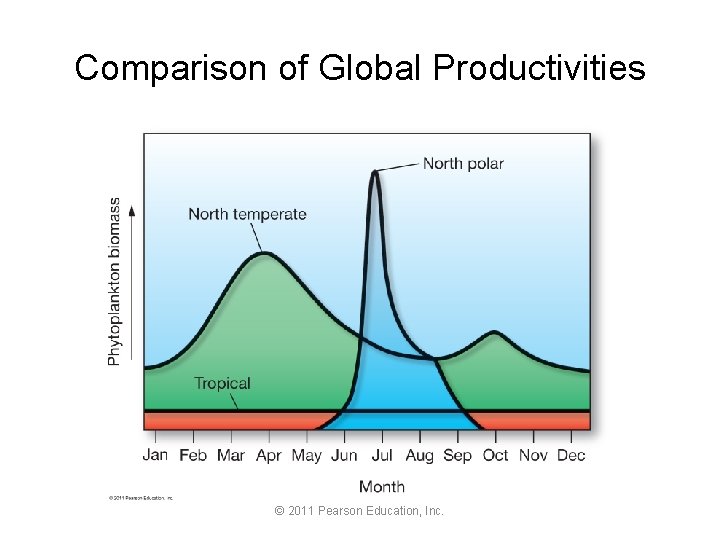
Comparison of Global Productivities © 2011 Pearson Education, Inc.
Energy Flow in Marine Systems • Biotic community – assemblage of organisms in definable area • Ecosystem – biotic community plus environment • Energy flow is unidirectional based on solar energy input. © 2011 Pearson Education, Inc.
Energy Flow in Marine Systems • Three categories of organisms: • Producers – Nourish themselves with photosynthesis or chemosynthesis – Autotrophic • Consumers – Eat other organisms – Heterotrophic • Decomposers – break down dead organisms or waste © 2011 Pearson Education, Inc.
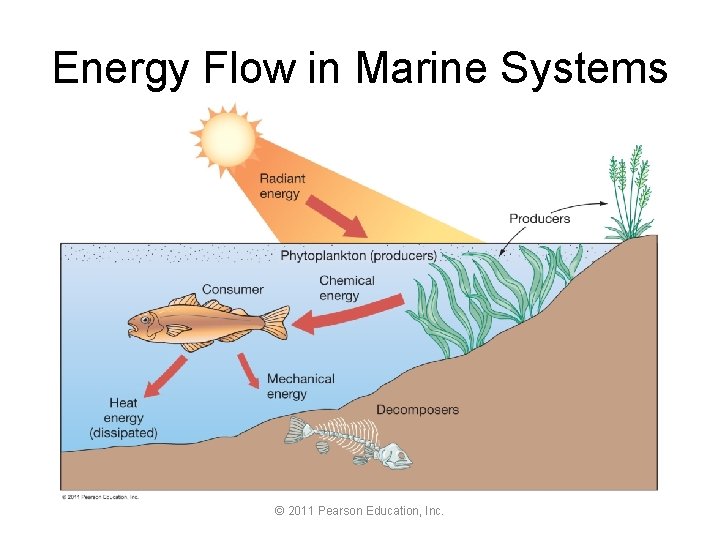
Energy Flow in Marine Systems © 2011 Pearson Education, Inc.
Consumers in Marine Ecosystems • • Herbivores – eat plants Carnivores – eat other animals Omnivores – eat plants and animals Bacteriovores – eat bacteria © 2011 Pearson Education, Inc.
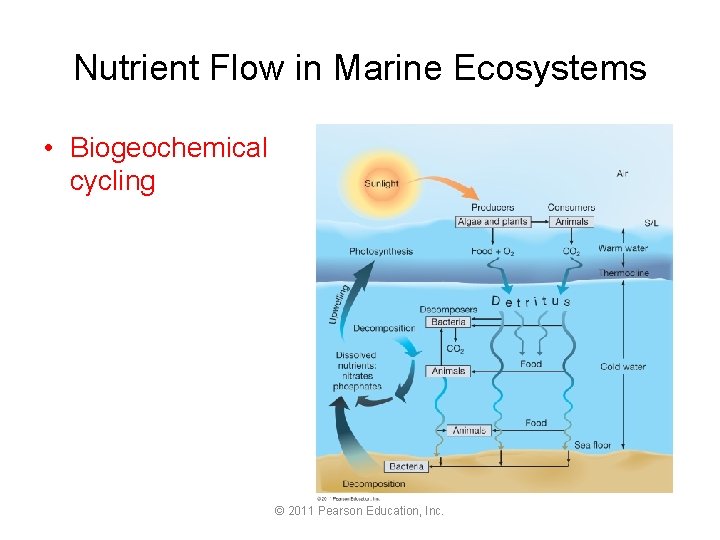
Nutrient Flow in Marine Ecosystems • Biogeochemical cycling © 2011 Pearson Education, Inc.
Feeding Strategies • Suspension feeding or filter feeding – Take in seawater and filter out usable organic matter • Deposit feeding – Take in detritus and sediment and extract usable organic matter • Carnivorous feeding – Capture and eat other animals © 2011 Pearson Education, Inc.
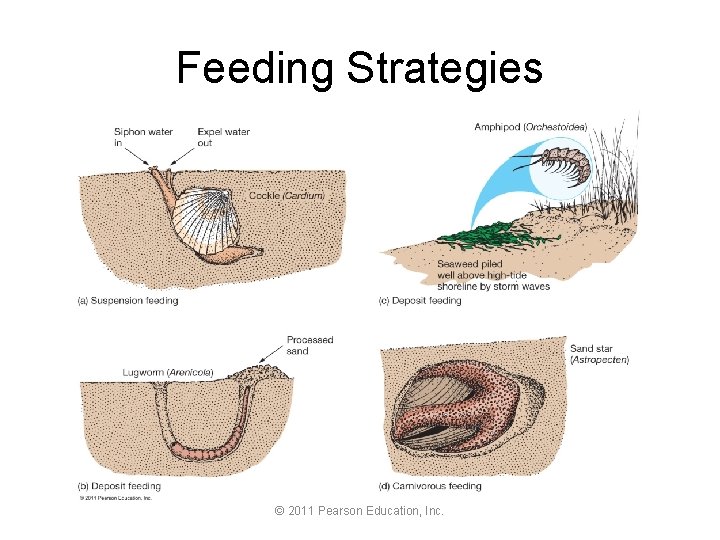
Feeding Strategies © 2011 Pearson Education, Inc.
Trophic Levels • Feeding stage • Chemical energy transferred from producers to consumers • About 10% of energy transferred to next trophic level • Gross ecological efficiency © 2011 Pearson Education, Inc.
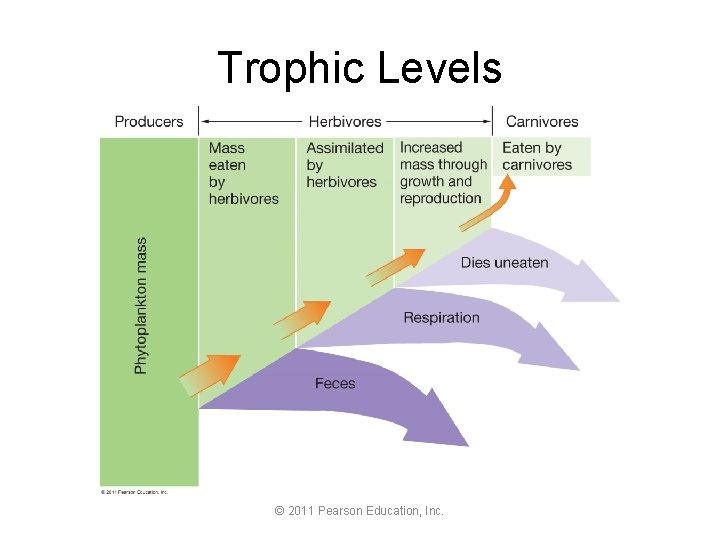
Trophic Levels © 2011 Pearson Education, Inc.
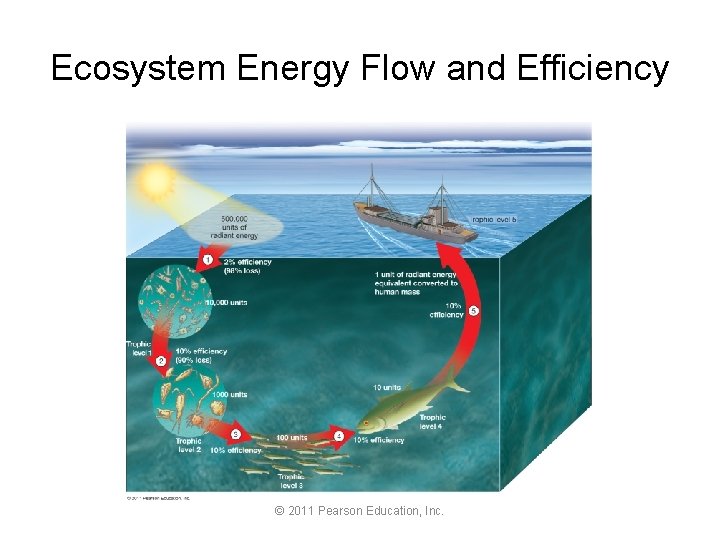
Ecosystem Energy Flow and Efficiency © 2011 Pearson Education, Inc.
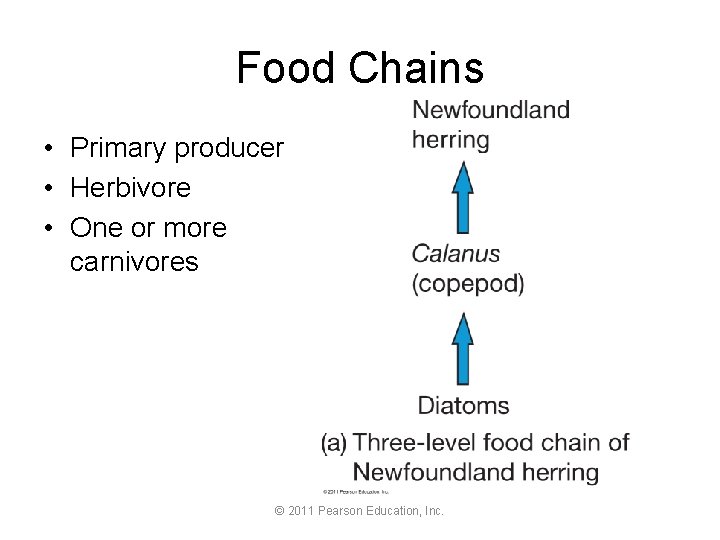
Food Chains • Primary producer • Herbivore • One or more carnivores © 2011 Pearson Education, Inc.
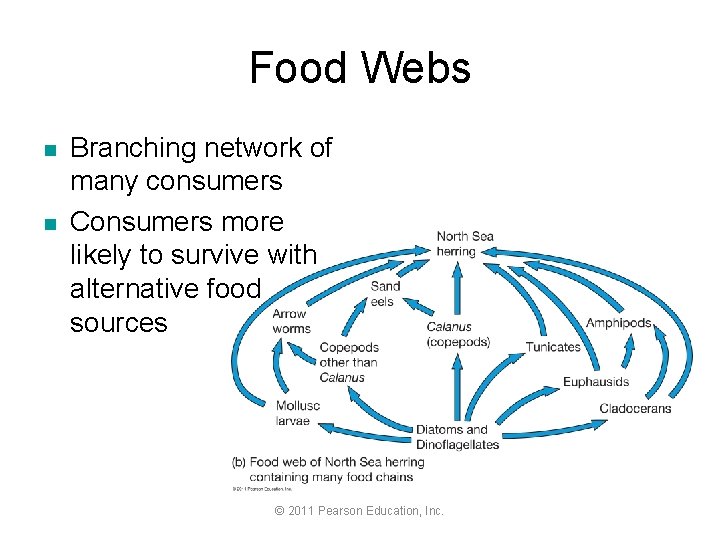
Food Webs n n Branching network of many consumers Consumers more likely to survive with alternative food sources © 2011 Pearson Education, Inc.
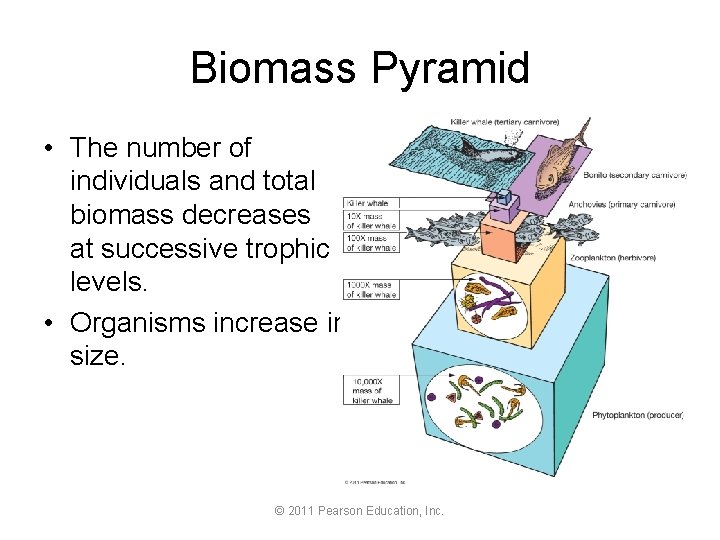
Biomass Pyramid • The number of individuals and total biomass decreases at successive trophic levels. • Organisms increase in size. © 2011 Pearson Education, Inc.
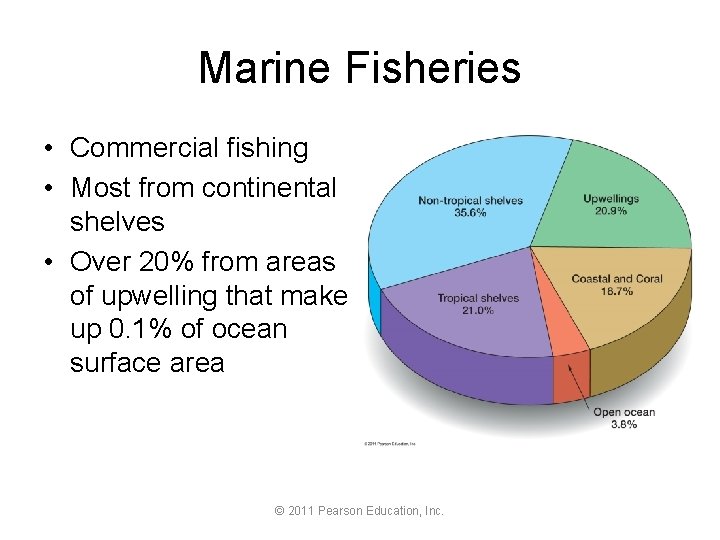
Marine Fisheries • Commercial fishing • Most from continental shelves • Over 20% from areas of upwelling that make up 0. 1% of ocean surface area © 2011 Pearson Education, Inc.
Overfishing • Fish from standing stock – the mass present in the ecosystem at any given time • Overfishing – fish stock harvested too rapidly, juveniles not sexually mature to reproduce • Reduction in Maximum Sustainable Yield (MSY) © 2011 Pearson Education, Inc.
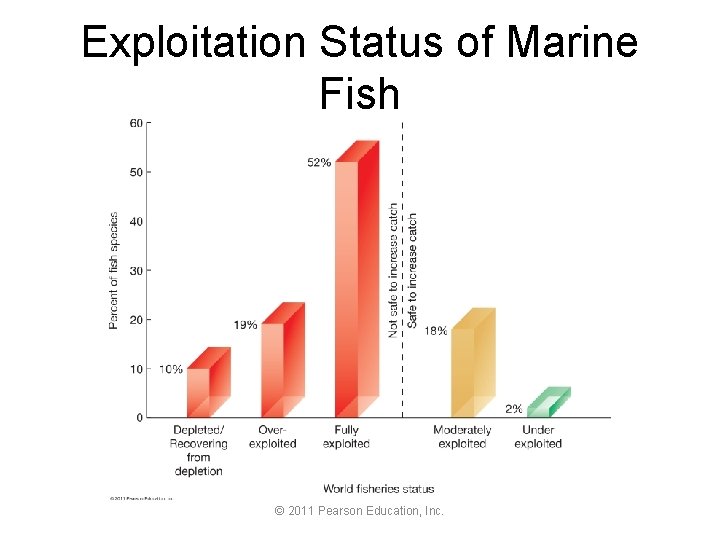
Exploitation Status of Marine Fish © 2011 Pearson Education, Inc.
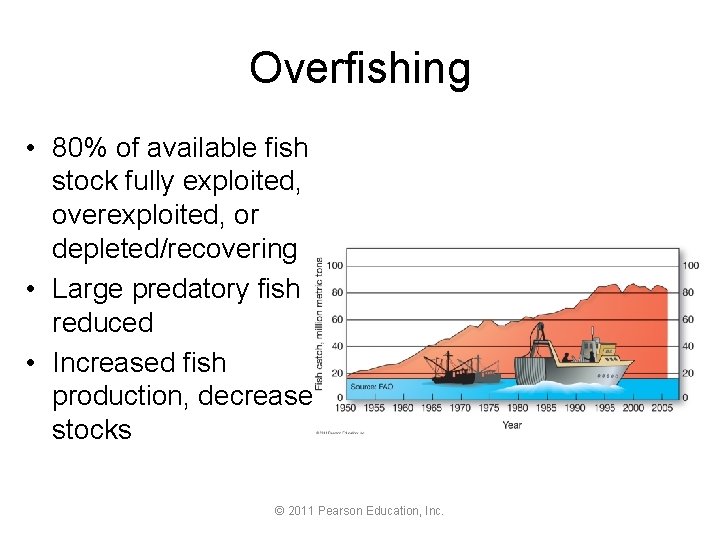
Overfishing • 80% of available fish stock fully exploited, overexploited, or depleted/recovering • Large predatory fish reduced • Increased fish production, decreased stocks © 2011 Pearson Education, Inc.
Incidental Catch or Bycatch • Non-commercial species are taken incidentally by commercial fishers. • Bycatch may be up to 8 times more than the intended catch. – Birds, turtles, dolphins, sharks © 2011 Pearson Education, Inc.
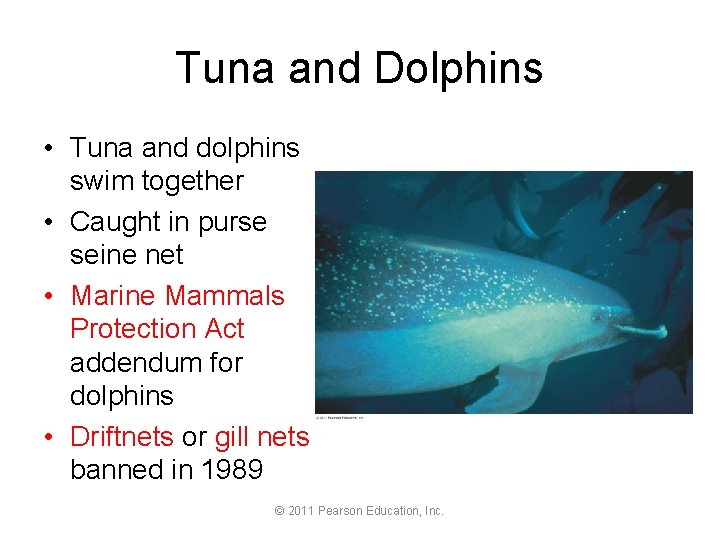
Tuna and Dolphins • Tuna and dolphins swim together • Caught in purse seine net • Marine Mammals Protection Act addendum for dolphins • Driftnets or gill nets banned in 1989 © 2011 Pearson Education, Inc.
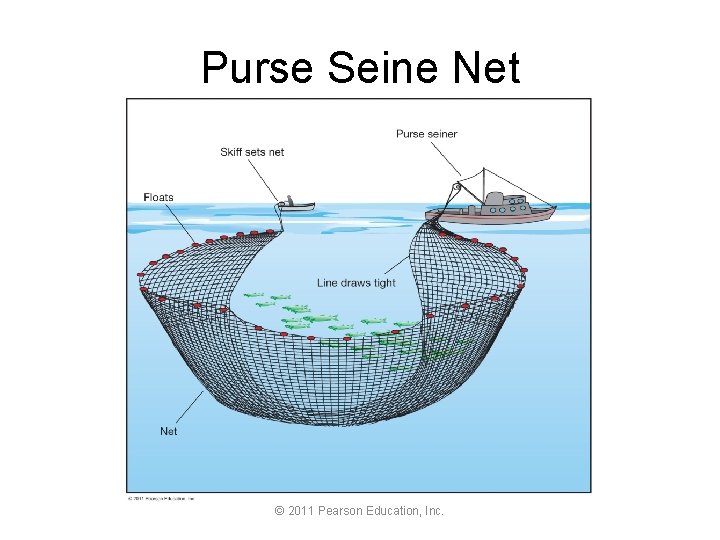
Purse Seine Net © 2011 Pearson Education, Inc.
Fisheries Management • • • Regulate fishing Conflicting interests Human employment Self-sustaining marine ecosystems International waters Enforcement difficult © 2011 Pearson Education, Inc.
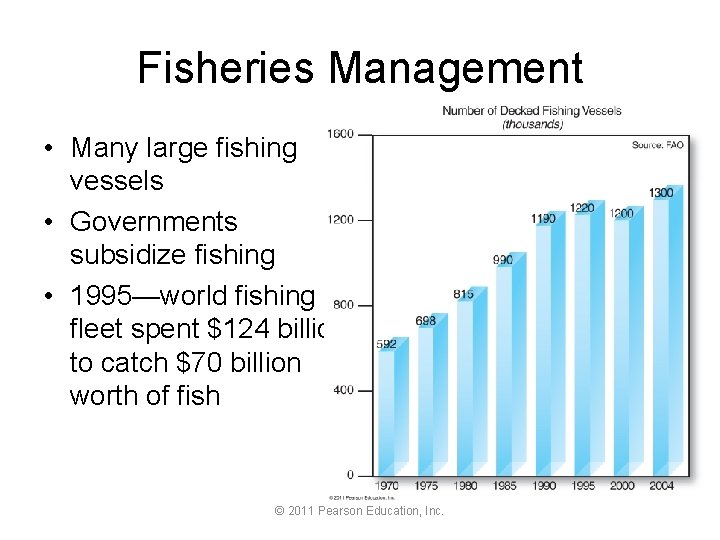
Fisheries Management • Many large fishing vessels • Governments subsidize fishing • 1995—world fishing fleet spent $124 billion to catch $70 billion worth of fish © 2011 Pearson Education, Inc.
Fisheries Management • Northwest Atlantic Fisheries such as Grand Banks and Georges Bank • Canada and United States restrict fishing and enforce bans • Some fish stocks in North Atlantic rebounding • Other fish stocks still in decline (e. g. , cod) © 2011 Pearson Education, Inc.
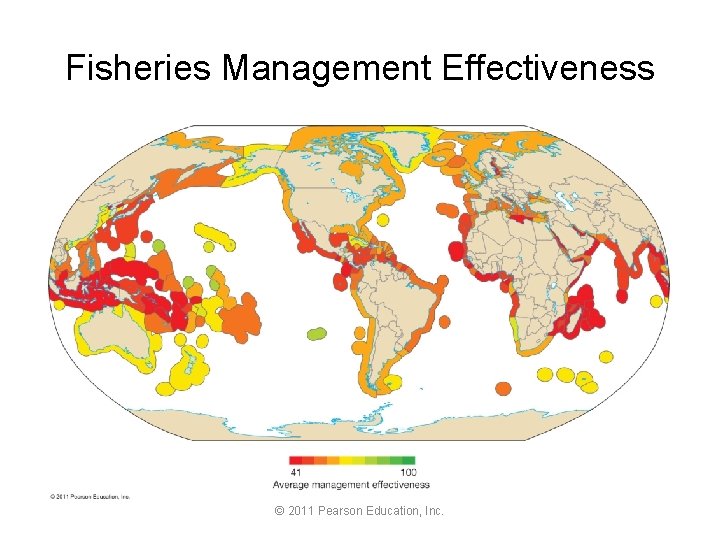
Fisheries Management Effectiveness © 2011 Pearson Education, Inc.
Fisheries Management • Consumer choices in seafood • Consume and purchase seafood from healthy, thriving fisheries – Examples: farmed seafood, Alaska salmon • Ecosystem-based fishery management • Avoid overfished or depleted seafood – Examples: tuna, shark, shrimp © 2011 Pearson Education, Inc.
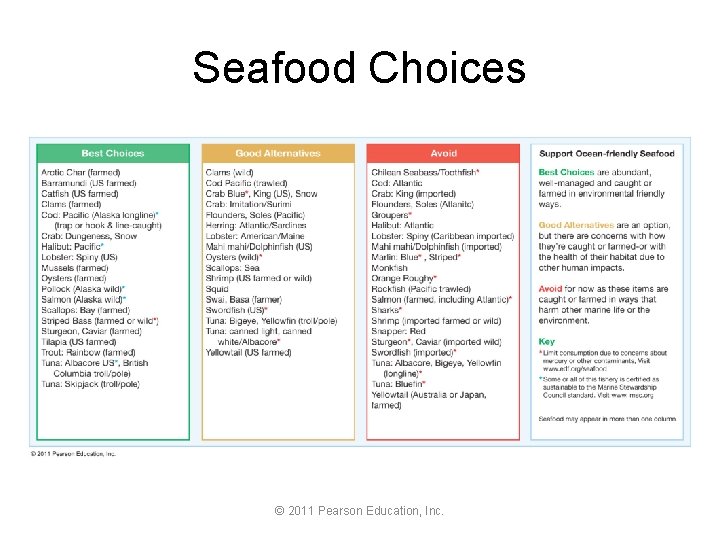
Seafood Choices © 2011 Pearson Education, Inc.
End of CHAPTER 13 Biological Productivity and Energy Transfer © 2011 Pearson Education, Inc.
- Slides: 57