
Chapter 13 Agents Used to Treat Hyperuricemia and
- Slides: 12
Chapter 13 Agents Used to Treat Hyperuricemia and Gout
Gout is a metabolic disease associated with the development of high uric acid in the blood. It is a metabolic defect and is not caused by excessive intake of meat and alcohol. l l 2 Copyright 2007 Thomson Delmar Learning, a division of Thomson Learning Inc. All rights reserved.
Uric Acid Uric acid is formed from the breakdown of proteins. The accumulation of uric acid causes a problem in the joints and kidneys: l l £ £ Kidney stones Kidney failure Gouty arthritis Hyperuricemia 3 Copyright 2007 Thomson Delmar Learning, a division of Thomson Learning Inc. All rights reserved.
Acute Attacks Acute attacks of gout are treated with: l £ £ £ Nonsteroidal anti-inflammatory drugs (NSAIDs) Corticosteroids Colchicine: intravenously or orally 4 Copyright 2007 Thomson Delmar Learning, a division of Thomson Learning Inc. All rights reserved.
Agents Used Corticosteroids and NSAIDs actions l £ £ Produce anti-inflammatory effects Produce analgesic effects Colchicine’s action is unclear l £ £ Reduces leukocyte production of lactic acid Reduces phagocytic activity 5 Copyright 2007 Thomson Delmar Learning, a division of Thomson Learning Inc. All rights reserved.
Colchicine Not a first-line agent because of its adverse side effects l 6 (continues) Copyright 2007 Thomson Delmar Learning, a division of Thomson Learning Inc. All rights reserved.
(continued) Colchicine Major adverse effects: l £ £ £ Nausea, vomiting, and diarrhea Gastrointestinal bleeding Neuritis Myopathy Alopecia Bone marrow depression 7 Copyright 2007 Thomson Delmar Learning, a division of Thomson Learning Inc. All rights reserved.
Long-term Control Most commonly used agent for gout: l £ Allopurinol: prevents formation of uric acid u Adverse effects: hepatotoxicity and skin rash 8 Copyright 2007 Thomson Delmar Learning, a division of Thomson Learning Inc. All rights reserved.
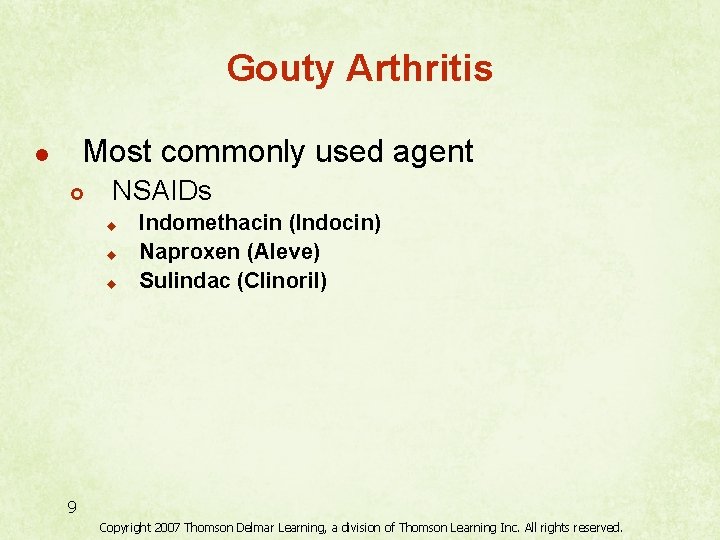
Gouty Arthritis Most commonly used agent l £ NSAIDs u u u Indomethacin (Indocin) Naproxen (Aleve) Sulindac (Clinoril) 9 Copyright 2007 Thomson Delmar Learning, a division of Thomson Learning Inc. All rights reserved.
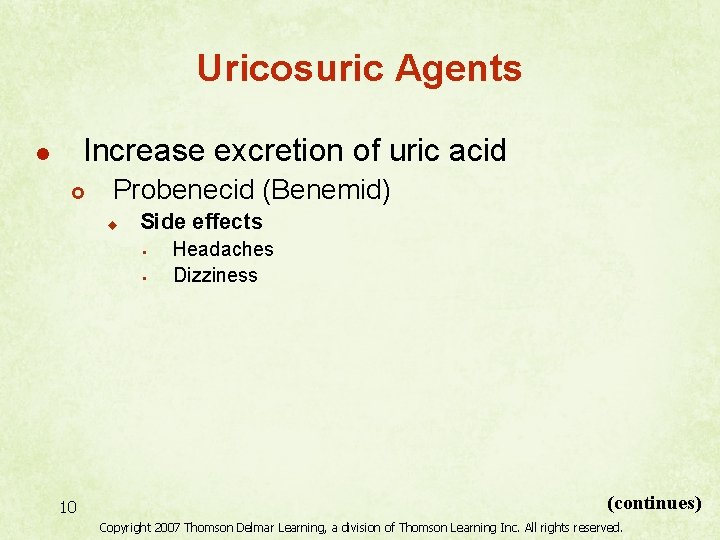
Uricosuric Agents Increase excretion of uric acid l £ Probenecid (Benemid) u Side effects • • 10 Headaches Dizziness (continues) Copyright 2007 Thomson Delmar Learning, a division of Thomson Learning Inc. All rights reserved.
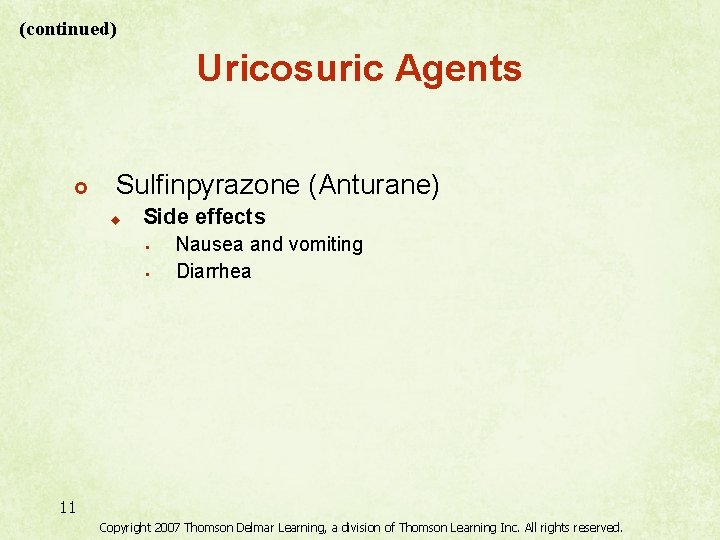
(continued) Uricosuric Agents £ Sulfinpyrazone (Anturane) u Side effects • • Nausea and vomiting Diarrhea 11 Copyright 2007 Thomson Delmar Learning, a division of Thomson Learning Inc. All rights reserved.
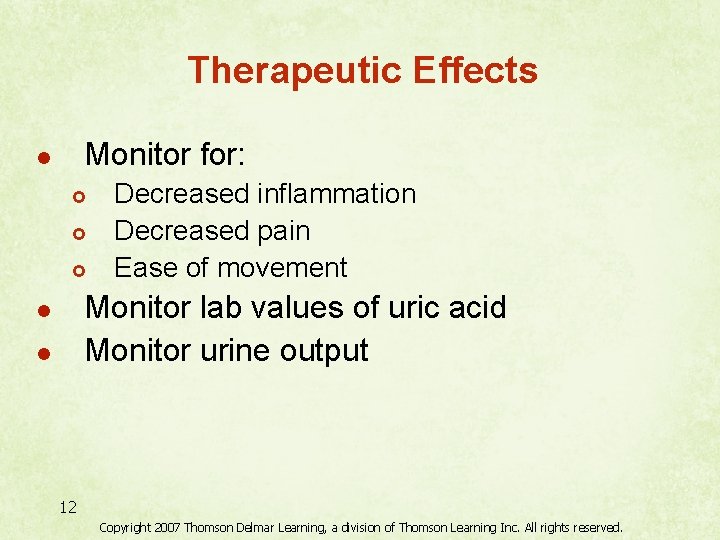
Therapeutic Effects Monitor for: l £ £ £ Decreased inflammation Decreased pain Ease of movement Monitor lab values of uric acid Monitor urine output l l 12 Copyright 2007 Thomson Delmar Learning, a division of Thomson Learning Inc. All rights reserved.