
Chapter 13 2 RNA and Protein Synthesis Translation
- Slides: 12
Chapter 13. 2 RNA and Protein Synthesis Translation
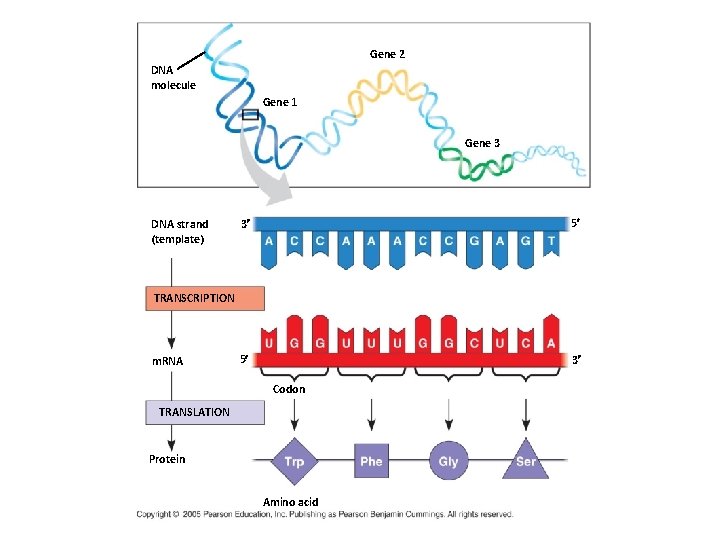
Gene 2 DNA molecule Gene 1 Gene 3 DNA strand (template) 3¢ 5¢ 5¢ 3¢ TRANSCRIPTION m. RNA Codon TRANSLATION Protein Amino acid
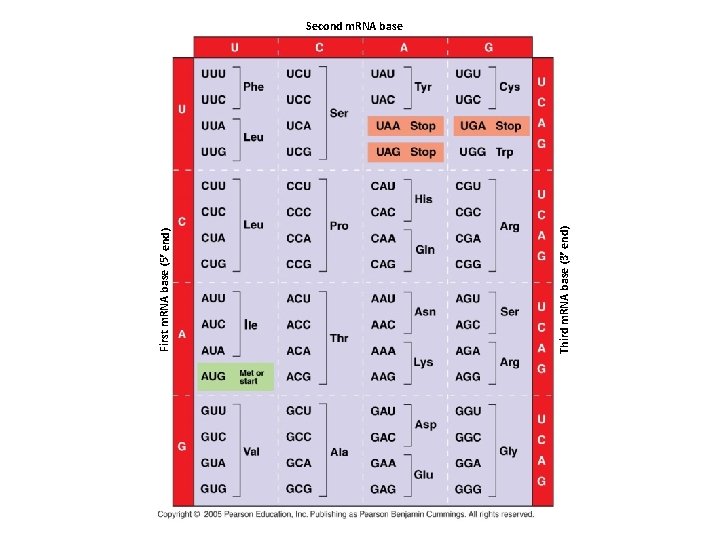
Third m. RNA base (3¢ end) First m. RNA base (5¢ end) Second m. RNA base
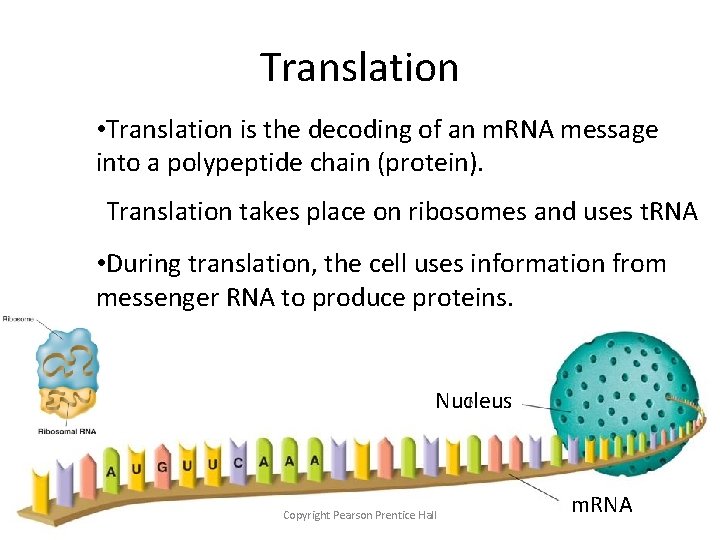
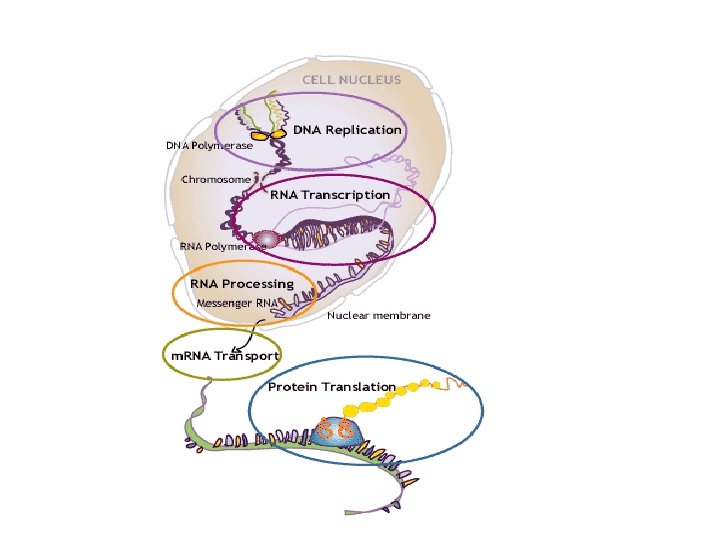
Translation • Translation is the decoding of an m. RNA message into a polypeptide chain (protein). • Translation takes place on ribosomes and uses t. RNA • During translation, the cell uses information from messenger RNA to produce proteins. Nucleus Copyright Pearson Prentice Hall m. RNA
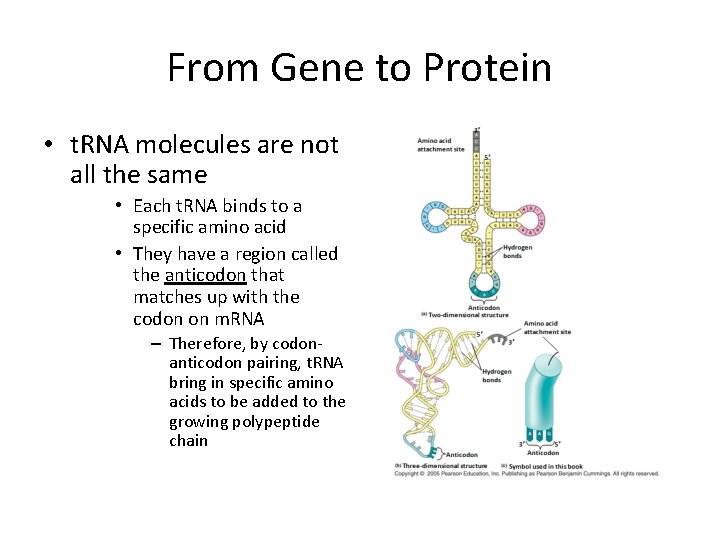
From Gene to Protein • t. RNA molecules are not all the same • Each t. RNA binds to a specific amino acid • They have a region called the anticodon that matches up with the codon on m. RNA – Therefore, by codonanticodon pairing, t. RNA bring in specific amino acids to be added to the growing polypeptide chain
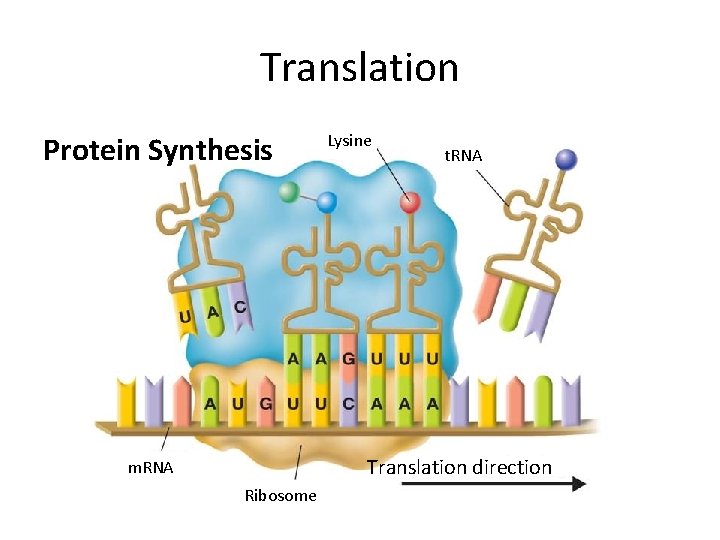
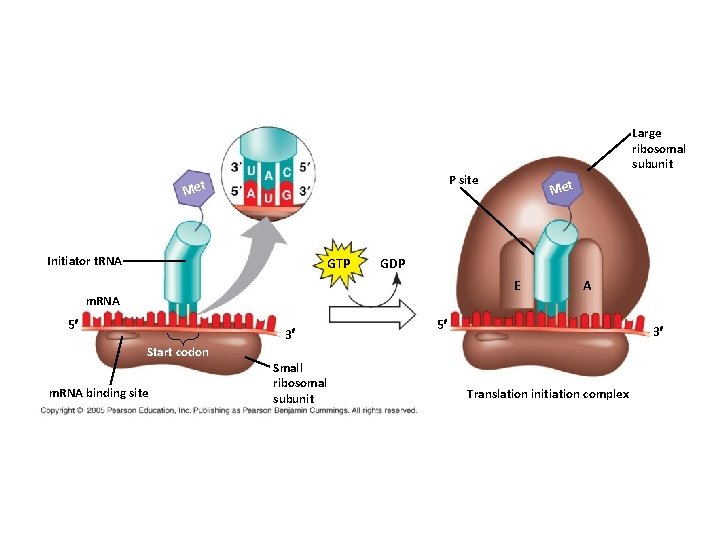
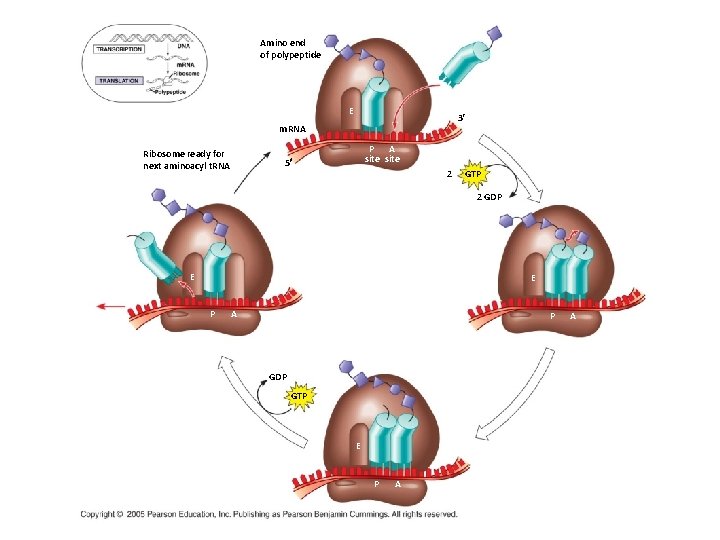
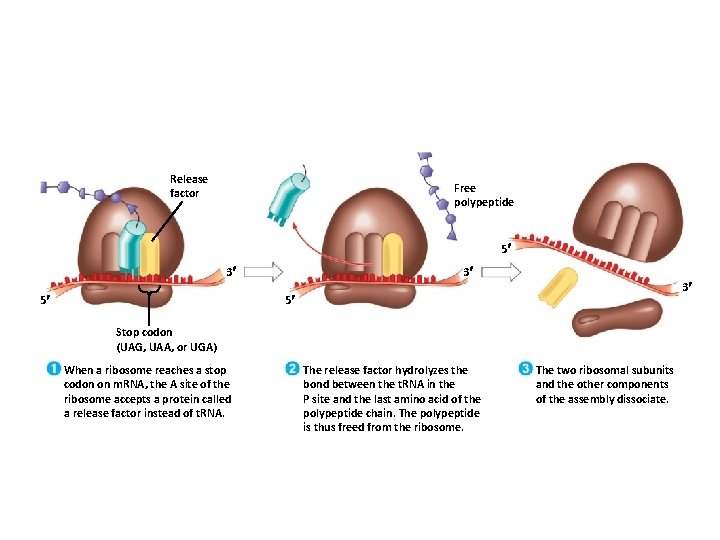
From Gene to Protein • The process of translation begins once the ribosome binds to the m. RNA strand • Once bound, the ribosome allows t. RNA molecules to bind to the m. RNA – The amino acids brought in by the t. RNA are then joined together • As the ribosome moves down the m. RNA, new t. RNA molecules bring in additional amino acids that are added to the growing polypeptide • Eventually, a STOP codon is reached – This codon causes the ribosome-m. RNA union to break apart stopping the process
Translation Lysine Protein Synthesis t. RNA Translation direction m. RNA Ribosome Copyright Pearson Prentice Hall
Large ribosomal subunit P site Met Initiator t. RNA GTP Met GDP E m. RNA 5¢ 3¢ Start codon m. RNA binding site Small ribosomal subunit A 5¢ 3¢ Translation initiation complex
Amino end of polypeptide E 3¢ m. RNA Ribosome ready for next aminoacyl t. RNA P A site 5¢ 2 GTP 2 GDP E E P A P GDP GTP E P A A
Release factor Free polypeptide 5¢ 3¢ 3¢ 5¢ Stop codon (UAG, UAA, or UGA) When a ribosome reaches a stop codon on m. RNA, the A site of the ribosome accepts a protein called a release factor instead of t. RNA. The release factor hydrolyzes the bond between the t. RNA in the P site and the last amino acid of the polypeptide chain. The polypeptide is thus freed from the ribosome. The two ribosomal subunits and the other components of the assembly dissociate.
Ch. 17 – From Gene to Protein • Protein Formation – After translation, the polypeptide is not yet a functional protein • In order to become functional, the polypeptide must be altered to find its functional shape – Polypeptide is folded, twisted, chemically bound to other polypeptides, etc. to become functional