
Chapter 13 2 d orbitals have the same
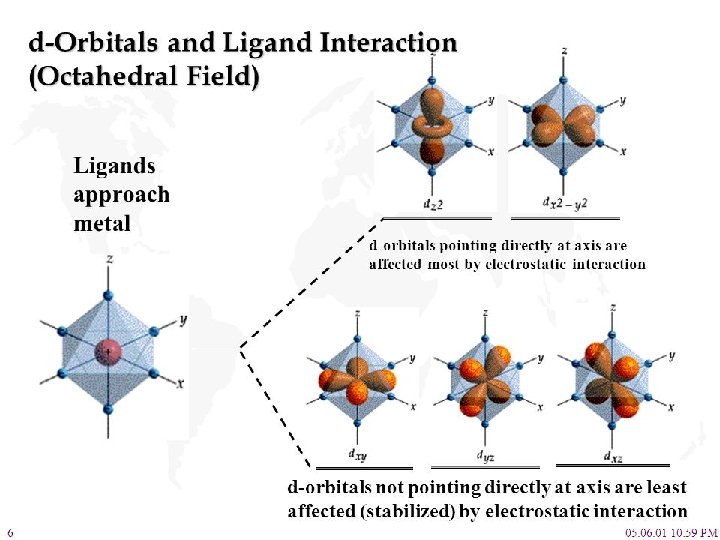
Chapter 13. 2: d orbitals have the same energy in an isolated atom, but split into two sub-levels in a complex ion. The electric field of ligands cause the d orbitals in complex ions to split so that the energy of an electron transition between them corresponds to a photon of visible light. Chapter 3 Notes: Colored complexes
Important terms for this section �Colored complexes �Nuclear charge �Charge density �Oxidation state

�The color absorbed means the complementary color is reflected (so you will see it) �If copper chloride is cyan (blue-green), then red-orange is being absorbed
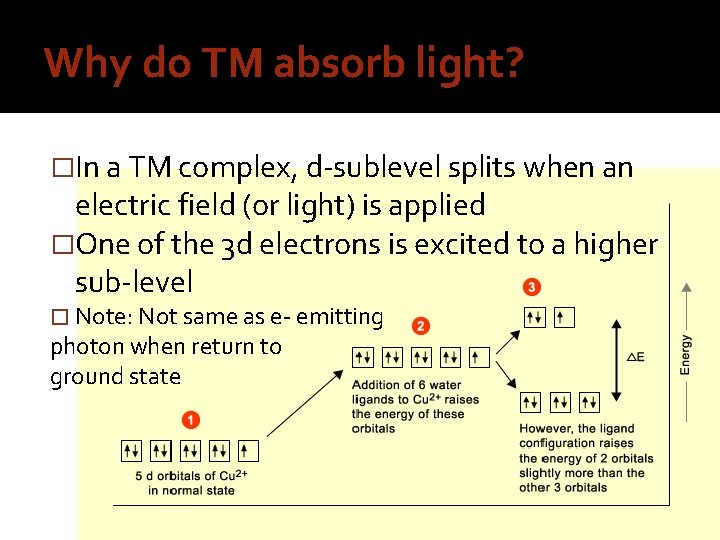
Why do TM absorb light? �In a TM complex, d-sublevel splits when an electric field (or light) is applied �One of the 3 d electrons is excited to a higher sub-level � Note: Not same as e- emitting photon when return to ground state
Color depends on… �The difference in energy between the split sublevels �The nuclear charge �Identity of central metal ion �Charge and density of ligand �Geometry of complex ion �Oxidation number of central metal ion (number of d electrons)
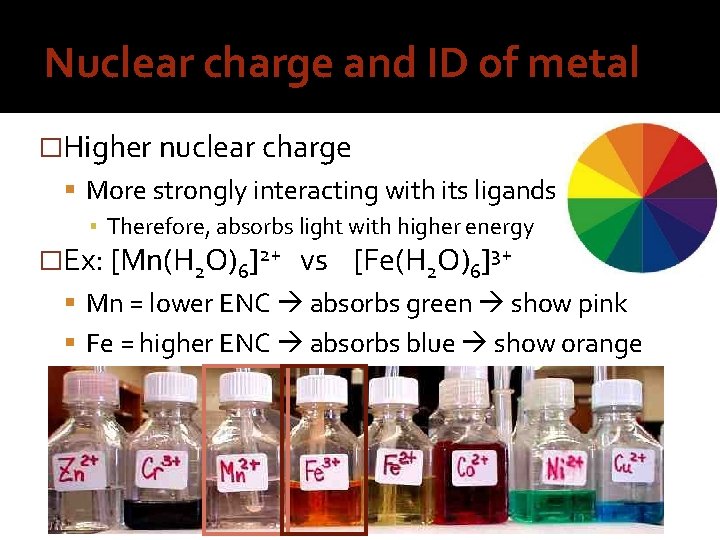
Nuclear charge and ID of metal �Higher nuclear charge More strongly interacting with its ligands ▪ Therefore, absorbs light with higher energy �Ex: [Mn(H 2 O)6]2+ vs [Fe(H 2 O)6]3+ Mn = lower ENC absorbs green show pink Fe = higher ENC absorbs blue show orange
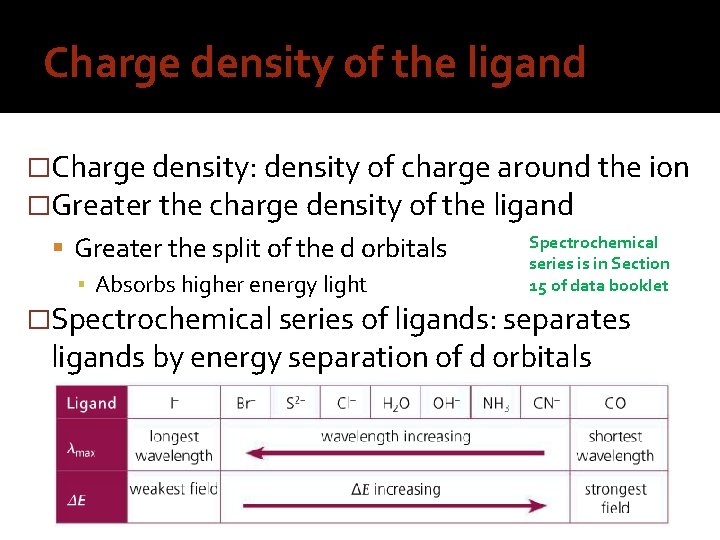
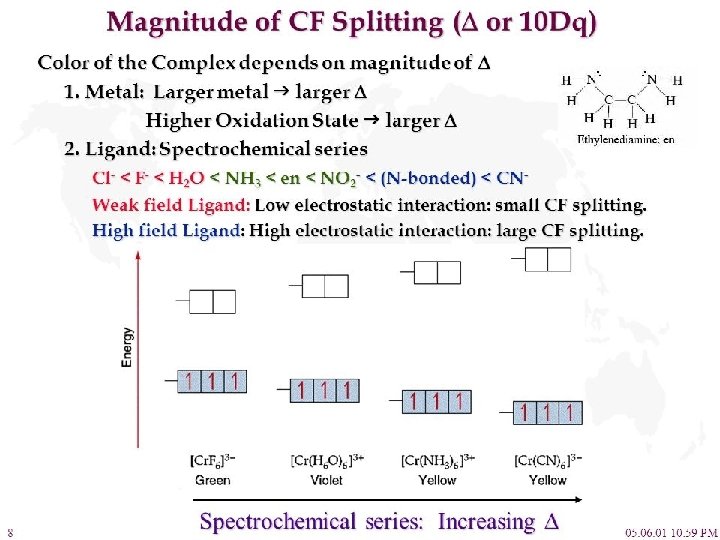
Charge density of the ligand �Charge density: density of charge around the ion �Greater the charge density of the ligand Greater the split of the d orbitals ▪ Absorbs higher energy light Spectrochemical series is in Section 15 of data booklet �Spectrochemical series of ligands: separates ligands by energy separation of d orbitals
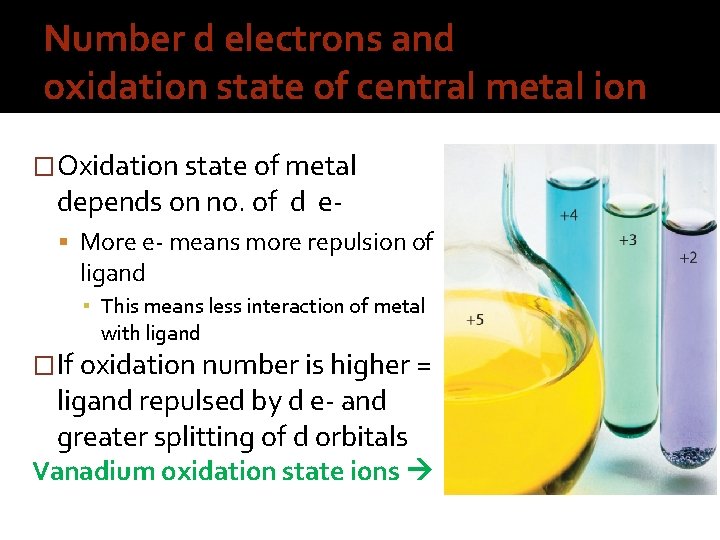
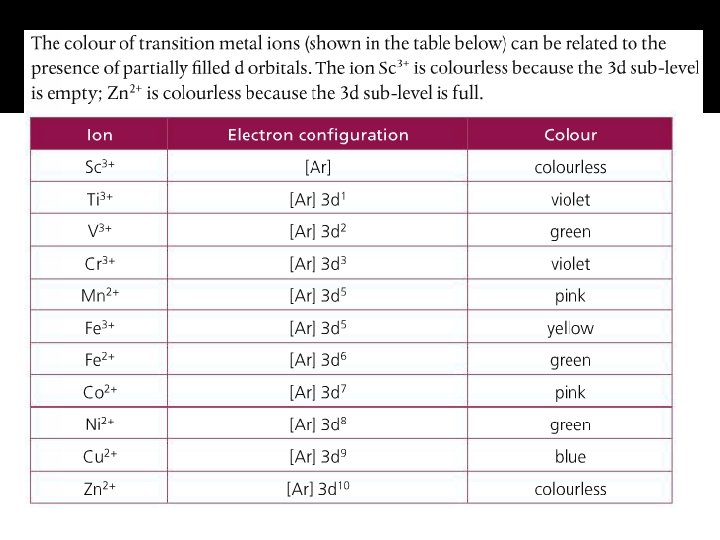
Number d electrons and oxidation state of central metal ion �Oxidation state of metal depends on no. of d e- More e- means more repulsion of ligand ▪ This means less interaction of metal with ligand �If oxidation number is higher = ligand repulsed by d e- and greater splitting of d orbitals Vanadium oxidation state ions
- Slides: 11