
Chapter 13 13 1 Fluid Pressure Pressure Review

- Slides: 23
Chapter 13 13. 1 Fluid Pressure
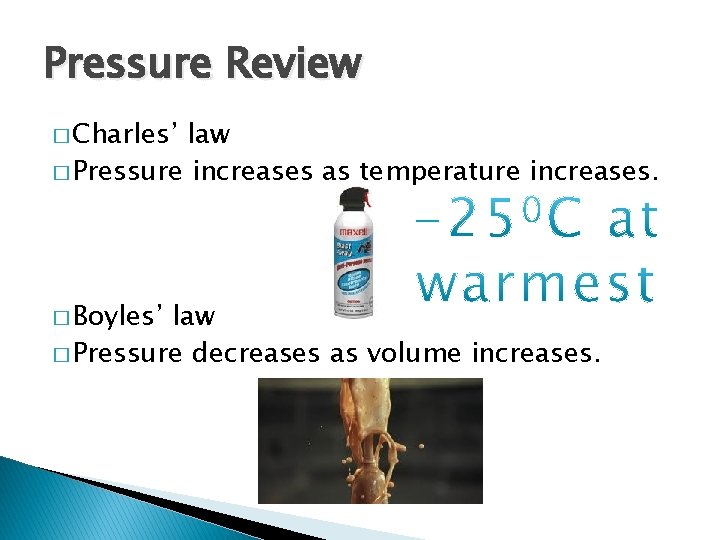
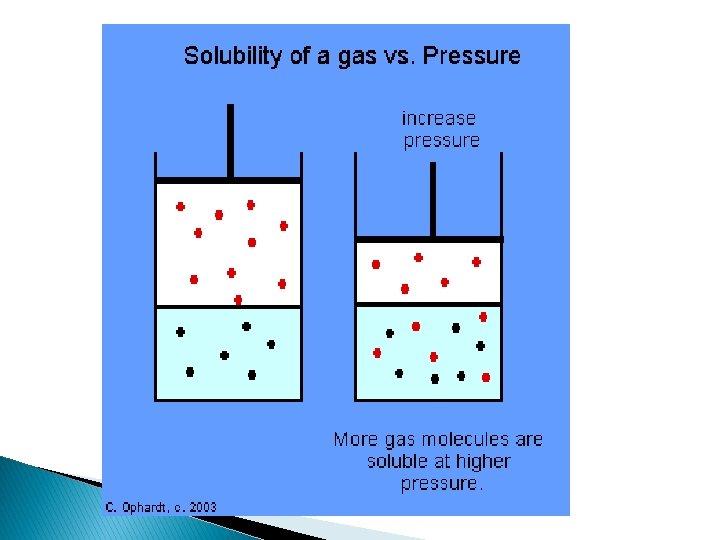
Pressure Review � Charles’ law � Pressure increases as temperature increases. � Boyles’ law � Pressure decreases as volume increases.
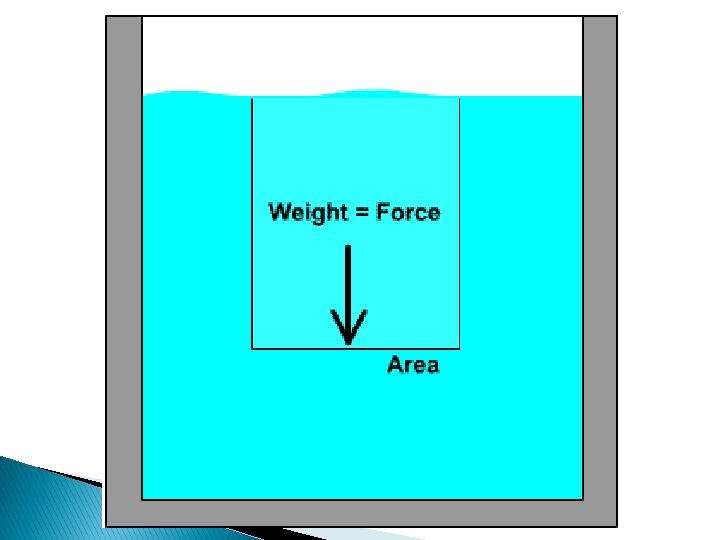
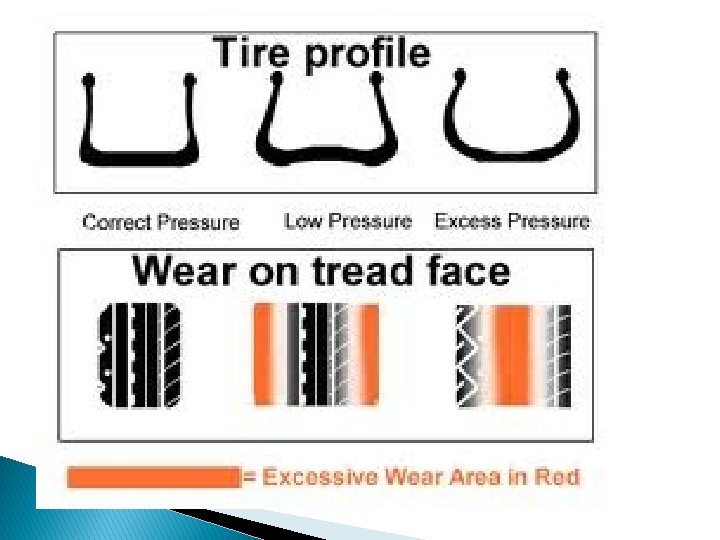
Pressure �Pressure = force ÷ area �Force should be in newtons (N). �Area should be in square meters (m 2). �The SI unit for pressure is a pascal (Pa) or N/m 2. Pascal P=F/A
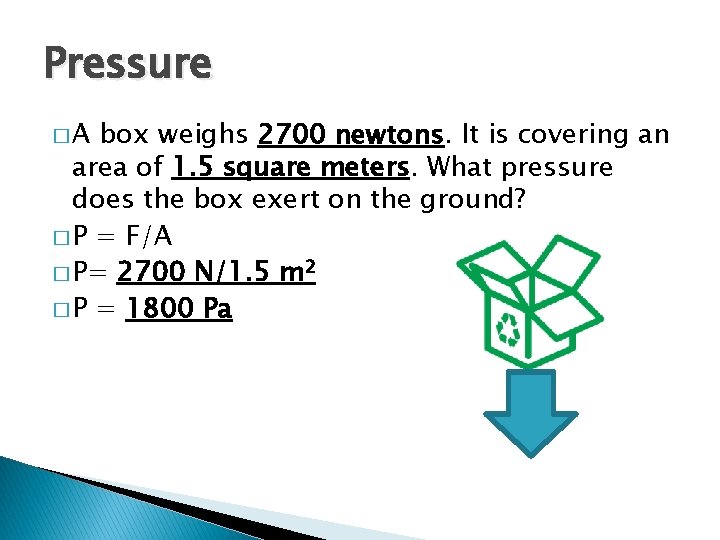
Pressure �A box weighs 2700 newtons. It is covering an area of 1. 5 square meters. What pressure does the box exert on the ground? � P = F/A � P= 2700 N/1. 5 m 2 � P = 1800 Pa
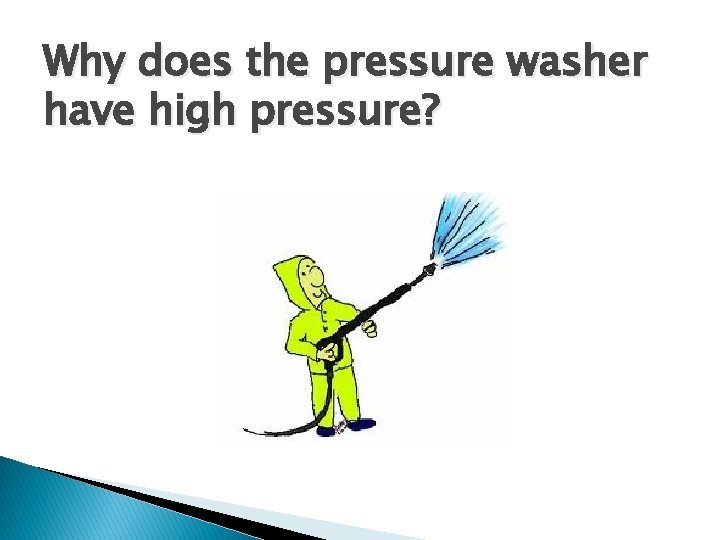
Why does the pressure washer have high pressure?
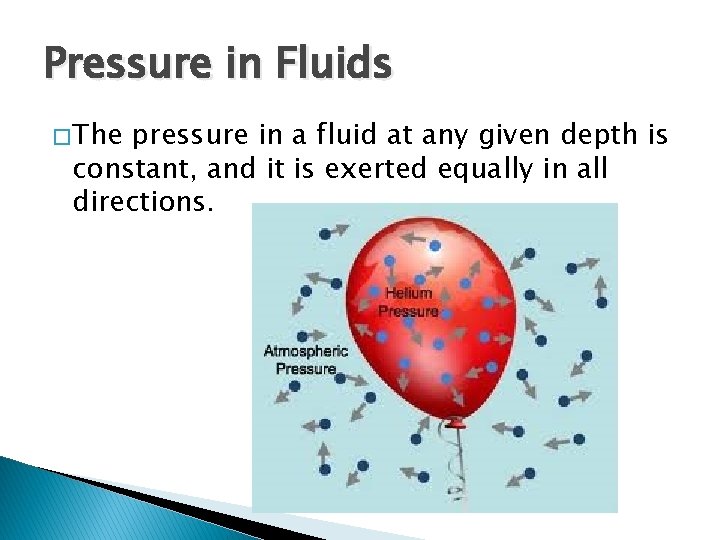
Pressure in Fluids � The pressure in a fluid at any given depth is constant, and it is exerted equally in all directions.
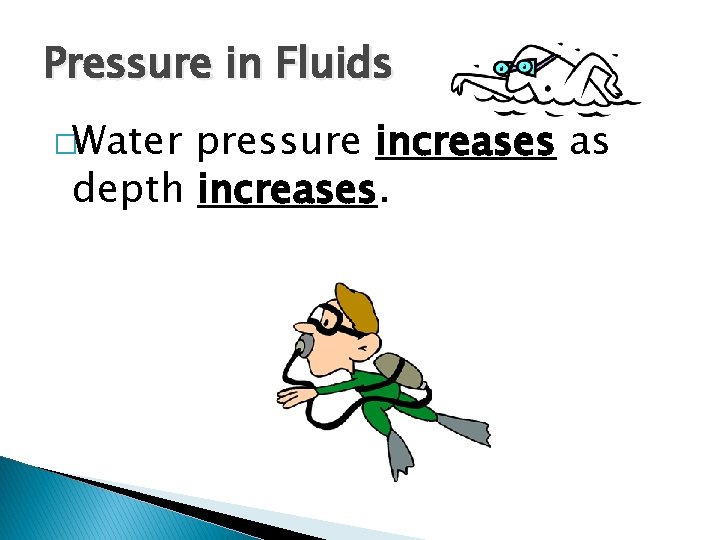
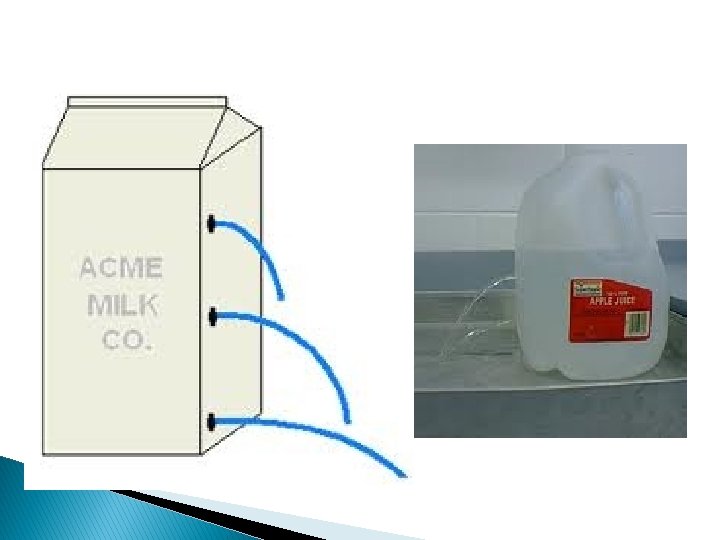
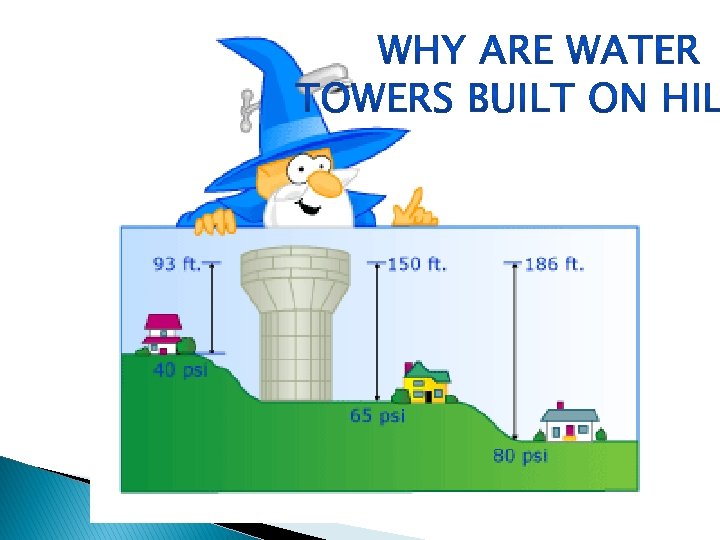
Pressure in Fluids �Water pressure increases as depth increases.
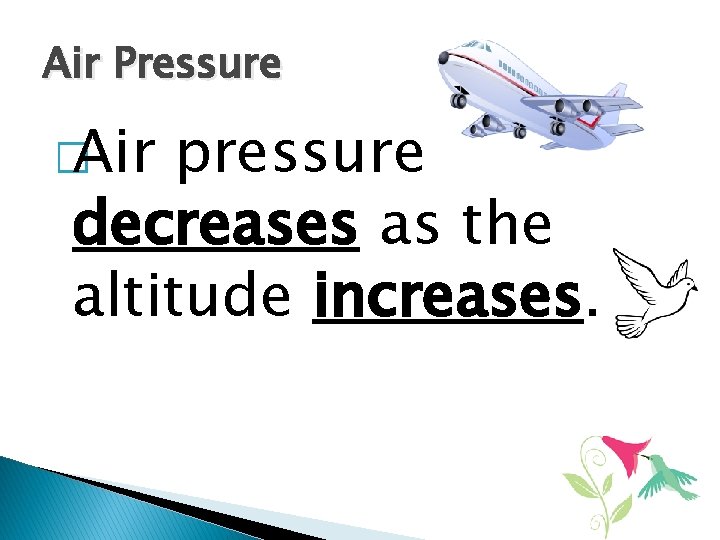
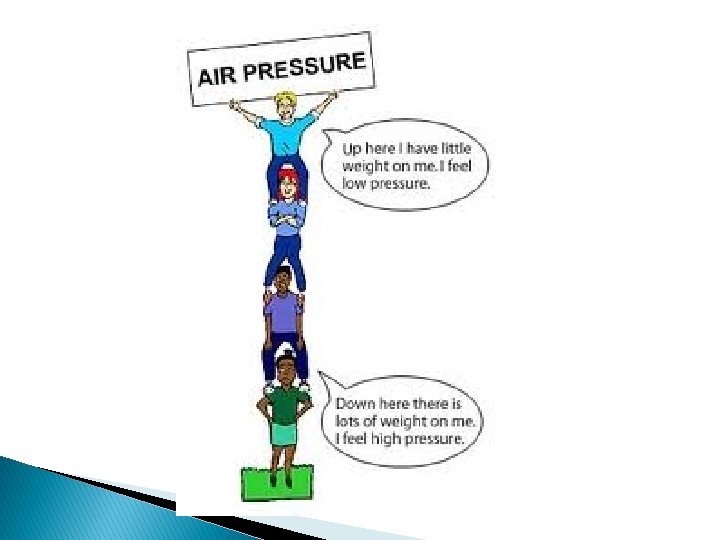
Air Pressure � Air pressure decreases as the altitude increases.
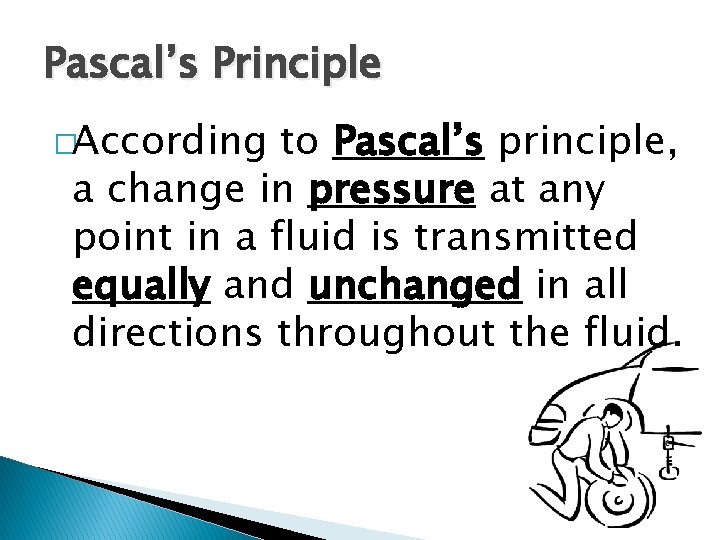
Pascal’s Principle �According to Pascal’s principle, a change in pressure at any point in a fluid is transmitted equally and unchanged in all directions throughout the fluid.
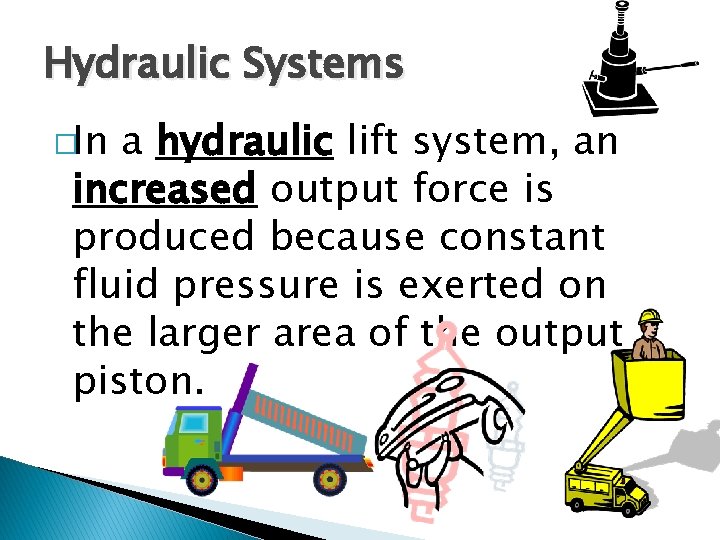
Hydraulic Systems �In a hydraulic lift system, an increased output force is produced because constant fluid pressure is exerted on the larger area of the output piston.
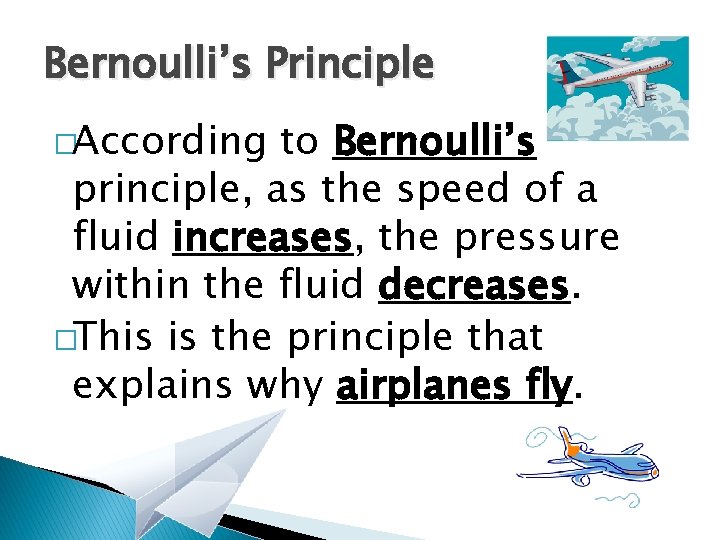
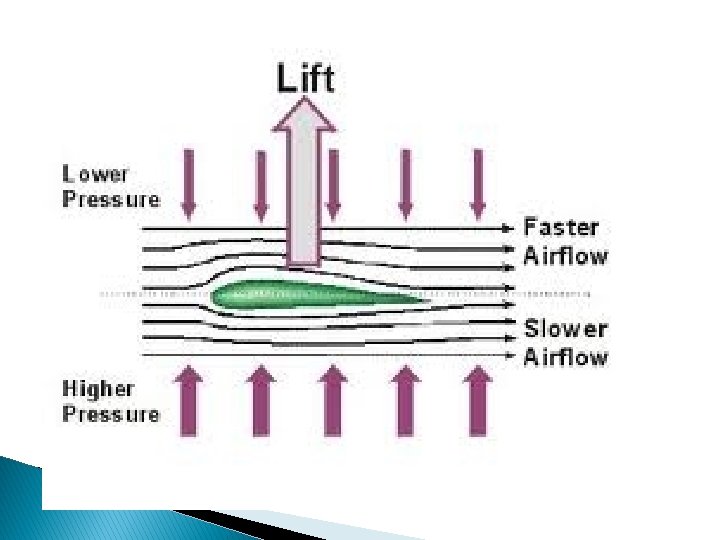
Bernoulli’s Principle �According to Bernoulli’s principle, as the speed of a fluid increases, the pressure within the fluid decreases. �This is the principle that explains why airplanes fly.
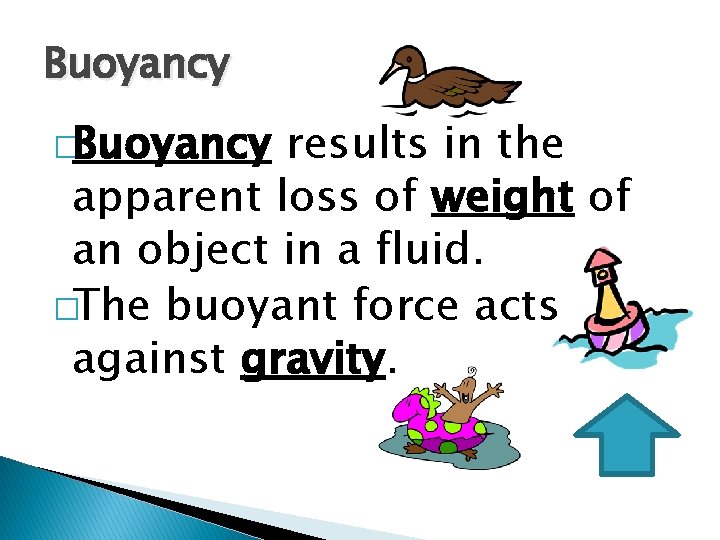
Buoyancy �Buoyancy results in the apparent loss of weight of an object in a fluid. �The buoyant force acts against gravity.
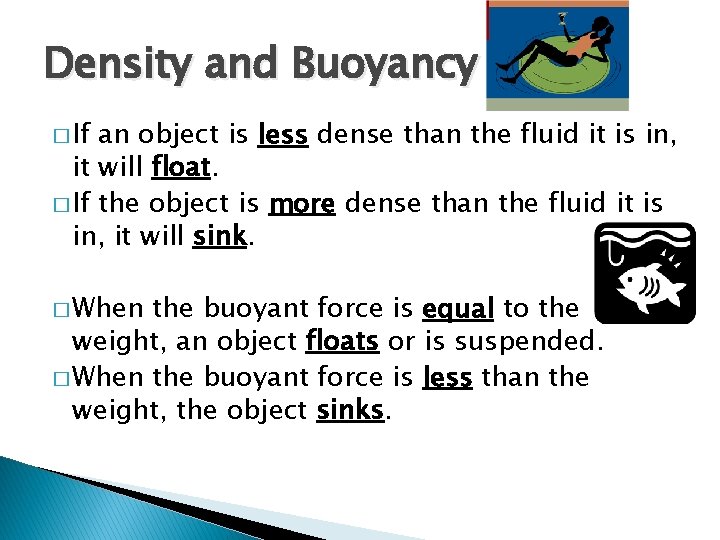
Density and Buoyancy � If an object is less dense than the fluid it is in, it will float. � If the object is more dense than the fluid it is in, it will sink. � When the buoyant force is equal to the weight, an object floats or is suspended. � When the buoyant force is less than the weight, the object sinks.
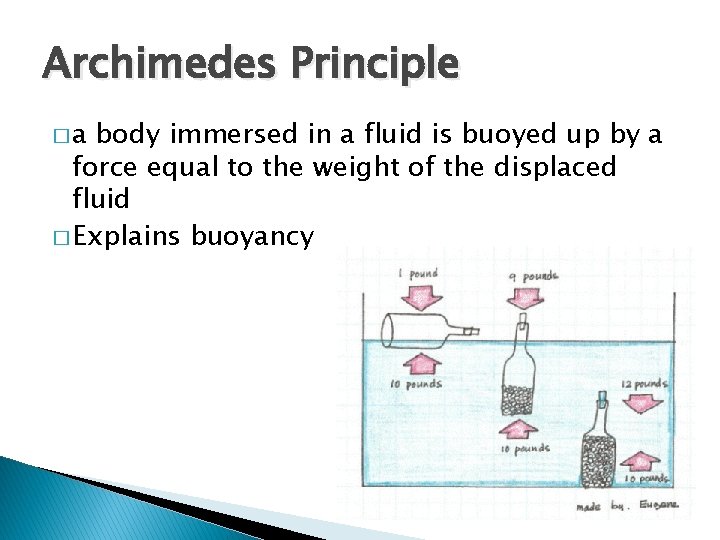
Archimedes Principle �a body immersed in a fluid is buoyed up by a force equal to the weight of the displaced fluid � Explains buoyancy