
Chapter 12 What significant information is omitted 1
- Slides: 11
Chapter 12 What significant information is omitted?
1. Significant omitted information a. is unnecessary trivialities b. is something unimportant that is not said c. shapes the reasoning 10
2. Some reasons for omitting information are time and space limitations, limited attention span, incomplete knowledge, and a. different perspectives b. lazy researchers c. publishers’ printing costs d. both a and c 10
3. Omitted information is not always an attempt to deceive. 1. True 2. False 10
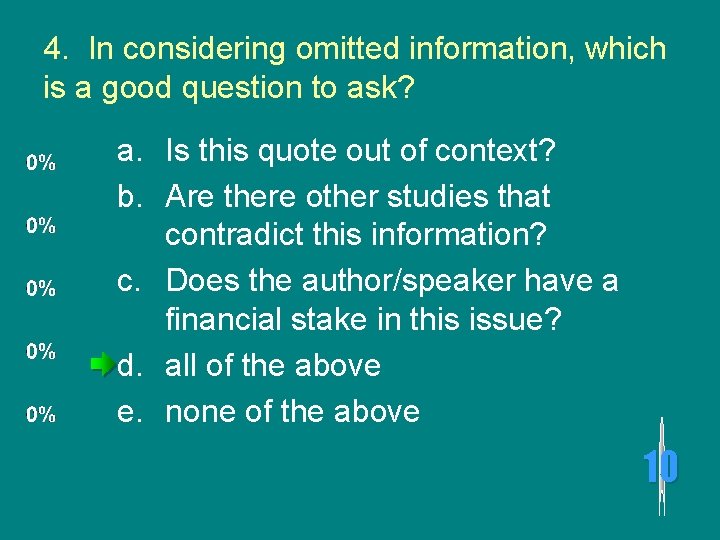
4. In considering omitted information, which is a good question to ask? a. Is this quote out of context? b. Are there other studies that contradict this information? c. Does the author/speaker have a financial stake in this issue? d. all of the above e. none of the above 10
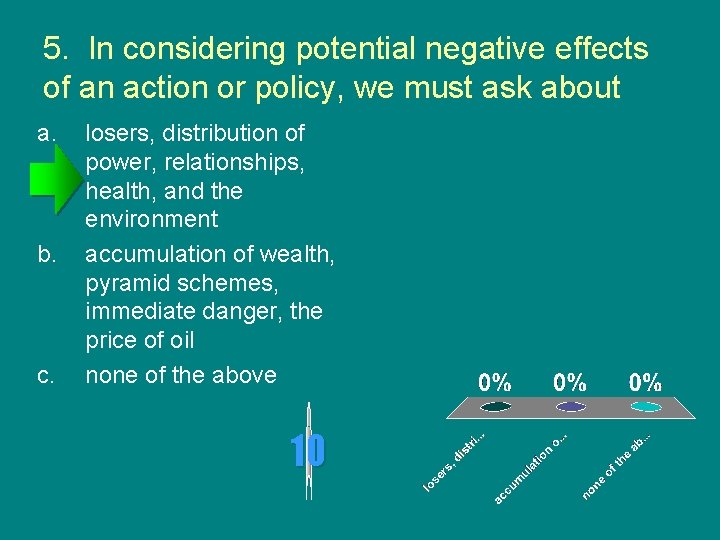
5. In considering potential negative effects of an action or policy, we must ask about a. b. c. losers, distribution of power, relationships, health, and the environment accumulation of wealth, pyramid schemes, immediate danger, the price of oil none of the above 10
6. It is unreasonable to form an opinion if there is any omitted information. a. True b. False 10
7. What is _____ said can be just as _____ as what is said. a. subliminally, powerful b. often, repetitious c. not, important 10
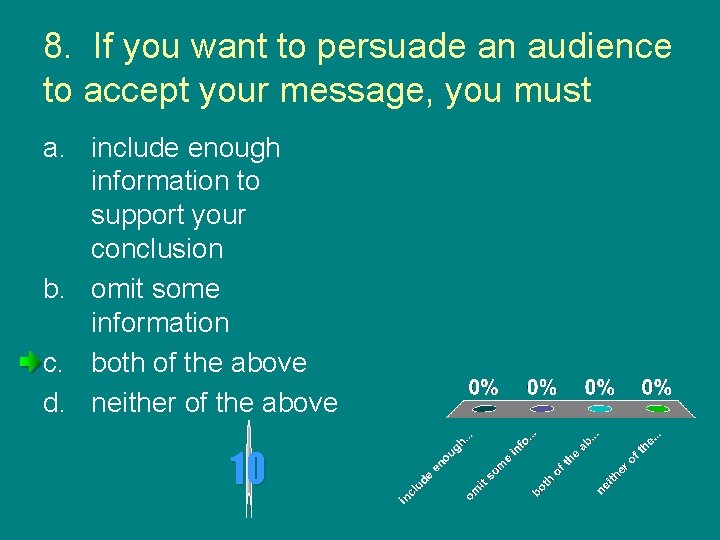
8. If you want to persuade an audience to accept your message, you must a. include enough information to support your conclusion b. omit some information c. both of the above d. neither of the above 10
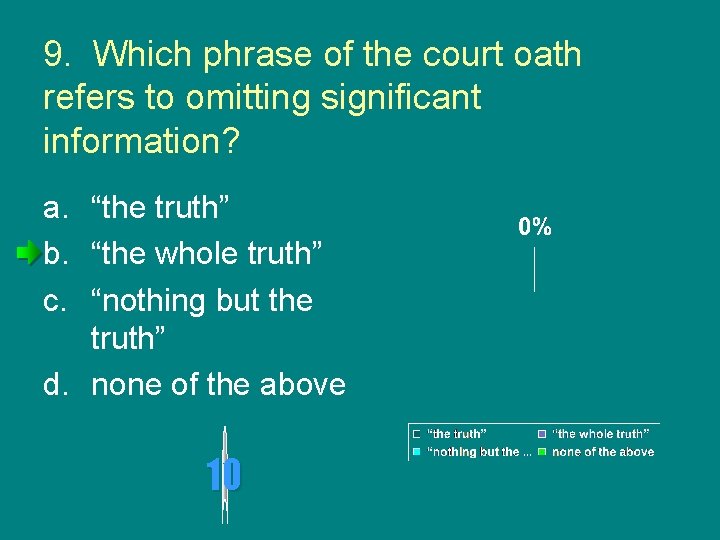
9. Which phrase of the court oath refers to omitting significant information? a. “the truth” b. “the whole truth” c. “nothing but the truth” d. none of the above 10
10. Which type of thinking recognizes omitted information? a. panning-for-gold thinking b. sponge thinking 10