
Chapter 12 Transmission Control Protocol TCP Mc GrawHill



- Slides: 60
Chapter 12 Transmission Control Protocol (TCP) Mc. Graw-Hill ©The Mc. Graw-Hill Companies, Inc. , 2000
CONTENTS • • Mc. Graw-Hill PROCESS-TO-PROCESS COMMUNICATION TCP SERVICES NUMBERING BYTES FLOW CONTROL SILLY WINDOW SYNDROME ERROR CONTROL TCP TIMERS ©The Mc. Graw-Hill Companies, Inc. , 2000
CONTENTS (continued) • • Mc. Graw-Hill CONGESTION CONTROL SEGMENT OPTIONS CHECKSUM CONNECTION STATE TRANSITION DIAGRAM TCP OERATION TCP PACKAGE ©The Mc. Graw-Hill Companies, Inc. , 2000
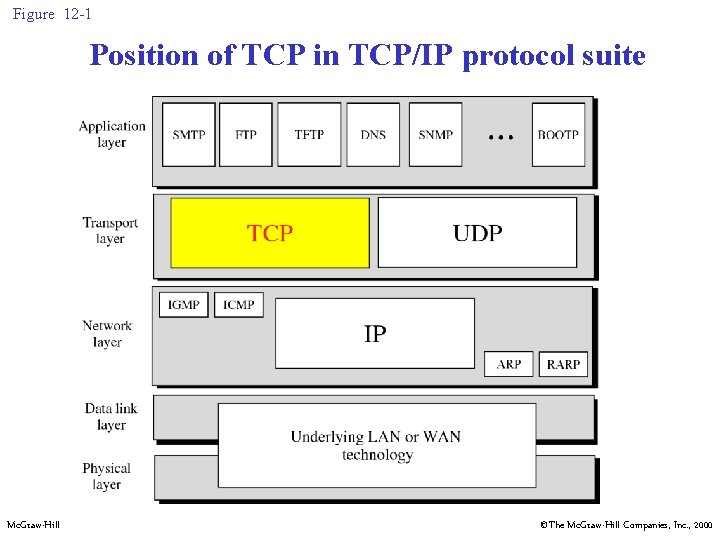
Figure 12 -1 Position of TCP in TCP/IP protocol suite Mc. Graw-Hill ©The Mc. Graw-Hill Companies, Inc. , 2000
12. 1 PROCESS TO PROCESS COMMUNICATION Mc. Graw-Hill ©The Mc. Graw-Hill Companies, Inc. , 2000
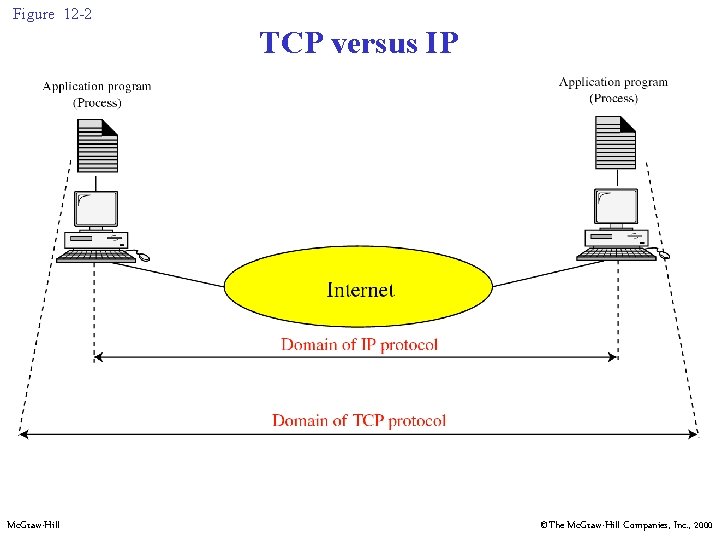
Figure 12 -2 TCP versus IP Mc. Graw-Hill ©The Mc. Graw-Hill Companies, Inc. , 2000
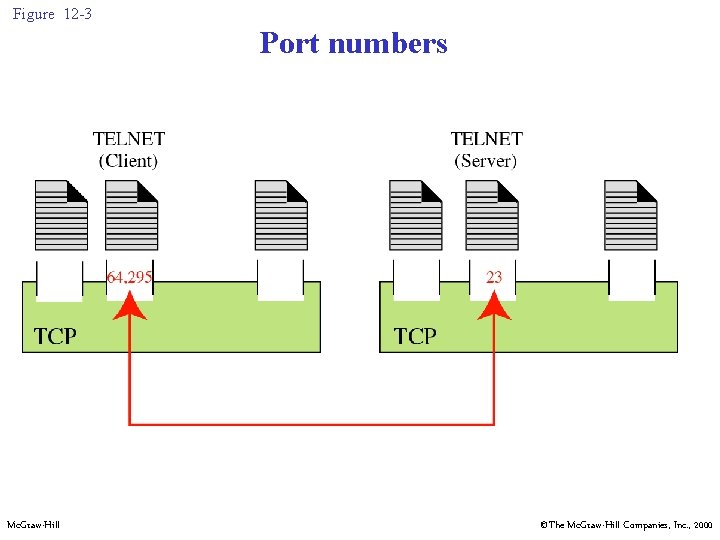
Figure 12 -3 Port numbers Mc. Graw-Hill ©The Mc. Graw-Hill Companies, Inc. , 2000
12. 2 TCP SERVICES Mc. Graw-Hill ©The Mc. Graw-Hill Companies, Inc. , 2000
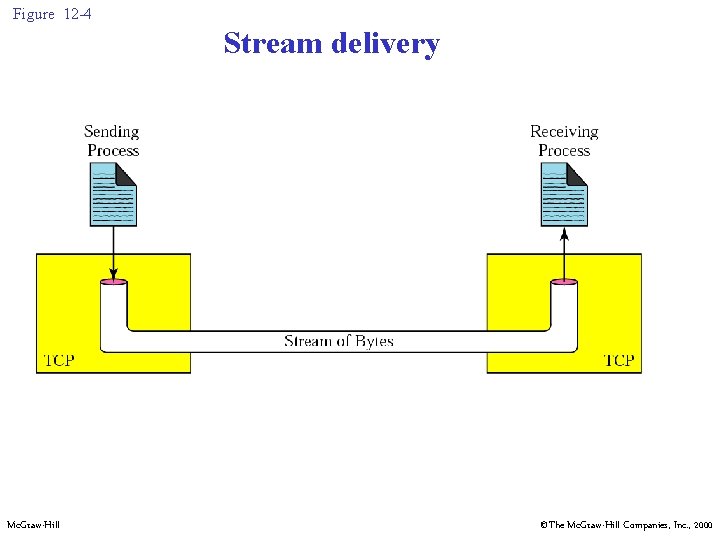
Figure 12 -4 Stream delivery Mc. Graw-Hill ©The Mc. Graw-Hill Companies, Inc. , 2000
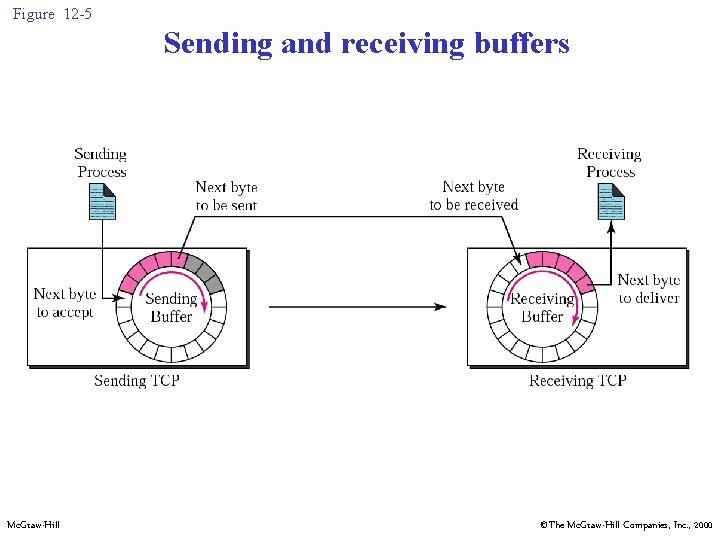
Figure 12 -5 Sending and receiving buffers Mc. Graw-Hill ©The Mc. Graw-Hill Companies, Inc. , 2000
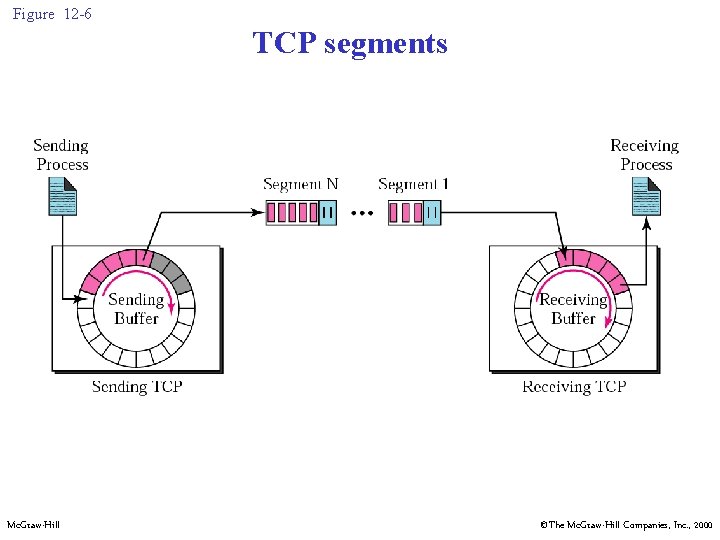
Figure 12 -6 TCP segments Mc. Graw-Hill ©The Mc. Graw-Hill Companies, Inc. , 2000
12. 3 NUMBERING BYTES Mc. Graw-Hill ©The Mc. Graw-Hill Companies, Inc. , 2000
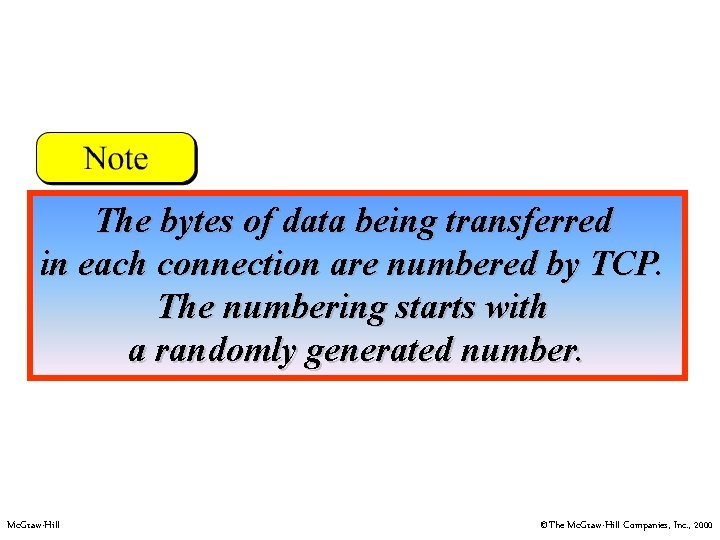
The bytes of data being transferred in each connection are numbered by TCP. The numbering starts with a randomly generated number. Mc. Graw-Hill ©The Mc. Graw-Hill Companies, Inc. , 2000
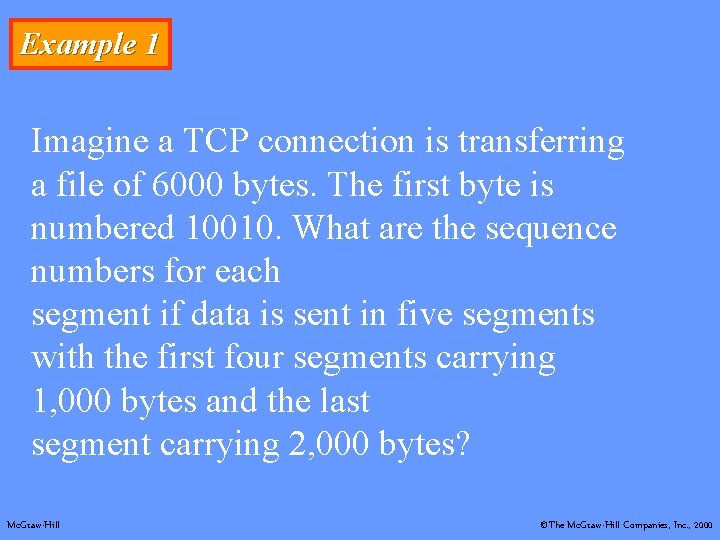
Example 1 Imagine a TCP connection is transferring a file of 6000 bytes. The first byte is numbered 10010. What are the sequence numbers for each segment if data is sent in five segments with the first four segments carrying 1, 000 bytes and the last segment carrying 2, 000 bytes? Mc. Graw-Hill ©The Mc. Graw-Hill Companies, Inc. , 2000
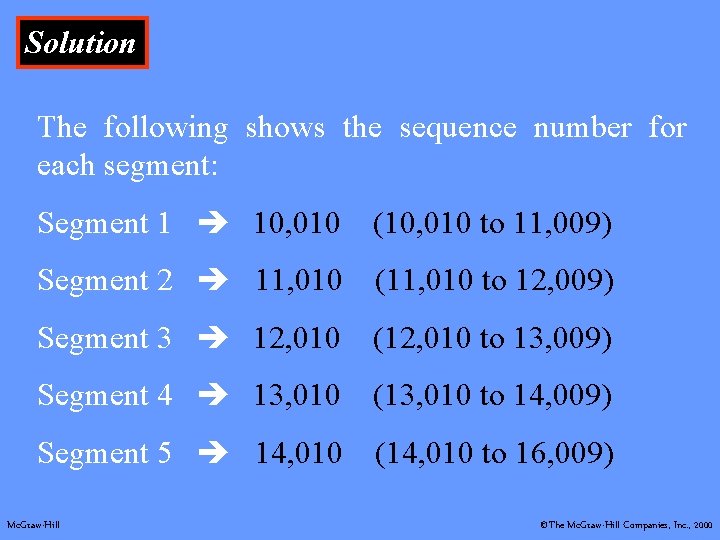
Solution The following shows the sequence number for each segment: Segment 1 10, 010 (10, 010 to 11, 009) Segment 2 11, 010 (11, 010 to 12, 009) Segment 3 12, 010 (12, 010 to 13, 009) Segment 4 13, 010 (13, 010 to 14, 009) Segment 5 14, 010 (14, 010 to 16, 009) Mc. Graw-Hill ©The Mc. Graw-Hill Companies, Inc. , 2000
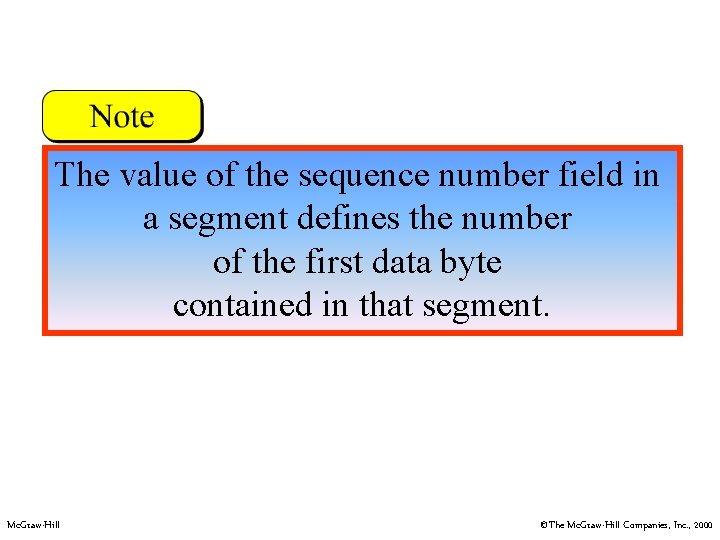
The value of the sequence number field in a segment defines the number of the first data byte contained in that segment. Mc. Graw-Hill ©The Mc. Graw-Hill Companies, Inc. , 2000
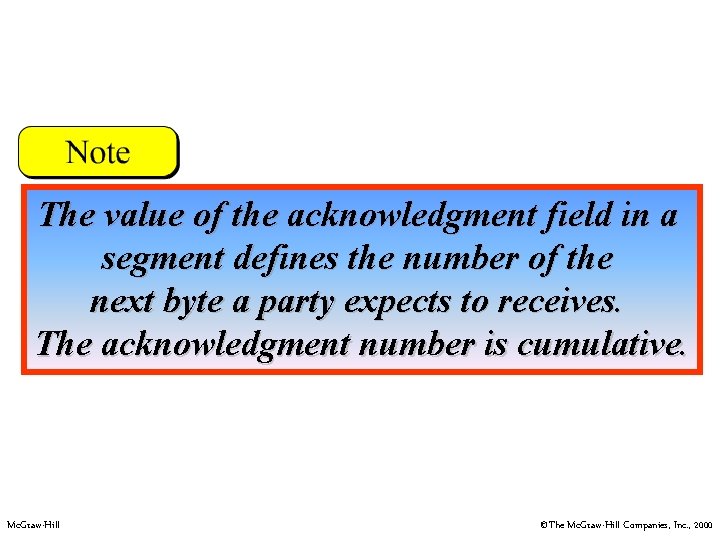
The value of the acknowledgment field in a segment defines the number of the next byte a party expects to receives. The acknowledgment number is cumulative. Mc. Graw-Hill ©The Mc. Graw-Hill Companies, Inc. , 2000
12. 4 FLOW CONTROL Mc. Graw-Hill ©The Mc. Graw-Hill Companies, Inc. , 2000
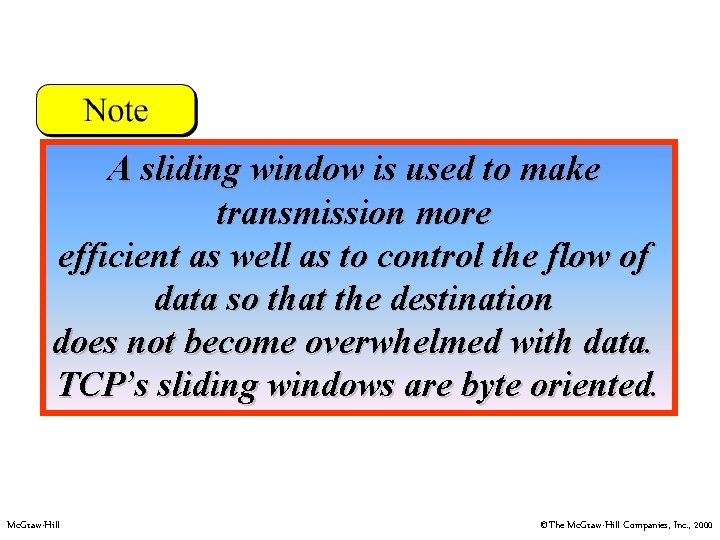
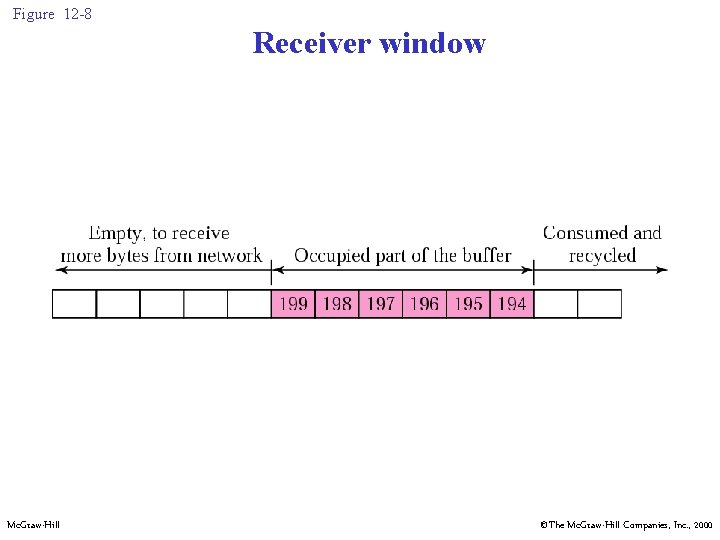
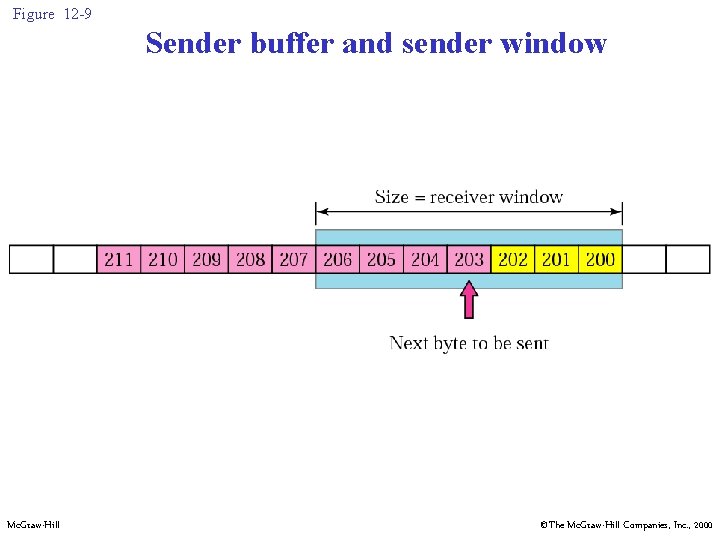
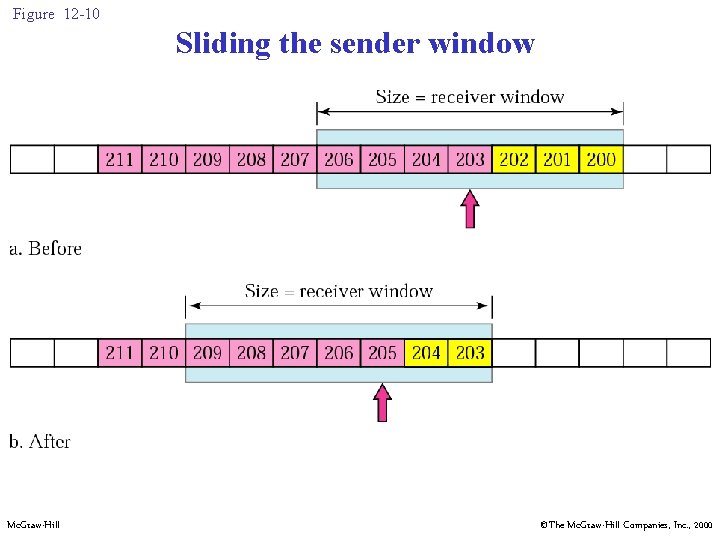
A sliding window is used to make transmission more efficient as well as to control the flow of data so that the destination does not become overwhelmed with data. TCP’s sliding windows are byte oriented. Mc. Graw-Hill ©The Mc. Graw-Hill Companies, Inc. , 2000
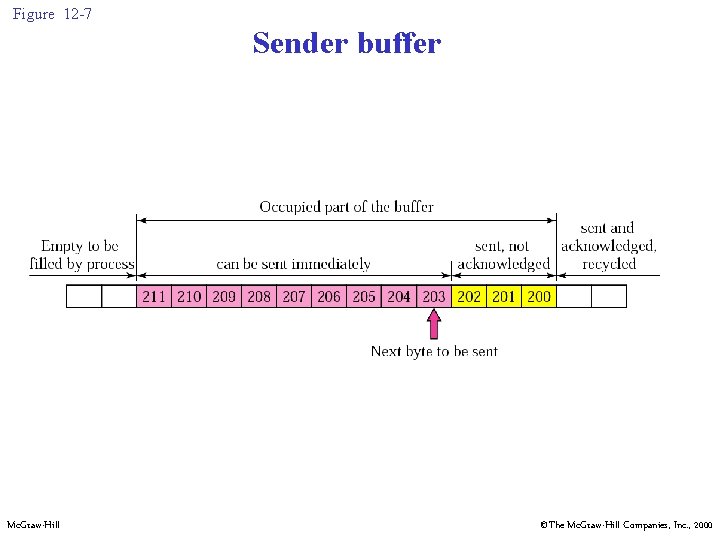
Figure 12 -7 Sender buffer Mc. Graw-Hill ©The Mc. Graw-Hill Companies, Inc. , 2000
Figure 12 -8 Receiver window Mc. Graw-Hill ©The Mc. Graw-Hill Companies, Inc. , 2000
Figure 12 -9 Sender buffer and sender window Mc. Graw-Hill ©The Mc. Graw-Hill Companies, Inc. , 2000
Figure 12 -10 Sliding the sender window Mc. Graw-Hill ©The Mc. Graw-Hill Companies, Inc. , 2000
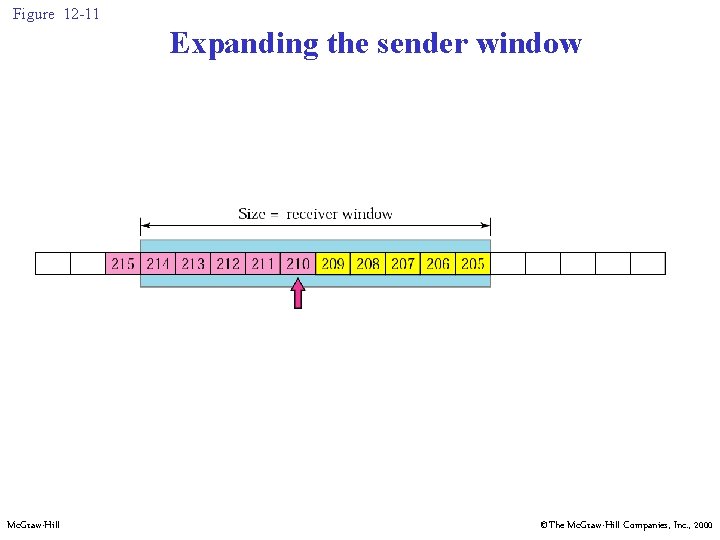
Figure 12 -11 Expanding the sender window Mc. Graw-Hill ©The Mc. Graw-Hill Companies, Inc. , 2000
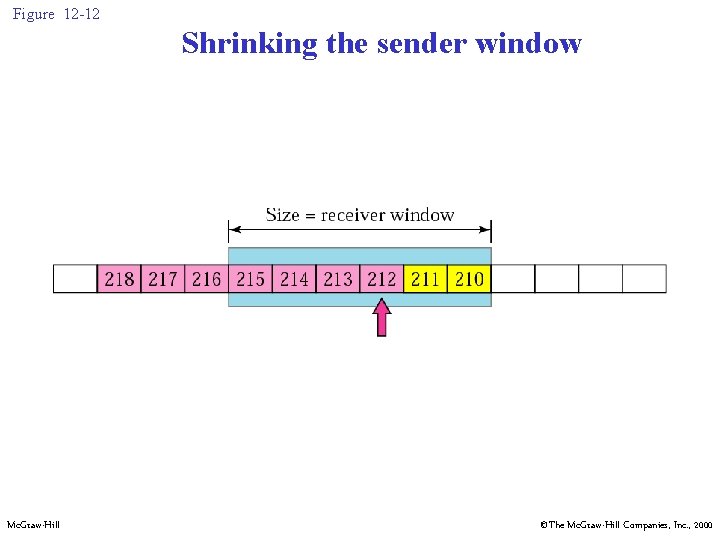
Figure 12 -12 Shrinking the sender window Mc. Graw-Hill ©The Mc. Graw-Hill Companies, Inc. , 2000
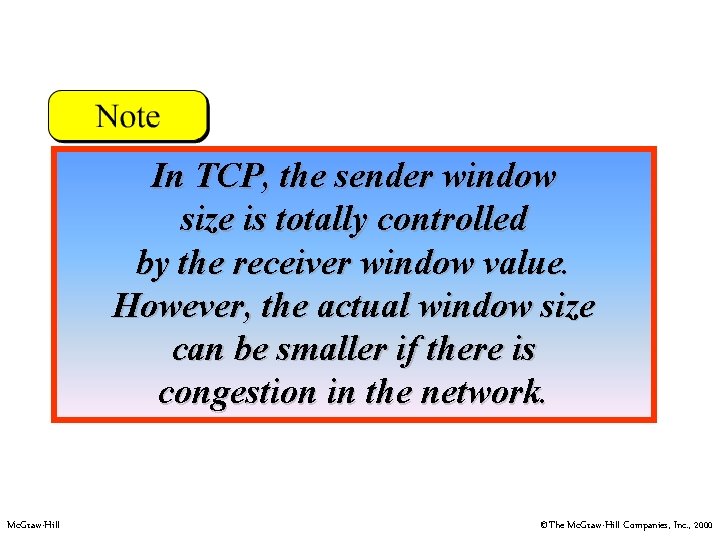
In TCP, the sender window size is totally controlled by the receiver window value. However, the actual window size can be smaller if there is congestion in the network. Mc. Graw-Hill ©The Mc. Graw-Hill Companies, Inc. , 2000
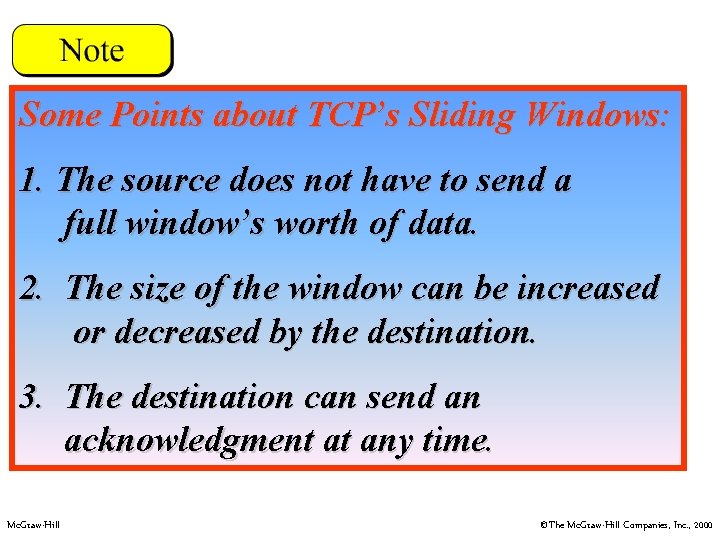
Some Points about TCP’s Sliding Windows: 1. The source does not have to send a full window’s worth of data. 2. The size of the window can be increased or decreased by the destination. 3. The destination can send an acknowledgment at any time. Mc. Graw-Hill ©The Mc. Graw-Hill Companies, Inc. , 2000
12. 5 SILLY WINDOW SYNDROME Mc. Graw-Hill ©The Mc. Graw-Hill Companies, Inc. , 2000
12. 6 ERROR CONTROL Mc. Graw-Hill ©The Mc. Graw-Hill Companies, Inc. , 2000
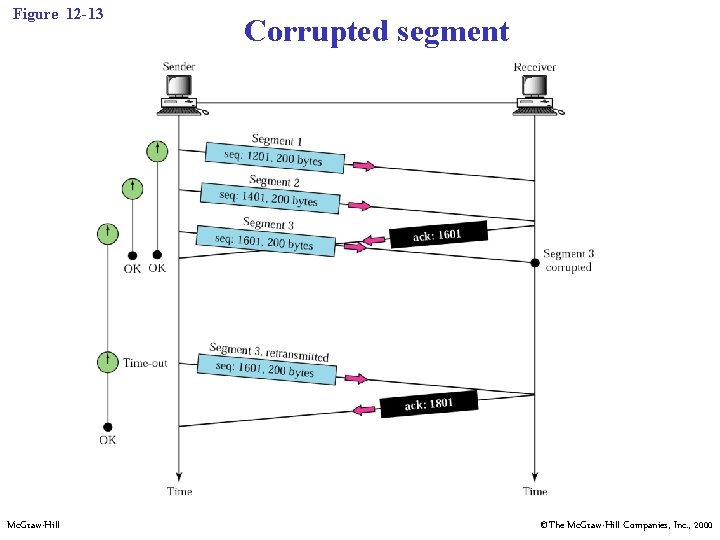
Figure 12 -13 Mc. Graw-Hill Corrupted segment ©The Mc. Graw-Hill Companies, Inc. , 2000
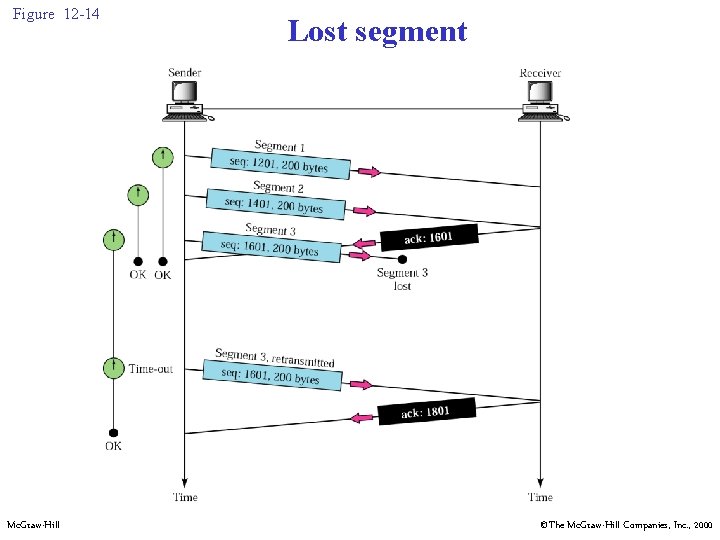
Figure 12 -14 Mc. Graw-Hill Lost segment ©The Mc. Graw-Hill Companies, Inc. , 2000
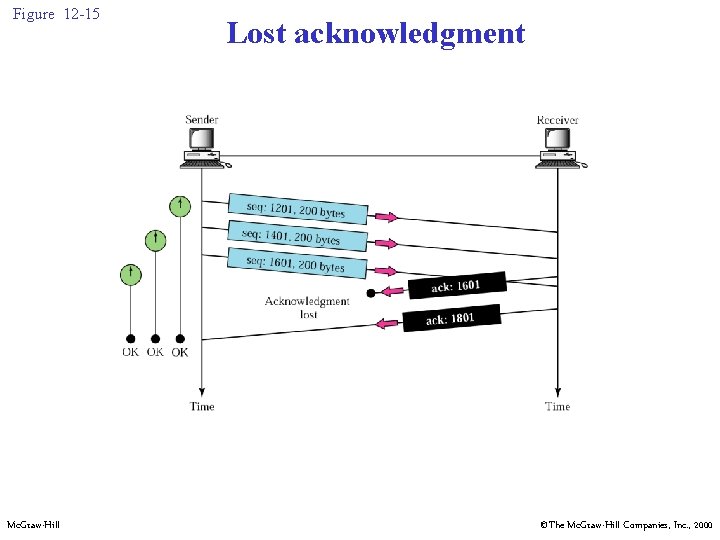
Figure 12 -15 Mc. Graw-Hill Lost acknowledgment ©The Mc. Graw-Hill Companies, Inc. , 2000
12. 7 TCP TIMERS Mc. Graw-Hill ©The Mc. Graw-Hill Companies, Inc. , 2000
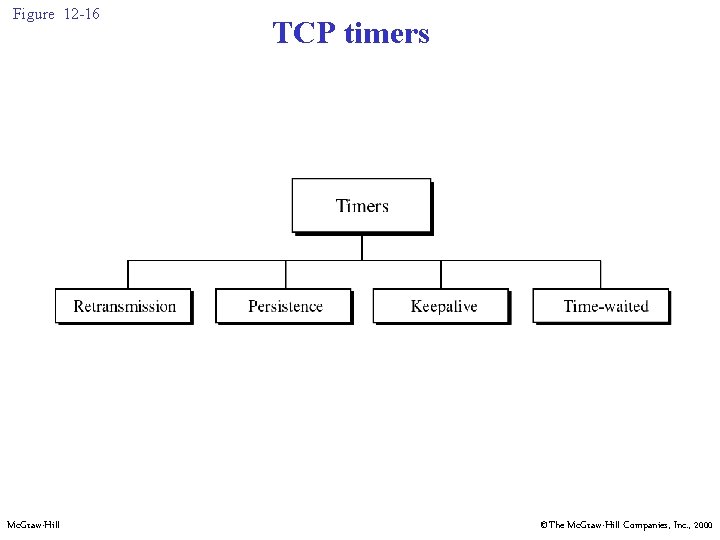
Figure 12 -16 Mc. Graw-Hill TCP timers ©The Mc. Graw-Hill Companies, Inc. , 2000
12. 8 CONGESTION CONTROL Mc. Graw-Hill ©The Mc. Graw-Hill Companies, Inc. , 2000
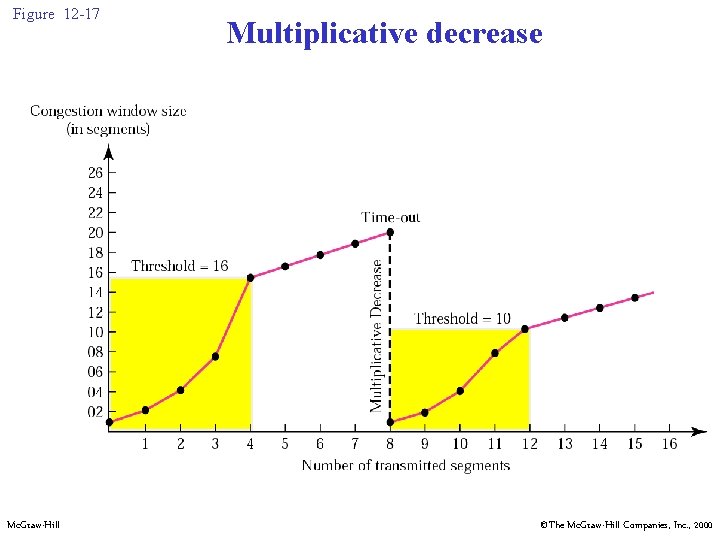
TCP assumes that the cause of a lost segment is due to congestion in the network. Mc. Graw-Hill ©The Mc. Graw-Hill Companies, Inc. , 2000
If the cause of the lost segment is congestion, retransmission of the segment not only does not remove the cause, it aggravates it. Mc. Graw-Hill ©The Mc. Graw-Hill Companies, Inc. , 2000
Figure 12 -17 Mc. Graw-Hill Multiplicative decrease ©The Mc. Graw-Hill Companies, Inc. , 2000
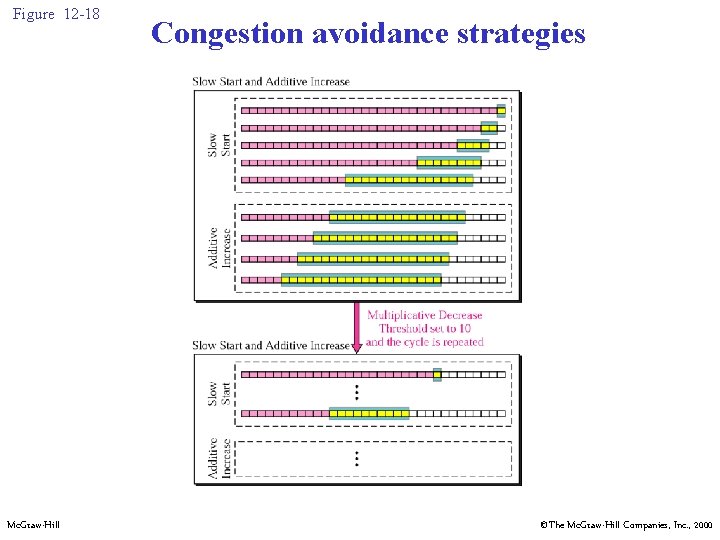
Figure 12 -18 Mc. Graw-Hill Congestion avoidance strategies ©The Mc. Graw-Hill Companies, Inc. , 2000
12. 9 SEGMENT Mc. Graw-Hill ©The Mc. Graw-Hill Companies, Inc. , 2000
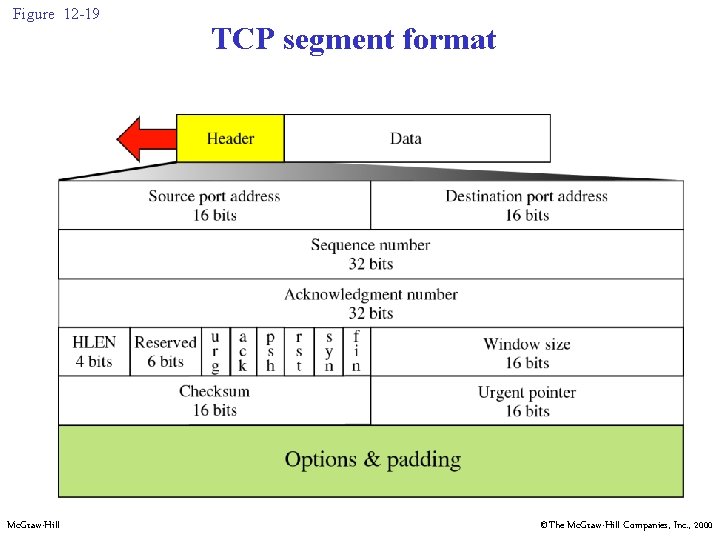
Figure 12 -19 Mc. Graw-Hill TCP segment format ©The Mc. Graw-Hill Companies, Inc. , 2000
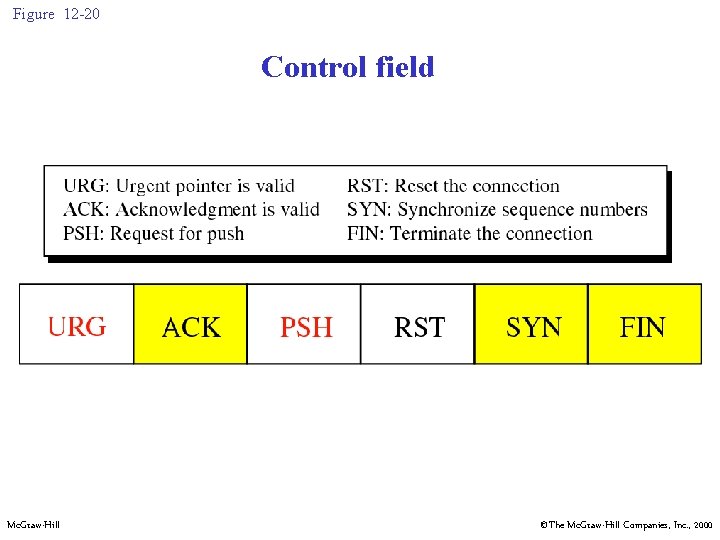
Figure 12 -20 Control field Mc. Graw-Hill ©The Mc. Graw-Hill Companies, Inc. , 2000
12. 10 OPTIONS Mc. Graw-Hill ©The Mc. Graw-Hill Companies, Inc. , 2000
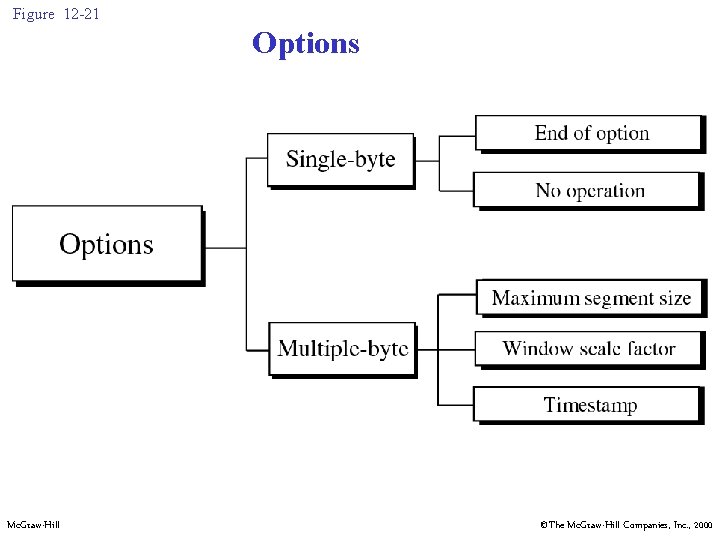
Figure 12 -21 Options Mc. Graw-Hill ©The Mc. Graw-Hill Companies, Inc. , 2000
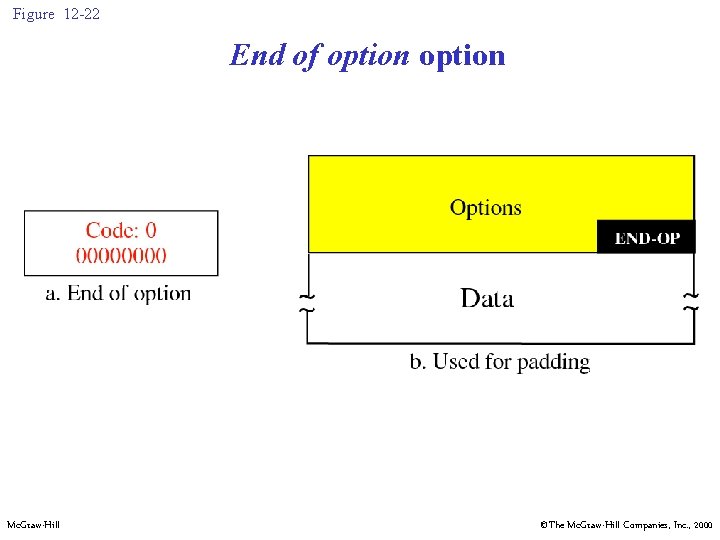
Figure 12 -22 End of option Mc. Graw-Hill ©The Mc. Graw-Hill Companies, Inc. , 2000
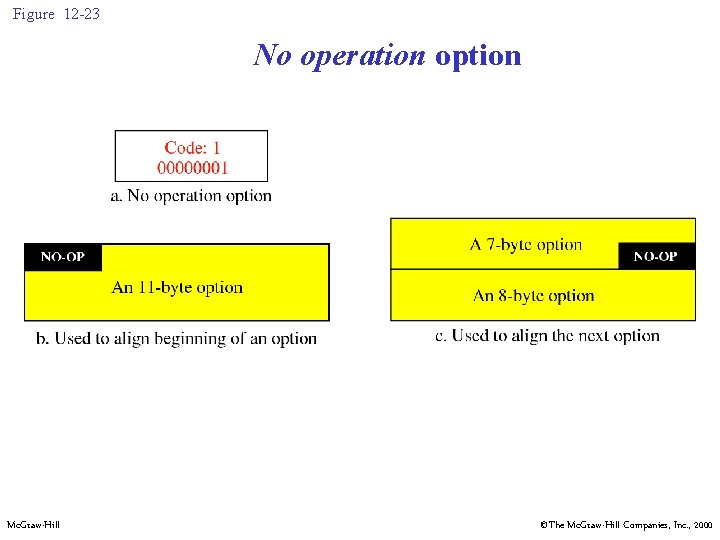
Figure 12 -23 No operation option Mc. Graw-Hill ©The Mc. Graw-Hill Companies, Inc. , 2000
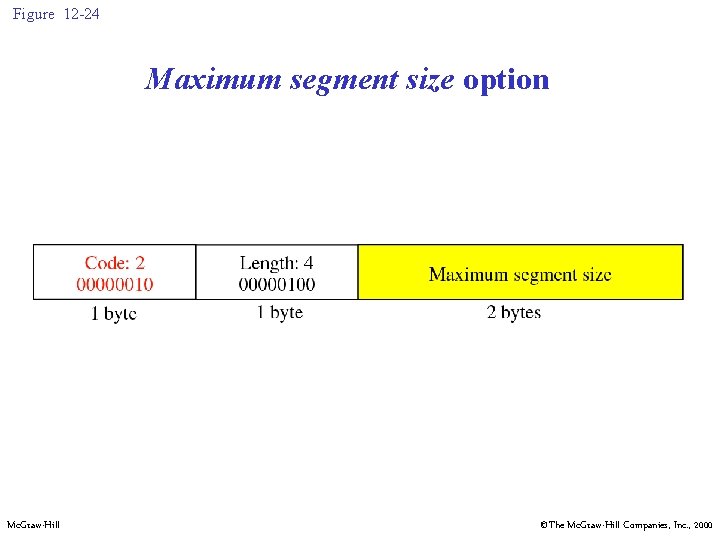
Figure 12 -24 Maximum segment size option Mc. Graw-Hill ©The Mc. Graw-Hill Companies, Inc. , 2000
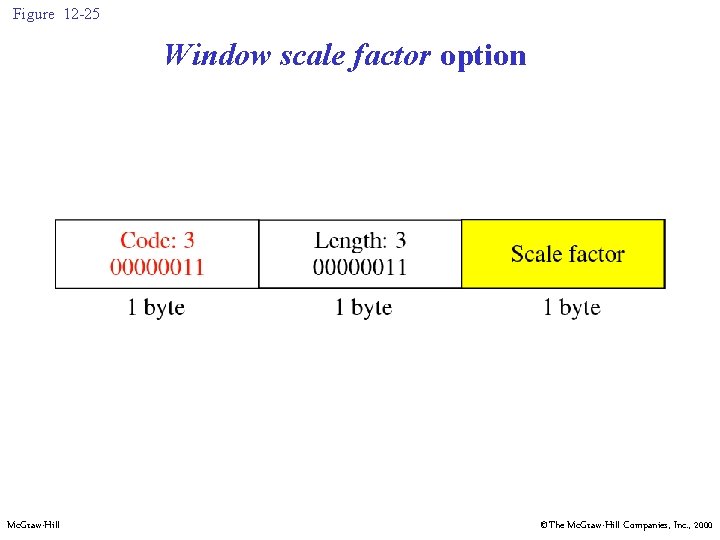
Figure 12 -25 Window scale factor option Mc. Graw-Hill ©The Mc. Graw-Hill Companies, Inc. , 2000
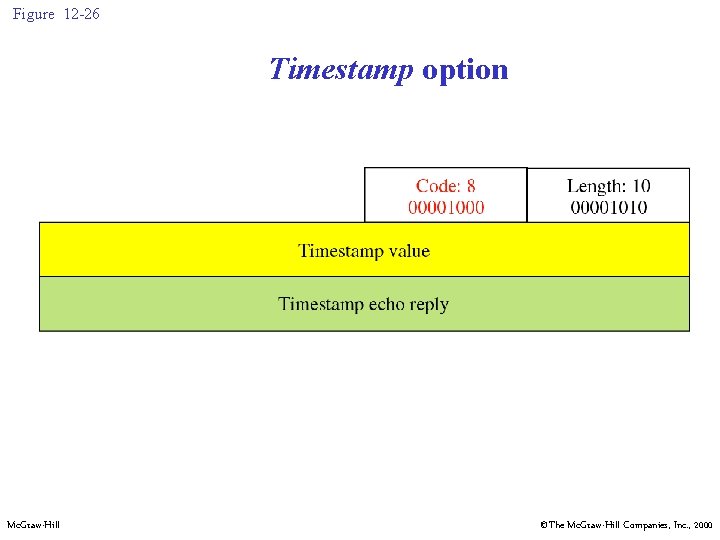
Figure 12 -26 Timestamp option Mc. Graw-Hill ©The Mc. Graw-Hill Companies, Inc. , 2000
12. 11 CHECKSUM Mc. Graw-Hill ©The Mc. Graw-Hill Companies, Inc. , 2000
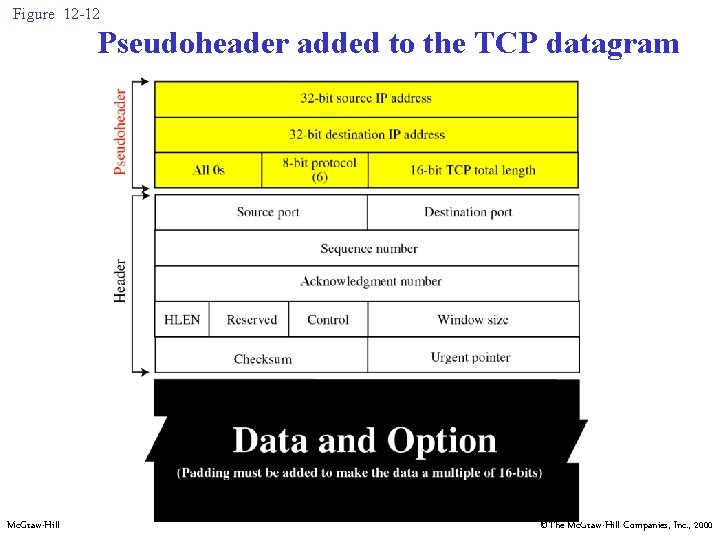
Figure 12 -12 Pseudoheader added to the TCP datagram Mc. Graw-Hill ©The Mc. Graw-Hill Companies, Inc. , 2000
12. 12 CONNECTION Mc. Graw-Hill ©The Mc. Graw-Hill Companies, Inc. , 2000
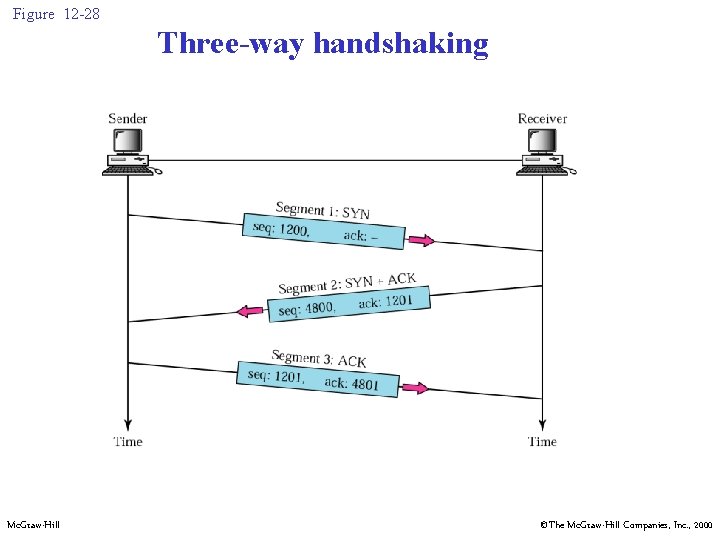
Figure 12 -28 Three-way handshaking Mc. Graw-Hill ©The Mc. Graw-Hill Companies, Inc. , 2000
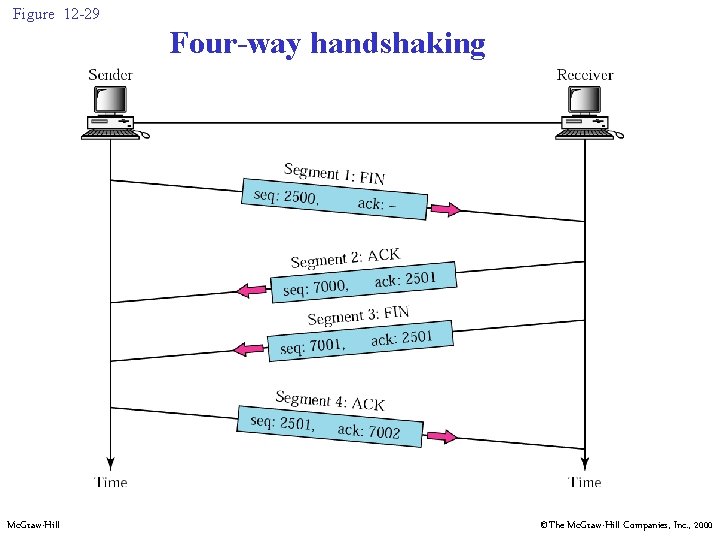
Figure 12 -29 Four-way handshaking Mc. Graw-Hill ©The Mc. Graw-Hill Companies, Inc. , 2000
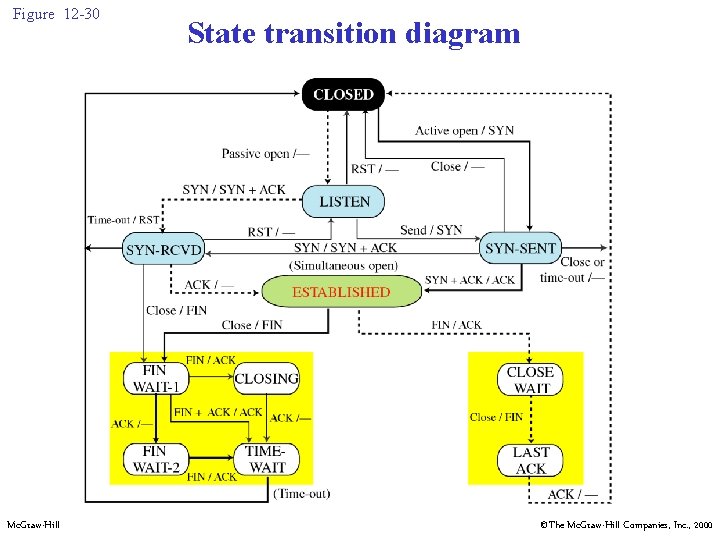
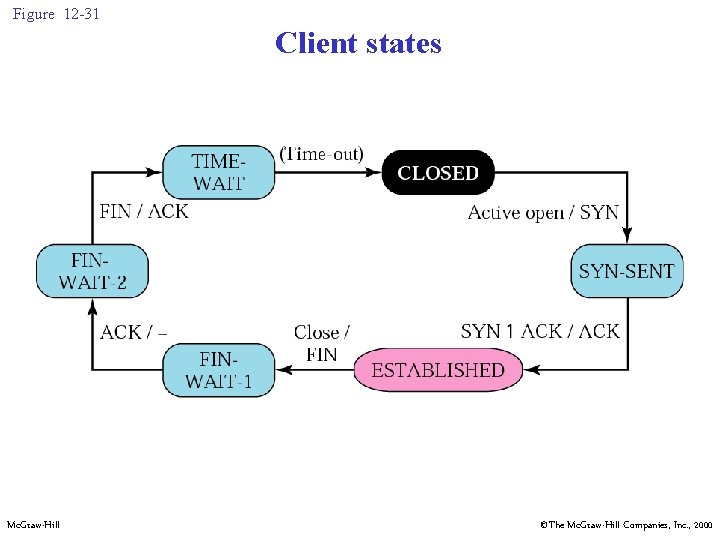
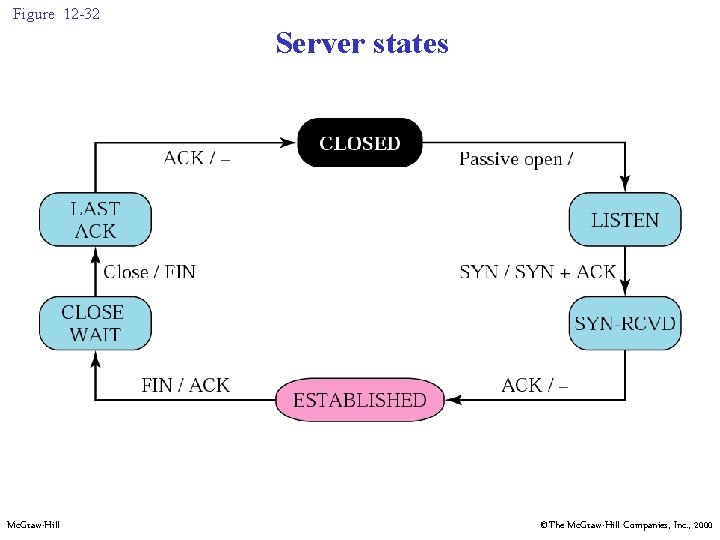
12. 13 STATE TRANSITION DIAGRAM Mc. Graw-Hill ©The Mc. Graw-Hill Companies, Inc. , 2000
Figure 12 -30 Mc. Graw-Hill State transition diagram ©The Mc. Graw-Hill Companies, Inc. , 2000
Figure 12 -31 Client states Mc. Graw-Hill ©The Mc. Graw-Hill Companies, Inc. , 2000
Figure 12 -32 Server states Mc. Graw-Hill ©The Mc. Graw-Hill Companies, Inc. , 2000
12. 14 TCP OPERATION Mc. Graw-Hill ©The Mc. Graw-Hill Companies, Inc. , 2000
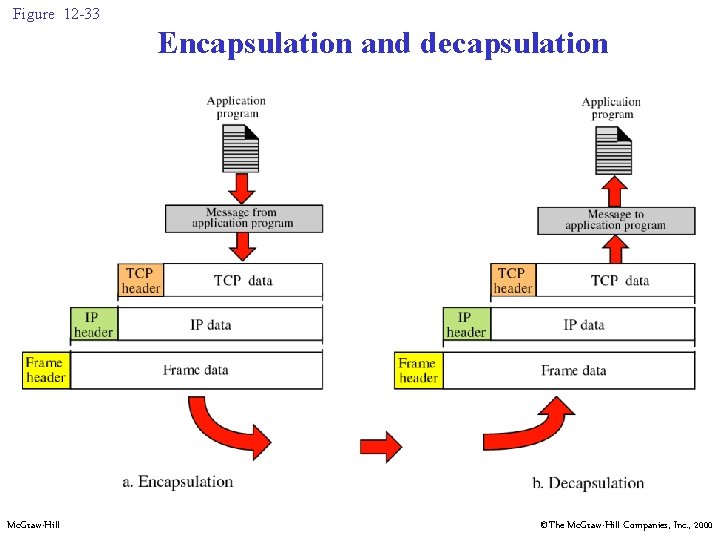
Figure 12 -33 Encapsulation and decapsulation Mc. Graw-Hill ©The Mc. Graw-Hill Companies, Inc. , 2000