
CHAPTER 12 THE STRUCTURE AND INFECTION CYCLE OF
- Slides: 35
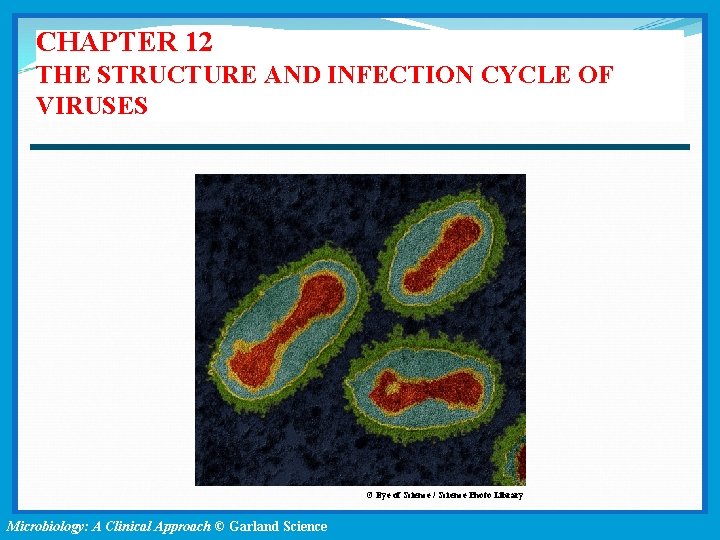
CHAPTER 12 THE STRUCTURE AND INFECTION CYCLE OF VIRUSES © Eye of Science / Science Photo Library Microbiology: A Clinical Approach © Garland Science
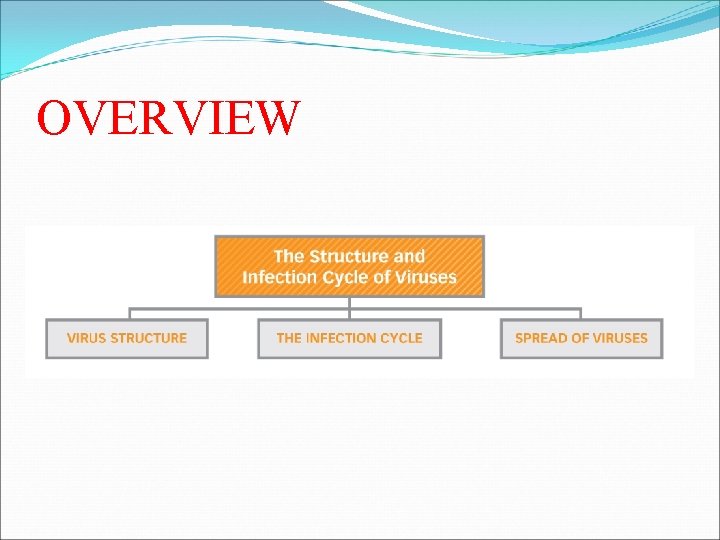
OVERVIEW
Viruses: • are noncellular or Acellular infectious agents Virology: • study of viruses Virologists: • scientists who study viruses
General features of Viruses �Viruses are infectious agents with both living and nonliving characteristics. 1. Living characteristics of viruses �a. They reproduce at a fantastic rate, but only in living host cells. b. They can mutate.
…General features of Viruses 2. Nonliving characteristics of viruses �They are acellular, that is, they contain no cytoplasm or cellular organelles. �They carry out no metabolism on their own and must replicate using the host cell's metabolic machinery.
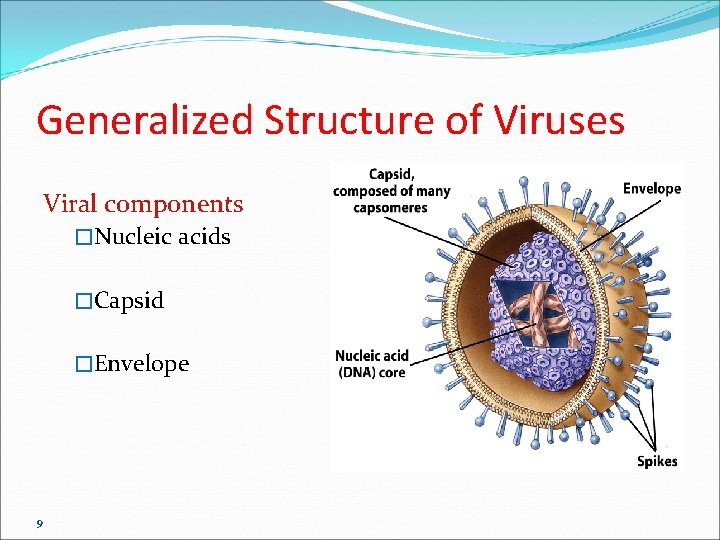
…General features of Viruses �Virus particles contains either DNA or RNA (not both) �Nucleic Acid is surrounded or coated by a protein shell (capsid) �Some viruses possess a membrane-like envelope surrounding the particle
…General Properties of viruses �Consists of 1 molecule of DNA or RNA enclosed in coat of protein �May have additional layers �Cannot reproduce independent of living cells nor carry out cell division as procaryotes and eucaryotes do � An intact viral particle is called a virion.
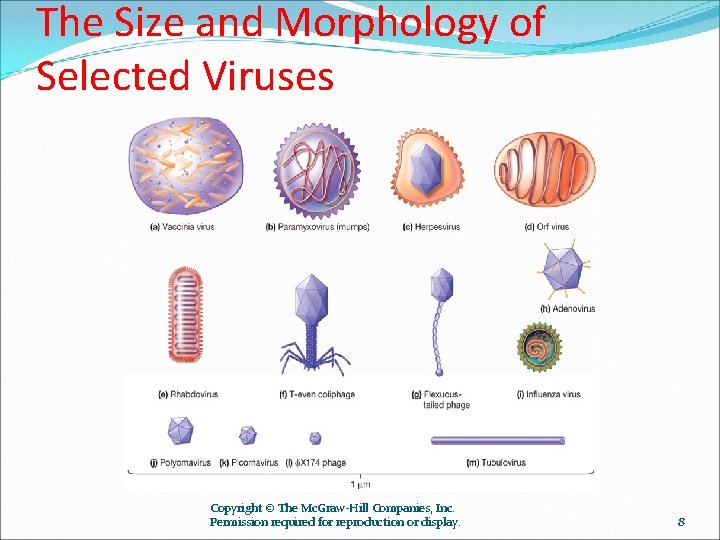
The Size and Morphology of Selected Viruses Copyright © The Mc. Graw-Hill Companies, Inc. Permission required for reproduction or display. 8
Generalized Structure of Viruses Viral components �Nucleic acids �Capsid �Envelope 9
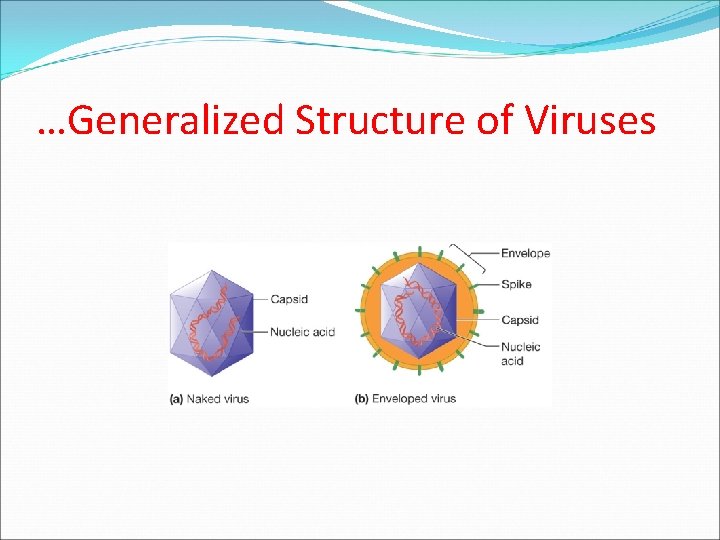
…Generalized Structure of Viruses
The Structure of Viruses �Virion size range is ~10 -400 nm �All virions contain a nucleocapsid which is composed of nucleic acid (DNA or RNA) and a protein coat (capsid) �Some viruses consist only of a nucleocapsid, others have additional components �Envelopes �virions having envelopes = enveloped viruses �virions lacking envelopes = naked viruses
VIRAL ENVELOPES • Many viruses that infect humans and other animals are enveloped. • Envelopes form when viral glycoproteins and oligosaccharides associate with the plasma membrane of the host cell. • All envelopes have a phospholipid bilayer.
VIRAL ENVELOPES Envelopes vary in: �Size �Morphology �Complexity �Composition
ENVELOPE GLYCOPROTEINS • They are firmly embedded in the envelope bilayer. • This is facilitated by domains of host membrane proteins called spanners. • They can form spikes or other structures on the outside of the virion. • These can be used to attach to a host cell.
Capsids �Capsids are large macromolecular structures which serve as protein coat of virus �Protect viral genetic material and aid in its transfer between host cells �Made of protein subunits called protomers Copyright © The Mc. Graw-Hill Companies, Inc. Permission required for reproduction or display. 15
GENOMIC PACKAGING • Genome packaging has an important role in the infection. • Viral genomes are packaged in one of three ways: • Directly in the capsid-inner side of the protein coat • Enclosed in special proteins-nucleic acid binding protein • Enclosed in proteins from the host cell
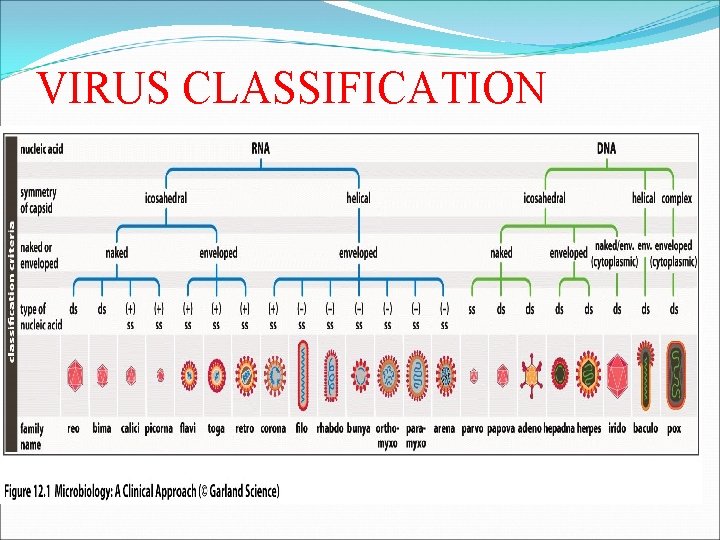
VIRUS CLASSIFICATION
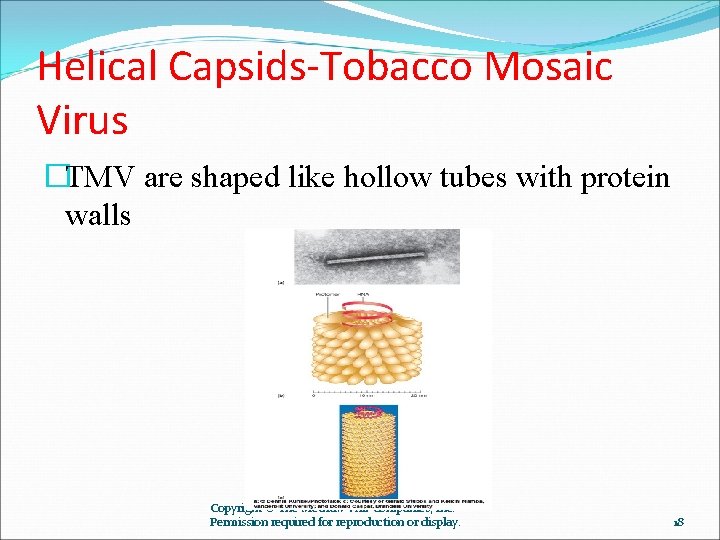
Helical Capsids-Tobacco Mosaic Virus �TMV are shaped like hollow tubes with protein walls Copyright © The Mc. Graw-Hill Companies, Inc. Permission required for reproduction or display. 18
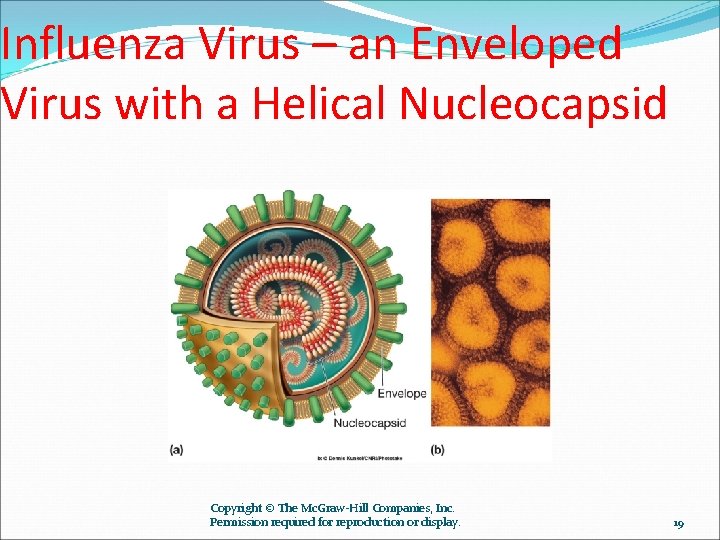
Influenza Virus – an Enveloped Virus with a Helical Nucleocapsid Copyright © The Mc. Graw-Hill Companies, Inc. Permission required for reproduction or display. 19
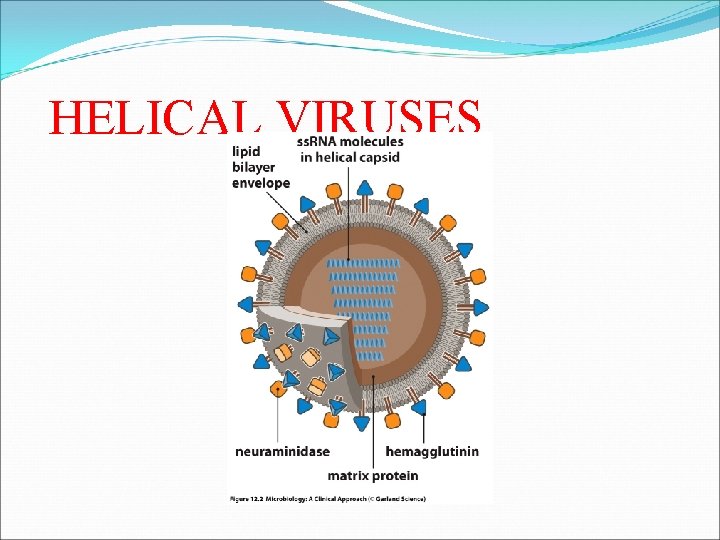
HELICAL VIRUSES
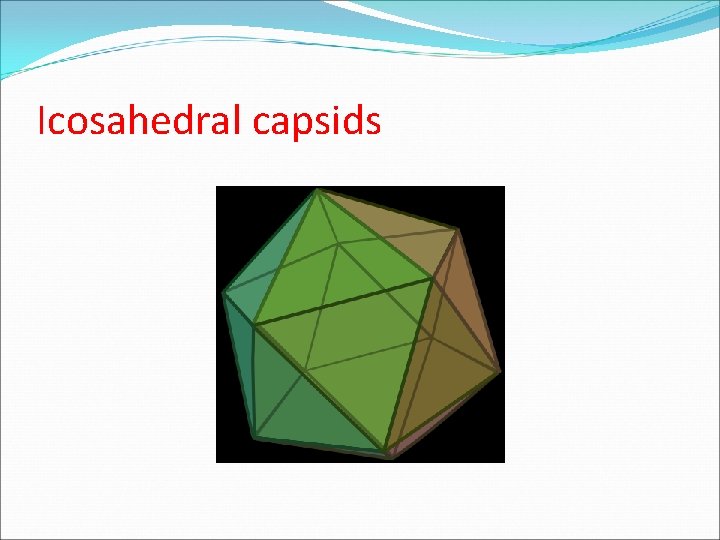
ICOSAHEDRAL VIRUSES �Their shape is derived from 20 triangular faces that make up the capsid. �The capsid ‘has’ 12 points of symmetry.
Icosahedral capsids
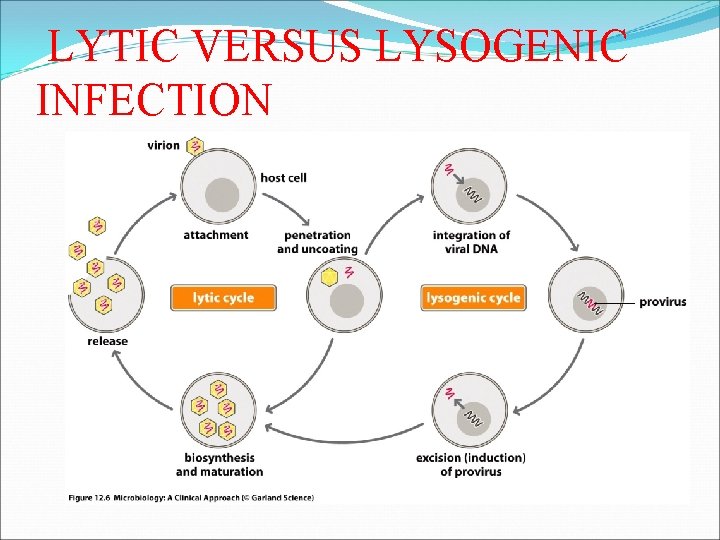
THE INFECTION CYCLE • The infection cycle was first worked out in bacteriophages (bacterial viruses). • Animal virus infections can be either lytic or lysogenic.
LYTIC VERSUS LYSOGENIC INFECTION • In a lytic infection, the host cells fills with virions and bursts. • The result is cell death. • Lysogenic infections are also known as latent infections. • The viral genome becomes incorporated into the host cell’s DNA. • It can remain this way for an extended period. • The host cell lives.
LYTIC VERSUS LYSOGENIC INFECTION
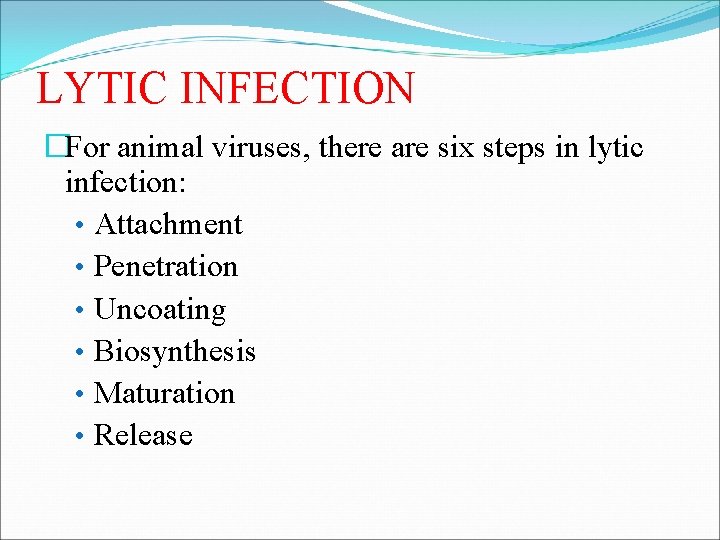
LYTIC INFECTION �For animal viruses, there are six steps in lytic infection: • Attachment • Penetration • Uncoating • Biosynthesis • Maturation • Release
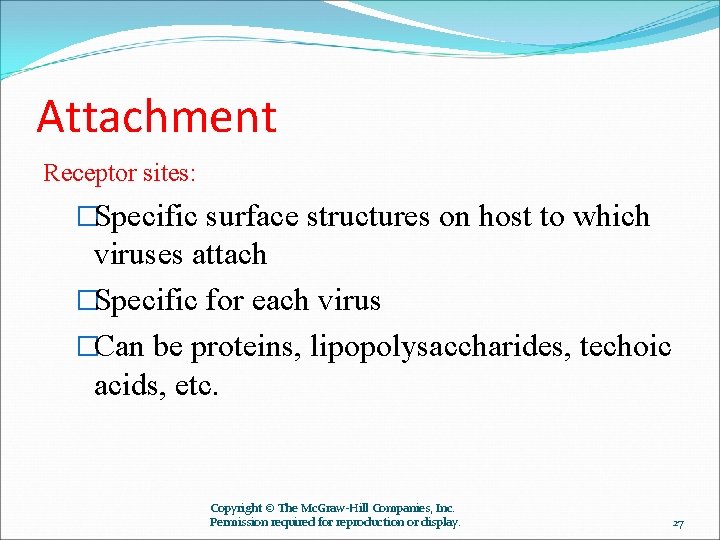
Attachment Receptor sites: �Specific surface structures on host to which viruses attach �Specific for each virus �Can be proteins, lipopolysaccharides, techoic acids, etc. Copyright © The Mc. Graw-Hill Companies, Inc. Permission required for reproduction or display. 27
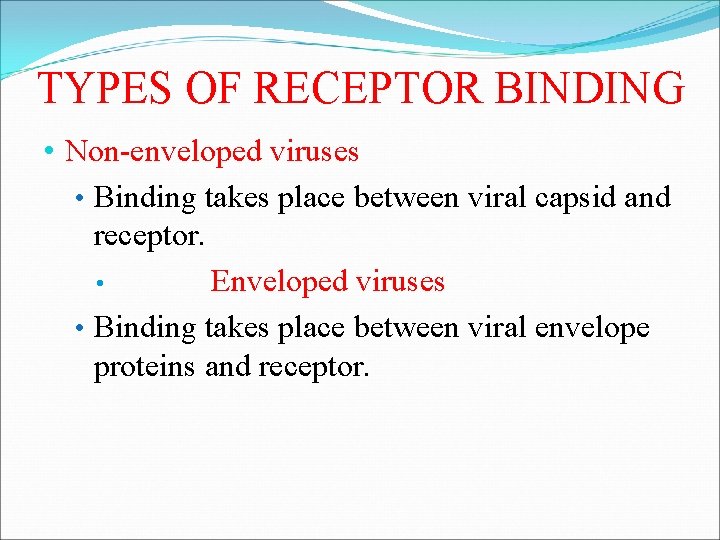
TYPES OF RECEPTOR BINDING • Non-enveloped viruses • Binding takes place between viral capsid and receptor. • Enveloped viruses • Binding takes place between viral envelope proteins and receptor.
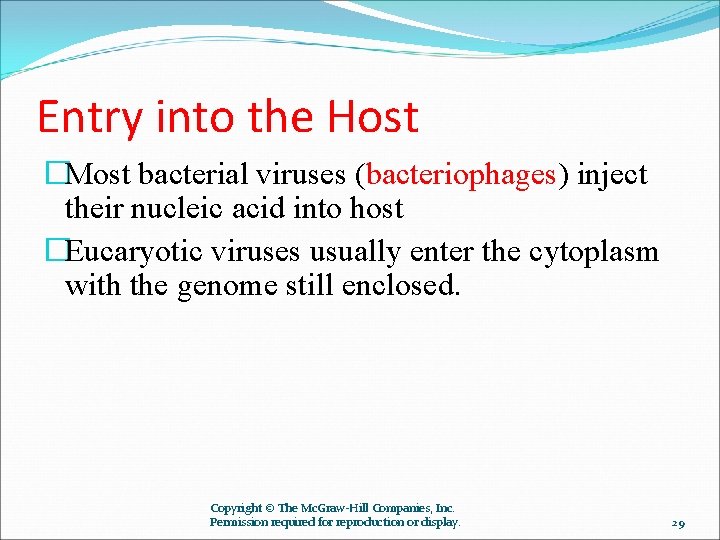
Entry into the Host �Most bacterial viruses (bacteriophages) inject their nucleic acid into host �Eucaryotic viruses usually enter the cytoplasm with the genome still enclosed. Copyright © The Mc. Graw-Hill Companies, Inc. Permission required for reproduction or display. 29
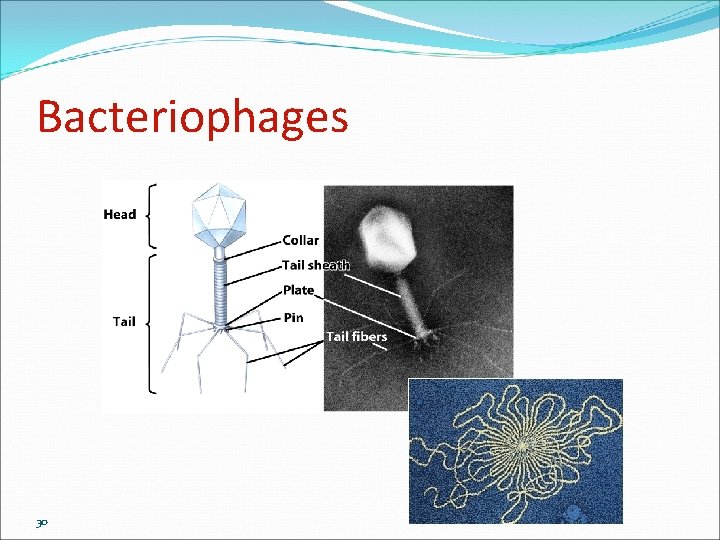
Bacteriophages 30
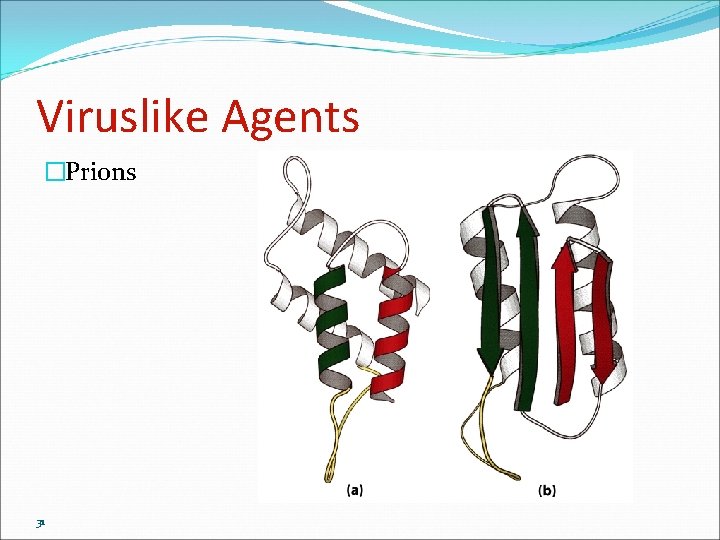
Viruslike Agents �Prions 31
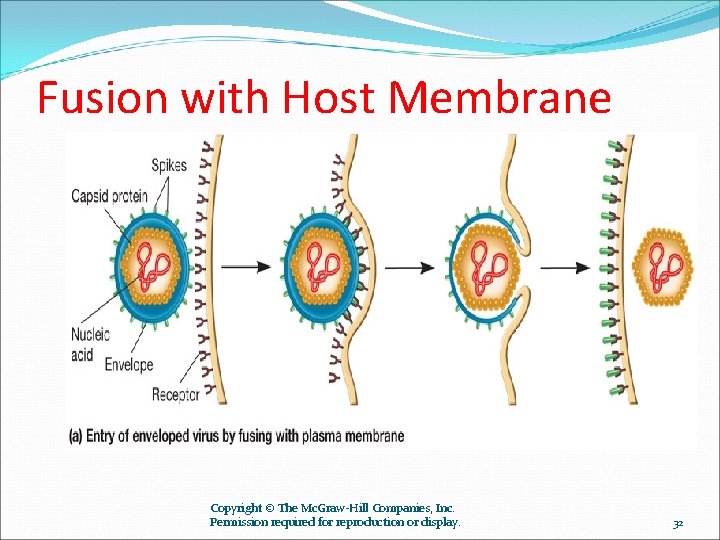
Fusion with Host Membrane Copyright © The Mc. Graw-Hill Companies, Inc. Permission required for reproduction or display. 32
Assignment �Homework: Important group of RNA viruses
Viral Diseases (Next chapter) A. B. C. D. E. Influenza Diseases Caused by the Herpes Family Viral Hepatitis Human Immunodeficiency Virus Miscellaneous Viral Diseases
Bibliography �Microbiology, A clinical Approach -Danielle Moszyk-Strelkauskas-Garland Science 2010. �http: //en. wikipedia. org/wiki/Scientific_method �https: //files. kennesaw. edu/faculty/jhendrix/bio 2261/home. html �http: //www. cdc. gov/cmv/