
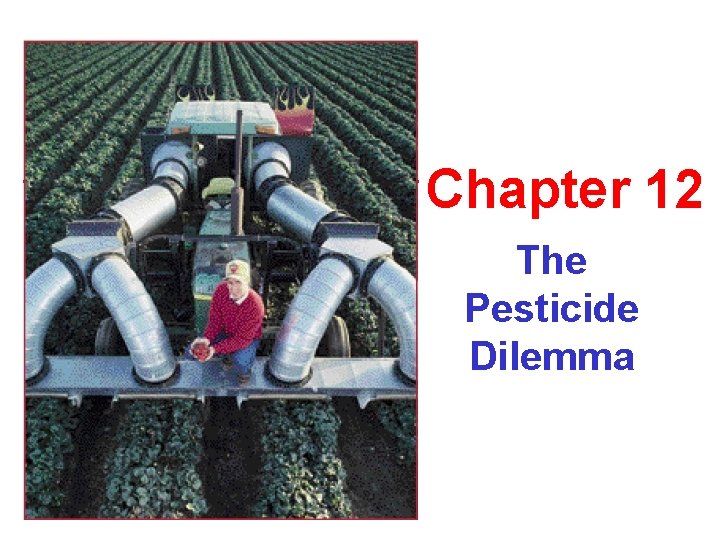
Chapter 12 The Pesticide Dilemma Types of Pesticides

- Slides: 33
Chapter 12 The Pesticide Dilemma
Types of Pesticides 23. 1 • INSECTICIDES – Kill insects by blocking reproduction, clogging airways or disrupting nervous system • HERBICIDES – Kill weeds by disrupting metabolism & growth • FUNGICIDES – Fungus killers • RODENTICIDES – Rat & mouse killers
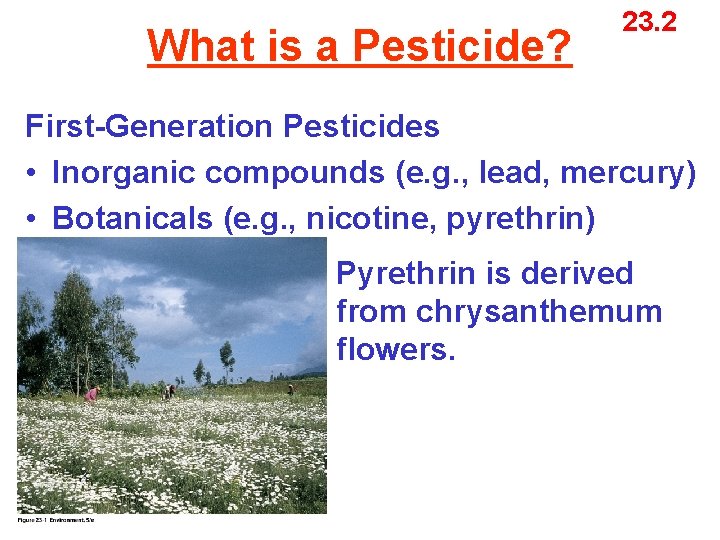
What is a Pesticide? 23. 2 First-Generation Pesticides • Inorganic compounds (e. g. , lead, mercury) • Botanicals (e. g. , nicotine, pyrethrin) Pyrethrin is derived from chrysanthemum flowers.
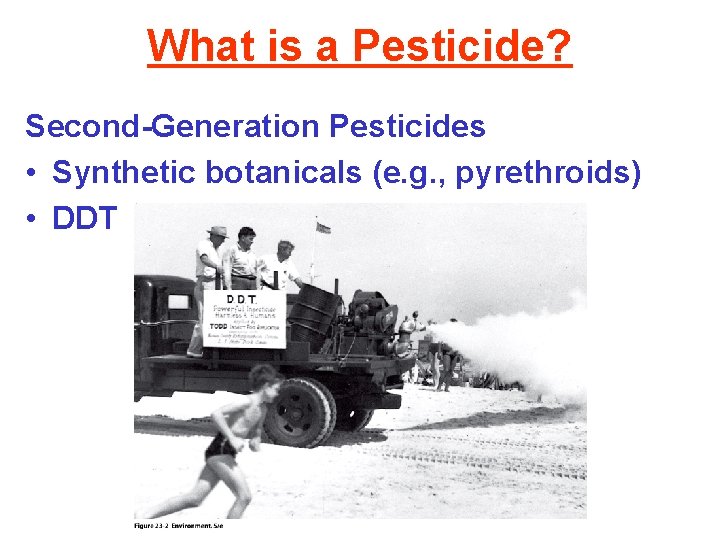
What is a Pesticide? Second-Generation Pesticides • Synthetic botanicals (e. g. , pyrethroids) • DDT
MAJOR CLASSES The Major Groups of Insecticides • Chlorinated hydrocarbon (e. g. , DDT) • Organophosphates (e. g. , malathion) • Carbamates (e. g. , carbaryl)
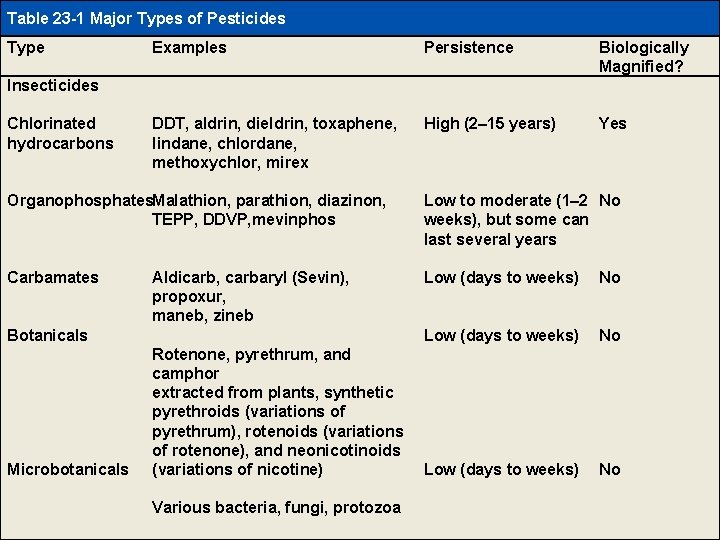
Table 23 -1 Page 520 Table 23 -1 Major Types of Pesticides Type Insecticides Chlorinated hydrocarbons Examples DDT, aldrin, dieldrin, toxaphene, lindane, chlordane, methoxychlor, mirex Persistence Biologically Magnified? High (2– 15 years) Yes Organophosphates. Malathion, parathion, diazinon, TEPP, DDVP, mevinphos Low to moderate (1– 2 No weeks), but some can last several years Carbamates Low (days to weeks) No Aldicarb, carbaryl (Sevin), propoxur, maneb, zineb Botanicals Microbotanicals Rotenone, pyrethrum, and camphor extracted from plants, synthetic pyrethroids (variations of pyrethrum), rotenoids (variations of rotenone), and neonicotinoids (variations of nicotine) Various bacteria, fungi, protozoa
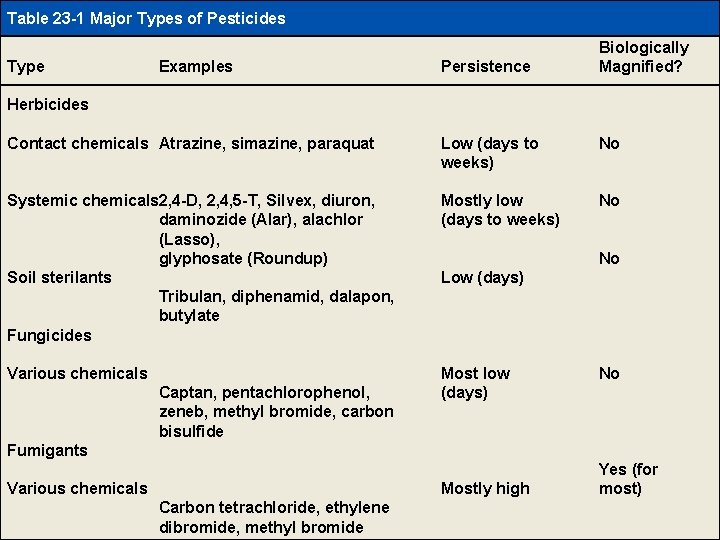
Table 23 -1 Page 520 Table 23 -1 Major Types of Pesticides Type Herbicides Examples Persistence Biologically Magnified? Contact chemicals Atrazine, simazine, paraquat Low (days to weeks) No Systemic chemicals 2, 4 -D, 2, 4, 5 -T, Silvex, diuron, daminozide (Alar), alachlor (Lasso), glyphosate (Roundup) Soil sterilants Tribulan, diphenamid, dalapon, butylate Fungicides Mostly low (days to weeks) No Various chemicals Most low (days) Captan, pentachlorophenol, zeneb, methyl bromide, carbon bisulfide No Low (days) No Fumigants Various chemicals Mostly high Carbon tetrachloride, ethylene dibromide, methyl bromide Yes (for most)
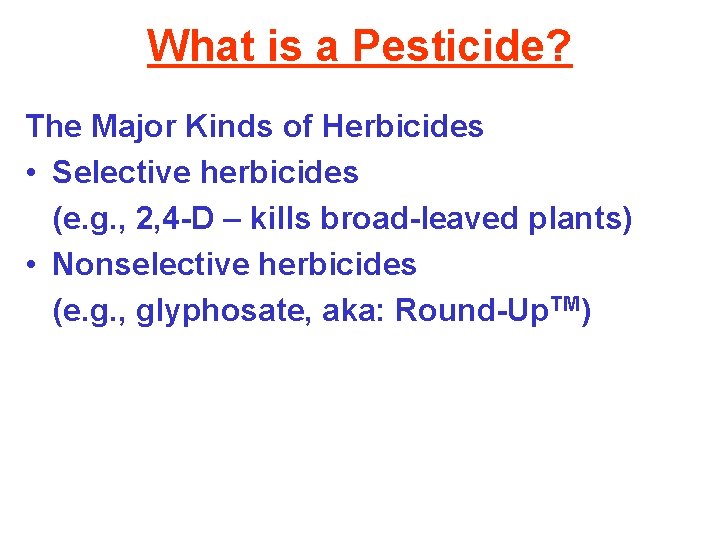
What is a Pesticide? The Major Kinds of Herbicides • Selective herbicides (e. g. , 2, 4 -D – kills broad-leaved plants) • Nonselective herbicides (e. g. , glyphosate, aka: Round-Up. TM)
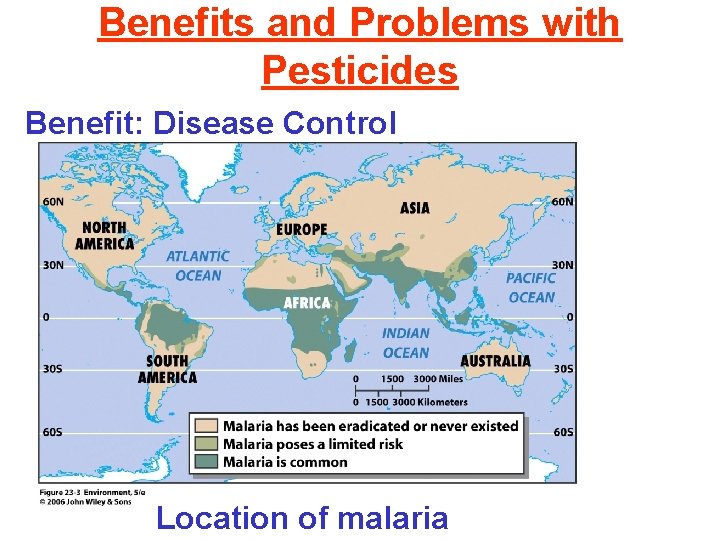
Benefits and Problems with Pesticides Benefit: Disease Control Location of malaria
Benefits and Problems with Pesticides Benefit: Crop production Farmers save ~$3 - $5 in crops for every $1 invested into pesticides
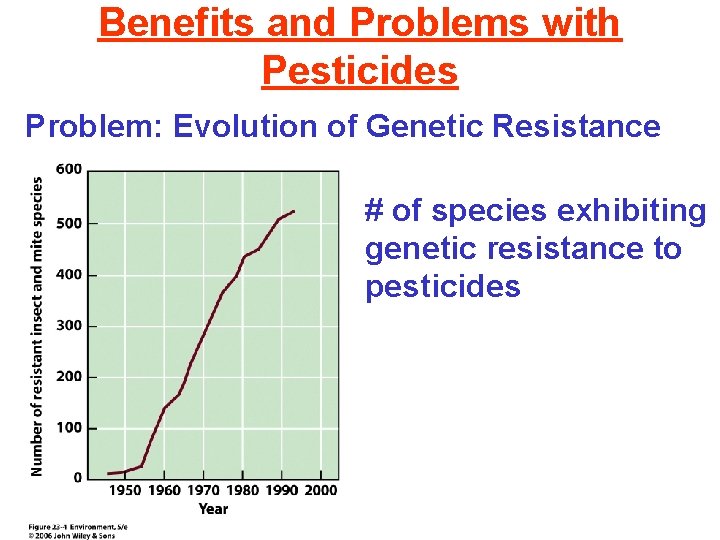
Benefits and Problems with Pesticides Problem: Evolution of Genetic Resistance # of species exhibiting genetic resistance to pesticides
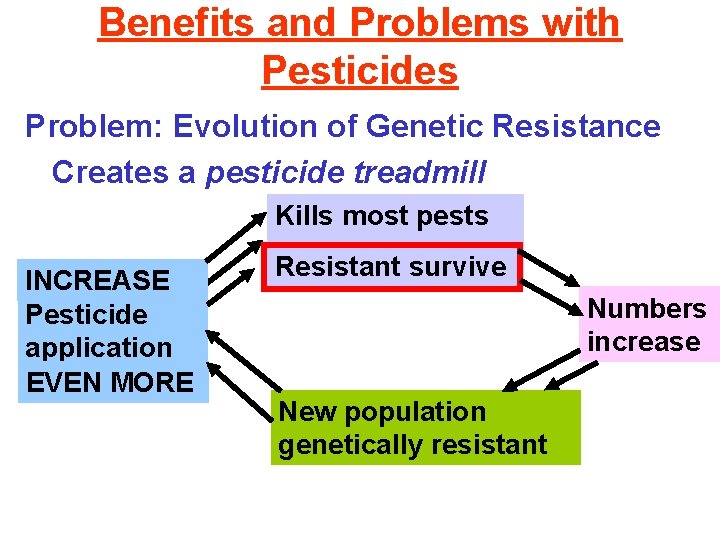
Benefits and Problems with Pesticides Problem: Evolution of Genetic Resistance Creates a pesticide treadmill Kills most pests INCREASE Pesticide application EVEN MORE Resistant survive Numbers increase New population genetically resistant
Benefits and Problems with Pesticides Problem: Evolution of Genetic Resistance Management • Create a “refuge” (no pesticide applied) • Avoid repeated use of same pesticide
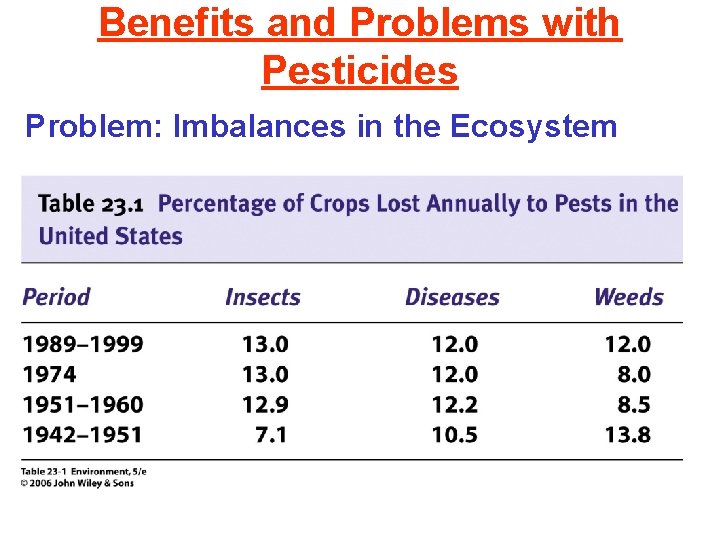
Benefits and Problems with Pesticides Problem: Imbalances in the Ecosystem
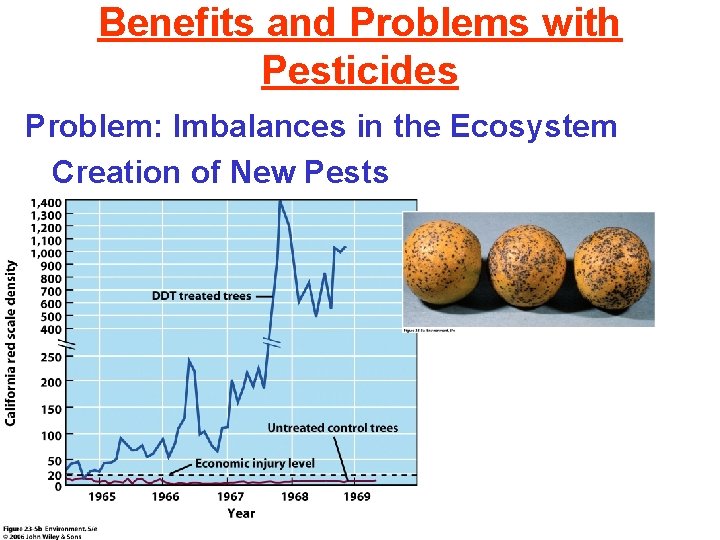
Benefits and Problems with Pesticides Problem: Imbalances in the Ecosystem Creation of New Pests
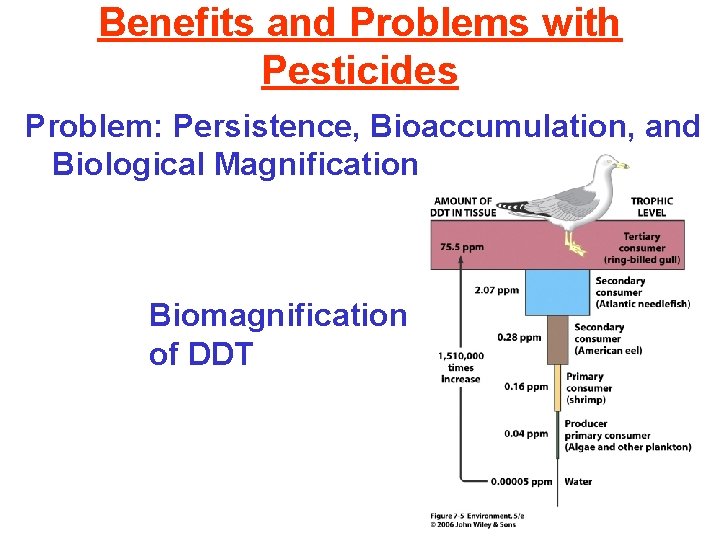
Benefits and Problems with Pesticides Problem: Persistence, Bioaccumulation, and Biological Magnification Biomagnification of DDT
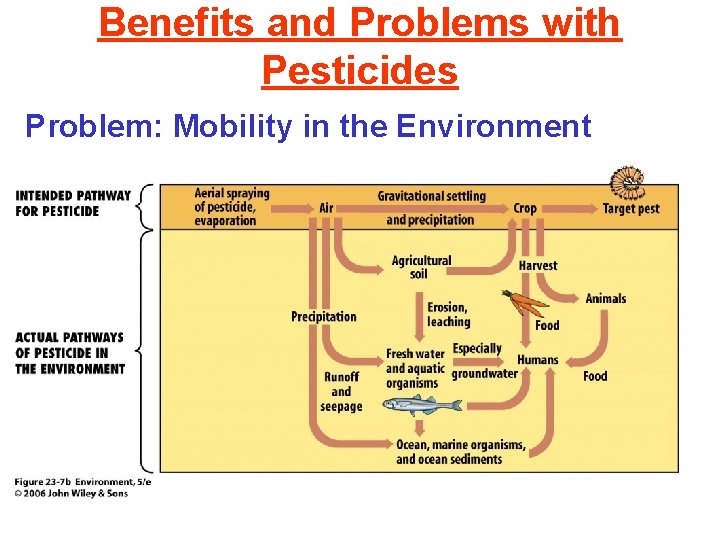
Benefits and Problems with Pesticides Problem: Mobility in the Environment
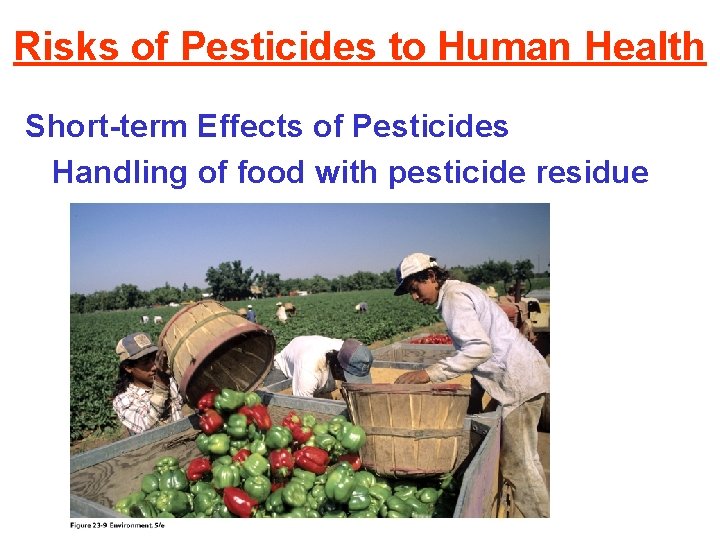
Risks of Pesticides to Human Health Short-term Effects of Pesticides Handling of food with pesticide residue
Risks of Pesticides to Human Health Short-term Effects of Pesticides Case-in-Point: The Bhopal Disaster • 40 tons of methyl isocyanate gas released • 600, 000 people exposed • 2, 500 immediately killed • 2, 500 more killed through time • 50, 000 -60, 000 have serious health problems
Risks of Pesticides to Human Health Long-term Effects of Pesticides • Potentially higher risk of cancer • Sterility • Miscarriage / birth defects • Potentially higher risk for Parkinson’s disease
Alternatives to Pesticides Using Cultivation Methods to Control Pests • Interplant mixtures of plants • Strip cutting • Planting, fertilizing, and irrigating at proper time • Crop rotation
Alternatives to Pesticides • Biological Controls Using naturally occurring diseases, parasites, or predators to control a pest • Pheromones and Hormones Use pheromones to attract insects to traps Synthetic hormones induce abnormal development • Reproductive Controls Sterile-male technique – inundate pest population with large numbers of sterile males
Alternatives to Pesticides Genetic Controls Using Genetically Modified plants (GMOs) Case-in-Point: Bt, Its Potential and Problems Genetically modified corn to produce Bt toxin Potential problem: may affect non-target species, such as monarch butterfly Quarantine
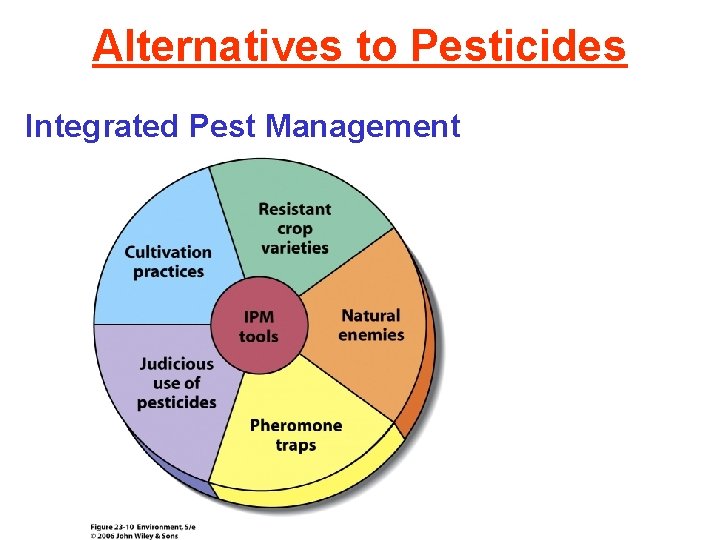
Alternatives to Pesticides Integrated Pest Management
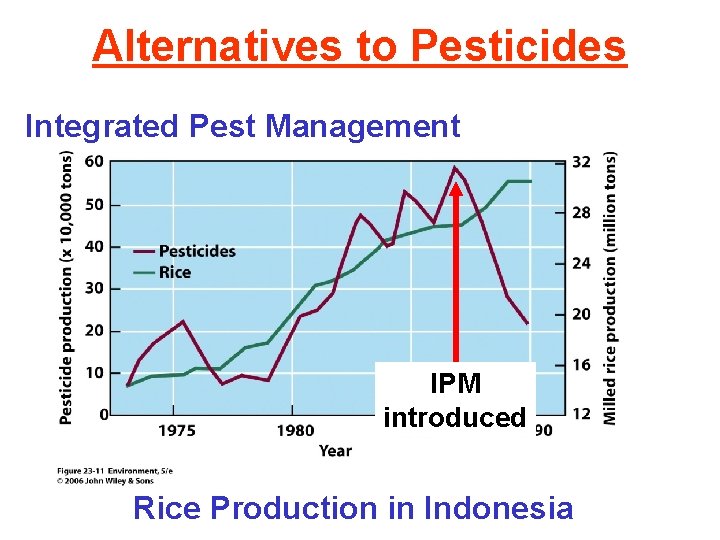
Alternatives to Pesticides Integrated Pest Management IPM introduced Rice Production in Indonesia
Alternatives to Pesticides Irradiating Foods Predominantly used on meats Kills many microorganisms
FEDERAL INSECTICIDE, FUNGICIDE, AND RODENTICIDE ACT (FIFRA) ü The primary focus of FIFRA was to provide federal control of pesticide distribution, sale, and use ü EPA was given authority under FIFRA not only to study the consequences of pesticide usage but also to require users to register when purchasing pesticides ü EPA is required to make instructional materials concerning integrated pest management (IPM) techniques available to individuals at their request
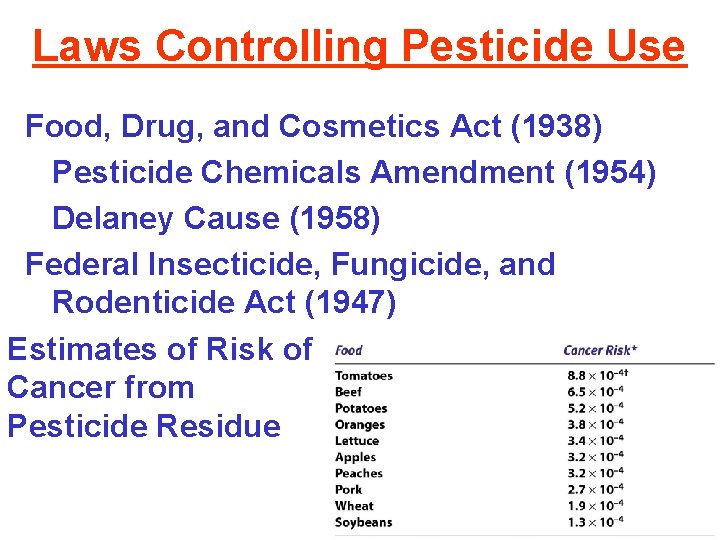
Laws Controlling Pesticide Use Food, Drug, and Cosmetics Act (1938) Pesticide Chemicals Amendment (1954) Delaney Cause (1958) Federal Insecticide, Fungicide, and Rodenticide Act (1947) Estimates of Risk of Cancer from Pesticide Residue
Laws Controlling Pesticide Use Food, Drug, and Cosmetics Act (1938) Pesticide Chemicals Amendment (1954) Delaney Cause (1958) Federal Insecticide, Fungicide, and Rodenticide Act (1947) Food Quality Protection Act (1996)
The Manufacture and Use of Banned Pesticides Some US companies still make banned or seriously restricted pesticides and export the product. This can potentially lead to the importation of food tainted with banned pesticides
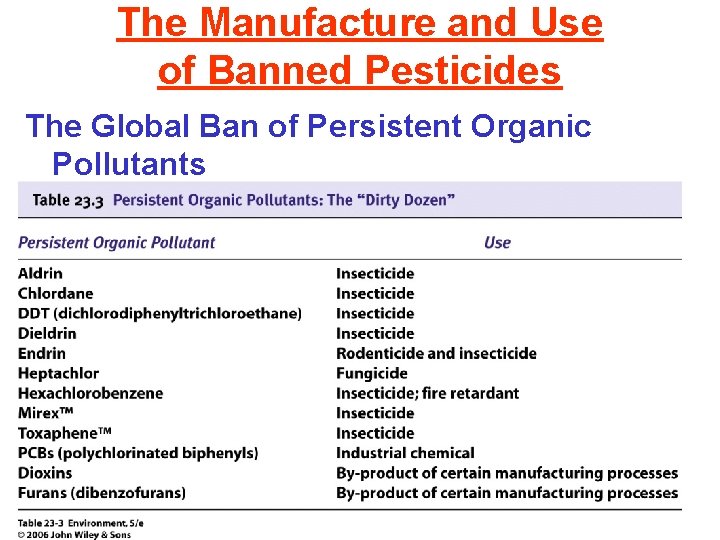
The Manufacture and Use of Banned Pesticides The Global Ban of Persistent Organic Pollutants
IPM is: A pest management philosophy that utilizes all suitable pest management techniques and methods to keep pest populations below economically injurious levels. Each pest management technique must be environmentally sound and compatible with producer objectives.
WHAT IS IPM? IPM utilizes a combination of: ü Preventive measures ü Monitoring ü Control techniques IPM’s goal is to suppress pests by the least toxic measures IPM does not exclude the use of chemical pesticides, but utilizes them sparingly and only as a last resort