
Chapter 12 THE OCEANS The Oceans Ocean basins
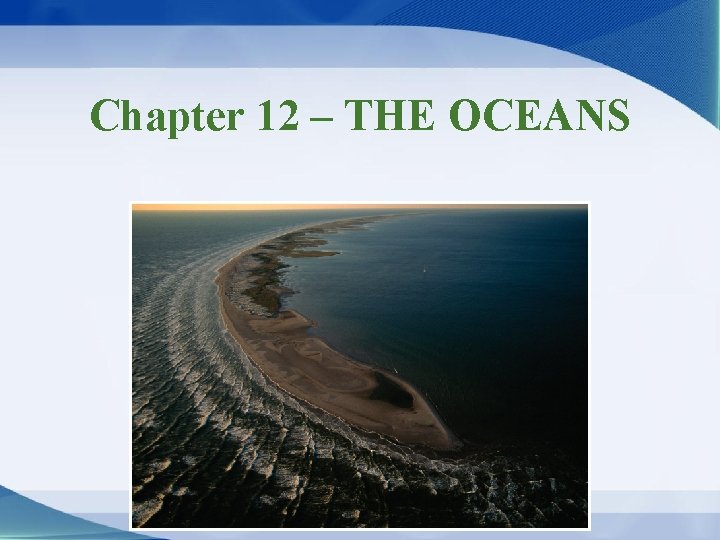
Chapter 12 – THE OCEANS
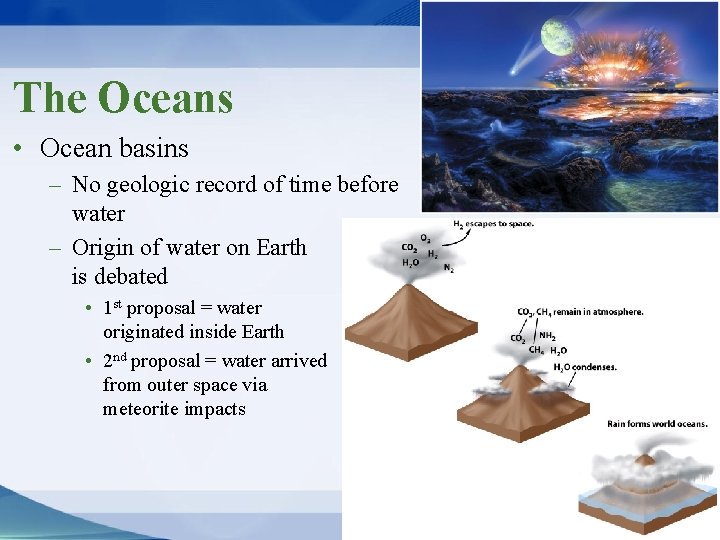
The Oceans • Ocean basins – No geologic record of time before water – Origin of water on Earth is debated • 1 st proposal = water originated inside Earth • 2 nd proposal = water arrived from outer space via meteorite impacts
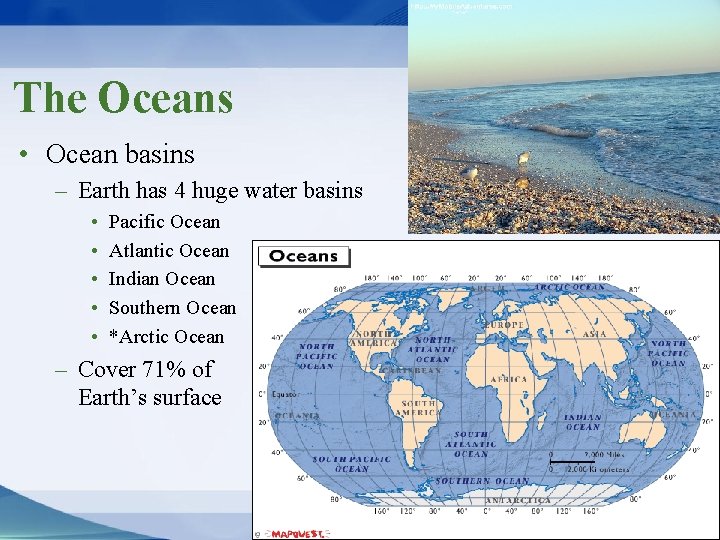
The Oceans • Ocean basins – Earth has 4 huge water basins • • • Pacific Ocean Atlantic Ocean Indian Ocean Southern Ocean *Arctic Ocean – Cover 71% of Earth’s surface
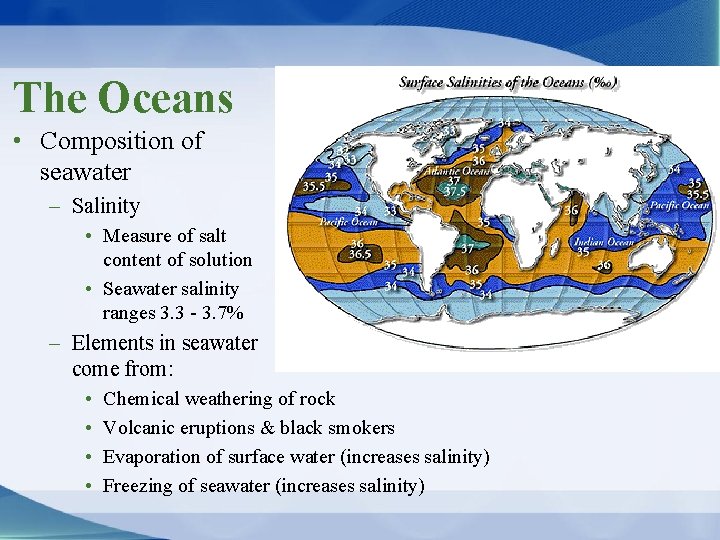
The Oceans • Composition of seawater – Salinity • Measure of salt content of solution • Seawater salinity ranges 3. 3 - 3. 7% – Elements in seawater come from: • • Chemical weathering of rock Volcanic eruptions & black smokers Evaporation of surface water (increases salinity) Freezing of seawater (increases salinity)
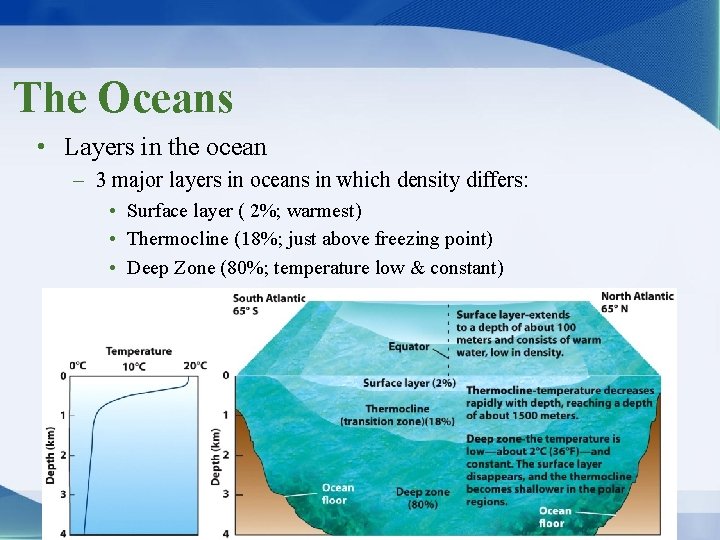
The Oceans • Layers in the ocean – 3 major layers in oceans in which density differs: • Surface layer ( 2%; warmest) • Thermocline (18%; just above freezing point) • Deep Zone (80%; temperature low & constant)
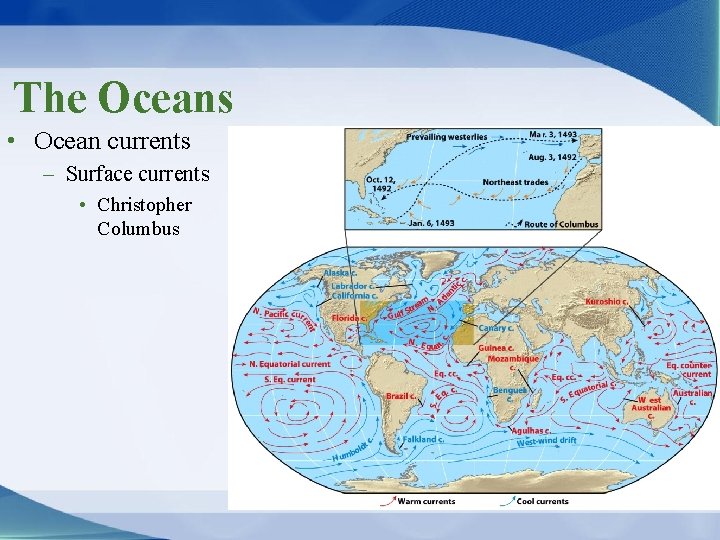
The Oceans • Ocean currents – Surface currents • Christopher Columbus
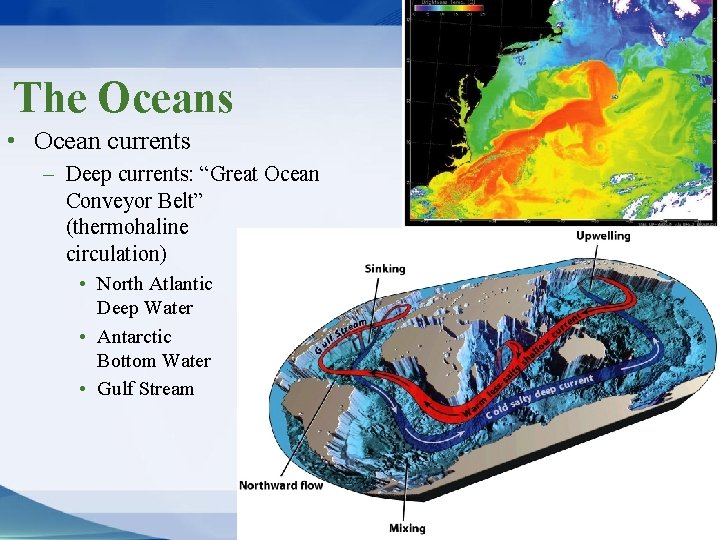
The Oceans • Ocean currents – Deep currents: “Great Ocean Conveyor Belt” (thermohaline circulation) • North Atlantic Deep Water • Antarctic Bottom Water • Gulf Stream
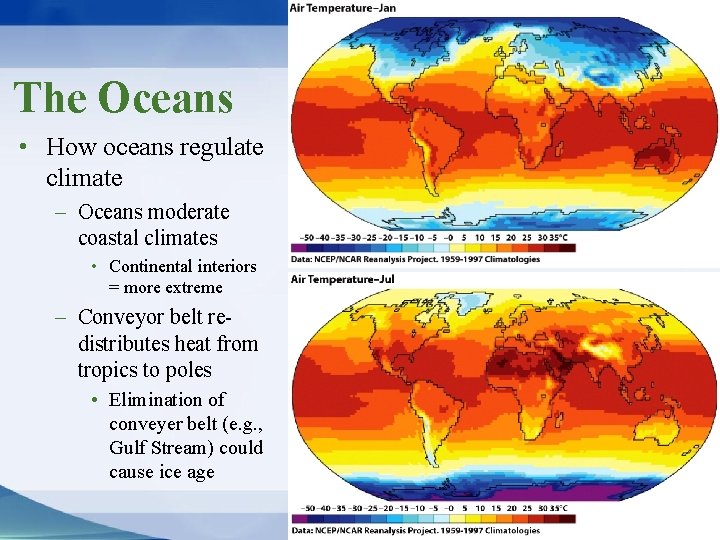
The Oceans • How oceans regulate climate – Oceans moderate coastal climates • Continental interiors = more extreme – Conveyor belt redistributes heat from tropics to poles • Elimination of conveyer belt (e. g. , Gulf Stream) could cause ice age
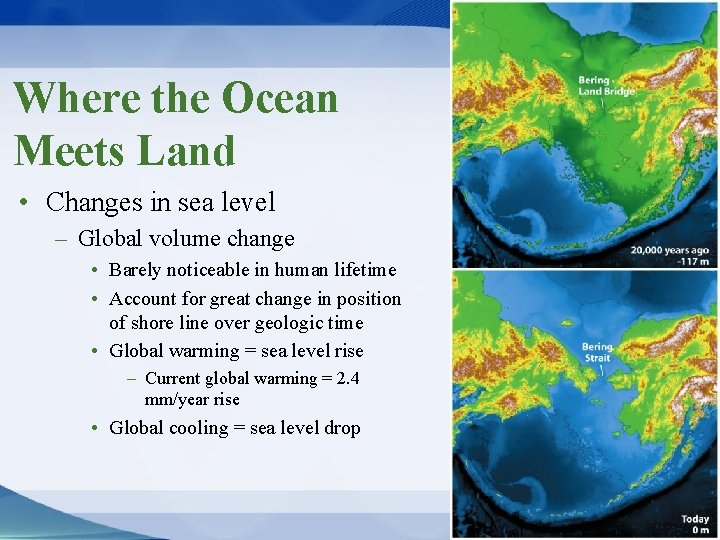
Where the Ocean Meets Land • Changes in sea level – Global volume change • Barely noticeable in human lifetime • Account for great change in position of shore line over geologic time • Global warming = sea level rise – Current global warming = 2. 4 mm/year rise • Global cooling = sea level drop
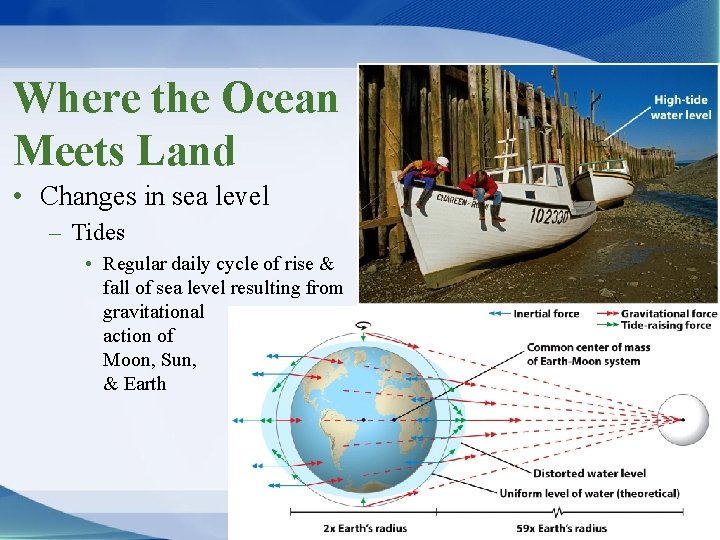
Where the Ocean Meets Land • Changes in sea level – Tides • Regular daily cycle of rise & fall of sea level resulting from gravitational action of Moon, Sun, & Earth
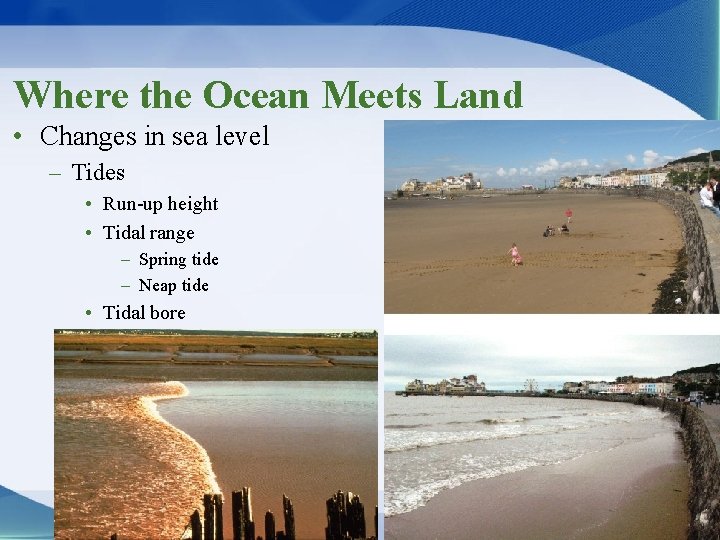
Where the Ocean Meets Land • Changes in sea level – Tides • Run-up height • Tidal range – Spring tide – Neap tide • Tidal bore
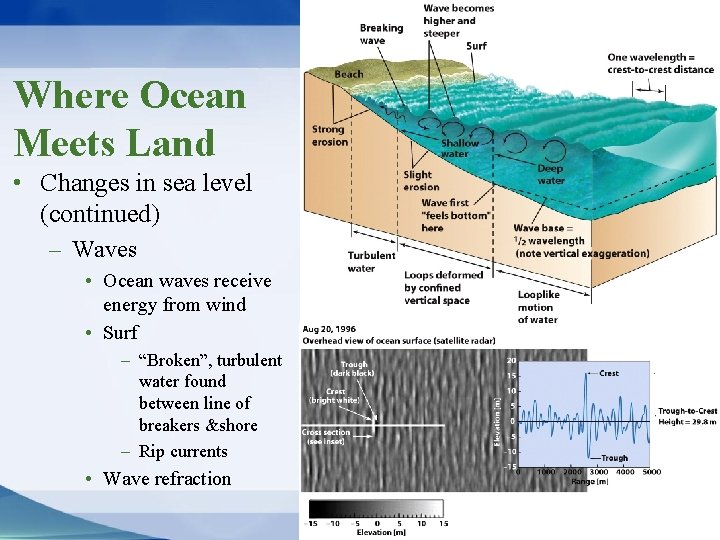
Where Ocean Meets Land • Changes in sea level (continued) – Waves • Ocean waves receive energy from wind • Surf – “Broken”, turbulent water found between line of breakers &shore – Rip currents • Wave refraction
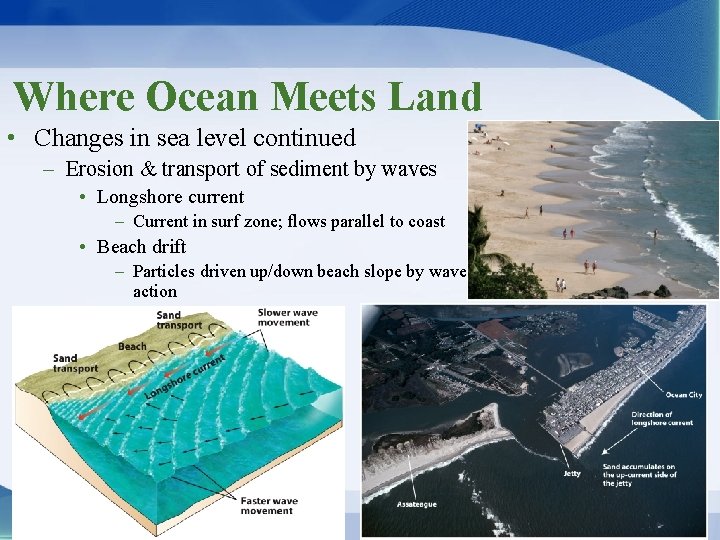
Where Ocean Meets Land • Changes in sea level continued – Erosion & transport of sediment by waves • Longshore current – Current in surf zone; flows parallel to coast • Beach drift – Particles driven up/down beach slope by wave action
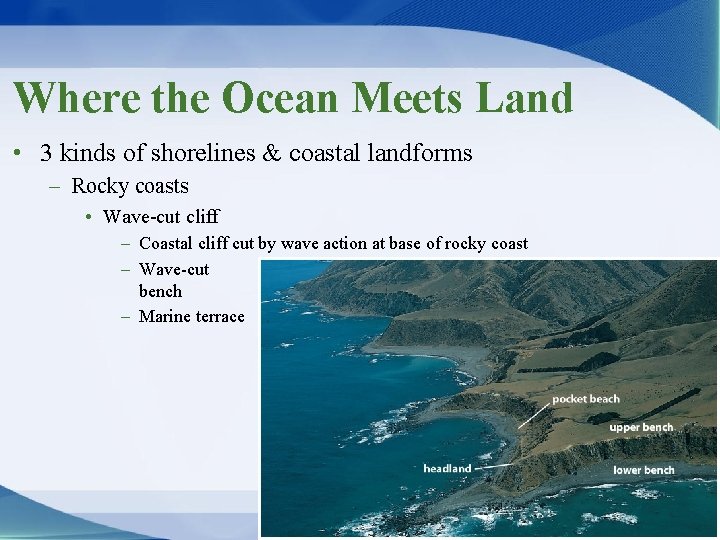
Where the Ocean Meets Land • 3 kinds of shorelines & coastal landforms – Rocky coasts • Wave-cut cliff – Coastal cliff cut by wave action at base of rocky coast – Wave-cut bench – Marine terrace
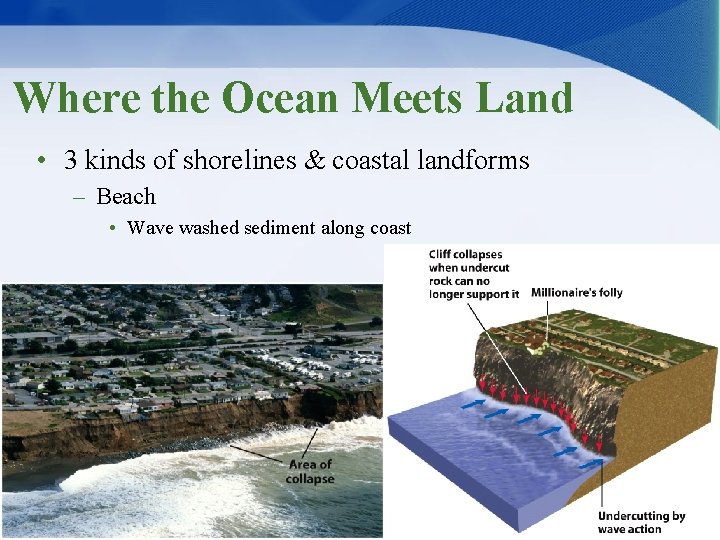
Where the Ocean Meets Land • 3 kinds of shorelines & coastal landforms – Beach • Wave washed sediment along coast
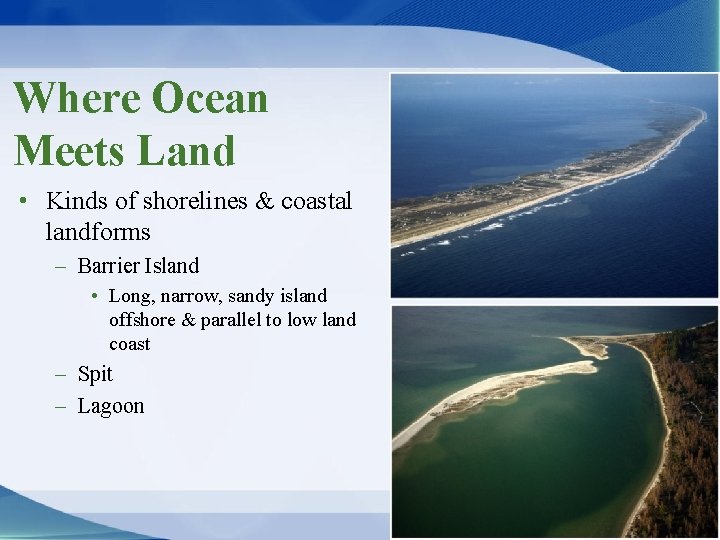
Where Ocean Meets Land • Kinds of shorelines & coastal landforms – Barrier Island • Long, narrow, sandy island offshore & parallel to low land coast – Spit – Lagoon
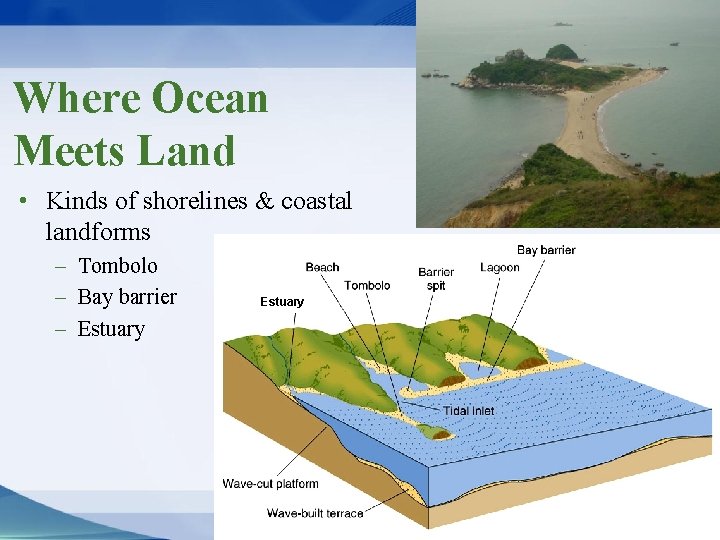
Where Ocean Meets Land • Kinds of shorelines & coastal landforms – Tombolo – Bay barrier – Estuary
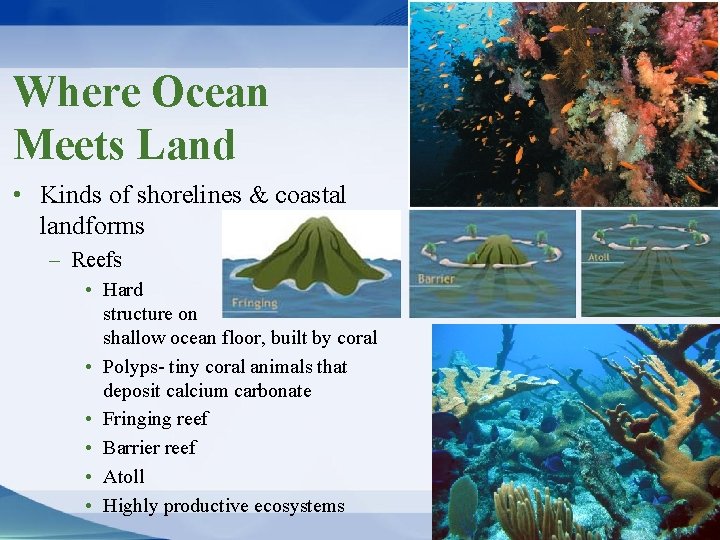
Where Ocean Meets Land • Kinds of shorelines & coastal landforms – Reefs • Hard structure on shallow ocean floor, built by coral • Polyps- tiny coral animals that deposit calcium carbonate • Fringing reef • Barrier reef • Atoll • Highly productive ecosystems
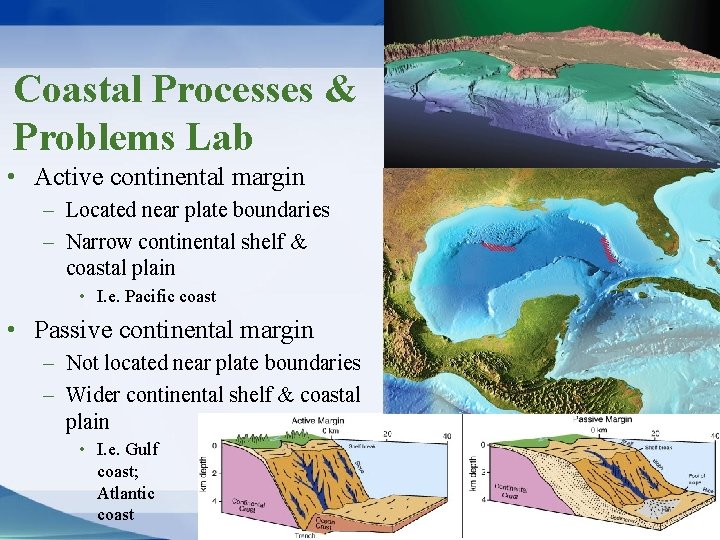
Coastal Processes & Problems Lab • Active continental margin – Located near plate boundaries – Narrow continental shelf & coastal plain • I. e. Pacific coast • Passive continental margin – Not located near plate boundaries – Wider continental shelf & coastal plain • I. e. Gulf coast; Atlantic coast
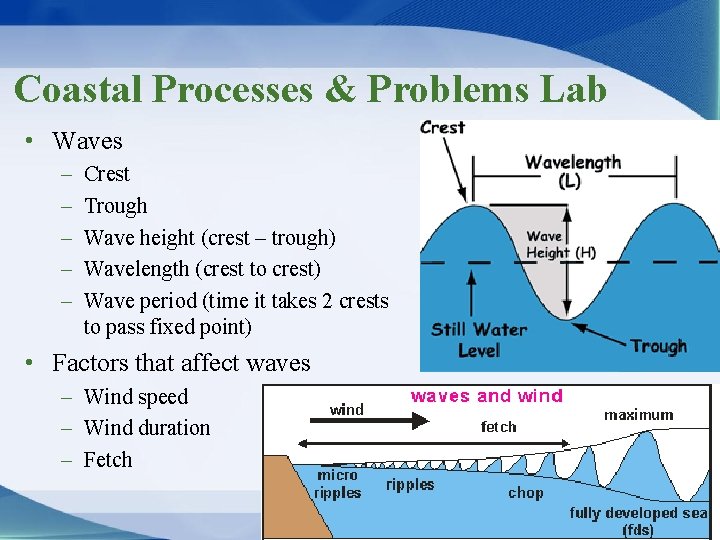
Coastal Processes & Problems Lab • Waves – – – Crest Trough Wave height (crest – trough) Wavelength (crest to crest) Wave period (time it takes 2 crests to pass fixed point) • Factors that affect waves – Wind speed – Wind duration – Fetch
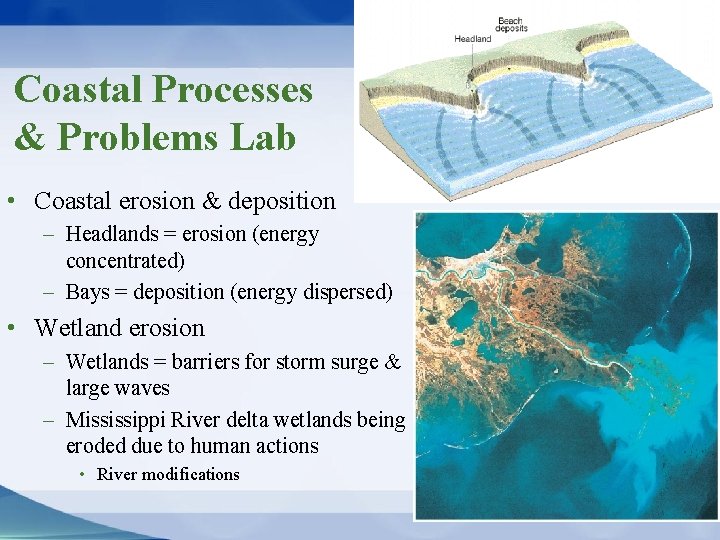
Coastal Processes & Problems Lab • Coastal erosion & deposition – Headlands = erosion (energy concentrated) – Bays = deposition (energy dispersed) • Wetland erosion – Wetlands = barriers for storm surge & large waves – Mississippi River delta wetlands being eroded due to human actions • River modifications
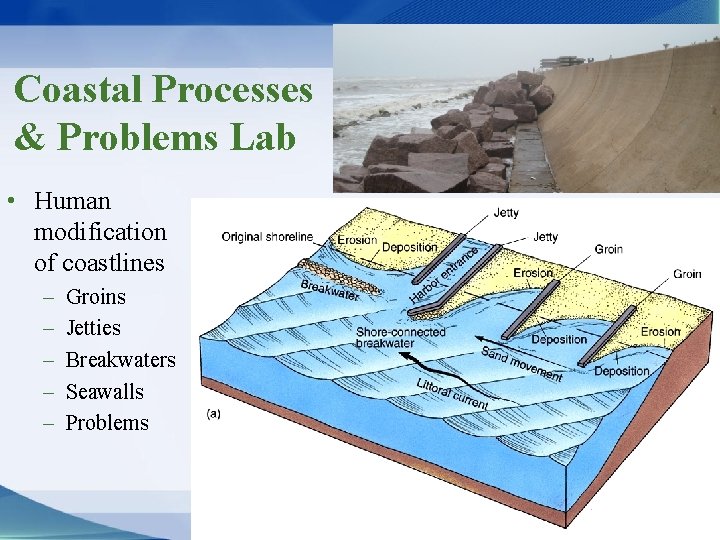
Coastal Processes & Problems Lab • Human modification of coastlines – – – Groins Jetties Breakwaters Seawalls Problems
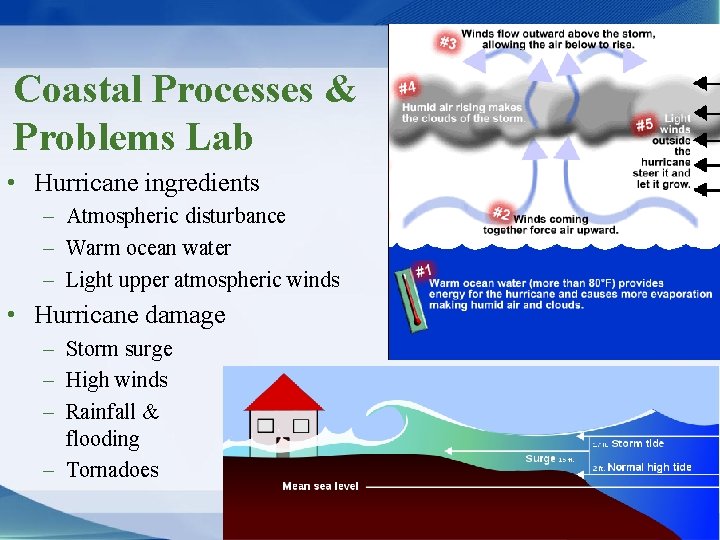
Coastal Processes & Problems Lab • Hurricane ingredients – Atmospheric disturbance – Warm ocean water – Light upper atmospheric winds • Hurricane damage – Storm surge – High winds – Rainfall & flooding – Tornadoes
- Slides: 23