
CHAPTER 12 SECTION 3 DNA REPLICATION Chromosome Structure


- Slides: 23
CHAPTER 12 SECTION 3 DNA REPLICATION
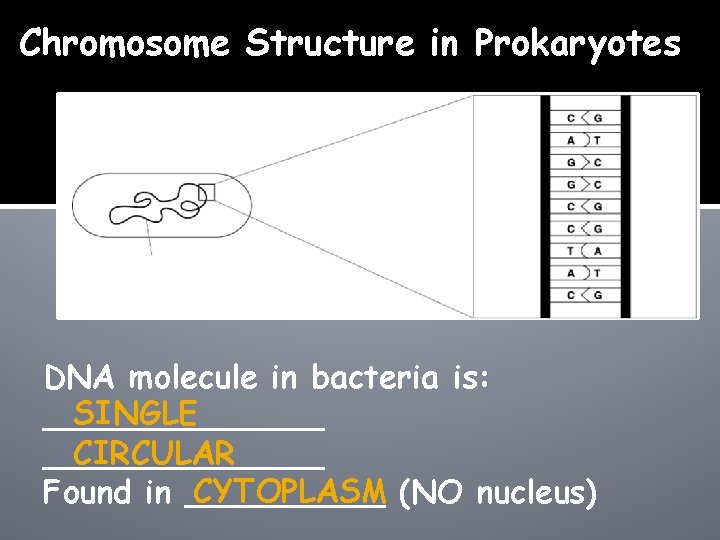
Chromosome Structure in Prokaryotes DNA molecule in bacteria is: SINGLE _______ CIRCULAR _______ CYTOPLASM (NO nucleus) Found in _____
WHAT ABOUT DNA IN EUKARYOTES? ?
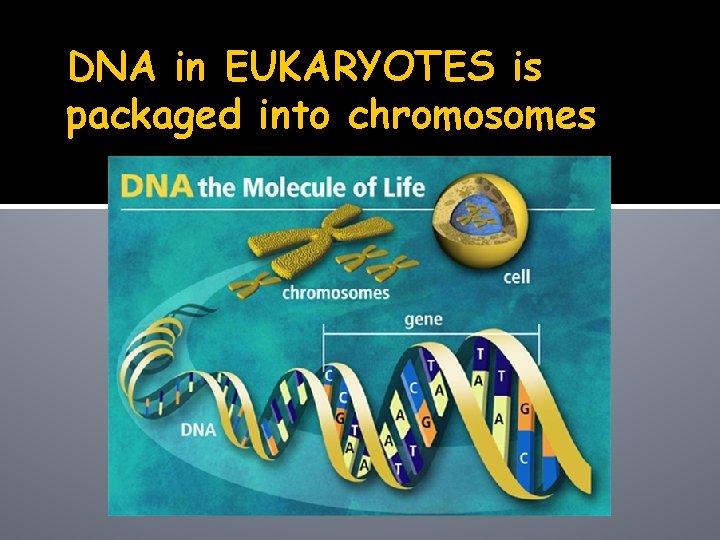
DNA in EUKARYOTES is packaged into chromosomes
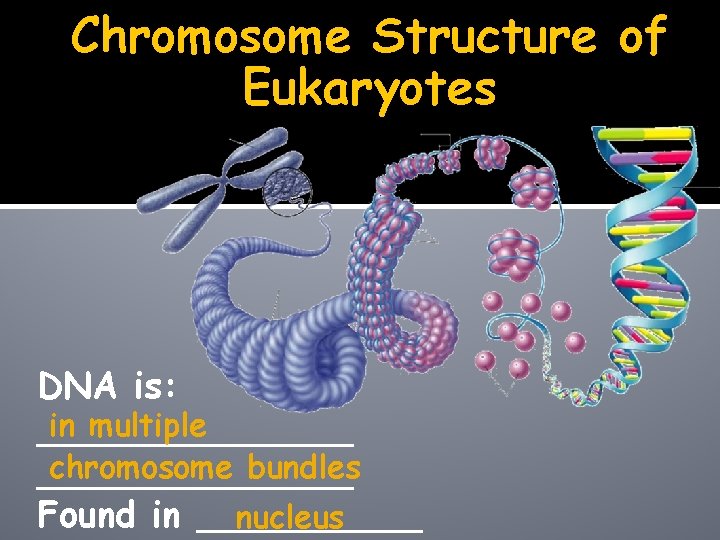
Chromosome Structure of Eukaryotes DNA is: in multiple _______ chromosome bundles _______ Found in _____ nucleus
WHY IS REPLICATION NECESSARY? -TAKE 30 SECONDS TO WRITE DOWN SOME IDEAS……………. . REPLICATION IS NEEDED FOR THE PROCESS OF MAKING NEW CELLS, OR CELL DIVISION. EACH NEW CELL WILL NEED ITS OWN SET OF DNA.
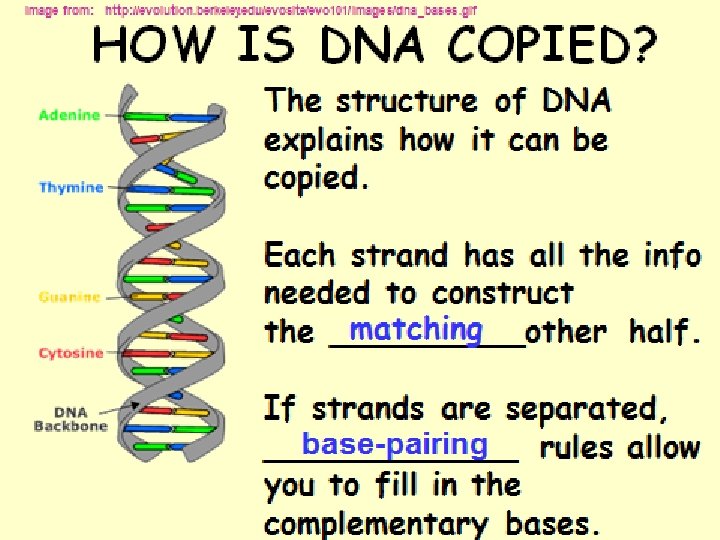
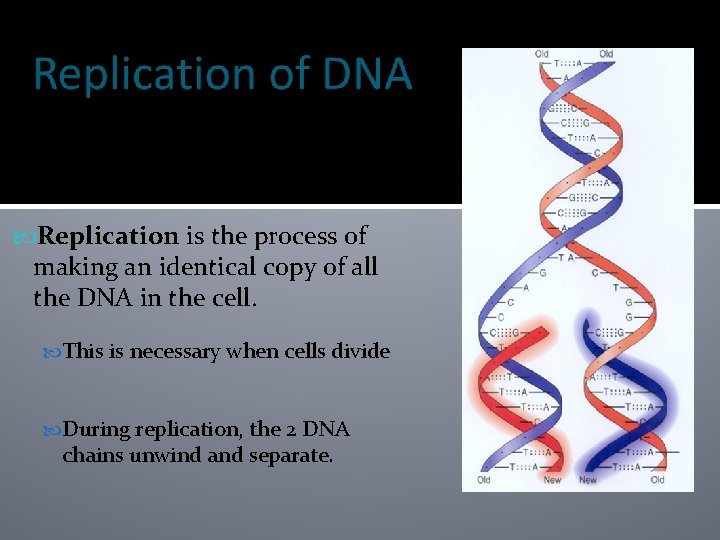
Replication is the process of making an identical copy of all the DNA in the cell. This is necessary when cells divide During replication, the 2 DNA chains unwind and separate.
Step I: Untwist & Unzip * DNA helicase untwists small portion of DNA * Helicase binds to the origin of replication (spot on DNA where replication begins) * Helicase “unzips” the 2 DNA nucleotide strands by breaking the weak hydrogen bonds
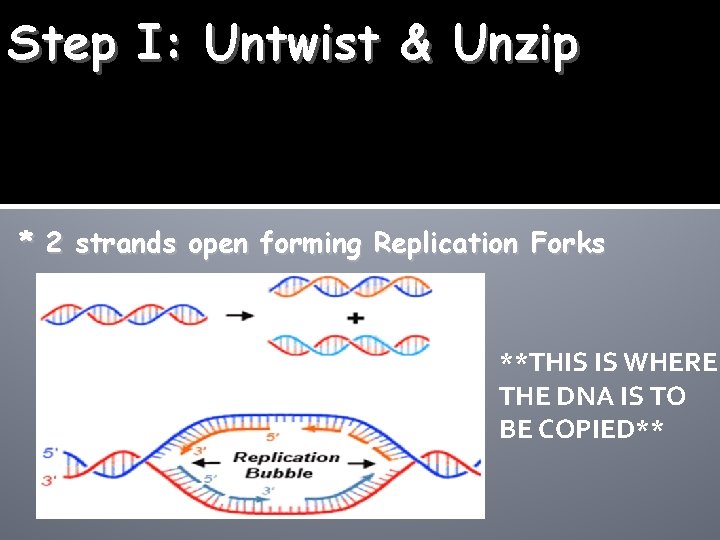
Step I: Untwist & Unzip * 2 strands open forming Replication Forks **THIS IS WHERE THE DNA IS TO BE COPIED**
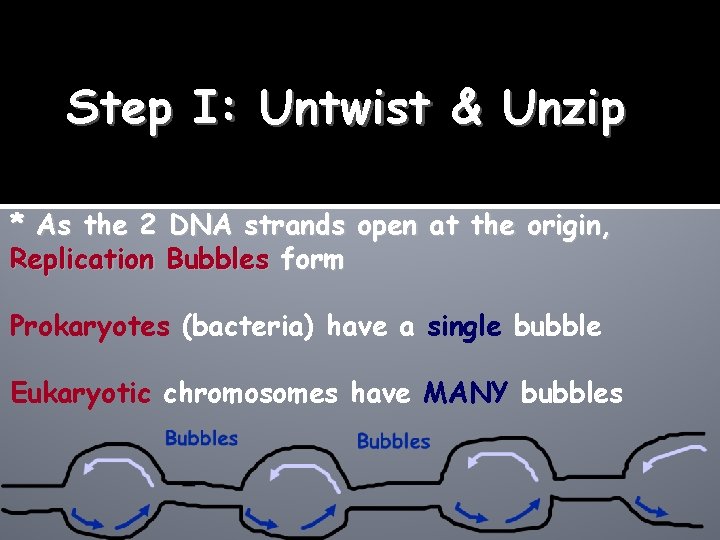
Step I: Untwist & Unzip * As the 2 DNA strands open at the origin, Replication Bubbles form Prokaryotes (bacteria) have a single bubble Eukaryotic chromosomes have MANY bubbles
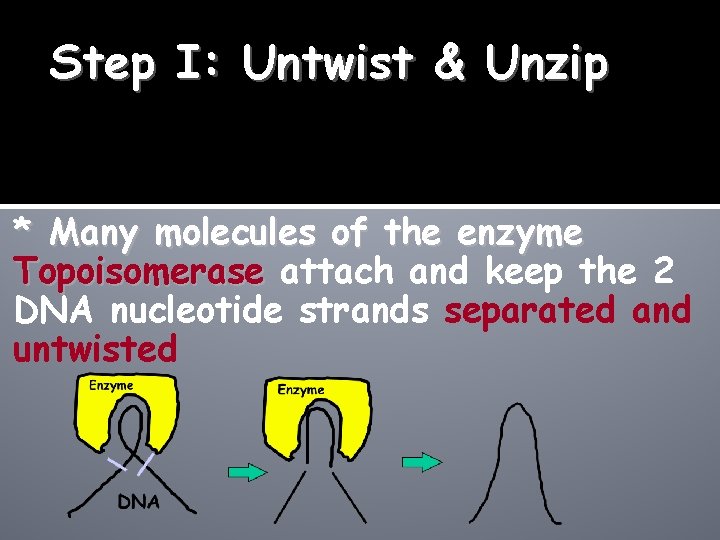
Step I: Untwist & Unzip * Many molecules of the enzyme Topoisomerase attach and keep the 2 DNA nucleotide strands separated and untwisted
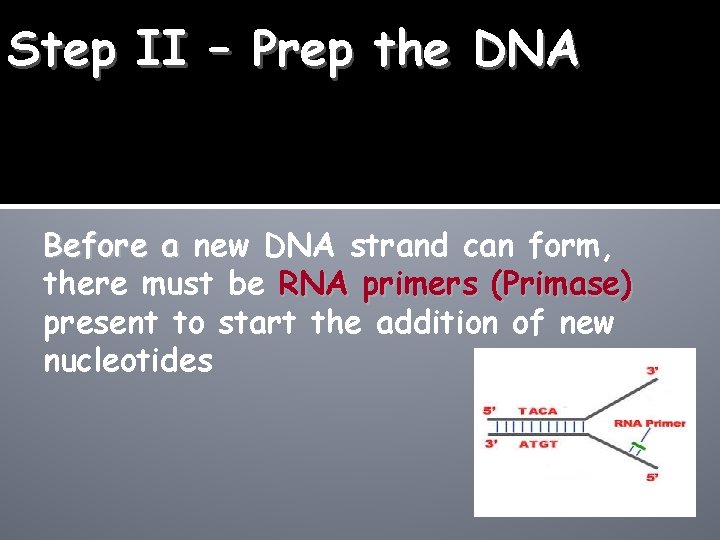
Step II – Prep the DNA Before a new DNA strand can form, there must be RNA primers (Primase) present to start the addition of new nucleotides
Step III-Building of the New DNA Strands • Each separated DNA nucleotide strand serves as a template for a new nucleotide strand to be built. • 1 of the original strands is called the leading strand the other is called the lagging strand.
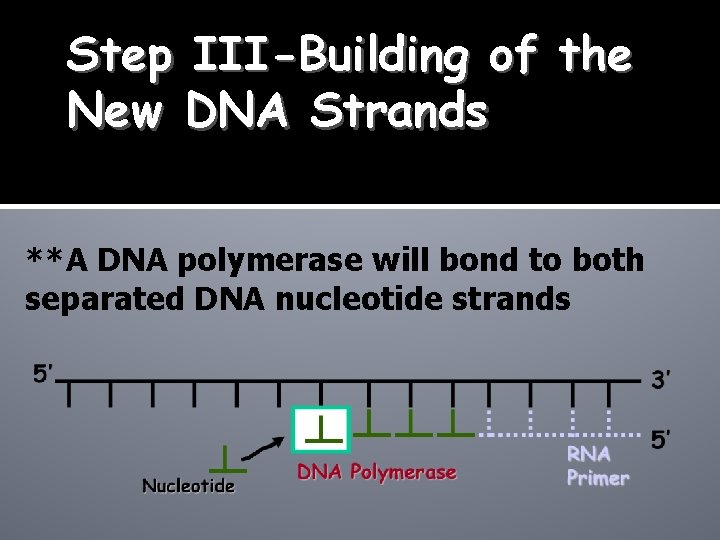
Step III-Building of the New DNA Strands **A DNA polymerase will bond to both separated DNA nucleotide strands
--DNA poly reads each strand 1 nucleotide at a time --DNA poly attaches a new complementary DNA nucleotide to each original DNA nucleotide that it reads
Step IV-Joining of Fragments The enzyme Ligase joins the fragments together to make one strand
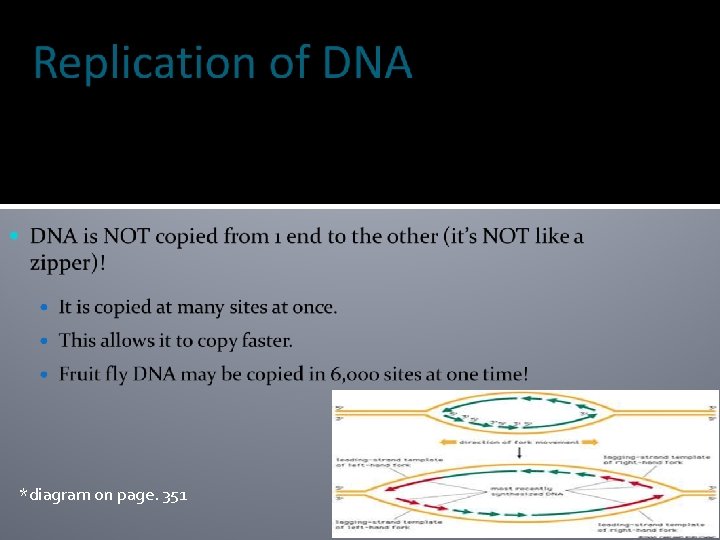
*diagram on page. 351
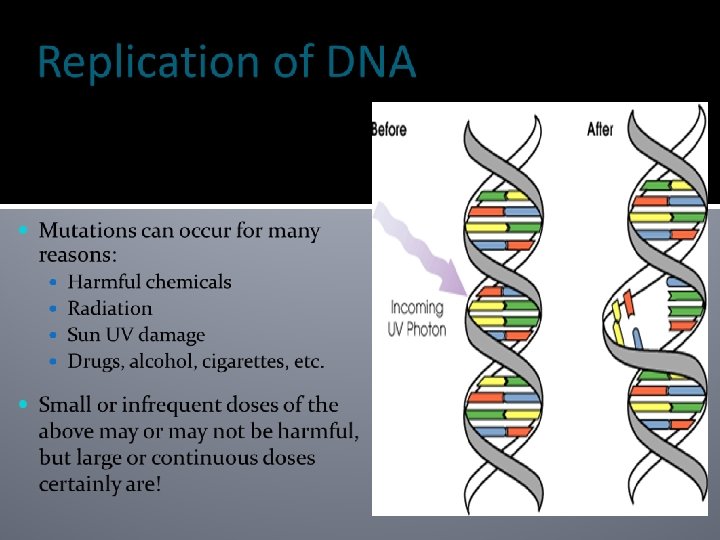
MUTATIONS DNA polymerase initially makes about 1 in 10, 000 base pairing errors Enzymes proofread and correct these mistakes The new error rate for DNA that has been proofread is 1 in 1 billion base pairing errors