
Chapter 12 Section 2 The Partition of Africa
- Slides: 20
Chapter 12 Section 2 The Partition of Africa
Lesson Objectives • Explain why European contact with Africa increased during the 1800 s. • Understand how Leopold II started a scramble for colonies. • Describe how Africans resisted imperialism. Look at the map: Africa in early 1800’s had many regions, hundreds of languages, varied governments
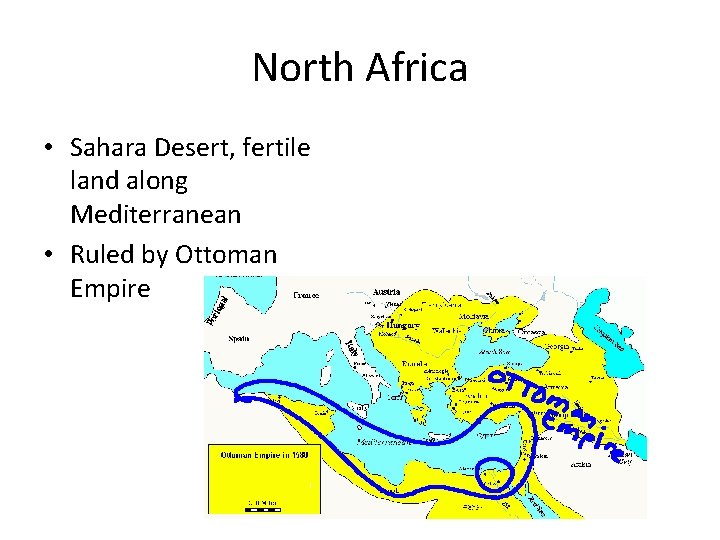
North Africa • Sahara Desert, fertile land along Mediterranean • Ruled by Ottoman Empire
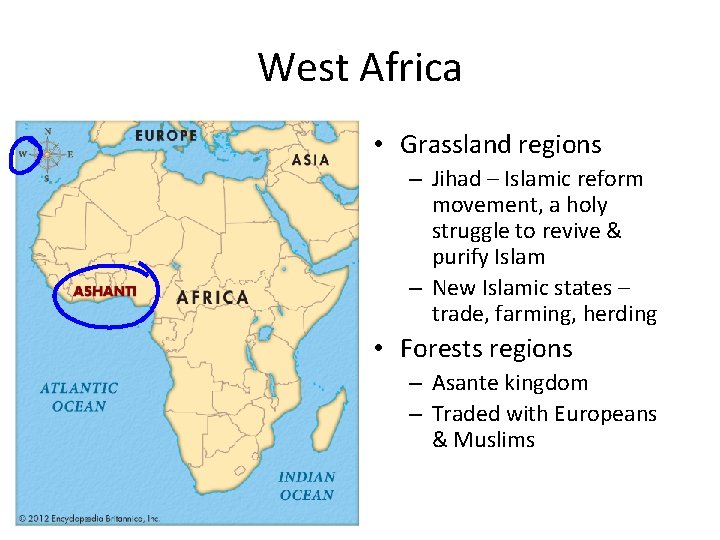
West Africa • Grassland regions – Jihad – Islamic reform movement, a holy struggle to revive & purify Islam – New Islamic states – trade, farming, herding • Forests regions – Asante kingdom – Traded with Europeans & Muslims
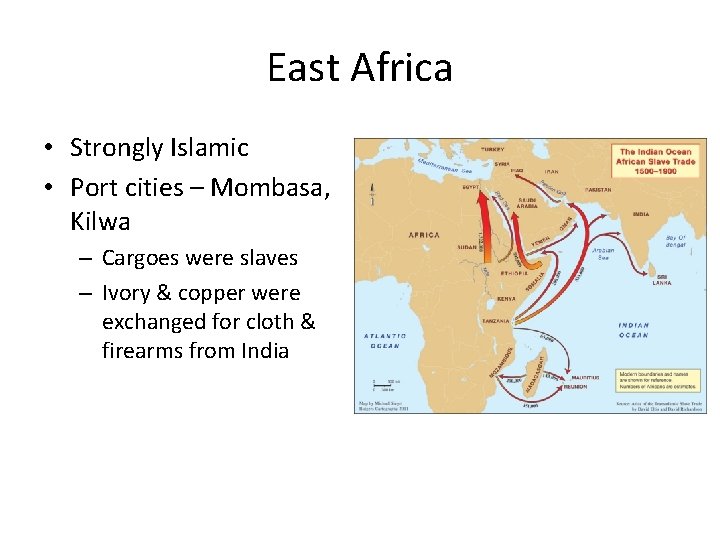
East Africa • Strongly Islamic • Port cities – Mombasa, Kilwa – Cargoes were slaves – Ivory & copper were exchanged for cloth & firearms from India
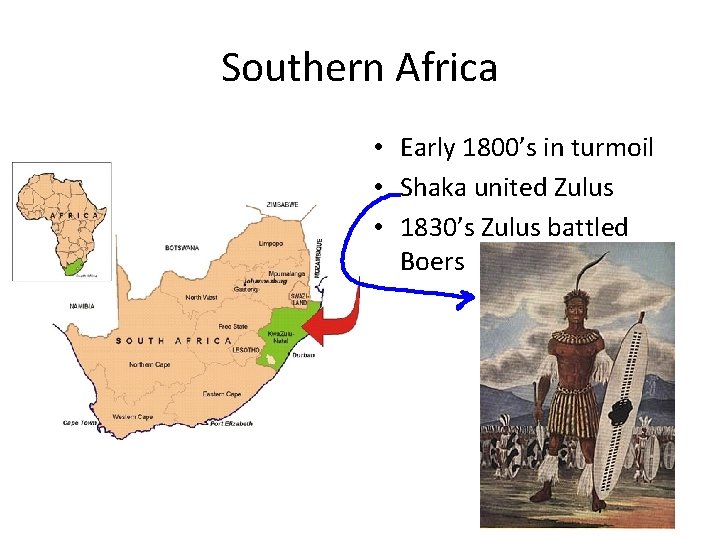
Southern Africa • Early 1800’s in turmoil • Shaka united Zulus • 1830’s Zulus battled Boers
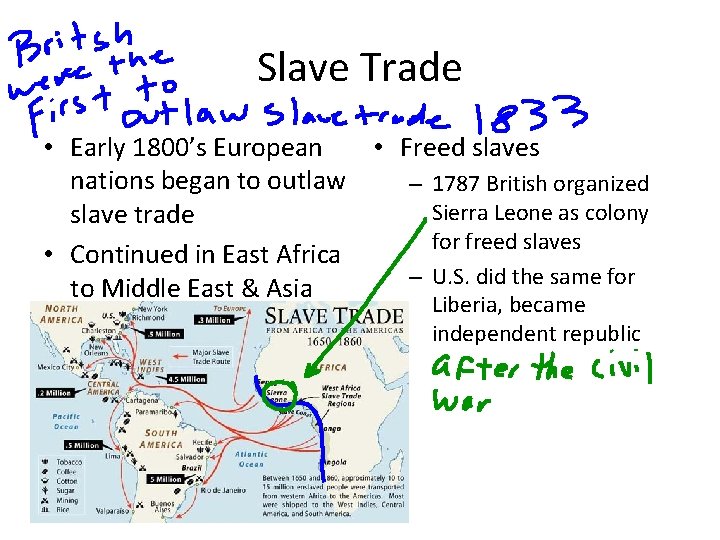
Slave Trade • Early 1800’s European • Freed slaves nations began to outlaw – 1787 British organized Sierra Leone as colony slave trade for freed slaves • Continued in East Africa – U. S. did the same for to Middle East & Asia Liberia, became independent republic
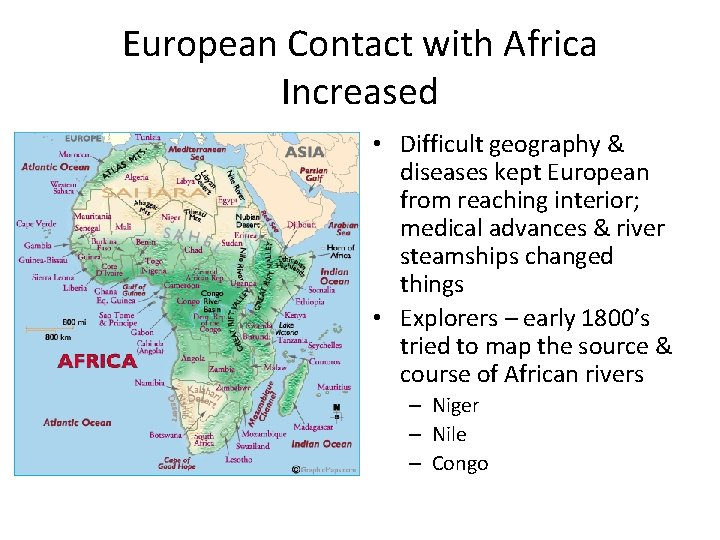
European Contact with Africa Increased • Difficult geography & diseases kept European from reaching interior; medical advances & river steamships changed things • Explorers – early 1800’s tried to map the source & course of African rivers – Niger – Nile – Congo
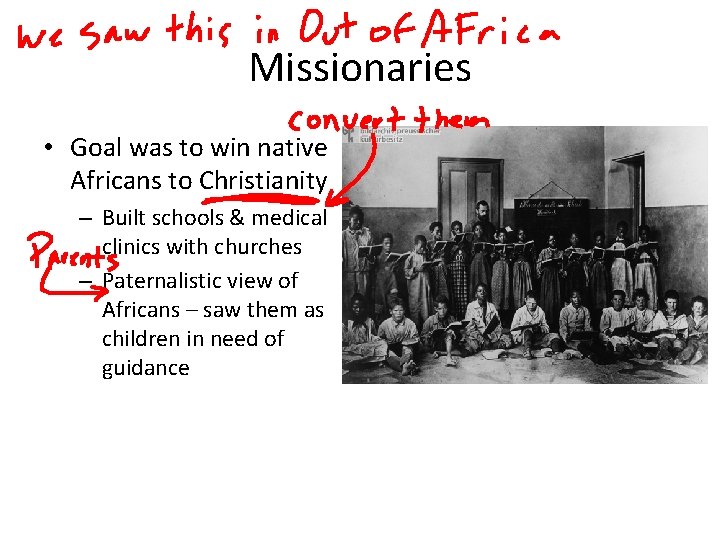
Missionaries • Goal was to win native Africans to Christianity – Built schools & medical clinics with churches – Paternalistic view of Africans – saw them as children in need of guidance
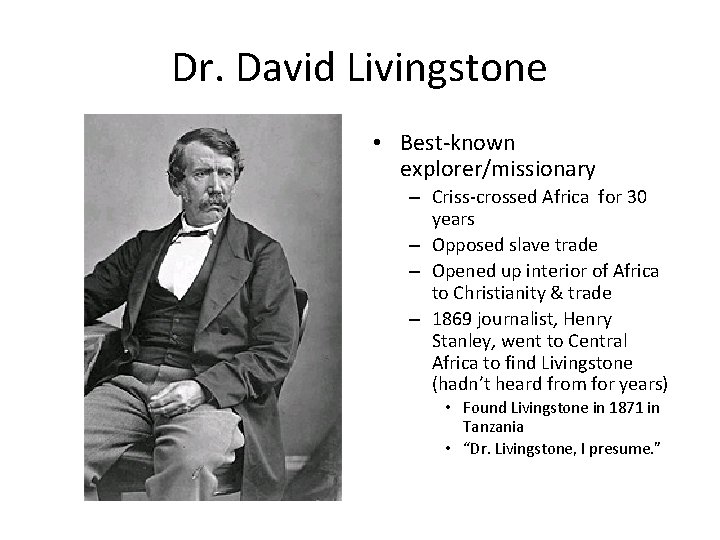
Dr. David Livingstone • Best-known explorer/missionary – Criss-crossed Africa for 30 years – Opposed slave trade – Opened up interior of Africa to Christianity & trade – 1869 journalist, Henry Stanley, went to Central Africa to find Livingstone (hadn’t heard from for years) • Found Livingstone in 1871 in Tanzania • “Dr. Livingstone, I presume. ”
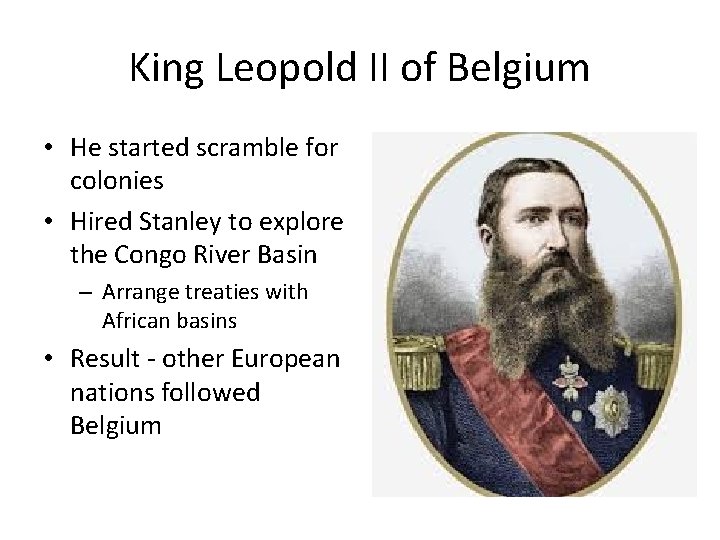
King Leopold II of Belgium • He started scramble for colonies • Hired Stanley to explore the Congo River Basin – Arrange treaties with African basins • Result - other European nations followed Belgium
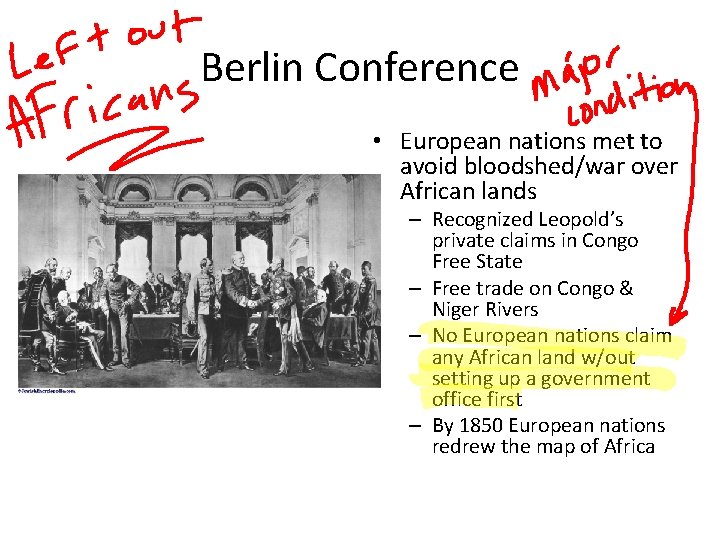
Berlin Conference • European nations met to avoid bloodshed/war over African lands – Recognized Leopold’s private claims in Congo Free State – Free trade on Congo & Niger Rivers – No European nations claim any African land w/out setting up a government office first – By 1850 European nations redrew the map of Africa
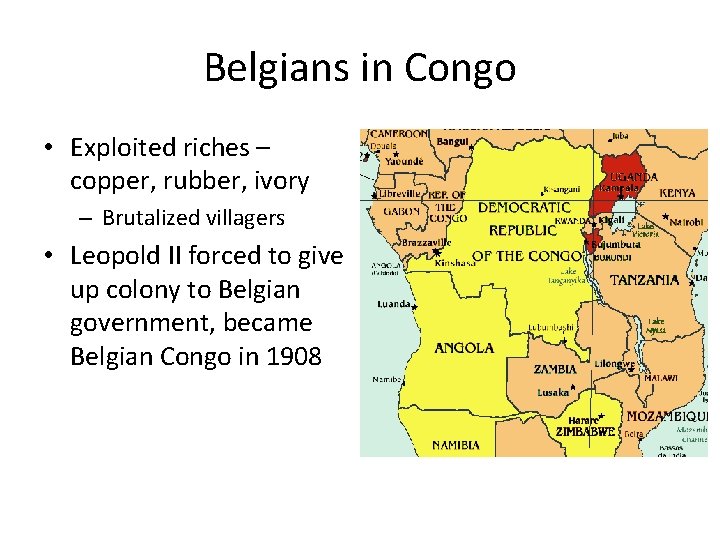
Belgians in Congo • Exploited riches – copper, rubber, ivory – Brutalized villagers • Leopold II forced to give up colony to Belgian government, became Belgian Congo in 1908
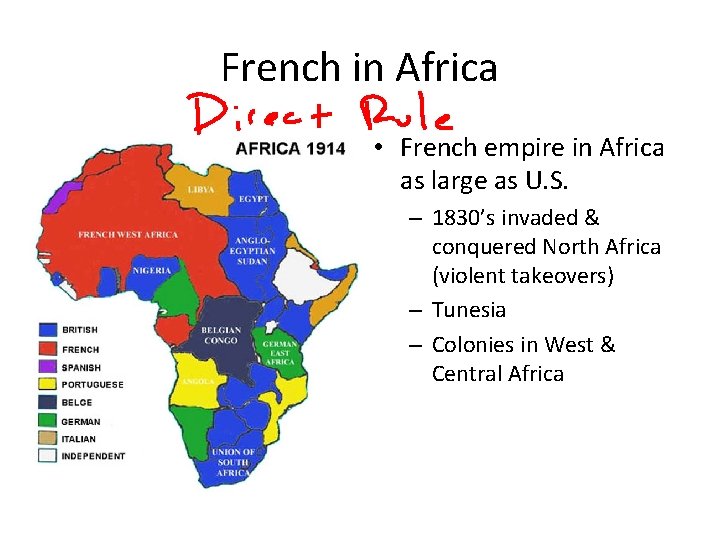
French in Africa • French empire in Africa as large as U. S. – 1830’s invaded & conquered North Africa (violent takeovers) – Tunesia – Colonies in West & Central Africa
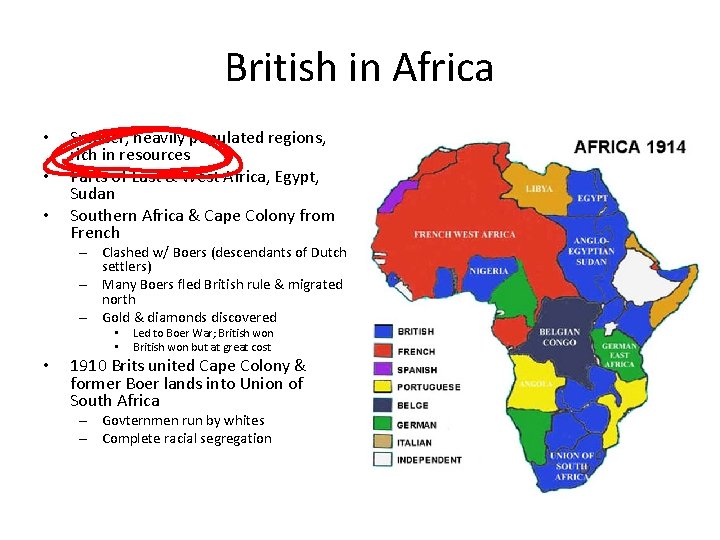
British in Africa • • • Smaller, heavily populated regions, rich in resources Parts of East & West Africa, Egypt, Sudan Southern Africa & Cape Colony from French – Clashed w/ Boers (descendants of Dutch settlers) – Many Boers fled British rule & migrated north – Gold & diamonds discovered • • • Led to Boer War; British won but at great cost 1910 Brits united Cape Colony & former Boer lands into Union of South Africa – Govternmen run by whites – Complete racial segregation
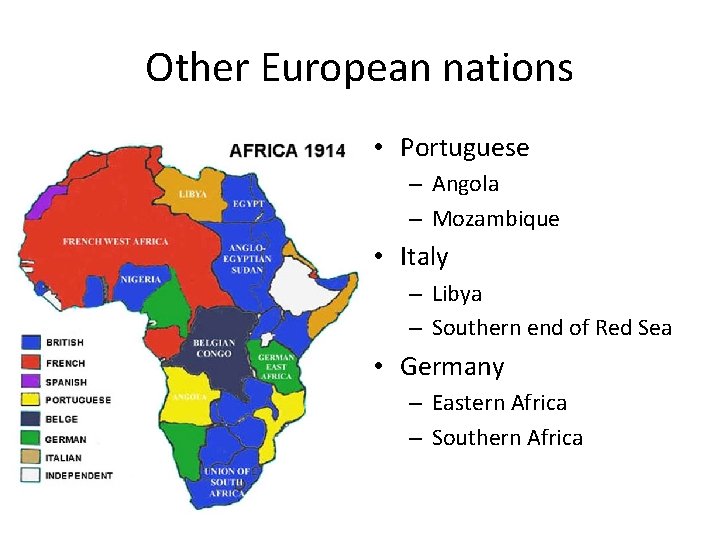
Other European nations • Portuguese – Angola – Mozambique • Italy – Libya – Southern end of Red Sea • Germany – Eastern Africa – Southern Africa
How Africans Resisted Imperialism • Algerians battled French for years • British battled: – Zulu in southern Africa – Asante in West Africa; Queen Yaa Asnatewaa – Queen Nehanda of Shona in Zimbabwe – captured & executed
Germans Fought • Yao • Herero • Fierce battle – 1905, Maji-Maji Rebellion – Germans won by using scorched earth policy – burned farmlands & starved people
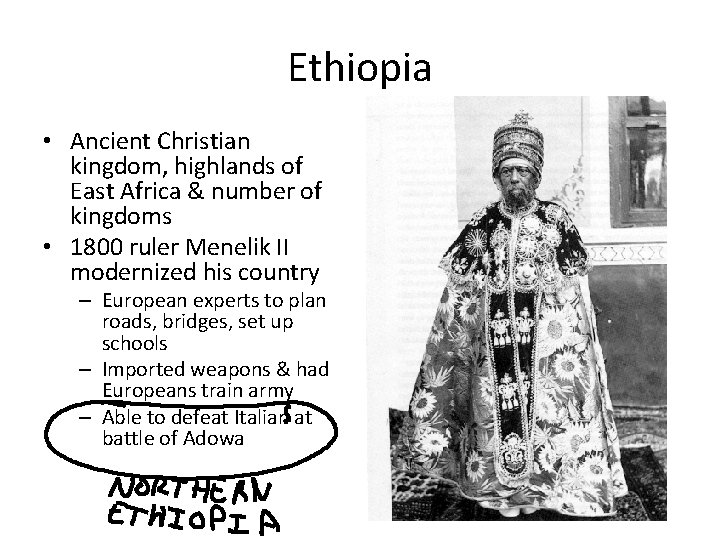
Ethiopia • Ancient Christian kingdom, highlands of East Africa & number of kingdoms • 1800 ruler Menelik II modernized his country – European experts to plan roads, bridges, set up schools – Imported weapons & had Europeans train army – Able to defeat Italian at battle of Adowa
Western-educated African elite (upper class) • Some rejected own culture • Others were nationalists & moved for independence