
Chapter 12 Parts of Speech Verbs VERB EXPRESSES
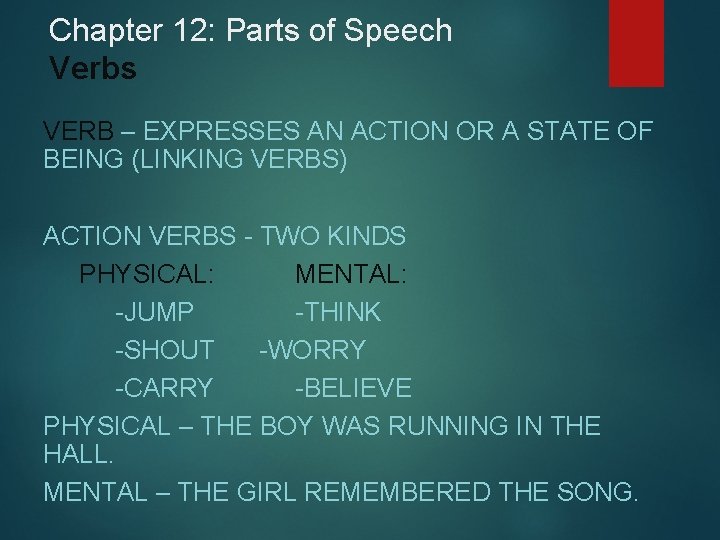
Chapter 12: Parts of Speech Verbs VERB – EXPRESSES AN ACTION OR A STATE OF BEING (LINKING VERBS) ACTION VERBS - TWO KINDS PHYSICAL: MENTAL: -JUMP -THINK -SHOUT -WORRY -CARRY -BELIEVE PHYSICAL – THE BOY WAS RUNNING IN THE HALL. MENTAL – THE GIRL REMEMBERED THE SONG.
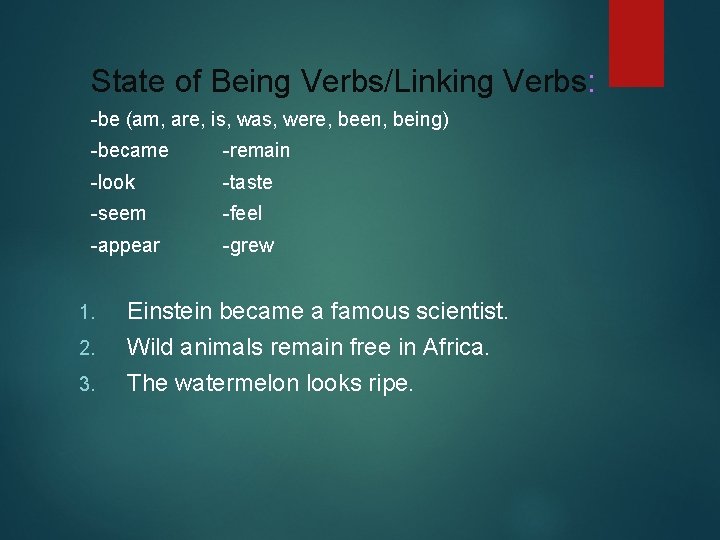
State of Being Verbs/Linking Verbs: -be (am, are, is, was, were, been, being) -became -remain -look -taste -seem -feel -appear -grew 1. 2. 3. Einstein became a famous scientist. Wild animals remain free in Africa. The watermelon looks ripe.
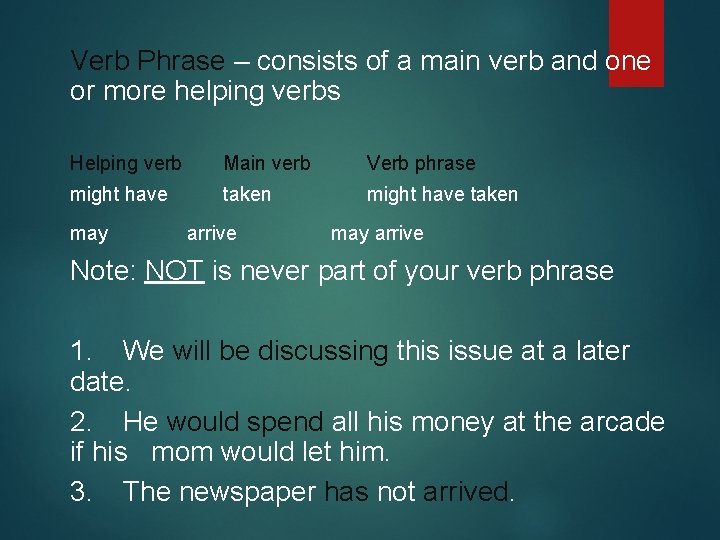
Verb Phrase – consists of a main verb and one or more helping verbs Helping verb Main verb Verb phrase might have taken may arrive Note: NOT is never part of your verb phrase 1. We will be discussing this issue at a later date. 2. He would spend all his money at the arcade if his mom would let him. 3. The newspaper has not arrived.
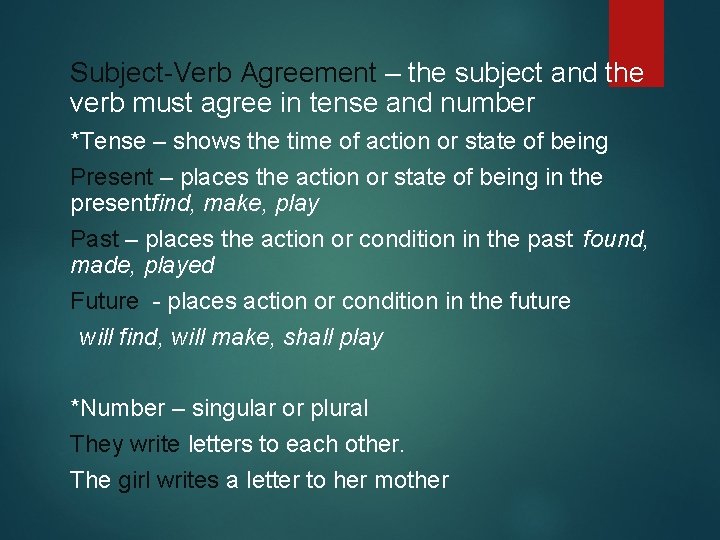
Subject-Verb Agreement – the subject and the verb must agree in tense and number *Tense – shows the time of action or state of being Present – places the action or state of being in the presentfind, make, play Past – places the action or condition in the past found, made, played Future - places action or condition in the future will find, will make, shall play *Number – singular or plural They write letters to each other. The girl writes a letter to her mother
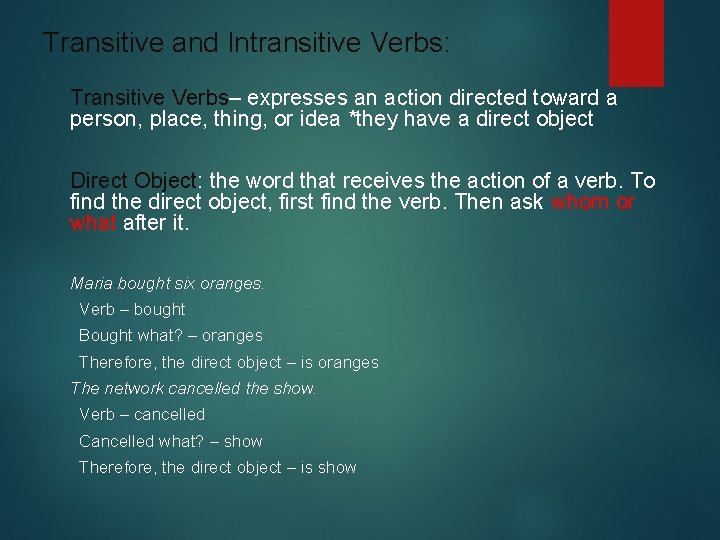
Transitive and Intransitive Verbs: Transitive Verbs– expresses an action directed toward a person, place, thing, or idea *they have a direct object Direct Object: the word that receives the action of a verb. To find the direct object, first find the verb. Then ask whom or what after it. Maria bought six oranges. Verb – bought Bought what? – oranges Therefore, the direct object – is oranges The network cancelled the show. Verb – cancelled Cancelled what? – show Therefore, the direct object – is show
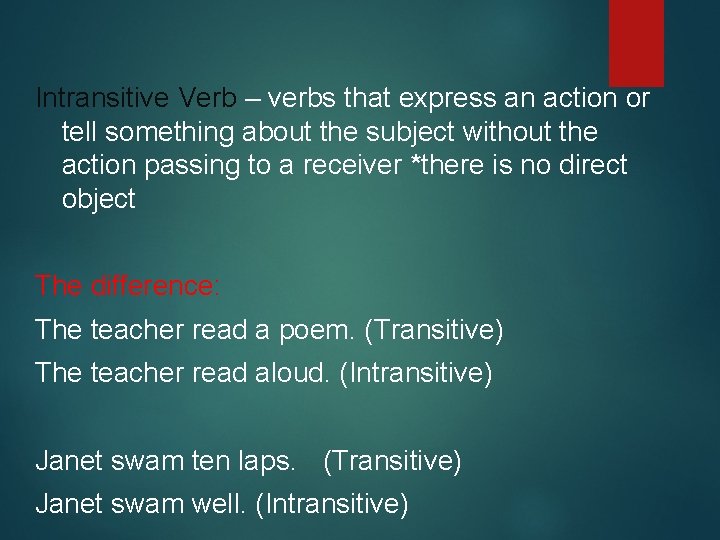
Intransitive Verb – verbs that express an action or tell something about the subject without the action passing to a receiver *there is no direct object The difference: The teacher read a poem. (Transitive) The teacher read aloud. (Intransitive) Janet swam ten laps. (Transitive) Janet swam well. (Intransitive)
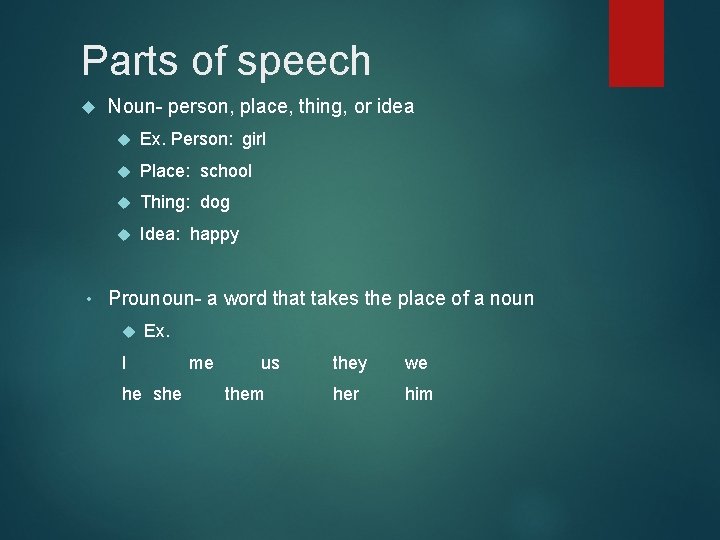
Parts of speech • Noun- person, place, thing, or idea Ex. Person: girl Place: school Thing: dog Idea: happy Prounoun- a word that takes the place of a noun Ex. I he she me us them they we her him
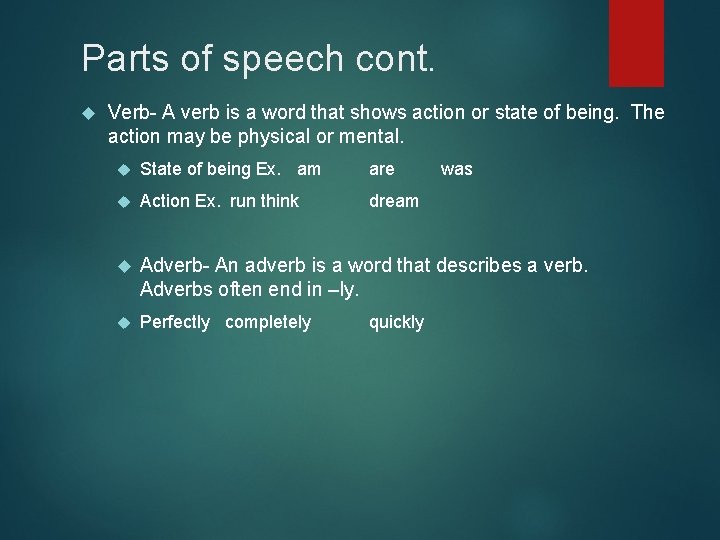
Parts of speech cont. Verb- A verb is a word that shows action or state of being. The action may be physical or mental. State of being Ex. am are Action Ex. run think dream Adverb- An adverb is a word that describes a verb. Adverbs often end in –ly. Perfectly completely quickly was
Parts of speech cont. Adjective- An adjective is a word that describes a noun or a pronoun. Adjectives tell how many, what kind, or which one. Ex. happyfive strong this more green Preposition- A preposition relates a noun or pronoun to another in the sentence. Ex. about from above with beyond on in beside by across
Parts of speech cont. • Conjunction- A conjunction is a word that joins words or groups of words. FANBOYS (coordinating conjunctions) for and nor but or yet so Interjection- An interjection is a word that expresses emotion or strong feeling. Ex. Uh oh whew! Yuck yeah Wow. Hey Oh no
- Slides: 10