
Chapter 12 Origins of Heredity Science Key Ideas
- Slides: 36
Chapter 12 Origins of Heredity Science Key Ideas n Why was Gregor Mendel important for modern genetics? n Why did Mendel conduct experiments with garden peas? n What were the important steps in Mendel’s first experiments? n What were the important results of Mendel’s first experiments?
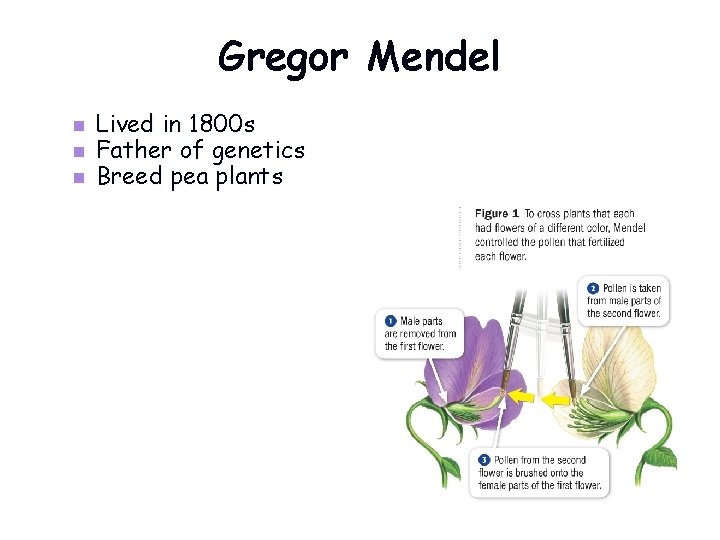
Gregor Mendel n n n Lived in 1800 s Father of genetics Breed pea plants
Genetics n n science of heredity Study of how traits are passed from parents to offspring.
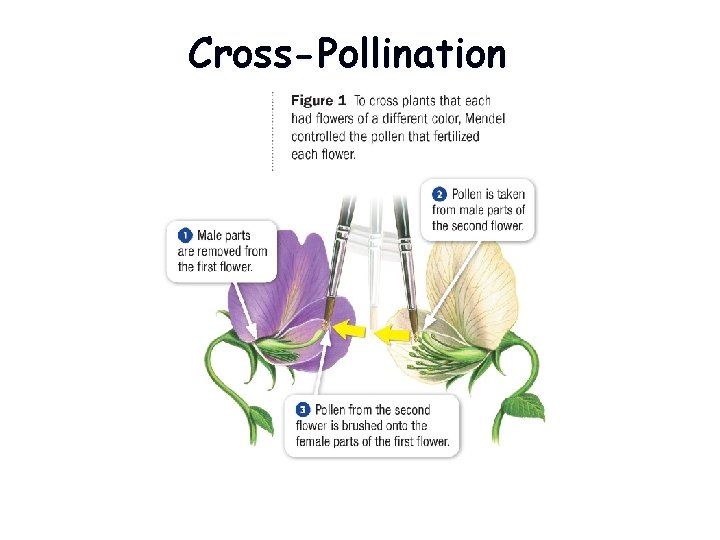
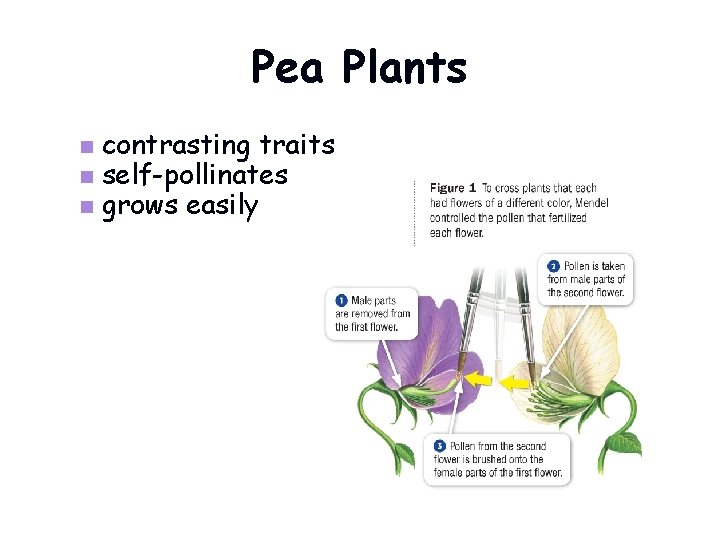
Cross-Pollination
Pea Plants contrasting traits n self-pollinates n grows easily n
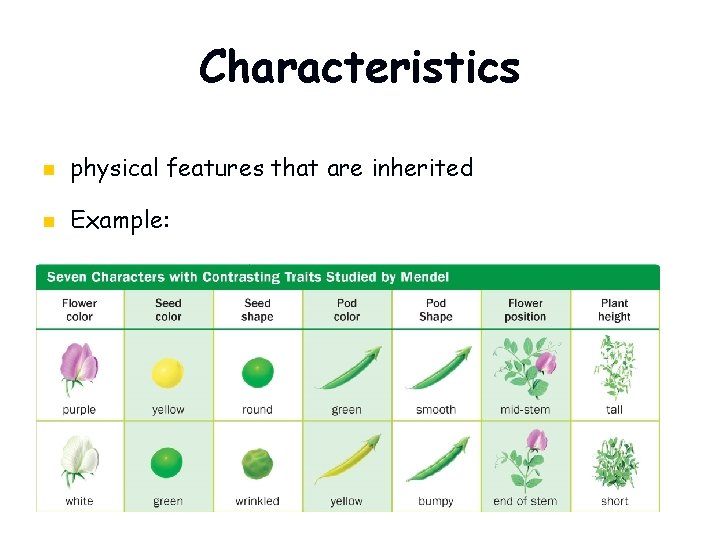
Characteristics n physical features that are inherited n Example:
Traits n n n one of several possible forms of a characteristic. Example: n Seed color: yellow or green n Seed shape: round or wrinkled n Pod color: green or yellow Human examples: n n Polydactyly or normal number of fingers & toes Hair color: black, brown, blond, red; etc.
Hybrid
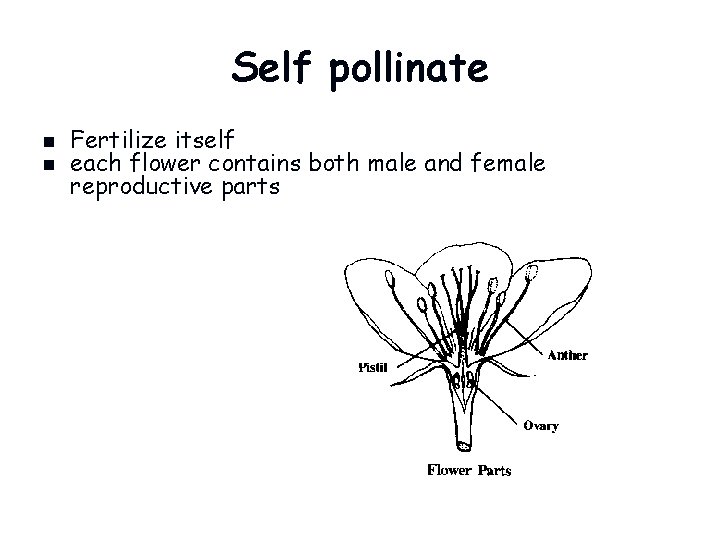
Self pollinate n n Fertilize itself each flower contains both male and female reproductive parts
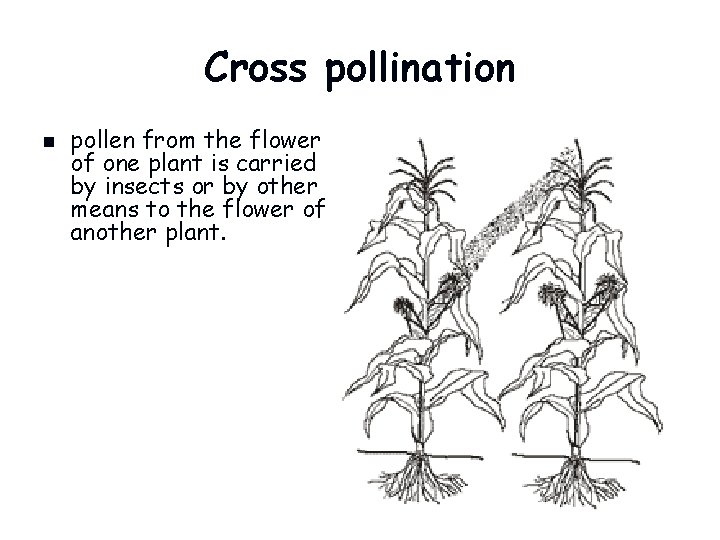
Cross pollination n pollen from the flower of one plant is carried by insects or by other means to the flower of another plant.
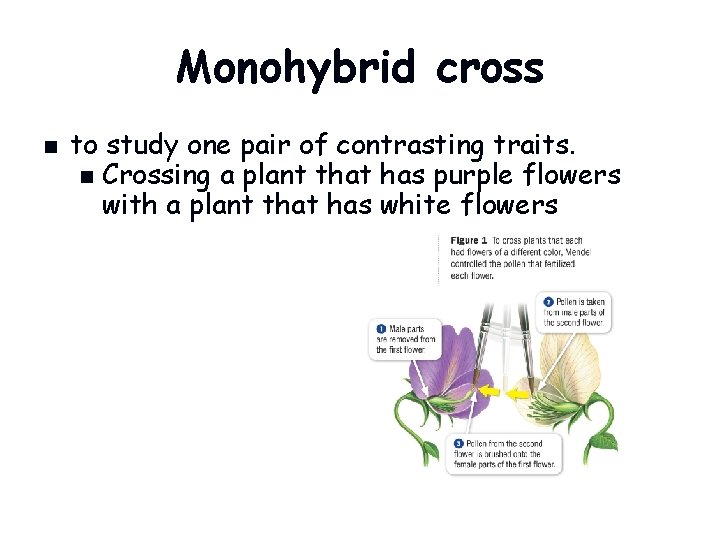
Monohybrid cross n to study one pair of contrasting traits. n Crossing a plant that has purple flowers with a plant that has white flowers
Generation n a group of offspring from a given group of parents.
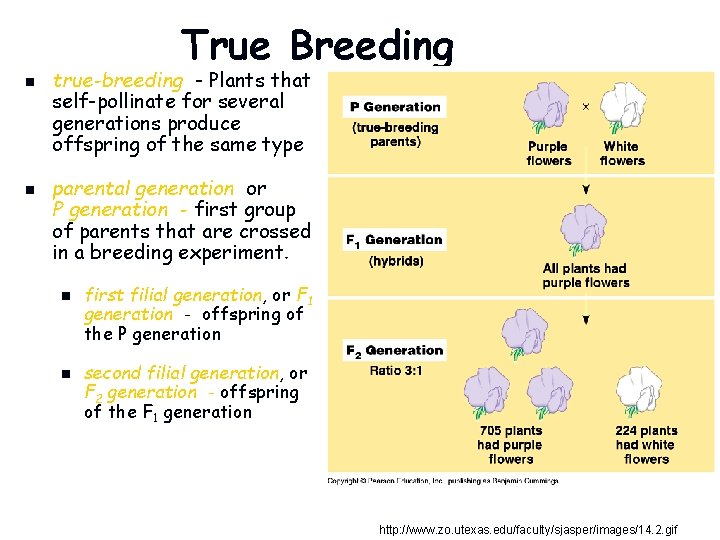
True Breeding n n true-breeding - Plants that self-pollinate for several generations produce offspring of the same type parental generation or P generation - first group of parents that are crossed in a breeding experiment. n n first filial generation, or F 1 generation - offspring of the P generation second filial generation, or F 2 generation - offspring of the F 1 generation http: //www. zo. utexas. edu/faculty/sjasper/images/14. 2. gif
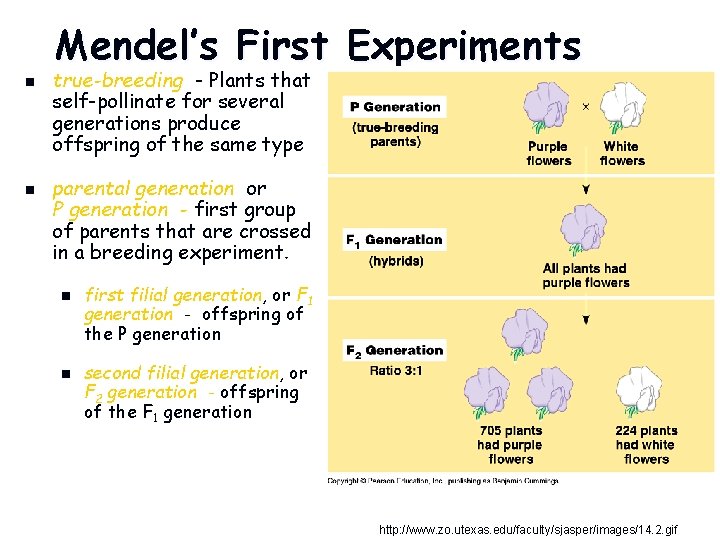
Mendel’s First Experiments n n true-breeding - Plants that self-pollinate for several generations produce offspring of the same type parental generation or P generation - first group of parents that are crossed in a breeding experiment. n n first filial generation, or F 1 generation - offspring of the P generation second filial generation, or F 2 generation - offspring of the F 1 generation http: //www. zo. utexas. edu/faculty/sjasper/images/14. 2. gif
Mendel’s Experiments
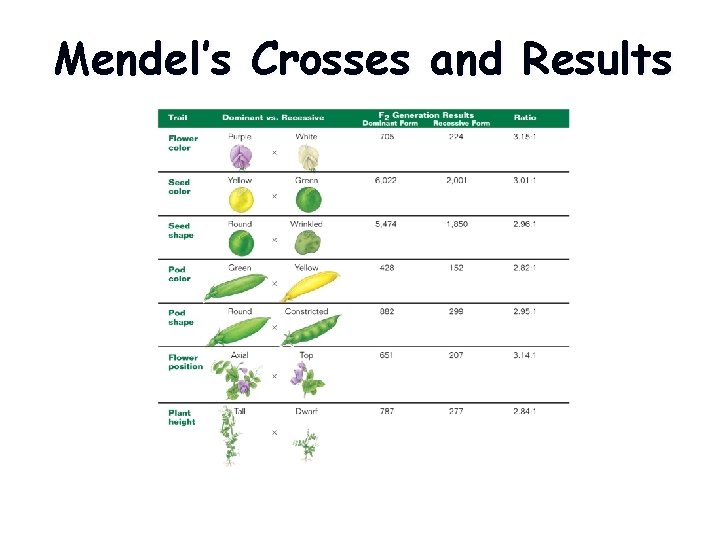
Ratios in Mendel’s Results n All F 1 plants expressed the same trait for a given character. n n contrasting trait seemed to have disappeared. F 2 generation n F 1 plants were allowed to self-pollinate contrasting trait reappeared For the seven characteristics studied a 3 -to-1 ratio of contrasting traits was seen
Mendel’s Crosses and Results
Summary n n Modern genetics is based on Mendel’s explanations for the patterns of heredity that he studied in garden pea plants. The garden pea plant is a good subject for studying heredity because the plant has contrasting traits, usually self-pollinates, and grows easily. Mendel’s first experiments used monohybrid crosses and were carried out in three steps. For each of the seven characters that Mendel studied, he found a similar 3 -to-1 ratio of contrasting traits in the F 2 generation.
Bellringer A gardener noticed that some of the flowers on her plants were white. In previous years, they had been purple. Write down a possible explanation for this difference.
Chapter 12; Section 2 Mendel’s Theory Key Ideas n What patterns of heredity were explained by Mendel’s hypotheses? n What is the law of segregation? n How does genotype relate to phenotype? n What is the law of independent assortment?
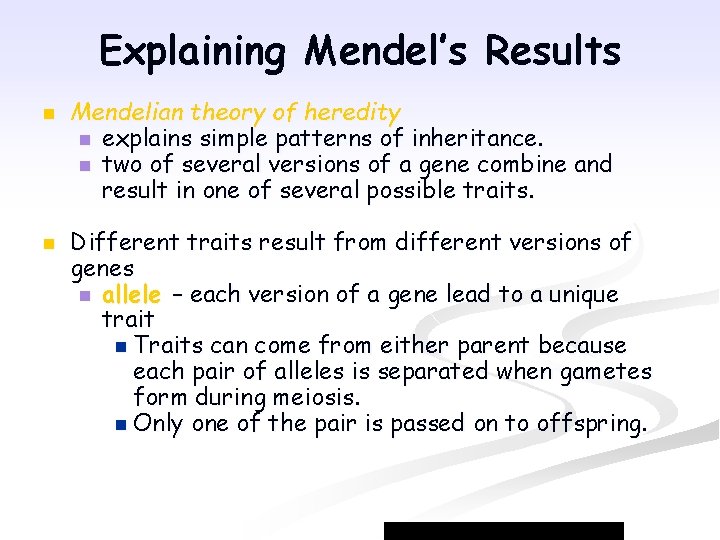
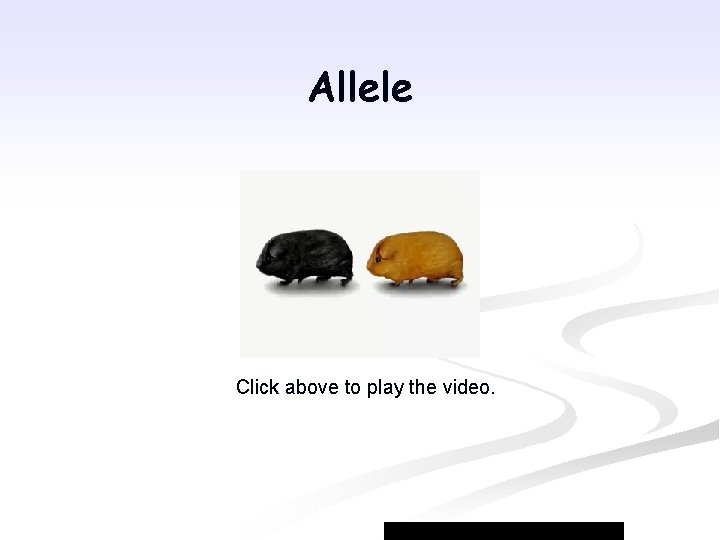
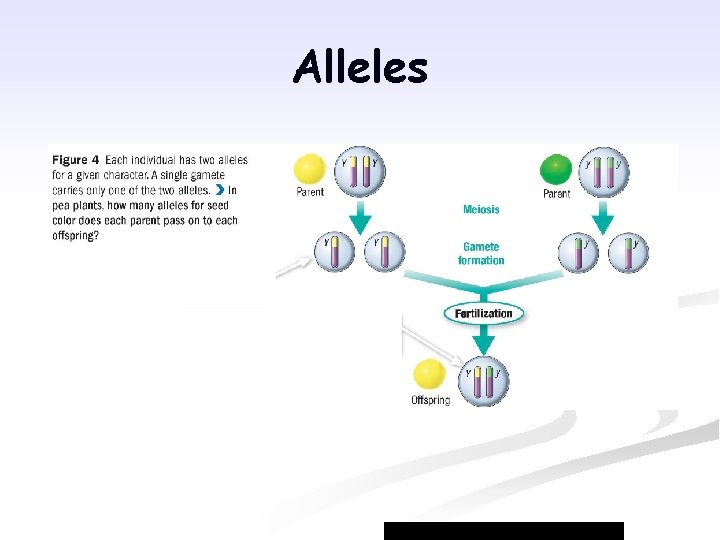
Explaining Mendel’s Results n n Mendelian theory of heredity n explains simple patterns of inheritance. n two of several versions of a gene combine and result in one of several possible traits. Different traits result from different versions of genes n allele – each version of a gene lead to a unique trait n Traits can come from either parent because each pair of alleles is separated when gametes form during meiosis. n Only one of the pair is passed on to offspring.
Allele Click above to play the video.
Alleles
Explaining Mendel’s Results n n dominant allele – the allele that is fully expressed whenever it is present recessive. An allele that is not expressed when a dominant allele is present is called n n A recessive allele is expressed only when there is no dominant allele present. Traits may also be called dominant or recessive.
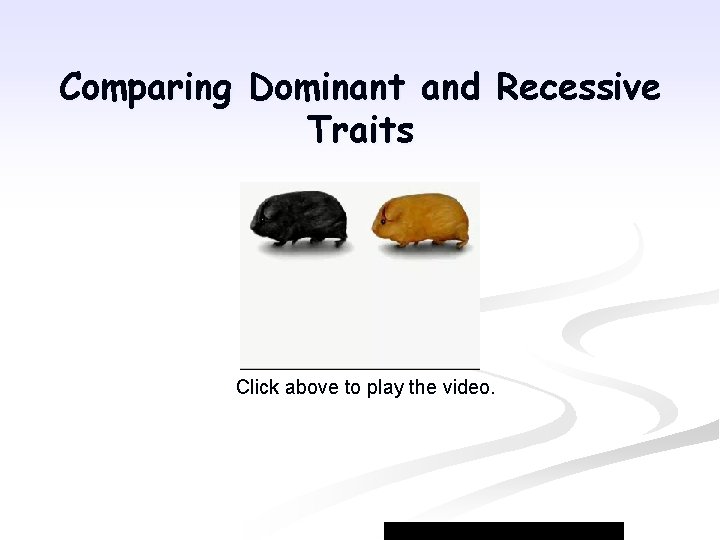
Comparing Dominant and Recessive Traits Click above to play the video.
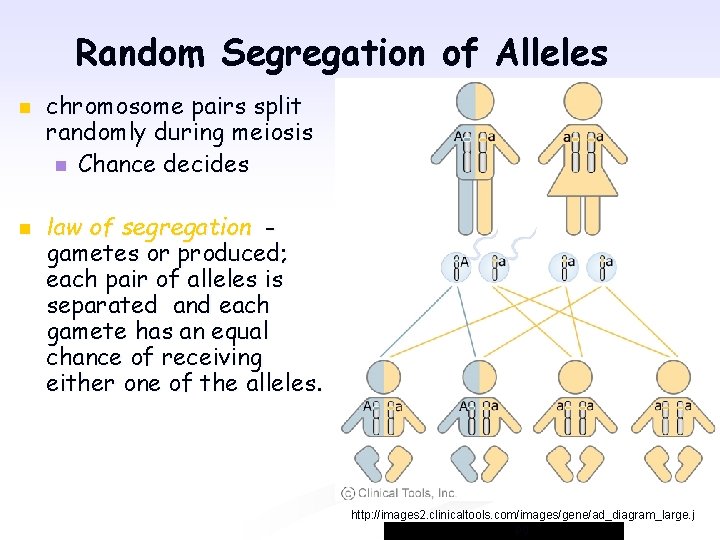
Random Segregation of Alleles n n chromosome pairs split randomly during meiosis n Chance decides law of segregation gametes or produced; each pair of alleles is separated and each gamete has an equal chance of receiving either one of the alleles. http: //images 2. clinicaltools. com/images/gene/ad_diagram_large. j pg
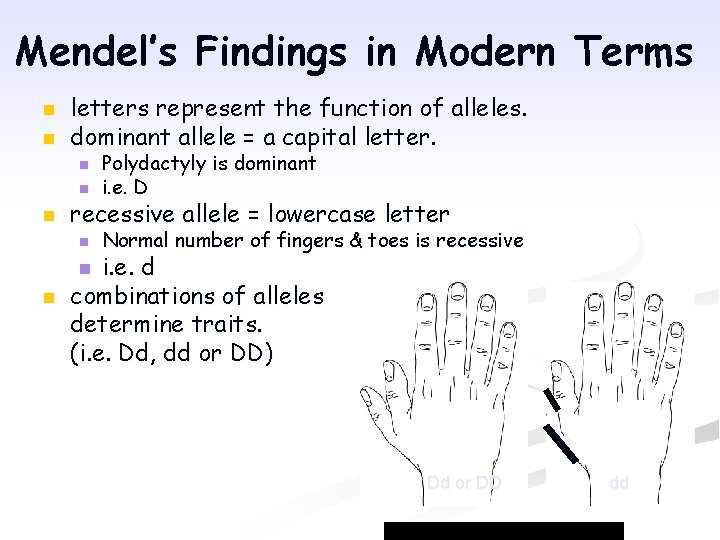
Mendel’s Findings in Modern Terms n n letters represent the function of alleles. dominant allele = a capital letter. n Polydactyly is dominant i. e. D n Normal number of fingers & toes is recessive n n recessive allele = lowercase letter i. e. d combinations of alleles determine traits. (i. e. Dd, dd or DD) n n Dd or DD dd
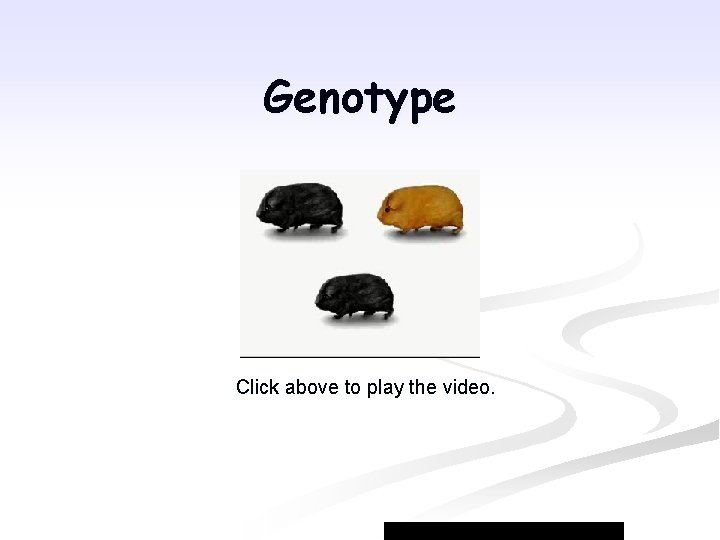
Mendel’s Findings in Modern Terms n n n genotype - set of specific combinations of alleles that an individual has for a characteristic Phenotype - detectable trait that results from the genotype’s set of alleles; it’s the physical trait – what you see genotype determines phenotype.
Genotype Click above to play the video.
Comparing Genotype and Phenotype
Mendel’s Findings in Modern Terms n homozygous - two identical alleles of a certain gene (ex. dd or DD) n n n dd = homozygous recessive DD = homozygous dominant heterozygous - two different alleles of a certain gene (ex. Dd)
Comparing Homozygous and Heterozygous Genotypes and Resulting Phenotypes
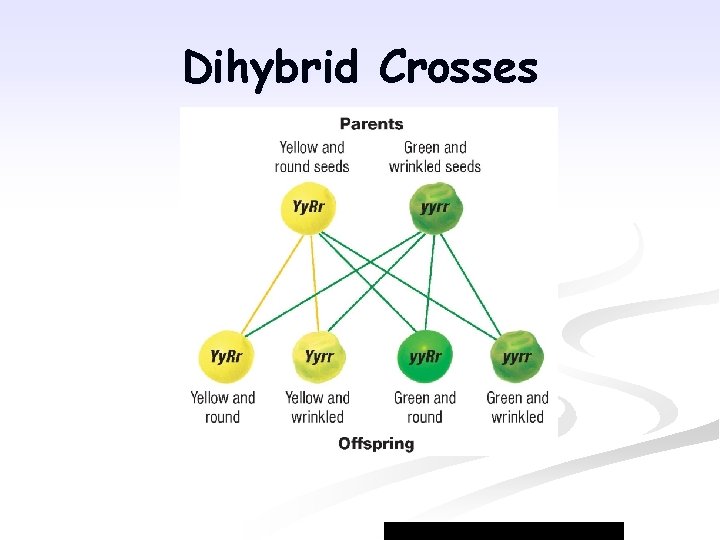
Mendel’s Second Experiments n dihybrid cross involves two characters, such as seed color and seed shape. n n Mendel’s experiment: the inheritance of one characteristic did not affect the inheritance of another characteristic. law of independent assortment - the alleles of each gene segregate independently.
Dihybrid Crosses
Mendel’s Second Experiments n Linked genes - are close together on chromosomes. n n n many genes are linked to each other as parts of chromosomes. Genes that are located close together on the same chromosome will rarely separate independently. The only genes that follow law of independent assortment are those that are far apart.
Summary n n Mendelian theory explains simple patterns of inheritance. In these patterns, two of several versions of a gene combine and result in one of several possible traits. In modern terms, the law of segregation holds that when an organism produces gametes, each pair of alleles is separated and each gamete has an equal chance of receiving either one of the alleles. Genotype determines phenotype. In modern terms, the law of independent assortment holds that during gamete formation, the alleles of each gene segregate independently.