
Chapter 12 Notes Physical Geography of Europe The


- Slides: 17
Chapter 12 Notes Physical Geography of Europe: The Peninsula of Peninsulas
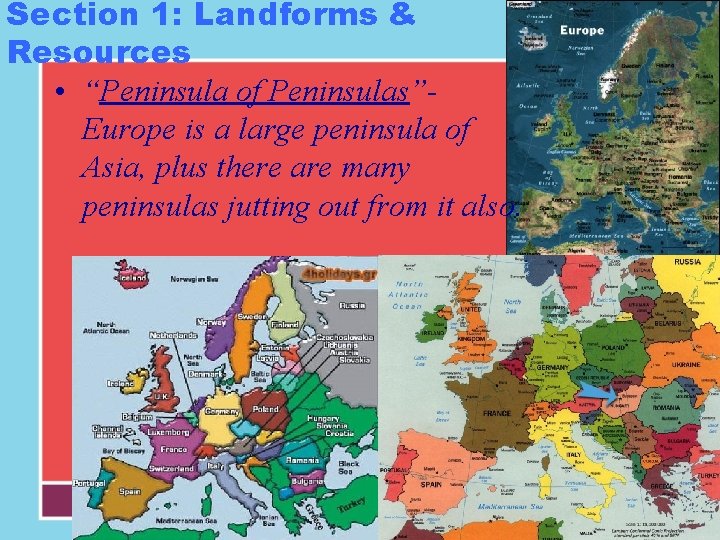
Section 1: Landforms & Resources • “Peninsula of Peninsulas”Europe is a large peninsula of Asia, plus there are many peninsulas jutting out from it also.
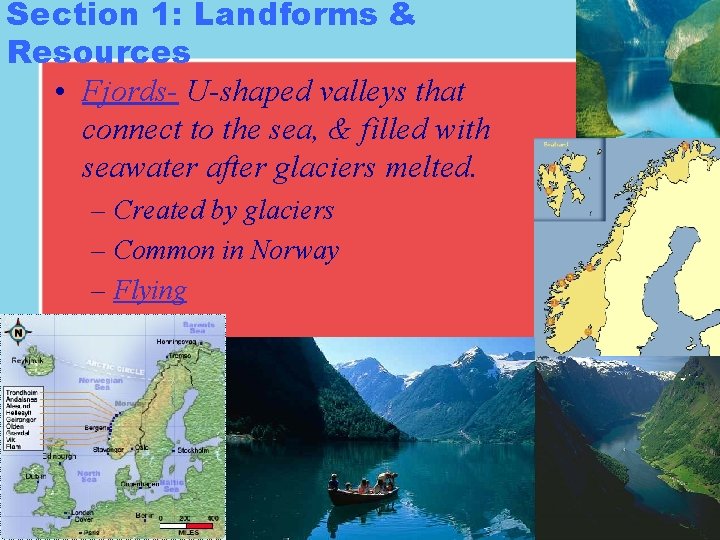
Section 1: Landforms & Resources • Fjords- U-shaped valleys that connect to the sea, & filled with seawater after glaciers melted. – Created by glaciers – Common in Norway – Flying
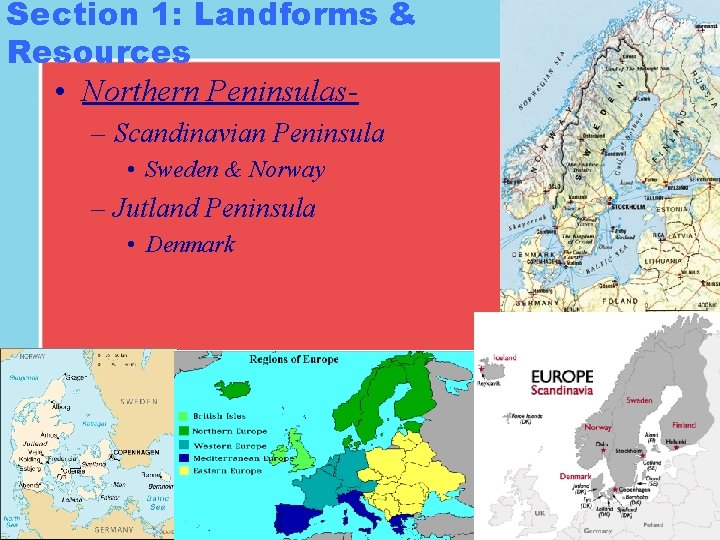
Section 1: Landforms & Resources • Northern Peninsulas– Scandinavian Peninsula • Sweden & Norway – Jutland Peninsula • Denmark
Section 1: Landforms & Resources • Southern Peninsulas– Iberian Peninsula • Spain & Portugal – Italian Peninsula • Italy – Balkan Peninsula • Greece, Serbia…
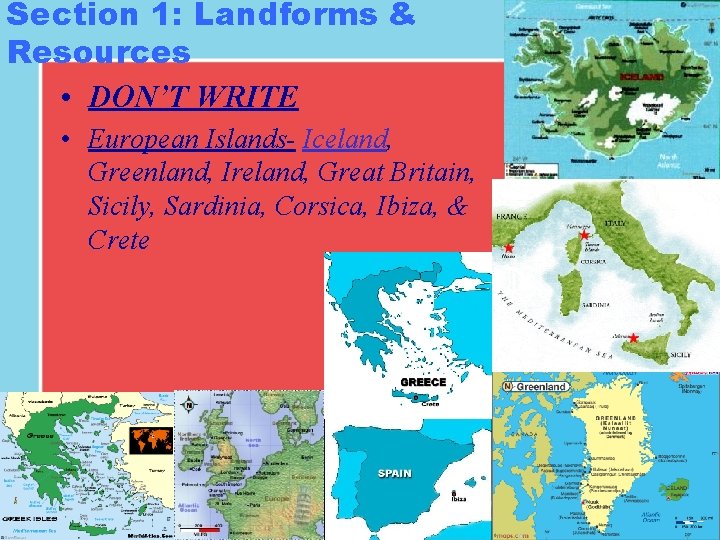
Section 1: Landforms & Resources • DON’T WRITE • European Islands- Iceland, Greenland, Ireland, Great Britain, Sicily, Sardinia, Corsica, Ibiza, & Crete
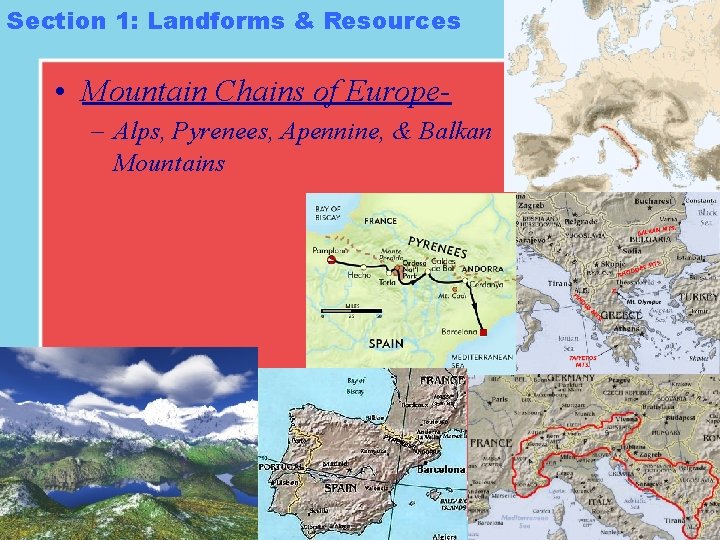
Section 1: Landforms & Resources • Mountain Chains of Europe– Alps, Pyrenees, Apennine, & Balkan Mountains
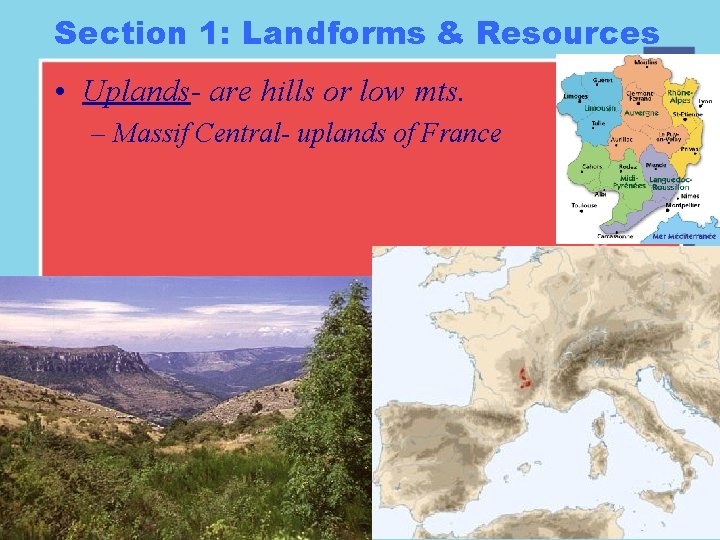
Section 1: Landforms & Resources • Uplands- are hills or low mts. – Massif Central- uplands of France
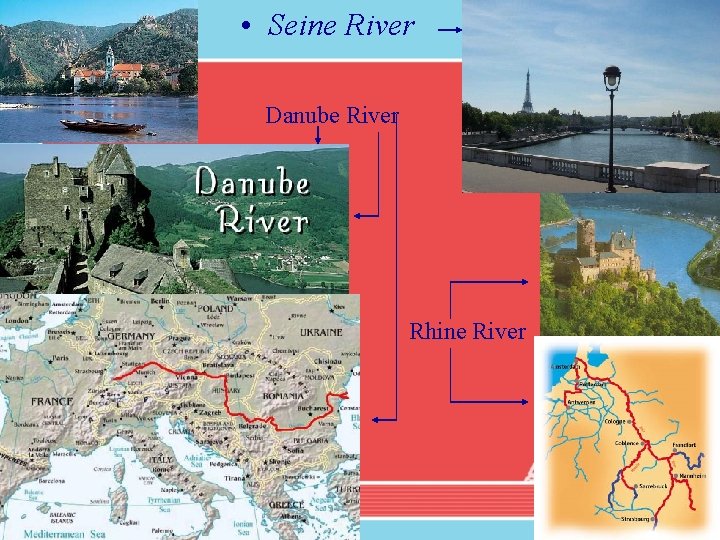
• Seine River Danube River Rhine River
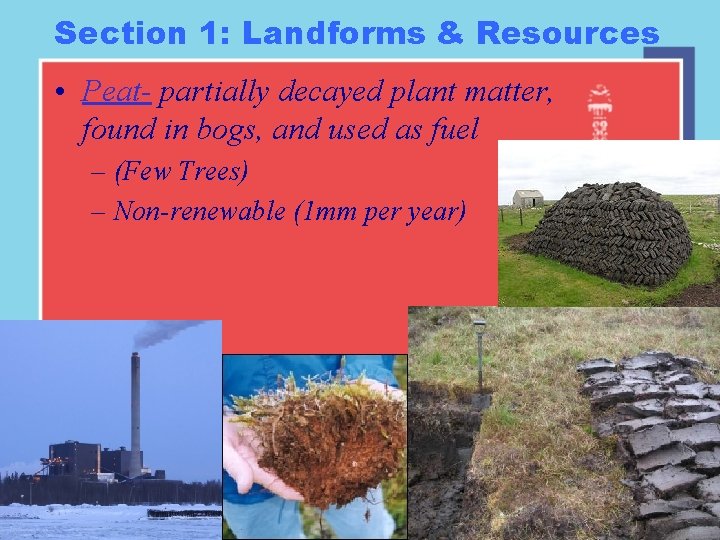
Section 1: Landforms & Resources • Peat- partially decayed plant matter, found in bogs, and used as fuel – (Few Trees) – Non-renewable (1 mm per year)
Section 2: Climate & Vegetation • North Atlantic Drift- current of warm water from the tropics – Prevailing westerlies pick up warmth from this and helps give Europe a mild climate
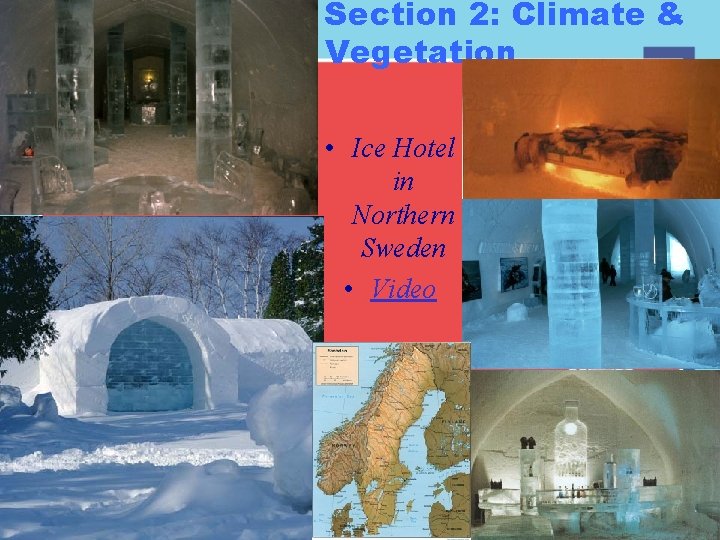
Section 2: Climate & Vegetation • Ice Hotel in Northern Sweden • Video
Section 2: Climate & Vegetation • Sirocco is a Mediterranean wind that comes from the Sahara and reaches hurricane speeds in North Africa and Southern Europe. The mistral is a strong, cold and usually dry regional wind in France, coming from the north or northwest.
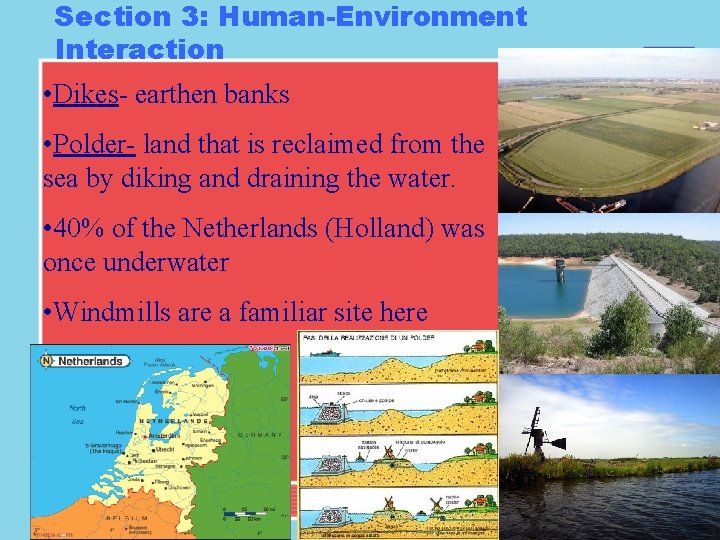
Section 3: Human-Environment Interaction • Dikes- earthen banks • Polder- land that is reclaimed from the sea by diking and draining the water. • 40% of the Netherlands (Holland) was once underwater • Windmills are a familiar site here
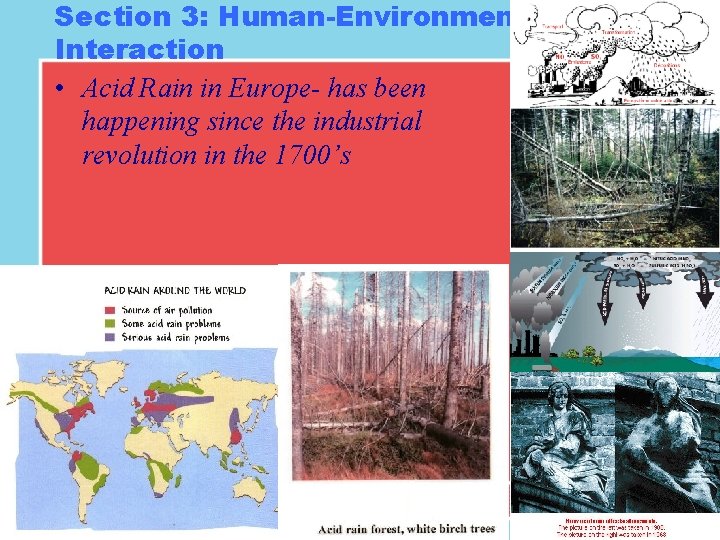
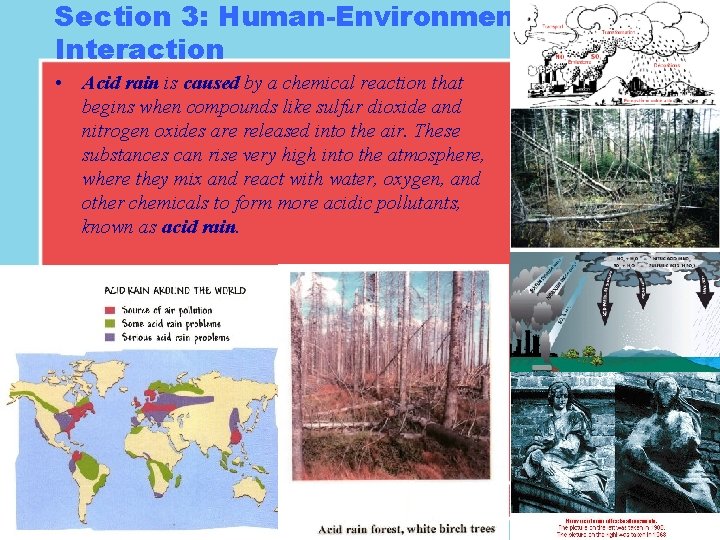
Section 3: Human-Environment Interaction • Acid Rain in Europe- has been happening since the industrial revolution in the 1700’s
Section 3: Human-Environment Interaction • Acid rain is caused by a chemical reaction that begins when compounds like sulfur dioxide and nitrogen oxides are released into the air. These substances can rise very high into the atmosphere, where they mix and react with water, oxygen, and other chemicals to form more acidic pollutants, known as acid rain.
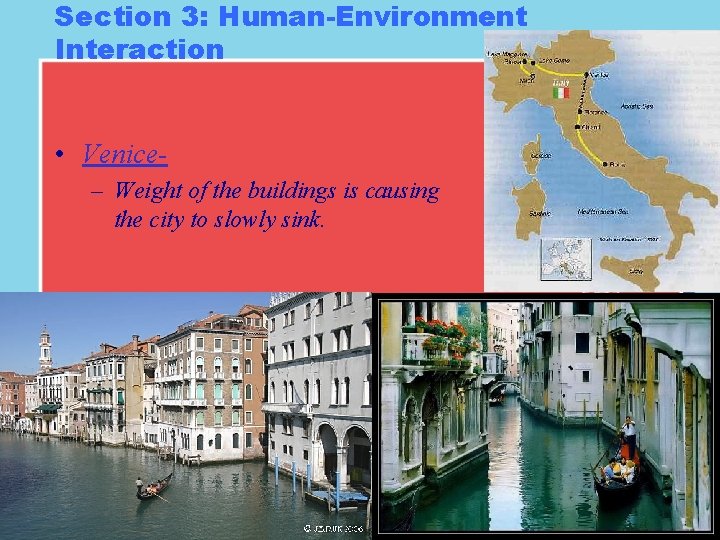
Section 3: Human-Environment Interaction • Venice– Weight of the buildings is causing the city to slowly sink.