
Chapter 12 Money and the Banking System Money
![Chapter 12 Money and the Banking System [Money] is a machine for doing quickly](https://slidetodoc.com/presentation_image_h/779f664ef447453305ee75ae0743ce83/image-1.jpg "Chapter 12 Money and the Banking System [Money] is a machine for doing quickly")
Chapter 12 Money and the Banking System [Money] is a machine for doing quickly and commodiously what would be done, though less quickly and commodiously, without it. JOHN STUART MILL
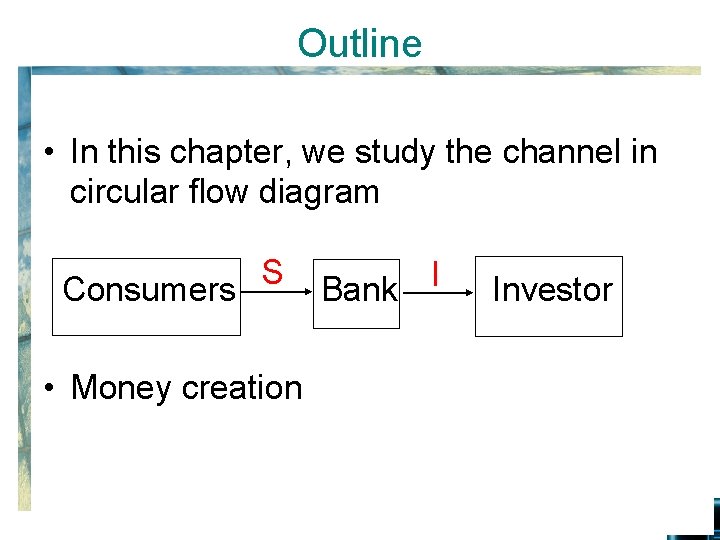
Outline • In this chapter, we study the channel in circular flow diagram S Consumers • Money creation I Bank Investor
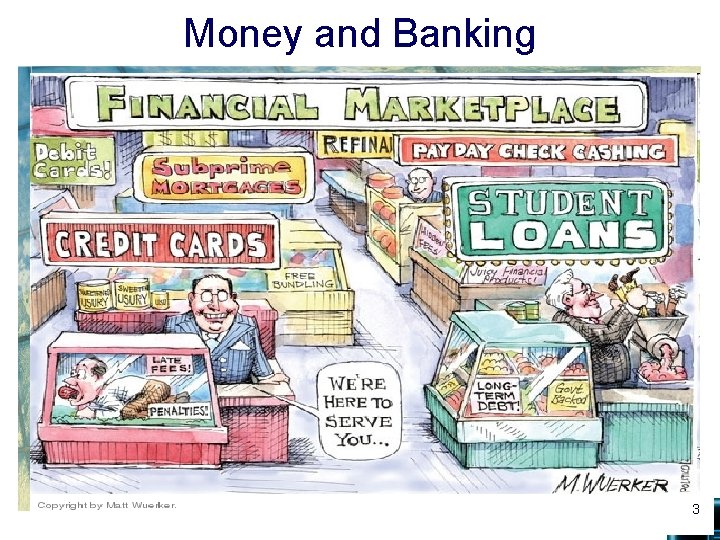
Money and Banking 3
Why we need money? • Robinson-Crusoe Economy: autarky, do not need money • Robinson + Friday: need exchange, barter economy • Barter economy has a drawback: “double coincidence of wants” wants
Why we need money? • Introduce money greases the wheel of exchange and make the whole economy more productive • With money, market does not need to be “personal, ” the extent of exchange is greatly increased
The Functions of Money • Money – Medium of exchange • Standard object - exchange goods & services – Unit of account • Standard unit – quoting prices – Store of value • Store wealth 6
What serves as money? • Commodity money – object – Used as medium of exchange – Substantial value in alternative uses 7
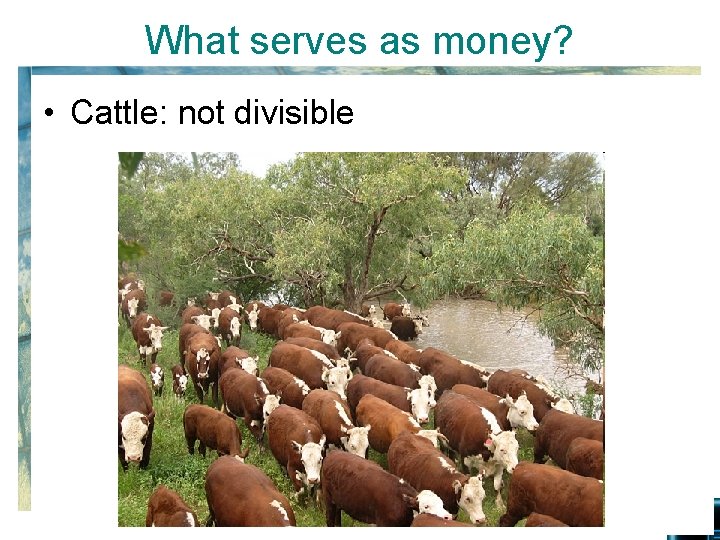
What serves as money? • Cattle: not divisible
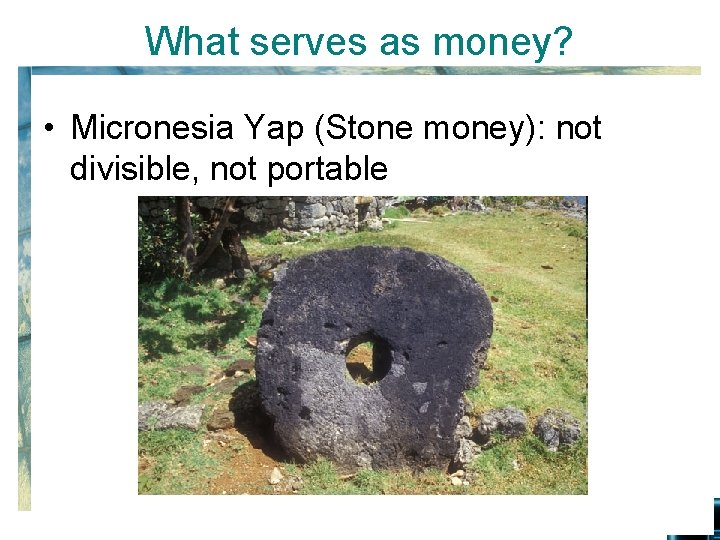
What serves as money? • Micronesia Yap (Stone money): not divisible, not portable
What serves as money? • For a money, we need it – Divisible – Identical (uniform) – Storable and durable – Compact (easy to carry): high value per unit of volume or weight – Candidate: gold, silver, copper, …
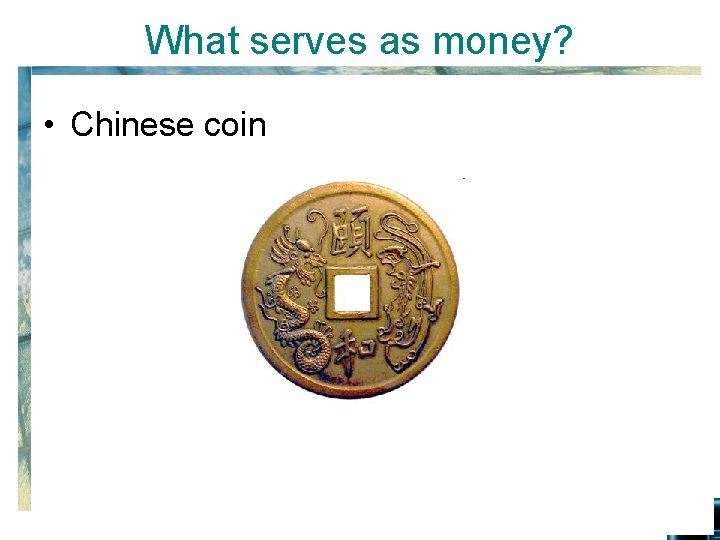
What serves as money? • Chinese coin
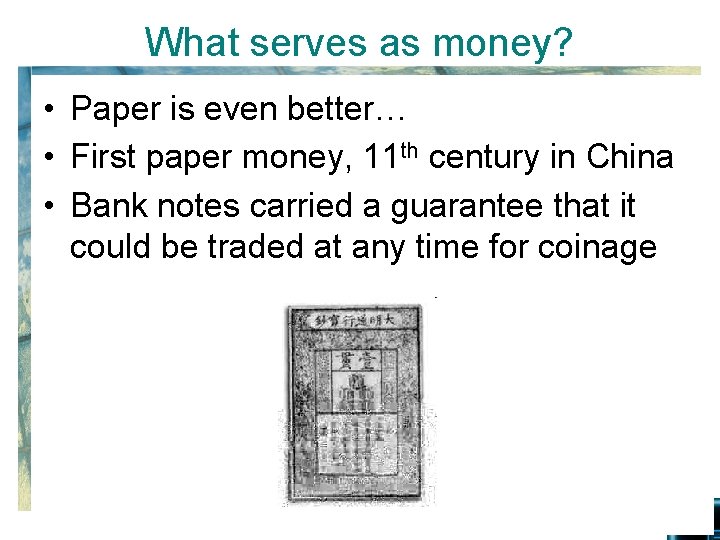
What serves as money? • Paper is even better… • First paper money, 11 th century in China • Bank notes carried a guarantee that it could be traded at any time for coinage
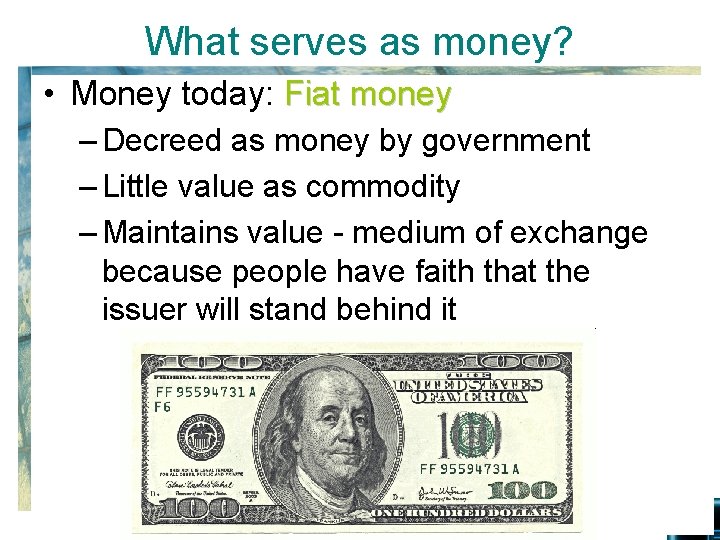
What serves as money? • Money today: Fiat money – Decreed as money by government – Little value as commodity – Maintains value - medium of exchange because people have faith that the issuer will stand behind it
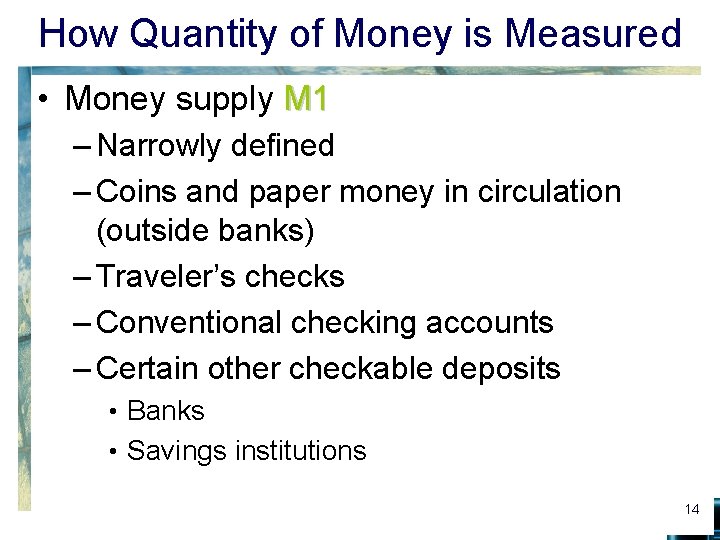
How Quantity of Money is Measured • Money supply M 1 – Narrowly defined – Coins and paper money in circulation (outside banks) – Traveler’s checks – Conventional checking accounts – Certain other checkable deposits • Banks • Savings institutions 14
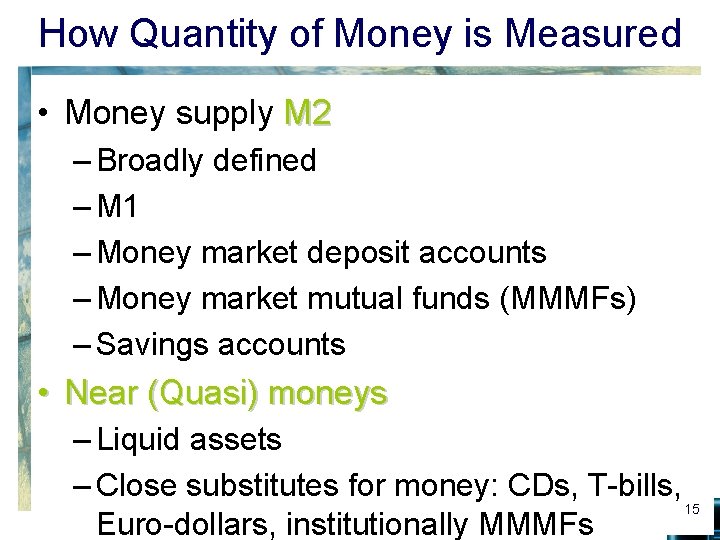
How Quantity of Money is Measured • Money supply M 2 – Broadly defined – M 1 – Money market deposit accounts – Money market mutual funds (MMMFs) – Savings accounts • Near (Quasi) moneys – Liquid assets – Close substitutes for money: CDs, T-bills, 15 Euro-dollars, institutionally MMMFs
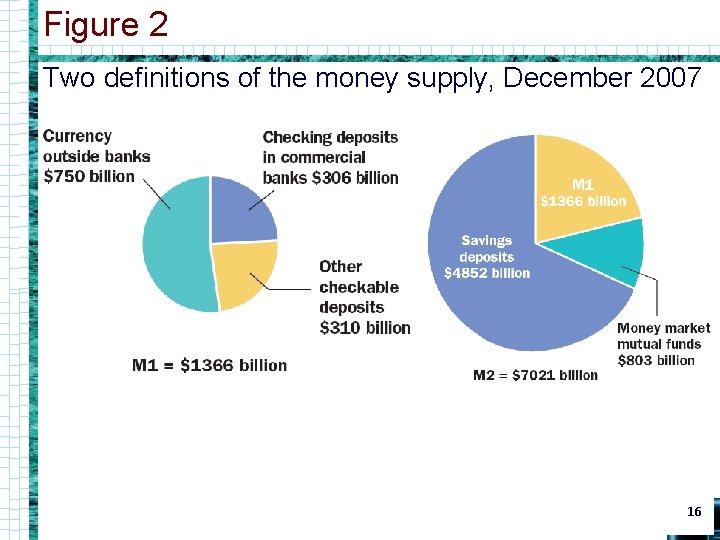
Figure 2 Two definitions of the money supply, December 2007 16
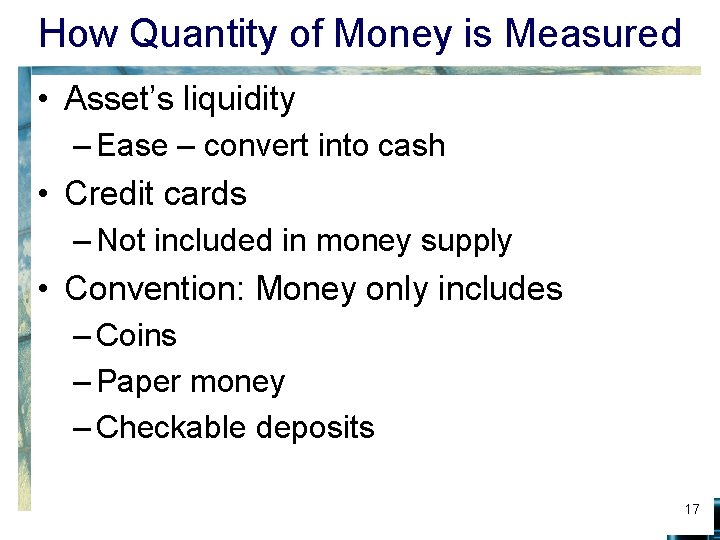
How Quantity of Money is Measured • Asset’s liquidity – Ease – convert into cash • Credit cards – Not included in money supply • Convention: Money only includes – Coins – Paper money – Checkable deposits 17
The Banking System • Fractional reserve banking system – Bank keeps reserves only a fraction of deposits – Given depositors would not withdraw quite often – Features • Bank profitability – Banks earns the spread of interest rate • Bank discretion over money supply – Create money • Exposure to bank runs – Keep prudency and lend out money carefully 18
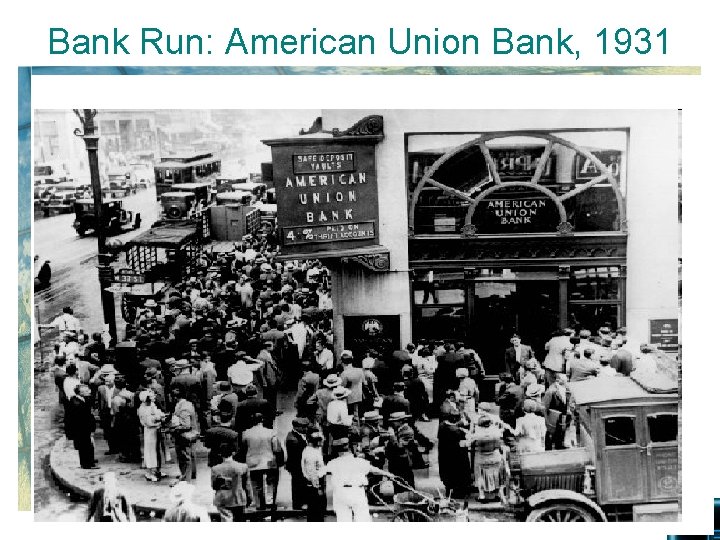
Bank Run: American Union Bank, 1931

Bank Run: Northern Rock, 2007
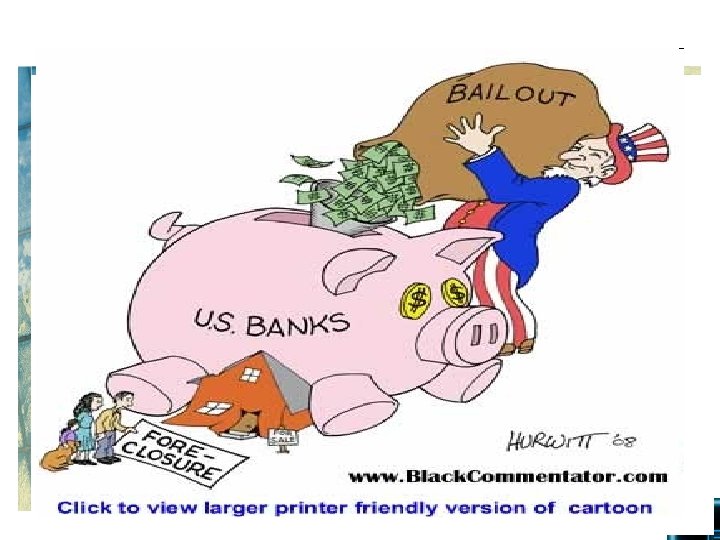
Subprime Crisis and Bank Run • 02/2007: Freddie Mac announces that it will stop buying subprime mortgages and related mortgage-backed securities • 09/2007: Bank of England bails out Northern Rock (liquidity support); eventually Northern Rock is nationalized (February 2008)
Subprime Crisis and Bank Run • 06/2008: BOA takes over Countrywide Financial • 07/2008: Indy. Mac fails • 09/2008: Lehman Brothers fails; BOA purchases Merrill Lynch; Washington Mutual (WAMU) fails; JPMorgan Chase acquires WAMU’s assets; Federal Reserve bails out AIG • 10/2008: TARP is established
Subprime Crisis and Bank Run • 06/2009: GM files for bankruptcy
The Banking System • Bankers - reputation for prudence – Checking deposits - pure fiat money – Sufficiently generous level of reserves • Minimize vulnerability to runs – Cautious - loans and investments • Large losses – undermine confidence • Banking - inherently risky business – The art of bank management: trade-off between profitability and safety 25
The Banking System • Bank regulations – Deposit insurance - guarantees deposits • Federal Deposit Insurance Corporation/ FDIC • Moral hazard problem – If insured against consequences of risk – Engage in riskier behavior – Example: Savings and Loan (S&L) Crisis in 1980 s 26
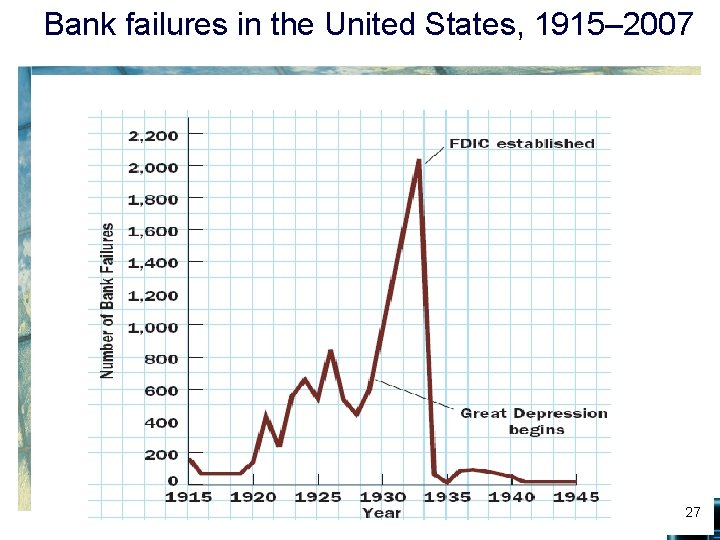
Bank failures in the United States, 1915– 2007 27
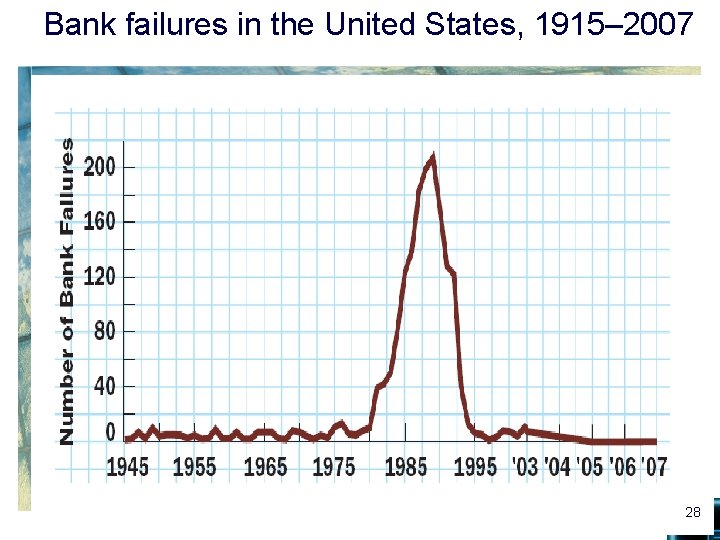
Bank failures in the United States, 1915– 2007 28
The Banking System – Bank supervision - Bank examinations • Limit the kinds and quantities of assets banks can invest – Reserve requirements • Minimum amount of reserves – Proportional to volume of deposits
The Origins of the Money Supply T-account for a typical bank • Asset - item of value owned • Liability - item of value owed / debt • Balance sheet - accounting statement • Left side: values of all assets • Right side: values of all liabilities & net worth – Net worth = assets – liabilities – Assets = Liabilities + Net worth 30
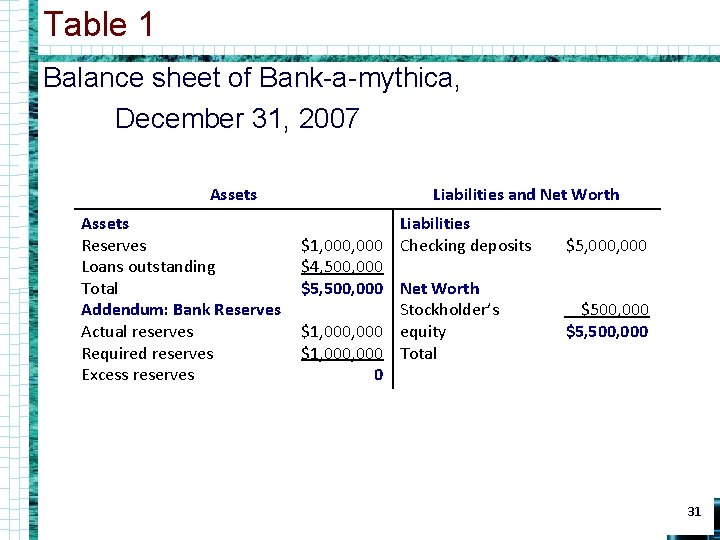
Table 1 Balance sheet of Bank-a-mythica, December 31, 2007 Assets Reserves Loans outstanding Total Addendum: Bank Reserves Actual reserves Required reserves Excess reserves Liabilities and Net Worth Liabilities $1, 000 Checking deposits $4, 500, 000 $5, 500, 000 Net Worth Stockholder’s $1, 000 equity $1, 000 Total 0 $5, 000 $500, 000 $5, 500, 000 31
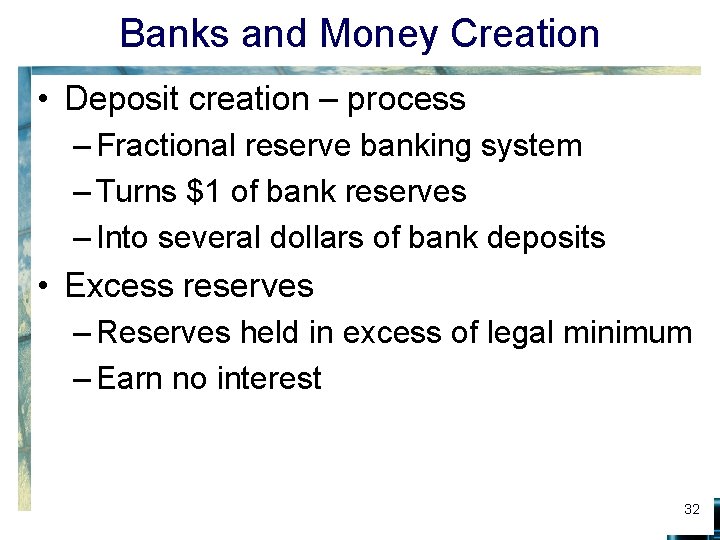
Banks and Money Creation • Deposit creation – process – Fractional reserve banking system – Turns $1 of bank reserves – Into several dollars of bank deposits • Excess reserves – Reserves held in excess of legal minimum – Earn no interest 32
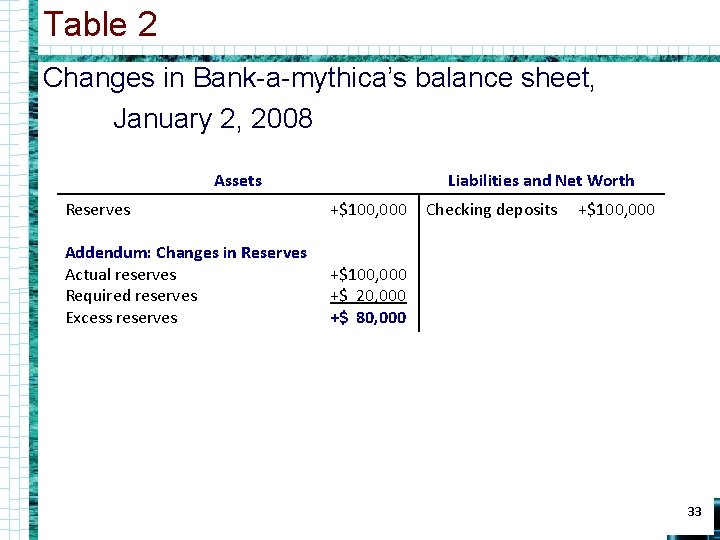
Table 2 Changes in Bank-a-mythica’s balance sheet, January 2, 2008 Assets Liabilities and Net Worth Reserves +$100, 000 Addendum: Changes in Reserves Actual reserves Required reserves Excess reserves +$100, 000 +$ 20, 000 +$ 80, 000 Checking deposits +$100, 000 33
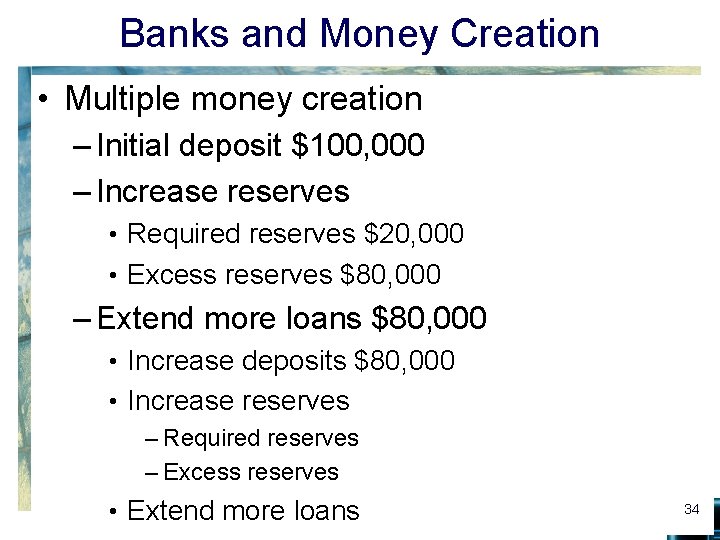
Banks and Money Creation • Multiple money creation – Initial deposit $100, 000 – Increase reserves • Required reserves $20, 000 • Excess reserves $80, 000 – Extend more loans $80, 000 • Increase deposits $80, 000 • Increase reserves – Required reserves – Excess reserves • Extend more loans 34
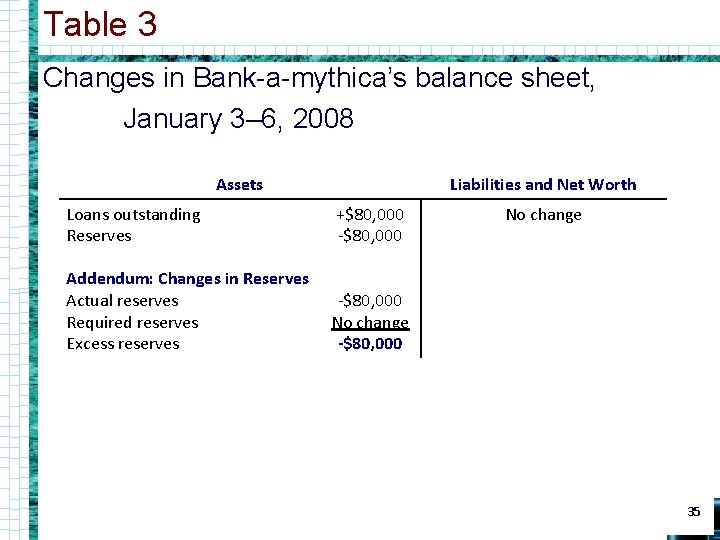
Table 3 Changes in Bank-a-mythica’s balance sheet, January 3– 6, 2008 Assets Liabilities and Net Worth Loans outstanding Reserves +$80, 000 -$80, 000 Addendum: Changes in Reserves Actual reserves Required reserves Excess reserves -$80, 000 No change 35
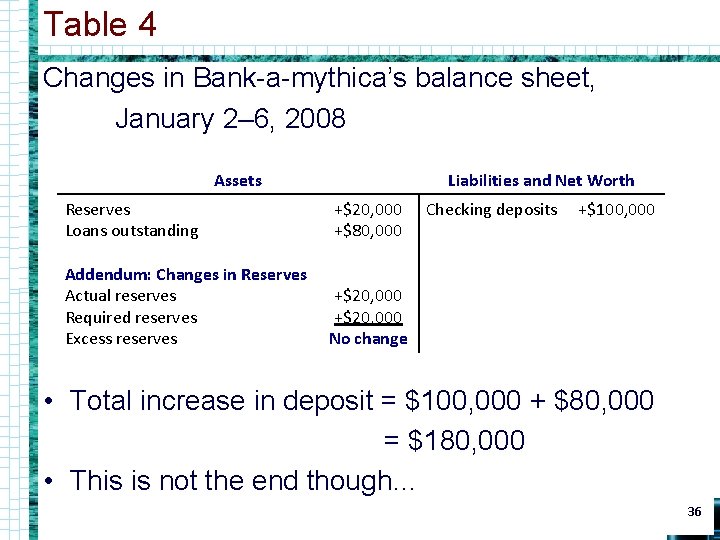
Table 4 Changes in Bank-a-mythica’s balance sheet, January 2– 6, 2008 Assets Liabilities and Net Worth Reserves Loans outstanding +$20, 000 +$80, 000 Addendum: Changes in Reserves Actual reserves Required reserves Excess reserves +$20, 000 No change Checking deposits +$100, 000 • Total increase in deposit = $100, 000 + $80, 000 = $180, 000 • This is not the end though… 36
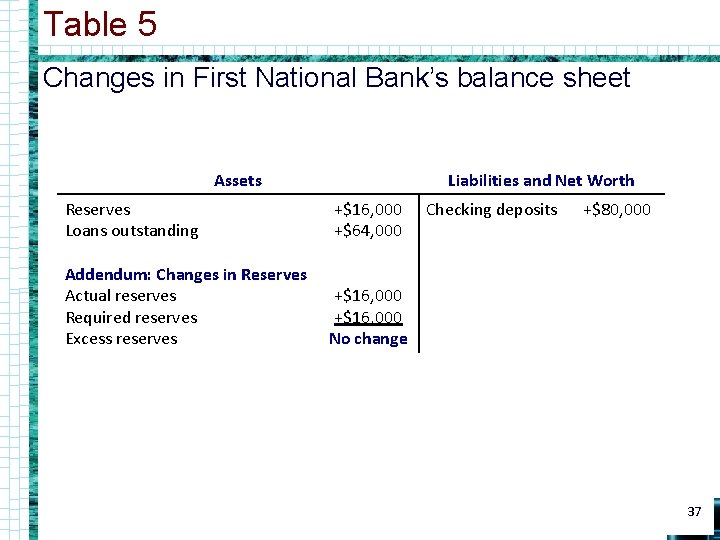
Table 5 Changes in First National Bank’s balance sheet Assets Liabilities and Net Worth Reserves Loans outstanding +$16, 000 +$64, 000 Addendum: Changes in Reserves Actual reserves Required reserves Excess reserves +$16, 000 No change Checking deposits +$80, 000 37
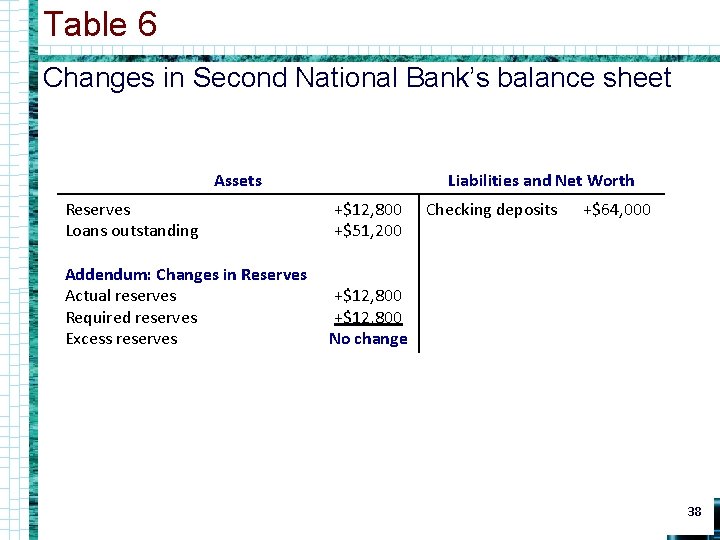
Table 6 Changes in Second National Bank’s balance sheet Assets Liabilities and Net Worth Reserves Loans outstanding +$12, 800 +$51, 200 Addendum: Changes in Reserves Actual reserves Required reserves Excess reserves +$12, 800 No change Checking deposits +$64, 000 38
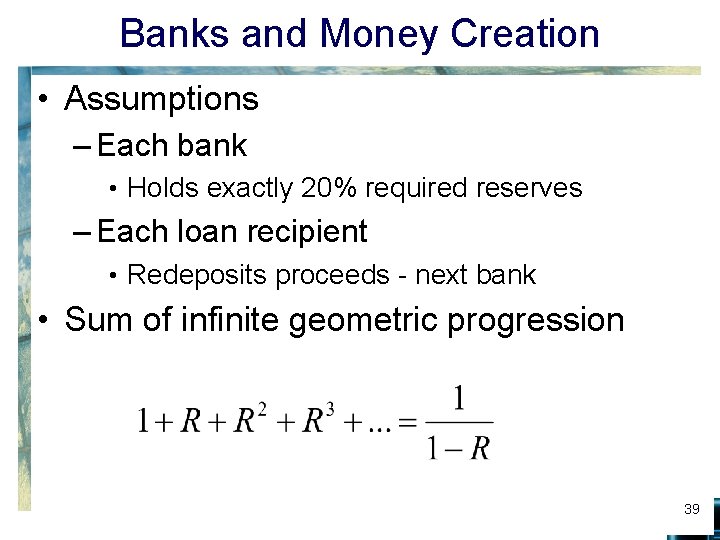
Banks and Money Creation • Assumptions – Each bank • Holds exactly 20% required reserves – Each loan recipient • Redeposits proceeds - next bank • Sum of infinite geometric progression 39
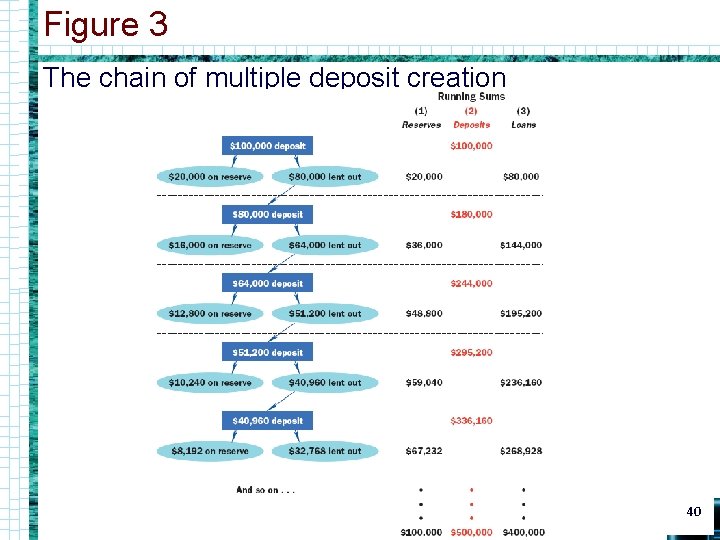
Figure 3 The chain of multiple deposit creation 40
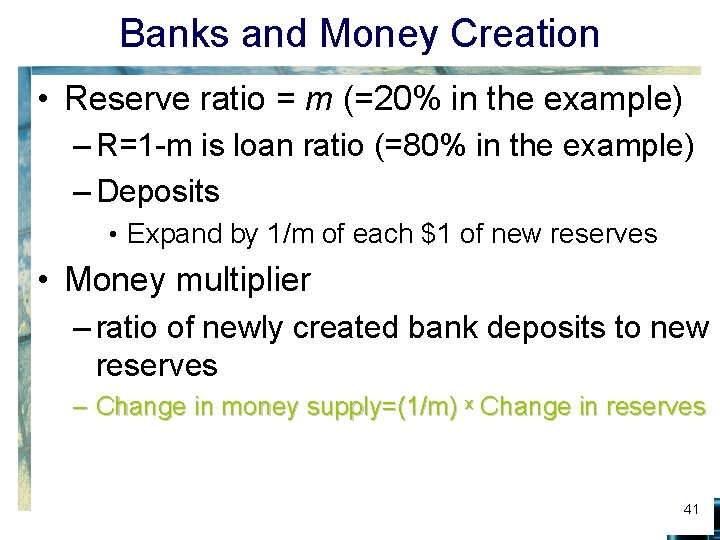
Banks and Money Creation • Reserve ratio = m (=20% in the example) – R=1 -m is loan ratio (=80% in the example) – Deposits • Expand by 1/m of each $1 of new reserves • Money multiplier – ratio of newly created bank deposits to new reserves – Change in money supply=(1/m) ˣ Change in reserves 41
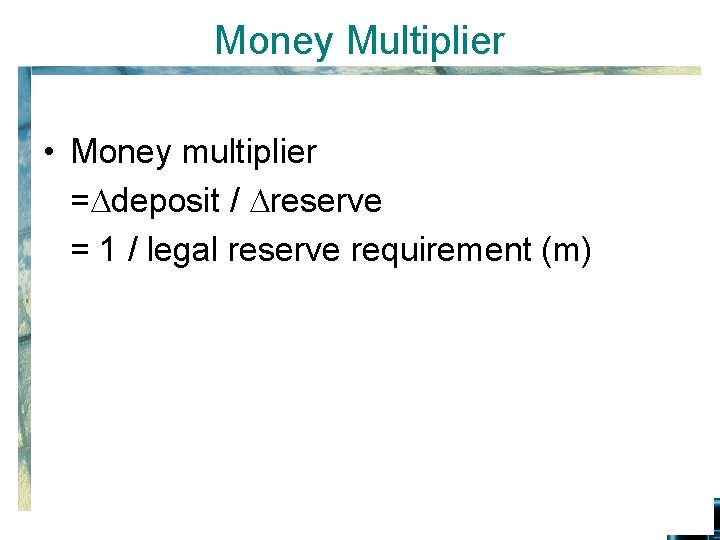
Money Multiplier • Money multiplier = deposit / reserve = 1 / legal reserve requirement (m)
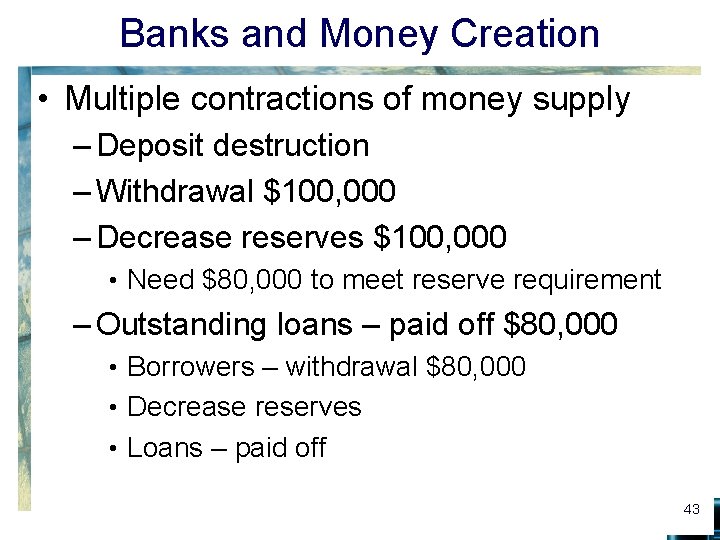
Banks and Money Creation • Multiple contractions of money supply – Deposit destruction – Withdrawal $100, 000 – Decrease reserves $100, 000 • Need $80, 000 to meet reserve requirement – Outstanding loans – paid off $80, 000 • Borrowers – withdrawal $80, 000 • Decrease reserves • Loans – paid off 43
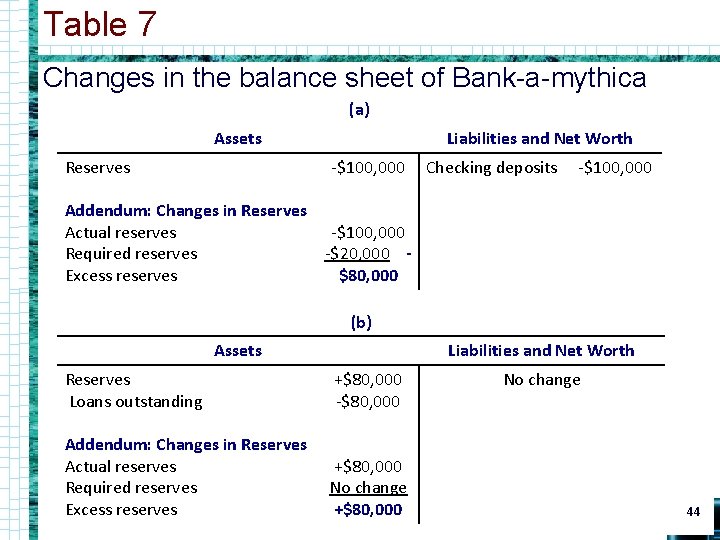
Table 7 Changes in the balance sheet of Bank-a-mythica (a) Assets Reserves Liabilities and Net Worth -$100, 000 Checking deposits -$100, 000 Addendum: Changes in Reserves Actual reserves -$100, 000 Required reserves -$20, 000 Excess reserves $80, 000 (b) Assets Liabilities and Net Worth Reserves Loans outstanding +$80, 000 -$80, 000 Addendum: Changes in Reserves Actual reserves Required reserves Excess reserves +$80, 000 No change 44
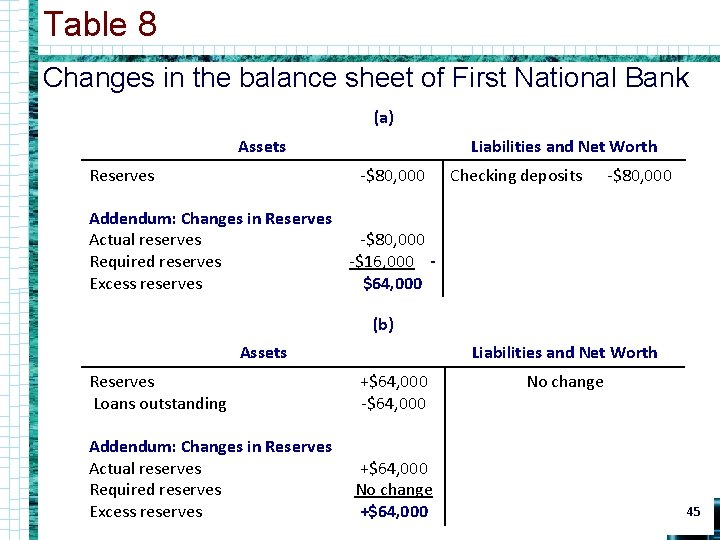
Table 8 Changes in the balance sheet of First National Bank (a) Assets Reserves Liabilities and Net Worth -$80, 000 Checking deposits -$80, 000 Addendum: Changes in Reserves Actual reserves -$80, 000 Required reserves -$16, 000 Excess reserves $64, 000 (b) Assets Liabilities and Net Worth Reserves Loans outstanding +$64, 000 -$64, 000 Addendum: Changes in Reserves Actual reserves Required reserves Excess reserves +$64, 000 No change 45
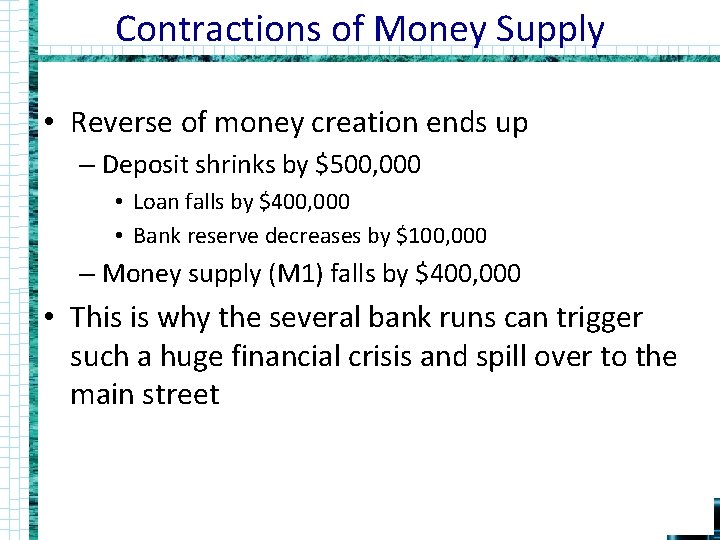
Contractions of Money Supply • Reverse of money creation ends up – Deposit shrinks by $500, 000 • Loan falls by $400, 000 • Bank reserve decreases by $100, 000 – Money supply (M 1) falls by $400, 000 • This is why the several bank runs can trigger such a huge financial crisis and spill over to the main street
Money-Creation Formula Is Oversimplified • Oversimplified money multiplier – Accurate - very particular circumstances: 1. Every recipient of cash • Must redeposit cash - another bank • Doesn’t hold cash 2. Every bank • Must hold reserves - legal minimum 47
Money-Creation Formula Is Oversimplified • If individuals & business firms – Hold more cash – Limited • Multiple expansion of bank deposits – Fewer dollars of cash • Available for use as reserves – Smaller money supply 48

Money-Creation Formula Is Oversimplified • If banks – Keep excess reserves – Limited • Multiple expansion of bank deposits – Smaller supply of money 49
The Need for Monetary Policy • During a recession – Banks - reduce money supply • Increase excess reserves • Decrease lending – Less creditworthy applicants – Aggravate recession – Milton Friedman believed this is the cause of Great Depression – Need government intervention 50
The Need for Monetary Policy • During an economic boom – Banks – expand money supply – Undesirable momentum to economy • Inflation – Need government intervention 51
Summary • • • Money: origin, function, measurement Fractional reserve banking system Bank Regulations Money creation and money multiplier Need for monetary policy
- Slides: 52