
Chapter 12 Mechanical Systems I Mechanical Systems HVAC



- Slides: 17
Chapter 12 Mechanical Systems
I. Mechanical Systems – HVAC – Heating, Ventilating and Air Conditioning. Plumbing – Complicated 1/5 th Construction Costs A. Fresh & conditioned air B. Hot/Cold, potable water C. Waste water, venting
II. Drawings – Typically Segregated into Mechanical/Plumbing Sheets
III. Basic System of Treating Air Requirements – Control of Ambient Air, Relative Humidity, Air Movement, Mean Radiant Temperature A. Heat generation – Hot water, steam, warm air systems by natural gas, fuel oil, coal, electricity or combination there of – distribution system B. Cooling – Typically by a gas cycled through a compressor condenser and evaporator – gas to liquid – transfer of – heat/cooled air circulated by distribution system – ducts C. Controls – Low voltage – thermostat/computer chips/mechanical/electrical responsibilities D. Fire safety – Both HVAC, plumbing require alarm circuitry required by fire code
IV. System Types – Most Systems in Buildings are Air or Water or Combination A. Air systems (1) Single zone system – uses single air handler) filtered – heated/cooled – humidified/dehumidified and distributed throughout buildings – typical for residential (2) Multi-zone system – produce heat/cool air simultaneously and distribute to various rooms through ducts
IV. A. (3) Reheat systems – utilize advantage of single and multizone systems by producing conditioned air at lowest required temperature then adjusting temperature by treating air as it travels to zones. Used in buildings where temperature variations required. (4) Variable air volume (VAV) – constant temperature systems that adjust temperature in a room by mixing cool and warm air. Typically used in office building and where humidity not a critical issue. (5) Dual duct systems – conditioned air is simultaneously heated/cooled in air-handling equipment – distributed to spaces in separate ducts - expensive
IV. B. Return air – Air must be returned to system (return air system) – strategically located C. Hydronic systems – Rely on hot/cold water distributed to coils in duct systems across which air is blown D. Air purity – By filter system of simple fabric filters to ionizing filters to remove dust and allergens. E. System maintenance – Important that equipment design allows for safe and ease of maintenance F. Controls – Air speed, volume and temperature. Mechanical contractors are responsible for start-up and testing of equipment. System controls often installed by specialists.
V. Analysis of Drawings – Complicated for Mechanical Contractor: Major Considerations A. Type of system B. Location of equipment (i. e. roof) C. Energy – who supplies/supply connect D. Distribution system E. Focus on high cost items F. Conflicts of distribution system with other components – structures, fire separation, floors, walls
VI. Plumbing Systems – Basic Buildings Simple, Special Projects – Hospitals, Etc. A. Piping – Type of fluid or gas piped determines material used and coupling method. - Steel – steam, hot water, chilled water, compressed gas or air and oil - Verified clay pipe – underground sewage - Cast iron – commercial drains - ABS/PVC – residential drains
VI. B. Pipe thickness – Size/pressure C. Fittings – Join sections, change direction, reduce/increase size; split or terminate. Most of same material - Threaded and coupled Flanged – steel pipe Grip type – fire protection systems No HUB – stainless steel Fused – welded, soldered, glued Bell and spigot – clay lines Compression – refrigeration lines
VI. D. Valves – Control flow, volume, level, temperature of liquids to regulate pressure – cast iron bronze, copper, plastic and attached to pipes by those listed in B. Types - Gate – used as shut off Globe – reduces flow Angle – less restrictive than globe Ball Swing check – allow flow in one direction Lift check valve – like swing Butterfly – control volume E. Water sources – Most often by city/county sources F. Fire service lines – Initial planning stage of project
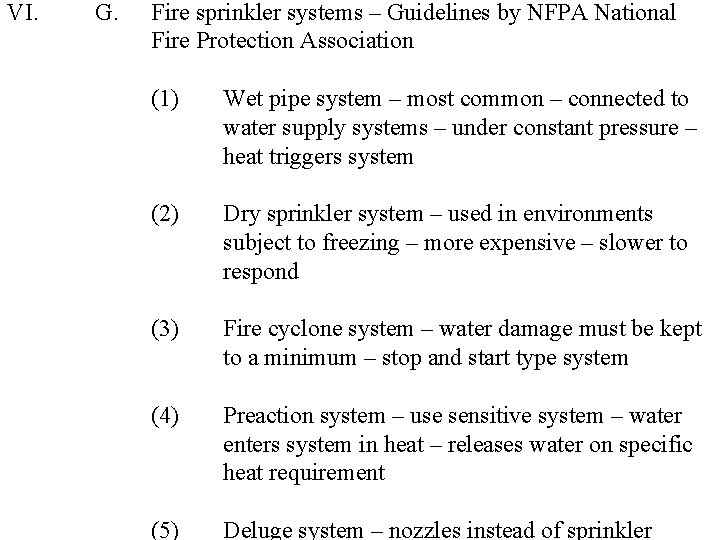
VI. G. Fire sprinkler systems – Guidelines by NFPA National Fire Protection Association (1) Wet pipe system – most common – connected to water supply systems – under constant pressure – heat triggers system (2) Dry sprinkler system – used in environments subject to freezing – more expensive – slower to respond (3) Fire cyclone system – water damage must be kept to a minimum – stop and start type system (4) Preaction system – use sensitive system – water enters system in heat – releases water on specific heat requirement (5) Deluge system – nozzles instead of sprinkler
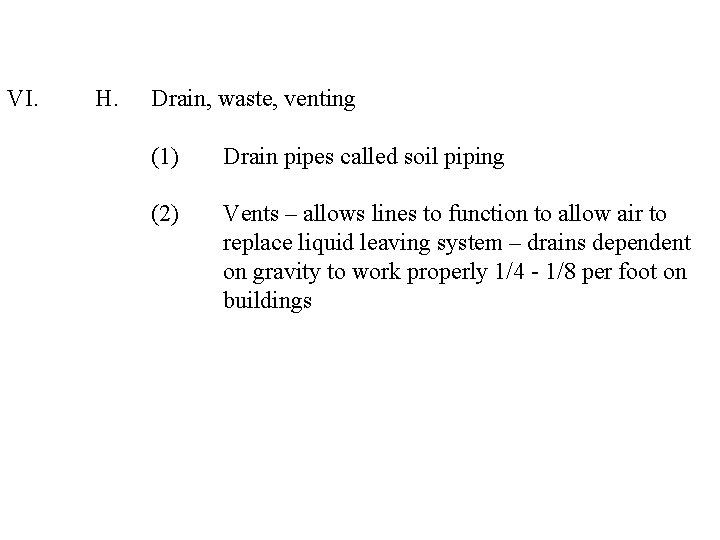
VI. H. Drain, waste, venting (1) Drain pipes called soil piping (2) Vents – allows lines to function to allow air to replace liquid leaving system – drains dependent on gravity to work properly 1/4 - 1/8 per foot on buildings
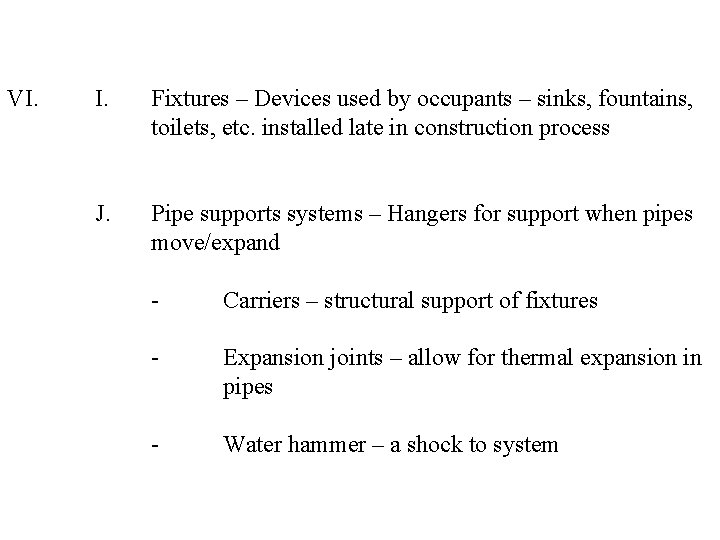
VI. Fixtures – Devices used by occupants – sinks, fountains, toilets, etc. installed late in construction process J. Pipe supports systems – Hangers for support when pipes move/expand - Carriers – structural support of fixtures - Expansion joints – allow for thermal expansion in pipes - Water hammer – a shock to system
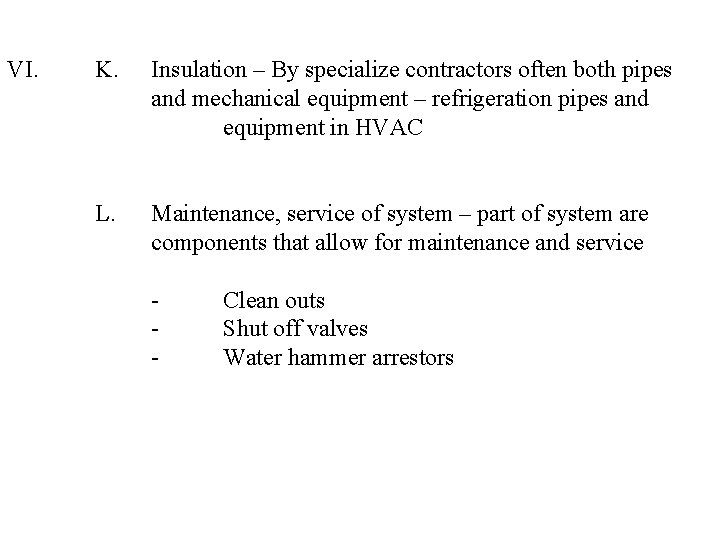
VI. K. Insulation – By specialize contractors often both pipes and mechanical equipment – refrigeration pipes and equipment in HVAC L. Maintenance, service of system – part of system are components that allow for maintenance and service - Clean outs Shut off valves Water hammer arrestors
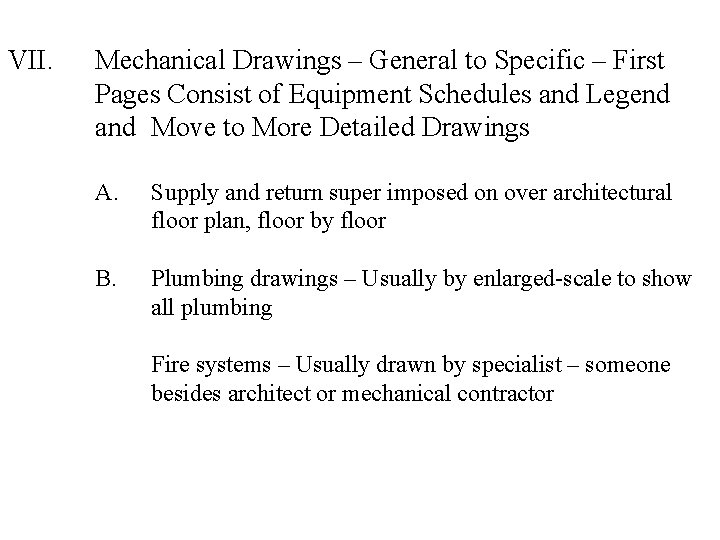
VII. Mechanical Drawings – General to Specific – First Pages Consist of Equipment Schedules and Legend and Move to More Detailed Drawings A. Supply and return super imposed on over architectural floor plan, floor by floor B. Plumbing drawings – Usually by enlarged-scale to show all plumbing Fire systems – Usually drawn by specialist – someone besides architect or mechanical contractor
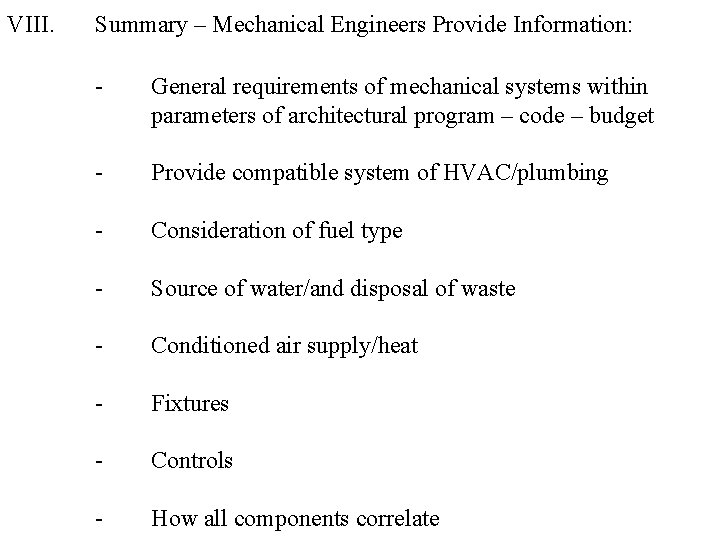
VIII. Summary – Mechanical Engineers Provide Information: - General requirements of mechanical systems within parameters of architectural program – code – budget - Provide compatible system of HVAC/plumbing - Consideration of fuel type - Source of water/and disposal of waste - Conditioned air supply/heat - Fixtures - Controls - How all components correlate