
CHAPTER 12 Marine Life and the Marine Environment

- Slides: 36
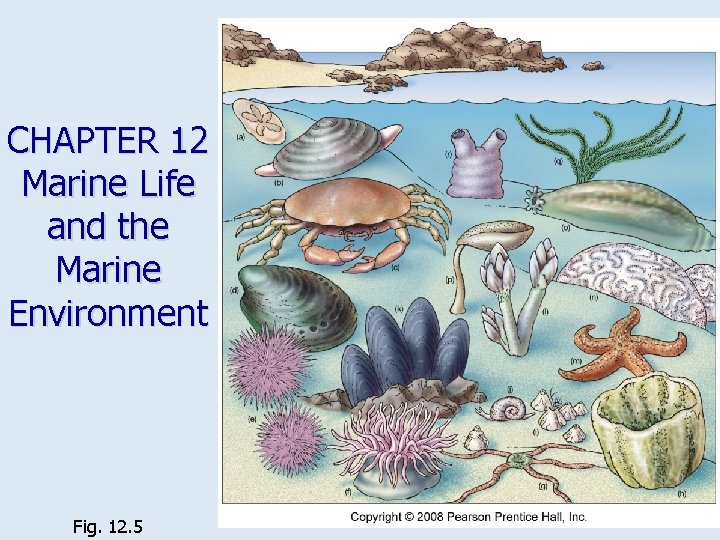
CHAPTER 12 Marine Life and the Marine Environment Fig. 12. 5
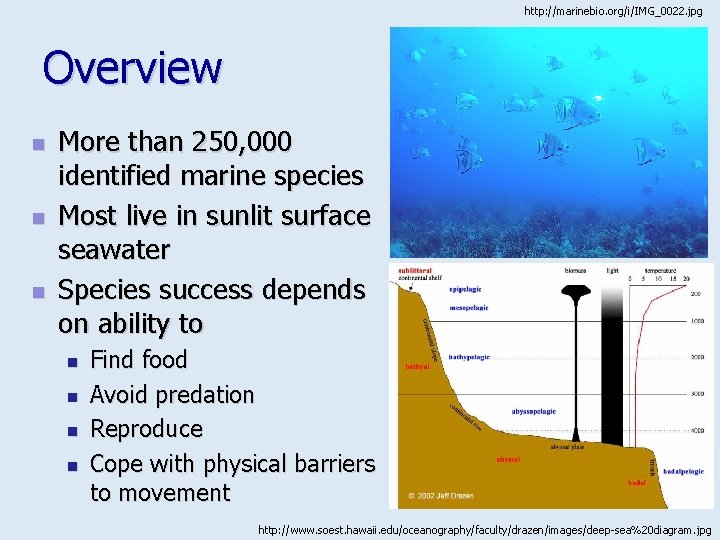
http: //marinebio. org/i/IMG_0022. jpg Overview n n n More than 250, 000 identified marine species Most live in sunlit surface seawater Species success depends on ability to n n Find food Avoid predation Reproduce Cope with physical barriers to movement http: //www. soest. hawaii. edu/oceanography/faculty/drazen/images/deep-sea%20 diagram. jpg
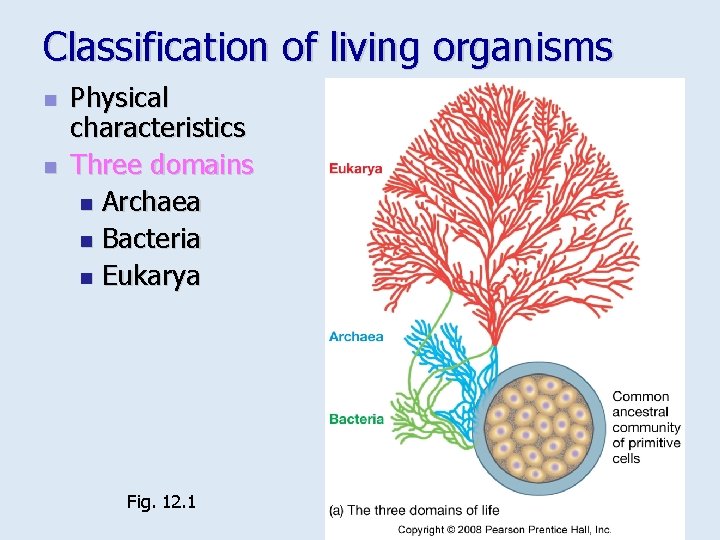
Classification of living organisms n n Physical characteristics Three domains n Archaea n Bacteria n Eukarya Fig. 12. 1
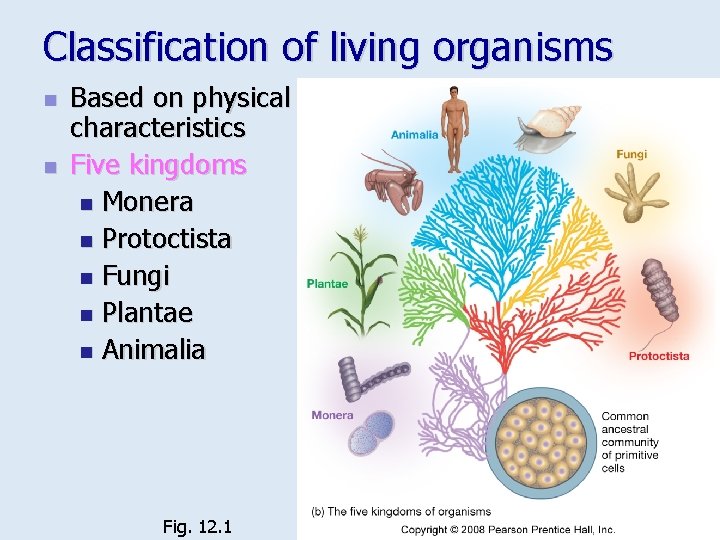
Classification of living organisms n n Based on physical characteristics Five kingdoms n Monera n Protoctista n Fungi n Plantae n Animalia Fig. 12. 1
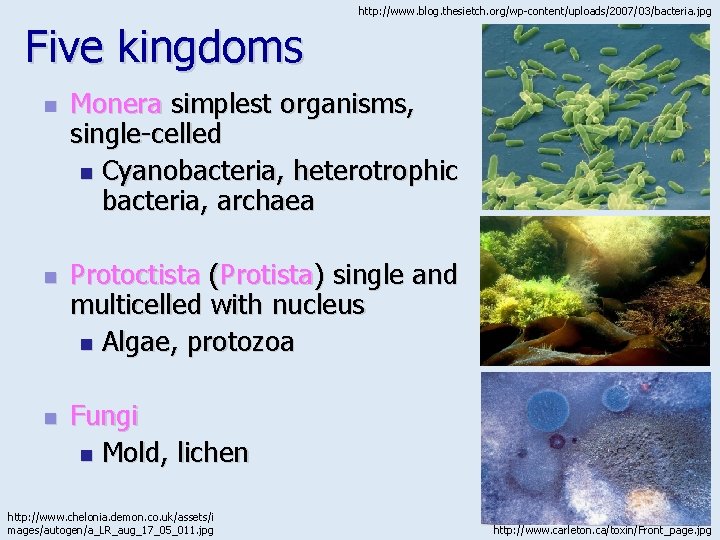
http: //www. blog. thesietch. org/wp-content/uploads/2007/03/bacteria. jpg Five kingdoms n n n Monera simplest organisms, single-celled n Cyanobacteria, heterotrophic bacteria, archaea Protoctista (Protista) single and multicelled with nucleus n Algae, protozoa Fungi n Mold, lichen http: //www. chelonia. demon. co. uk/assets/i mages/autogen/a_LR_aug_17_05_011. jpg http: //www. carleton. ca/toxin/Front_page. jpg
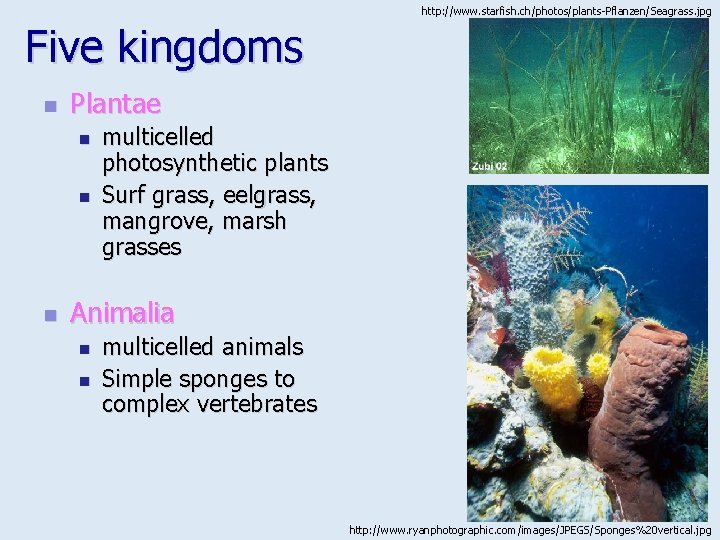
http: //www. starfish. ch/photos/plants-Pflanzen/Seagrass. jpg Five kingdoms n Plantae n n n multicelled photosynthetic plants Surf grass, eelgrass, mangrove, marsh grasses Animalia n n multicelled animals Simple sponges to complex vertebrates http: //www. ryanphotographic. com/images/JPEGS/Sponges%20 vertical. jpg
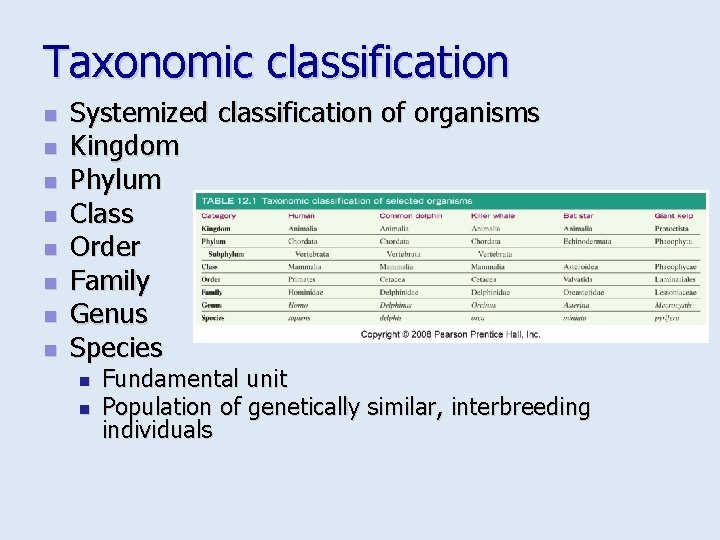
Taxonomic classification n n n n Systemized classification of organisms Kingdom Phylum Class Order Family Genus Species n n Fundamental unit Population of genetically similar, interbreeding individuals
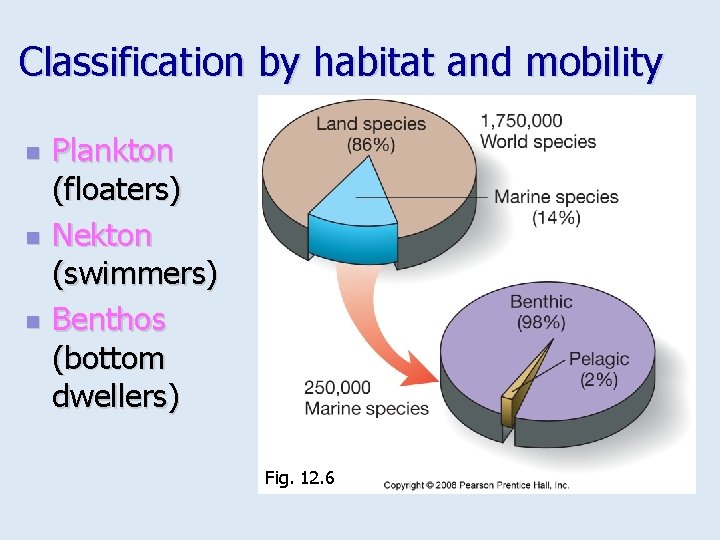
Classification by habitat and mobility n n n Plankton (floaters) Nekton (swimmers) Benthos (bottom dwellers) Fig. 12. 6
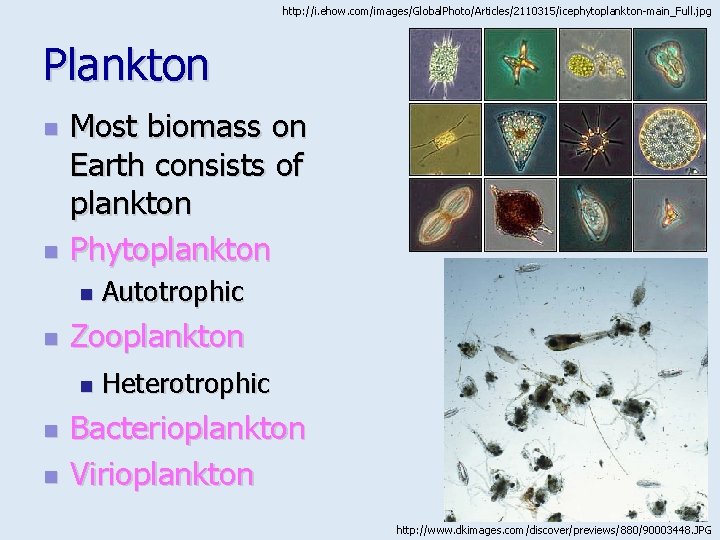
http: //i. ehow. com/images/Global. Photo/Articles/2110315/icephytoplankton-main_Full. jpg Plankton n n Most biomass on Earth consists of plankton Phytoplankton n n Zooplankton n Autotrophic Heterotrophic Bacterioplankton Virioplankton http: //www. dkimages. com/discover/previews/880/90003448. JPG
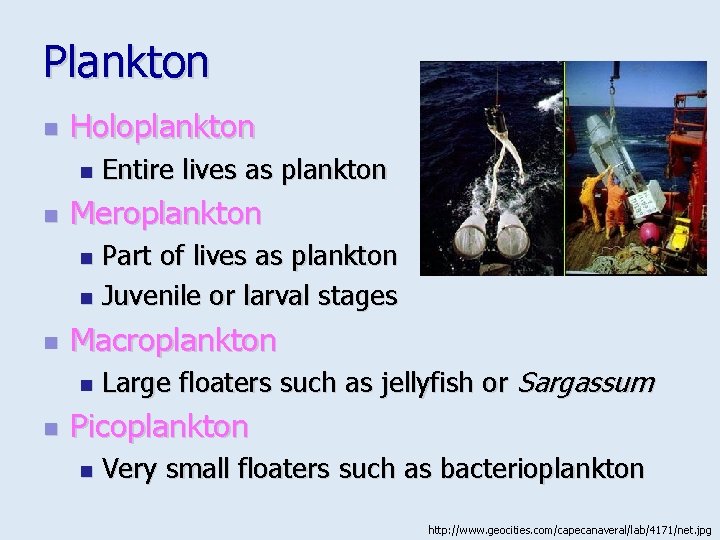
Plankton n Holoplankton n n Entire lives as plankton Meroplankton Part of lives as plankton n Juvenile or larval stages n n Macroplankton n n Large floaters such as jellyfish or Sargassum Picoplankton n Very small floaters such as bacterioplankton http: //www. geocities. com/capecanaveral/lab/4171/net. jpg
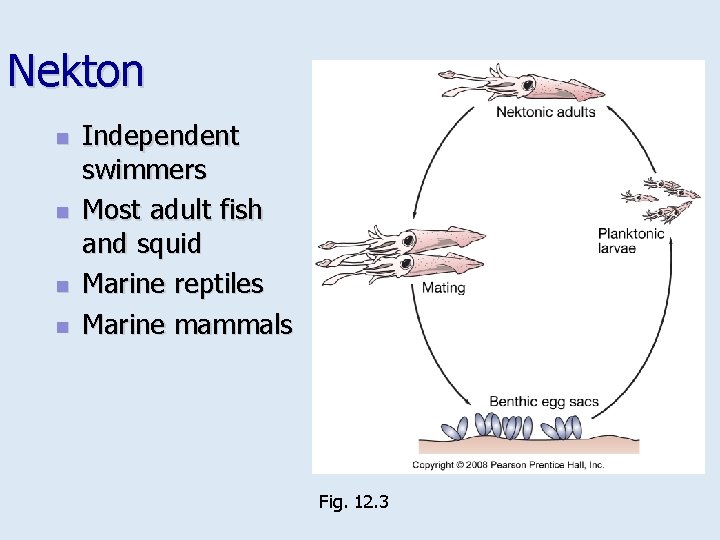
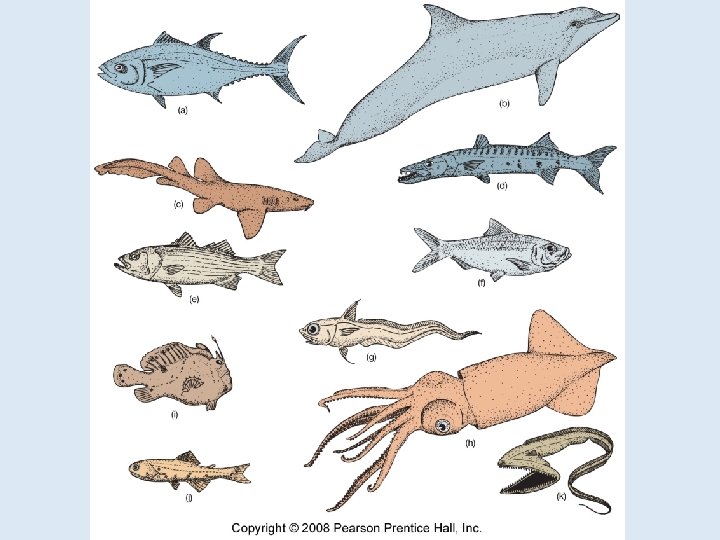
Nekton n n Independent swimmers Most adult fish and squid Marine reptiles Marine mammals Fig. 12. 3
Figure 12. 4
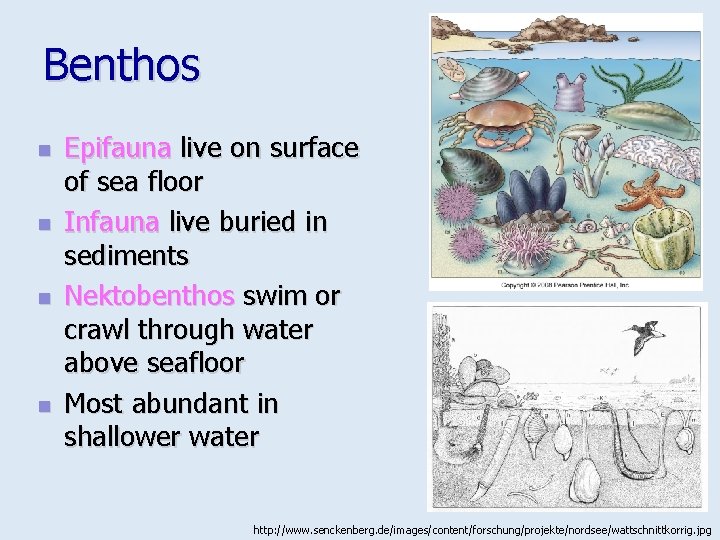
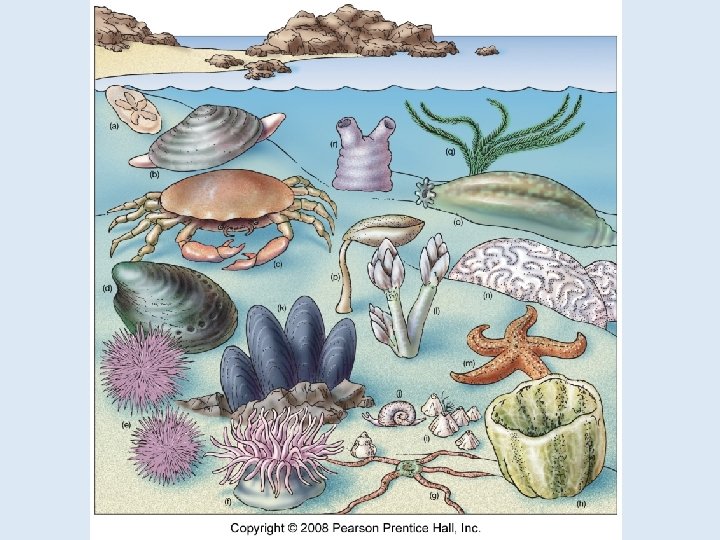
Benthos n n Epifauna live on surface of sea floor Infauna live buried in sediments Nektobenthos swim or crawl through water above seafloor Most abundant in shallower water http: //www. senckenberg. de/images/content/forschung/projekte/nordsee/wattschnittkorrig. jpg
Figure 12. 5
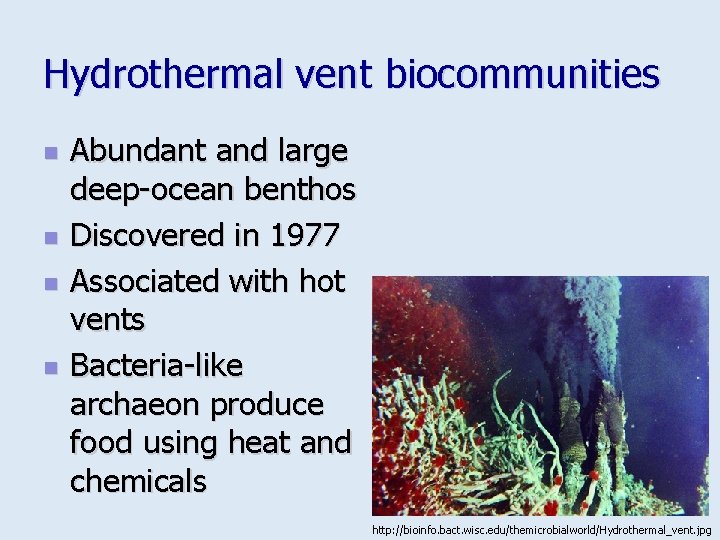
Hydrothermal vent biocommunities n n Abundant and large deep-ocean benthos Discovered in 1977 Associated with hot vents Bacteria-like archaeon produce food using heat and chemicals http: //bioinfo. bact. wisc. edu/themicrobialworld/Hydrothermal_vent. jpg
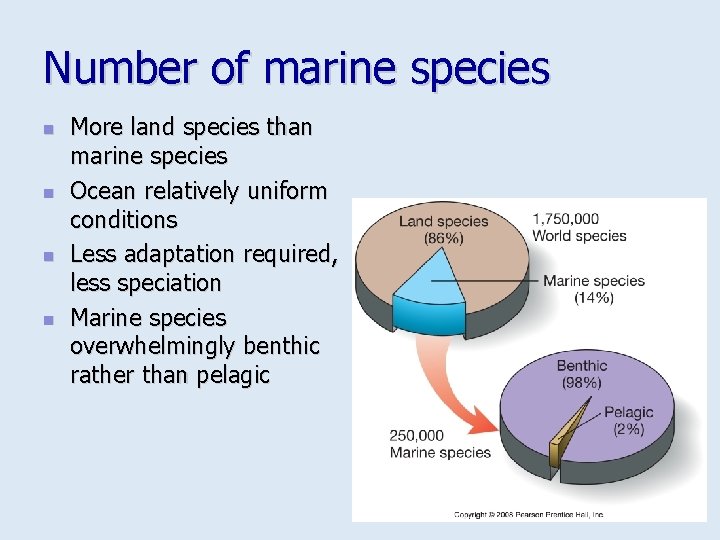
Number of marine species n n More land species than marine species Ocean relatively uniform conditions Less adaptation required, less speciation Marine species overwhelmingly benthic rather than pelagic
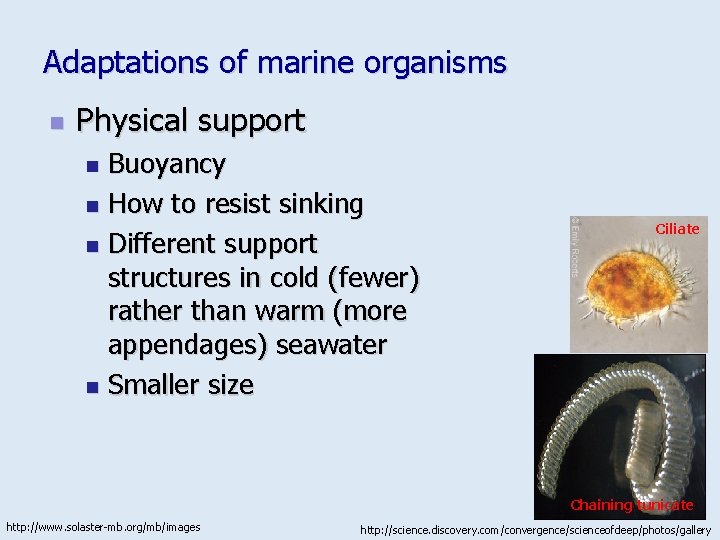
Adaptations of marine organisms n Physical support Buoyancy n How to resist sinking n Different support structures in cold (fewer) rather than warm (more appendages) seawater n Smaller size n Ciliate Chaining tunicate http: //www. solaster-mb. org/mb/images http: //science. discovery. com/convergence/scienceofdeep/photos/gallery
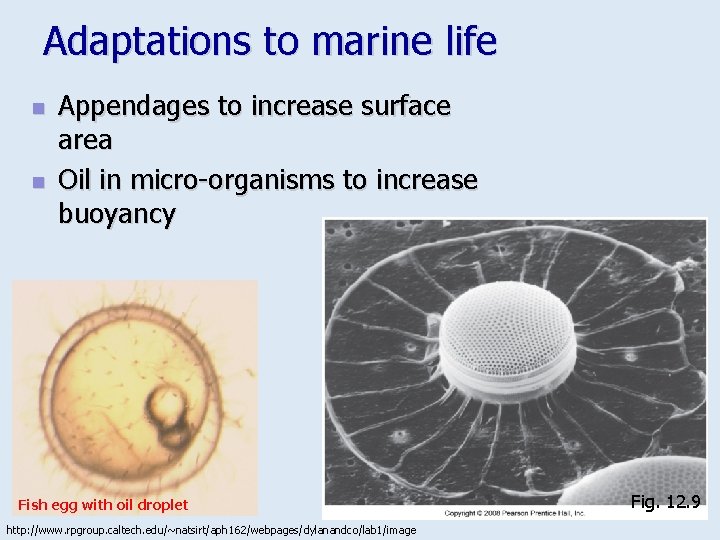
Adaptations to marine life n n Appendages to increase surface area Oil in micro-organisms to increase buoyancy Fish egg with oil droplet http: //www. rpgroup. caltech. edu/~natsirt/aph 162/webpages/dylanandco/lab 1/image Fig. 12. 9
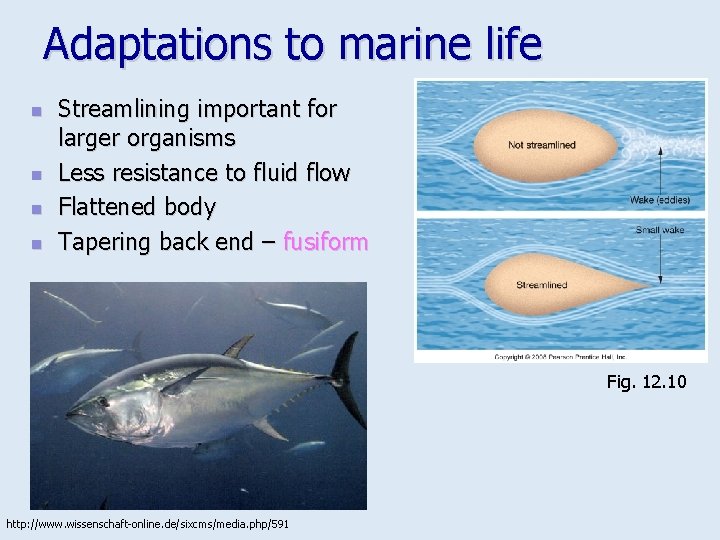
Adaptations to marine life n n Streamlining important for larger organisms Less resistance to fluid flow Flattened body Tapering back end – fusiform Fig. 12. 10 http: //www. wissenschaft-online. de/sixcms/media. php/591
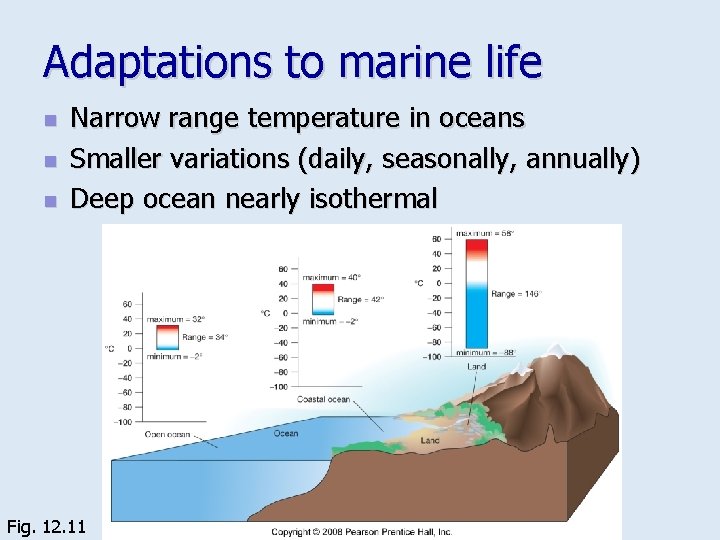
Adaptations to marine life n n n Narrow range temperature in oceans Smaller variations (daily, seasonally, annually) Deep ocean nearly isothermal Fig. 12. 11
Adaptations to marine life n Cold- versus warm-water species n Smaller in cooler seawater n More appendages in warmer seawater n Tropical organisms grow faster, live shorter, reproduce more often n More species in warmer seawater n More biomass in cooler seawater (upwelling)
Adaptations to marine life n Stenothermal Organisms withstand small variation in temperature n Typically live in open ocean n n Eurythermal Organisms withstand large variation in temperature n Typically live in coastal waters n
Adaptations to marine life n Stenohaline Organisms withstand only small variation in salinity n Typically live in open ocean n n Euryhaline Organisms withstand large variation in salinity n Typically live in coastal waters, e. g. , estuaries n
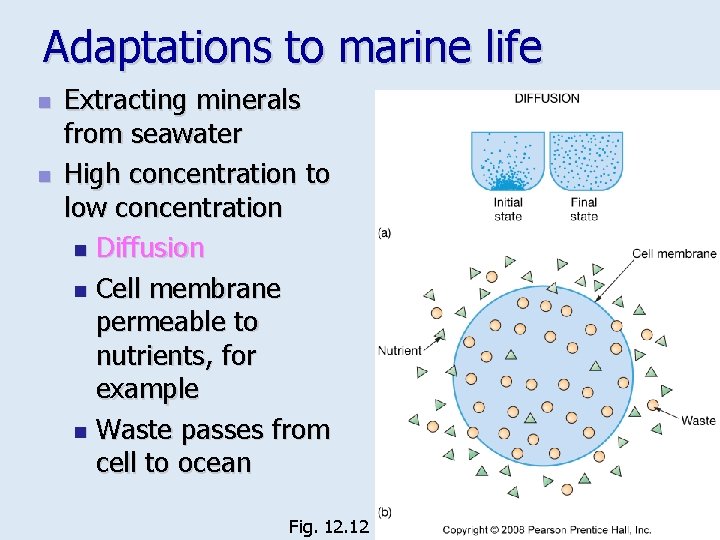
Adaptations to marine life n n Extracting minerals from seawater High concentration to low concentration n Diffusion n Cell membrane permeable to nutrients, for example n Waste passes from cell to ocean Fig. 12
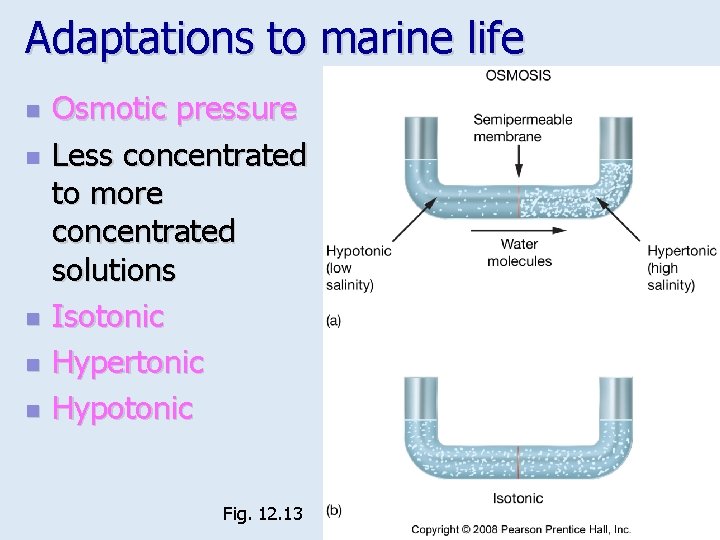
Adaptations to marine life n n n Osmotic pressure Less concentrated to more concentrated solutions Isotonic Hypertonic Hypotonic Fig. 12. 13
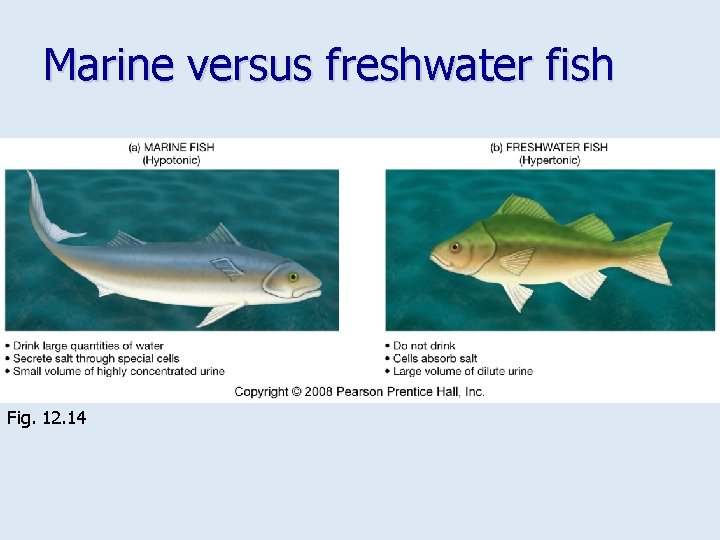
Marine versus freshwater fish Fig. 12. 14
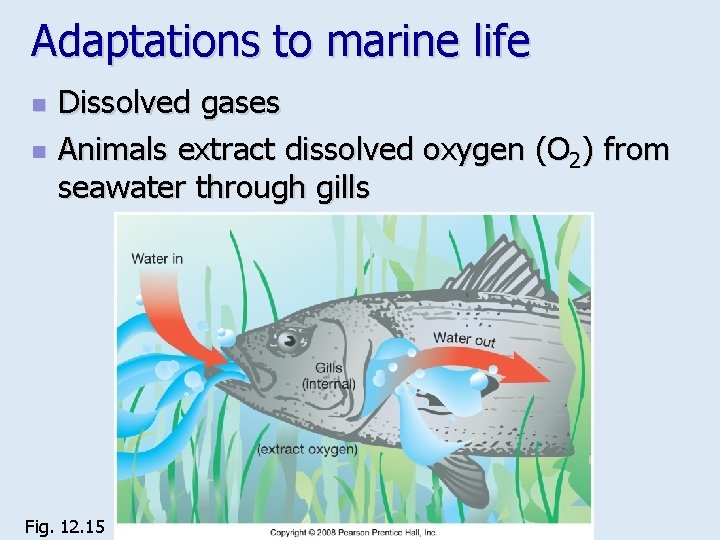
Adaptations to marine life n n Dissolved gases Animals extract dissolved oxygen (O 2) from seawater through gills Fig. 12. 15
Adaptations to marine life n n n Water’s transparency Many marine organisms see well Some marine organisms are nearly transparent to avoid predation
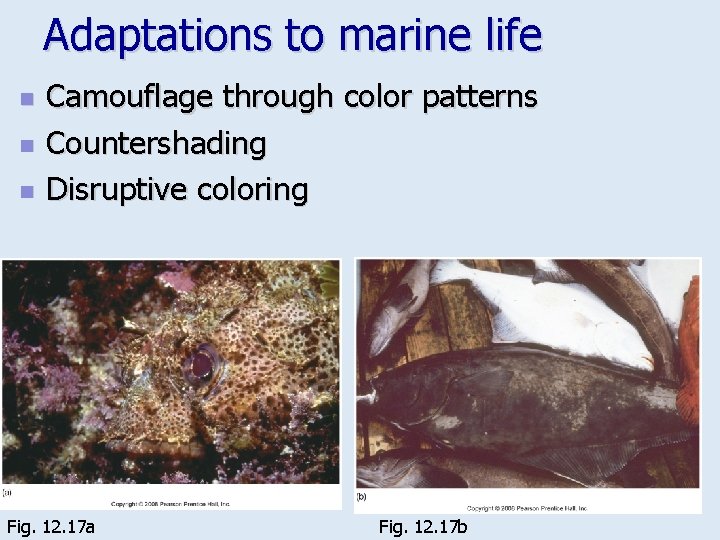
Adaptations to marine life n n n Camouflage through color patterns Countershading Disruptive coloring Fig. 12. 17 a Fig. 12. 17 b
Adaptations to marine life n Water pressure Increases about 1 atmosphere (1 kg/cm 2) with every 10 m (33 ft) deeper n Many marine organisms do not have inner air pockets n Collapsible rib cage (e. g. , sperm whale) n
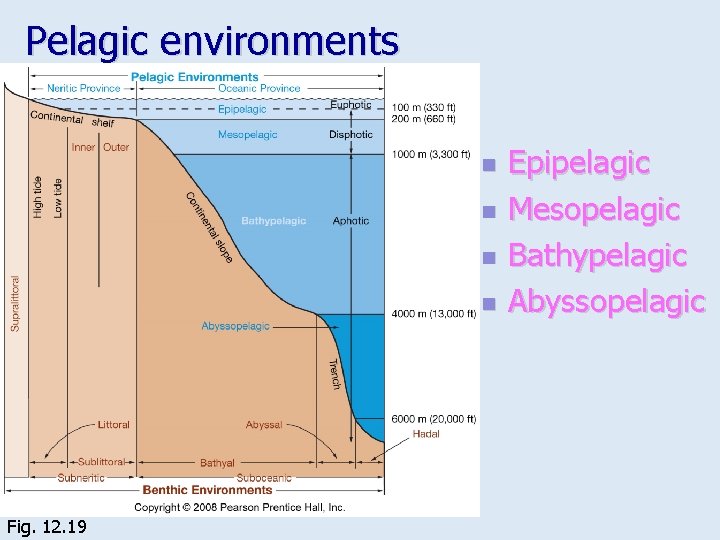
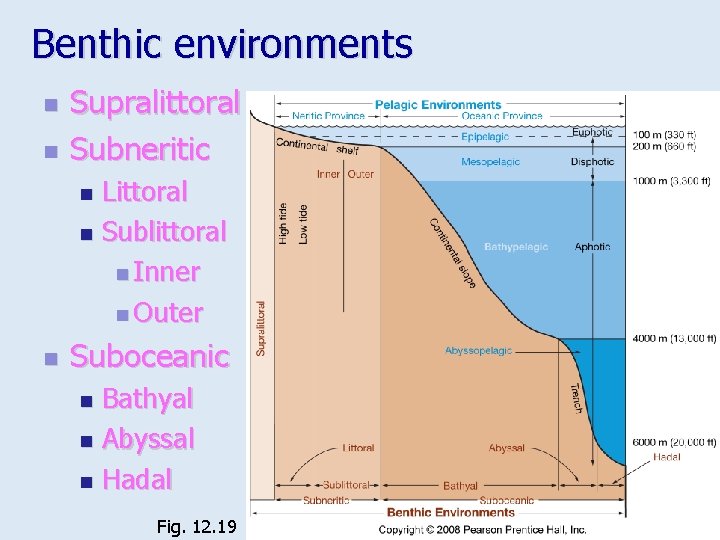
Main divisions of the marine environment n Pelagic (open sea) n n Benthic (sea floor) n n n Neritic (< 200 m) and oceanic Subneritic and suboceanic Another classification scheme: Euphotic Disphotic Aphotic
Pelagic environments n n Fig. 12. 19 Epipelagic Mesopelagic Bathypelagic Abyssopelagic
Daily Movement of the Deep Scattering Layer
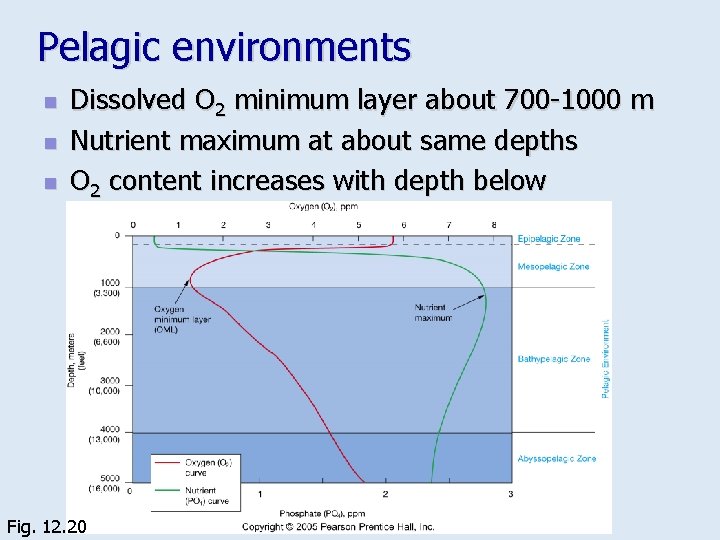
Pelagic environments n n n Dissolved O 2 minimum layer about 700 -1000 m Nutrient maximum at about same depths O 2 content increases with depth below Fig. 12. 20
Benthic environments n n Supralittoral Subneritic Littoral n Sublittoral n Inner n Outer n n Suboceanic Bathyal n Abyssal n Hadal n Fig. 12. 19
End of CHAPTER 12 Marine Life and the Marine Environment