
Chapter 12 Introduction to Motivation Motivation a need
- Slides: 5
Chapter 12 Introduction to Motivation
Motivation § a need or desire that energizes and directs behavior § Instinct § complex behavior that is rigidly patterned throughout a species and is unlearned
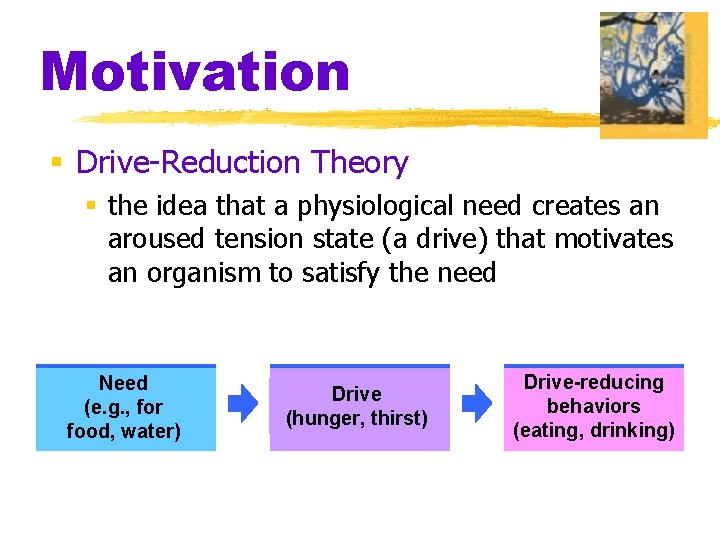
Motivation § Drive-Reduction Theory § the idea that a physiological need creates an aroused tension state (a drive) that motivates an organism to satisfy the need Need (e. g. , for food, water) Drive (hunger, thirst) Drive-reducing behaviors (eating, drinking)
Motivation § Homeostasis § tendency to maintain a balanced or constant internal state § regulation of any aspect of body chemistry around a particular level § Incentive § a positive or negative environmental stimulus that motivates behavior
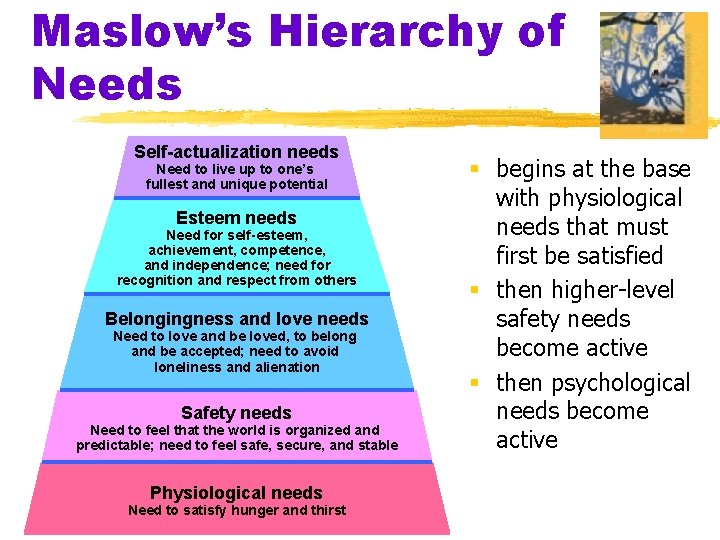
Maslow’s Hierarchy of Needs Self-actualization needs Need to live up to one’s fullest and unique potential Esteem needs Need for self-esteem, achievement, competence, and independence; need for recognition and respect from others Belongingness and love needs Need to love and be loved, to belong and be accepted; need to avoid loneliness and alienation Safety needs Need to feel that the world is organized and predictable; need to feel safe, secure, and stable Physiological needs Need to satisfy hunger and thirst § begins at the base with physiological needs that must first be satisfied § then higher-level safety needs become active § then psychological needs become active