
Chapter 12 Introduction to Analysis of Variance 1
- Slides: 37
Chapter 12: Introduction to Analysis of Variance 1
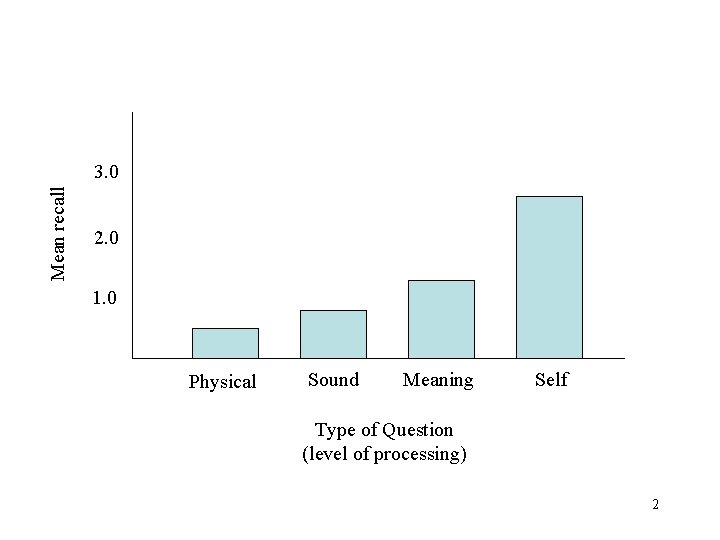
Mean recall 3. 0 2. 0 1. 0 Physical Sound Meaning Self Type of Question (level of processing) 2
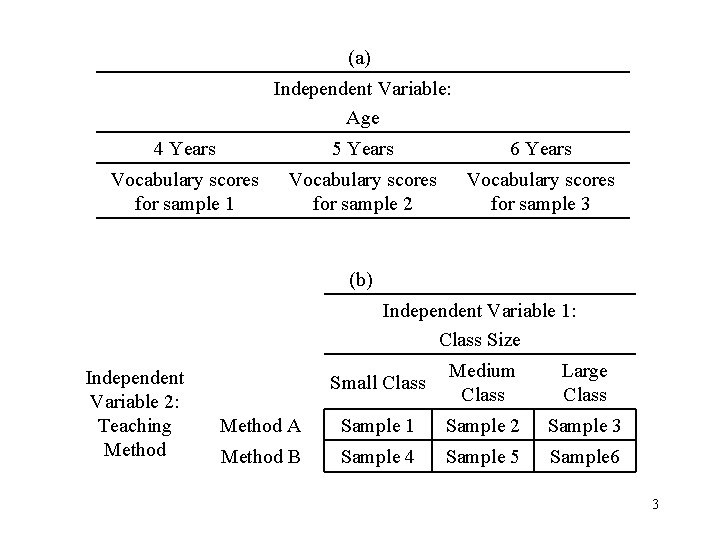
(a) Independent Variable: Age 4 Years 5 Years 6 Years Vocabulary scores for sample 1 Vocabulary scores for sample 2 Vocabulary scores for sample 3 (b) Independent Variable 1: Class Size Independent Variable 2: Teaching Method Small Class Medium Class Large Class Method A Sample 1 Sample 2 Sample 3 Method B Sample 4 Sample 5 Sample 6 3
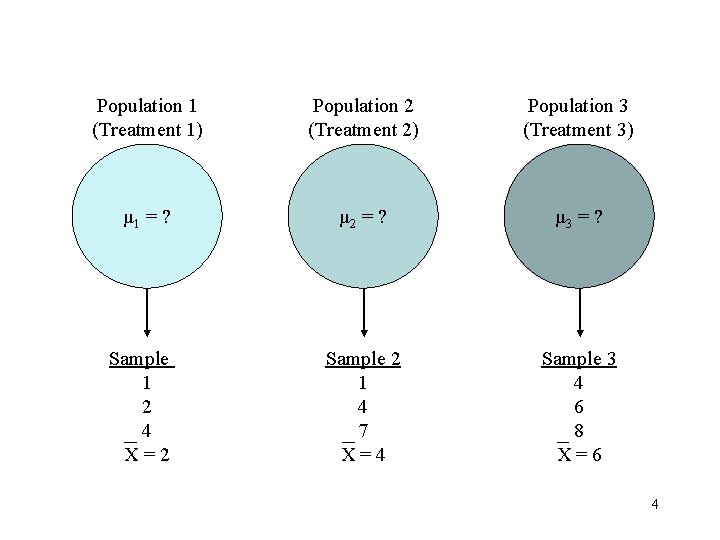
Population 1 (Treatment 1) Population 2 (Treatment 2) Population 3 (Treatment 3) µ 1 = ? µ 2 = ? µ 3 = ? Sample 2 1 4 7 X=4 Sample 3 4 6 8 X=6 Sample 1 2 4 X=2 4
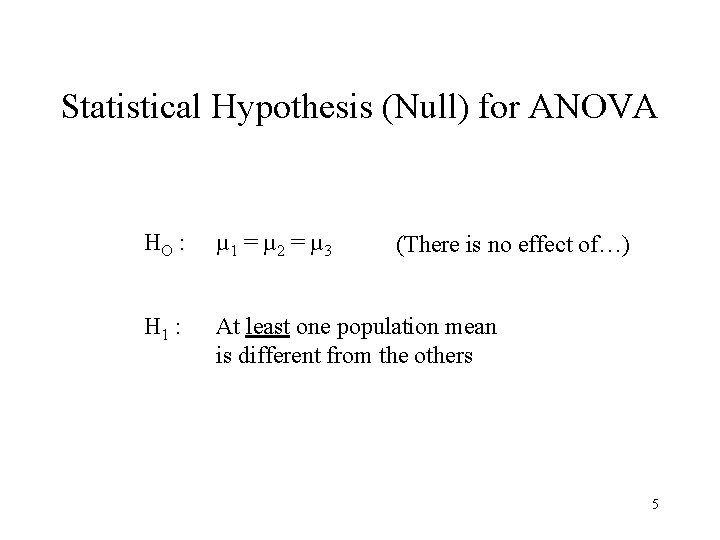
Statistical Hypothesis (Null) for ANOVA HO : µ 1 = µ 2 = µ 3 H 1 : At least one population mean is different from the others (There is no effect of…) 5
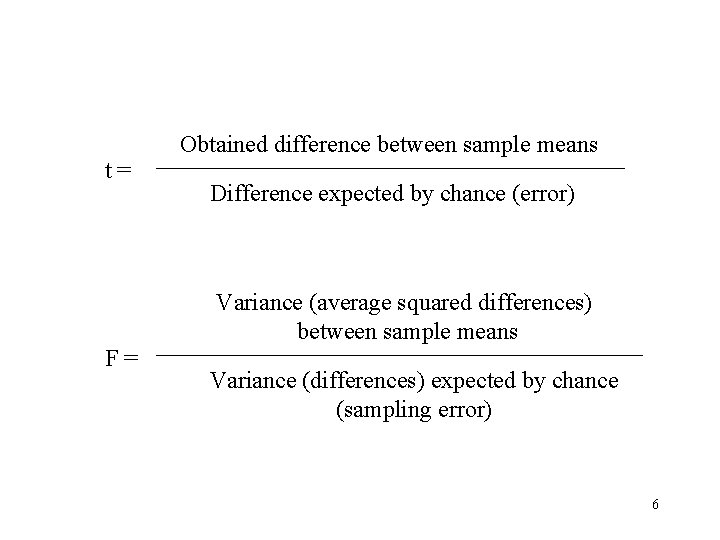
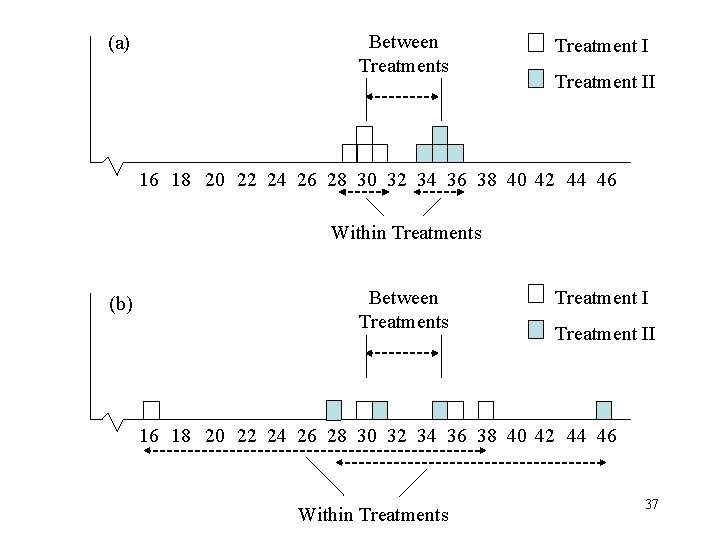
Obtained difference between sample means t= Difference expected by chance (error) Variance (average squared differences) between sample means F= Variance (differences) expected by chance (sampling error) 6
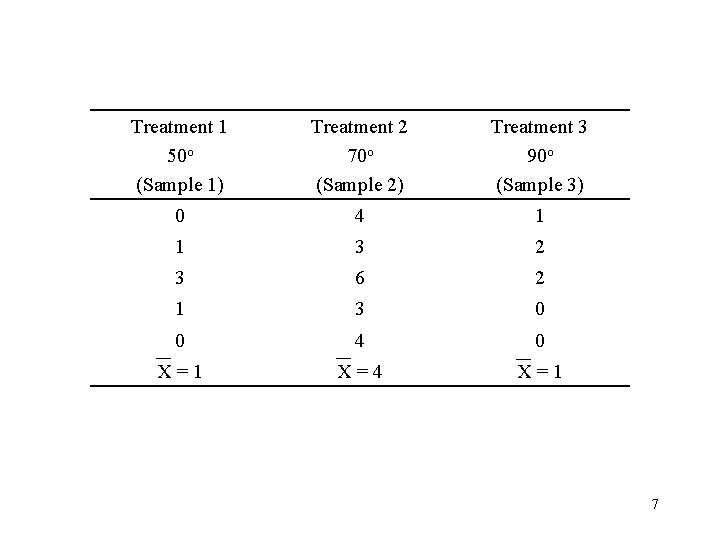
Treatment 1 50 o (Sample 1) Treatment 2 70 o (Sample 2) Treatment 3 90 o (Sample 3) 0 4 1 1 3 2 3 6 2 1 3 0 0 4 0 X=1 X=4 X=1 7
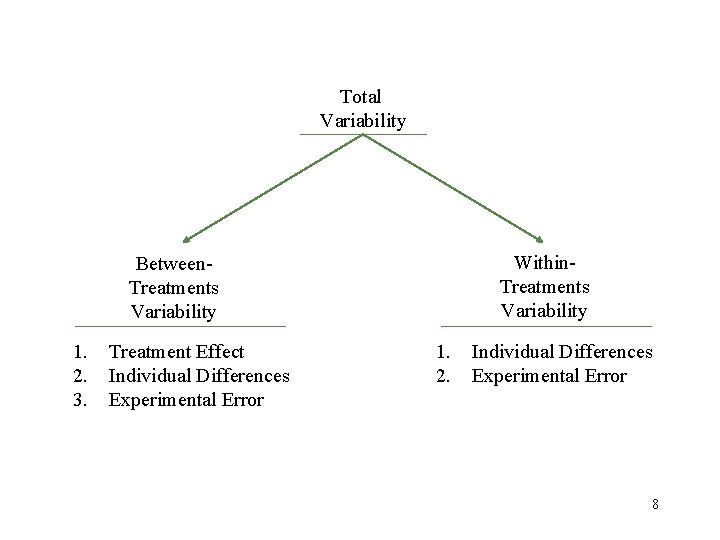
Total Variability Within. Treatments Variability Between. Treatments Variability 1. 2. 3. Treatment Effect Individual Differences Experimental Error 1. 2. Individual Differences Experimental Error 8
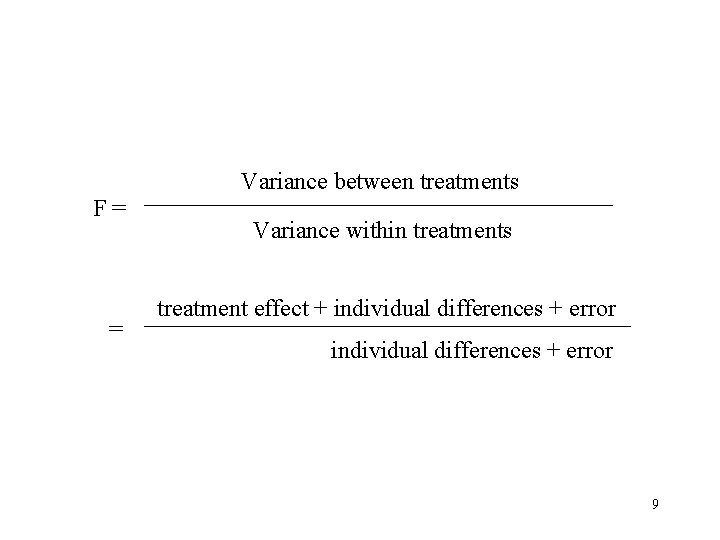
Variance between treatments F= = Variance within treatments treatment effect + individual differences + error 9
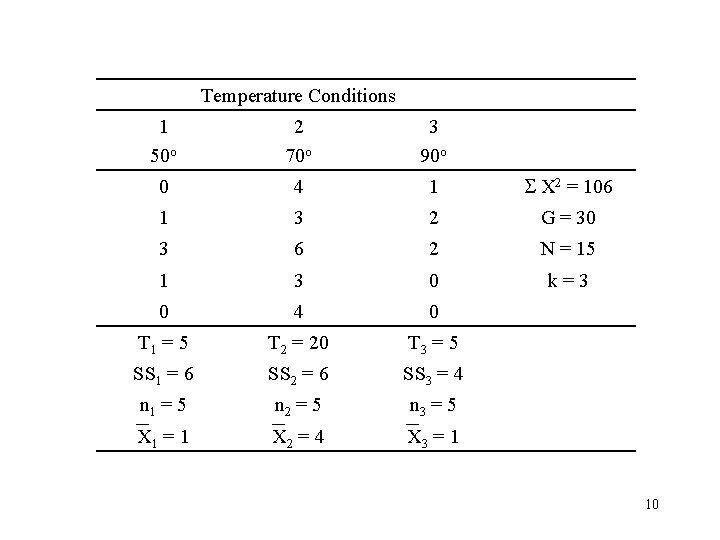
Temperature Conditions 1 50 o 2 70 o 3 90 o 0 4 1 X 2 = 106 1 3 2 G = 30 3 6 2 N = 15 1 3 0 k=3 0 4 0 T 1 = 5 T 2 = 20 T 3 = 5 SS 1 = 6 SS 2 = 6 SS 3 = 4 n 1 = 5 n 2 = 5 n 3 = 5 X 1 = 1 X 2 = 4 X 3 = 1 10
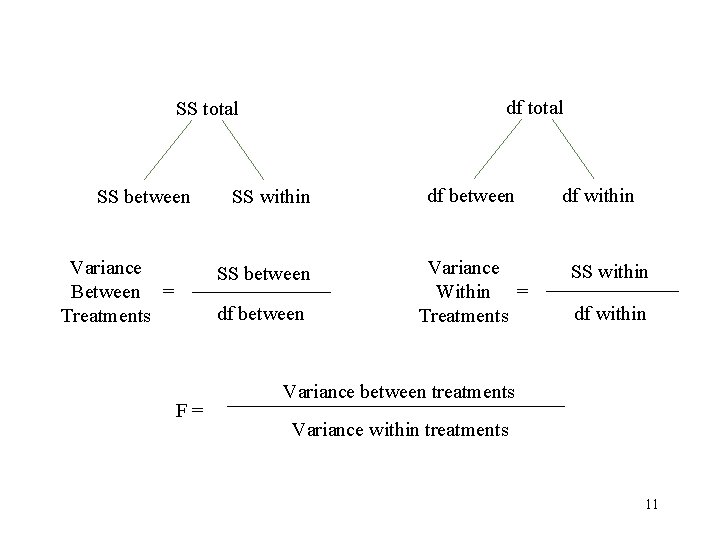
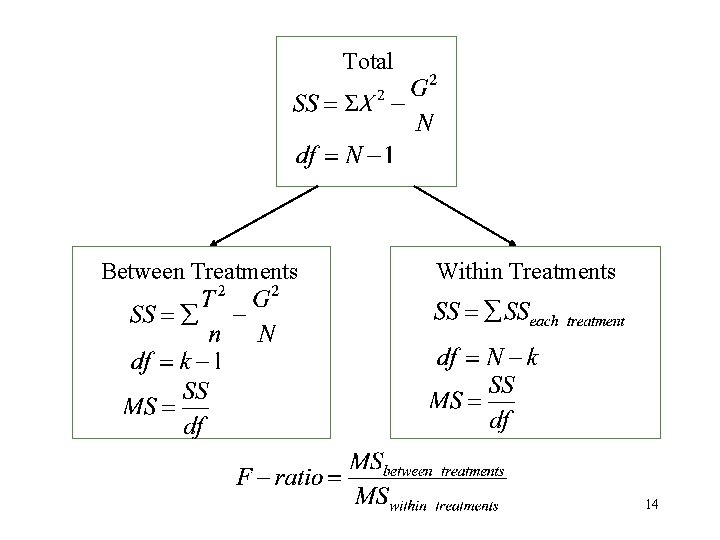
df total SS between Variance Between = Treatments SS within SS between df between F= df between Variance Within = Treatments df within SS within df within Variance between treatments Variance within treatments 11
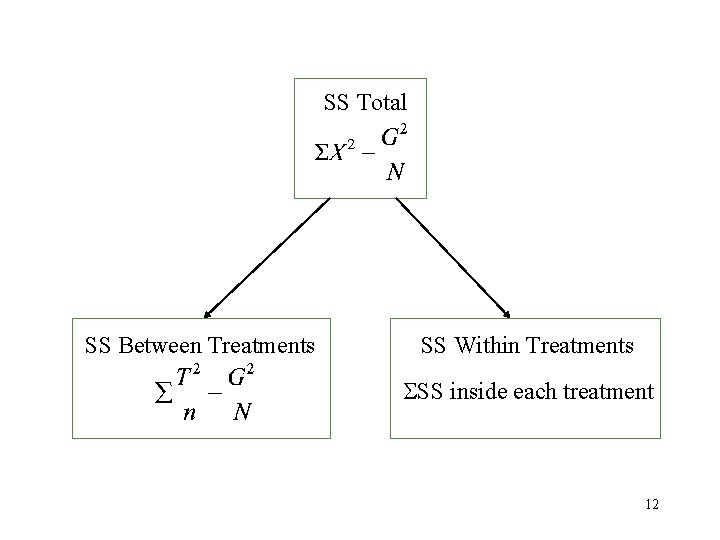
SS Total SS Between Treatments SS Within Treatments SS inside each treatment 12
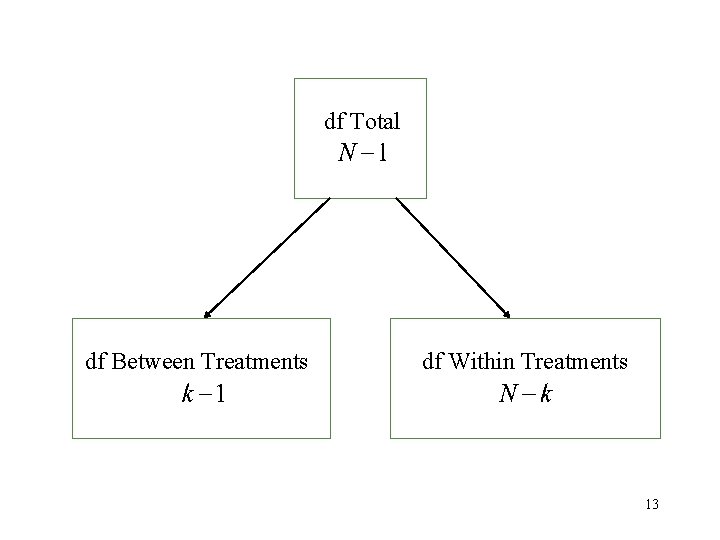
df Total df Between Treatments df Within Treatments 13
Total Between Treatments Within Treatments 14
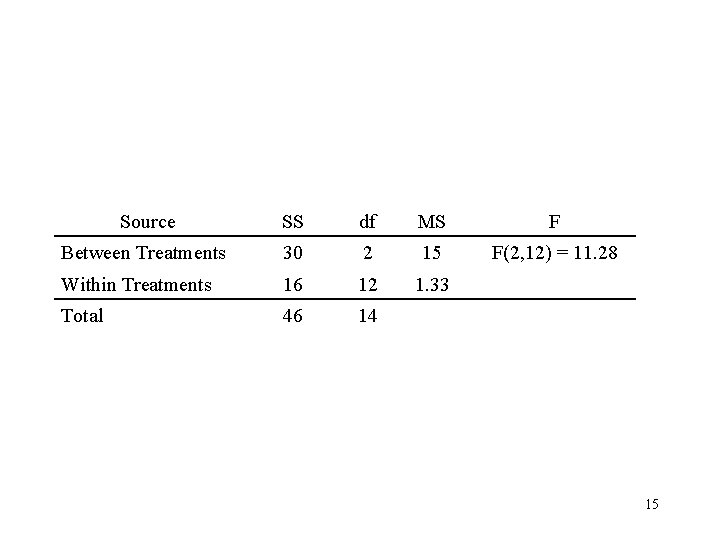
Source SS df MS F Between Treatments 30 2 15 F(2, 12) = 11. 28 Within Treatments 16 12 1. 33 Total 46 14 15
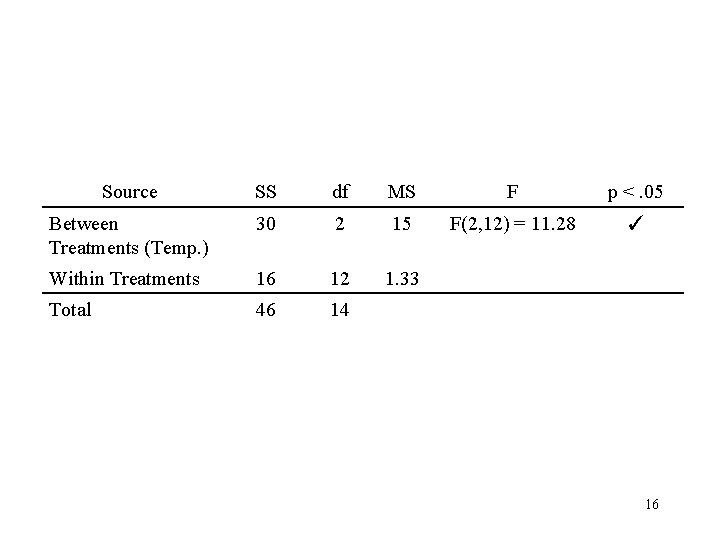
Source SS df MS F p <. 05 Between Treatments (Temp. ) 30 2 15 F(2, 12) = 11. 28 ✓ Within Treatments 16 12 1. 33 Total 46 14 16
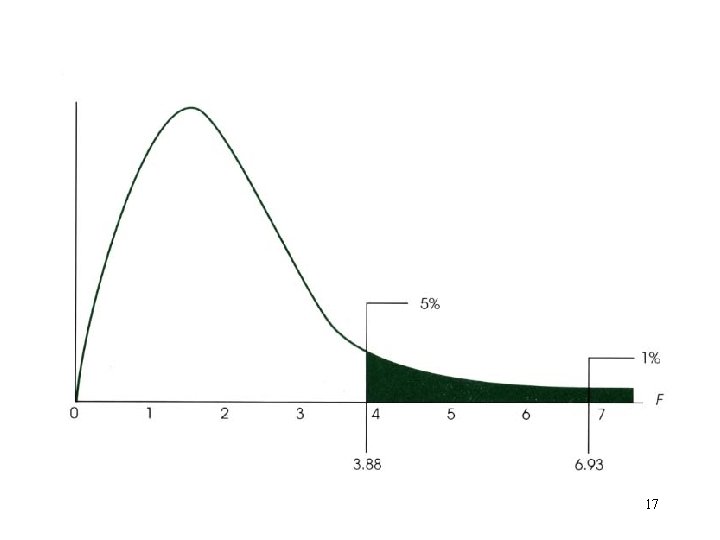
17
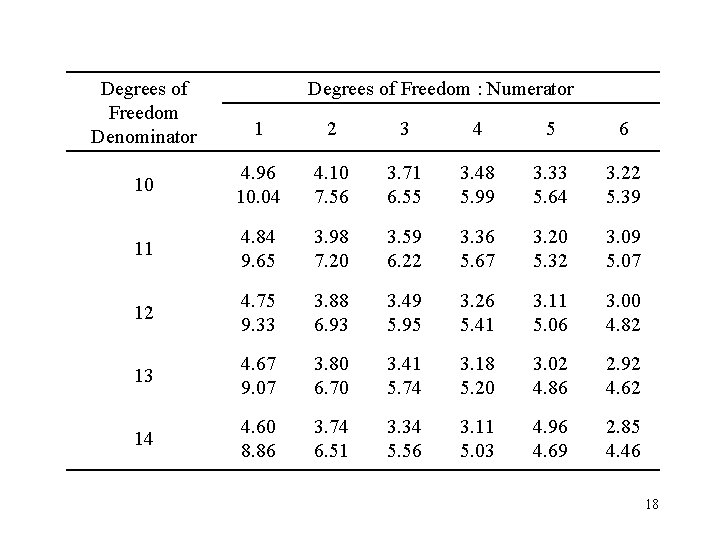
Degrees of Freedom Denominator Degrees of Freedom : Numerator 1 2 3 4 5 6 10 4. 96 10. 04 4. 10 7. 56 3. 71 6. 55 3. 48 5. 99 3. 33 5. 64 3. 22 5. 39 11 4. 84 9. 65 3. 98 7. 20 3. 59 6. 22 3. 36 5. 67 3. 20 5. 32 3. 09 5. 07 12 4. 75 9. 33 3. 88 6. 93 3. 49 5. 95 3. 26 5. 41 3. 11 5. 06 3. 00 4. 82 13 4. 67 9. 07 3. 80 6. 70 3. 41 5. 74 3. 18 5. 20 3. 02 4. 86 2. 92 4. 62 14 4. 60 8. 86 3. 74 6. 51 3. 34 5. 56 3. 11 5. 03 4. 96 4. 69 2. 85 4. 46 18
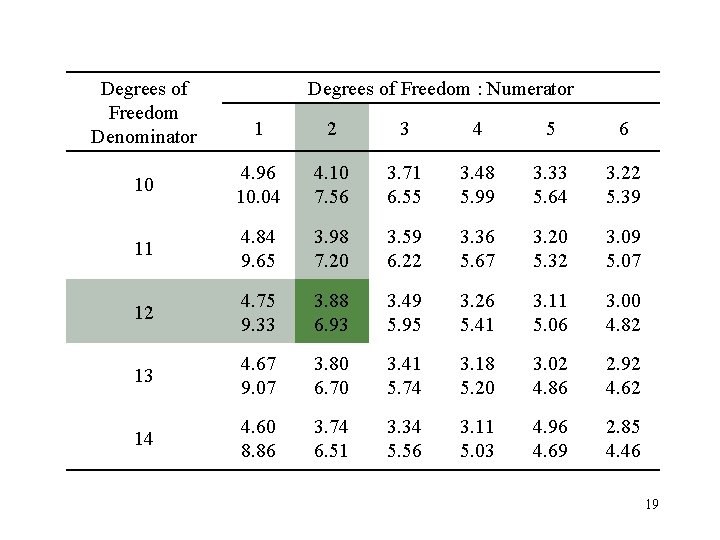
Degrees of Freedom Denominator Degrees of Freedom : Numerator 1 2 3 4 5 6 10 4. 96 10. 04 4. 10 7. 56 3. 71 6. 55 3. 48 5. 99 3. 33 5. 64 3. 22 5. 39 11 4. 84 9. 65 3. 98 7. 20 3. 59 6. 22 3. 36 5. 67 3. 20 5. 32 3. 09 5. 07 12 4. 75 9. 33 3. 88 6. 93 3. 49 5. 95 3. 26 5. 41 3. 11 5. 06 3. 00 4. 82 13 4. 67 9. 07 3. 80 6. 70 3. 41 5. 74 3. 18 5. 20 3. 02 4. 86 2. 92 4. 62 14 4. 60 8. 86 3. 74 6. 51 3. 34 5. 56 3. 11 5. 03 4. 96 4. 69 2. 85 4. 46 19
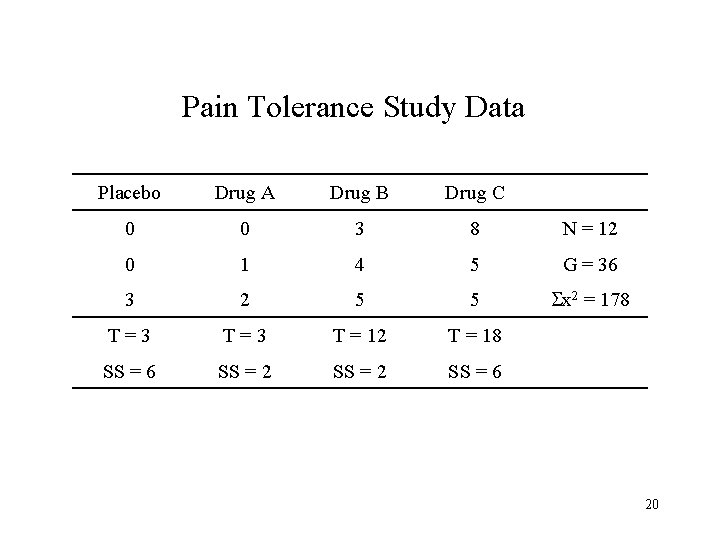
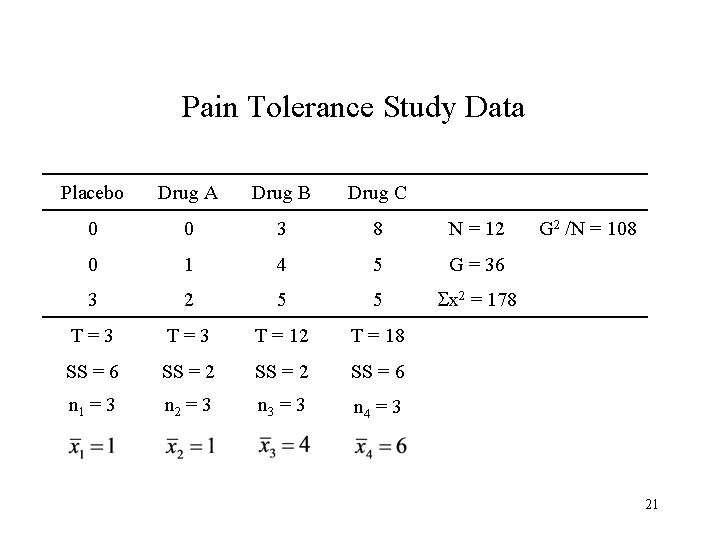
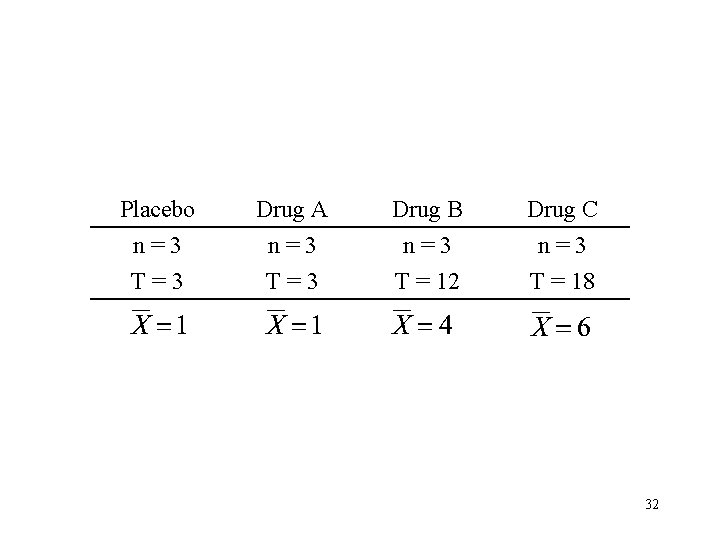
Pain Tolerance Study Data Placebo Drug A Drug B Drug C 0 0 3 8 N = 12 0 1 4 5 G = 36 3 2 5 5 x 2 = 178 T=3 T = 12 T = 18 SS = 6 SS = 2 SS = 6 20
Pain Tolerance Study Data Placebo Drug A Drug B Drug C 0 0 3 8 N = 12 0 1 4 5 G = 36 3 2 5 5 x 2 = 178 T=3 T = 12 T = 18 SS = 6 SS = 2 SS = 6 n 1 = 3 n 2 = 3 n 3 = 3 n 4 = 3 G 2 /N = 108 21
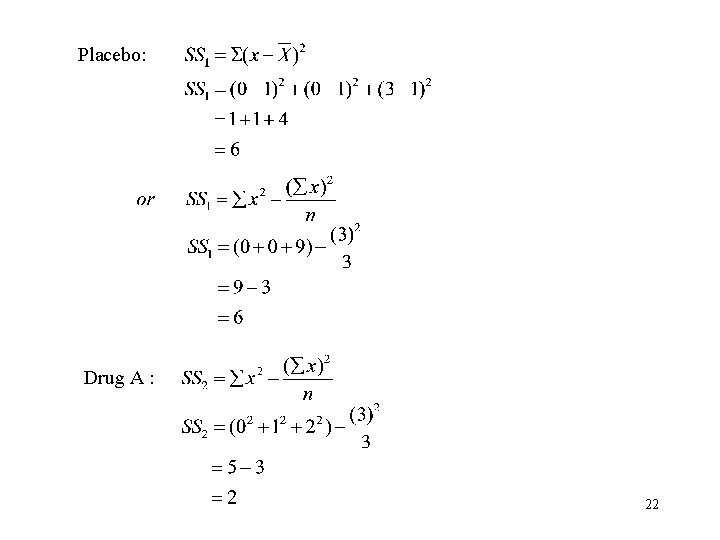
Placebo: Drug A : 22
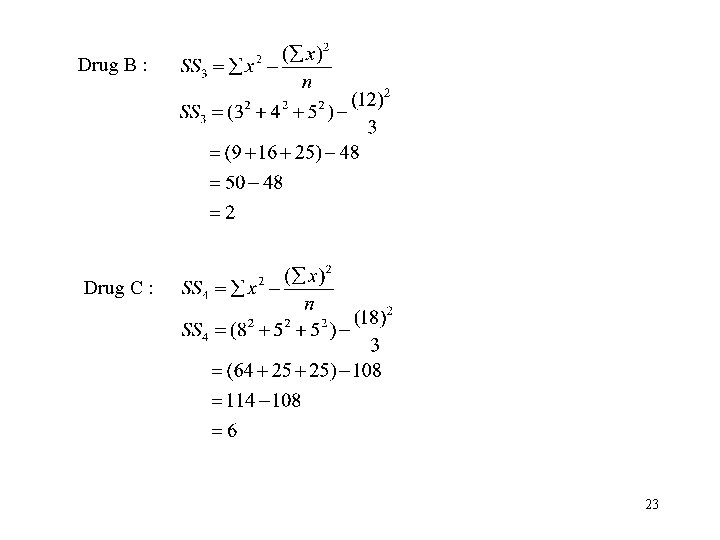
Drug B : Drug C : 23
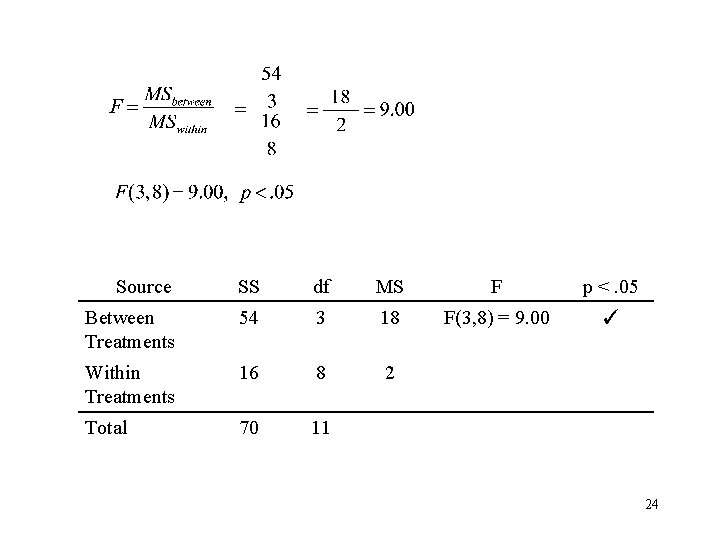
Source SS df MS F p <. 05 Between Treatments 54 3 18 F(3, 8) = 9. 00 ✓ Within Treatments 16 8 2 Total 70 11 24
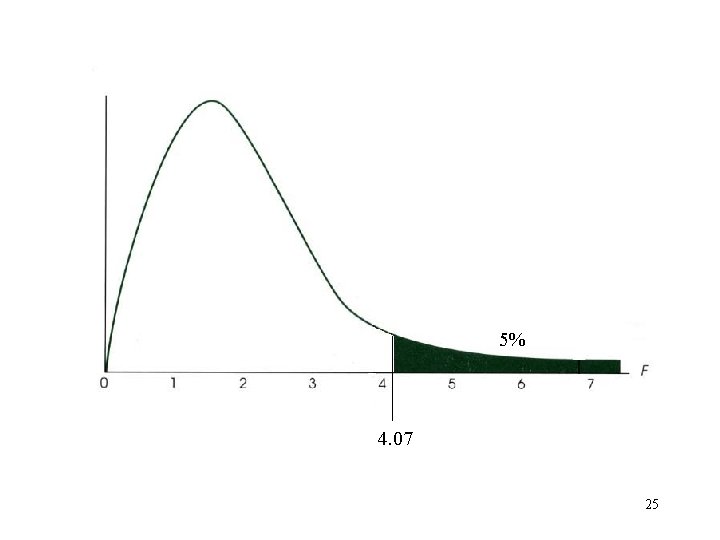
5% 4. 07 25
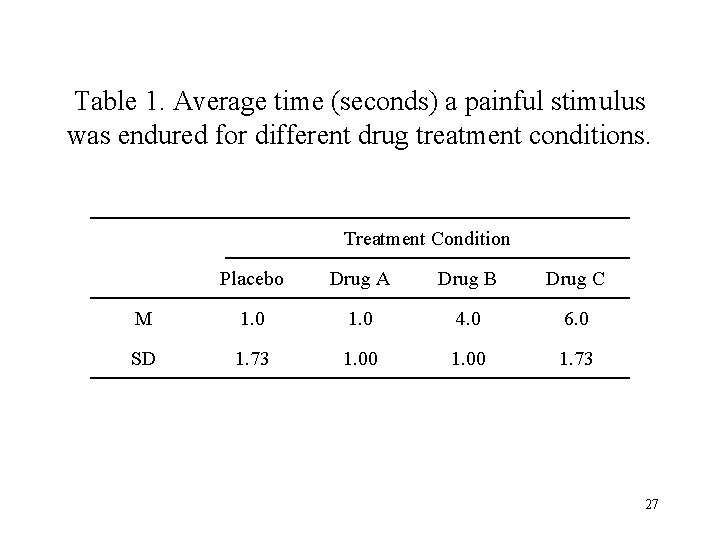
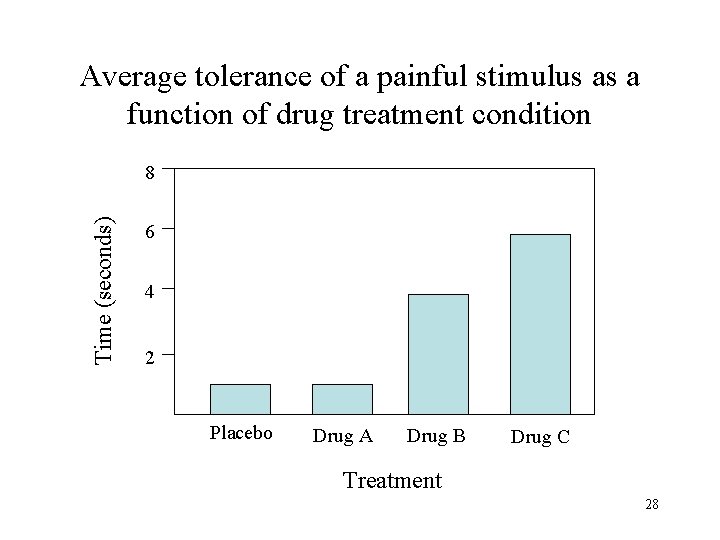
Reporting the results for the Pain Tolerance Study The average length of time participants were able to tolerate a painful stimulus for each of the different drug conditions are presented in Table 1. A single-factor analysis of variance confirmed an overall effect of drug type on pain tolerance, F(3, 8) = 9. 00, MSE = 2. 00, p <. 05. 26
Table 1. Average time (seconds) a painful stimulus was endured for different drug treatment conditions. Treatment Condition Placebo Drug A Drug B Drug C M 1. 0 4. 0 6. 0 SD 1. 73 1. 00 1. 73 27
Average tolerance of a painful stimulus as a function of drug treatment condition Time (seconds) 8 6 4 2 Placebo Drug A Drug B Drug C Treatment 28
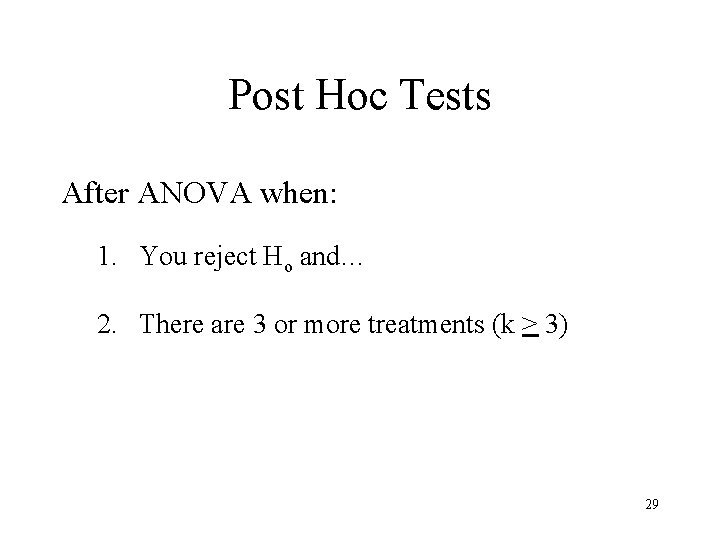
Post Hoc Tests After ANOVA when: 1. You reject Ho and… 2. There are 3 or more treatments (k > 3) 29
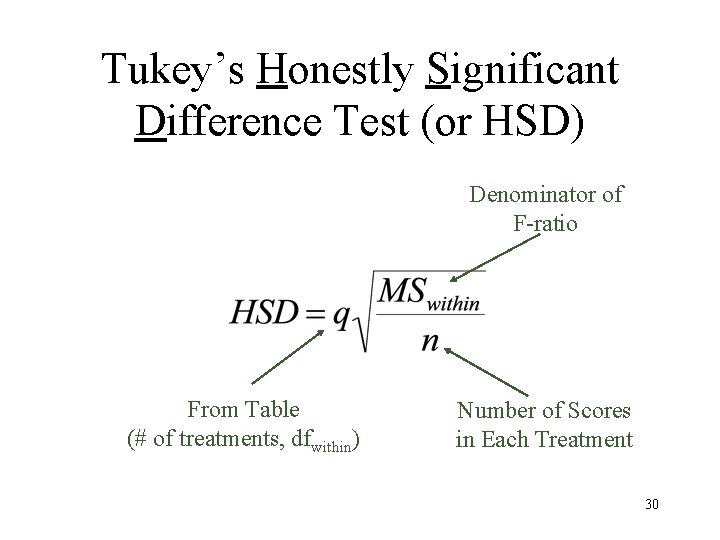
Tukey’s Honestly Significant Difference Test (or HSD) Denominator of F-ratio From Table (# of treatments, dfwithin) Number of Scores in Each Treatment 30
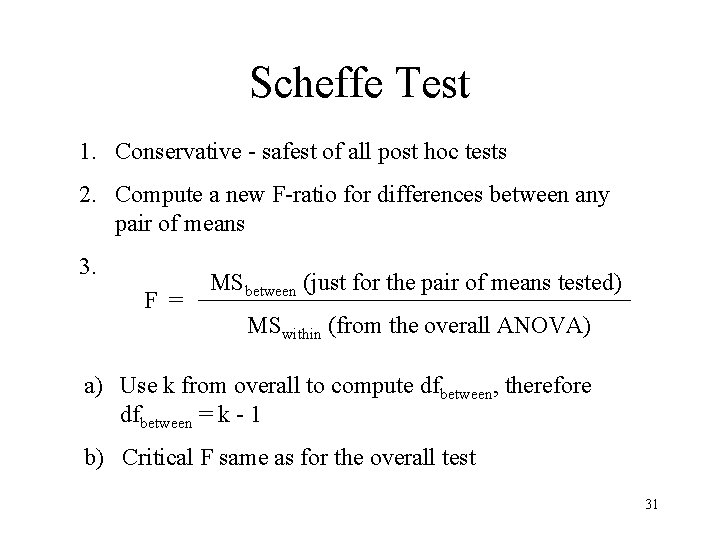
Scheffe Test 1. Conservative - safest of all post hoc tests 2. Compute a new F-ratio for differences between any pair of means 3. F = MSbetween (just for the pair of means tested) MSwithin (from the overall ANOVA) a) Use k from overall to compute dfbetween, therefore dfbetween = k - 1 b) Critical F same as for the overall test 31
Placebo n=3 T=3 Drug A n=3 T=3 Drug B n=3 T = 12 Drug C n=3 T = 18 32
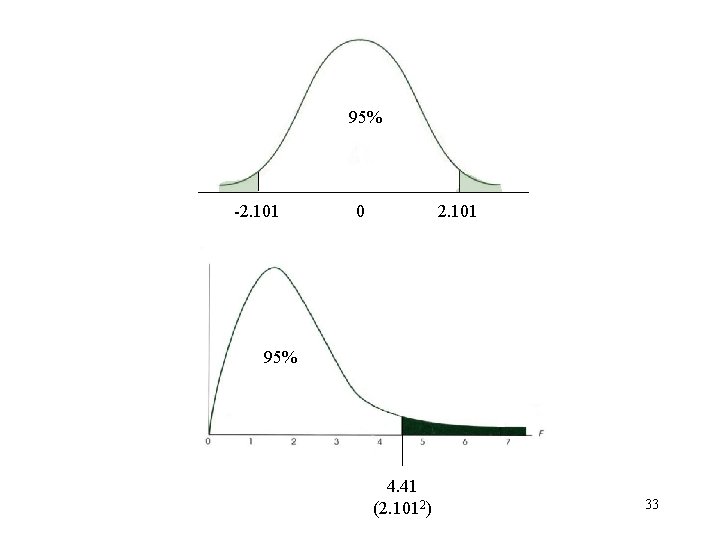
95% -2. 101 0 2. 101 95% 4. 41 (2. 1012) 33
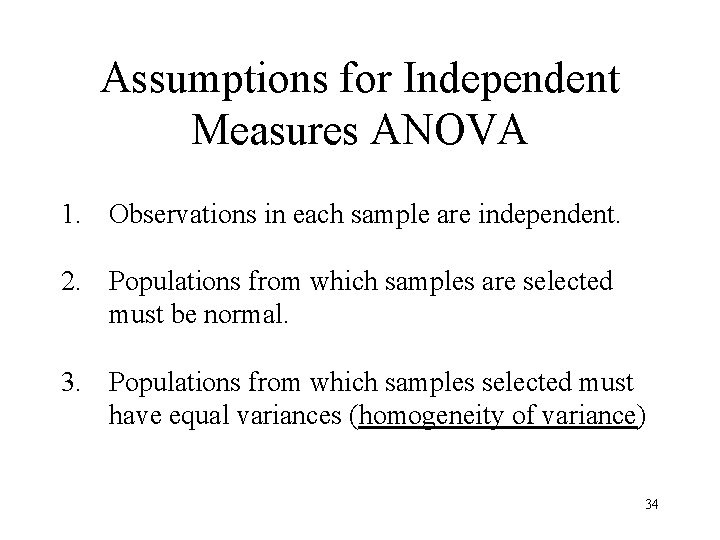
Assumptions for Independent Measures ANOVA 1. Observations in each sample are independent. 2. Populations from which samples are selected must be normal. 3. Populations from which samples selected must have equal variances (homogeneity of variance) 34
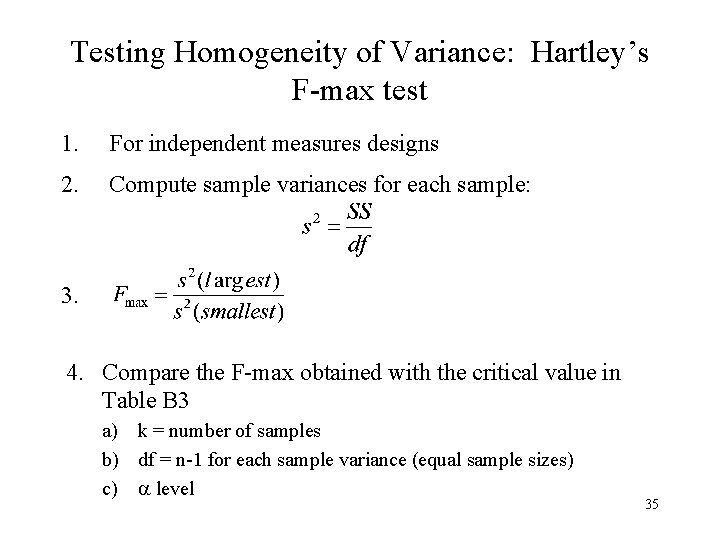
Testing Homogeneity of Variance: Hartley’s F-max test 1. For independent measures designs 2. Compute sample variances for each sample: 3. 4. Compare the F-max obtained with the critical value in Table B 3 a) k = number of samples b) df = n-1 for each sample variance (equal sample sizes) c) level 35
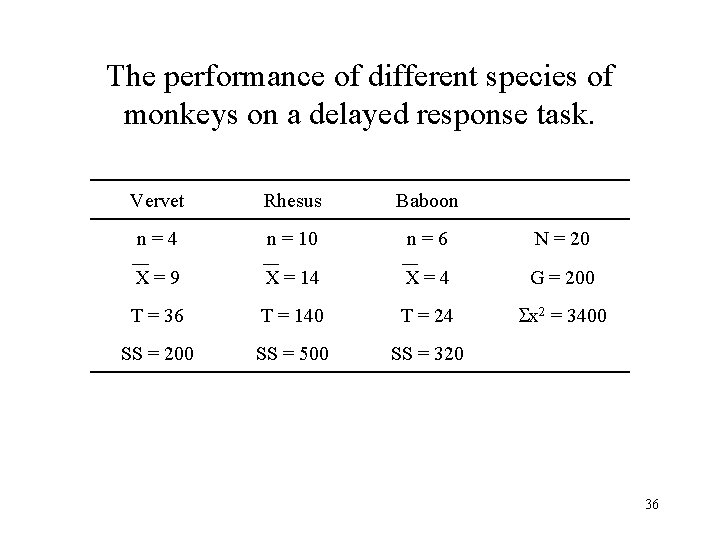
The performance of different species of monkeys on a delayed response task. Vervet Rhesus Baboon n=4 n = 10 n=6 N = 20 X=9 X = 14 X=4 G = 200 T = 36 T = 140 T = 24 x 2 = 3400 SS = 200 SS = 500 SS = 320 36
(a) Between Treatments Treatment II 16 18 20 22 24 26 28 30 32 34 36 38 40 42 44 46 Within Treatments (b) Between Treatments Treatment II 16 18 20 22 24 26 28 30 32 34 36 38 40 42 44 46 Within Treatments 37