
Chapter 12 Information Processing Theory Developed by multiple
Chapter 12: Information Processing Theory Developed by multiple researchers in the 1950 s
Information Processing Theory Consists of three components: • Sensory memory • Working memory • Long-term memory

Information Processing Model
Sensory Memory q The main purpose of sensory memory is to screen incoming stimuli and process only those stimuli that are most relevant at the present time. q Sensory memory processes incoming sensory information for very only a few seconds q The amount of information held at any given moment in sensory memory is limited to only a few elements
Sensory Memory Continued q Information processing in sensory memory usually occurs too quickly for people to consciously control what they attend to. q Information that is relevant to the task at hand, and familiar are the most likely types of information to be processed and forwarded to the working memory buffer. q Information that is highly relevant receives conscious processing only if it is crucial to a task
Working Memory q Working memory is a multi-component temporary memory system in which information is assigned meaning, and linked to other information q After stimuli enter sensory memory, they are either forwarded to working memory or deleted from the system.
Three Components of Working Memory Executive control system-Where humans make conscious meaning of the information they process Articulatory loop- Maintains and further processes verbal information. Visual-spatial sketch pad-Barring rehearsal (e. g. , repeating a telephone number), information is either forwarded to long-term memory or is deleted from the system.
Long-Term Memory q Role is to provide an unlimited repository for all the facts and knowledge in memory. q Unlike sensory and working memory, long-term memory is not constrained by capacity or duration of attention limitations. q Long-term memory is capable of holding millions of pieces of information for very long periods of time. q Information in long-term memory must be organized, and therefore quickly accessible, to be of practical use to learners.
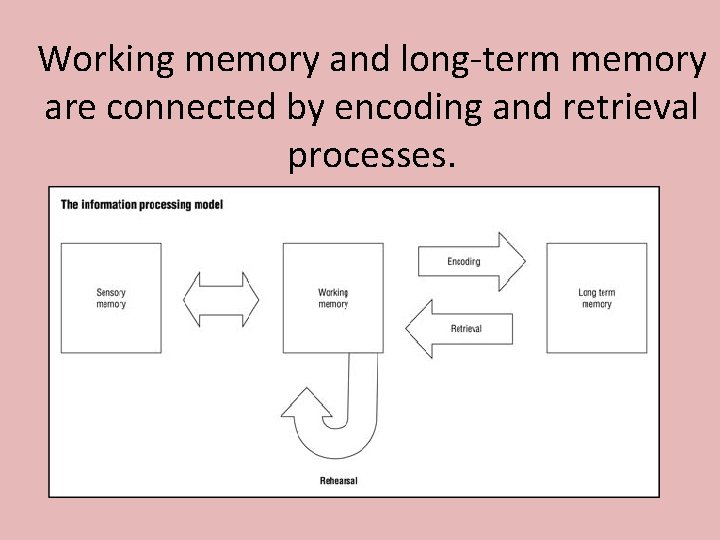
Working memory and long-term memory are connected by encoding and retrieval processes.
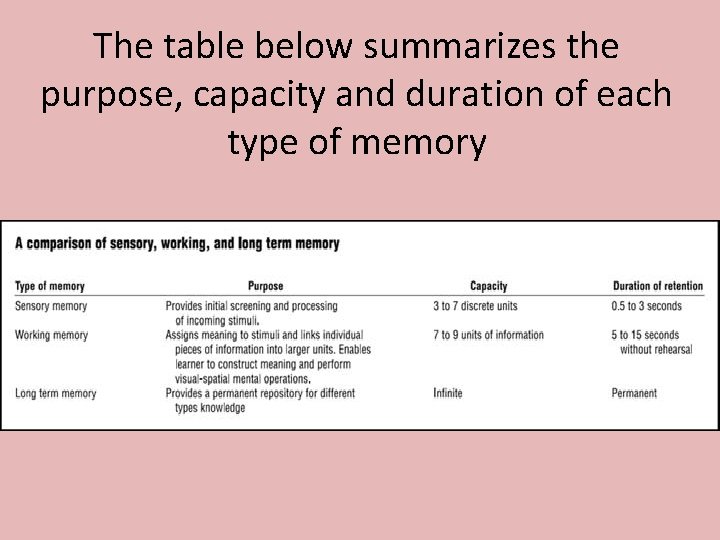
The table below summarizes the purpose, capacity and duration of each type of memory

Implications of Information Processing Theory for Teaching • Memory stores are extremely limited in both sensory and working memory • Teachers should make sure students selectively focus their attention on important information and engage in as much automated processing as possible • Relevant prior knowledge facilitates encoding and retrieval processes. • Helping students use their prior knowledge when learning new information promotes learning.
Importance of organization, inferences, and elaboration Organization-Activating existing knowledge prior to instruction, or providing a visual diagram of how information is organized, is one of the best ways to facilitate learning new information. Inferences-Constructing inferences involves making connections between separate concepts. Elaboration-Refers to increasing the meaningfulness of information by connecting new information to ideas already known.
Reference Schraw, G. , & Mc. Crudden, M. (n. d. ) Information processing theory. Education. com. Retrieved from http: //www. education. com/reference/article/informationprocessing-theory/
- Slides: 13