
Chapter 12 Human Resource Management Learning Objectives 1

Chapter 12 – Human Resource Management – Learning Objectives 1 l Importance of strategic HRM l Environmental considerations l HRM process - 8 steps l Current HRM Issues
HRM: Traditional vs. Strategic 2 l HRM Process: Activities necessary for staffing the organization with competent people and sustaining high employee performance l Strategic HRM: Using HRM as a tool to achieve the organization’s strategic initiatives
Importance of People 3 l In the century ahead, “skilled people become the only sustainable competitive advantage” (Lester Thurow – MIT Economist) l The traditional factors of production (land, labor, capital), have become secondary. Knowledge is the only meaningful resource today. (Peter Drucker – Management guru, Claremont) l “The organizations that will truly excel in the future will be the organizations that discover how to tap people’s commitment and capacity to learn at all levels of the organization” (Peter Senge MIT) l “Empowerment is no longer a nice thing to do, some new-fangled notion. It is a business imperative. ” (Murli Thirumale - HP)
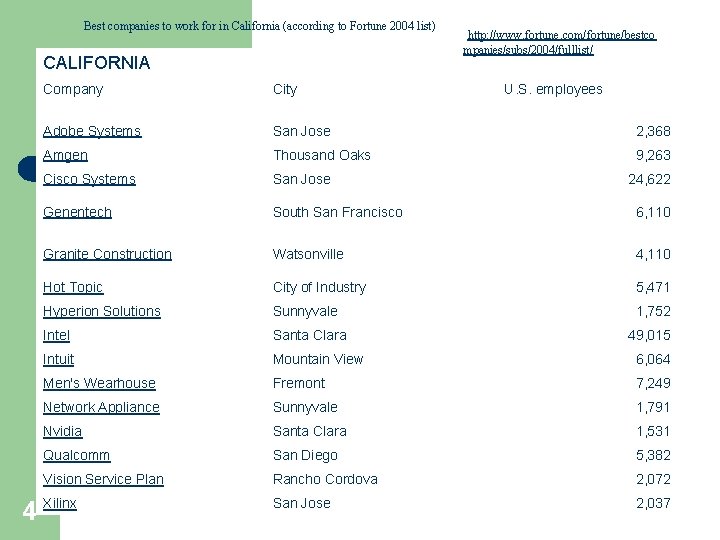
Best companies to work for in California (according to Fortune 2004 list) CALIFORNIA • http: //www. fortune. com/fortune/bestco mpanies/subs/2004/fulllist/ Company City Adobe Systems San Jose 2, 368 Amgen Thousand Oaks 9, 263 Cisco Systems San Jose Genentech South San Francisco 6, 110 Granite Construction Watsonville 4, 110 Hot Topic City of Industry 5, 471 Hyperion Solutions Sunnyvale 1, 752 Intel Santa Clara Intuit Mountain View 6, 064 Men's Wearhouse Fremont 7, 249 Network Appliance Sunnyvale 1, 791 Nvidia Santa Clara 1, 531 Qualcomm San Diego 5, 382 Vision Service Plan Rancho Cordova 2, 072 San Jose 2, 037 4 Xilinx U. S. employees 24, 622 49, 015
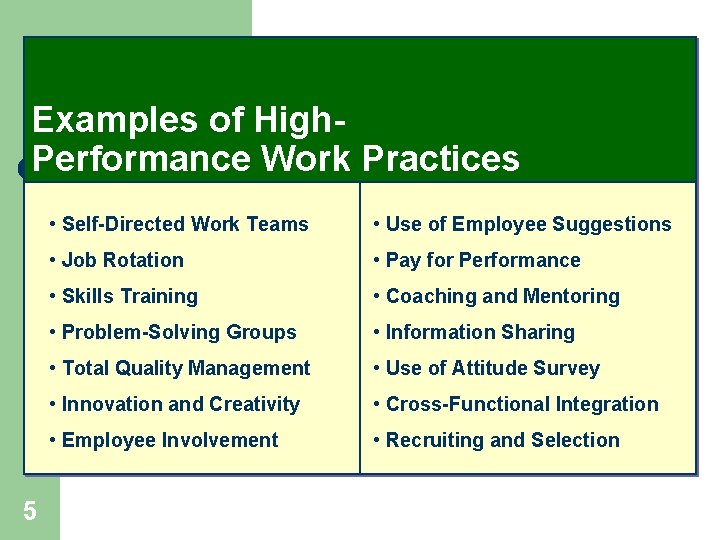
Examples of High. Performance Work Practices 5 • Self-Directed Work Teams • Use of Employee Suggestions • Job Rotation • Pay for Performance • Skills Training • Coaching and Mentoring • Problem-Solving Groups • Information Sharing • Total Quality Management • Use of Attitude Survey • Innovation and Creativity • Cross-Functional Integration • Employee Involvement • Recruiting and Selection
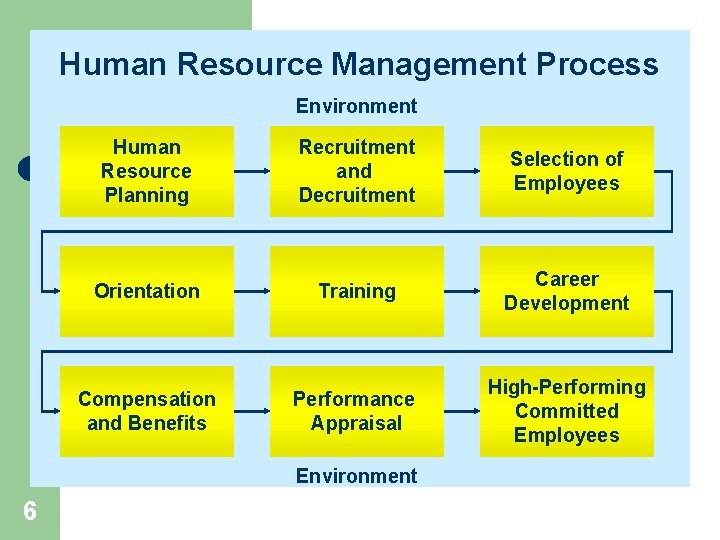
Human Resource Management Process Environment Human Resource Planning Recruitment and Decruitment Selection of Employees Orientation Training Career Development Compensation and Benefits Performance Appraisal High-Performing Committed Employees Environment 6
Environmental Considerations l Labor unions l Federal laws and regulations – 7 BFOQ’s

l Answer 8 Question #1
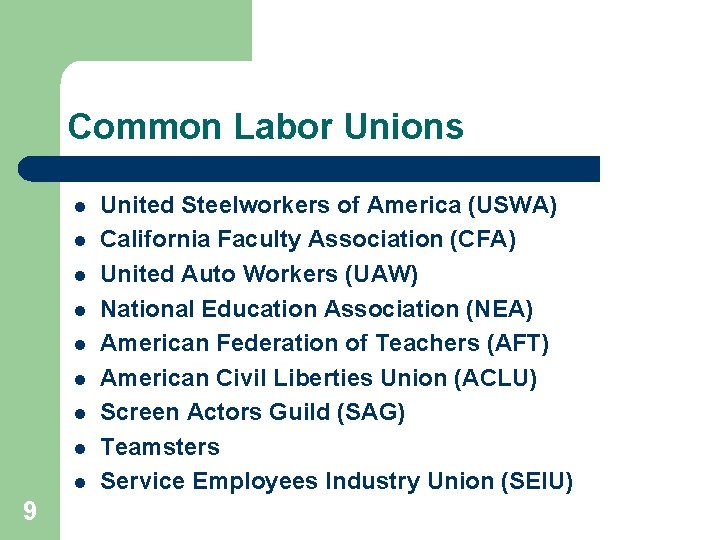
Common Labor Unions l l l l l 9 United Steelworkers of America (USWA) California Faculty Association (CFA) United Auto Workers (UAW) National Education Association (NEA) American Federation of Teachers (AFT) American Civil Liberties Union (ACLU) Screen Actors Guild (SAG) Teamsters Service Employees Industry Union (SEIU)
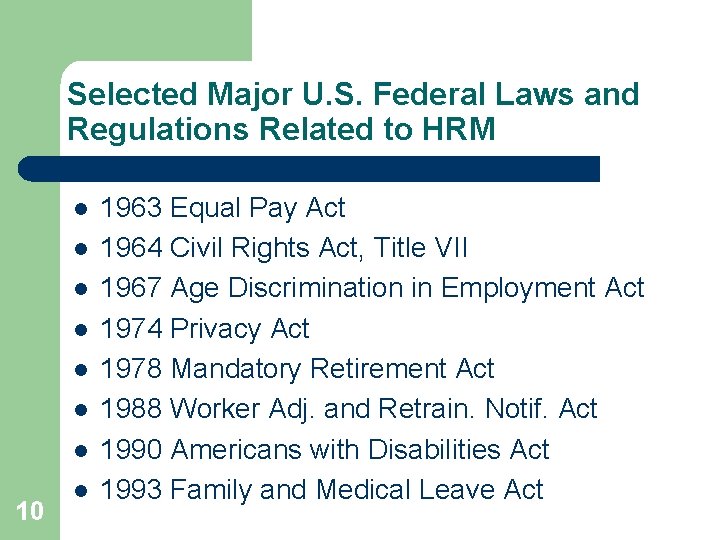
Selected Major U. S. Federal Laws and Regulations Related to HRM l l l l 10 l 1963 Equal Pay Act 1964 Civil Rights Act, Title VII 1967 Age Discrimination in Employment Act 1974 Privacy Act 1978 Mandatory Retirement Act 1988 Worker Adj. and Retrain. Notif. Act 1990 Americans with Disabilities Act 1993 Family and Medical Leave Act
Step 1 - Human Resource Planning l l 11 Assess current and future human resource needs – HR inventory – Job analysis – Job description – Job specification Develop a plan to meet future needs PLEASE ANSWER QUESTIONS 2 & 3
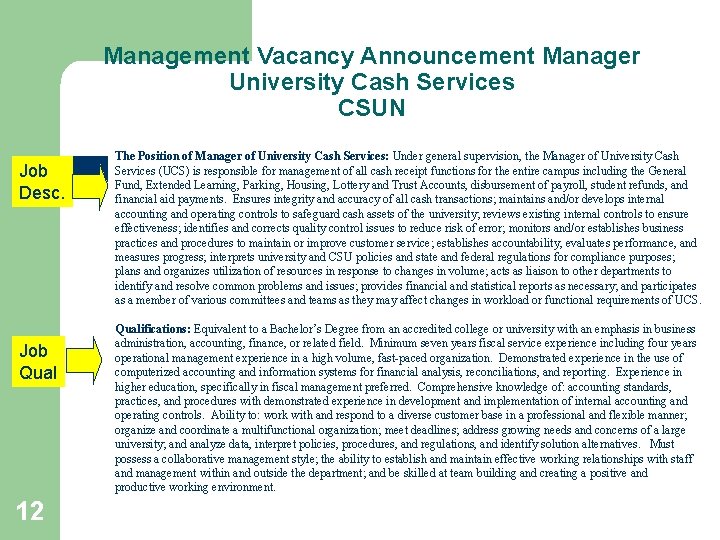
Management Vacancy Announcement Manager University Cash Services CSUN Job Desc. Job Qual 12 The Position of Manager of University Cash Services: Under general supervision, the Manager of University Cash Services (UCS) is responsible for management of all cash receipt functions for the entire campus including the General Fund, Extended Learning, Parking, Housing, Lottery and Trust Accounts, disbursement of payroll, student refunds, and financial aid payments. Ensures integrity and accuracy of all cash transactions; maintains and/or develops internal accounting and operating controls to safeguard cash assets of the university; reviews existing internal controls to ensure effectiveness; identifies and corrects quality control issues to reduce risk of error; monitors and/or establishes business practices and procedures to maintain or improve customer service; establishes accountability, evaluates performance, and measures progress; interprets university and CSU policies and state and federal regulations for compliance purposes; plans and organizes utilization of resources in response to changes in volume; acts as liaison to other departments to identify and resolve common problems and issues; provides financial and statistical reports as necessary; and participates as a member of various committees and teams as they may affect changes in workload or functional requirements of UCS. Qualifications: Equivalent to a Bachelor’s Degree from an accredited college or university with an emphasis in business administration, accounting, finance, or related field. Minimum seven years fiscal service experience including four years operational management experience in a high volume, fast-paced organization. Demonstrated experience in the use of computerized accounting and information systems for financial analysis, reconciliations, and reporting. Experience in higher education, specifically in fiscal management preferred. Comprehensive knowledge of: accounting standards, practices, and procedures with demonstrated experience in development and implementation of internal accounting and operating controls. Ability to: work with and respond to a diverse customer base in a professional and flexible manner; organize and coordinate a multifunctional organization; meet deadlines; address growing needs and concerns of a large university; and analyze data, interpret policies, procedures, and regulations, and identify solution alternatives. Must possess a collaborative management style; the ability to establish and maintain effective working relationships with staff and management within and outside the department; and be skilled at team building and creating a positive and productive working environment.
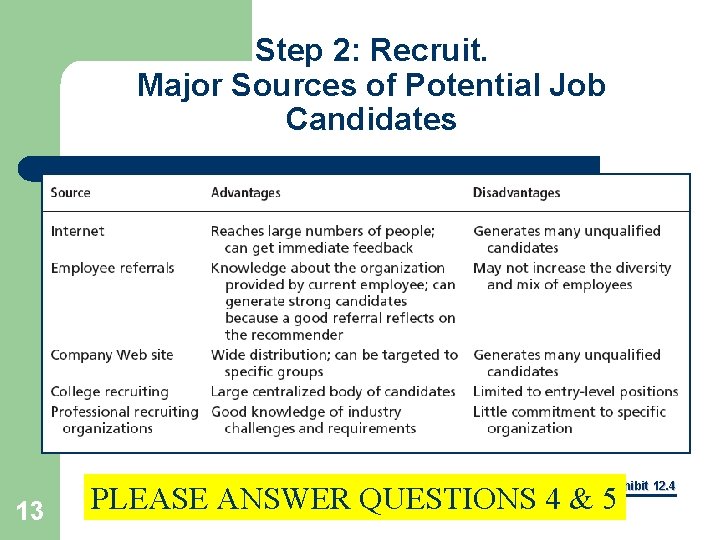
Step 2: Recruit. Major Sources of Potential Job Candidates Exhibit 12. 4 13 PLEASE ANSWER QUESTIONS 4 & 5
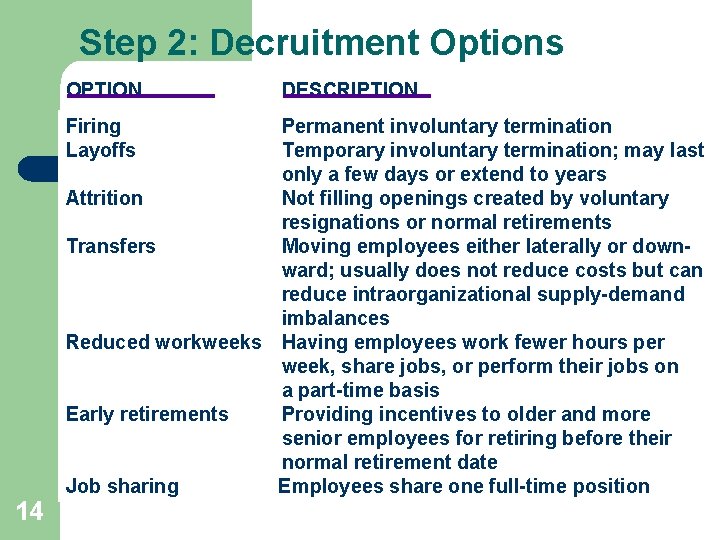
Step 2: Decruitment Options OPTION Firing Layoffs 14 DESCRIPTION Permanent involuntary termination Temporary involuntary termination; may last only a few days or extend to years Attrition Not filling openings created by voluntary resignations or normal retirements Transfers Moving employees either laterally or downward; usually does not reduce costs but can reduce intraorganizational supply-demand imbalances Reduced workweeks Having employees work fewer hours per week, share jobs, or perform their jobs on a part-time basis Early retirements Providing incentives to older and more senior employees for retiring before their normal retirement date Job sharing Employees share one full-time position
Step 3: Selection Issues 15 l Prediction l Validity l Reliability
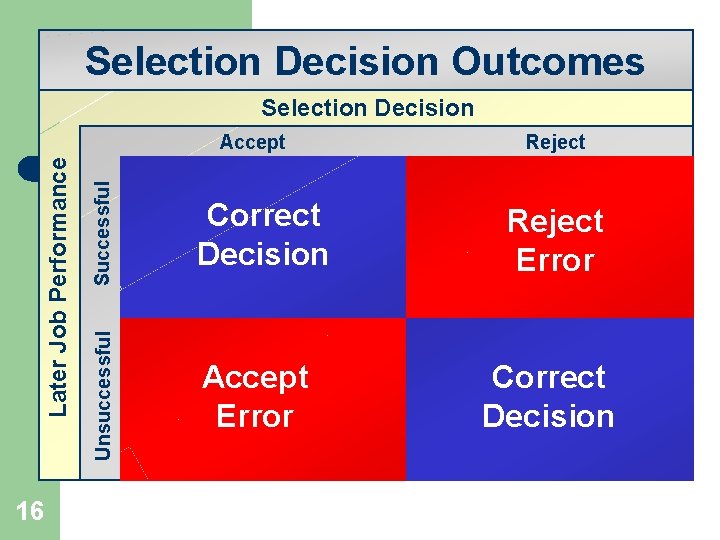
Selection Decision Outcomes Selection Decision 16 Successful Reject Correct Decision Reject Error Unsuccessful Later Job Performance Accept Error Correct Decision
PLEASE ANSWER QUESTION 6 Selection Devices 17 l Application Form l Written Test l Work Samples l Performance Simulation l Background Checks l Physical Examination l Personal Interviews PLEASE ANSWER QUESTION 7
Suggestions for Interviewing l l l 18 1. Structure fixed set of questions (e. g. , standardized evaluation form) for all applicants. 2. Have detailed information about the job that applicants are interviewing for. 3. Minimize any prior knowledge of applicants’ background, experience, interests, test scores of other characteristics. 4. Ask behavioral questions that require applicants to give detailed accounts of actual job behaviors. 6. Take notes during the interview. 7. Avoid short interviews that encourage premature decision making.
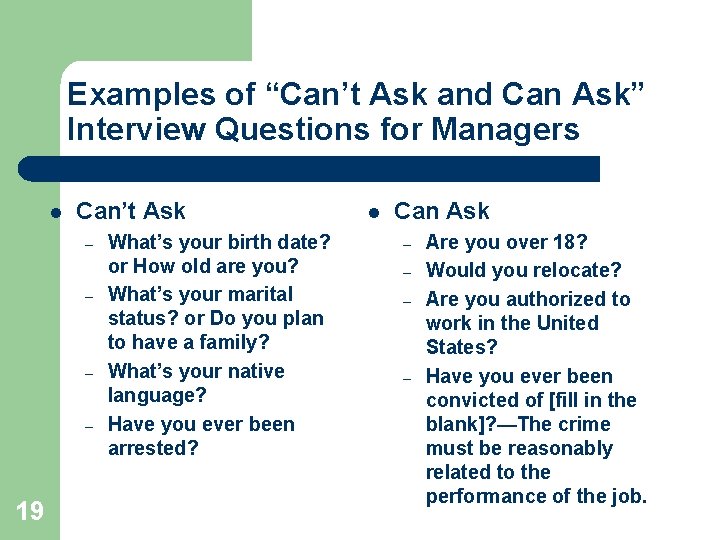
Examples of “Can’t Ask and Can Ask” Interview Questions for Managers l Can’t Ask – – 19 What’s your birth date? or How old are you? What’s your marital status? or Do you plan to have a family? What’s your native language? Have you ever been arrested? l Can Ask – – Are you over 18? Would you relocate? Are you authorized to work in the United States? Have you ever been convicted of [fill in the blank]? —The crime must be reasonably related to the performance of the job.
PLEASE ANSWER QUESTION 8 Step 4 - Orientation l Reduce initial anxiety l Familiarize new employees with job, work unit, organization l Facilitate outsider-insider transition – – 20 – Cover org’s objectives, history, etc. Clarify how job contributes to goals Cover policies (hours, pay, overtime, benefits) Introduce co-workers Tour
PLEASE ANSWER QUESTION 9 Step 5 - Training l l 21 Skill Categories – Technical – Interpersonal – Problem-solving Training Methods – On-the-Job – Off-the-Job
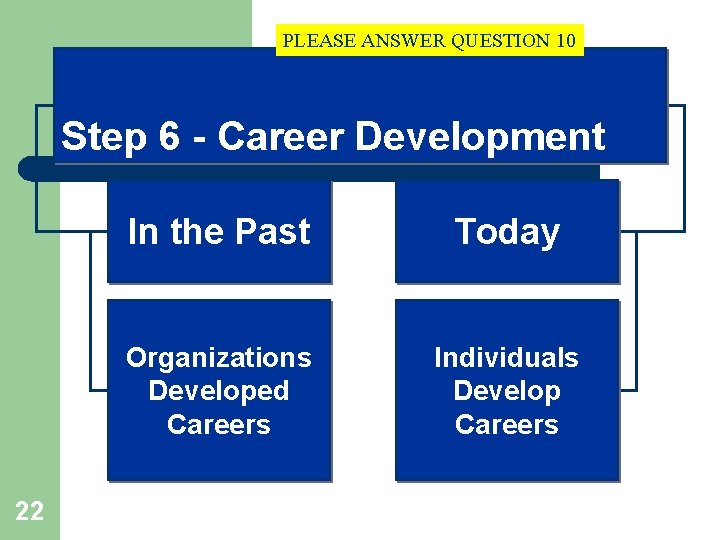
PLEASE ANSWER QUESTION 10 Step 6 - Career Development 22 In the Past Today Organizations Developed Careers Individuals Develop Careers

Steps to a Successful Management Career l l l 23 Select your first job judiciously Do good work Present the right image Learn the power structure Gain control of organizational resources l l l l Stay visible Don’t stay too long Find a mentor Support your boss Stay mobile Think laterally Continue upgrading your skills Develop a network
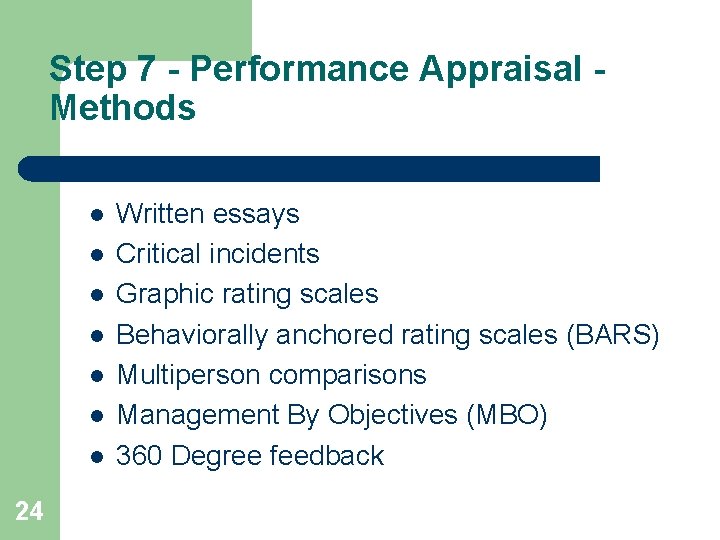
Step 7 - Performance Appraisal Methods l l l l 24 Written essays Critical incidents Graphic rating scales Behaviorally anchored rating scales (BARS) Multiperson comparisons Management By Objectives (MBO) 360 Degree feedback
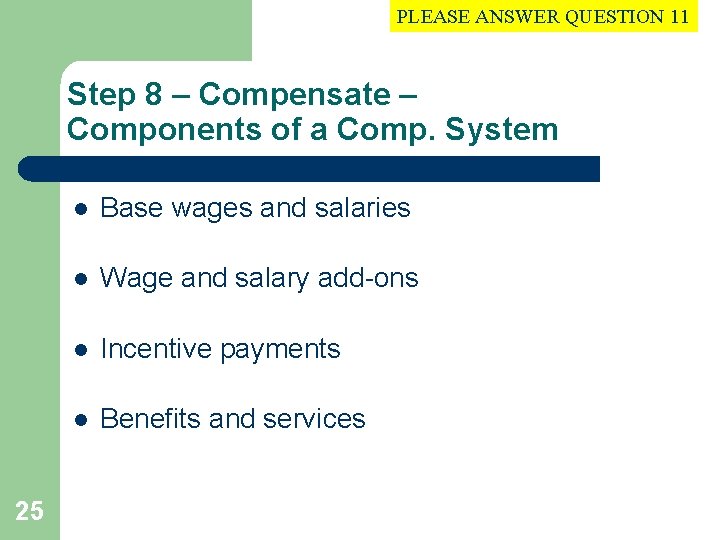
PLEASE ANSWER QUESTION 11 Step 8 – Compensate – Components of a Comp. System 25 l Base wages and salaries l Wage and salary add-ons l Incentive payments l Benefits and services
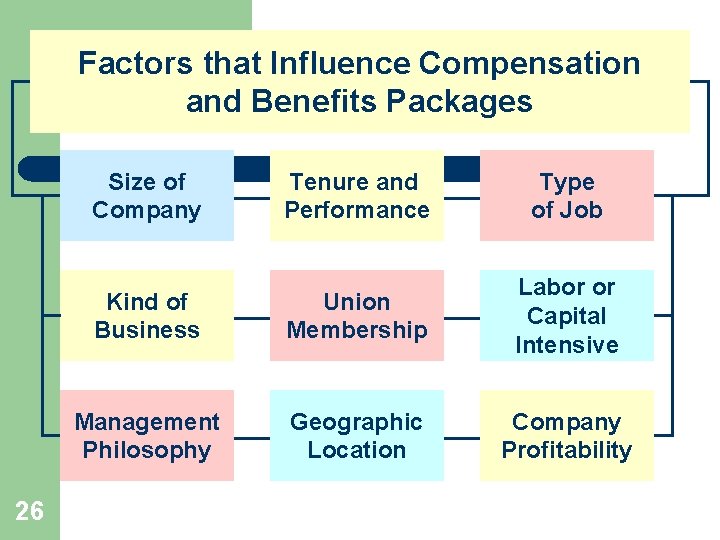
Factors that Influence Compensation and Benefits Packages Size of Company 26 Tenure and Performance Type of Job Kind of Business Union Membership Labor or Capital Intensive Management Philosophy Geographic Location Company Profitability
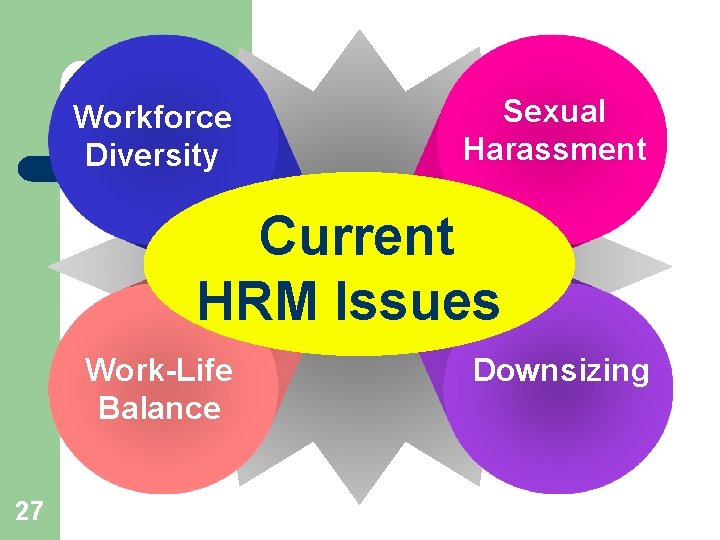
Workforce Diversity Sexual Harassment Current HRM Issues Work-Life Balance 27 Downsizing
- Slides: 27