
Chapter 12 Equilibrium and Elasticity 12 1 Rigid
Chapter 12 Equilibrium and Elasticity 12. 1 Rigid Object in Equilibrium Examples of Rigid Objects in 12. 3 Static Equilibrium 12. 4 Elastic Properties of Solids
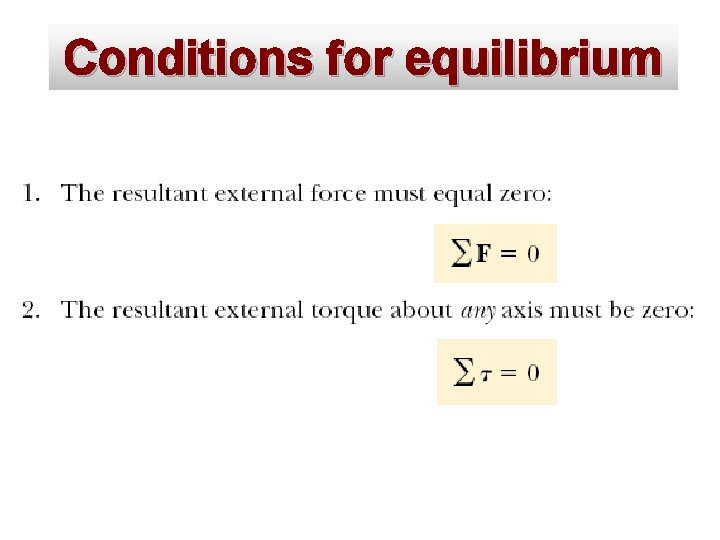
Conditions for equilibrium
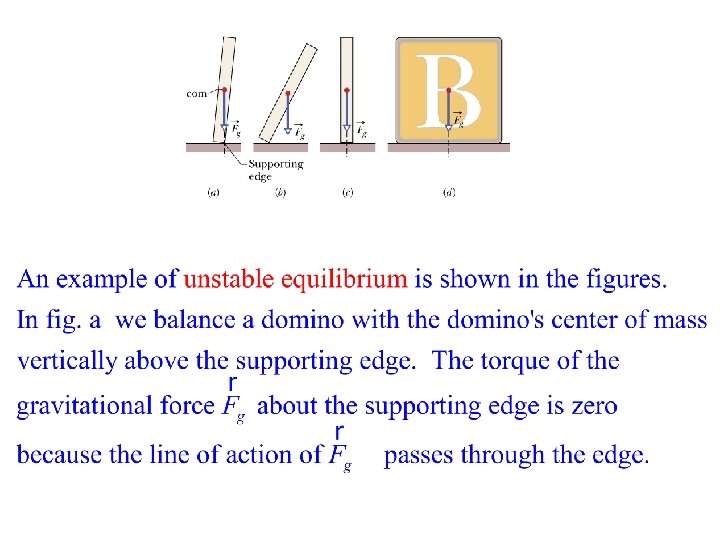
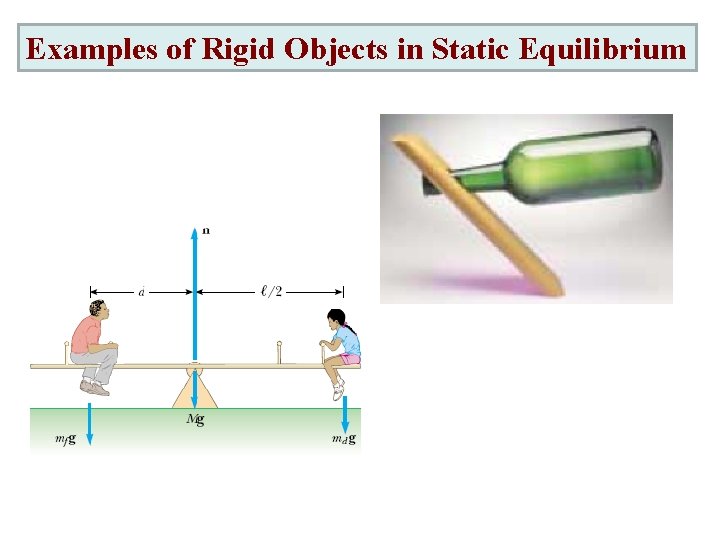
Examples of Rigid Objects in Static Equilibrium
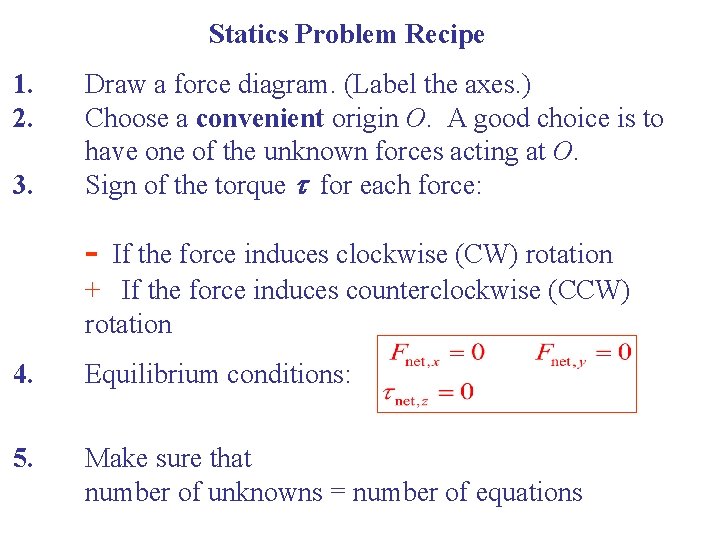
Statics Problem Recipe 1. 2. 3. Draw a force diagram. (Label the axes. ) Choose a convenient origin O. A good choice is to have one of the unknown forces acting at O. Sign of the torque for each force: - If the force induces clockwise (CW) rotation + If the force induces counterclockwise (CCW) rotation 4. Equilibrium conditions: 5. Make sure that number of unknowns = number of equations
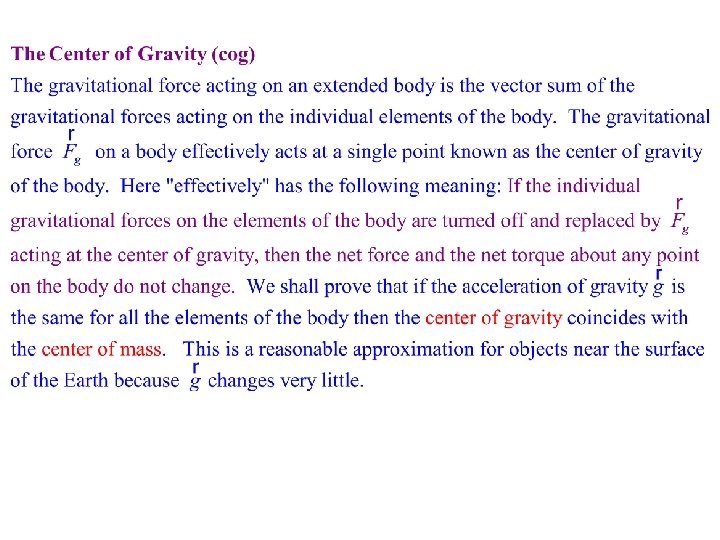
Elastic Properties of Solids
STRESS • Stress is the force that produces strain on a physical body without undergoing some sort of physical change. Stress = σ = F/A • UNIT: N/m 2 or Pascal STRAIN Strain is the deformation of a physical body under the action of applied forces
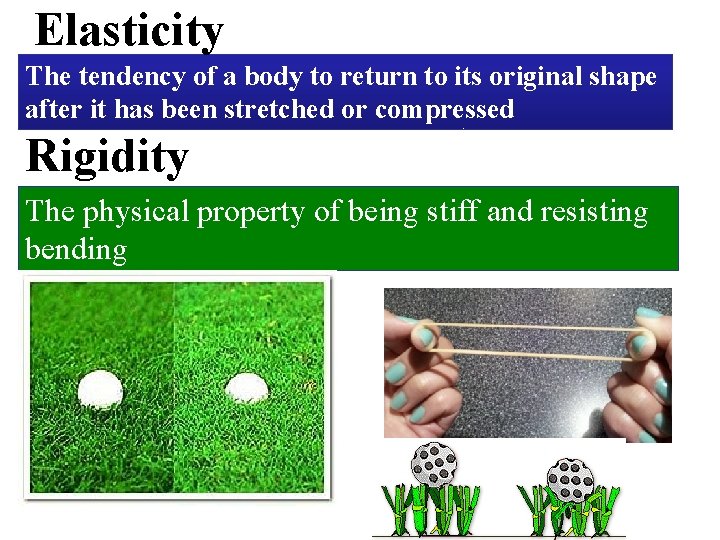
Elasticity The tendency of a body to return to its original shape after it has been stretched or compressed Rigidity The physical property of being stiff and resisting bending
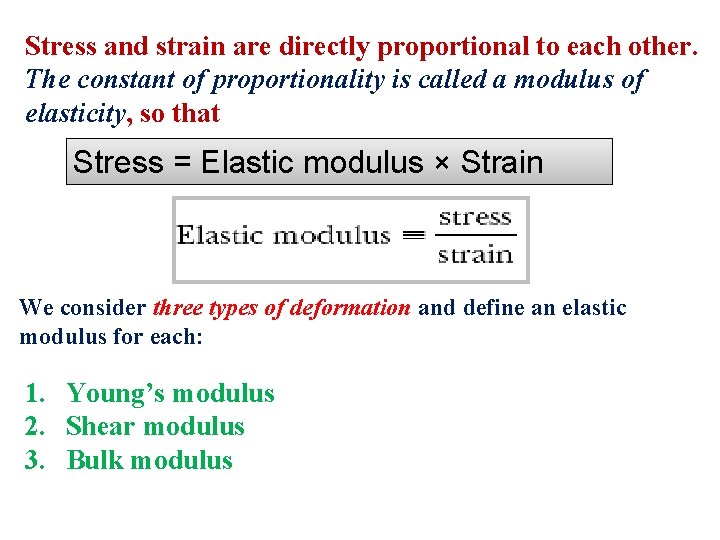
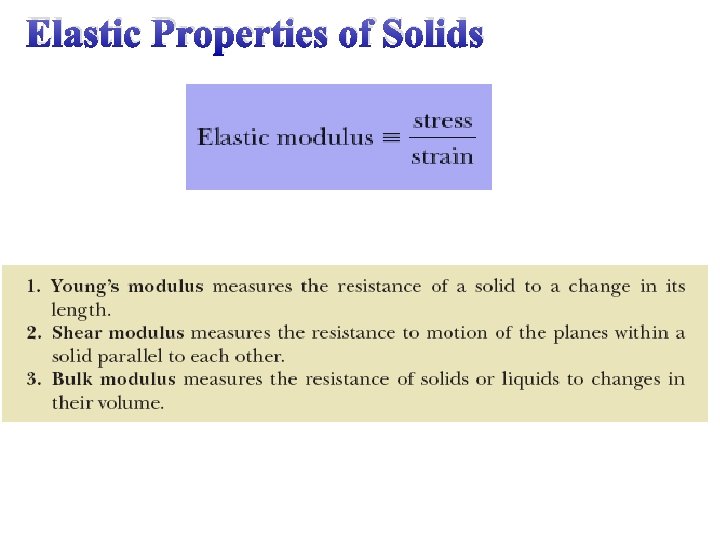
Stress and strain are directly proportional to each other. The constant of proportionality is called a modulus of elasticity, so that Stress = Elastic modulus × Strain We consider three types of deformation and define an elastic modulus for each: 1. Young’s modulus 2. Shear modulus 3. Bulk modulus
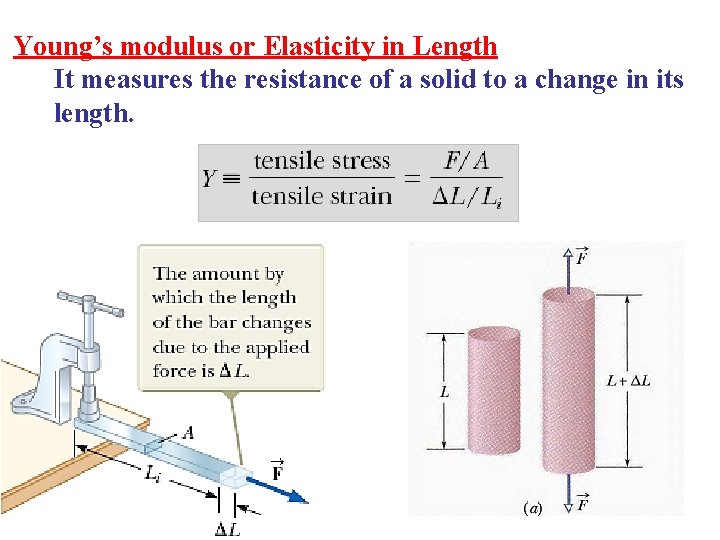
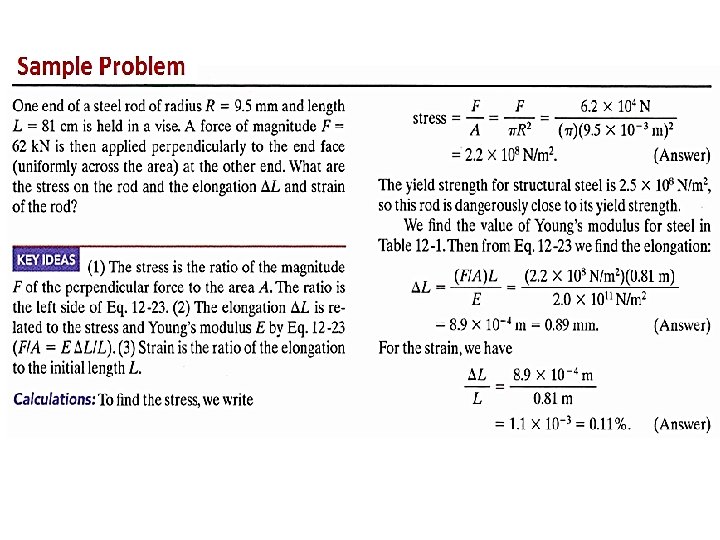
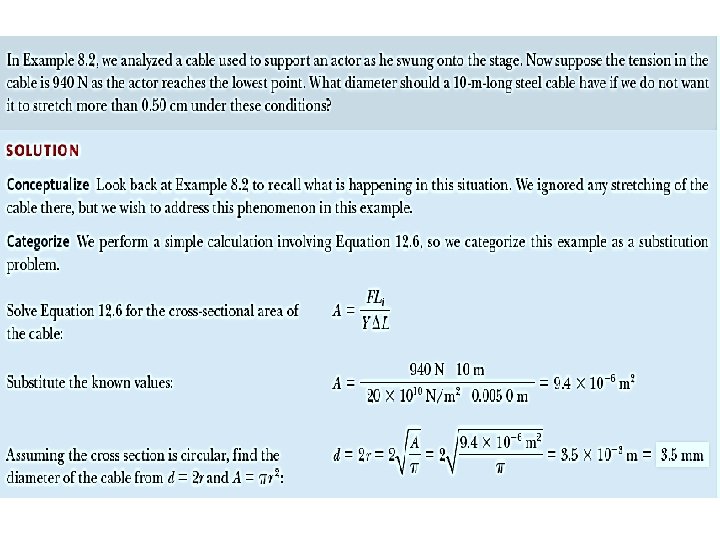
Young’s modulus or Elasticity in Length It measures the resistance of a solid to a change in its length.
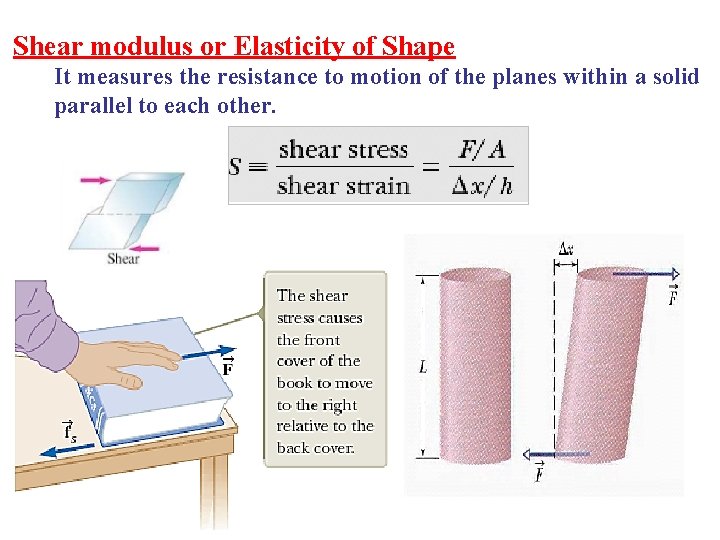
Shear modulus or Elasticity of Shape It measures the resistance to motion of the planes within a solid parallel to each other.
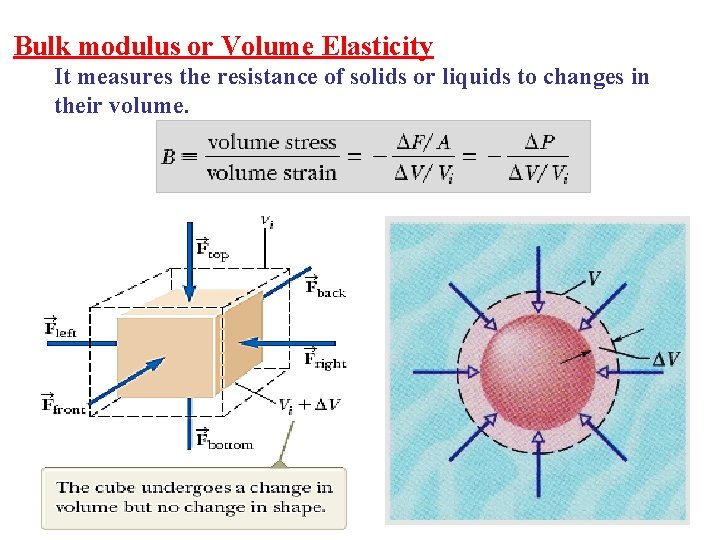
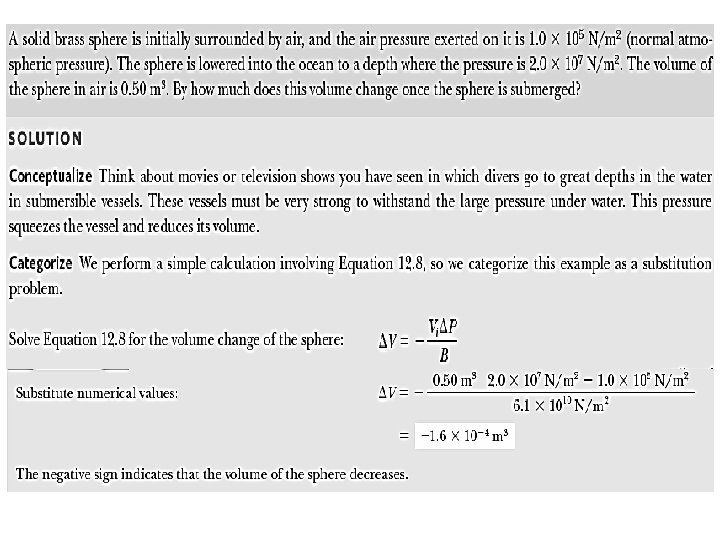
Bulk modulus or Volume Elasticity It measures the resistance of solids or liquids to changes in their volume.
- Slides: 16