
Chapter 12 Enzymes The Protein Catalyst Enzymes as
- Slides: 18
Chapter 12 Enzymes: The Protein Catalyst
Enzymes as Catalysts • Enzymes are proteins that start chemical reactions without being changed by the chemical reaction • Every enzyme is involved in a specific chemical reaction • Catalysts are substances that start a reaction between substances without being affected by the reaction
How Enzymes Work • Most chemical reactions in the body need additional energy to begin its process • Activation energy is the energy needed to begin a chemical reaction • Enzymes start these chemical reactions by lowering the activation energy required to start the chemical reactions
How Enzymes Work • Digestion- Without enzymes, the amount of heat energy necessary to digest food would destroy body organs • Enzymes are very specific and will only react with certain compounds
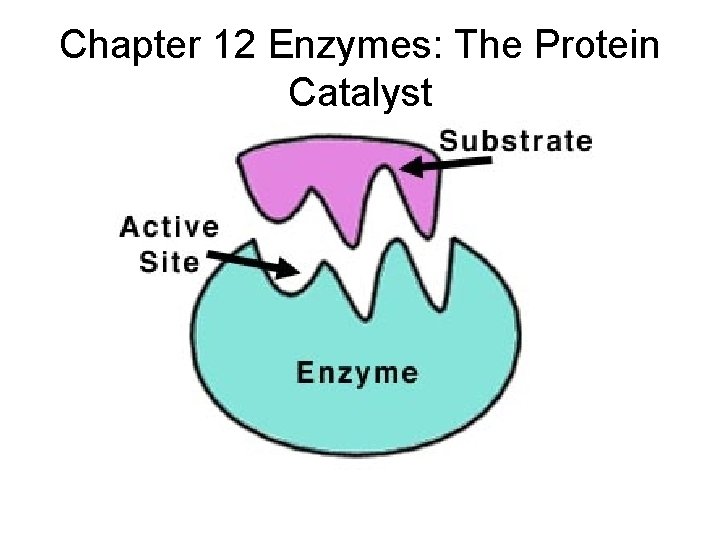
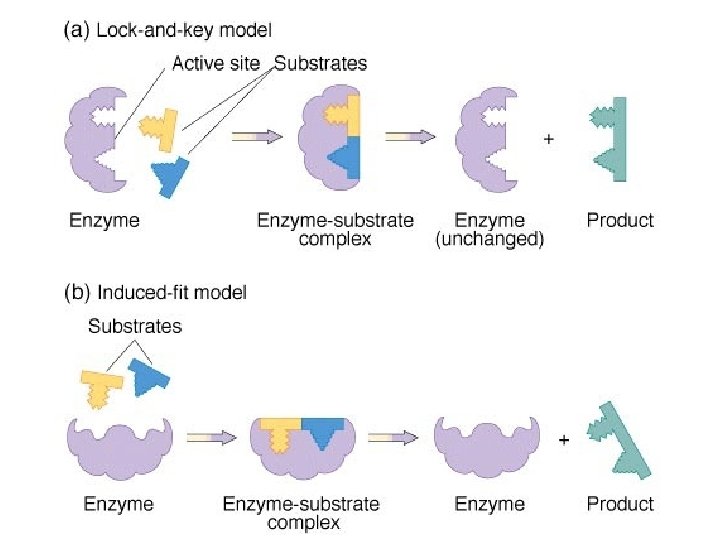
Enzymes and Substrates • A substrate is the substance on which an enzyme acts in an enzymatic reaction • An active site is the location where the substrate attaches to the enzyme • There are two models used to illustrate enzymatic reactions; the lock and key model and the induced fit model
Coenzymes • There are many enzymatic reactions that require coenzymes • Coenzymes are substances that must be present for an enzymatic reaction to occur • Three ways that coenzymes work; • 1. A coenzyme attaches to an enzyme in a way that changes the shape so that a substrate will fit at the active site
Coenzymes • 2. A coenzyme attaches to a substrate so that the shape is changed to where it will fit at the active site of the enzyme • 3. The coenzyme is a transfer agent that accepts an atom or molecular group from a substrate and transfers it to another compound • Vitamins and minerals are important coenzymes in food science
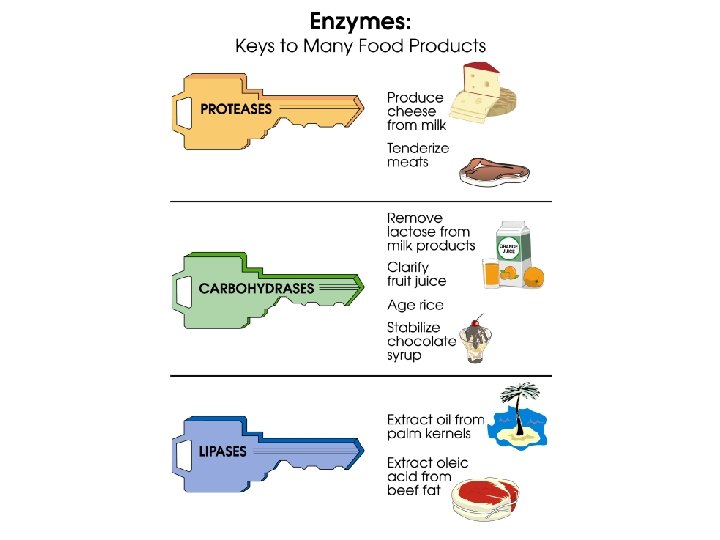
Naming Enzymes • Nomenclature- naming system • The naming system for enzymes is based on the names of the substrates on which enzymes act • Most enzymes have the suffix –ase • Digestive enzymes are commonly studied by food scientists and are divided into three main categories
Factors that Affect Enzyme Activity • • • 1. Water availability 2. Concentration of the solution 3. Factors that denature enzymes A. Heat B. p. H or acids and bases C. Electrolytes
Water Availability • Water needs to be present to act as a solvent in enzymatic reactions • Water allows large molecules to be broken down into smaller molecules • Without water, molecules that break apart can rejoin and there will be no net reaction
Concentration of the Solution • The higher the concentration of substrate in a solution, the greater the rate of reaction will be • A low concentration of substrate results in a very slow rate of reaction
Factors that Denature Enzymes • Since enzymes are proteins, they can be denatured which changes the shape of the enzyme and stops enzymatic activity • A. Heat- An increase in temperature up to a point increases enzymatic reaction rates but eventually too much heat will cause the enzyme reactions to cease • Blanching- briefly purging food in boiling water to stop enzyme activity; ex. Frozen vegetables
Factors that Denature Enzymes • Meat tenderizers will work until heat is added and then they will stop working • B. p. H- Every enzyme has a specific p. H range in which they react rapidly and a p. H where they will denature as well • C. Electrolytes- electrolytes are positively and negatively charged ions in solution. High concentrations can either inhibit or promote enzymatic activity
Factors that Denature Enzymes • C. ex- Salt used to preserve meats by inhibiting enzyme activity that would lead to spoilage; mercury and lead poisoning • Enzyme inhibitors- any substance that will prevent the enzyme-substrate complex from forming • They are found in many plants and serve as defensive mechanisms to kill fungi and bacteria that might attack it
Enzymes and the Food Supply • There are three ways that the food industry uses enzymes to develop food products • 1. Enzymes are used to convert one food product into another. Ex. Convert milk into cheese • 2. Enzymes extract food components from food systems. Ex. Pectinase speeds up the separation of juice from fruit residue
Enzymes and the Food Supply • 3. Enzymes can help develop new foods and ingredients. Ex. Lipases convert palm oils into cocoa butter and beef fat into oleic acid, which is used to make margarine