
Chapter 12 DNA Technology Genetic Engineering How does
- Slides: 28
Chapter 12 DNA Technology
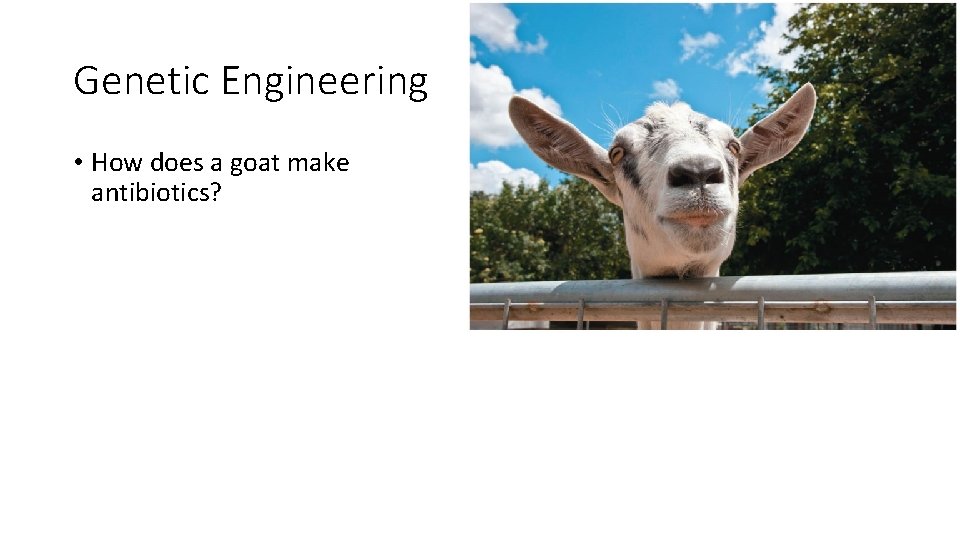
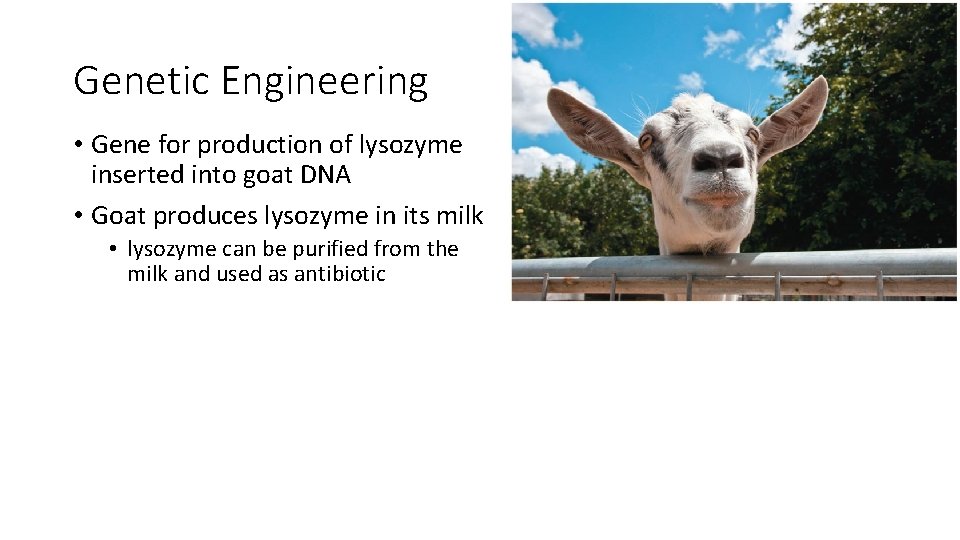
Genetic Engineering • How does a goat make antibiotics?
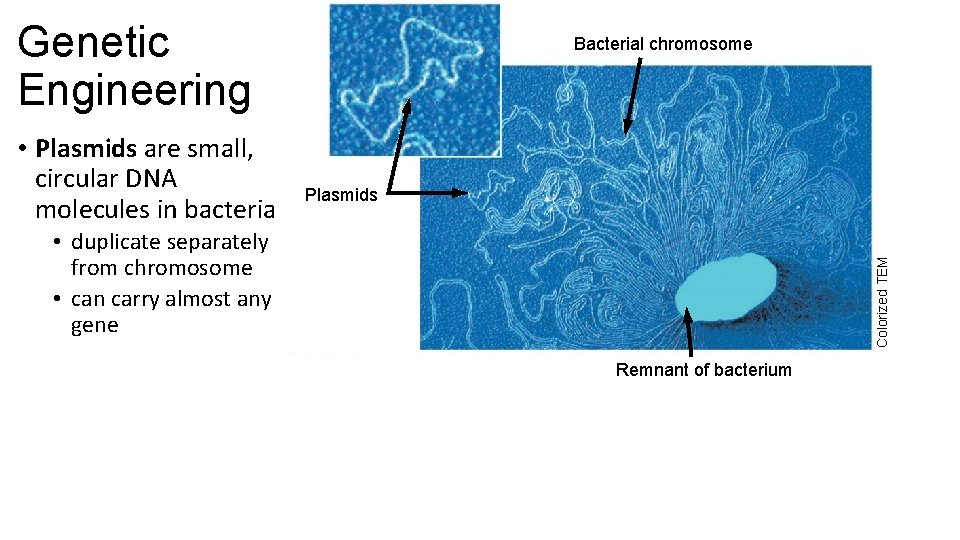
Genetic Engineering • Plasmids are small, circular DNA molecules in bacteria Bacterial chromosome Plasmids Colorized TEM • duplicate separately from chromosome • can carry almost any gene Remnant of bacterium
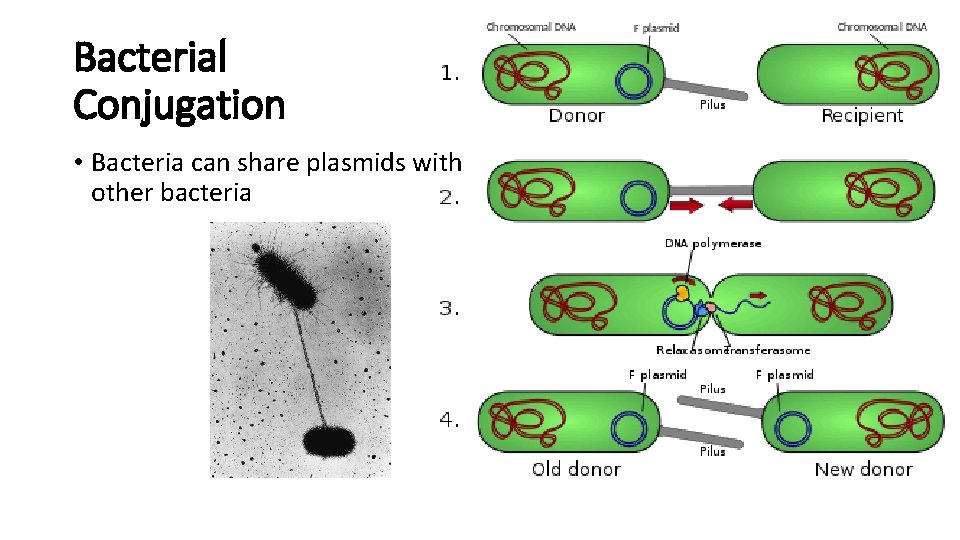
Bacterial Conjugation • Bacteria can share plasmids with other bacteria
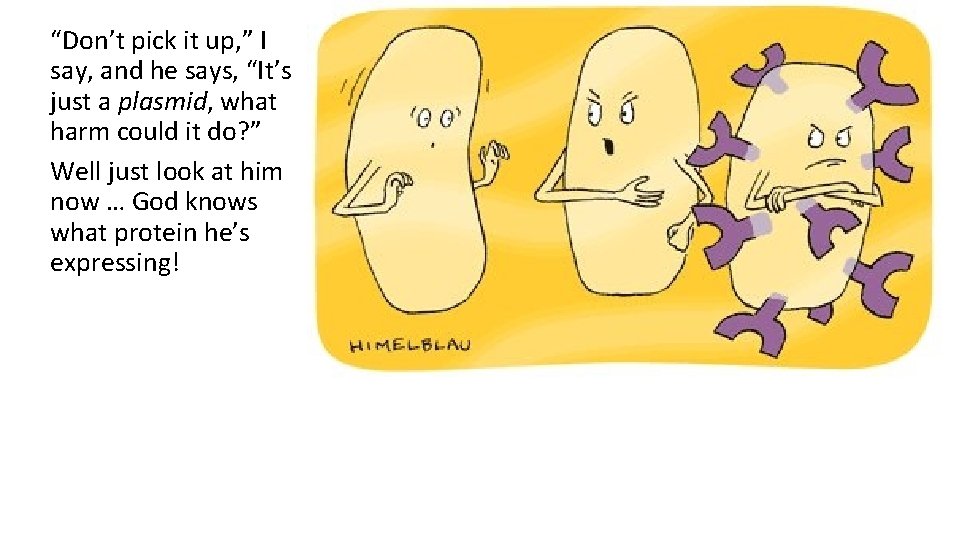
“Don’t pick it up, ” I say, and he says, “It’s just a plasmid, what harm could it do? ” Well just look at him now … God knows what protein he’s expressing!
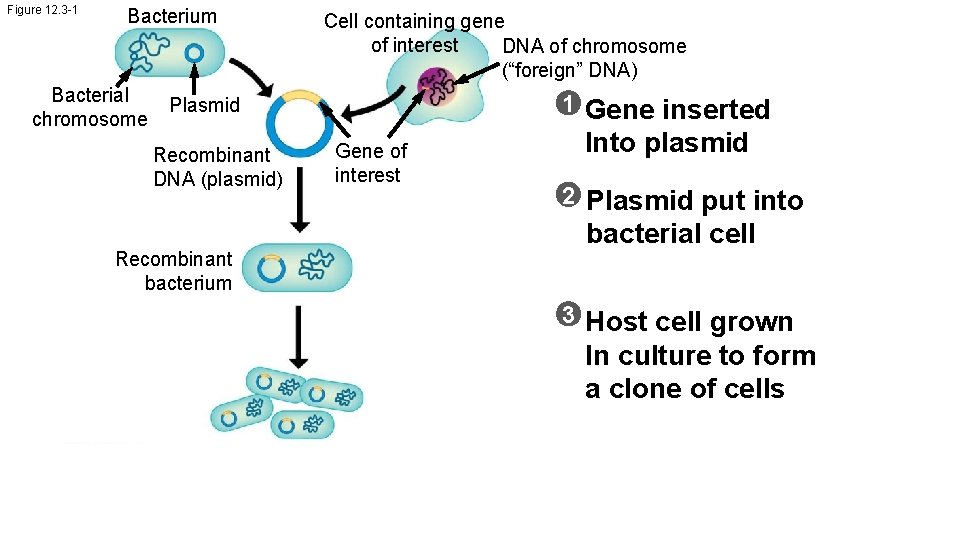
Genetic engineering • Harness the existing biological system and use it for our purposes • • Isolate a gene Insert it into a plasmid Bacteria take up the plasmid and express the gene Harvest the protein from the bacteria
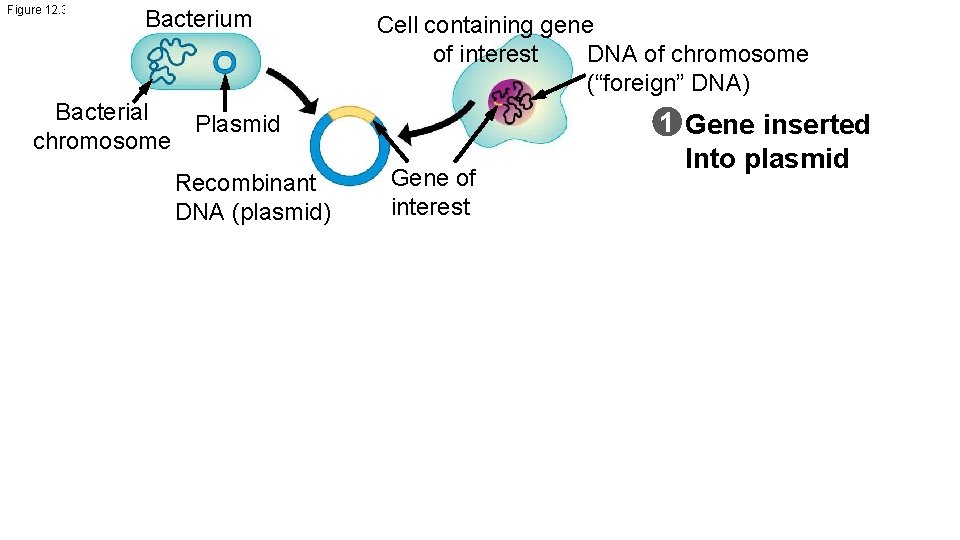
Figure 12. 3 -1 Bacterium Cell containing gene of interest DNA of chromosome (“foreign” DNA) Bacterial Plasmid chromosome Recombinant DNA (plasmid) Gene of interest 1 Gene inserted Into plasmid
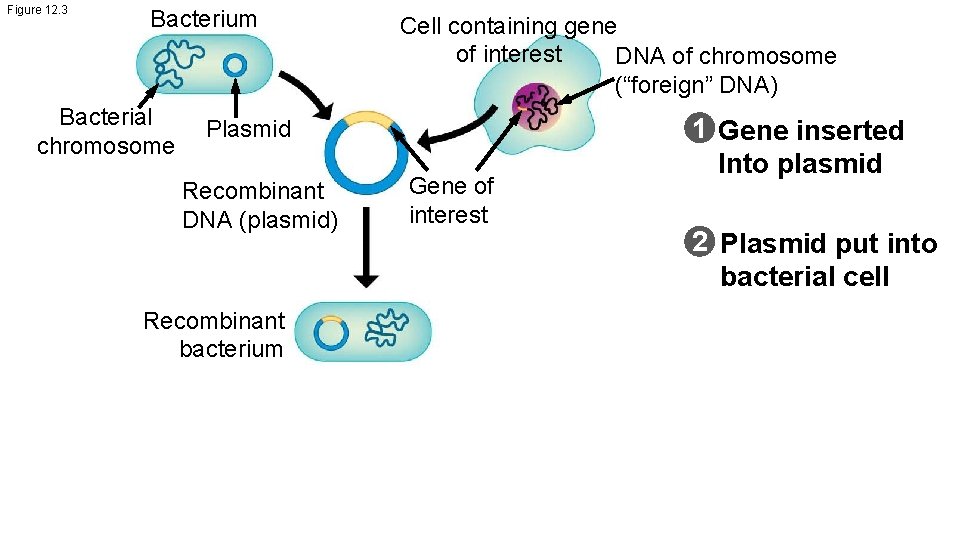
Figure 12. 3 -1 Bacterium Bacterial chromosome Cell containing gene of interest DNA of chromosome (“foreign” DNA) Plasmid Recombinant DNA (plasmid) Recombinant bacterium Gene of interest 1 Gene inserted Into plasmid 2 Plasmid put into bacterial cell
Figure 12. 3 -1 Bacterium Bacterial chromosome Cell containing gene of interest DNA of chromosome (“foreign” DNA) 1 Gene inserted Plasmid Recombinant DNA (plasmid) Recombinant bacterium Gene of interest Into plasmid 2 Plasmid put into bacterial cell 3 Host cell grown In culture to form a clone of cells
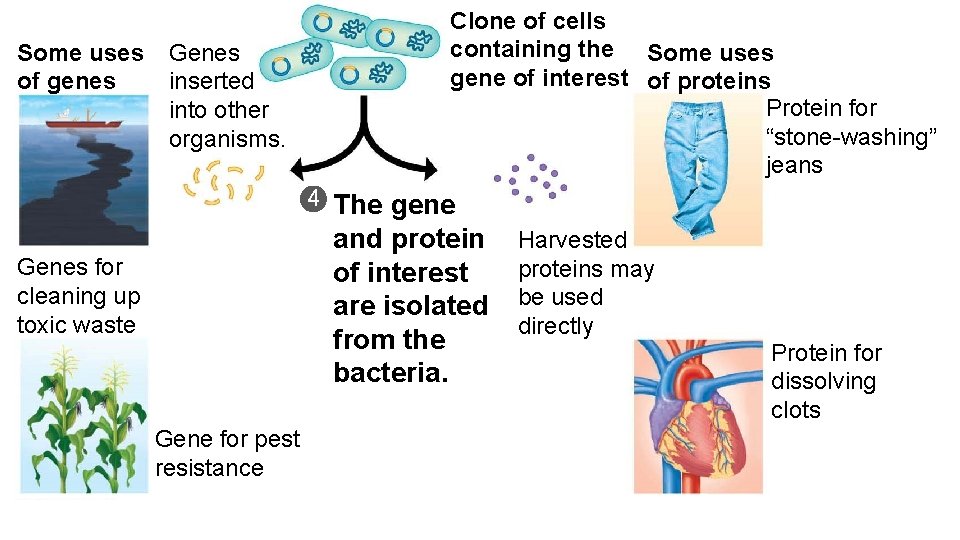
Figure 12. 3 -2 Some uses of genes Genes inserted into other organisms. Clone of cells containing the Some uses gene of interest of proteins Protein for “stone-washing” jeans 4 The gene and protein of interest are isolated from the bacteria. Genes for cleaning up toxic waste Gene for pest resistance Harvested proteins may be used directly Protein for dissolving clots
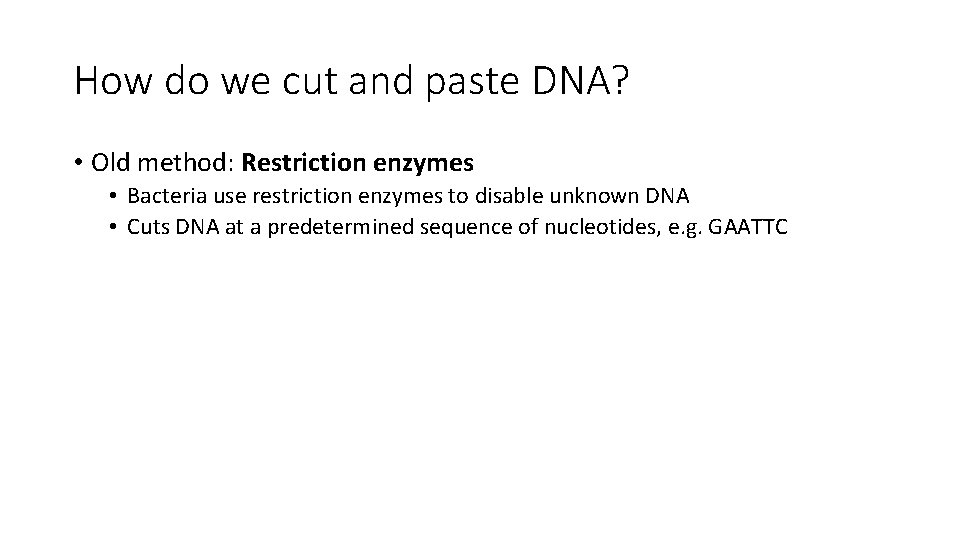
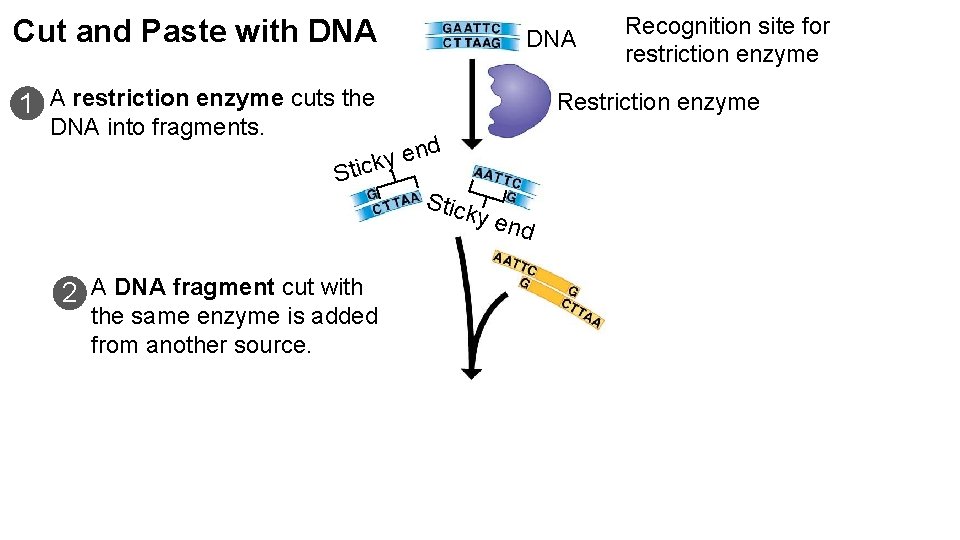
How do we cut and paste DNA? • Old method: Restriction enzymes • Bacteria use restriction enzymes to disable unknown DNA • Cuts DNA at a predetermined sequence of nucleotides, e. g. GAATTC
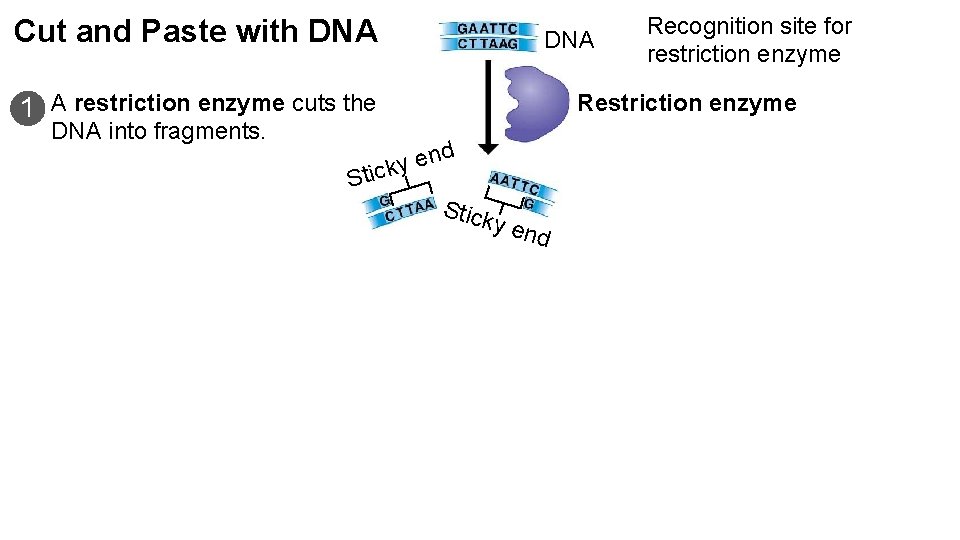
Cut and Paste with DNA 1 A restriction enzyme cuts the DNA into fragments. Recognition site for restriction enzyme Restriction enzyme d n e y tick S Stick y en d
Cut and Paste with DNA 1 A restriction enzyme cuts the DNA into fragments. Restriction enzyme d en y k tic S Stick y en 2 A DNA fragment cut with the same enzyme is added from another source. Recognition site for restriction enzyme d
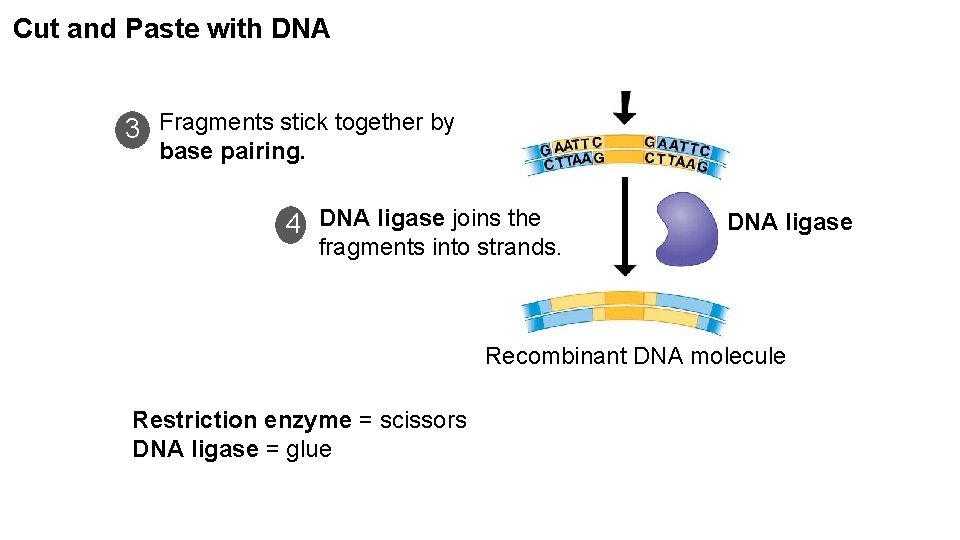
Cut and Paste with DNA 3 Fragments stick together by base pairing. 4 DNA ligase joins the fragments into strands. DNA ligase Recombinant DNA molecule Restriction enzyme = scissors DNA ligase = glue
How can we be sure the gene got inserted? • The new DNA strand will be longer than the old one
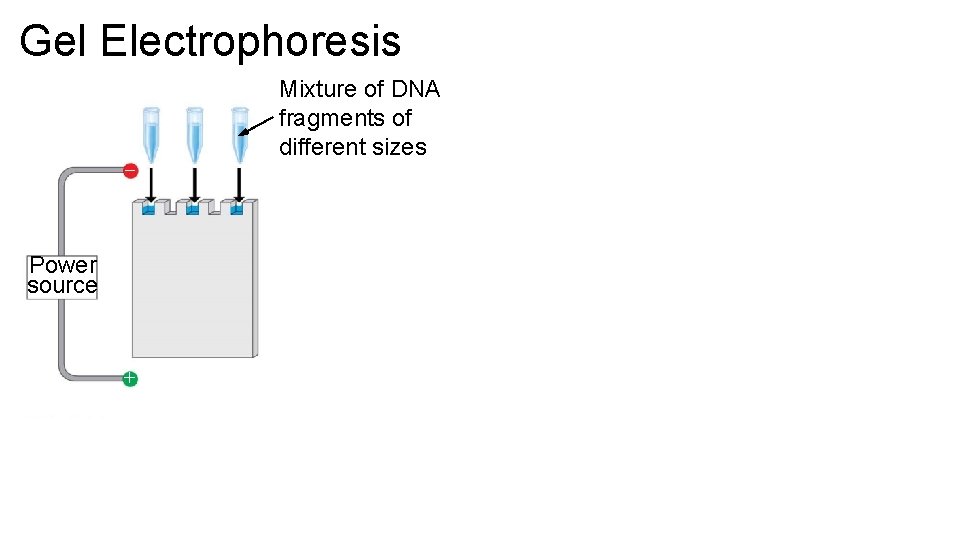
Gel Electrophoresis Power source + Mixture of DNA fragments of different sizes
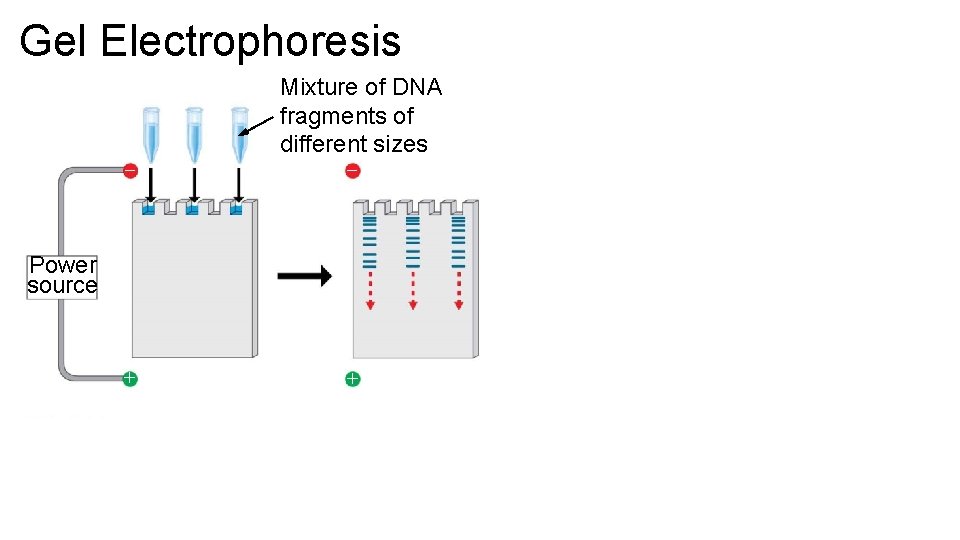
Gel Electrophoresis Mixture of DNA fragments of different sizes Power source + +
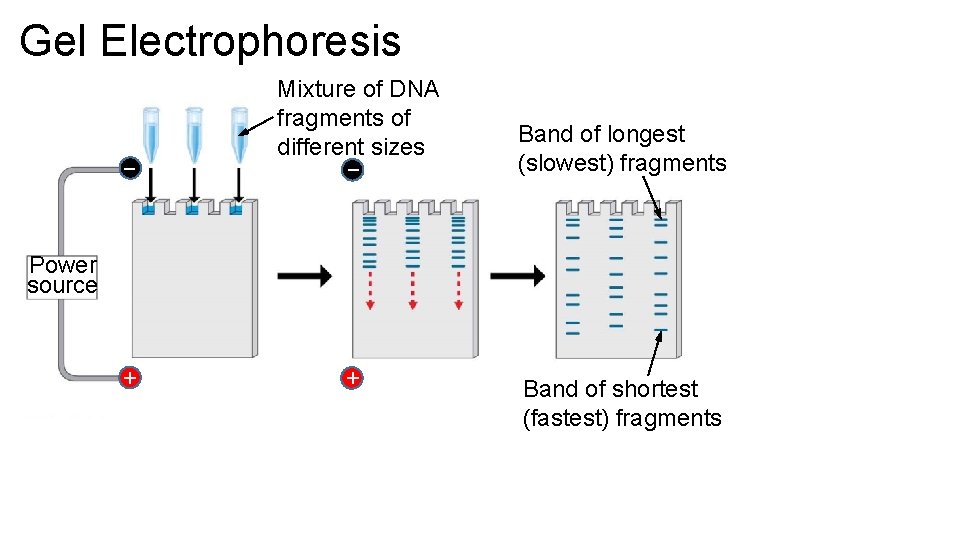
Gel Electrophoresis Mixture of DNA fragments of different sizes Band of longest (slowest) fragments Power source + + Band of shortest (fastest) fragments
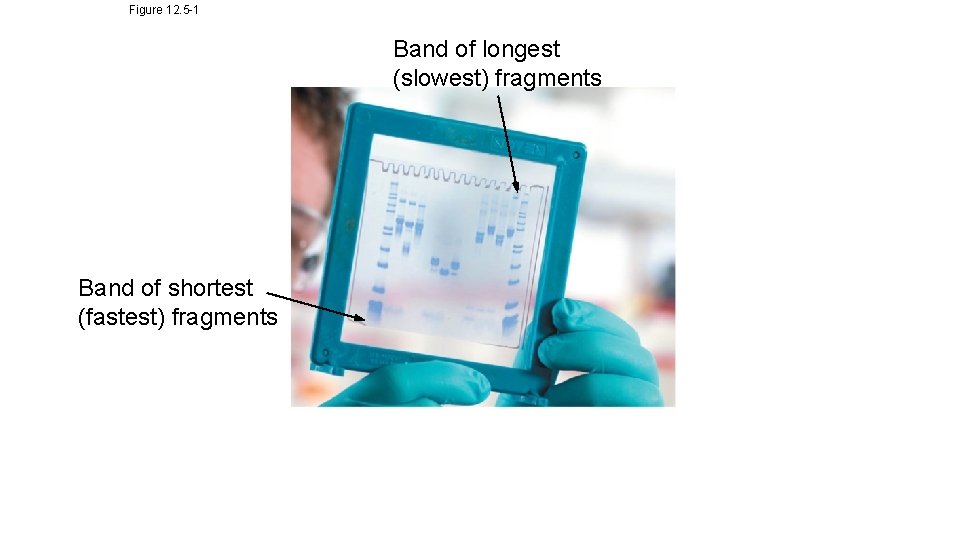
Figure 12. 5 -1 Band of longest (slowest) fragments Band of shortest (fastest) fragments
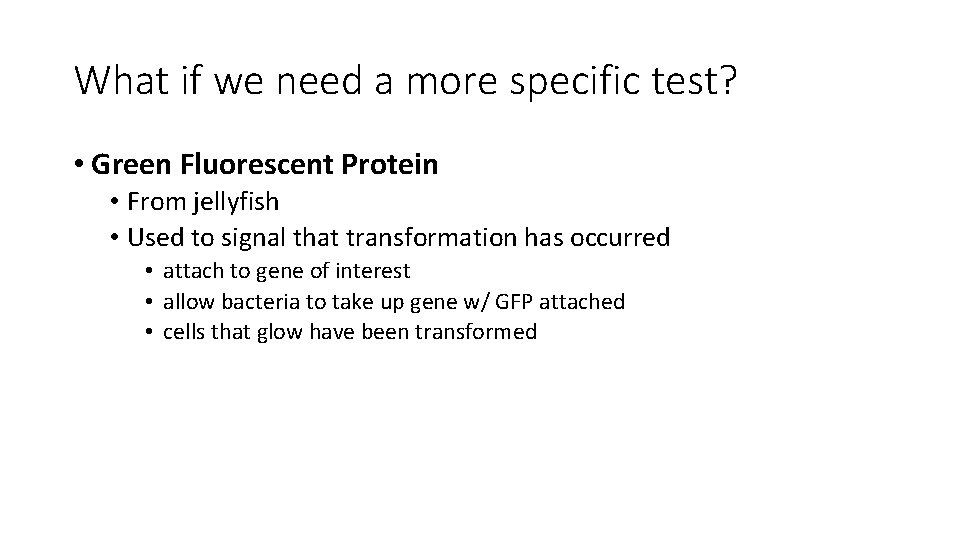
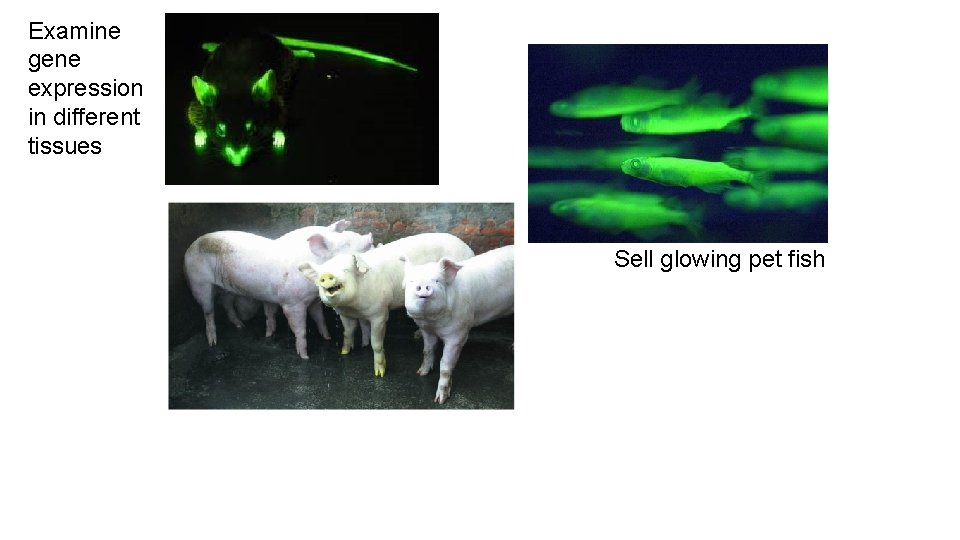
What if we need a more specific test? • Green Fluorescent Protein • From jellyfish • Used to signal that transformation has occurred • attach to gene of interest • allow bacteria to take up gene w/ GFP attached • cells that glow have been transformed
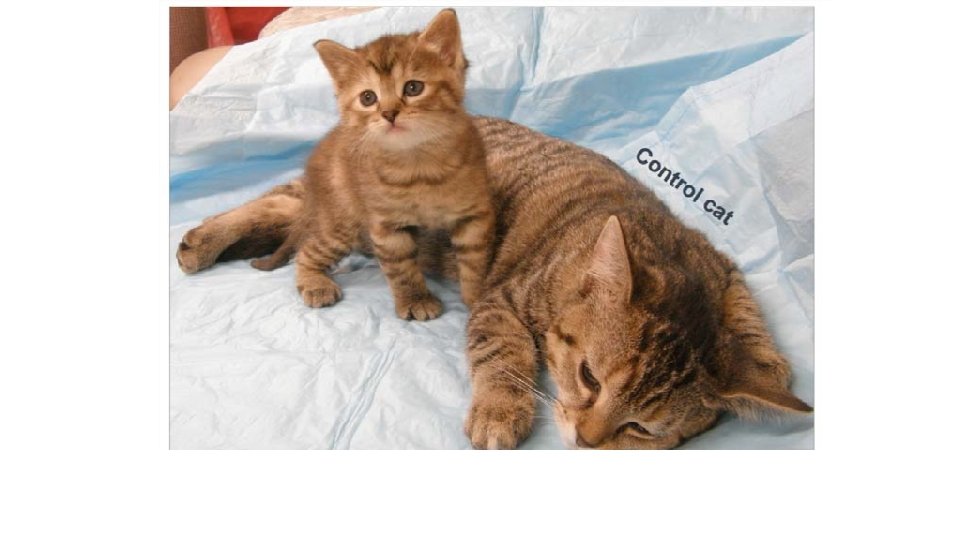
• AIDS researchers attached GFP to FIV-resistance gene • Implanted GFP/FIV-resistance gene into eggs of cat
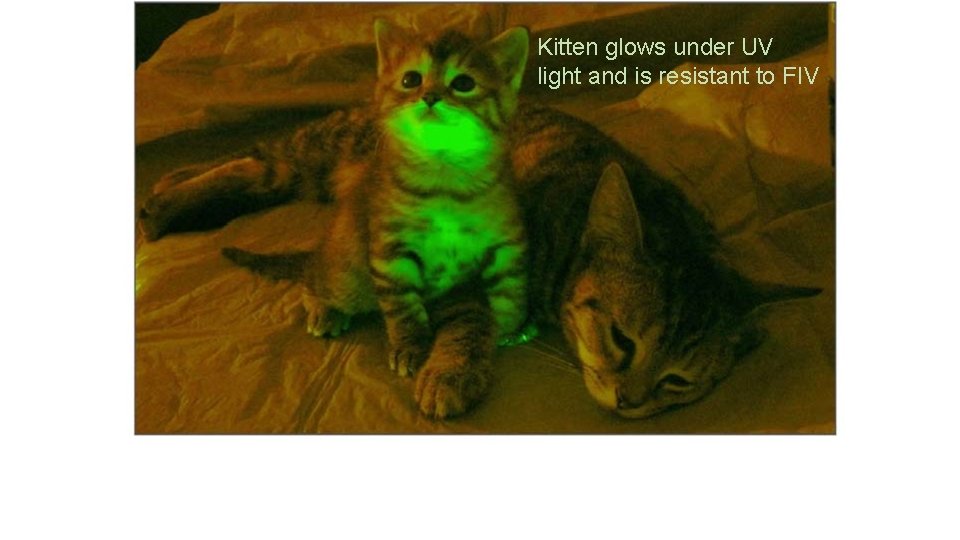
Kitten glows under UV light and is resistant to FIV
Examine gene expression in different tissues Sell glowing pet fish
Genetic Engineering • Gene for production of lysozyme inserted into goat DNA • Goat produces lysozyme in its milk • lysozyme can be purified from the milk and used as antibiotic
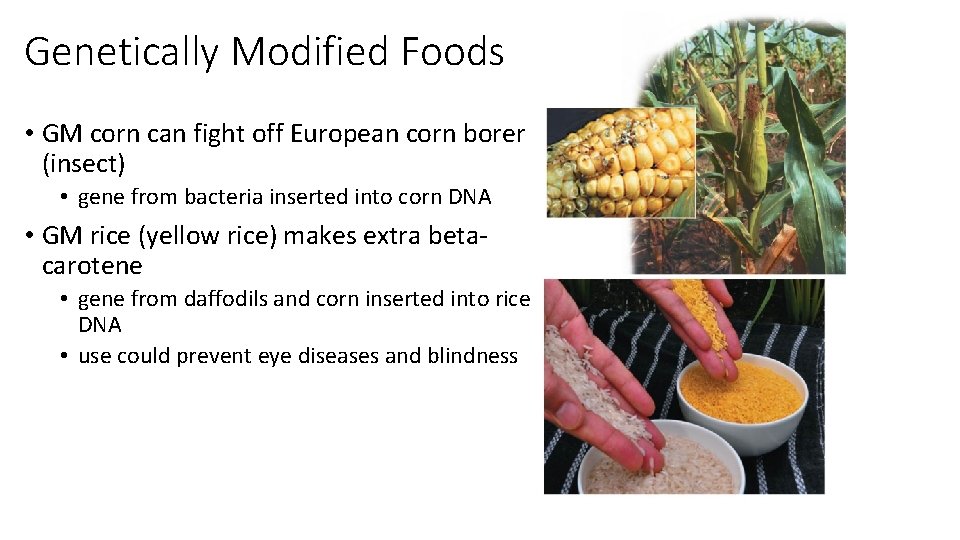
Genetically Modified Foods • GM corn can fight off European corn borer (insect) • gene from bacteria inserted into corn DNA • GM rice (yellow rice) makes extra betacarotene • gene from daffodils and corn inserted into rice DNA • use could prevent eye diseases and blindness
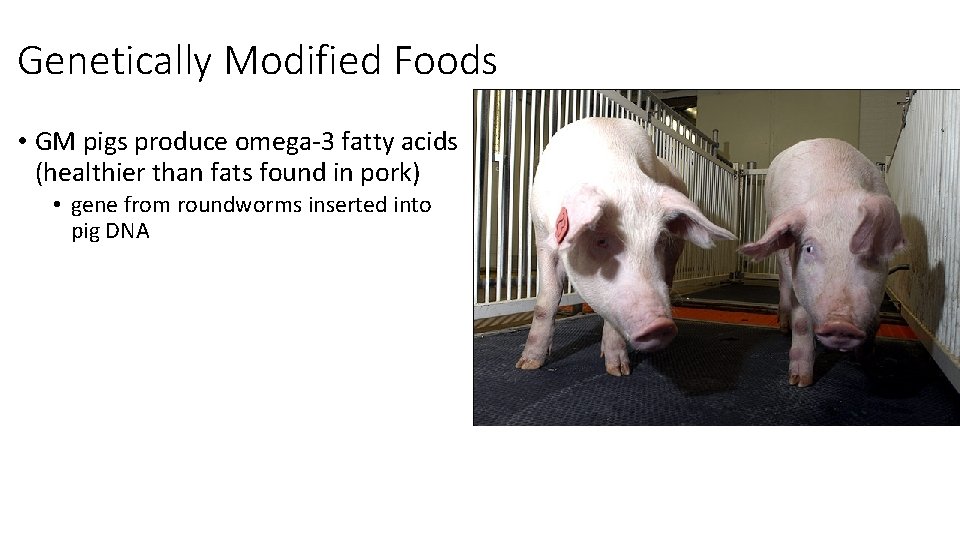
Genetically Modified Foods • GM pigs produce omega-3 fatty acids (healthier than fats found in pork) • gene from roundworms inserted into pig DNA