
CHAPTER 12 DNA RNA Why do Animals not



- Slides: 95
CHAPTER 12 DNA & RNA
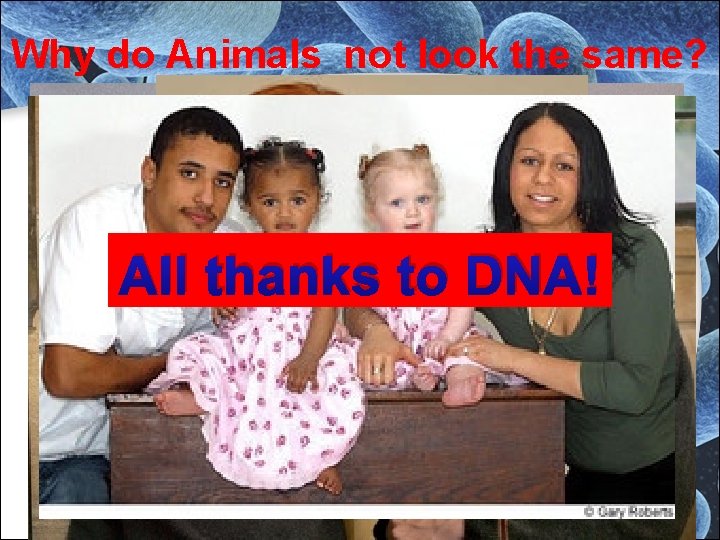
Why do Animals not look the same? All thanks to DNA!
Chapter 12 DNA and RNA 12. 1 DNA 12. 2 Chromosomes and DNA Replication 12. 3 RNA and Protein Synthesis 12. 4 Mutations 12. 5 Gene Regulation
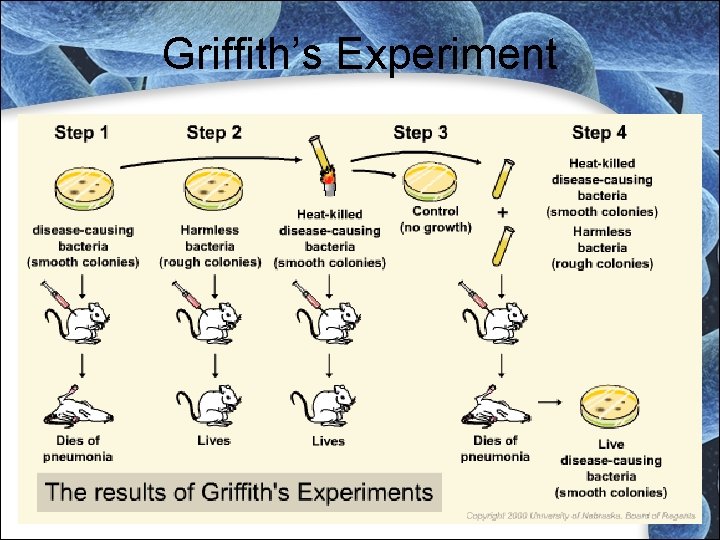
Griffith’s Experiment
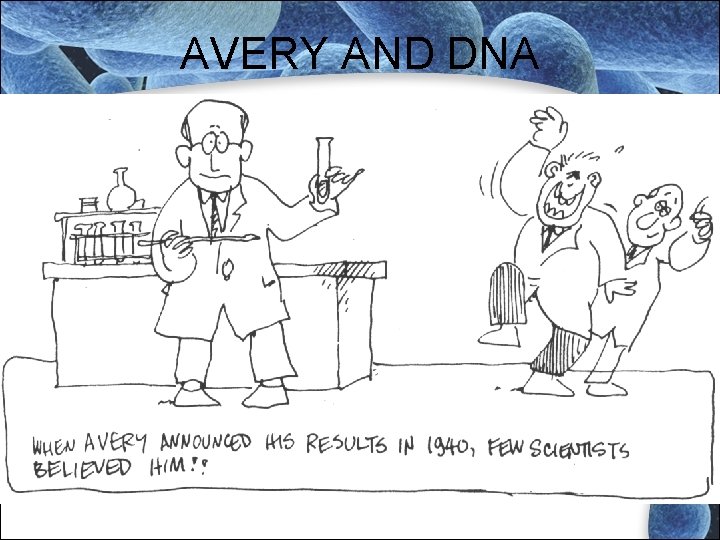
AVERY AND DNA
AVERY AND DNA
Hershey-Chase Experiment
12. 1 DNA Learning Outcomes After this section, you should be able to: • describe the basic unit of DNA – the nucleotide; • state and apply the rule of complementary base pairing.
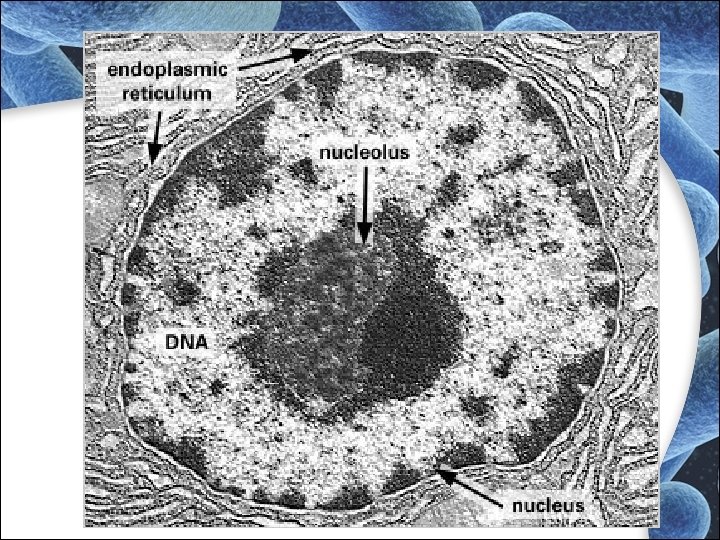
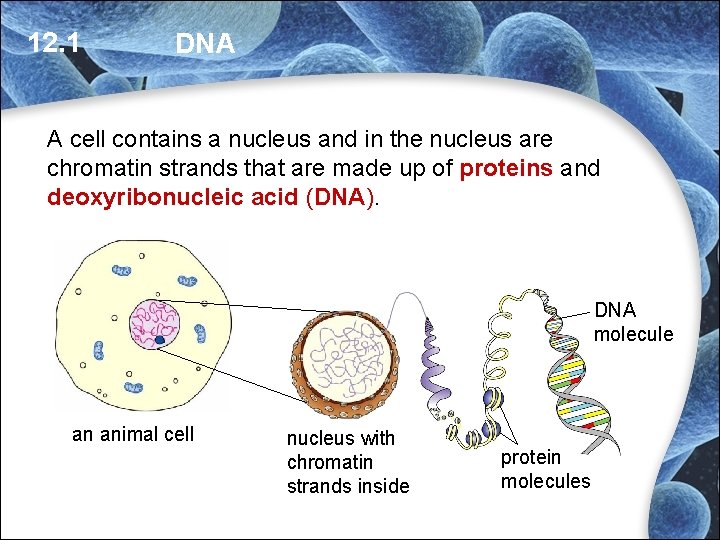
12. 1 DNA A cell contains a nucleus and in the nucleus are chromatin strands that are made up of proteins and deoxyribonucleic acid (DNA). DNA molecule an animal cell nucleus with chromatin strands inside protein molecules
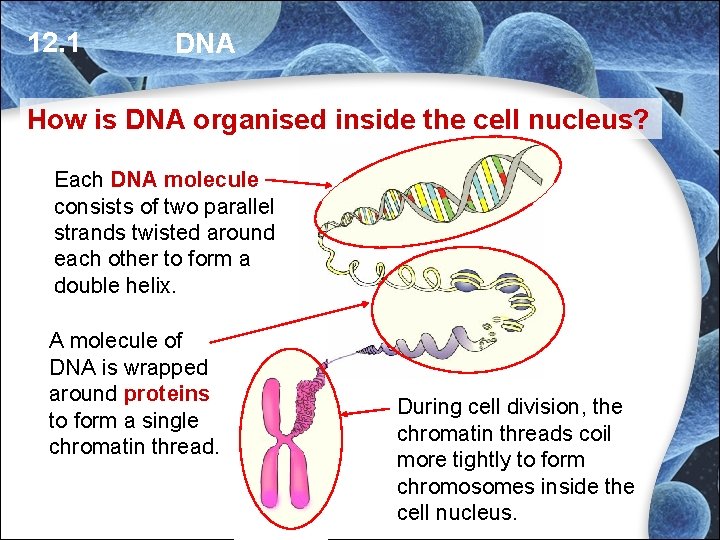
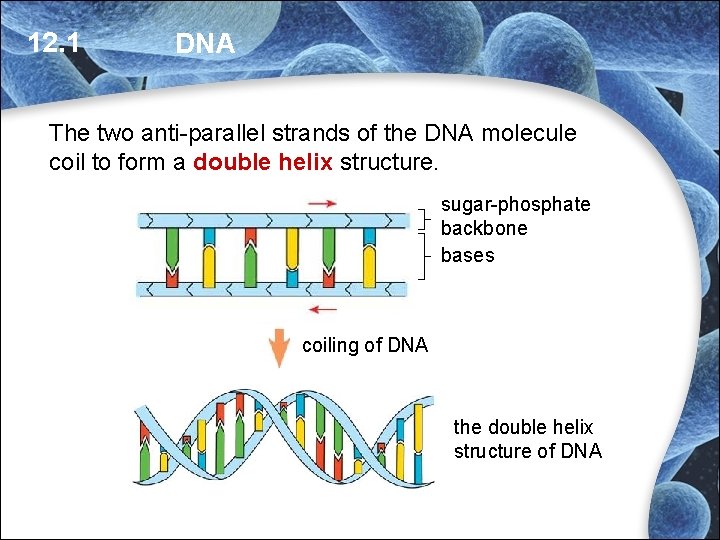
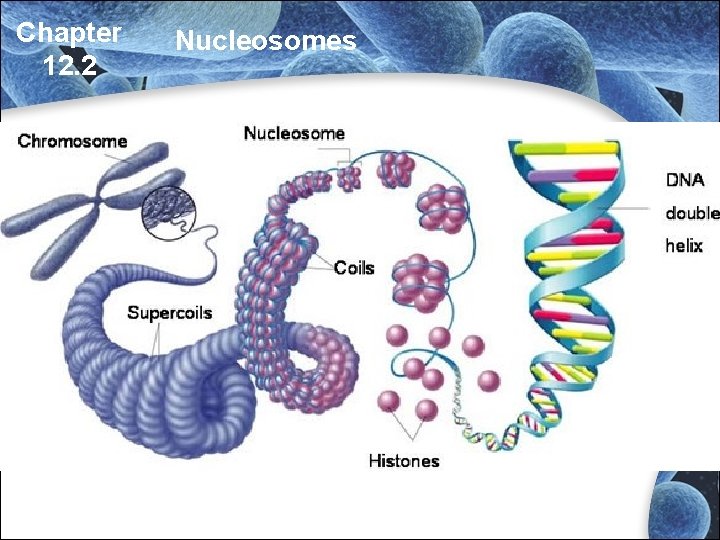
12. 1 DNA How is DNA organised inside the cell nucleus? Each DNA molecule consists of two parallel strands twisted around each other to form a double helix. A molecule of DNA is wrapped around proteins to form a single chromatin thread. During cell division, the chromatin threads coil more tightly to form chromosomes inside the cell nucleus.
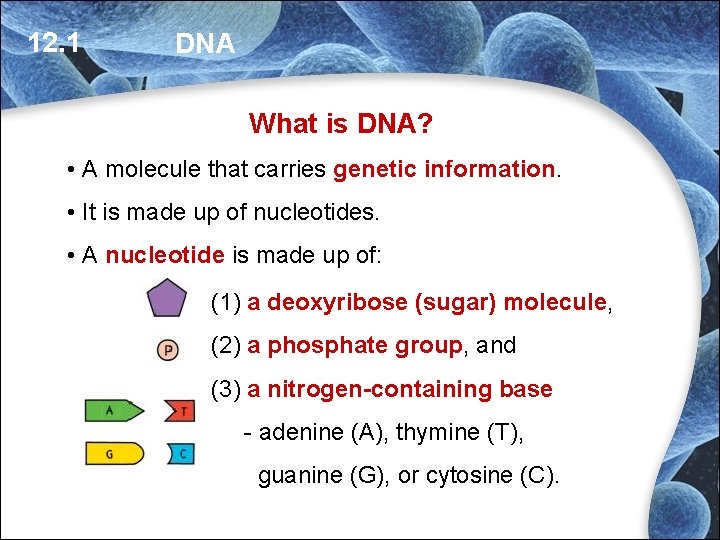
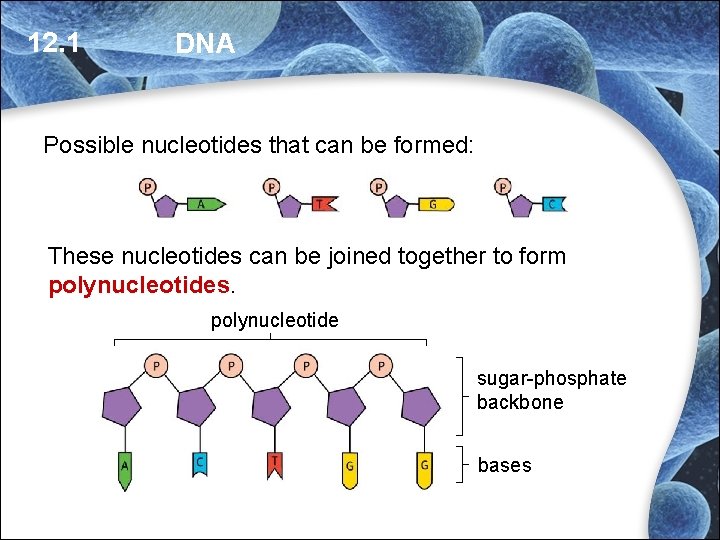
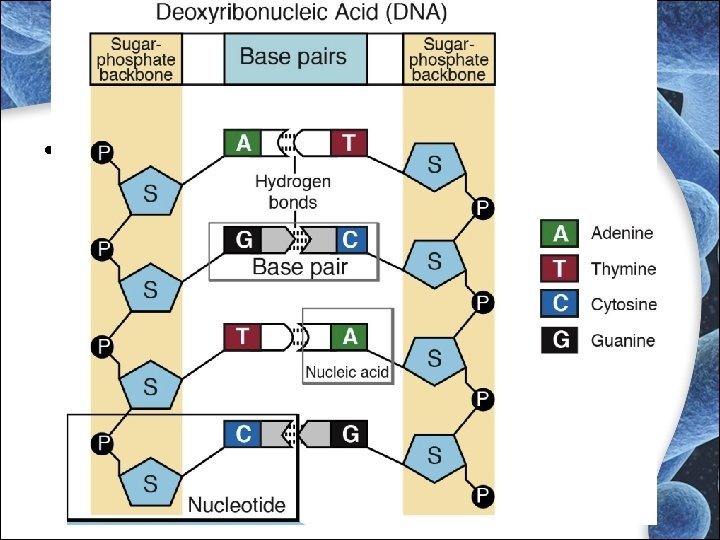
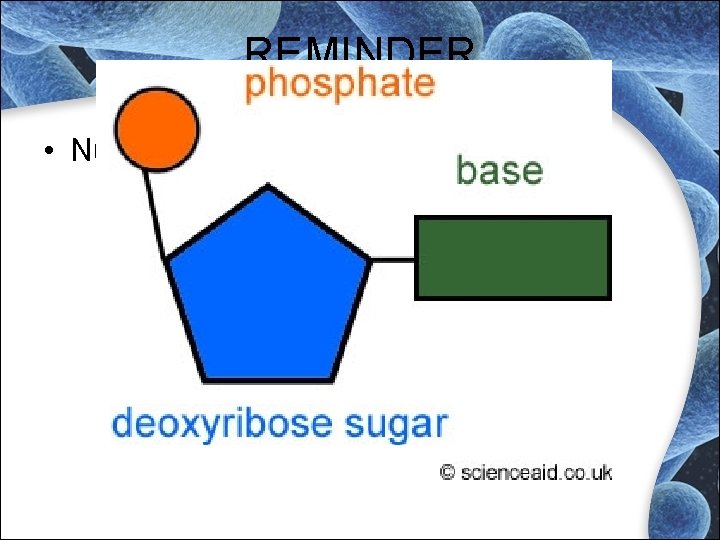
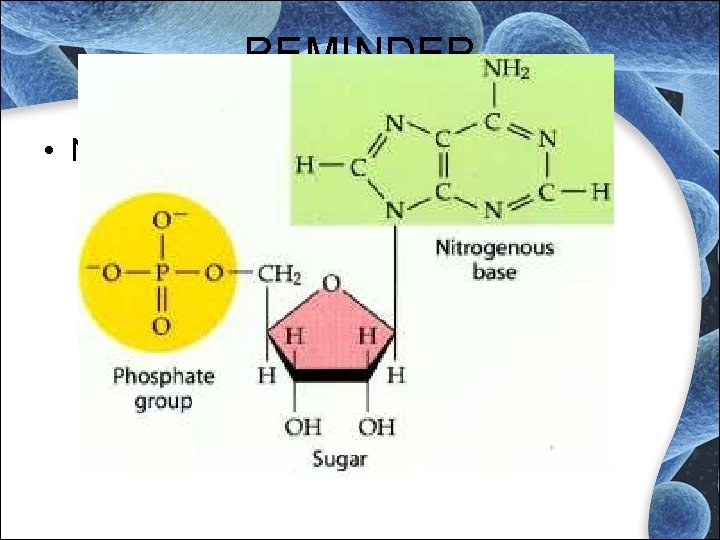
12. 1 DNA What is DNA? • A molecule that carries genetic information. • It is made up of nucleotides. • A nucleotide is made up of: (1) a deoxyribose (sugar) molecule, (2) a phosphate group, and (3) a nitrogen-containing base - adenine (A), thymine (T), guanine (G), or cytosine (C).
12. 1 DNA Possible nucleotides that can be formed: cytosine adenine guanine thymine These nucleotides can be joined together to form nucleotide polynucleotides. polynucleotide sugar-phosphate backbone bases
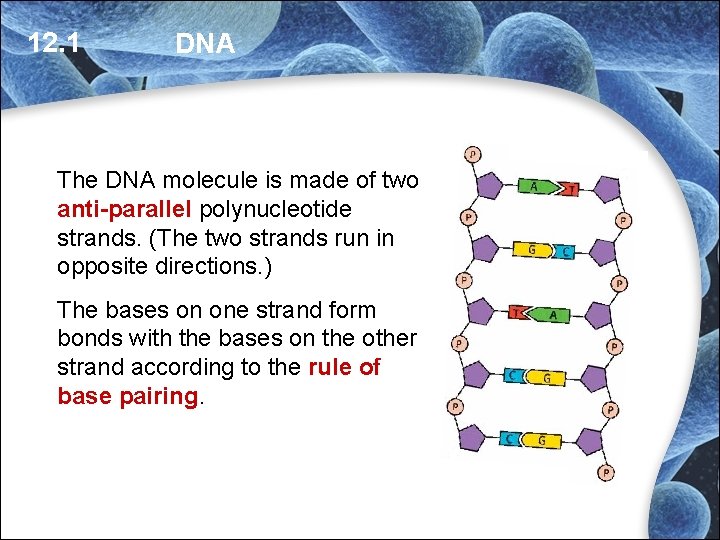
12. 1 DNA The DNA molecule is made of two anti-parallel polynucleotide strands. (The two strands run in opposite directions. ) The bases on one strand form bonds with the bases on the other strand according to the rule of base pairing.
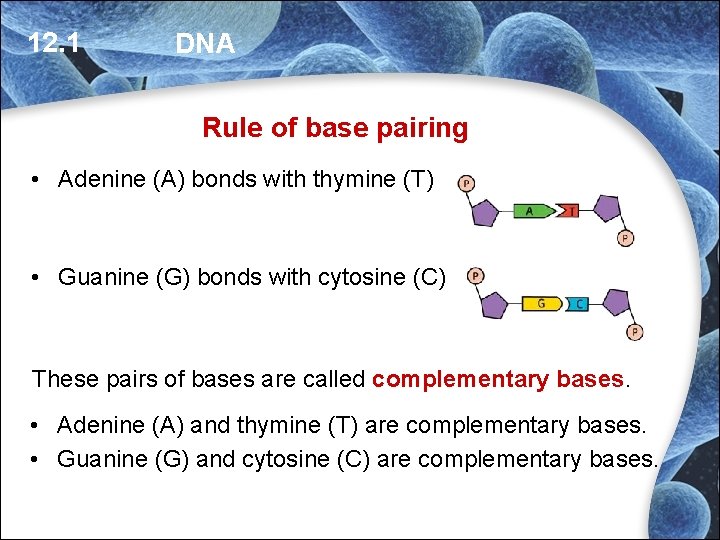
12. 1 DNA Rule of base pairing • Adenine (A) bonds with thymine (T) • Guanine (G) bonds with cytosine (C) These pairs of bases are called complementary bases. • Adenine (A) and thymine (T) are complementary bases. • Guanine (G) and cytosine (C) are complementary bases.
12. 1 DNA The two anti-parallel strands of the DNA molecule coil to form a double helix structure. sugar-phosphate backbone bases coiling of DNA the double helix structure of DNA
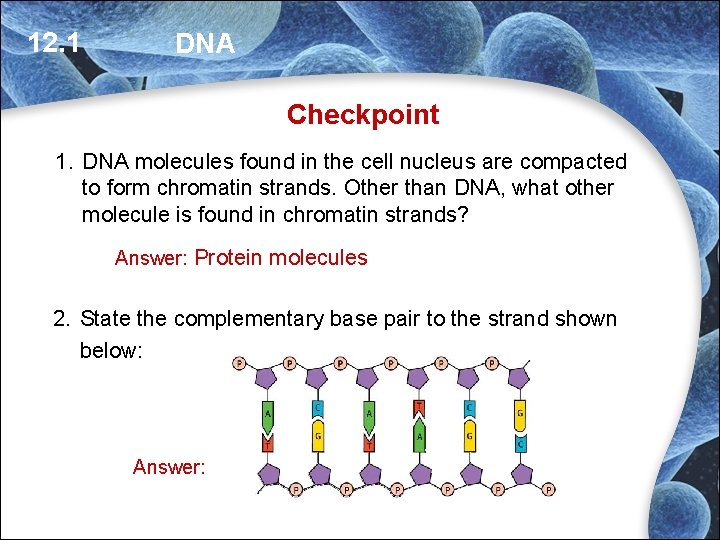
12. 1 DNA Checkpoint 1. DNA molecules found in the cell nucleus are compacted to form chromatin strands. Other than DNA, what other molecule is found in chromatin strands? Answer: Protein molecules 2. State the complementary base pair to the strand shown below: Answer:
12. 1 DNA 3. State the ratio of: (1) adenine : thymine, and (2) guanine : cytosine in the DNA of a cell. Answer: (1) 1 : 1 (2) 1 : 1 anti-parallel 4. The strands in a DNA molecule are ______. The double helix strands coil together to form a ______ structure.
12. 1 DNA • Text book Questions • Page 294 • Q 1 -5
Chapter 12 DNA and RNA 12. 1 DNA 12. 2 Chromosomes and DNA Replication 12. 3 RNA and Protein Synthesis 12. 4 Mutations 12. 5 Gene Regulation
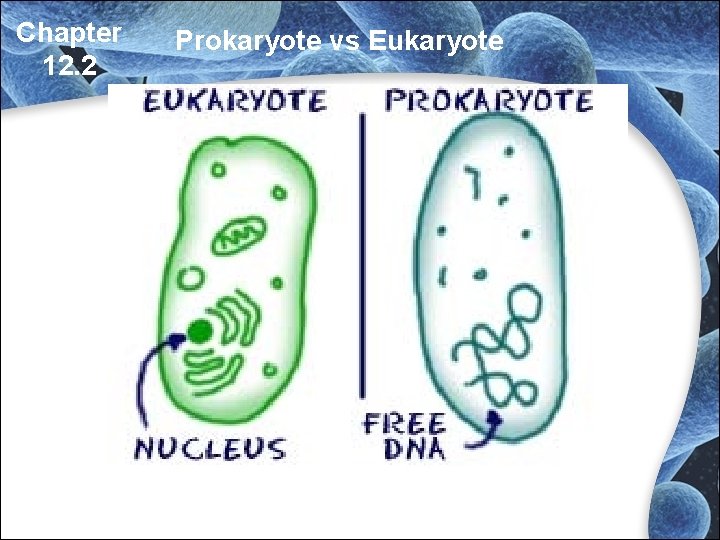
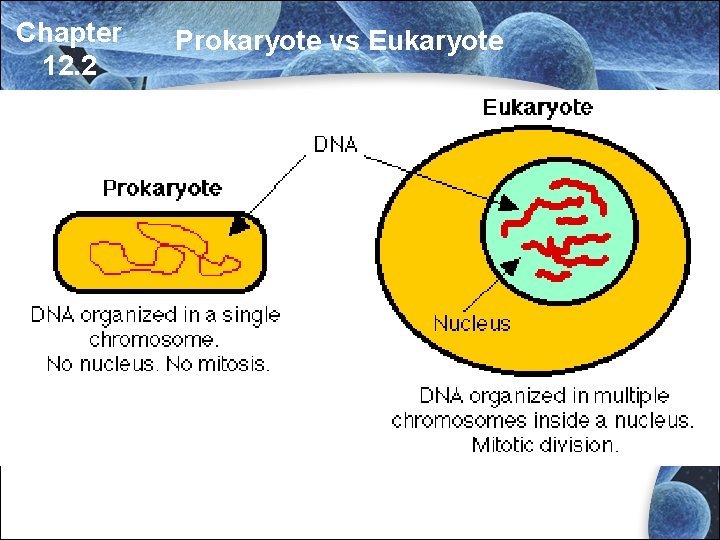
Chapter 12. 2 Prokaryote vs Eukaryote
Chapter 12. 2 Prokaryote vs Eukaryote
Chapter 12. 2 Nucleosomes
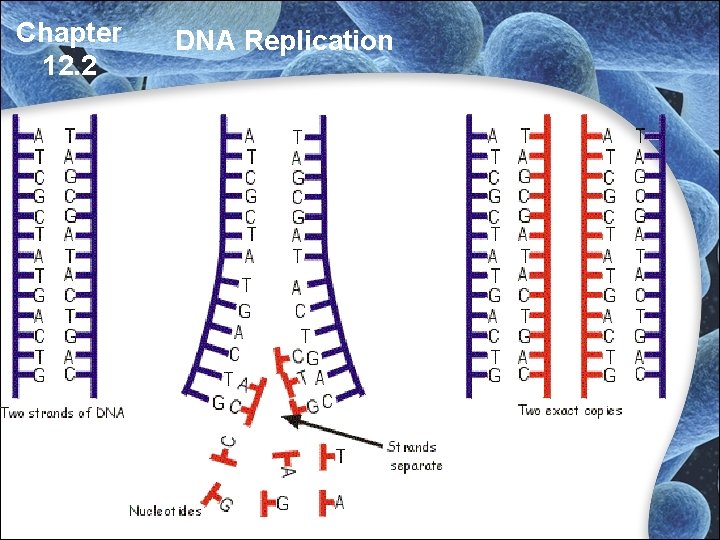
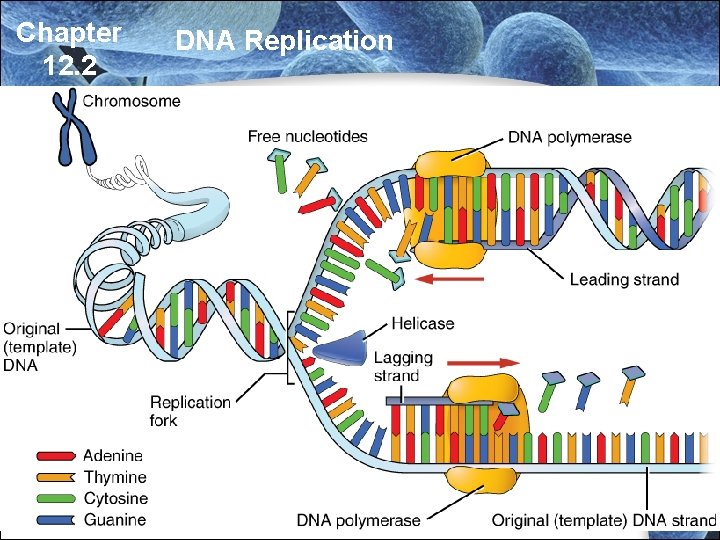
Chapter 12. 2 DNA Replication
Chapter 12. 2 DNA Replication
Chapter 12. 2 Review • According to Chargaff's rule, the following proportion exists in DNA. • A)C=G • B)C» T • C)C» G • D)C=T
Chapter 12. 2 Review • According to Chargaff's rule, the following proportion exists in DNA. • A)C=G • B)C» T • C)C» G • D)C=T
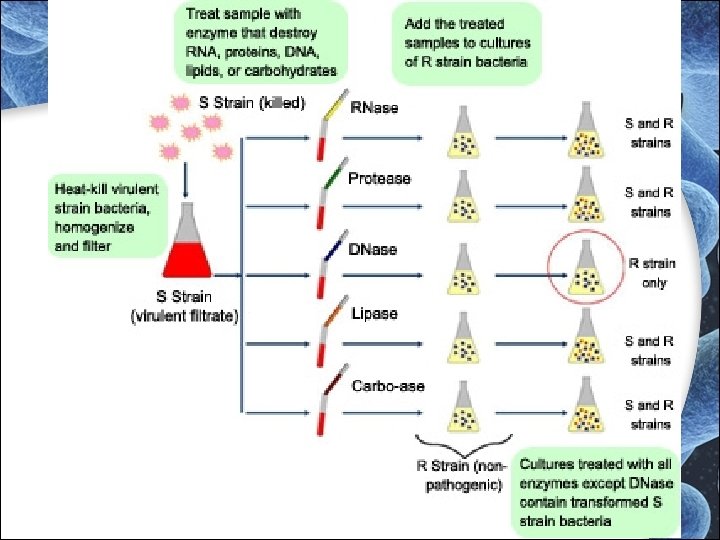
Chapter 12. 2 Review All of the following were outcomes of Avery's experiment on "the active principle" except A)the array of the elements of purified principle agreed closely with DNA and the principle centrifuged to the same level as DNA. B)protein digesting enzymes did not affect the sample C)the extraction of lipids and proteins from the principle only slightly reduced its activity D)DNA-digesting enzyme, DNase, destroyed all transcription activity.
Chapter 12. 2 Review All of the following were outcomes of Avery's experiment on "the active principle" except A)the array of the elements of purified principle agreed closely with DNA and the principle centrifuged to the same level as DNA. B)protein digesting enzymes did not affect the sample C)the extraction of lipids and proteins from the principle only slightly reduced its activity D)DNA-digesting enzyme, DNase, destroyed all transcription activity.
Chapter 12. 2 Review The fact that some viruses use DNA to direct their heredity was demonstrated by A)finding radioactive sulfur from a bacteriophage in a bacterium. B)finding radioactive phosphorus from a bacterium in a bacteriophage. C)finding that radioactive phosphorus from a bacteriophage had mutated in bacterium. D)finding radioactive phosphorus from a bacteriophage in a bacterium. E)finding radioactive sulfur from a bacterium in a bacteriophage.
Chapter 12. 2 Review The fact that some viruses use DNA to direct their heredity was demonstrated by A)finding radioactive sulfur from a bacteriophage in a bacterium. B)finding radioactive phosphorus from a bacterium in a bacteriophage. C)finding that radioactive phosphorus from a bacteriophage had mutated in bacterium. D)finding radioactive phosphorus from a bacteriophage in a bacterium. E)finding radioactive sulfur from a bacterium in a bacteriophage.
Chapter 12. 2 Review In DNA guanine always pairs with A)Adenine B)Cytosine C)Guanine D)Thymine E)Uracil
Chapter 12. 2 Review In DNA guanine always pairs with A)Adenine B)Cytosine C)Guanine D)Thymine E)Uracil
Chapter 12. 2 Review With few exceptions, all nuclei of eukaryotes contain A)genes to specify the portion of the organism in which they are found B)all the information needed for growing the whole organism C)all of the chromosomes except sex chromosomes which are restricted to sex organs D)single stranded DNA E)only euchromatin except in the case of the Ychromosome
Chapter 12. 2 Review With few exceptions, all nuclei of eukaryotes contain A)genes to specify the portion of the organism in which they are found B)all the information needed for growing the whole organism C)all of the chromosomes except sex chromosomes which are restricted to sex organs D)single stranded DNA E)only euchromatin except in the case of the Ychromosome
Chapter 12. 2 Review In DNA, thymine always pairs with A)Adenine B)Cytosine C)Guanine D)Thymine E)Uracil
Chapter 12. 2 Review In DNA, thymine always pairs with A)Adenine B)Cytosine C)Guanine D)Thymine E)Uracil
Chapter 12. 2 Review Each unit of a nucleic acid consisting of a sugar, attached phosphate group, and base is a A)Nucleolus B)Nucleotide C)Nucleosome D)Histone E)Genetisome
Chapter 12. 2 Review Each unit of a nucleic acid consisting of a sugar, attached phosphate group, and base is a A)Nucleolus B)Nucleotide C)Nucleosome D)Histone E)Genetisome
Chapter 12. 2 Review A DNA molecule has the same amount of adenine and thymine. A)True B)False
Chapter 12. 2 Review A DNA molecule has the same amount of adenine and thymine. A)True B)False
Chapter 12. 2 Review In the DNA molecule: A)adenine pairs with thymine B)guanine pairs with thymine C)cytosine pairs with thymine D)adenine pairs with cytosine E)All of the above are possible. A DNA molecule has the same amount of adenine and thymine.
Chapter 12. 2 Review In the DNA molecule: A)adenine pairs with thymine B)guanine pairs with thymine C)cytosine pairs with thymine D)adenine pairs with cytosine E)All of the above are possible. A DNA molecule has the same amount of adenine and thymine.
Chapter 12. 2 Review If one side of a DNA molecule contains the following sequence of nucleotides, AGTCCG, the complementary sequence on the other side would be: A)GCCTGA B)AGTCCG C)TCAGGC D)CTGAAT E)none of the above
Chapter 12. 2 Review If one side of a DNA molecule contains the following sequence of nucleotides, AGTCCG, the complementary sequence on the other side would be: A)GCCTGA B)AGTCCG C)TCAGGC D)CTGAAT E)none of the above
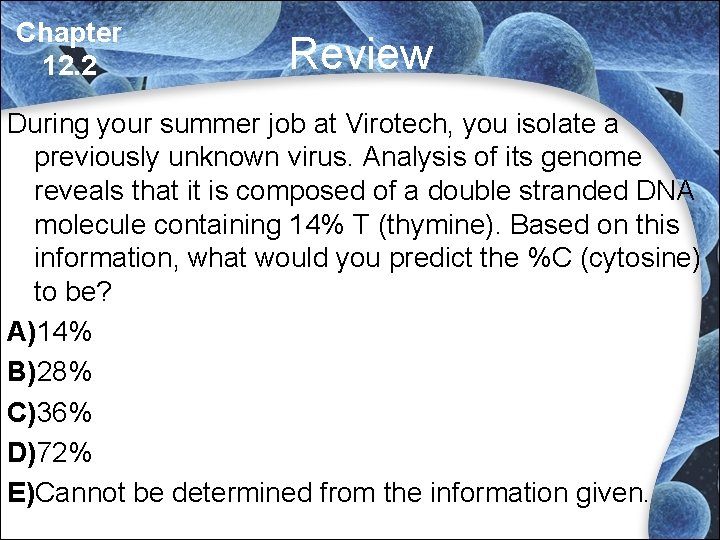
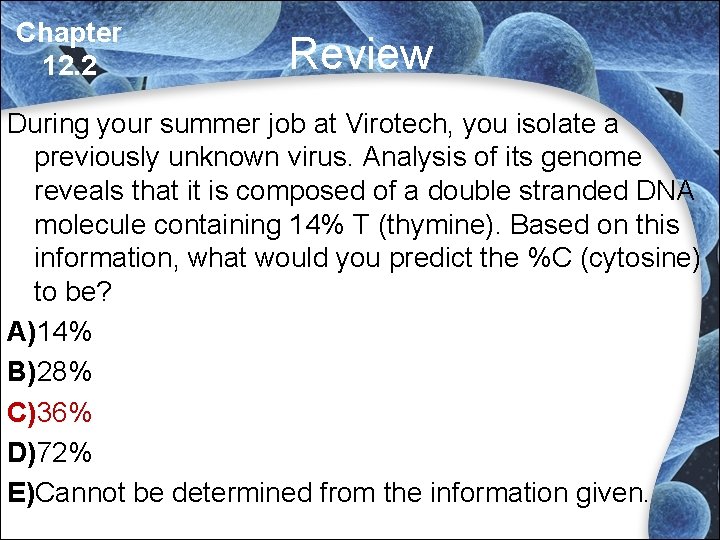
Chapter 12. 2 Review During your summer job at Virotech, you isolate a previously unknown virus. Analysis of its genome reveals that it is composed of a double stranded DNA molecule containing 14% T (thymine). Based on this information, what would you predict the %C (cytosine) to be? A)14% B)28% C)36% D)72% E)Cannot be determined from the information given.
Chapter 12. 2 Review During your summer job at Virotech, you isolate a previously unknown virus. Analysis of its genome reveals that it is composed of a double stranded DNA molecule containing 14% T (thymine). Based on this information, what would you predict the %C (cytosine) to be? A)14% B)28% C)36% D)72% E)Cannot be determined from the information given.
Chapter 12. 2 Review Text book questions page 299 1 -6
Chapter 12 DNA and RNA 12. 1 DNA 12. 2 Chromosomes and DNA Replication 12. 3 RNA and Protein Synthesis 12. 4 Mutations 12. 5 Gene Regulation
12. 3 RNA and Protein Synthesis How are proteins made?
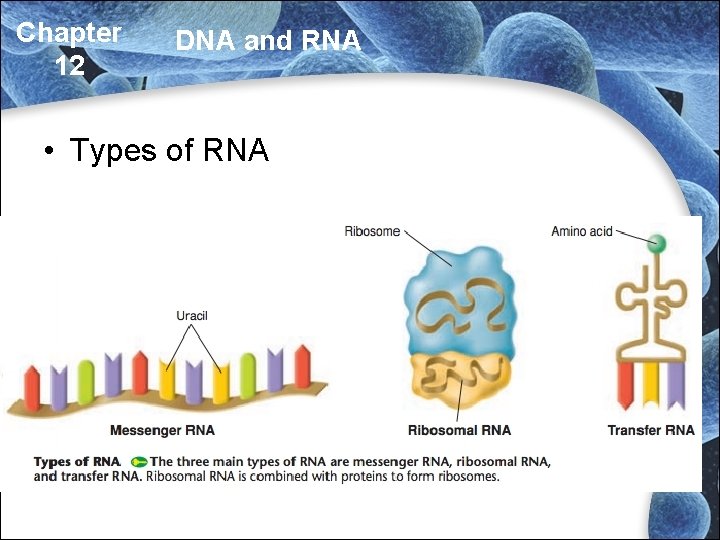
Chapter 12 DNA and RNA • Types of RNA
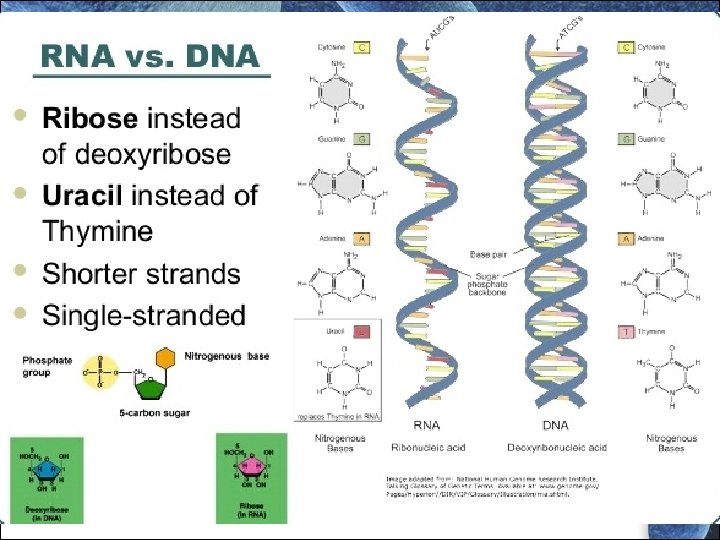
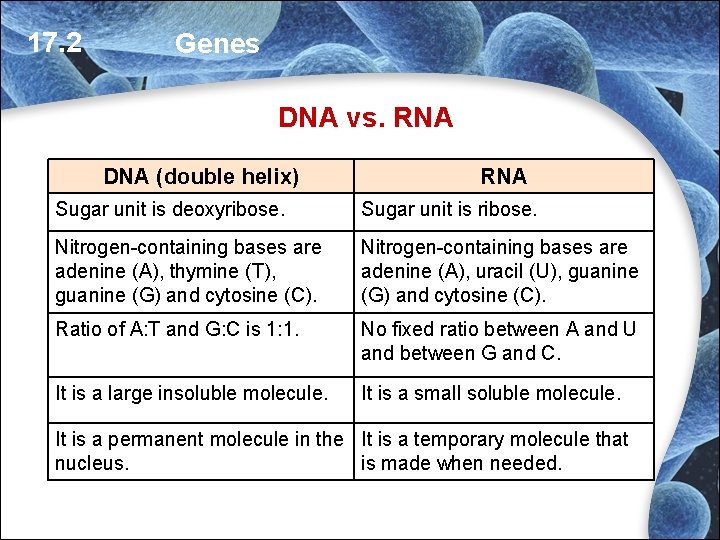
17. 2 Genes DNA vs. RNA DNA (double helix) RNA Sugar unit is deoxyribose. Sugar unit is ribose. Nitrogen-containing bases are adenine (A), thymine (T), guanine (G) and cytosine (C). Nitrogen-containing bases are adenine (A), uracil (U), guanine (G) and cytosine (C). Ratio of A: T and G: C is 1: 1. No fixed ratio between A and U and between G and C. It is a large insoluble molecule. It is a small soluble molecule. It is a permanent molecule in the It is a temporary molecule that nucleus. is made when needed.
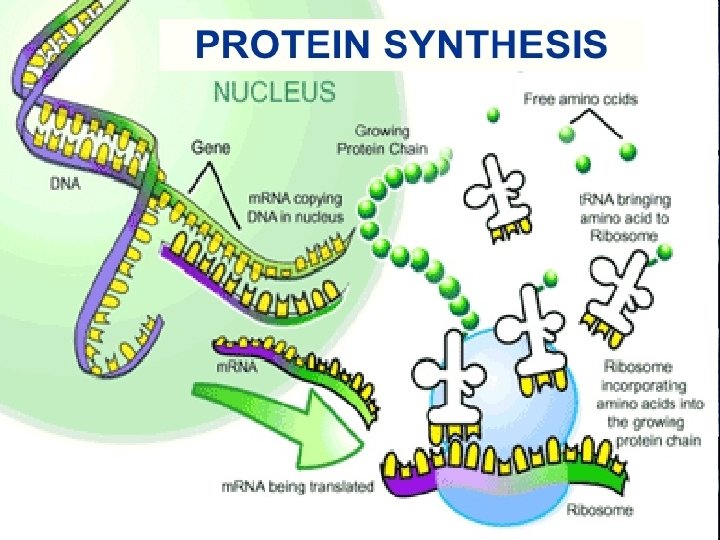
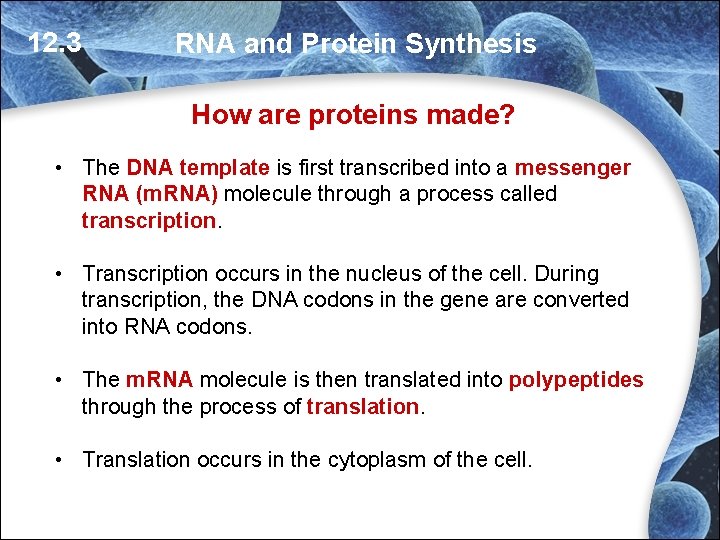
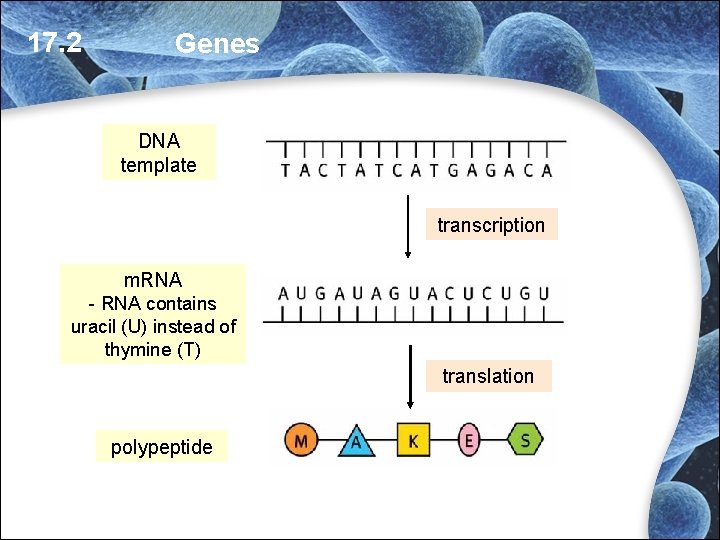
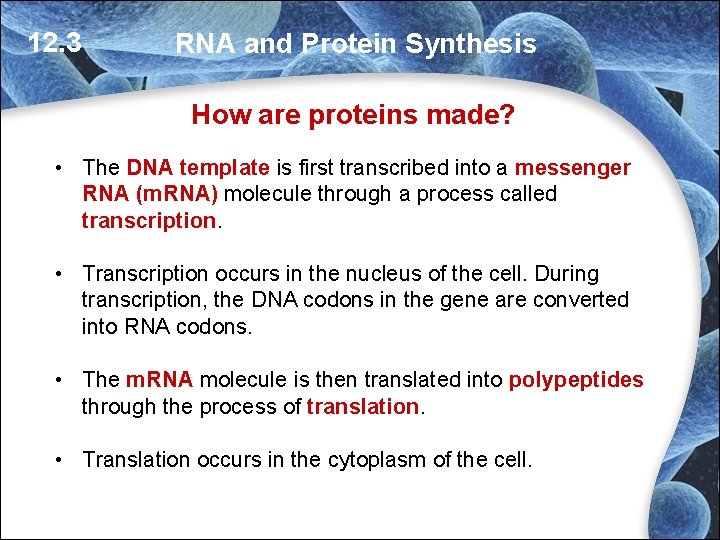
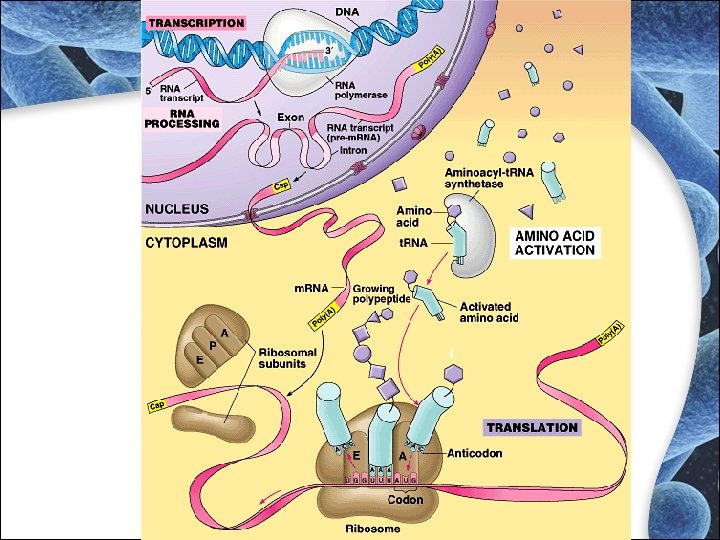
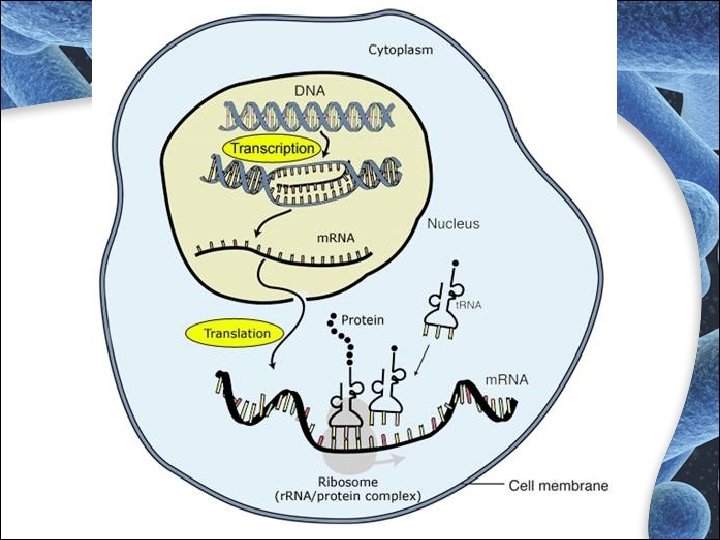
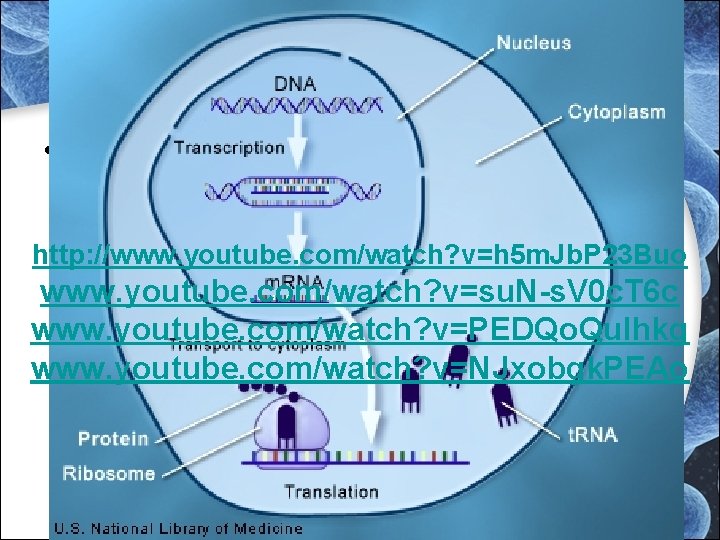
12. 3 RNA and Protein Synthesis How are proteins made? • The DNA template is first transcribed into a messenger RNA (m. RNA) molecule through a process called transcription. • Transcription occurs in the nucleus of the cell. During transcription, the DNA codons in the gene are converted into RNA codons. • The m. RNA molecule is then translated into polypeptides through the process of translation. • Translation occurs in the cytoplasm of the cell.
17. 2 Genes DNA template transcription m. RNA - RNA contains uracil (U) instead of thymine (T) translation polypeptide
12. 3 RNA and Protein Synthesis How are proteins made? • The DNA template is first transcribed into a messenger RNA (m. RNA) molecule through a process called transcription. • Transcription occurs in the nucleus of the cell. During transcription, the DNA codons in the gene are converted into RNA codons. • The m. RNA molecule is then translated into polypeptides through the process of translation. • Translation occurs in the cytoplasm of the cell.
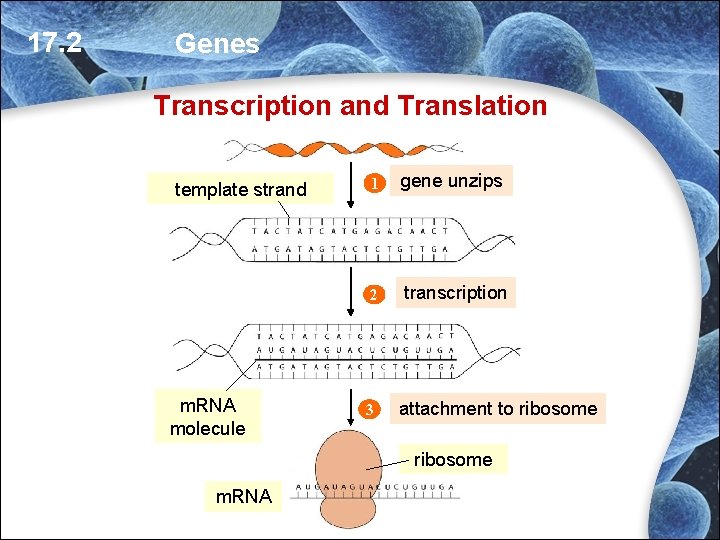
17. 2 Genes Transcription and Translation template strand m. RNA molecule 1 gene unzips 2 transcription 3 attachment to ribosome m. RNA
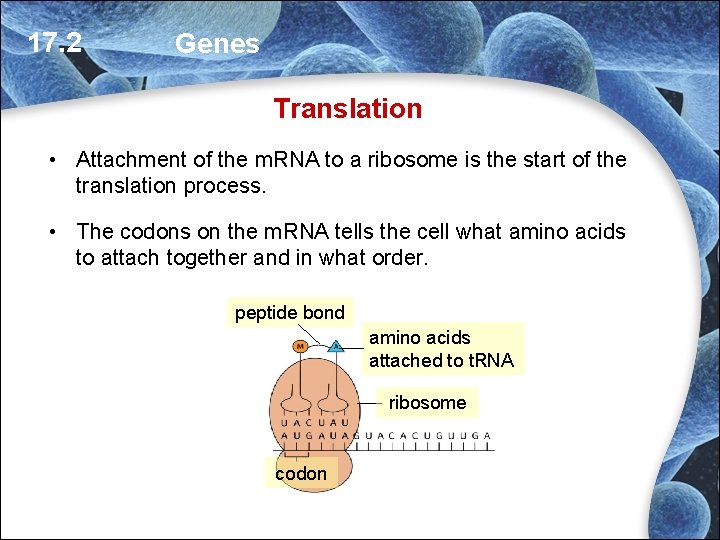
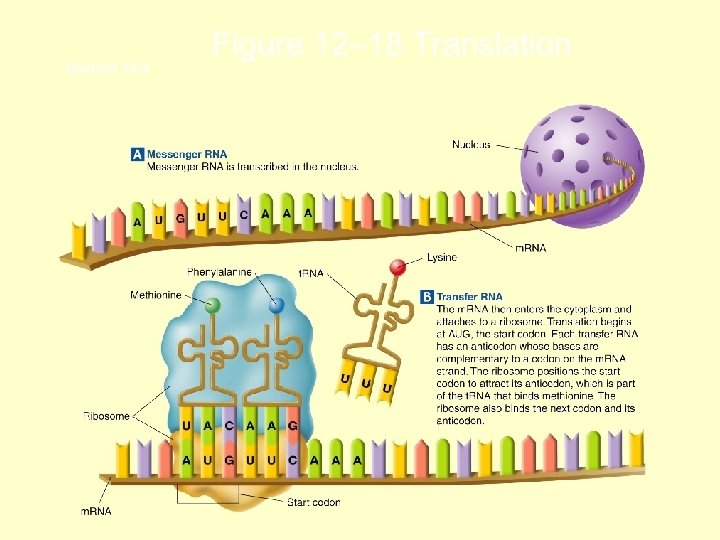
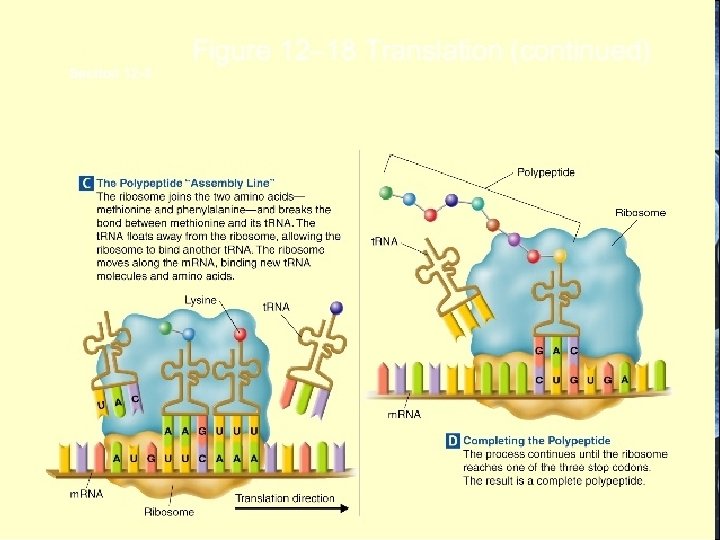
17. 2 Genes Translation • Attachment of the m. RNA to a ribosome is the start of the translation process. • The codons on the m. RNA tells the cell what amino acids to attach together and in what order. peptide bond amino acids attached to t. RNA ribosome codon
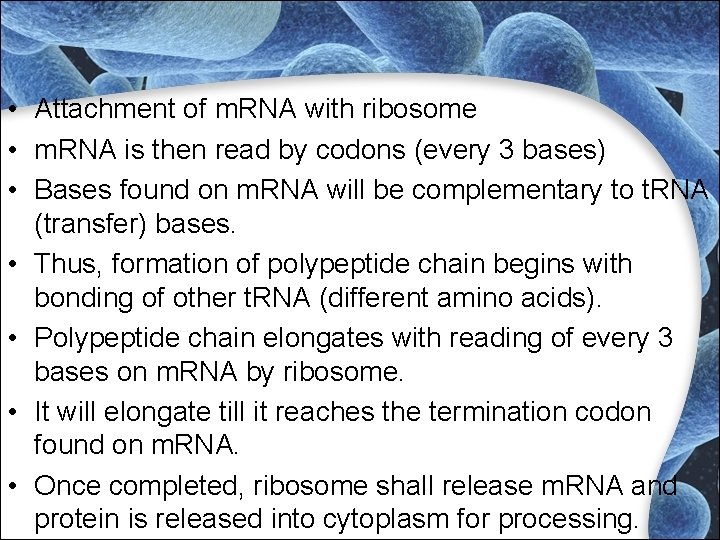
• Attachment of m. RNA with ribosome • m. RNA is then read by codons (every 3 bases) • Bases found on m. RNA will be complementary to t. RNA (transfer) bases. • Thus, formation of polypeptide chain begins with bonding of other t. RNA (different amino acids). • Polypeptide chain elongates with reading of every 3 bases on m. RNA by ribosome. • It will elongate till it reaches the termination codon found on m. RNA. • Once completed, ribosome shall release m. RNA and protein is released into cytoplasm for processing.
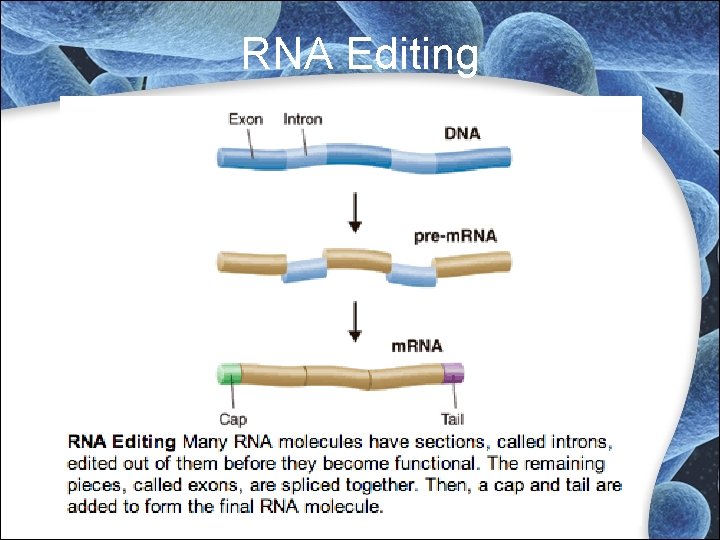
RNA Editing
RNA Editing
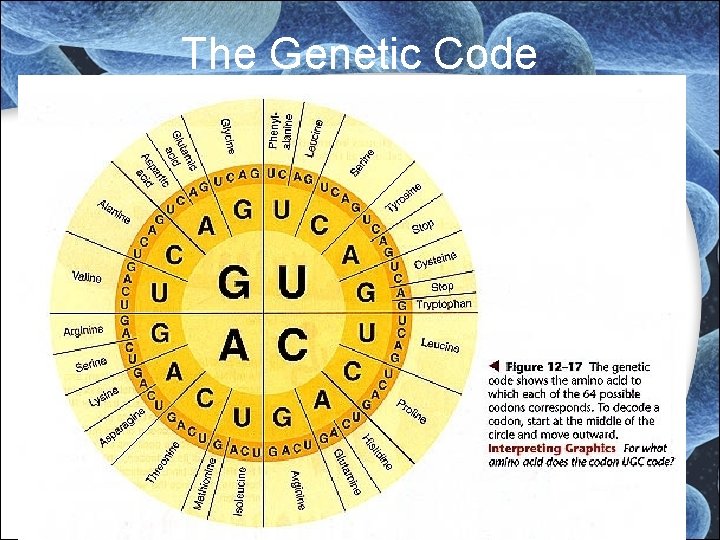
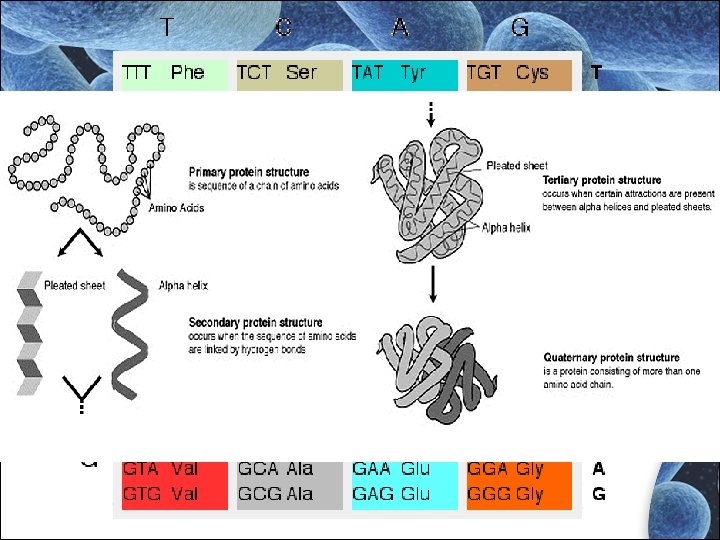
The Genetic Code
The Genetic Code
Review • Text Book • Page 306 • Question 1 -5
12. 4 Mutations
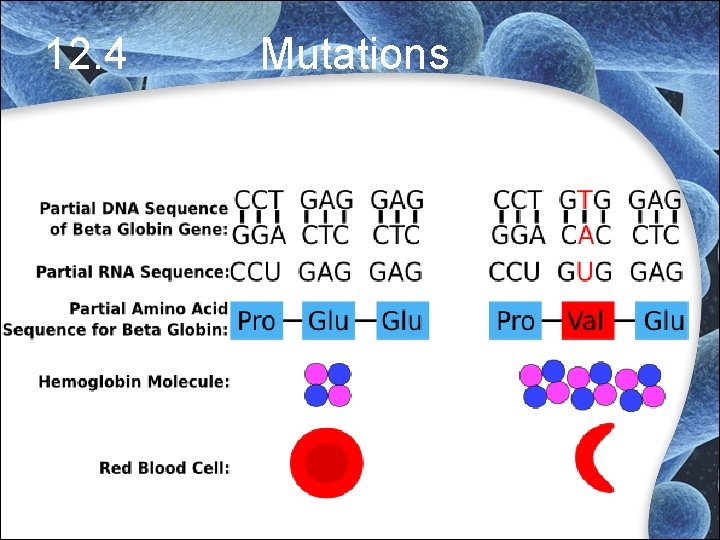
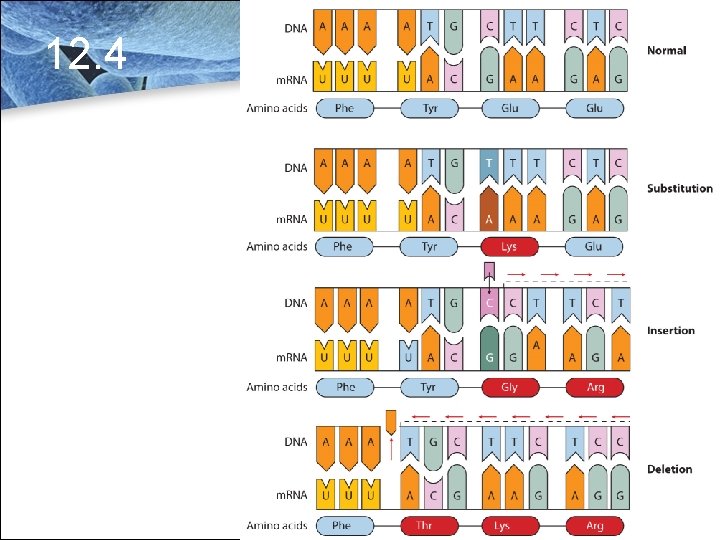
12. 4 Point Mutations
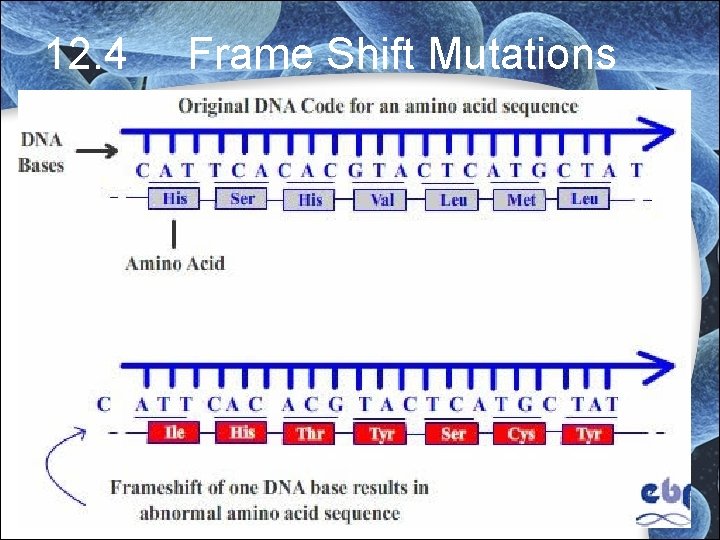
12. 4 Frame Shift Mutations
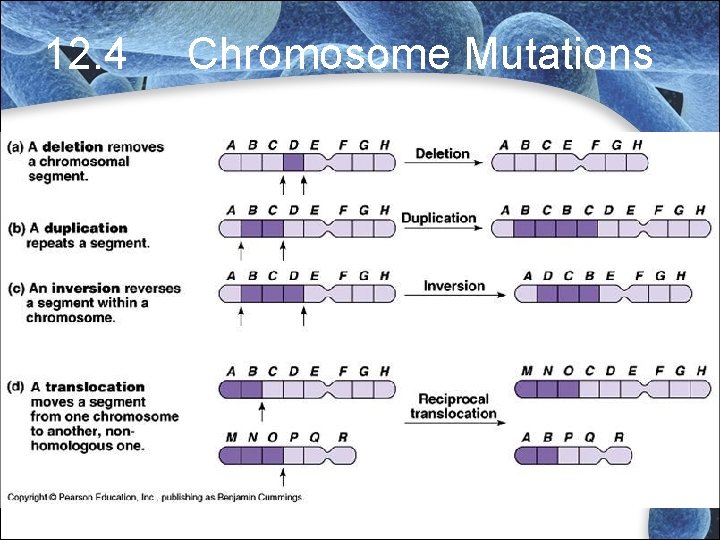
12. 4 Chromosome Mutations
Review • Text book • Page 308 • Question 1 -4
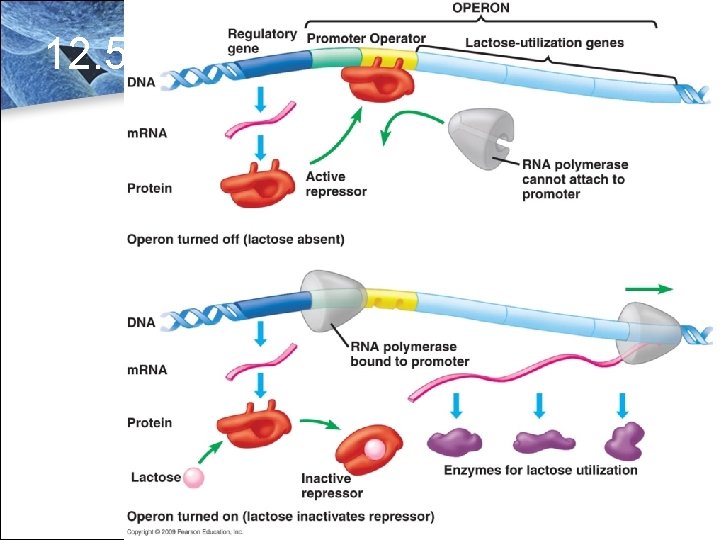
12. 5 Gene Regulation
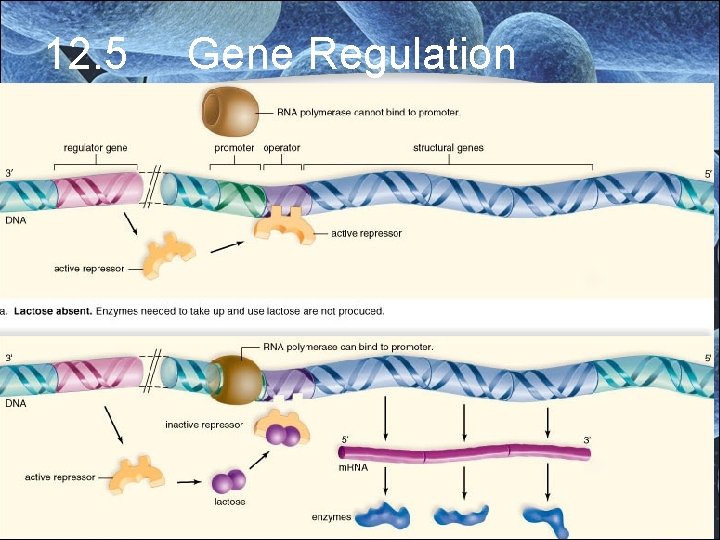
12. 5 Gene Regulation
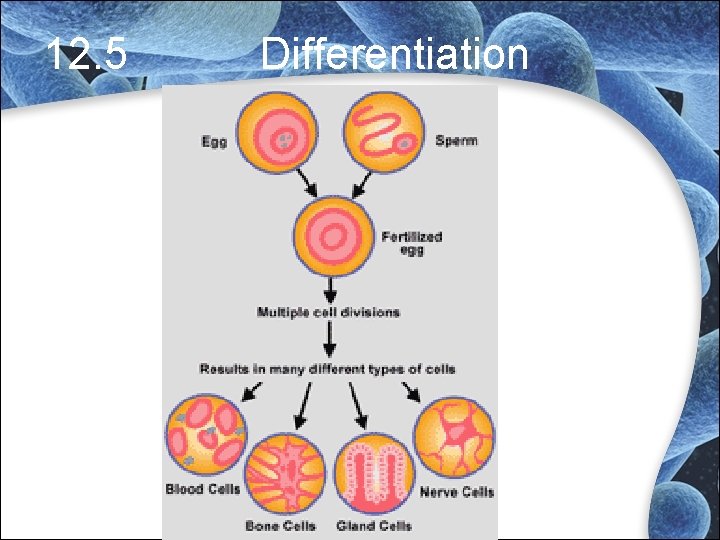
12. 5 Differentiation
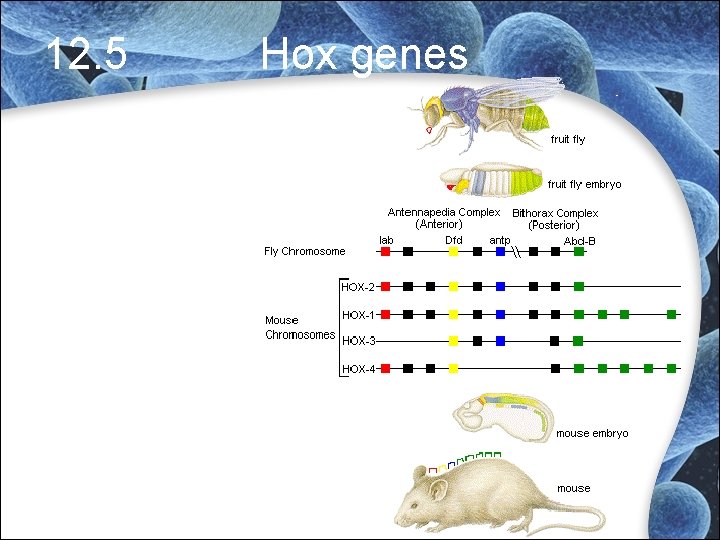
12. 5 Hox genes • Any of the developmental control genes involved in making and identity of each body segment. Mainly during early embryonic development.
12. 5 Hox genes
Review • Text book • Page 312 • Questions 1 -5
REMINDER • Nucleotide
REMINDER • Nucleotide
REMINDER • Nucleotide
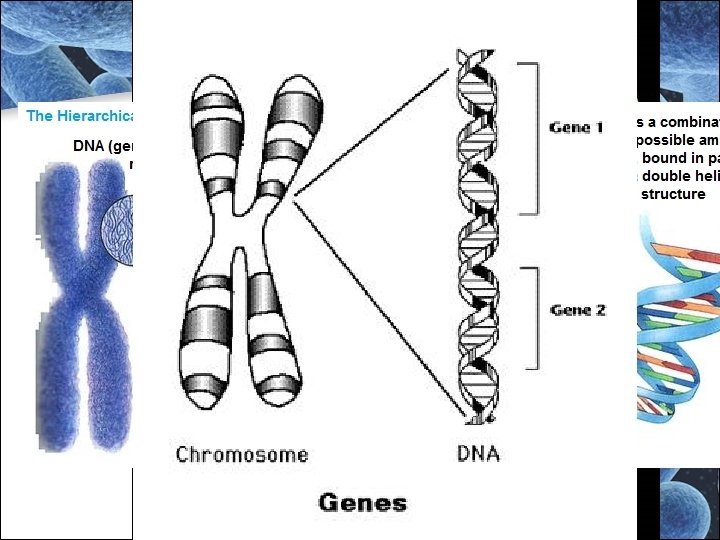
12. 2 Genes Learning Outcomes After this section, you should be able to: • state that DNA molecules contain the genetic code; • state what is meant by the genetic code; • state that a gene is a specific sequence of nucleotides in a DNA molecule that controls the production of a polypeptide.
http: //ghr. nlm. nih. gov/chro mosomes
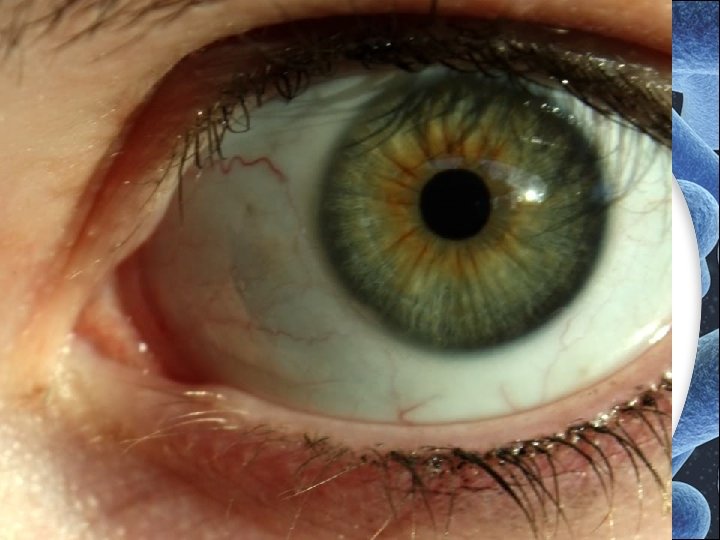
• The Eye Colour is Green due to proteins. • Proteins are formed thanks to genes found in the DNA that encodes for eye colour. • Over time, eye colour may change (either lighten or darken) • This is due to different expressions of the gene which leads to different release of proteins thus a different colour!
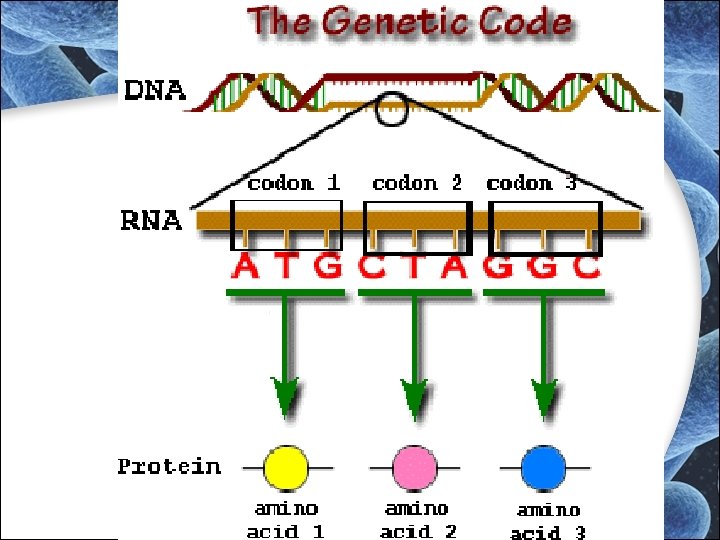
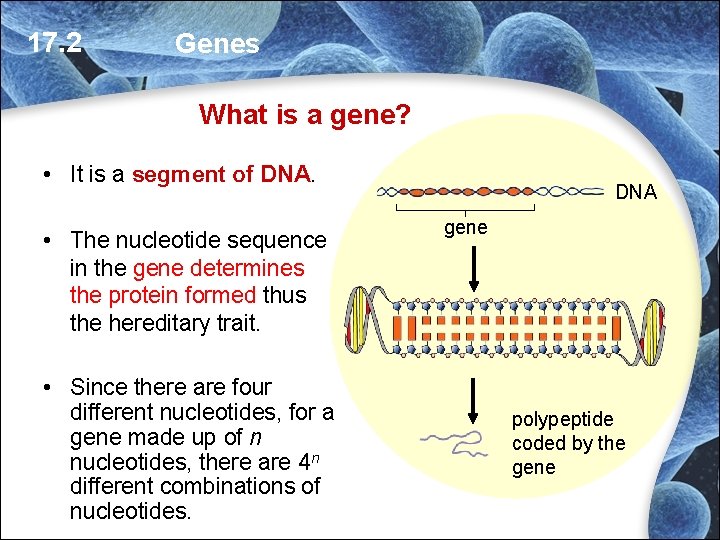
17. 2 Genes What is a gene? • It is a segment of DNA. • The nucleotide sequence in the gene determines the protein formed thus the hereditary trait. • Since there are four different nucleotides, for a gene made up of n nucleotides, there are 4 n different combinations of nucleotides. DNA gene polypeptide coded by the gene
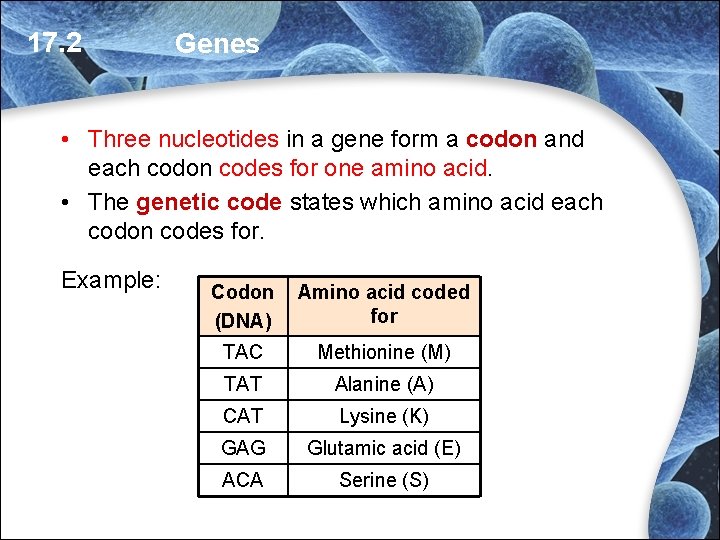
17. 2 Genes • Three nucleotides in a gene form a codon and each codon codes for one amino acid. • The genetic code states which amino acid each codon codes for. Example: Codon (DNA) Amino acid coded for TAC Methionine (M) TAT Alanine (A) CAT Lysine (K) GAG Glutamic acid (E) ACA Serine (S)
• How are proteins made? http: //www. youtube. com/watch? v=h 5 m. Jb. P 23 Buo www. youtube. com/watch? v=su. N-s. V 0 c. T 6 c www. youtube. com/watch? v=PEDQo. Qu. Ihkg www. youtube. com/watch? v=NJxobgk. PEAo