
Chapter 12 DNA and RNA DNA rap What


- Slides: 55
Chapter 12 DNA and RNA DNA rap
What do we now know about DNA? • • “Carries the genetic code” Is the “blueprint for life” Makes up our genes Contains the information for each cell’s structure & all functions • Interactives. DNA. History of DNA
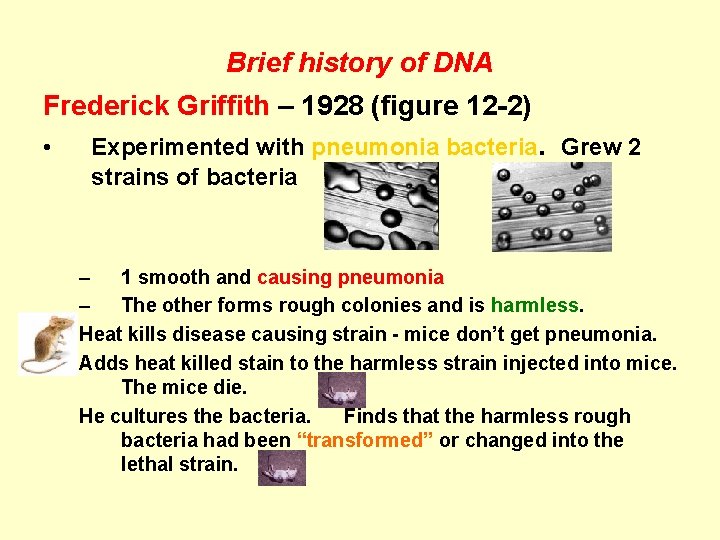
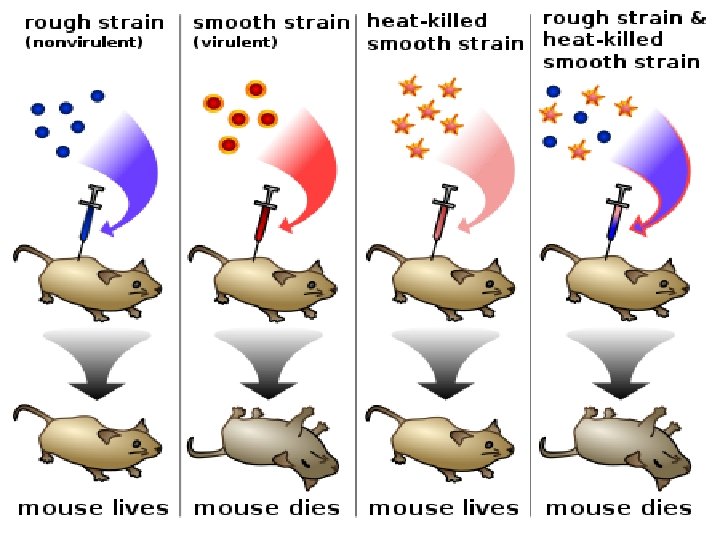
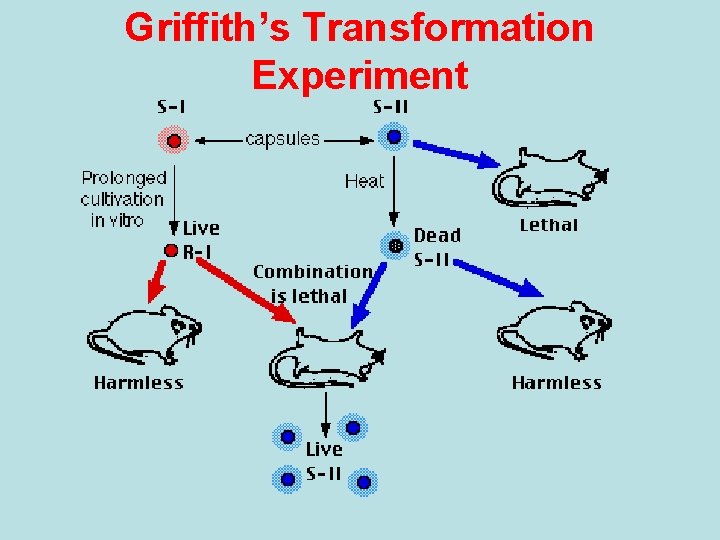
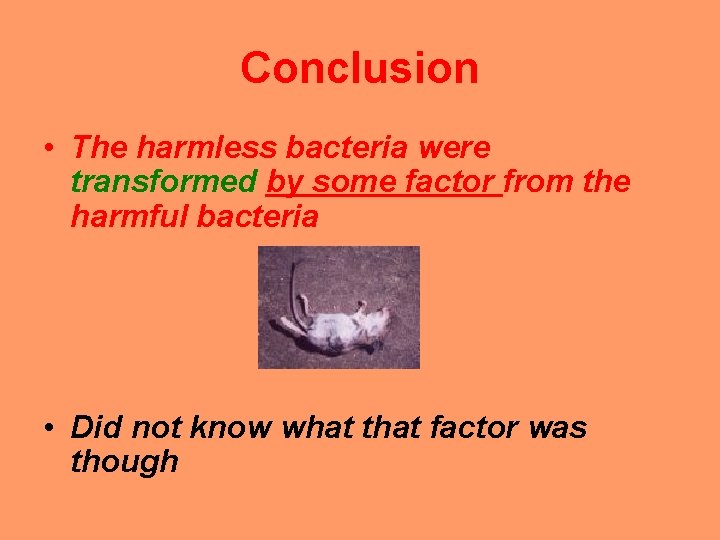
Brief history of DNA Frederick Griffith – 1928 (figure 12 -2) • Experimented with pneumonia bacteria. Grew 2 strains of bacteria – 1 smooth and causing pneumonia – The other forms rough colonies and is harmless. Heat kills disease causing strain - mice don’t get pneumonia. Adds heat killed stain to the harmless strain injected into mice. The mice die. He cultures the bacteria. Finds that the harmless rough bacteria had been “transformed” or changed into the lethal strain.
Griffith’s Transformation Experiment
Conclusion • The harmless bacteria were transformed by some factor from the harmful bacteria • Did not know what that factor was though
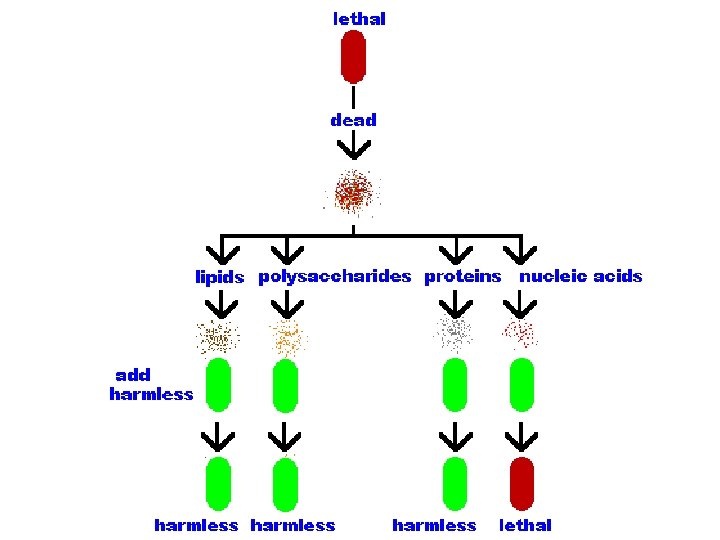
Oswald Avery and company 1944 • Repeated Griffith’s work but used enzymes to destroy proteins, lipids and carbs in the heat killed bacteria. • Pneumonia and transformation still occurred. • Then used an enzyme to kill RNA. Still transformed. • Finally, used an enzyme to break apart DNA. • This stopped transformation
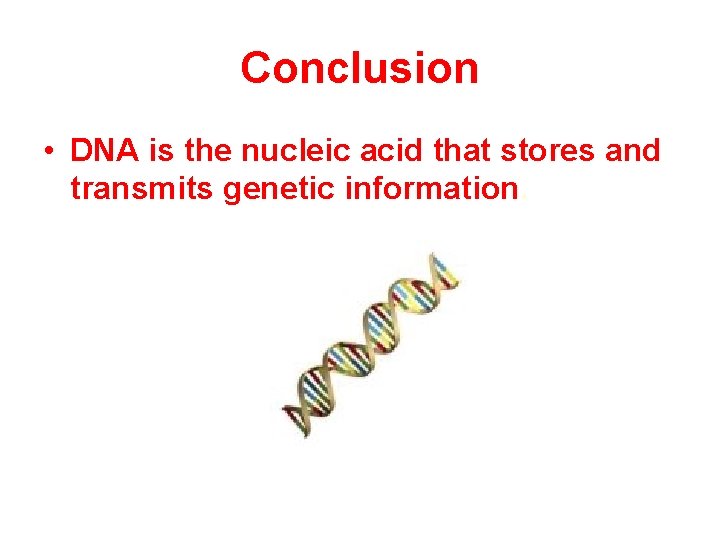
Conclusion • DNA is the nucleic acid that stores and transmits genetic information.
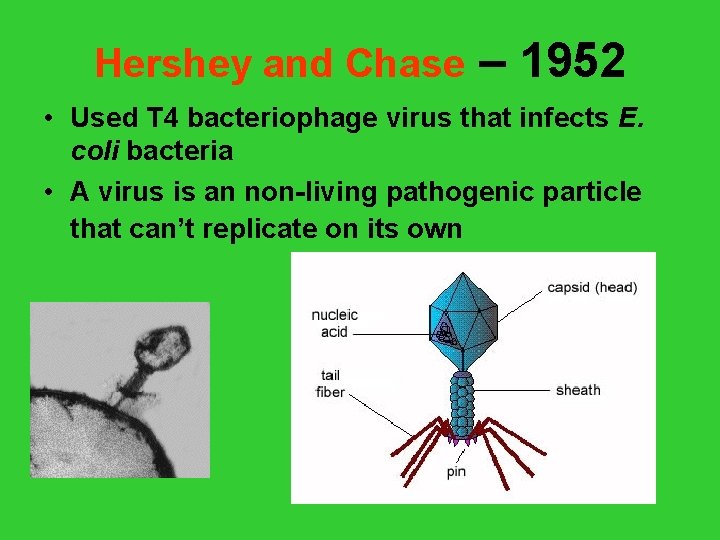
Hershey and Chase – 1952 • Used T 4 bacteriophage virus that infects E. coli bacteria • A virus is an non-living pathogenic particle that can’t replicate on its own
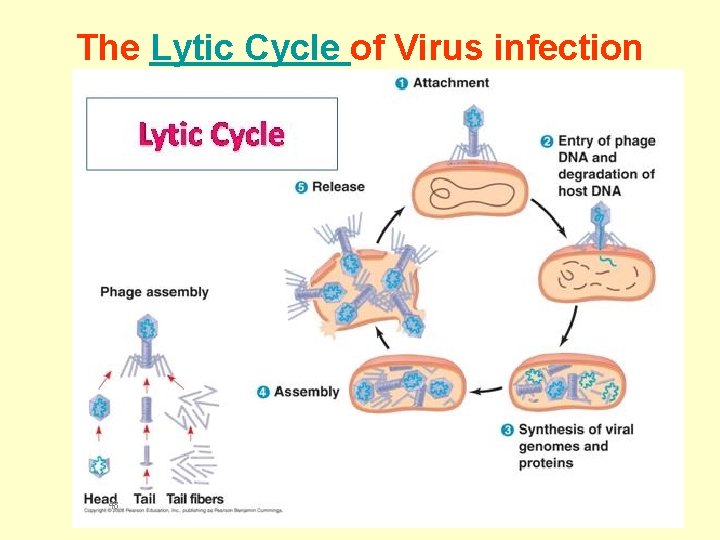
The Lytic Cycle of Virus infection
What part of a virus actually infects & causes the host cell to become a viral factory? Used radioactive isotopes of P 31 and S 32. P 32 and S 35 Proteins do not have Phosphorus DNA doesn’t contain Sulfur
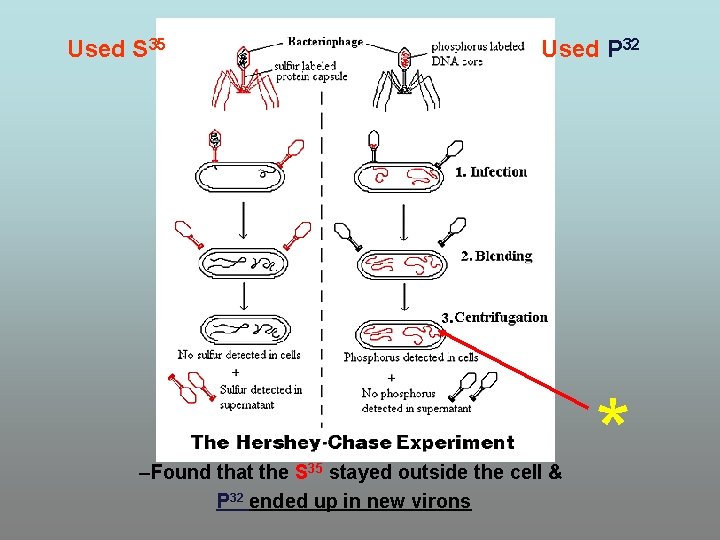
Used S 35 Used P 32 –Found that the stayed outside the cell & P 32 ended up in new virons S 35 *
Conclusion The genetic material of the bacteriophage is located in the DNA, not the protein coat
Erwin Chargaff – 1940’s Noticed a pattern in the amounts of the four bases: Adenine, Guanine, Cytosine, and Thymine • Found the number of Guanine & Cytosine nitrogen bases is always equal in DNA • & the number of Thymine and Adenine is always equal. • Didn’t know why though!
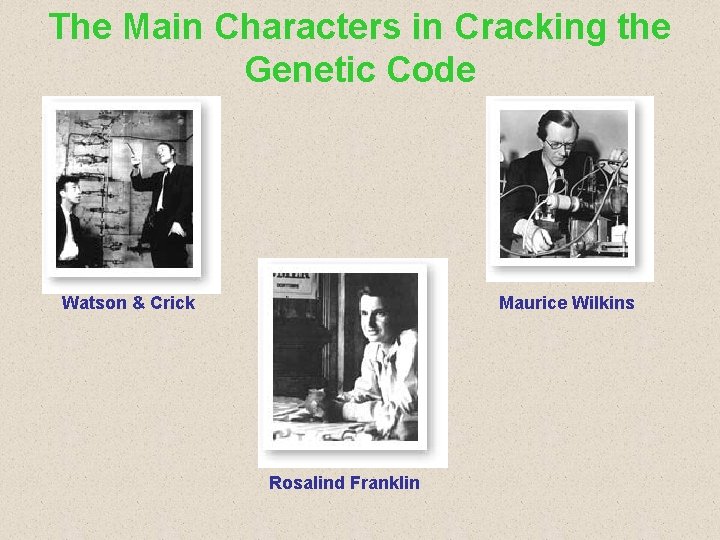
The Main Characters in Cracking the Genetic Code Watson & Crick Maurice Wilkins Rosalind Franklin
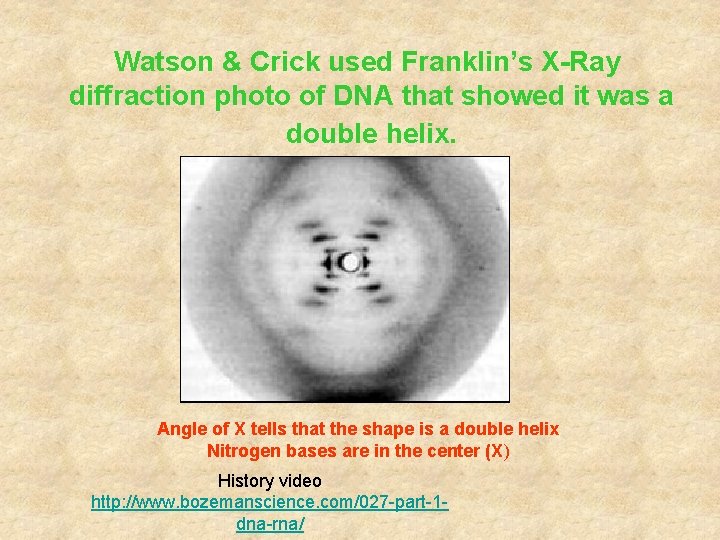
Watson & Crick used Franklin’s X-Ray diffraction photo of DNA that showed it was a double helix. Angle of X tells that the shape is a double helix Nitrogen bases are in the center (X) History video http: //www. bozemanscience. com/027 -part-1 dna-rna/
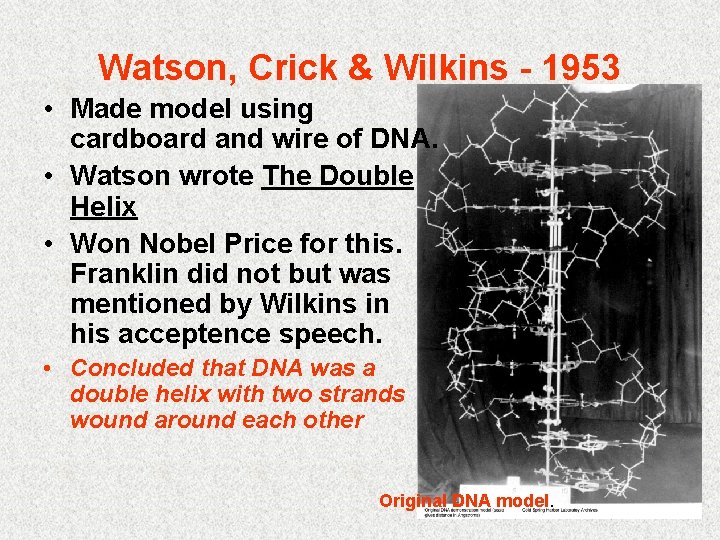
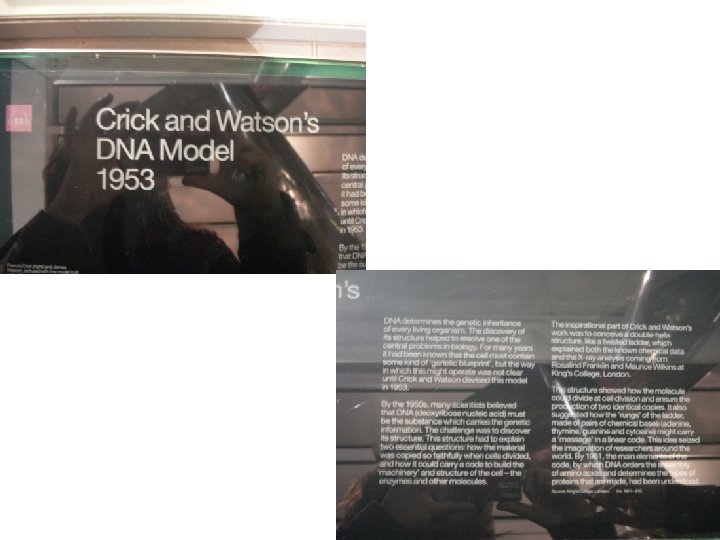
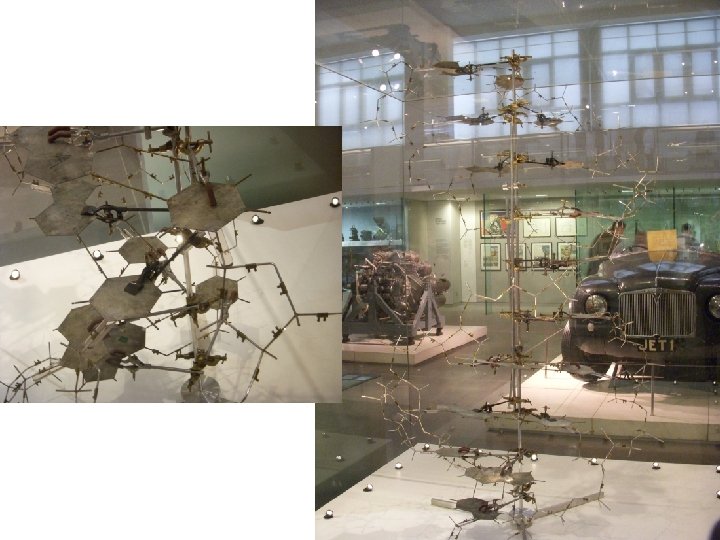
Watson, Crick & Wilkins - 1953 • Made model using cardboard and wire of DNA. • Watson wrote The Double Helix • Won Nobel Price for this. Franklin did not but was mentioned by Wilkins in his acceptence speech. • Concluded that DNA was a double helix with two strands wound around each other Original DNA model.
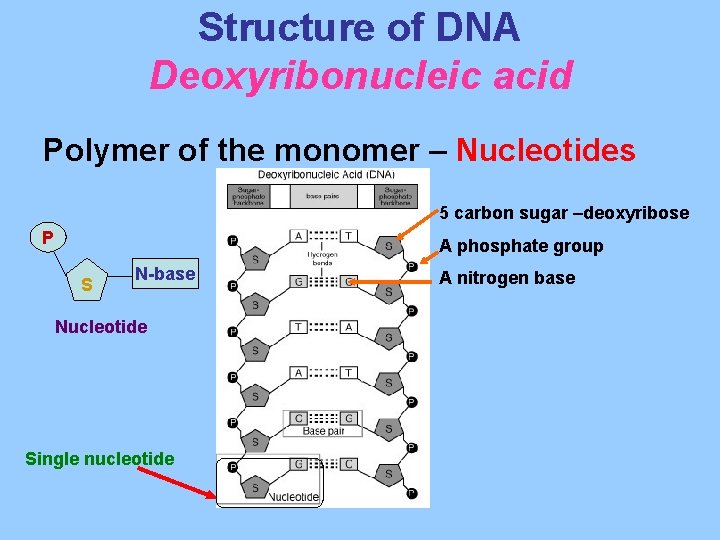
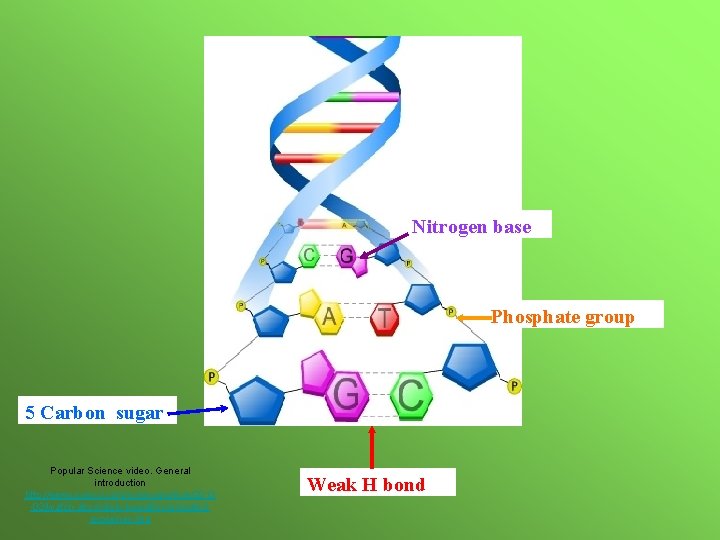
Structure of DNA Deoxyribonucleic acid Polymer of the monomer – Nucleotides 5 carbon sugar –deoxyribose P A phosphate group S N-base Nucleotide Single nucleotide A nitrogen base
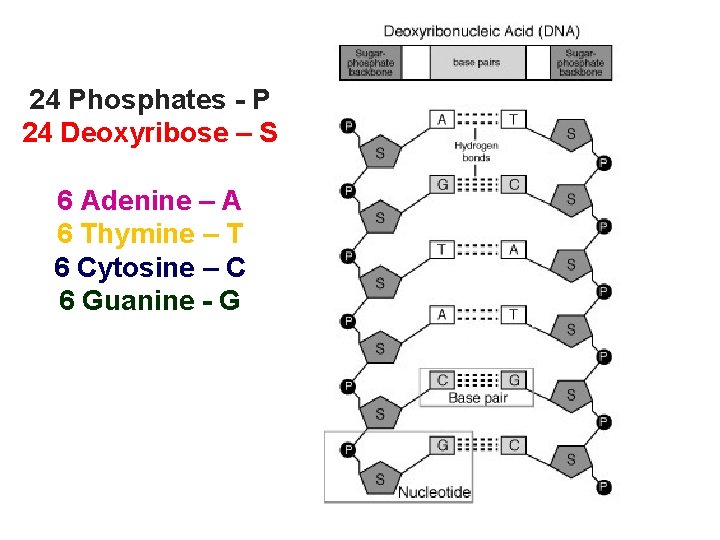
24 Phosphates - P 24 Deoxyribose – S 6 Adenine – A 6 Thymine – T 6 Cytosine – C 6 Guanine - G
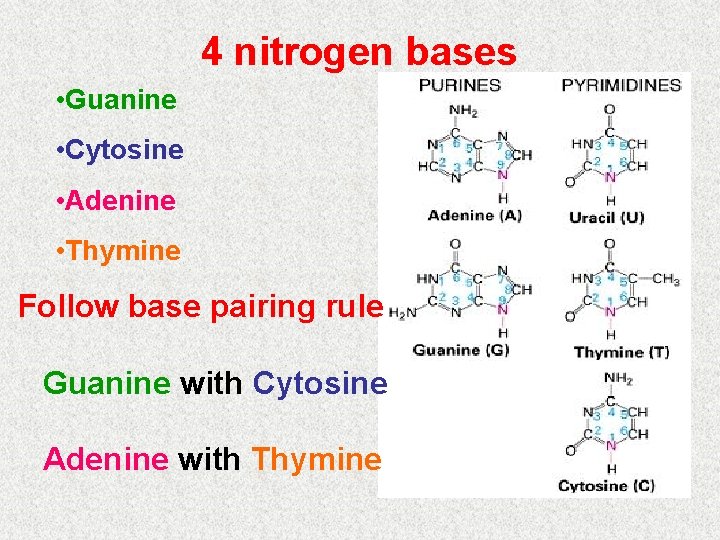
4 nitrogen bases • Guanine • Cytosine • Adenine • Thymine Follow base pairing rule Guanine with Cytosine Adenine with Thymine
Nitrogen base Phosphate group 5 Carbon sugar Popular Science video. General introduction http: //www. popsci. com/science/article/2013 -03/watch-absolutely-beautiful-animatedexplainer-dna Weak H bond
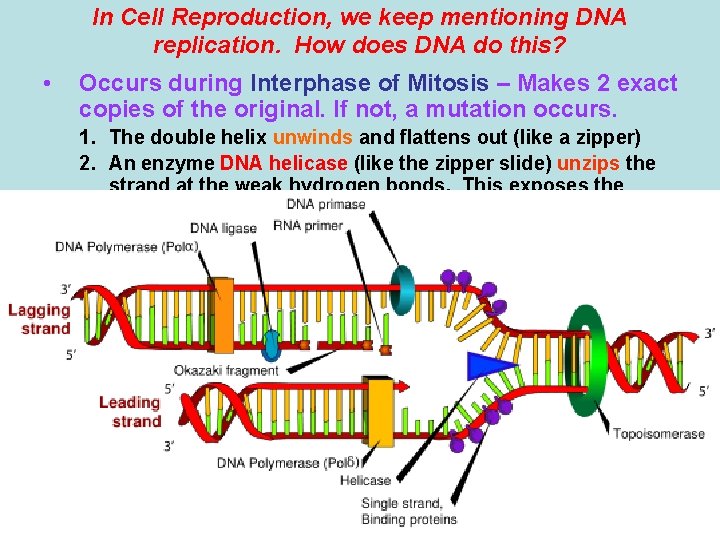
In Cell Reproduction, we keep mentioning DNA replication. How does DNA do this? • Occurs during Interphase of Mitosis – Makes 2 exact copies of the original. If not, a mutation occurs. 1. The double helix unwinds and flattens out (like a zipper) 2. An enzyme DNA helicase (like the zipper slide) unzips the strand at the weak hydrogen bonds. This exposes the Nitrogen bases (each tooth of the zipper) 3. Another enzyme, DNA polymerase will be responsible for rezipping the strands. It will take free nucleotides in the nucleus and bond them to the exposed bases, following the base pair ruling – G – C and A – T. 4. The base pairing continues until the entire strand has their complement. 5. Now there are two identical strands of DNA
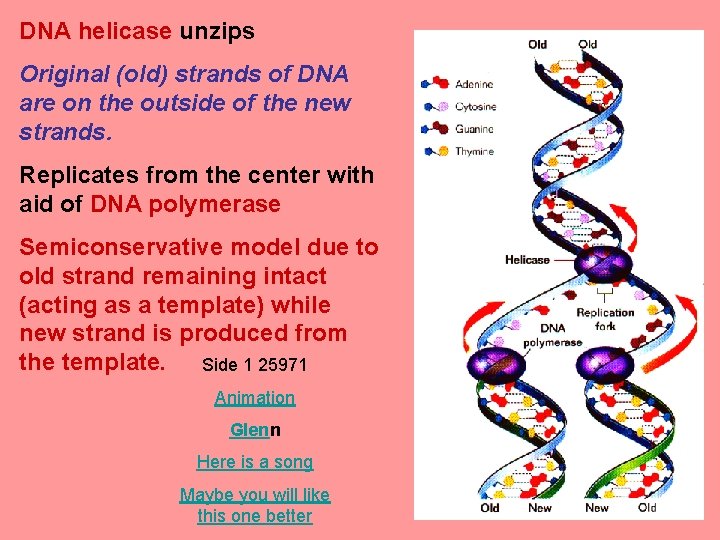
DNA helicase unzips Original (old) strands of DNA are on the outside of the new strands. Replicates from the center with aid of DNA polymerase Semiconservative model due to old strand remaining intact (acting as a template) while new strand is produced from the template. Side 1 25971 Animation Glenn Here is a song Maybe you will like this one better
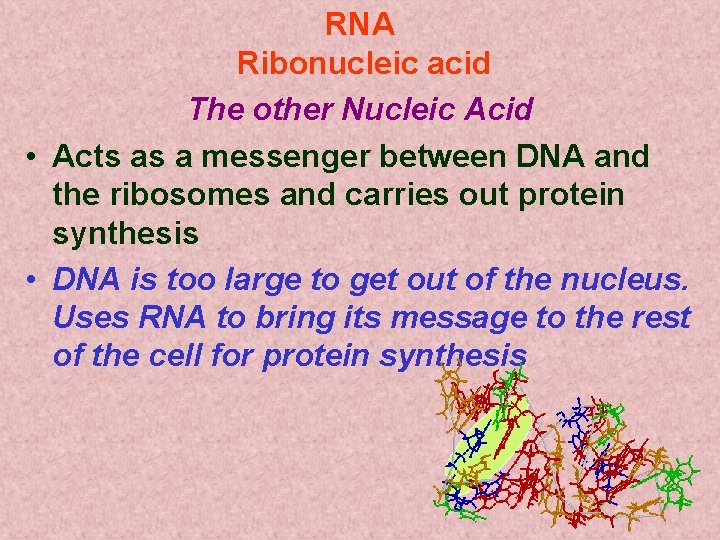
RNA Ribonucleic acid The other Nucleic Acid • Acts as a messenger between DNA and the ribosomes and carries out protein synthesis • DNA is too large to get out of the nucleus. Uses RNA to bring its message to the rest of the cell for protein synthesis
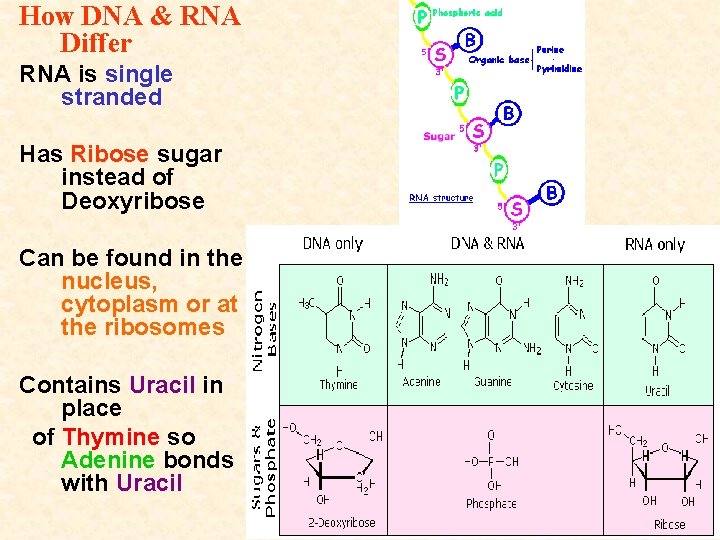
How DNA & RNA Differ RNA is single stranded Has Ribose sugar instead of Deoxyribose Can be found in the nucleus, cytoplasm or at the ribosomes Contains Uracil in place of Thymine so Adenine bonds with Uracil
Three different kinds of RNA • Messenger RNA (m. RNA) Produced in the nucleus & goes to the ribosomes • Transfer RNA (t. RNA) Goes between cytoplasm & ribosomes • Ribosomal RNA (r. RNA) Makes up the ribosomes
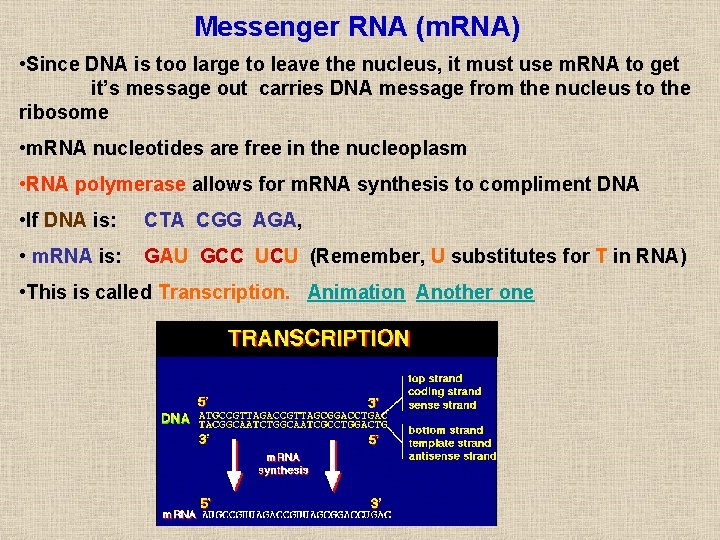
Messenger RNA (m. RNA) • Since DNA is too large to leave the nucleus, it must use m. RNA to get it’s message out carries DNA message from the nucleus to the ribosome • m. RNA nucleotides are free in the nucleoplasm • RNA polymerase allows for m. RNA synthesis to compliment DNA • If DNA is: CTA CGG AGA, • m. RNA is: GAU GCC UCU (Remember, U substitutes for T in RNA) • This is called Transcription. Animation Another one
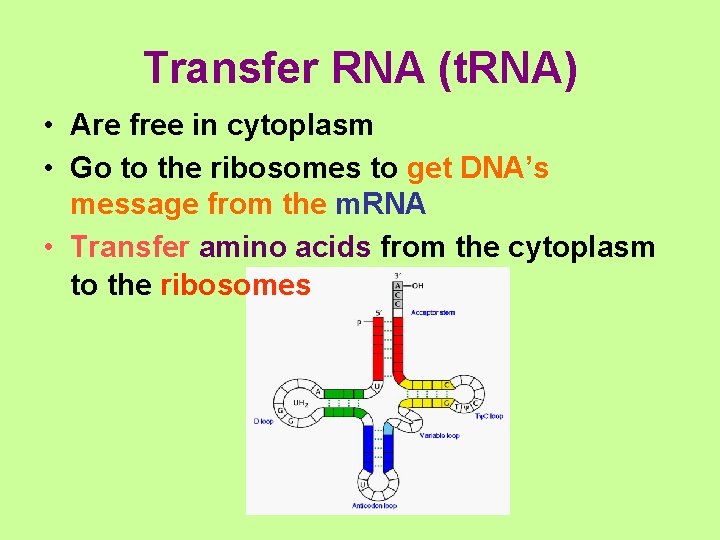
Transfer RNA (t. RNA) • Are free in cytoplasm • Go to the ribosomes to get DNA’s message from the m. RNA • Transfer amino acids from the cytoplasm to the ribosomes
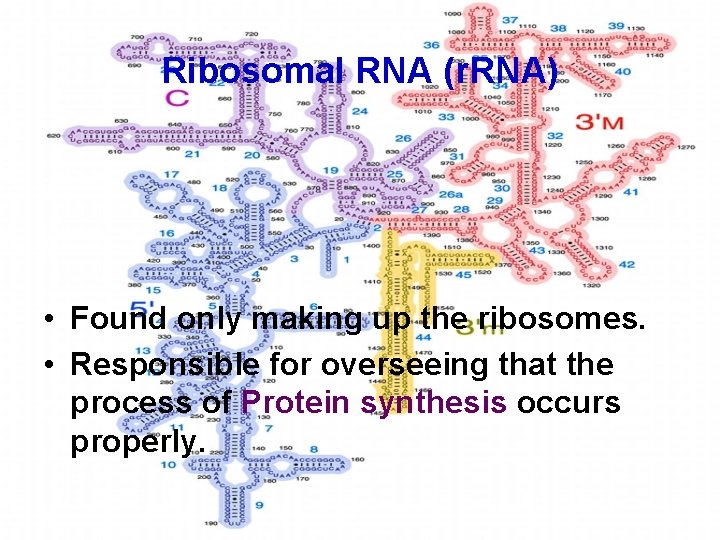
Ribosomal RNA (r. RNA) • Found only making up the ribosomes. • Responsible for overseeing that the process of Protein synthesis occurs properly.
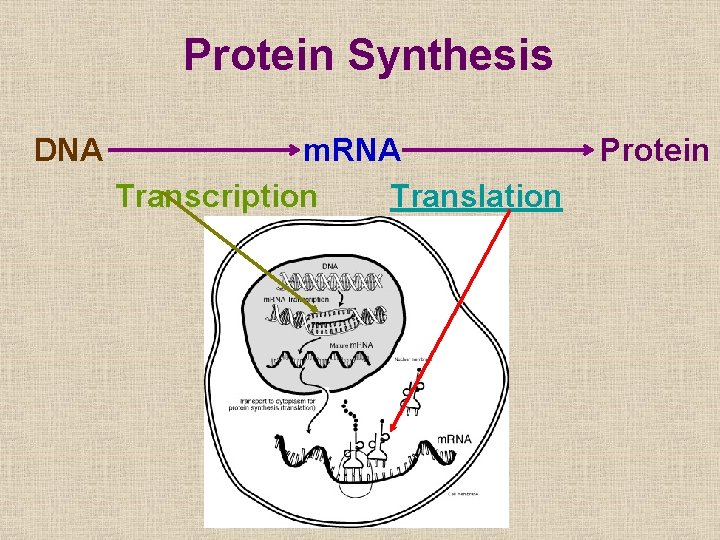
Protein Synthesis DNA m. RNA Transcription Translation Protein
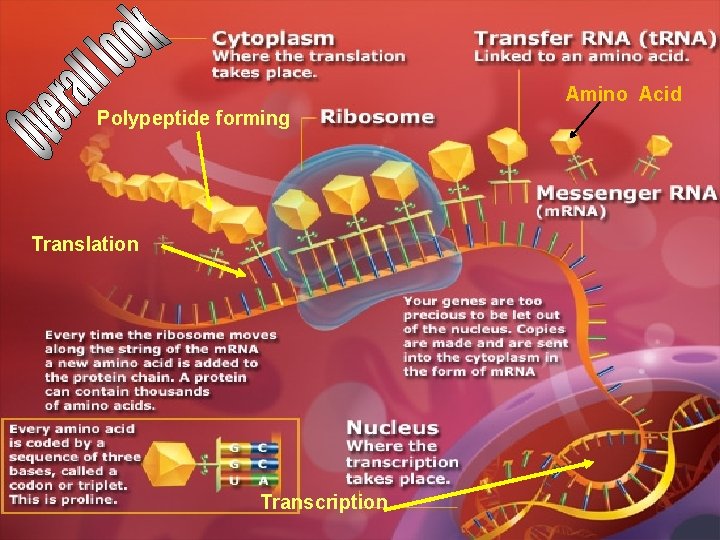
Amino Acid Polypeptide forming Translation Transcription
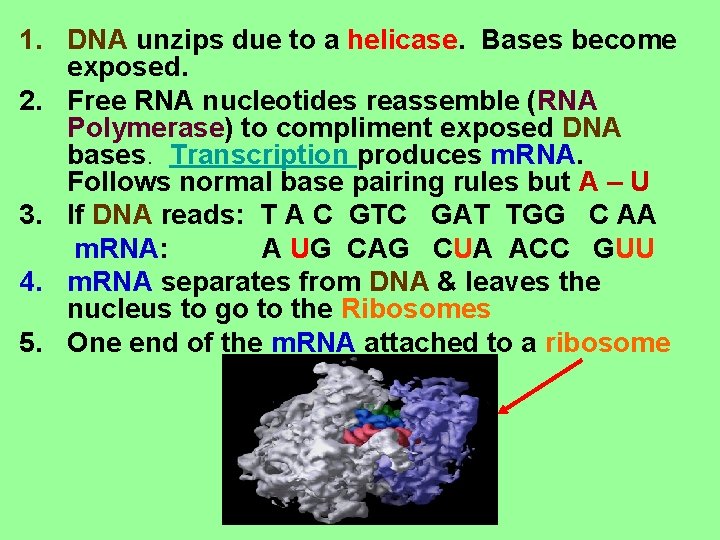
1. DNA unzips due to a helicase. Bases become exposed. 2. Free RNA nucleotides reassemble (RNA Polymerase) to compliment exposed DNA bases. Transcription produces m. RNA. Follows normal base pairing rules but A – U 3. If DNA reads: T A C GTC GAT TGG C AA m. RNA: A UG CAG CUA ACC GUU 4. m. RNA separates from DNA & leaves the nucleus to go to the Ribosomes 5. One end of the m. RNA attached to a ribosome
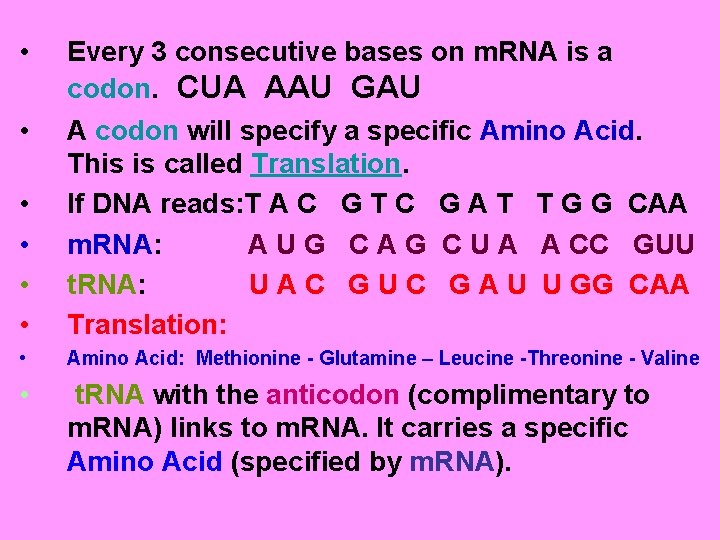
• • • Every 3 consecutive bases on m. RNA is a codon. CUA AAU GAU A codon will specify a specific Amino Acid. This is called Translation. If DNA reads: T A C G T C G A T T G G CAA m. RNA: A U G C A G C U A A CC GUU t. RNA: U A C G U C G A U U GG CAA Translation: • Amino Acid: Methionine - Glutamine – Leucine -Threonine - Valine • t. RNA with the anticodon (complimentary to m. RNA) links to m. RNA. It carries a specific Amino Acid (specified by m. RNA). •
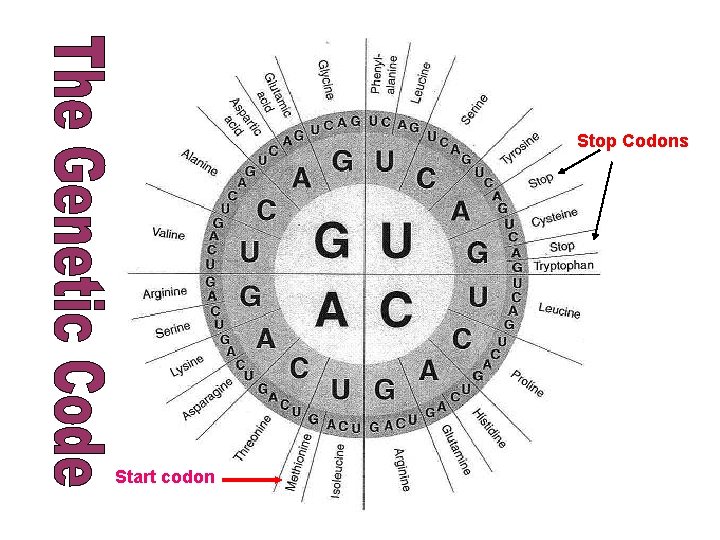
Stop Codons Start codon
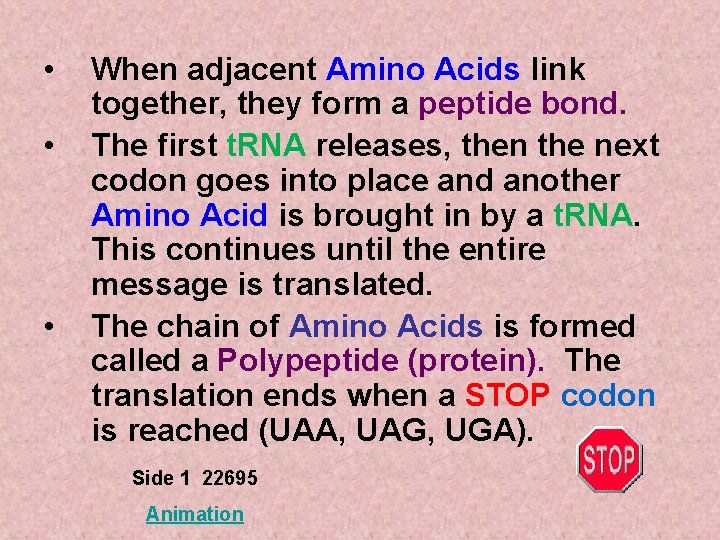
• • • When adjacent Amino Acids link together, they form a peptide bond. The first t. RNA releases, then the next codon goes into place and another Amino Acid is brought in by a t. RNA. This continues until the entire message is translated. The chain of Amino Acids is formed called a Polypeptide (protein). The translation ends when a STOP codon is reached (UAA, UAG, UGA). Side 1 22695 Animation
• DNA codes for m. RNA, • m. RNA carries the information needed for the synthesis of coded proteins in the ribosomes. • t. RNA is the go-for that brings the amino acids to the ribosomes to make the protein).
Protein Synthesis • • Production of Proteins coded for by DNA Animation. Protein Synthesis - Learning You tube animation – really good! Mc. Graw animation • http: //www. youtube. com/watch? v=41_Ne 5 m. S 2 ls – HHMI one • Replication & Protein synthesis – song with only typed words but good • Central Dogma Song
• Does this process ever make a mistake? • Have you ever had to copy a large amount of information? • What is the likelihood of you making a mistake or more?
Changes in genetic material Gene Mutations: alters one or more genes Chromosomal Mutations: alter the entire chromosome or a portion of it.
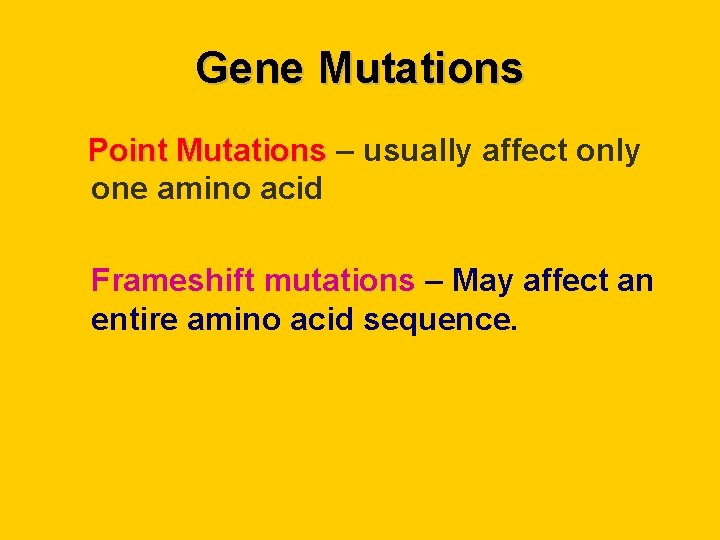
Gene Mutations Point Mutations – usually affect only one amino acid Frameshift mutations – May affect an entire amino acid sequence.
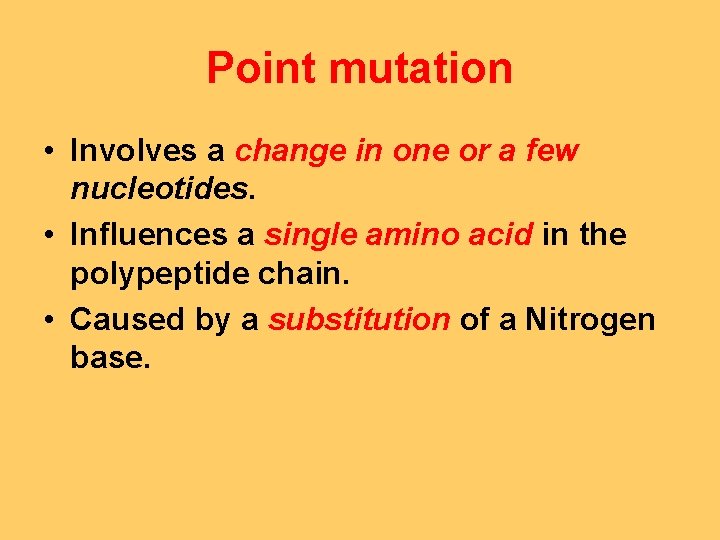
Point mutation • Involves a change in one or a few nucleotides. • Influences a single amino acid in the polypeptide chain. • Caused by a substitution of a Nitrogen base.
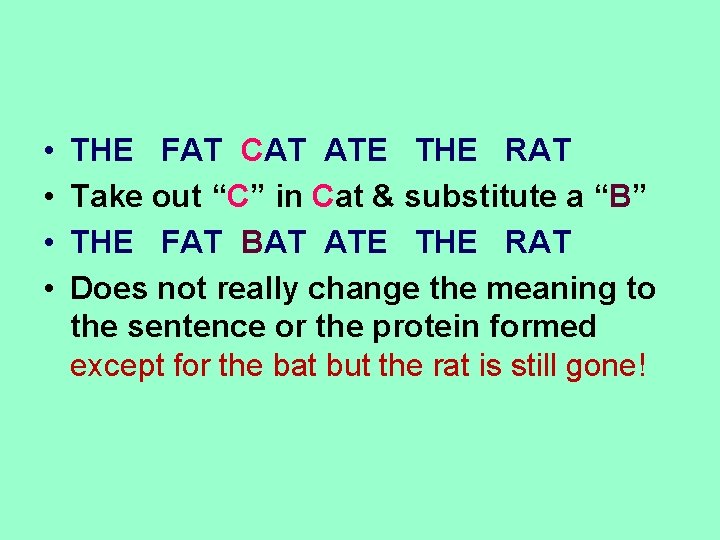
• • THE FAT CAT ATE THE RAT Take out “C” in Cat & substitute a “B” THE FAT BAT ATE THE RAT Does not really change the meaning to the sentence or the protein formed except for the bat but the rat is still gone!
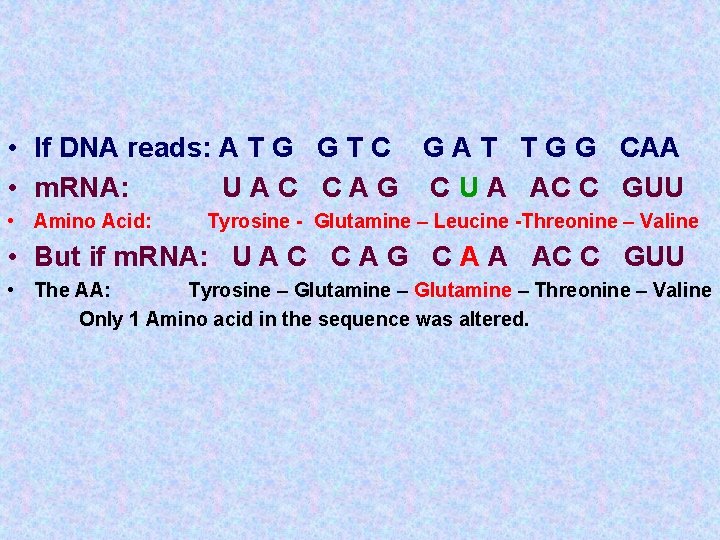
• If DNA reads: A T G G T C G A T T G G CAA • m. RNA: U A C C A G C U A AC C GUU • Amino Acid: Tyrosine - Glutamine – Leucine -Threonine – Valine • But if m. RNA: U A C C A G C A A AC C GUU • The AA: Tyrosine – Glutamine – Threonine – Valine Only 1 Amino acid in the sequence was altered.
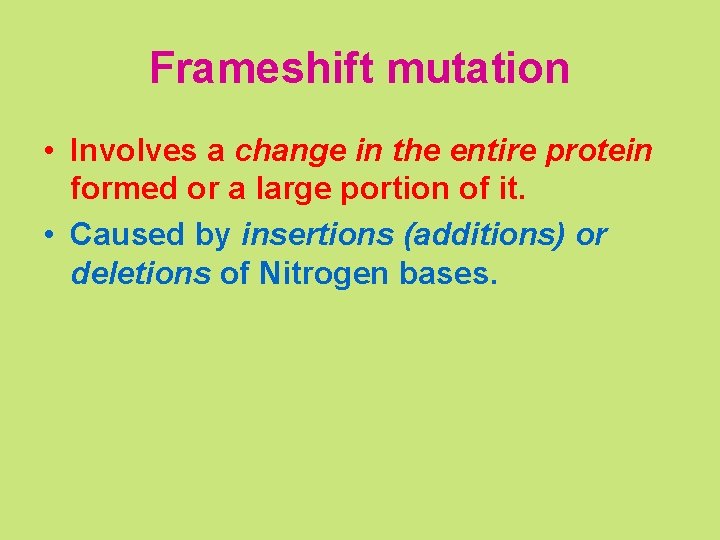
Frameshift mutation • Involves a change in the entire protein formed or a large portion of it. • Caused by insertions (additions) or deletions of Nitrogen bases.
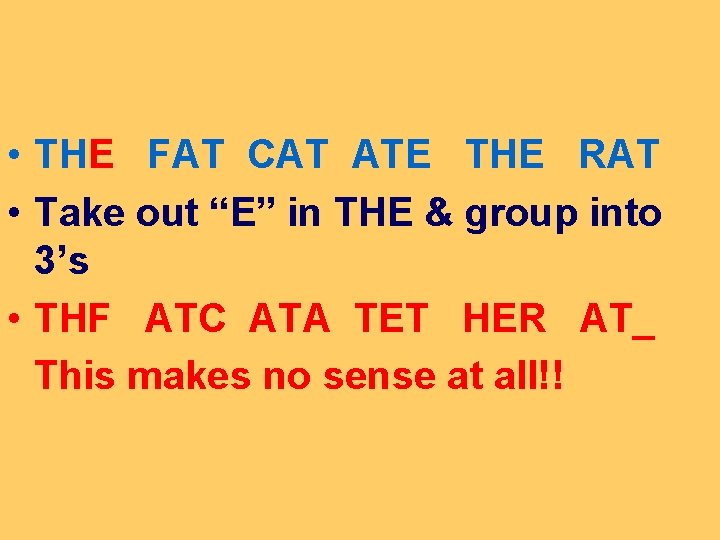
• THE FAT CAT ATE THE RAT • Take out “E” in THE & group into 3’s • THF ATC ATA TET HER AT_ This makes no sense at all!!
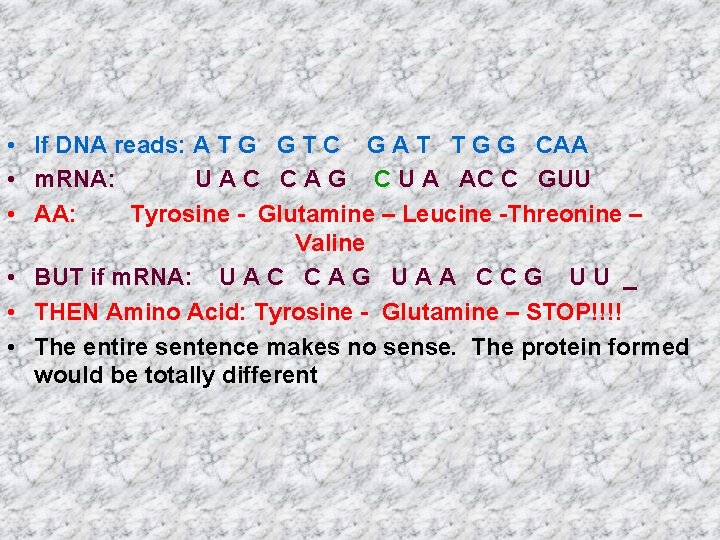
• If DNA reads: A T G G T C G A T T G G CAA • m. RNA: U A C C A G C U A AC C GUU • AA: Tyrosine - Glutamine – Leucine -Threonine – Valine • BUT if m. RNA: U A C C A G U A A C C G U U _ • THEN Amino Acid: Tyrosine - Glutamine – STOP!!!! • The entire sentence makes no sense. The protein formed would be totally different
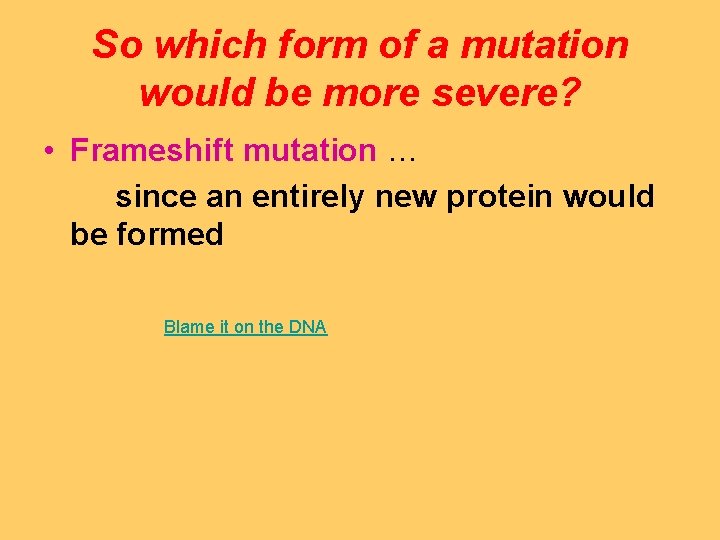
So which form of a mutation would be more severe? • Frameshift mutation … since an entirely new protein would be formed Blame it on the DNA
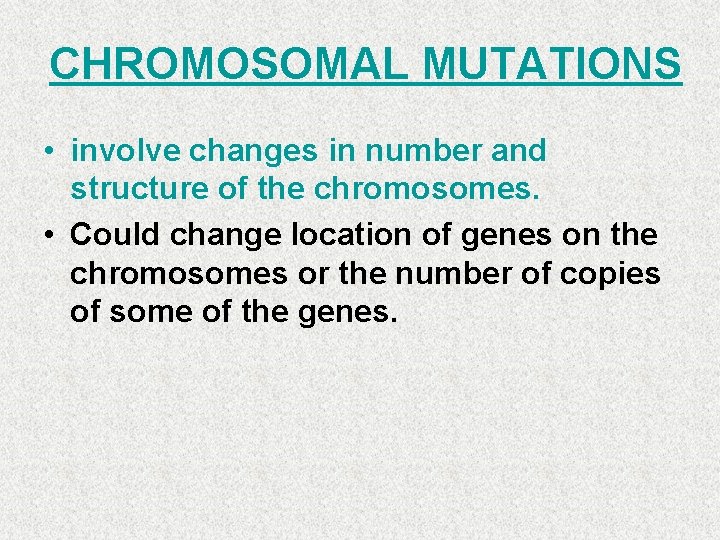
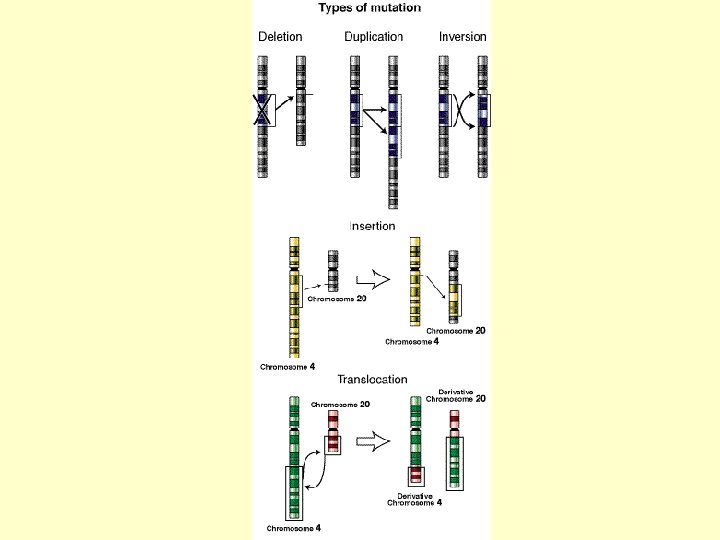
CHROMOSOMAL MUTATIONS • involve changes in number and structure of the chromosomes. • Could change location of genes on the chromosomes or the number of copies of some of the genes.
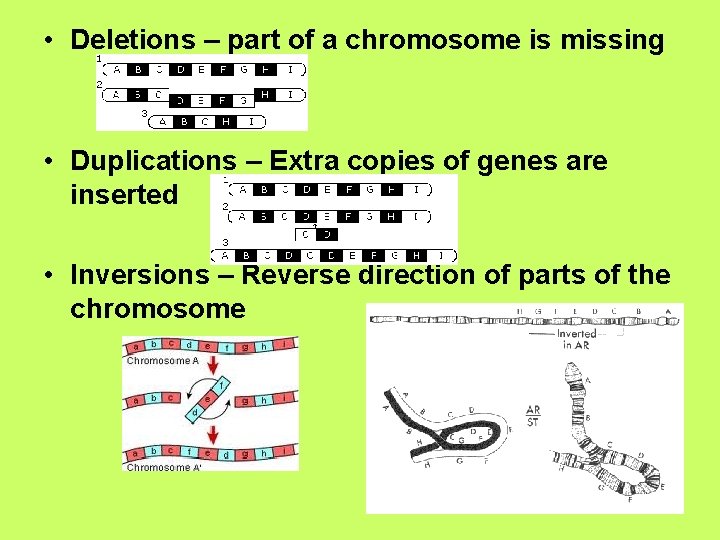
• Deletions – part of a chromosome is missing • Duplications – Extra copies of genes are inserted • Inversions – Reverse direction of parts of the chromosome
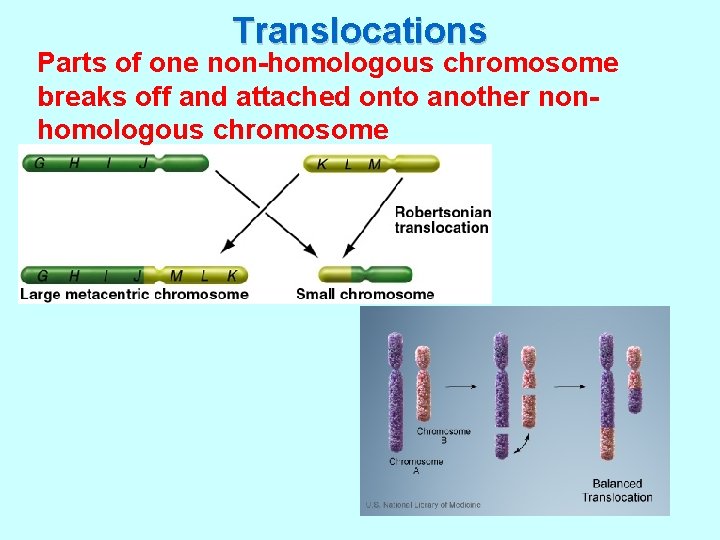
Translocations Parts of one non-homologous chromosome breaks off and attached onto another nonhomologous chromosome
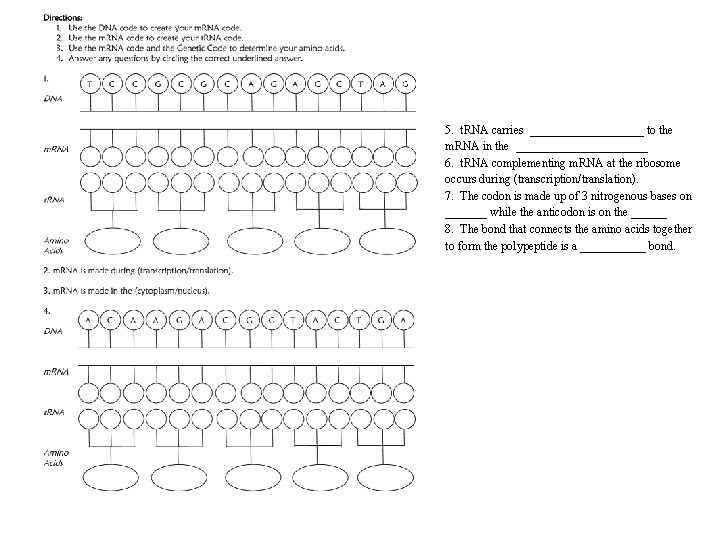
5. t. RNA carries __________ to the m. RNA in the ___________ 6. t. RNA complementing m. RNA at the ribosome occurs during (transcription/translation). 7. The codon is made up of 3 nitrogenous bases on _______ while the anticodon is on the ______ 8. The bond that connects the amino acids together to form the polypeptide is a ______ bond.