
Chapter 12 CONTROLLING Planning and Controlling Importance of

- Slides: 11
Chapter 12 CONTROLLING Ø Planning and Controlling Ø Importance of controlling Ø Steps in the controlling process Ø Types of controlling Ø Organization control strategies Ø Characteristics of effective controls 1
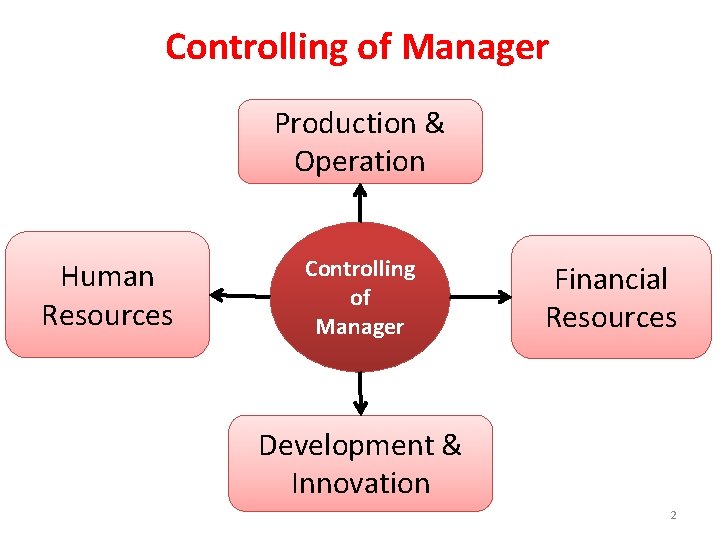
Controlling of Manager Production & Operation Human Resources Controlling of Manager Financial Resources Development & Innovation 2
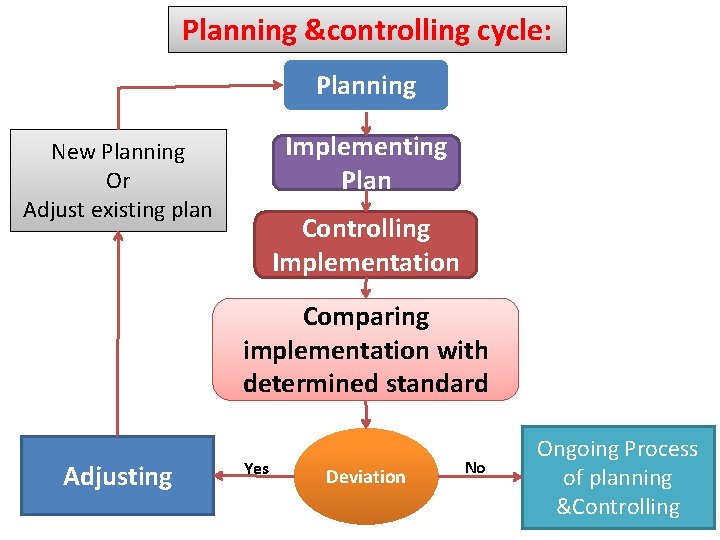
Planning & Controlling Ø Planning is the involving to create standard of implementation and preparation specific reasons with designed results in planning to determine whether business operation has the right process determined planning? Ø Planning &controlling cycle: is The flow of management activities through planning, directing and motivating, and controlling, and then back to planning again. 3
Planning &controlling cycle: Planning Implementing Plan New Planning Or Adjust existing plan Controlling Implementation Comparing implementation with determined standard Adjusting Yes Deviation No Ongoing Process of planning &Controlling 4
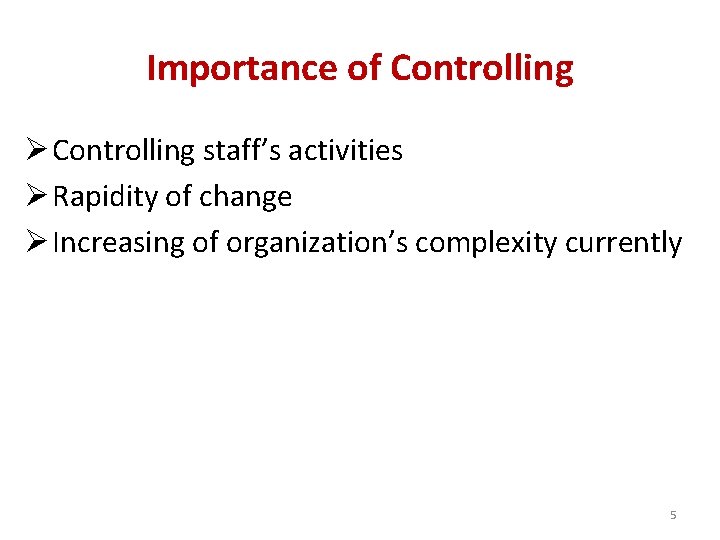
Importance of Controlling Ø Controlling staff’s activities Ø Rapidity of change Ø Increasing of organization’s complexity currently 5
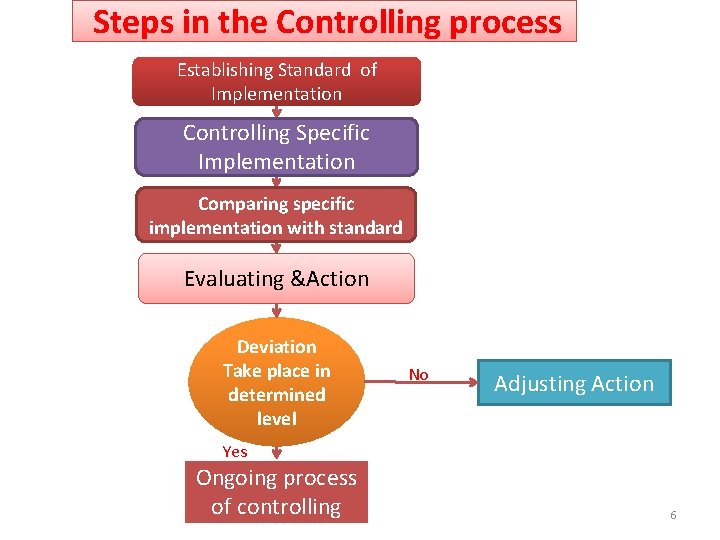
Steps in the Controlling process Establishing Standard of Implementation Controlling Specific Implementation Comparing specific implementation with standard Evaluating &Action Deviation Take place in determined level No Adjusting Action Yes Ongoing process of controlling 6
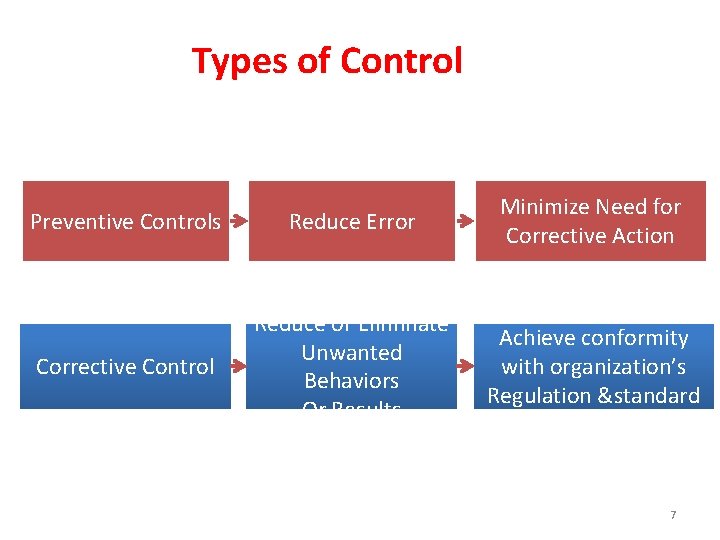
Types of Control Preventive Controls Reduce Error Minimize Need for Corrective Action Corrective Control Reduce or Eliminate Unwanted Behaviors Or Results Achieve conformity with organization’s Regulation &standard 7
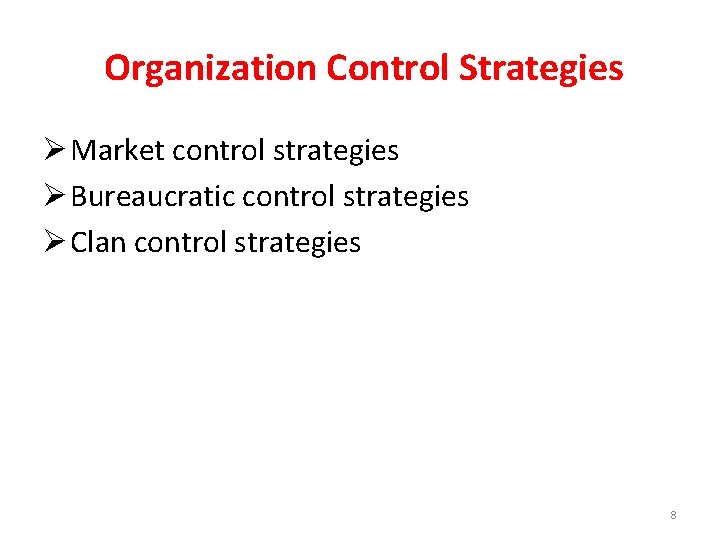
Organization Control Strategies Ø Market control strategies Ø Bureaucratic control strategies Ø Clan control strategies 8
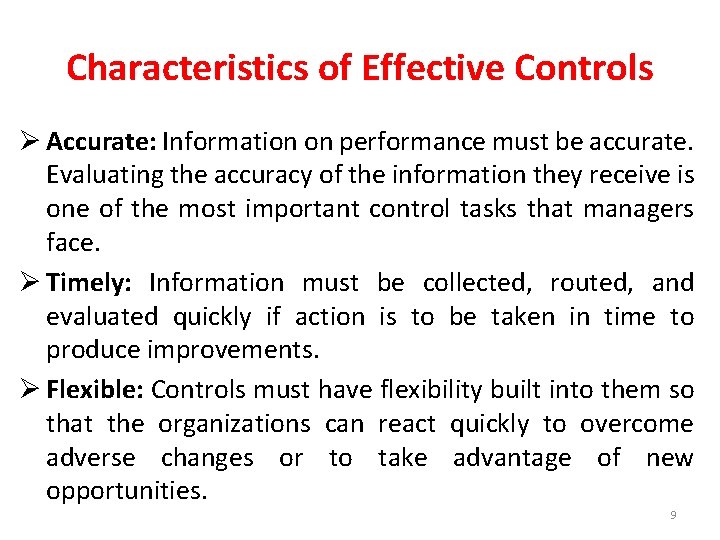
Characteristics of Effective Controls Ø Accurate: Information on performance must be accurate. Evaluating the accuracy of the information they receive is one of the most important control tasks that managers face. Ø Timely: Information must be collected, routed, and evaluated quickly if action is to be taken in time to produce improvements. Ø Flexible: Controls must have flexibility built into them so that the organizations can react quickly to overcome adverse changes or to take advantage of new opportunities. 9
Characteristics of Effective Controls Ø Focused on Strategic Control Points: The control system should be focused on those areas where deviations from the standards are most likely to take place or where deviations would lead to the greatest harm. Ø Economically Realistic: The cost of implementing a control system should be less than, or at most equal to, the benefits derived from the control system. Ø Organizational Realistic: The control system has to be compatible with organizational realities and all standards for performance must be realistic. 10
Thank You! YOUR FOCUSING ATTENTION ON OUR TEACHING! THIS COURSE IS FINISHED BY SUMMARY SO, YOU ALL MUST LEARN YOURSELF ABOUT READING AT YOUR HOME! GOOD BYE!!! 11