
Chapter 12 Characterizing and Classifying Eukaryotes Five major


![[INSERT FIGURE 12. 2]](https://slidetodoc.com/presentation_image_h/1fe853904e35971f2a188ce3a0b02926/image-7.jpg "[INSERT FIGURE 12. 2]")

![§ Classification system is changing [INSERT FIGURE 12. 4]](https://slidetodoc.com/presentation_image_h/1fe853904e35971f2a188ce3a0b02926/image-9.jpg "§ Classification system is changing [INSERT FIGURE 12. 4]")

![Protozoa [INSERT TABLE 12. 2]](https://slidetodoc.com/presentation_image_h/1fe853904e35971f2a188ce3a0b02926/image-14.jpg "Protozoa [INSERT TABLE 12. 2]")

![Protozoa [INSERT FIGURE 12. 14]](https://slidetodoc.com/presentation_image_h/1fe853904e35971f2a188ce3a0b02926/image-16.jpg "Protozoa [INSERT FIGURE 12. 14]")
![Fungi [INSERT FIGURE 12. 16]](https://slidetodoc.com/presentation_image_h/1fe853904e35971f2a188ce3a0b02926/image-18.jpg "Fungi [INSERT FIGURE 12. 16]")
![Fungi [INSERT FIGURE 12. 19]](https://slidetodoc.com/presentation_image_h/1fe853904e35971f2a188ce3a0b02926/image-22.jpg "Fungi [INSERT FIGURE 12. 19]")
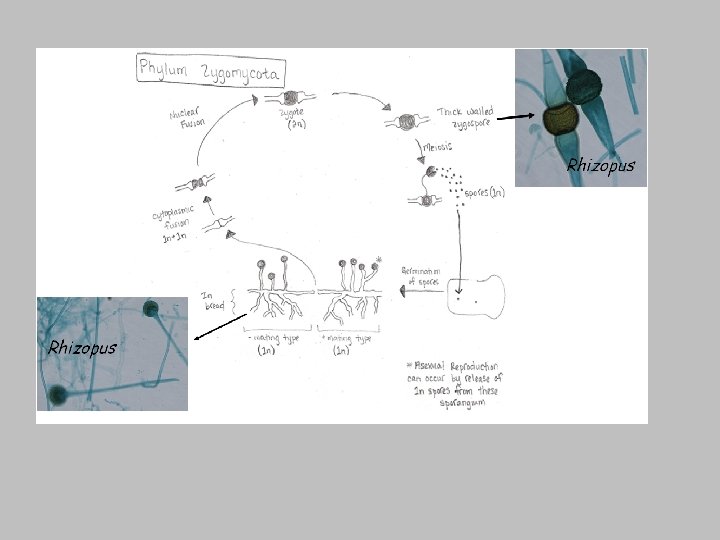
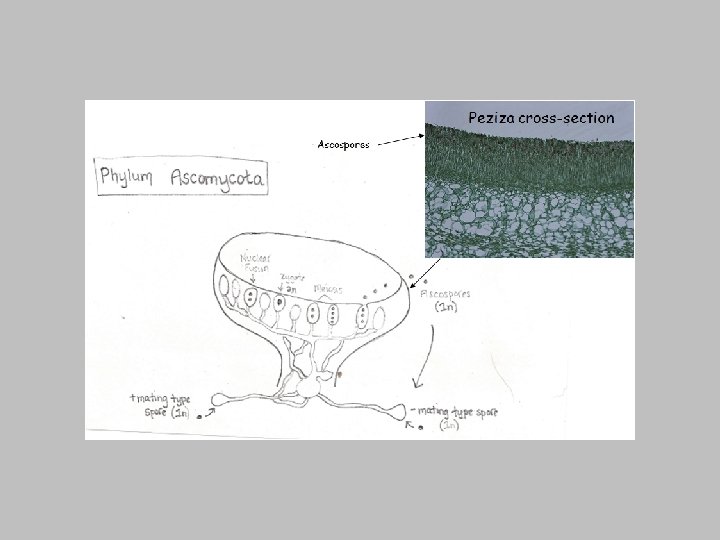
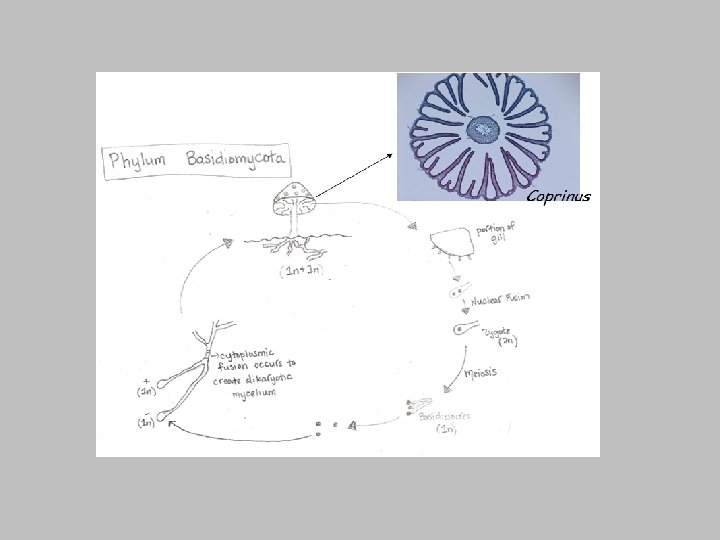
![Fungi [INSERT FIGURE 12. 26]](https://slidetodoc.com/presentation_image_h/1fe853904e35971f2a188ce3a0b02926/image-29.jpg "Fungi [INSERT FIGURE 12. 26]")
![Fungi [INSERT TABLE 12. 3]](https://slidetodoc.com/presentation_image_h/1fe853904e35971f2a188ce3a0b02926/image-30.jpg "Fungi [INSERT TABLE 12. 3]")
![Algae [INSERT TABLE 12. 4]](https://slidetodoc.com/presentation_image_h/1fe853904e35971f2a188ce3a0b02926/image-34.jpg "Algae [INSERT TABLE 12. 4]")
- Slides: 38
Chapter 12 Characterizing and Classifying Eukaryotes
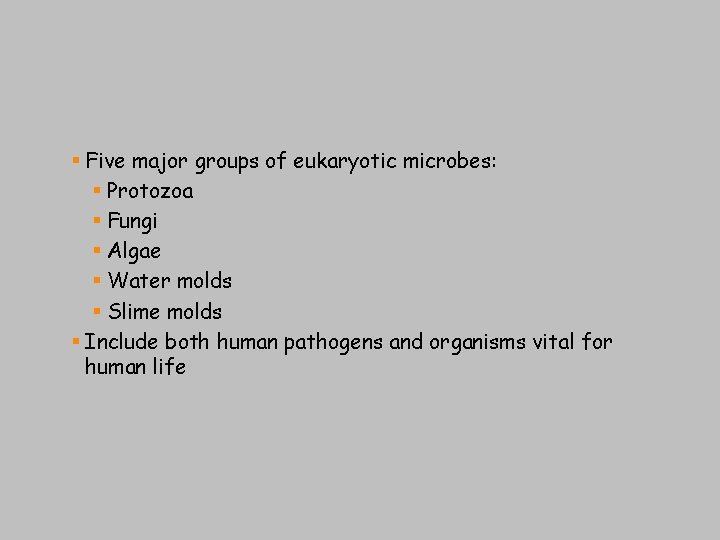
§ Five major groups of eukaryotic microbes: § Protozoa § Fungi § Algae § Water molds § Slime molds § Include both human pathogens and organisms vital for human life
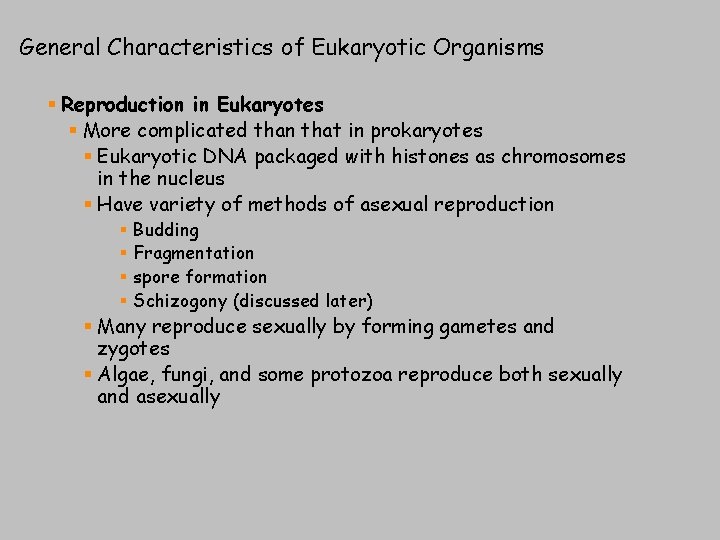
General Characteristics of Eukaryotic Organisms § Reproduction in Eukaryotes § More complicated than that in prokaryotes § Eukaryotic DNA packaged with histones as chromosomes in the nucleus § Have variety of methods of asexual reproduction § § Budding Fragmentation spore formation Schizogony (discussed later) § Many reproduce sexually by forming gametes and zygotes § Algae, fungi, and some protozoa reproduce both sexually and asexually
General Characteristics of Eukaryotic Organisms § Reproduction in Eukaryotes § Nuclear division § Nucleus has one or two complete copies of genome § Single copy – haploid (most fungi, many algae, some protozoa) § Two copies – diploid (remaining fungi, algae, and protozoa) § Two types § Mitosis § Meiosis
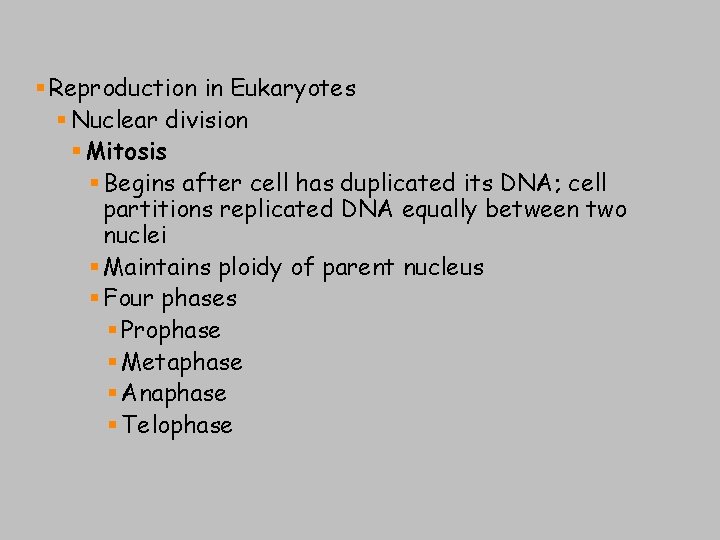
§ Reproduction in Eukaryotes § Nuclear division § Mitosis § Begins after cell has duplicated its DNA; cell partitions replicated DNA equally between two nuclei § Maintains ploidy of parent nucleus § Four phases § Prophase § Metaphase § Anaphase § Telophase
§ Reproduction in Eukaryotes § Cytokinesis (cytoplasmic division) § Typically occurs simultaneously with telophase of mitosis § In some algae and fungi, may be postponed or not occur at all § Results in multinucleated cells called coenocytes
[INSERT FIGURE 12. 2]
Shizogony -some protozoa, like Plasmodium -asexual reproduction -multiple mitosises followed then by cytokinesis [INSERT FIGURE 12. 3]
§ Classification system is changing [INSERT FIGURE 12. 4]
Protozoa § Diverse group defined by three characteristics § Eukaryotic § Unicellular § Lack a cell wall and most (but not all) are heterotrophic § Motile by means of cilia, flagella, and/or pseudopodia (except subgroup, apicomplexans) § Distribution of Protozoa § Require moist environments § Most live worldwide in ponds, streams, lakes, and oceans; critical members of plankton § Others live in moist soil, beach sand, and decaying organic matter § Very few are pathogens
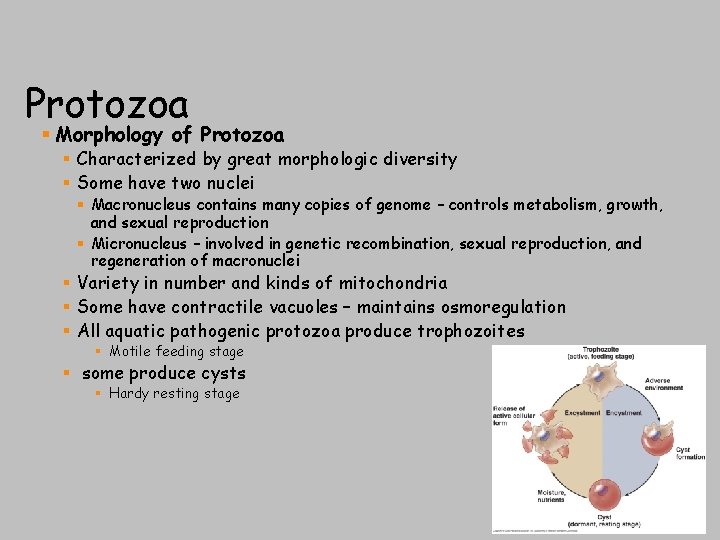
Protozoa § Morphology of Protozoa § Characterized by great morphologic diversity § Some have two nuclei § Macronucleus contains many copies of genome – controls metabolism, growth, and sexual reproduction § Micronucleus – involved in genetic recombination, sexual reproduction, and regeneration of macronuclei § Variety in number and kinds of mitochondria § Some have contractile vacuoles – maintains osmoregulation § All aquatic pathogenic protozoa produce trophozoites § Motile feeding stage § some produce cysts § Hardy resting stage
Protozoa § Nutrition of Protozoa § Most are chemoheterotrophic § Obtain nutrients by phagocytizing bacteria, decaying organic matter, other protozoa, or the tissues of host § Few absorb nutrients from surrounding water § Dinoflagellates and euglenoids are photoautrophic
Protozoa § Reproduction in Protozoa § Most reproduce asexually only (binary fission or schizogony) § Few also have sexual reproduction
Protozoa [INSERT TABLE 12. 2]
Protozoan Classification § Parabasala § Lack mitochondria § includes. Trichomonas § Diplomonadida § Lack mitochondria, Golgi, peroxisomes § Includes Giardia § Euglenozoa § Euglenids – share characteristics of both plants and animals (chloroplasts and flagella) § Kinetoplastids – single mitochondria § includes. Trypanosoma § Aveolates § 3 subgroups: § Apicomplexans – pathogens of animals (includes Plasmodium, Toxoplasma) § Dinoflagellates – photosynthetic but molecular data show they are more closely related to ciliates than algae § Ciliates – have cilia ( includes Vorticella, Paramecium) § Amoebae – have pseudopodia, little uniformity in this group § Rhizaria – threadlike pseudopodia – include foraminiferans, radiolarians § Amoebozoa – include amoebas § Can cause disease in eyes and brains of animals § Includes slime molds § Plasmodial – acellular, filaments of cytoplasm § Cellular slime molds
Protozoa [INSERT FIGURE 12. 14]
Fungi Chemoheterotrophic Have cell walls typically composed of chitin Lack chlorophyll; do not perform photosynthesis Cytokinesis does not always happen after mitosis resulting in coenocytes (multiple nuclei) § Related to animals § The Significance of Fungi § § § Decompose dead organisms and recycle their nutrients § Form associations with roots of vascular plants, which help plants absorb water and minerals § Used for food and in manufacture of foods and beverages § Produce antibiotics § Serve as important research tools § 30% cause diseases of plants, animals, and humans § Can spoil fruit, pickles, jams, and jellies
Fungi [INSERT FIGURE 12. 16]
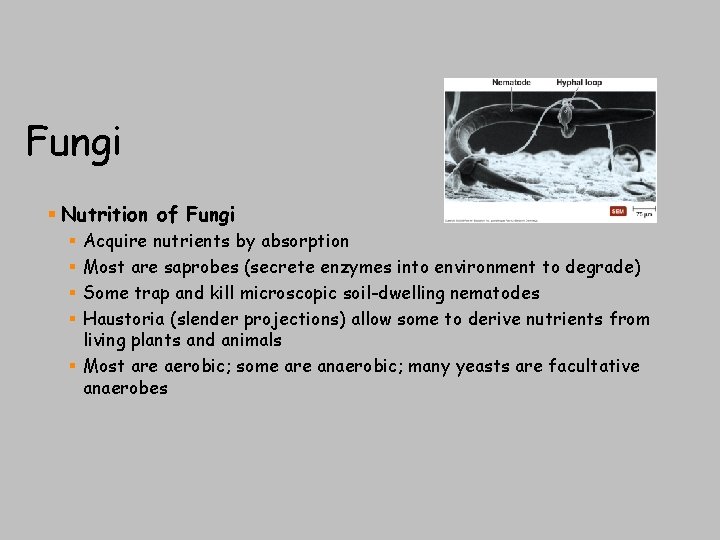
Fungi § Nutrition of Fungi Acquire nutrients by absorption Most are saprobes (secrete enzymes into environment to degrade) Some trap and kill microscopic soil-dwelling nematodes Haustoria (slender projections) allow some to derive nutrients from living plants and animals § Most are aerobic; some are anaerobic; many yeasts are facultative anaerobes § §
Fungi § Reproduction in Fungi § All have some means of asexual reproduction involving mitosis and cytokinesis § Asexual spores are classified by their mode of development (the structures which they are derived from) § Most also reproduce sexually
Fungi § Reproduction in Fungi § Budding and asexual spore formation § Yeasts bud in manner similar to prokaryotic budding § Pseudohypha – series of buds that remain attached to one another and to parent cell
Fungi [INSERT FIGURE 12. 19]
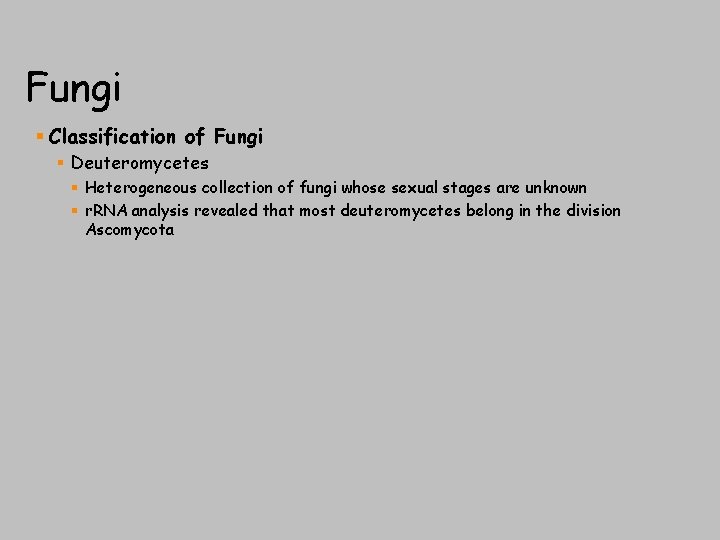
Fungi § Classification of Fungi § § Division Zygomycota Division Ascomycota Division Basidiomycota Deuteromycetes
Fungi § Classification of Fungi § Deuteromycetes § Heterogeneous collection of fungi whose sexual stages are unknown § r. RNA analysis revealed that most deuteromycetes belong in the division Ascomycota
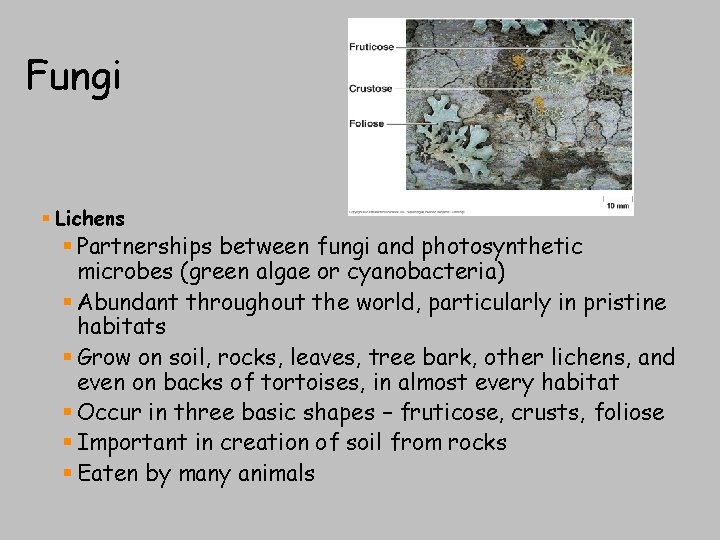
Fungi § Lichens § Partnerships between fungi and photosynthetic microbes (green algae or cyanobacteria) § Abundant throughout the world, particularly in pristine habitats § Grow on soil, rocks, leaves, tree bark, other lichens, and even on backs of tortoises, in almost every habitat § Occur in three basic shapes – fruticose, crusts, foliose § Important in creation of soil from rocks § Eaten by many animals
Fungi [INSERT FIGURE 12. 26]
Fungi [INSERT TABLE 12. 3]
Algae § Simple, eukaryotic, phototrophic organisms that carry out oxygenic photosynthesis using chlorophyll a § Have sexual reproductive structures; every cell becomes a gamete § Differ widely in distribution, morphology, reproduction, and biochemical traits § Distribution of Algae § Most are aquatic, living in the photic zone of fresh, brackish, and salt water § Have accessory photosynthetic pigments that trap energy of light and pass it to chlorophyll a
Algae § Morphology of Algae § Unicellular (phytoplankton), colonial, or have simple multicellular bodies (“seaweed”)
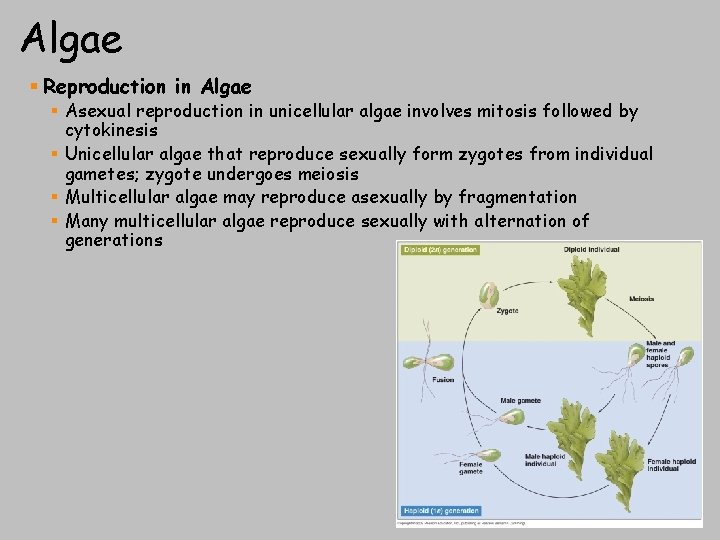
Algae § Reproduction in Algae § Asexual reproduction in unicellular algae involves mitosis followed by cytokinesis § Unicellular algae that reproduce sexually form zygotes from individual gametes; zygote undergoes meiosis § Multicellular algae may reproduce asexually by fragmentation § Many multicellular algae reproduce sexually with alternation of generations
Algae [INSERT TABLE 12. 4]
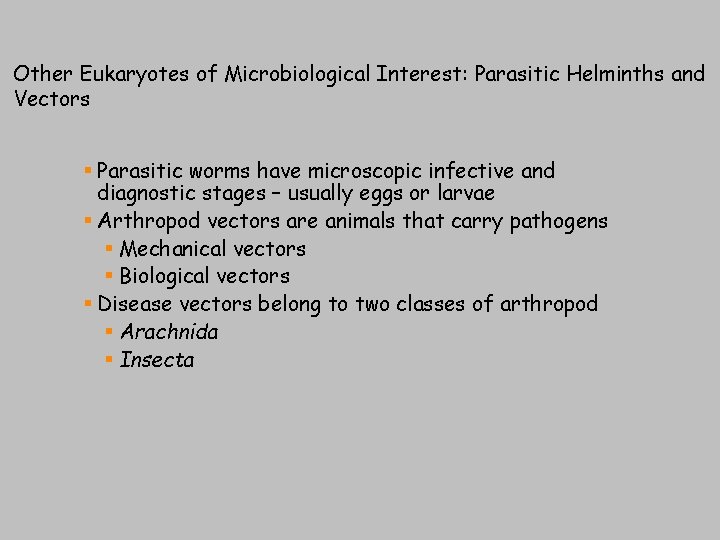
Other Eukaryotes of Microbiological Interest: Parasitic Helminths and Vectors § Parasitic worms have microscopic infective and diagnostic stages – usually eggs or larvae § Arthropod vectors are animals that carry pathogens § Mechanical vectors § Biological vectors § Disease vectors belong to two classes of arthropod § Arachnida § Insecta
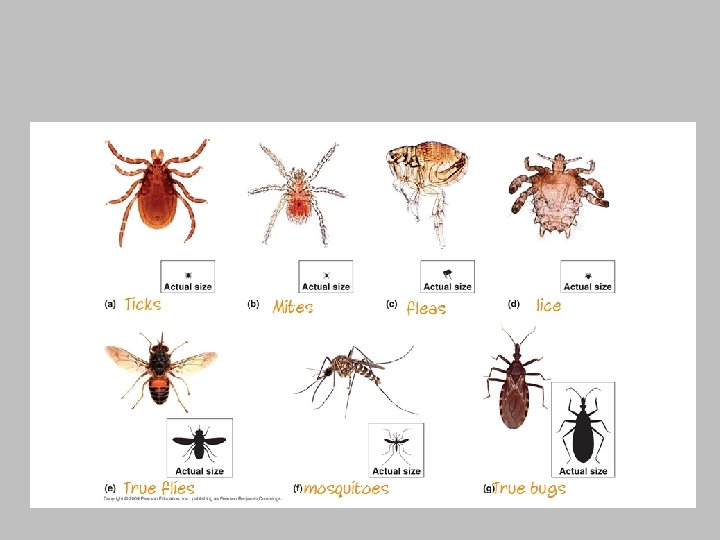
Other Eukaryotes of Microbiological Interest: Parasitic Helminths and Vectors § Arachnids § Adult arachnids have four pairs of legs § Ticks are the most important arachnid vectors § Hard ticks are most prominent tick vectors § A few mite species transmit rickettsial diseases
Other Eukaryotes of Microbiological Interest: Parasitic Helminths and Vectors § Insects § Adult insects have three pairs of legs and three body regions § Include § § Fleas Lice Flies Mosquitoes