
CHAPTER 12 BVIRUSES How do viruses reproduce and
CHAPTER 12 BVIRUSES How do viruses reproduce and function?
Objectives ■ How are viruses similar to but different from bacteria? ■ How do viruses grow and reproduce? ■ How do viruses interact with humans and the environment?
12. 5 - STRUCTURE OF VIRUSES
Structure of Viruses ■ Viruses– Carry genetic information – Not sure if living or not – Infects healthy cells
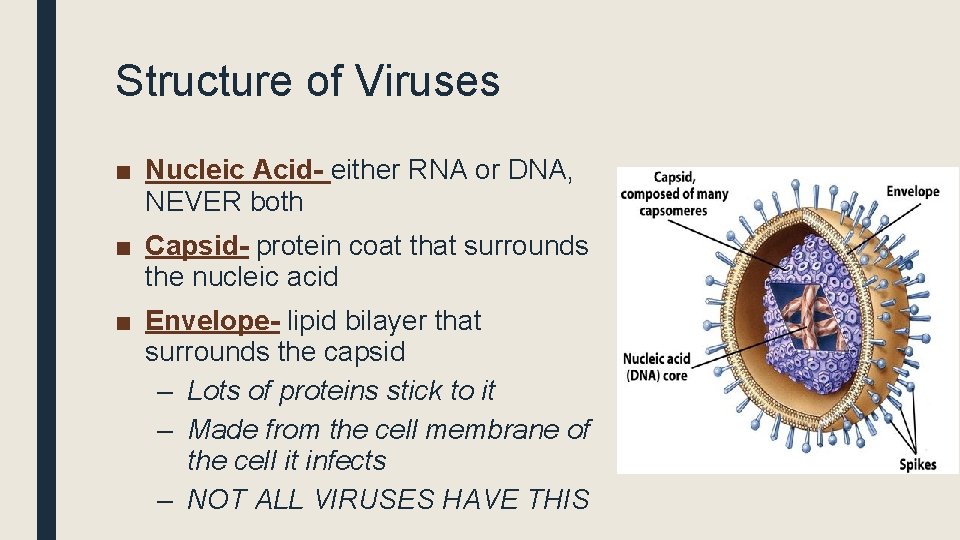
Structure of Viruses ■ Nucleic Acid- either RNA or DNA, NEVER both ■ Capsid- protein coat that surrounds the nucleic acid ■ Envelope- lipid bilayer that surrounds the capsid – Lots of proteins stick to it – Made from the cell membrane of the cell it infects – NOT ALL VIRUSES HAVE THIS
Viroids and Prions ■ Viruses are SUPER small – (largest virus = smallest bacterium) ■ 2 smaller pathogens – Viroids – Prions
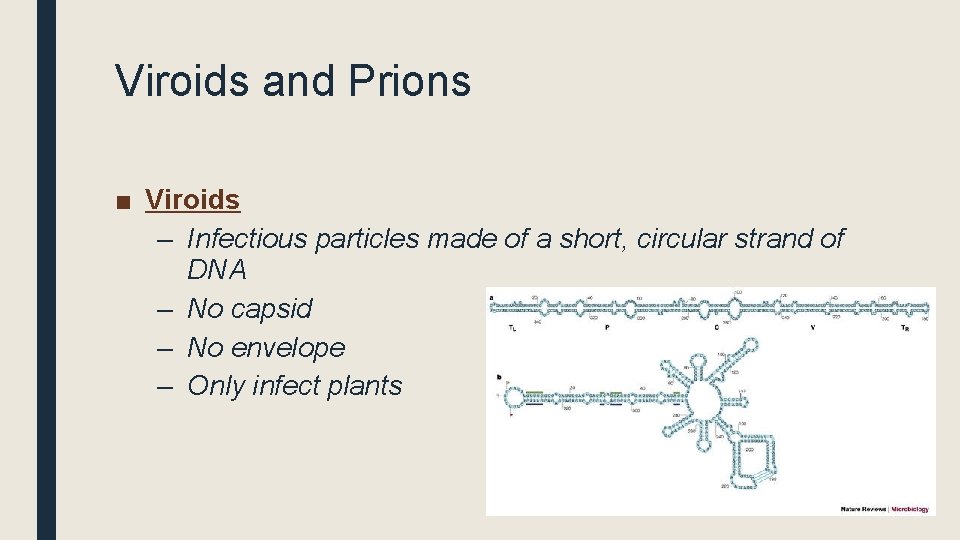
Viroids and Prions ■ Viroids – Infectious particles made of a short, circular strand of DNA – No capsid – No envelope – Only infect plants
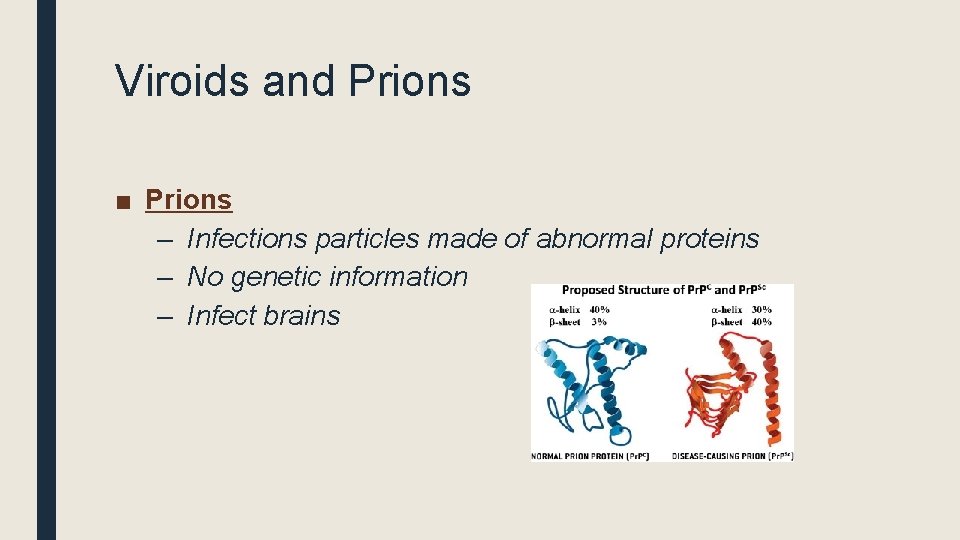
Viroids and Prions ■ Prions – Infections particles made of abnormal proteins – No genetic information – Infect brains
12. 6 REPRODUCTION IN VIRUSES
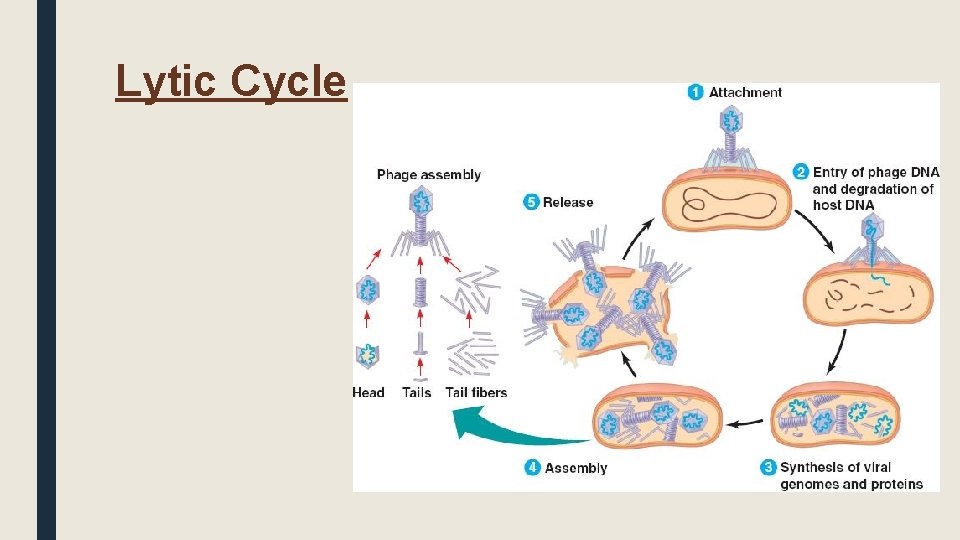
Lytic Cycle
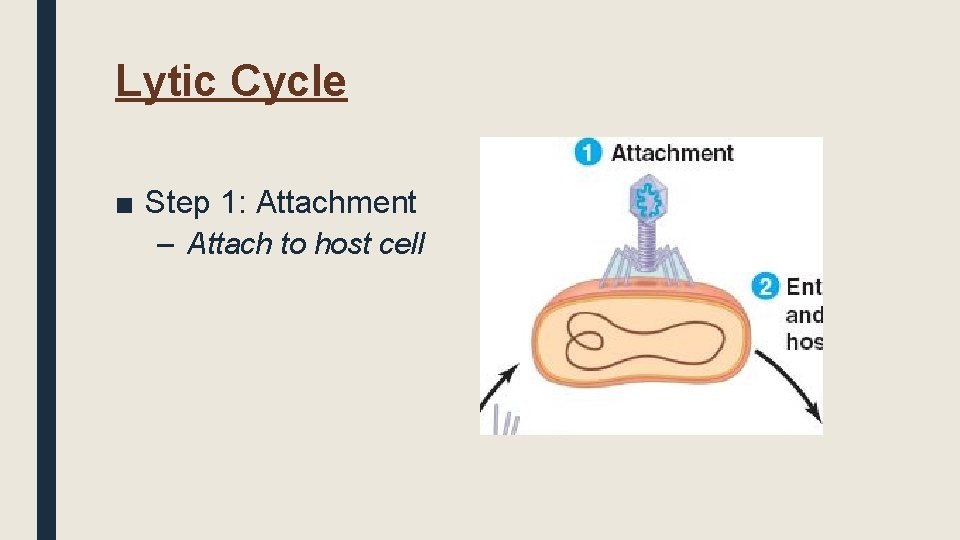
Lytic Cycle ■ Step 1: Attachment – Attach to host cell
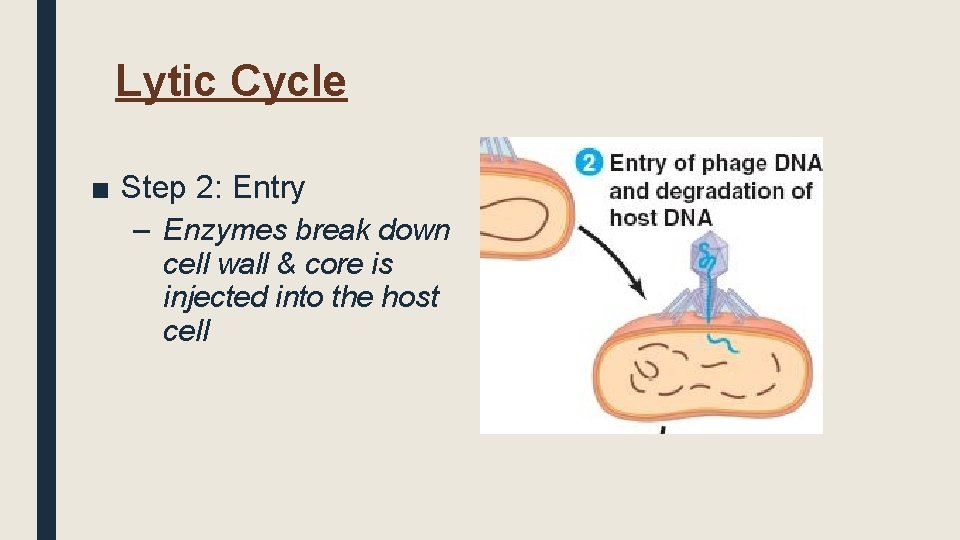
Lytic Cycle ■ Step 2: Entry – Enzymes break down cell wall & core is injected into the host cell
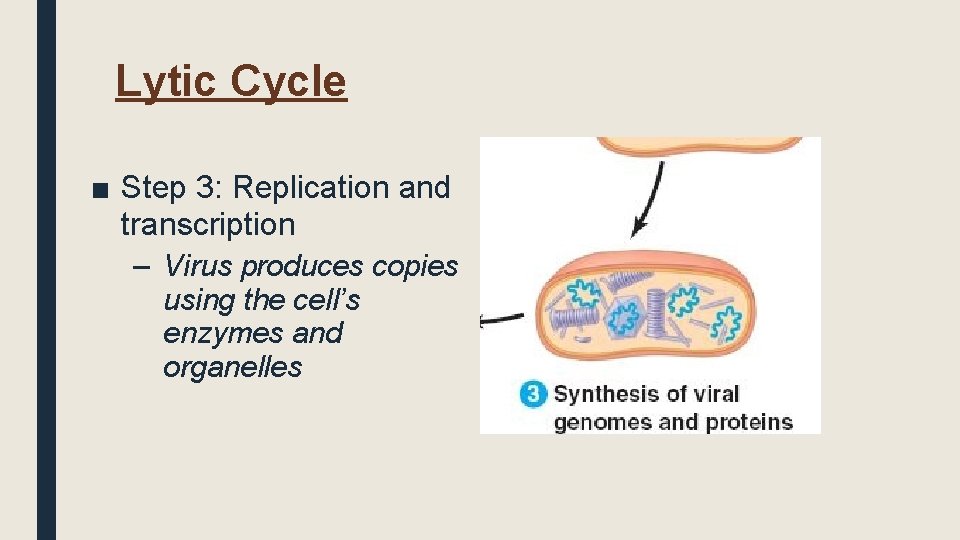
Lytic Cycle ■ Step 3: Replication and transcription – Virus produces copies using the cell’s enzymes and organelles
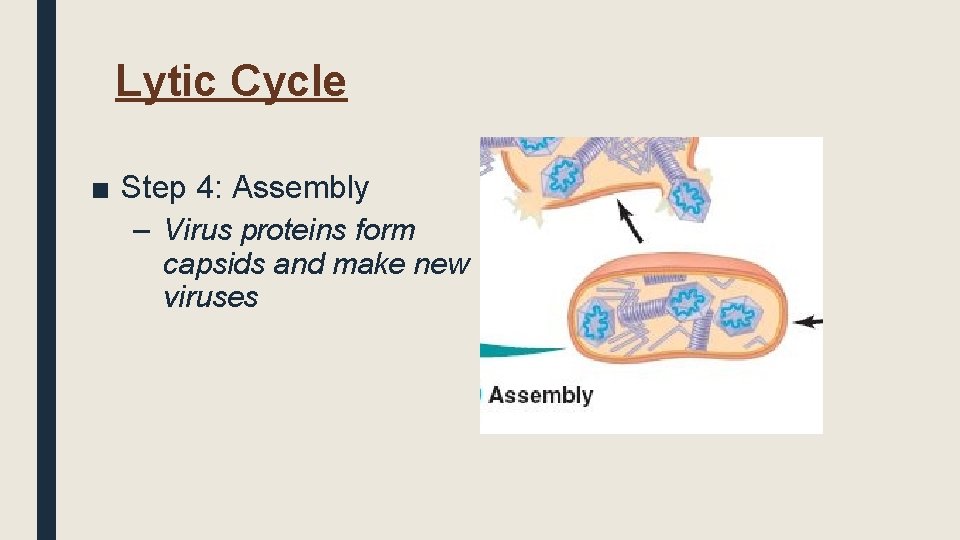
Lytic Cycle ■ Step 4: Assembly – Virus proteins form capsids and make new viruses
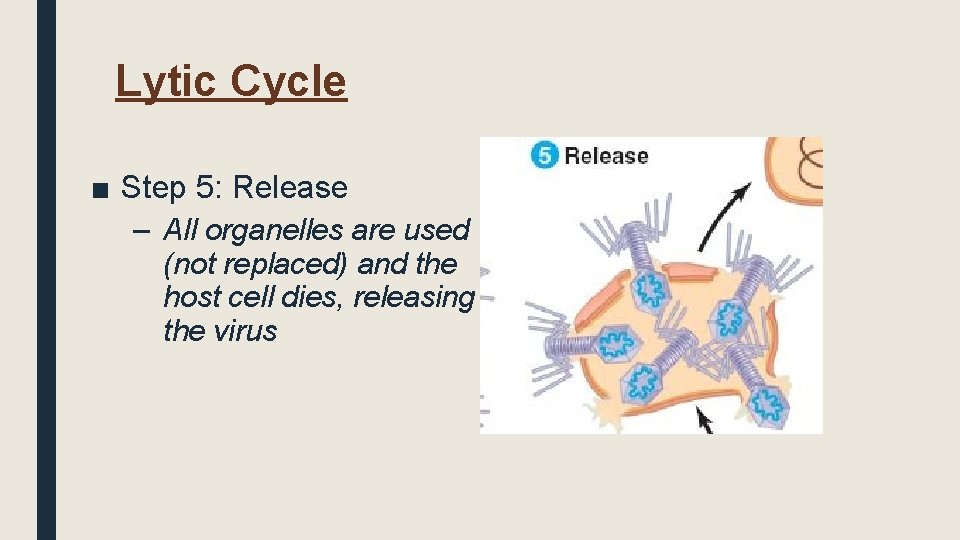
Lytic Cycle ■ Step 5: Release – All organelles are used (not replaced) and the host cell dies, releasing the virus
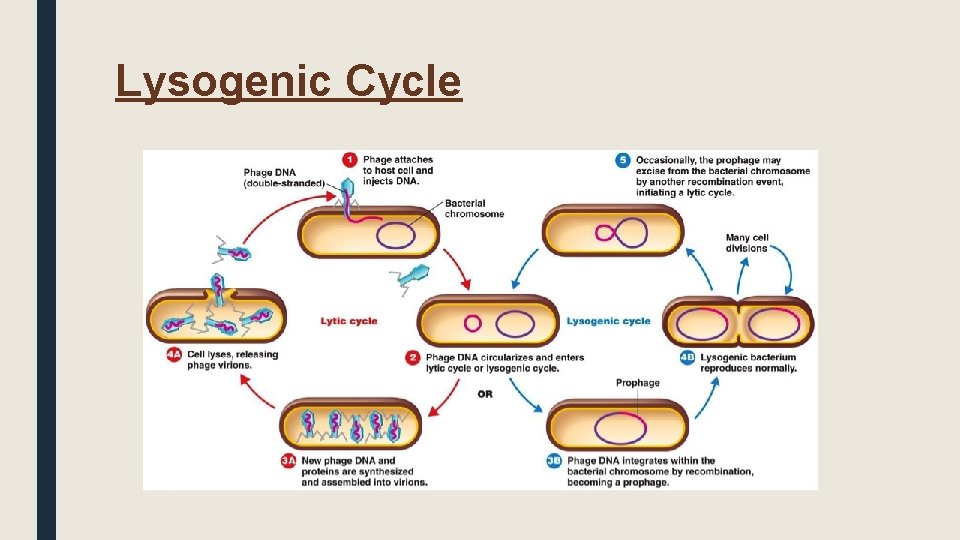
Lysogenic Cycle
Lysogenic Cycle ■ Virus doesn’t kill the host at first, and enters inactivity stage – Cell divides and now new cells BOTH have virus DNA/RNA!
Lysogenic Cycle ■ Some lysogenic viruses are retroviruses – Force a cell to transcribe its RNA into the cell’s DNA (reverse of transcription) – Example- HIV ■ Lysogenic Cycle- HIV ■ Lytic Cycle- AIDS
12. 7 - HOW VIRUSES FUNCTION IN THE ENVIRONMENT
Useful Viruses ■ Medical Research– Virus has good genes put inside, then delivers to genetically damaged cell ■ Antibiotics– Bacteriophages- research to try and use them to kill MRSA (Methicillin-resistant Staphylococcus aureus) and drug-resistant tuberculosis ■ Agriculture– Viruses can help ward off pests!
Harmful Viruses ■ Polio, Ebola, measles, H 1 N 1, Smallpox, SARS, etc ■ How do we treat? – Vaccines ■ Uses an inactivated (or weakened) virus to teach the body what it should fight ■ Taken before you get the virus
- Slides: 21