
CHAPTER 12 ANALYSIS OF VARIANCE Prem Mann Introductory






- Slides: 48
CHAPTER 12 ANALYSIS OF VARIANCE Prem Mann, Introductory Statistics, 7/E Copyright © 2010 John Wiley & Sons. All right reserved
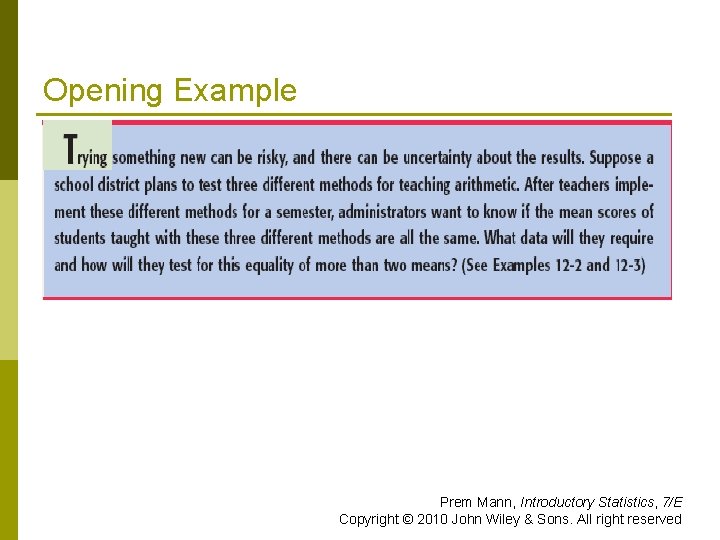
Opening Example Prem Mann, Introductory Statistics, 7/E Copyright © 2010 John Wiley & Sons. All right reserved
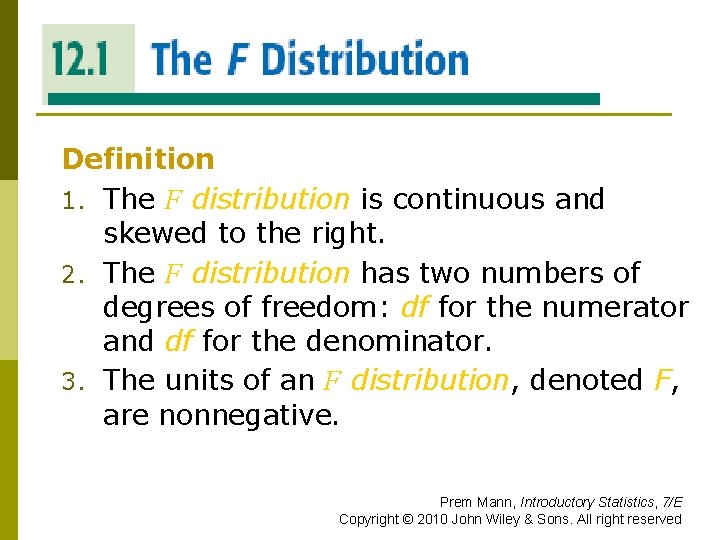
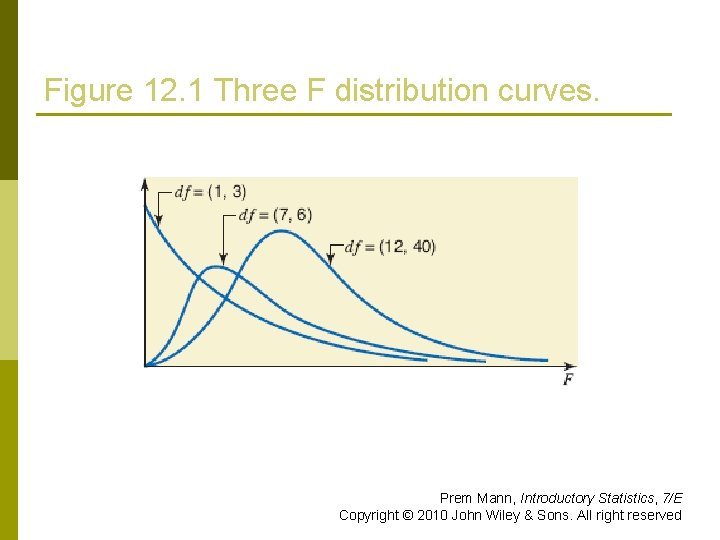
THE F DISTRIBUTION Definition 1. The F distribution is continuous and skewed to the right. 2. The F distribution has two numbers of degrees of freedom: df for the numerator and df for the denominator. 3. The units of an F distribution, denoted F, are nonnegative. Prem Mann, Introductory Statistics, 7/E Copyright © 2010 John Wiley & Sons. All right reserved
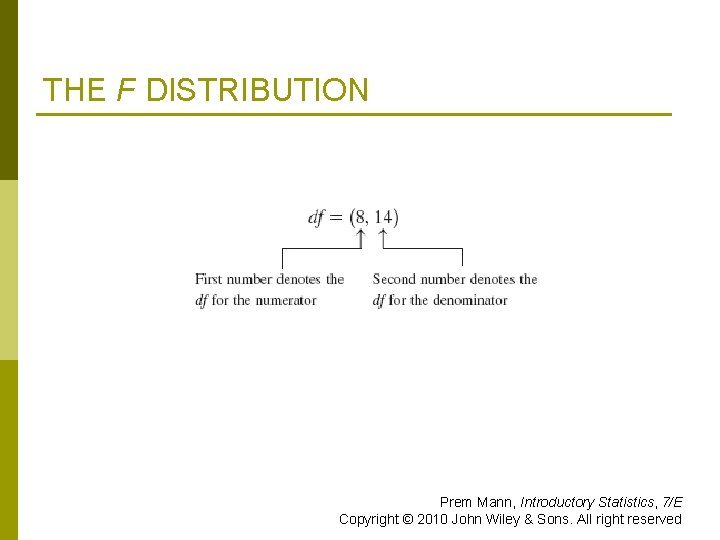
THE F DISTRIBUTION Prem Mann, Introductory Statistics, 7/E Copyright © 2010 John Wiley & Sons. All right reserved
Figure 12. 1 Three F distribution curves. Prem Mann, Introductory Statistics, 7/E Copyright © 2010 John Wiley & Sons. All right reserved
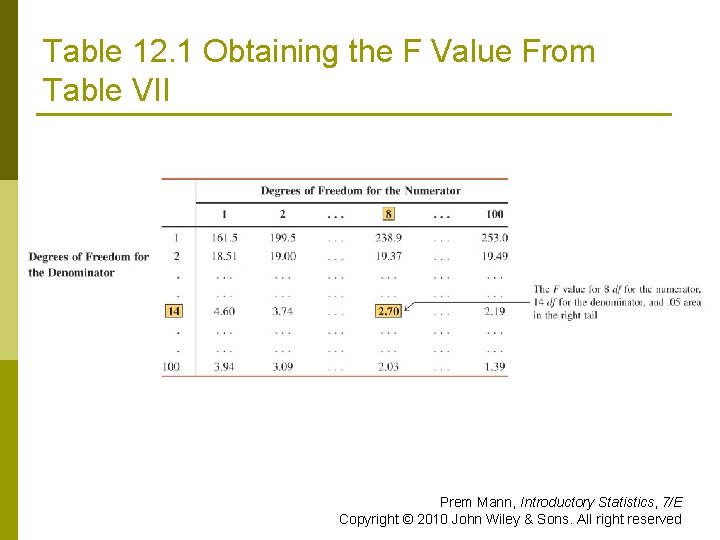
Example 12 -1 Find the F value for 8 degrees of freedom for the numerator, 14 degrees of freedom for the denominator, and. 05 area in the right tail of the F distribution curve. Prem Mann, Introductory Statistics, 7/E Copyright © 2010 John Wiley & Sons. All right reserved
Table 12. 1 Obtaining the F Value From Table VII Prem Mann, Introductory Statistics, 7/E Copyright © 2010 John Wiley & Sons. All right reserved
Figure 12. 2 The critical value of F for 8 df for the numerator, 14 df for the denominator, and. 05 area in the right tail. Prem Mann, Introductory Statistics, 7/E Copyright © 2010 John Wiley & Sons. All right reserved
ONE-WAY ANALYSIS OF VARIANCE Calculating the Value of the Test Statistic p One-Way ANOVA Test p Prem Mann, Introductory Statistics, 7/E Copyright © 2010 John Wiley & Sons. All right reserved
ONE-WAY ANALYSIS OF VARIANCE Definition ANOVA is a procedure used to test the null hypothesis that the means of three or more populations are equal. Prem Mann, Introductory Statistics, 7/E Copyright © 2010 John Wiley & Sons. All right reserved
Assumptions of One-Way ANOVA The following assumptions must hold true to use one-way ANOVA. The populations from which the samples are drawn are (approximately) normally distributed. 2. The populations from which the samples are drawn have the same variance (or standard deviation). 3. The samples drawn from different populations are random and independent. 1. Prem Mann, Introductory Statistics, 7/E Copyright © 2010 John Wiley & Sons. All right reserved
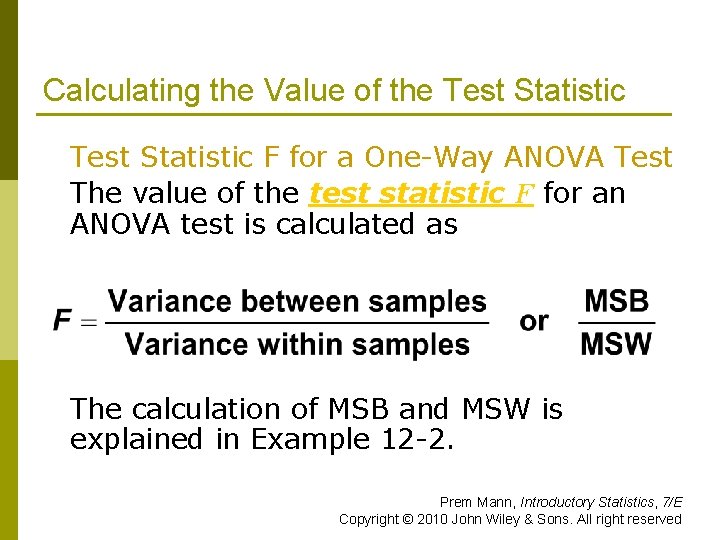
Calculating the Value of the Test Statistic F for a One-Way ANOVA Test The value of the test statistic F for an ANOVA test is calculated as The calculation of MSB and MSW is explained in Example 12 -2. Prem Mann, Introductory Statistics, 7/E Copyright © 2010 John Wiley & Sons. All right reserved
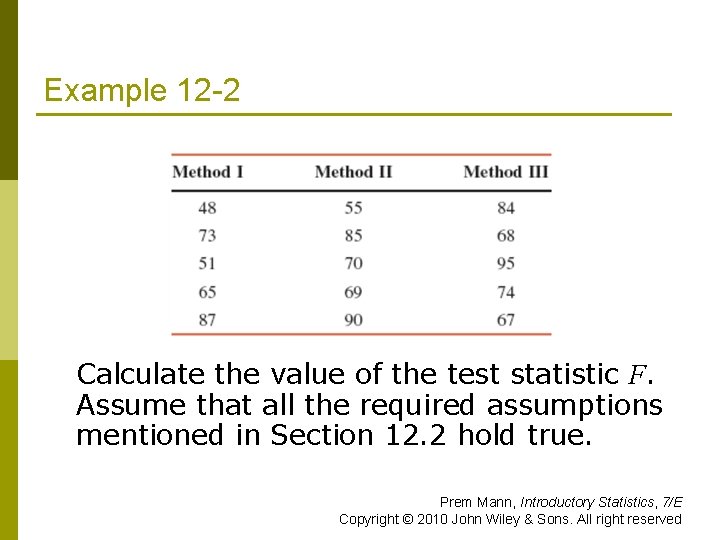
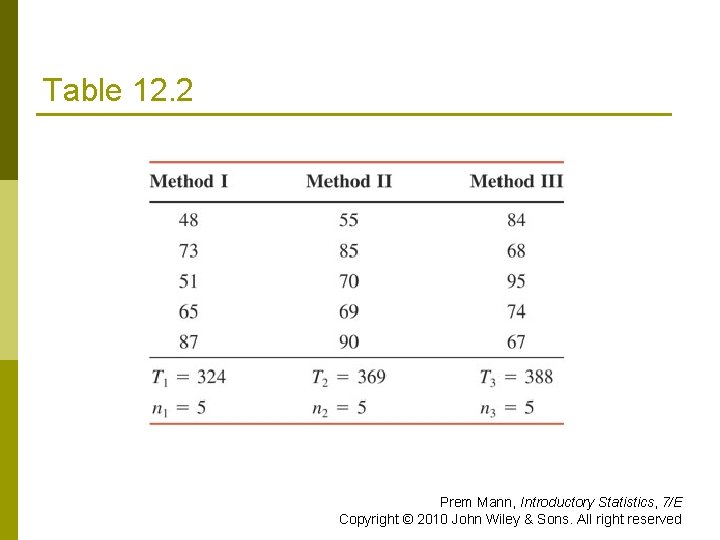
Example 12 -2 Fifteen fourth-grade students were randomly assigned to three groups to experiment with three different methods of teaching arithmetic. At the end of the semester, the same test was given to all 15 students. The table gives the scores of students in the three groups. Prem Mann, Introductory Statistics, 7/E Copyright © 2010 John Wiley & Sons. All right reserved
Example 12 -2 Calculate the value of the test statistic F. Assume that all the required assumptions mentioned in Section 12. 2 hold true. Prem Mann, Introductory Statistics, 7/E Copyright © 2010 John Wiley & Sons. All right reserved
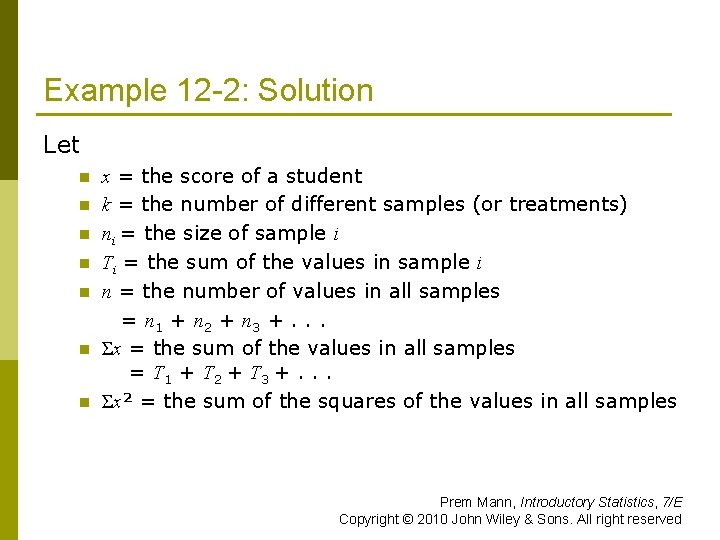
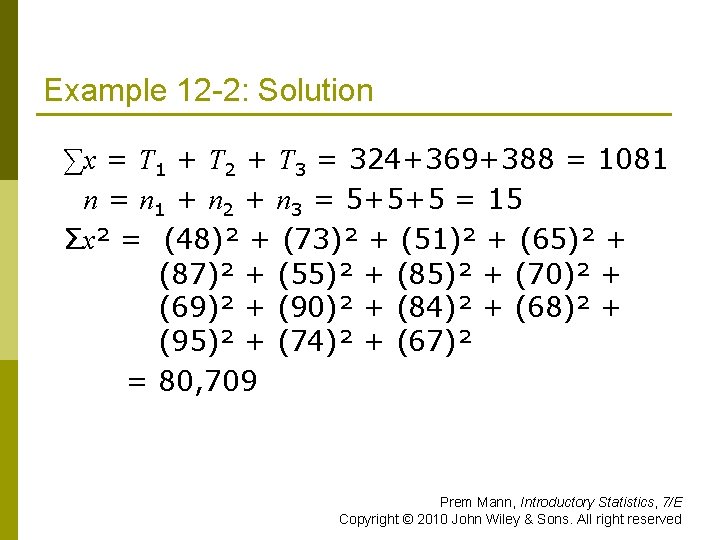
Example 12 -2: Solution Let n n n n x = the score of a student k = the number of different samples (or treatments) ni = the size of sample i Ti = the sum of the values in sample i n = the number of values in all samples = n 1 + n 2 + n 3 +. . . Σx = the sum of the values in all samples = T 1 + T 2 + T 3 +. . . Σx² = the sum of the squares of the values in all samples Prem Mann, Introductory Statistics, 7/E Copyright © 2010 John Wiley & Sons. All right reserved
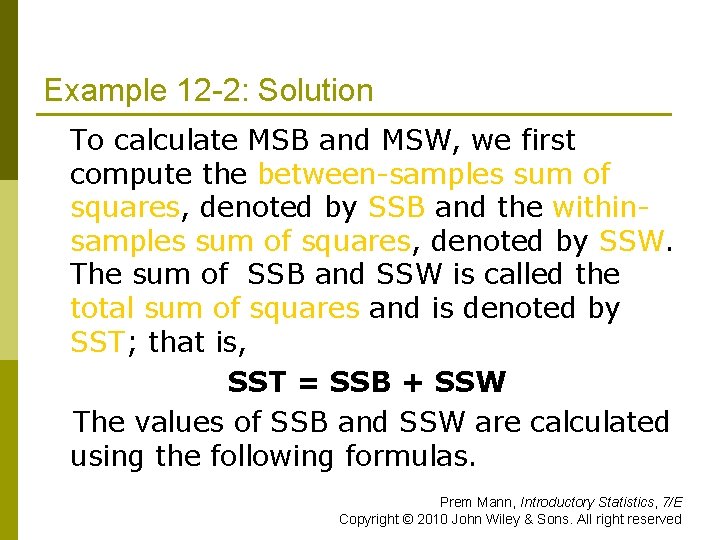
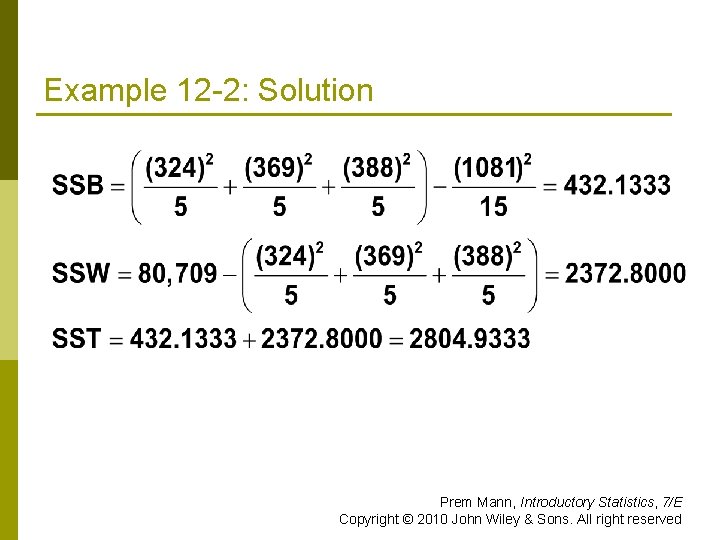
Example 12 -2: Solution To calculate MSB and MSW, we first compute the between-samples sum of squares, denoted by SSB and the withinsamples sum of squares, denoted by SSW. The sum of SSB and SSW is called the total sum of squares and is denoted by SST; that is, SST = SSB + SSW The values of SSB and SSW are calculated using the following formulas. Prem Mann, Introductory Statistics, 7/E Copyright © 2010 John Wiley & Sons. All right reserved
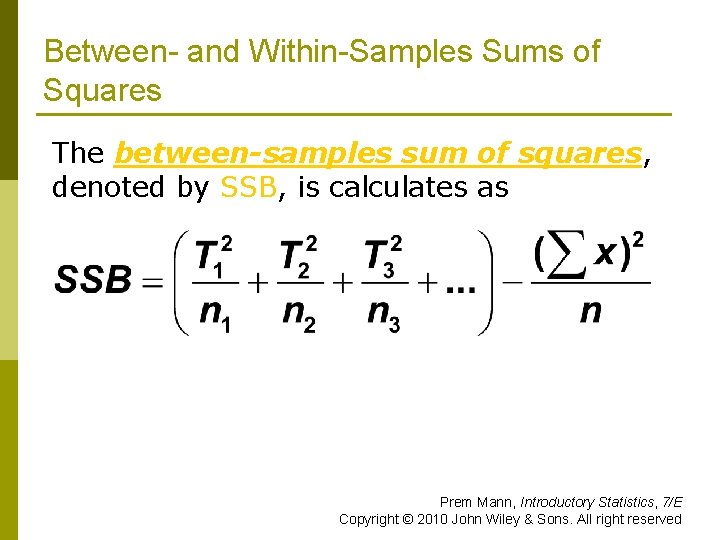
Between- and Within-Samples Sums of Squares The between-samples sum of squares, denoted by SSB, is calculates as Prem Mann, Introductory Statistics, 7/E Copyright © 2010 John Wiley & Sons. All right reserved
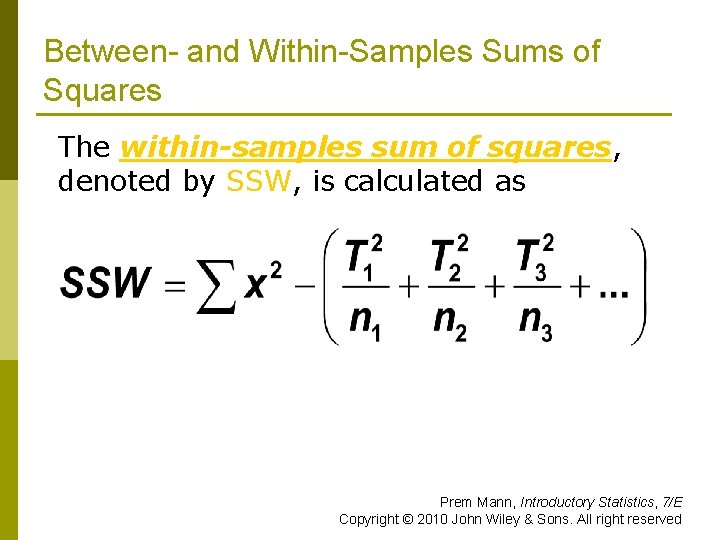
Between- and Within-Samples Sums of Squares The within-samples sum of squares, denoted by SSW, is calculated as Prem Mann, Introductory Statistics, 7/E Copyright © 2010 John Wiley & Sons. All right reserved
Table 12. 2 Prem Mann, Introductory Statistics, 7/E Copyright © 2010 John Wiley & Sons. All right reserved
Example 12 -2: Solution ∑x = T 1 + T 2 + T 3 = 324+369+388 = 1081 n = n 1 + n 2 + n 3 = 5+5+5 = 15 Σx² = (48)² + (73)² + (51)² + (65)² + (87)² + (55)² + (85)² + (70)² + (69)² + (90)² + (84)² + (68)² + (95)² + (74)² + (67)² = 80, 709 Prem Mann, Introductory Statistics, 7/E Copyright © 2010 John Wiley & Sons. All right reserved
Example 12 -2: Solution Prem Mann, Introductory Statistics, 7/E Copyright © 2010 John Wiley & Sons. All right reserved
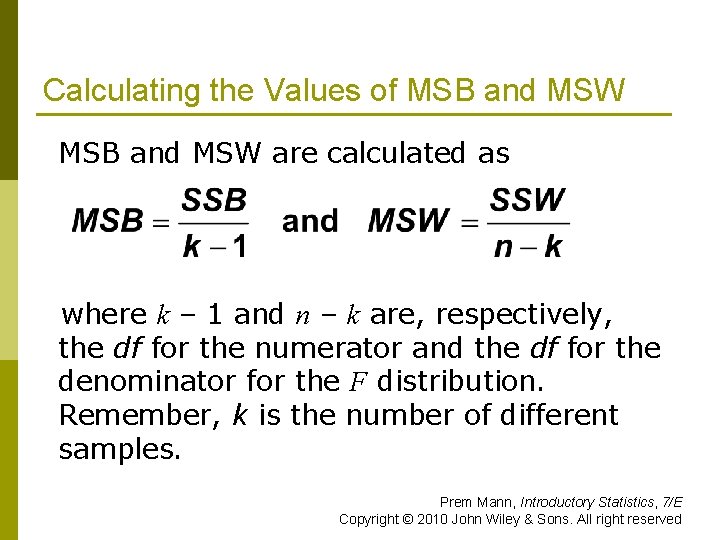
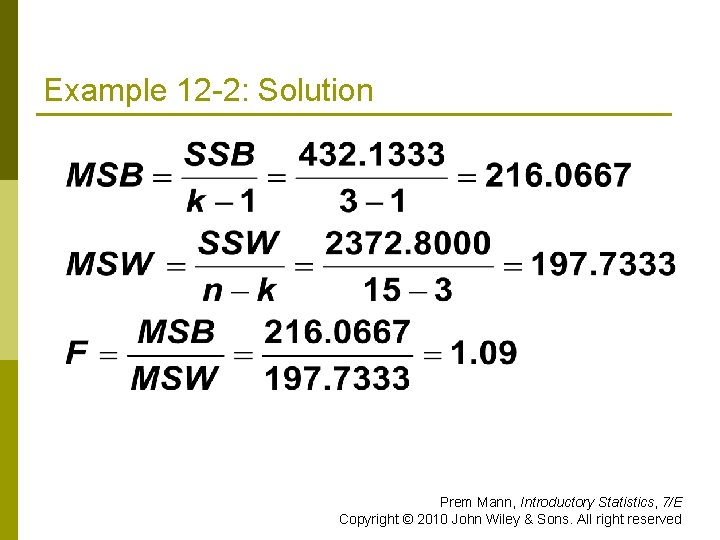
Calculating the Values of MSB and MSW are calculated as where k – 1 and n – k are, respectively, the df for the numerator and the df for the denominator for the F distribution. Remember, k is the number of different samples. Prem Mann, Introductory Statistics, 7/E Copyright © 2010 John Wiley & Sons. All right reserved
Example 12 -2: Solution Prem Mann, Introductory Statistics, 7/E Copyright © 2010 John Wiley & Sons. All right reserved
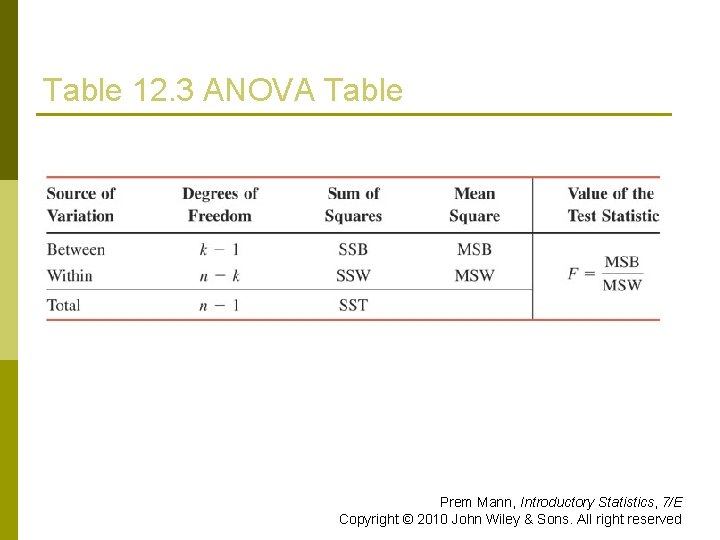
Table 12. 3 ANOVA Table Prem Mann, Introductory Statistics, 7/E Copyright © 2010 John Wiley & Sons. All right reserved
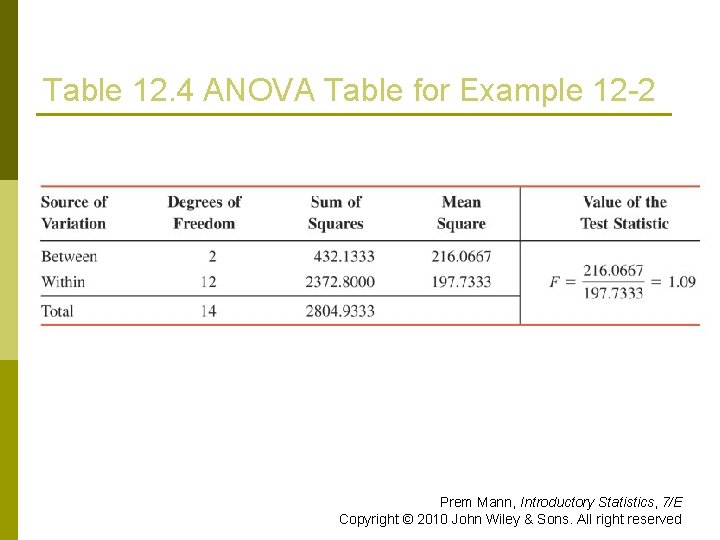
Table 12. 4 ANOVA Table for Example 12 -2 Prem Mann, Introductory Statistics, 7/E Copyright © 2010 John Wiley & Sons. All right reserved
Example 12 -3 Reconsider Example 12 -2 about the scores of 15 fourth-grade students who were randomly assigned to three groups in order to experiment with three different methods of teaching arithmetic. At the 1% significance level, can we reject the null hypothesis that the mean arithmetic score of all fourth-grade students taught by each of these three methods is the same? Assume that all the assumptions required to apply the one-way ANOVA procedure hold true. Prem Mann, Introductory Statistics, 7/E Copyright © 2010 John Wiley & Sons. All right reserved
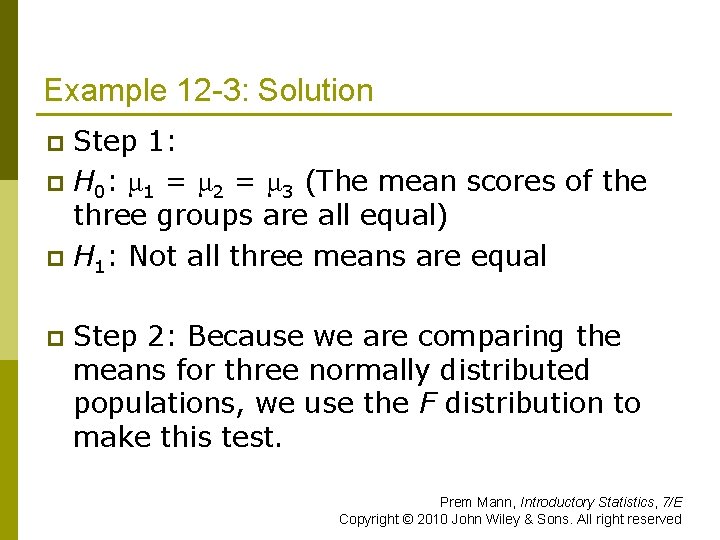
Example 12 -3: Solution Step 1: p H 0: μ 1 = μ 2 = μ 3 (The mean scores of the three groups are all equal) p H 1: Not all three means are equal p p Step 2: Because we are comparing the means for three normally distributed populations, we use the F distribution to make this test. Prem Mann, Introductory Statistics, 7/E Copyright © 2010 John Wiley & Sons. All right reserved
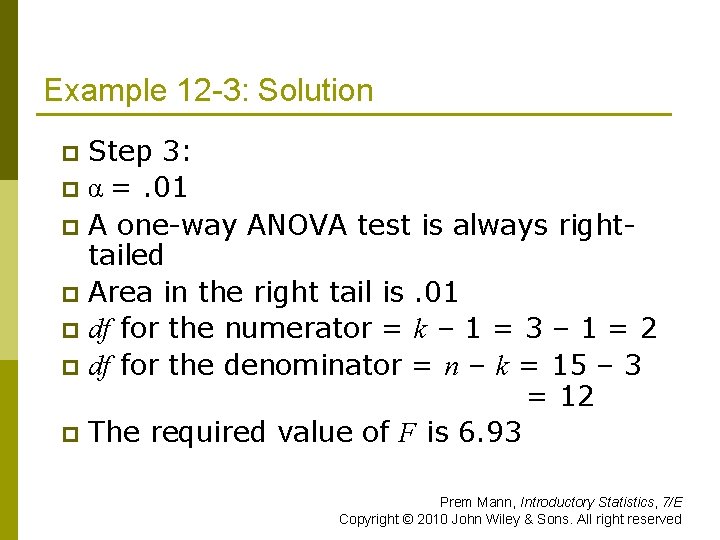
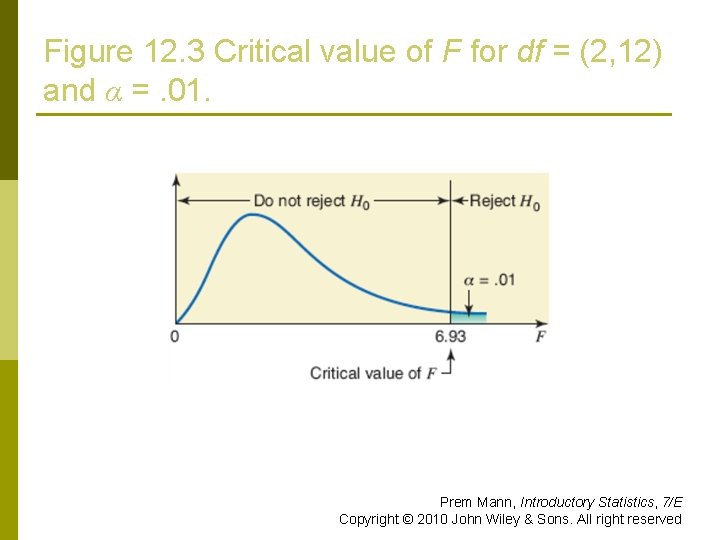
Example 12 -3: Solution Step 3: p α =. 01 p A one-way ANOVA test is always righttailed p Area in the right tail is. 01 p df for the numerator = k – 1 = 3 – 1 = 2 p df for the denominator = n – k = 15 – 3 = 12 p The required value of F is 6. 93 p Prem Mann, Introductory Statistics, 7/E Copyright © 2010 John Wiley & Sons. All right reserved
Figure 12. 3 Critical value of F for df = (2, 12) and α =. 01. Prem Mann, Introductory Statistics, 7/E Copyright © 2010 John Wiley & Sons. All right reserved
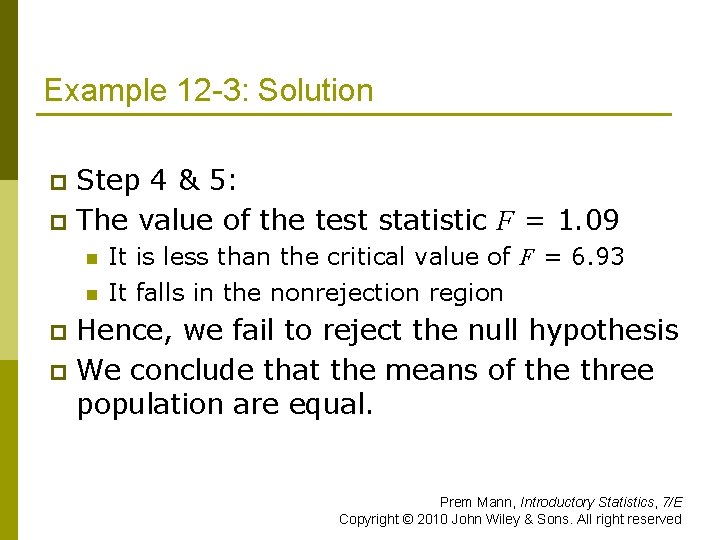
Example 12 -3: Solution Step 4 & 5: p The value of the test statistic F = 1. 09 p n n It is less than the critical value of F = 6. 93 It falls in the nonrejection region Hence, we fail to reject the null hypothesis p We conclude that the means of the three population are equal. p Prem Mann, Introductory Statistics, 7/E Copyright © 2010 John Wiley & Sons. All right reserved
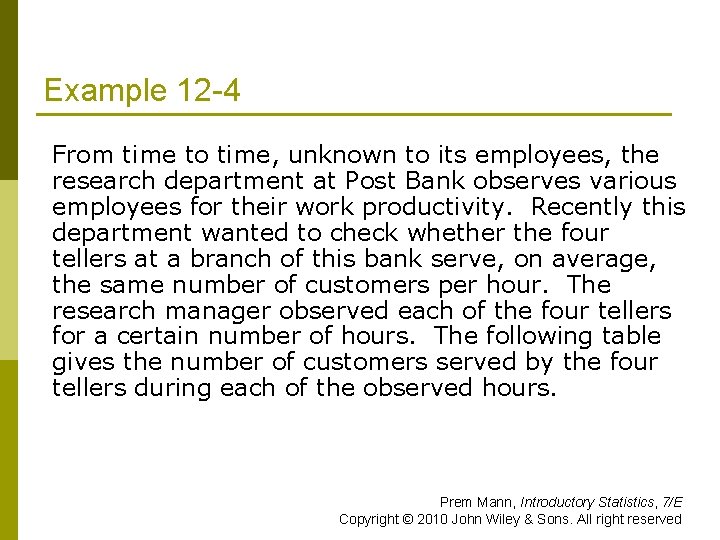
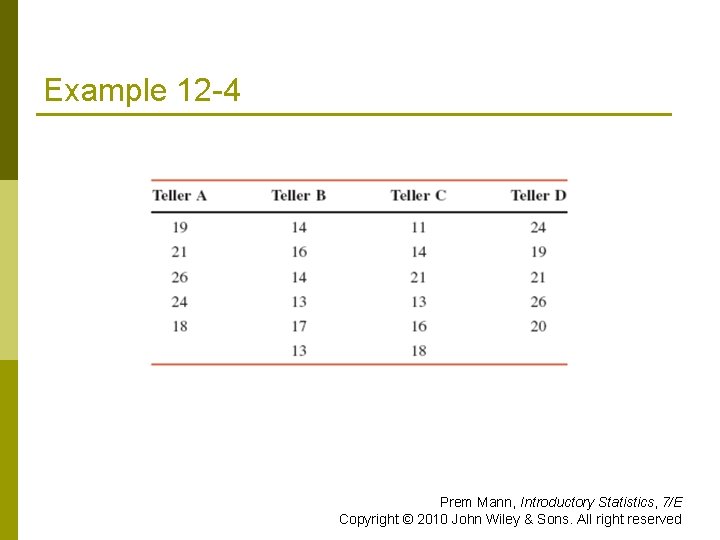
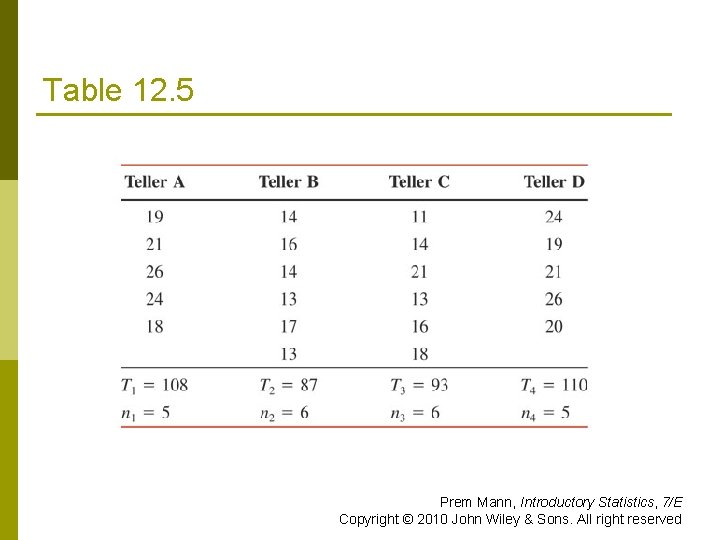
Example 12 -4 From time to time, unknown to its employees, the research department at Post Bank observes various employees for their work productivity. Recently this department wanted to check whether the four tellers at a branch of this bank serve, on average, the same number of customers per hour. The research manager observed each of the four tellers for a certain number of hours. The following table gives the number of customers served by the four tellers during each of the observed hours. Prem Mann, Introductory Statistics, 7/E Copyright © 2010 John Wiley & Sons. All right reserved
Example 12 -4 Prem Mann, Introductory Statistics, 7/E Copyright © 2010 John Wiley & Sons. All right reserved
Example 12 -4 At the 5% significance level, test the null hypothesis that the mean number of customers served per hour by each of these four tellers is the same. Assume that all the assumptions required to apply the oneway ANOVA procedure hold true. Prem Mann, Introductory Statistics, 7/E Copyright © 2010 John Wiley & Sons. All right reserved
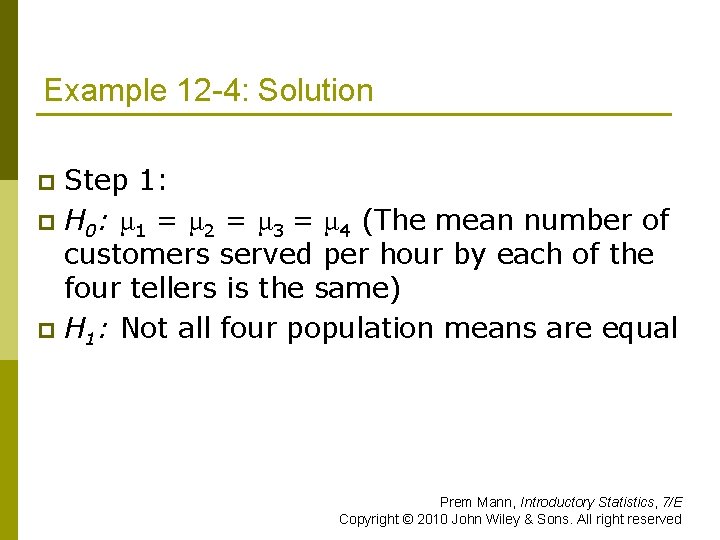
Example 12 -4: Solution Step 1: p H 0: μ 1 = μ 2 = μ 3 = μ 4 (The mean number of customers served per hour by each of the four tellers is the same) p H 1: Not all four population means are equal p Prem Mann, Introductory Statistics, 7/E Copyright © 2010 John Wiley & Sons. All right reserved
Example 12 -4: Solution Step 2: p Because we are testing for the equality of four means for four normally distributed populations, we use the F distribution to make the test. p Prem Mann, Introductory Statistics, 7/E Copyright © 2010 John Wiley & Sons. All right reserved
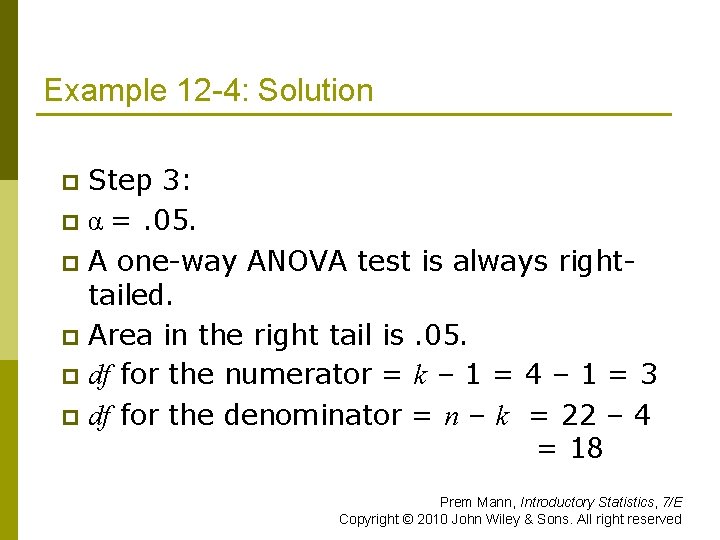
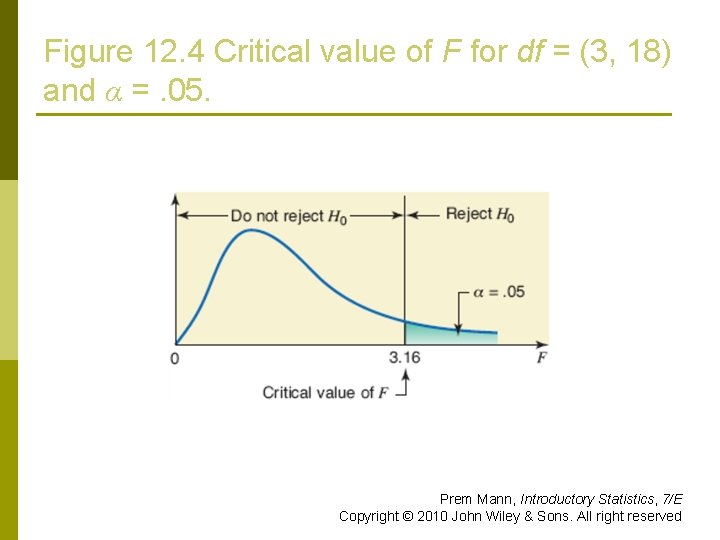
Example 12 -4: Solution Step 3: p α =. 05. p A one-way ANOVA test is always righttailed. p Area in the right tail is. 05. p df for the numerator = k – 1 = 4 – 1 = 3 p df for the denominator = n – k = 22 – 4 = 18 p Prem Mann, Introductory Statistics, 7/E Copyright © 2010 John Wiley & Sons. All right reserved
Figure 12. 4 Critical value of F for df = (3, 18) and α =. 05. Prem Mann, Introductory Statistics, 7/E Copyright © 2010 John Wiley & Sons. All right reserved
Table 12. 5 Prem Mann, Introductory Statistics, 7/E Copyright © 2010 John Wiley & Sons. All right reserved
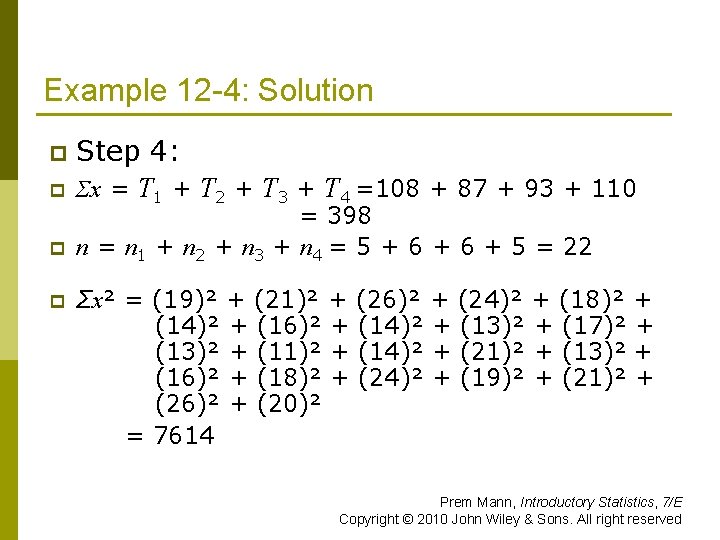
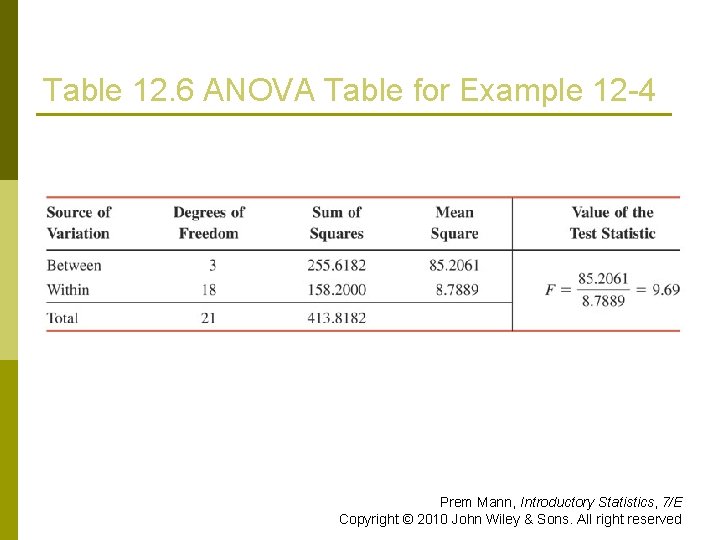
Example 12 -4: Solution p p Step 4: Σx = T 1 + T 2 + T 3 + T 4 =108 + 87 + 93 + 110 = 398 n = n 1 + n 2 + n 3 + n 4 = 5 + 6 + 5 = 22 Σx² = (19)² + (21)² + (26)² + (24)² + (18)² + (14)² + (16)² + (14)² + (13)² + (17)² + (13)² + (11)² + (14)² + (21)² + (13)² + (16)² + (18)² + (24)² + (19)² + (21)² + (26)² + (20)² = 7614 Prem Mann, Introductory Statistics, 7/E Copyright © 2010 John Wiley & Sons. All right reserved
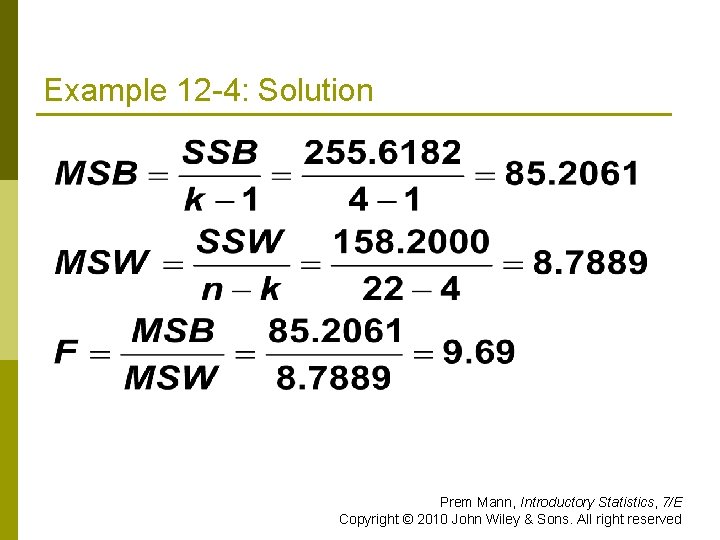
Example 12 -4: Solution Prem Mann, Introductory Statistics, 7/E Copyright © 2010 John Wiley & Sons. All right reserved
Example 12 -4: Solution Prem Mann, Introductory Statistics, 7/E Copyright © 2010 John Wiley & Sons. All right reserved
Table 12. 6 ANOVA Table for Example 12 -4 Prem Mann, Introductory Statistics, 7/E Copyright © 2010 John Wiley & Sons. All right reserved
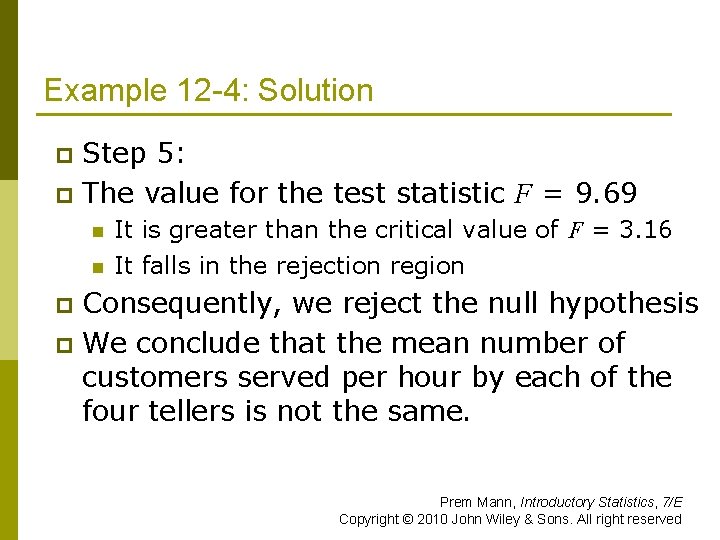
Example 12 -4: Solution Step 5: p The value for the test statistic F = 9. 69 p n n It is greater than the critical value of F = 3. 16 It falls in the rejection region Consequently, we reject the null hypothesis p We conclude that the mean number of customers served per hour by each of the four tellers is not the same. p Prem Mann, Introductory Statistics, 7/E Copyright © 2010 John Wiley & Sons. All right reserved
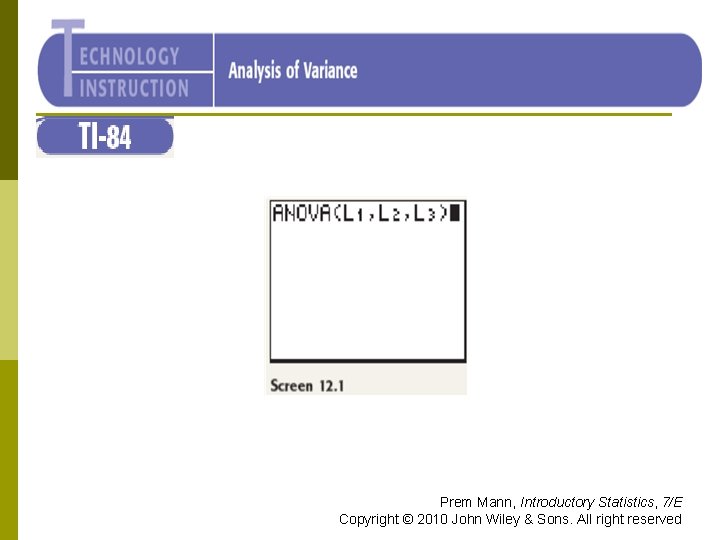
TI-84 Prem Mann, Introductory Statistics, 7/E Copyright © 2010 John Wiley & Sons. All right reserved
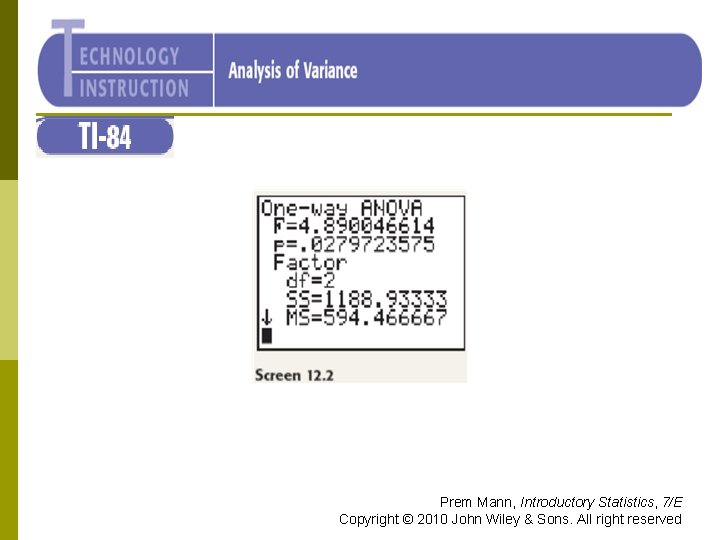
TI-84 Prem Mann, Introductory Statistics, 7/E Copyright © 2010 John Wiley & Sons. All right reserved
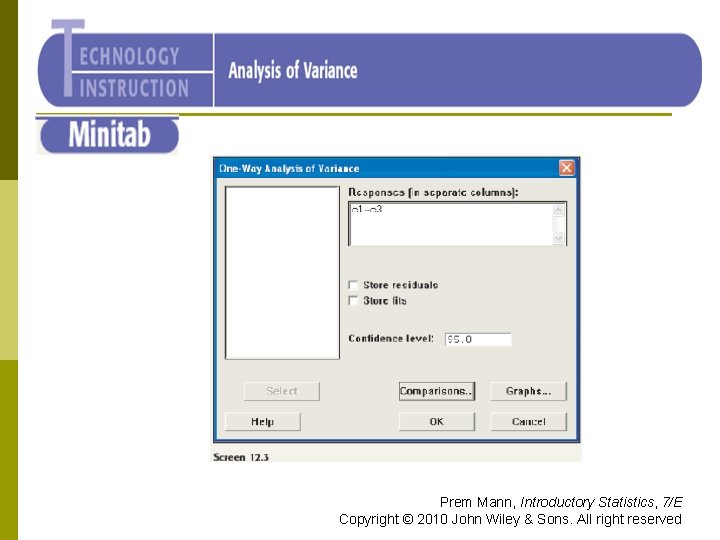
Minitab Prem Mann, Introductory Statistics, 7/E Copyright © 2010 John Wiley & Sons. All right reserved
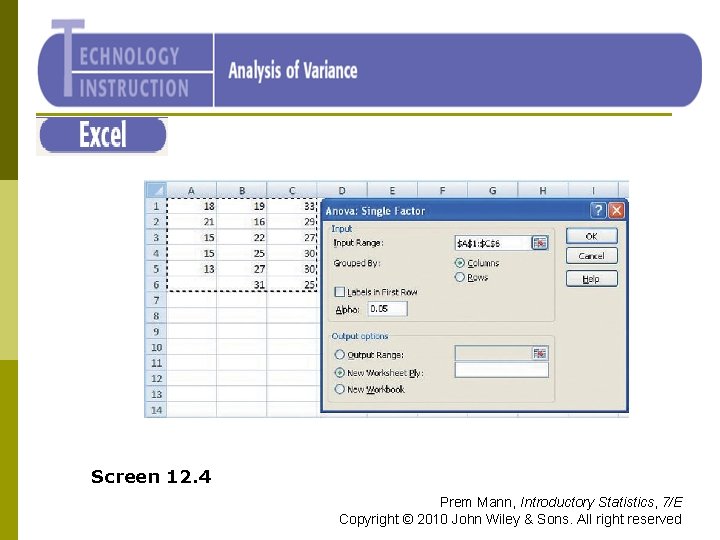
Excel Screen 12. 4 Prem Mann, Introductory Statistics, 7/E Copyright © 2010 John Wiley & Sons. All right reserved
Excel Screen 12. 5 Prem Mann, Introductory Statistics, 7/E Copyright © 2010 John Wiley & Sons. All right reserved