
Chapter 12 1 12 2 The Cell Cycle
- Slides: 44
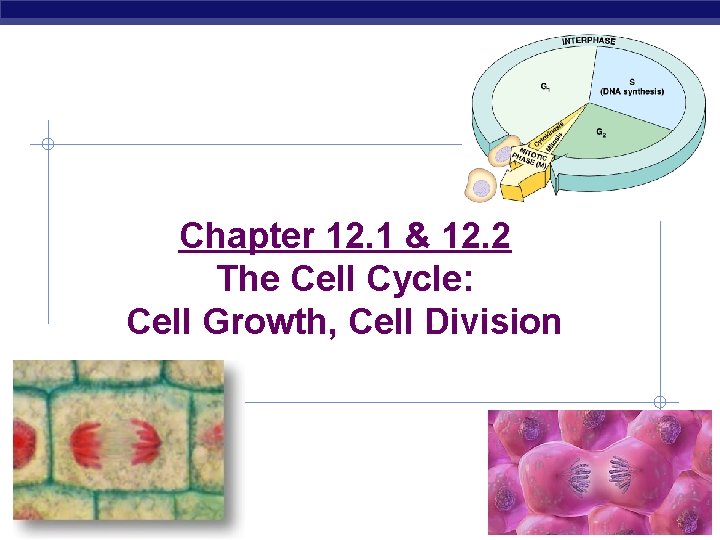
Chapter 12. 1 & 12. 2 The Cell Cycle: Cell Growth, Cell Division AP Biology
Where it all began… You started as a cell smaller than a period at the end of a sentence… AP Biology
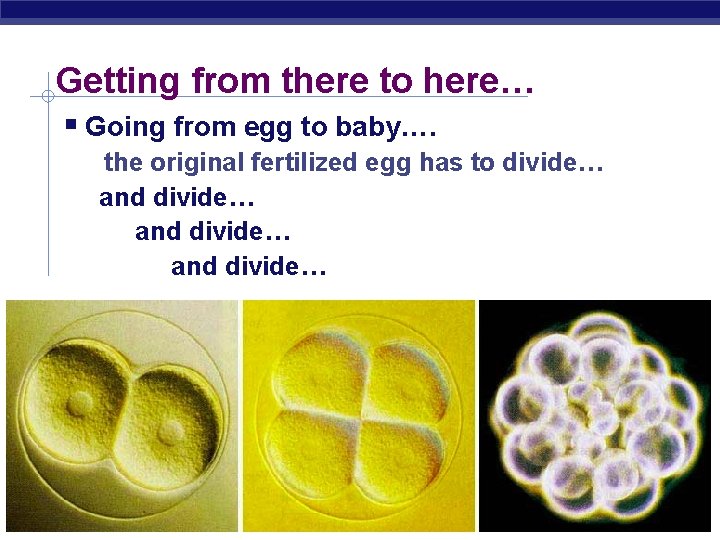
Getting from there to here… Going from egg to baby…. the original fertilized egg has to divide… and divide… AP Biology
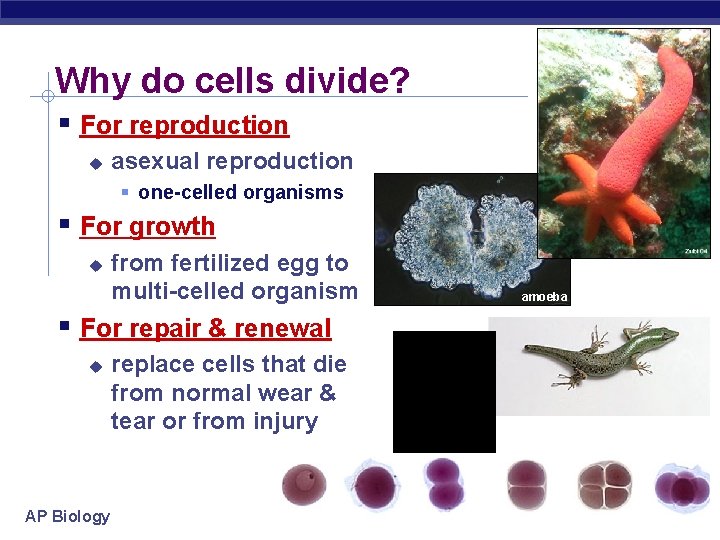
Why do cells divide? For reproduction asexual reproduction one-celled organisms For growth from fertilized egg to multi-celled organism For repair & renewal AP Biology replace cells that die from normal wear & tear or from injury amoeba
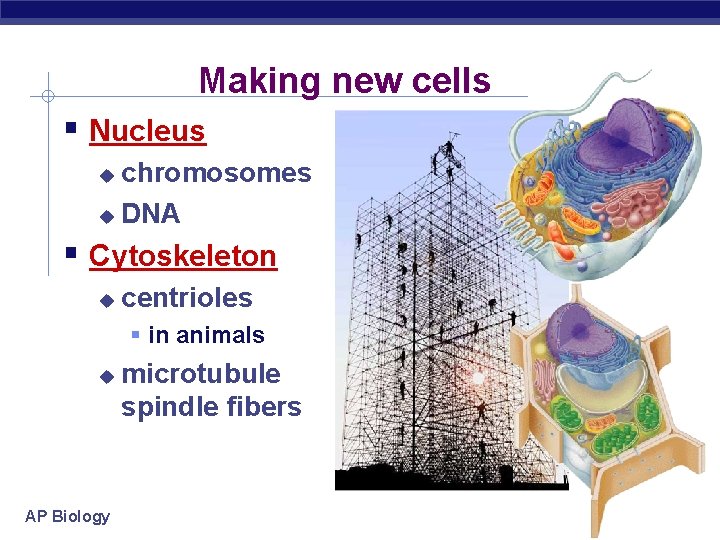
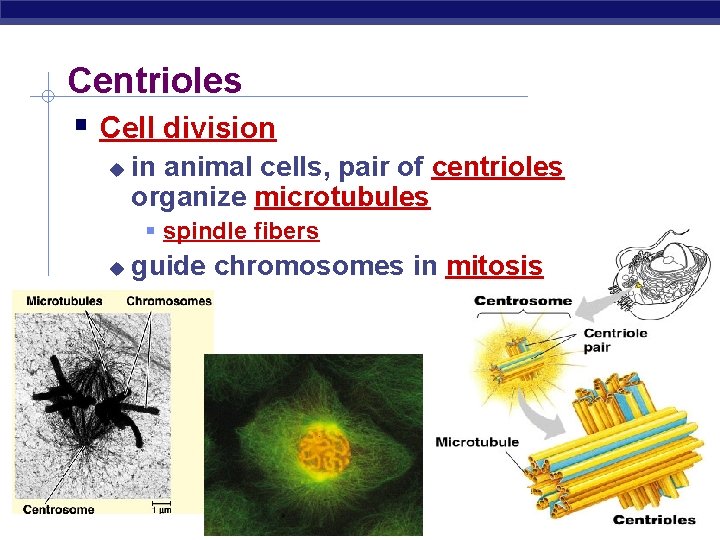
Making new cells Nucleus chromosomes DNA Cytoskeleton centrioles in animals AP Biology microtubule spindle fibers
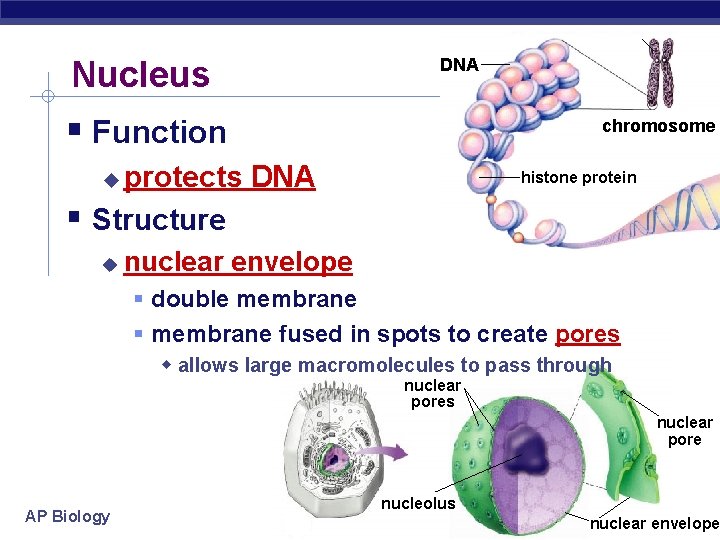
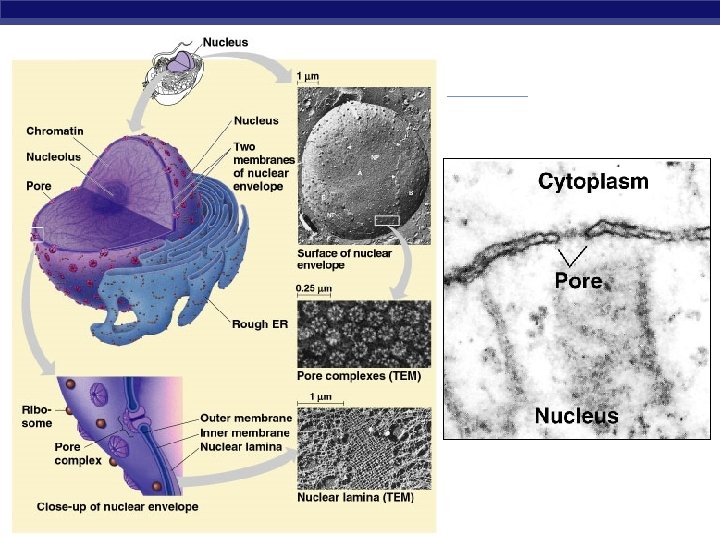
Nucleus DNA Function chromosome protects DNA Structure histone protein nuclear envelope double membrane fused in spots to create pores allows large macromolecules to pass through nuclear pores nuclear pore AP Biology nucleolus nuclear envelope
AP Biology
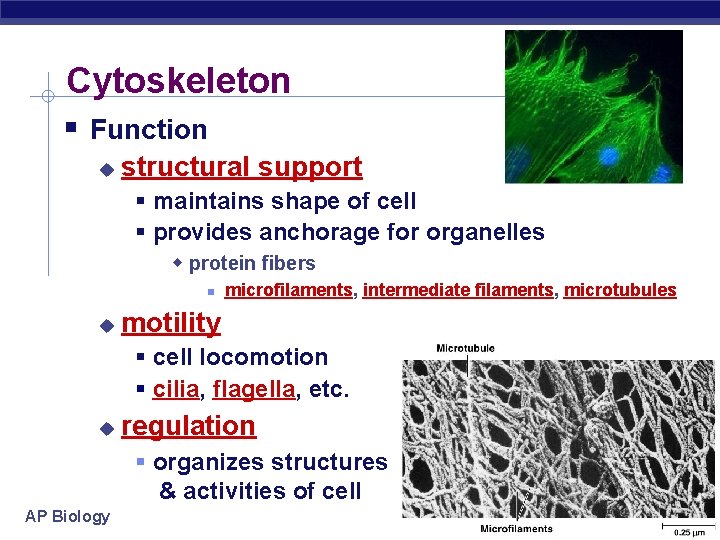
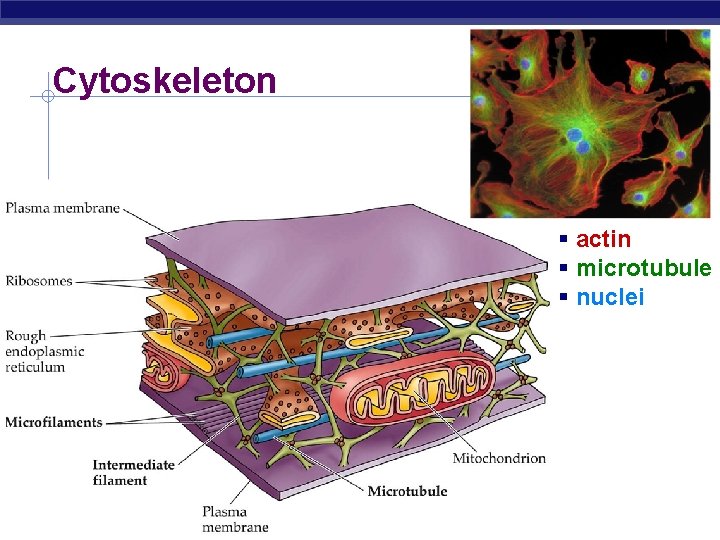
Cytoskeleton Function structural support maintains shape of cell provides anchorage for organelles protein fibers microfilaments, intermediate filaments, microtubules motility cell locomotion cilia, flagella, etc. regulation organizes structures & activities of cell AP Biology
Cytoskeleton actin microtubule nuclei AP Biology
Centrioles Cell division in animal cells, pair of centrioles organize microtubules spindle fibers AP Biology guide chromosomes in mitosis
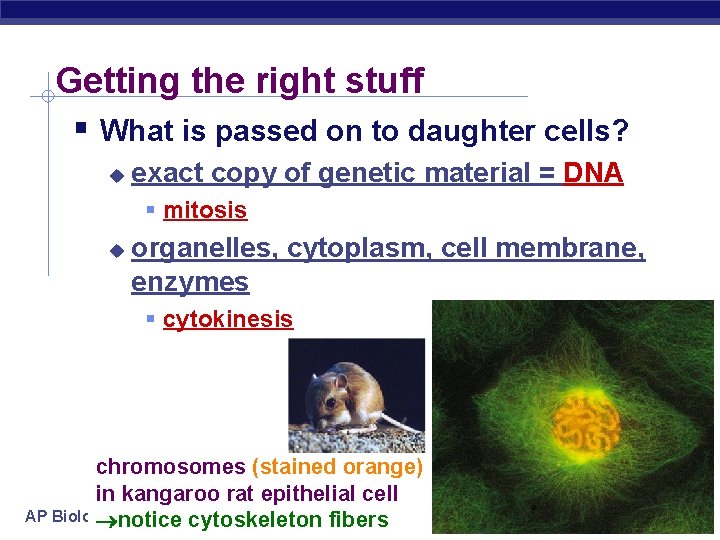
Getting the right stuff What is passed on to daughter cells? exact copy of genetic material = DNA mitosis organelles, cytoplasm, cell membrane, enzymes cytokinesis chromosomes (stained orange) in kangaroo rat epithelial cell AP Biology notice cytoskeleton fibers
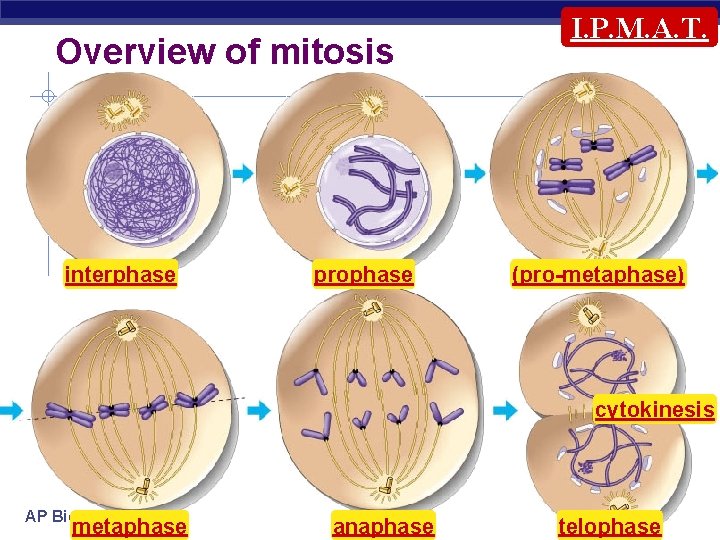
Overview of mitosis interphase prophase I. P. M. A. T. (pro-metaphase) cytokinesis AP Biology metaphase anaphase telophase
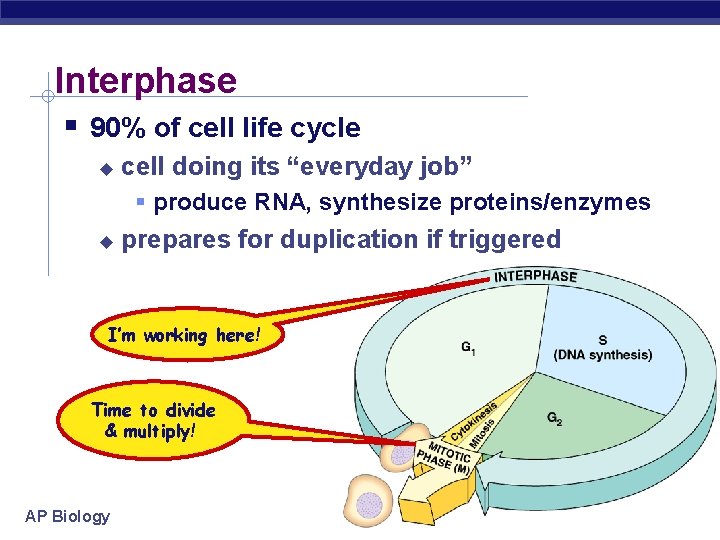
Interphase 90% of cell life cycle cell doing its “everyday job” produce RNA, synthesize proteins/enzymes prepares for duplication if triggered I’m working here! Time to divide & multiply! AP Biology
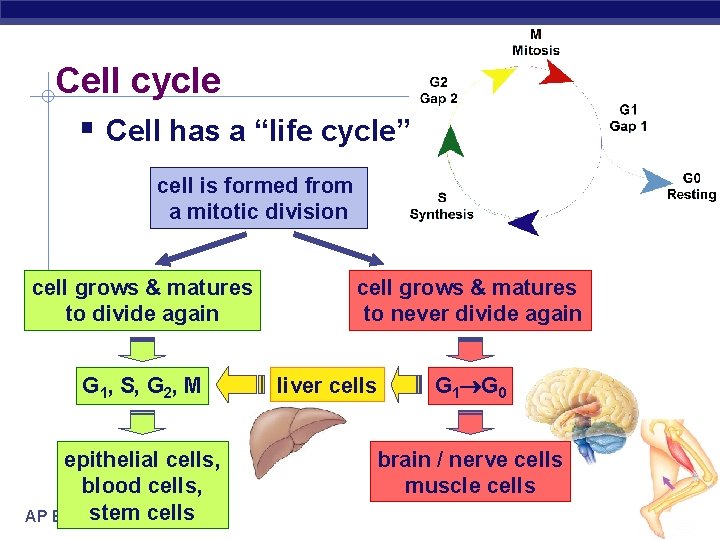
Cell cycle Cell has a “life cycle” cell is formed from a mitotic division cell grows & matures to divide again G 1, S, G 2, M epithelial cells, blood cells, stem cells AP Biology cell grows & matures to never divide again liver cells G 1 G 0 brain / nerve cells muscle cells
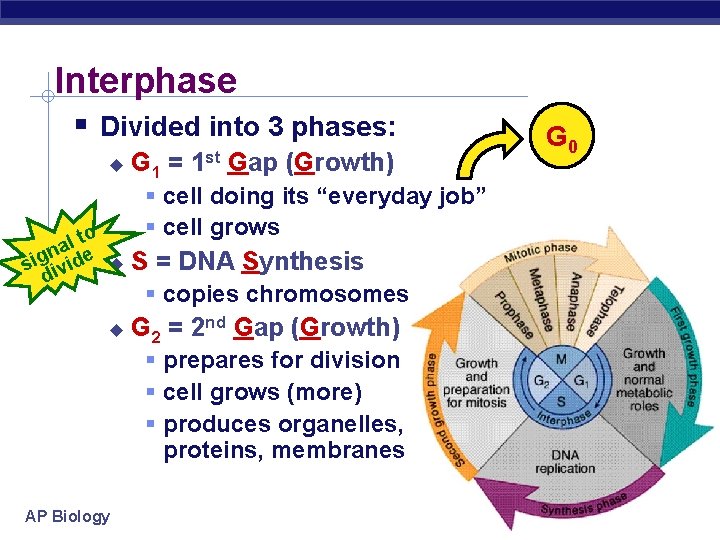
Interphase Divided into 3 phases: l to a n sig ivide d G 1 = 1 st Gap (Growth) cell doing its “everyday job” cell grows S = DNA Synthesis copies chromosomes G 2 = 2 nd Gap (Growth) prepares for division cell grows (more) produces organelles, proteins, membranes AP Biology G 0
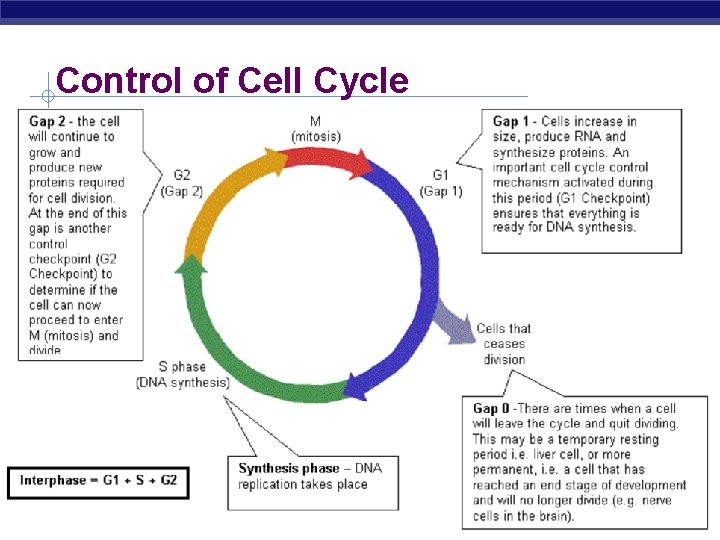
Control of Cell Cycle AP Biology
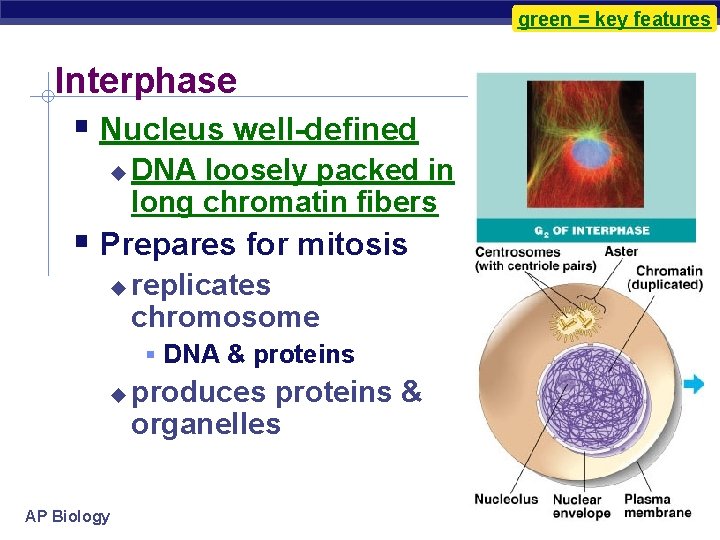
green = key features Interphase Nucleus well-defined DNA loosely packed in long chromatin fibers Prepares for mitosis replicates chromosome DNA & proteins AP Biology produces proteins & organelles
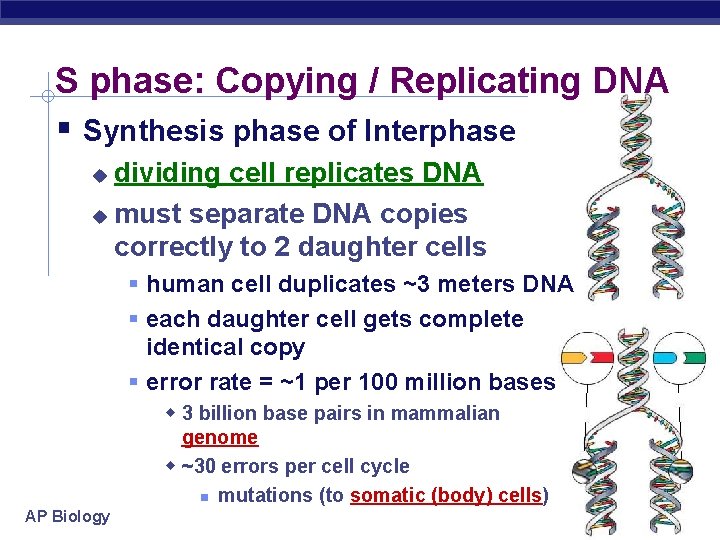
S phase: Copying / Replicating DNA Synthesis phase of Interphase dividing cell replicates DNA must separate DNA copies correctly to 2 daughter cells human cell duplicates ~3 meters DNA each daughter cell gets complete identical copy error rate = ~1 per 100 million bases 3 billion base pairs in mammalian genome ~30 errors per cell cycle mutations (to somatic (body) cells) AP Biology
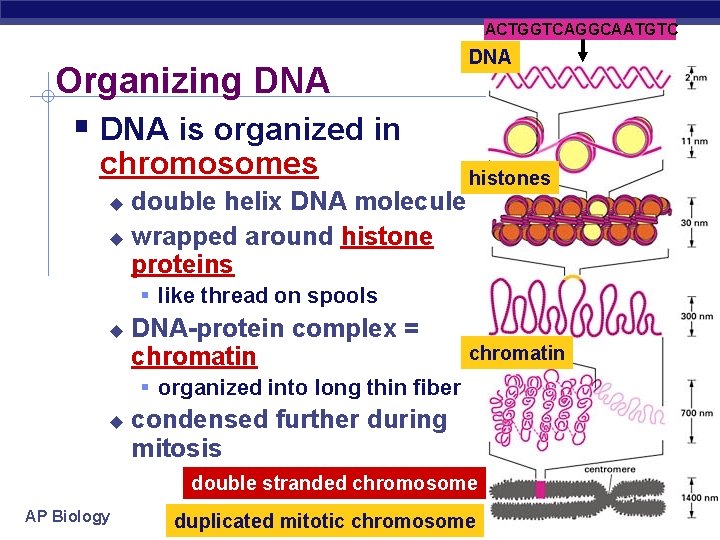
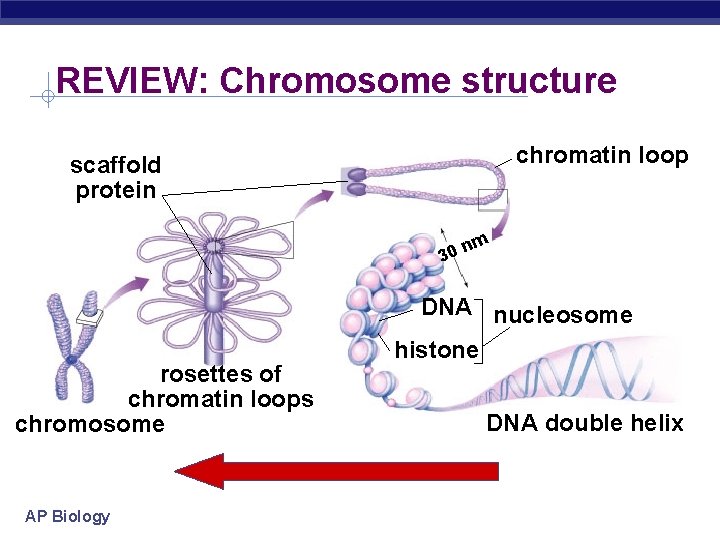
ACTGGTCAGGCAATGTC Organizing DNA is organized in chromosomes double helix DNA molecule wrapped around histone proteins histones like thread on spools DNA-protein complex = chromatin organized into long thin fiber condensed further during mitosis double stranded chromosome AP Biology duplicated mitotic chromosome
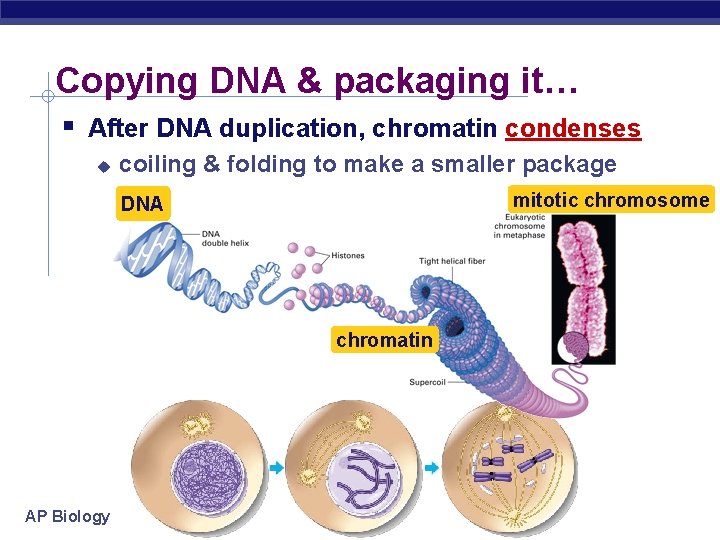
Copying DNA & packaging it… After DNA duplication, chromatin condenses coiling & folding to make a smaller package mitotic chromosome DNA chromatin AP Biology
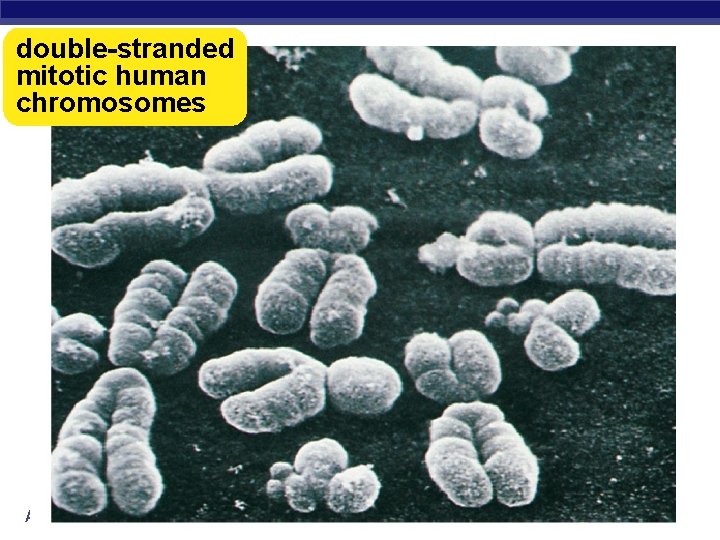
double-stranded mitotic human chromosomes AP Biology
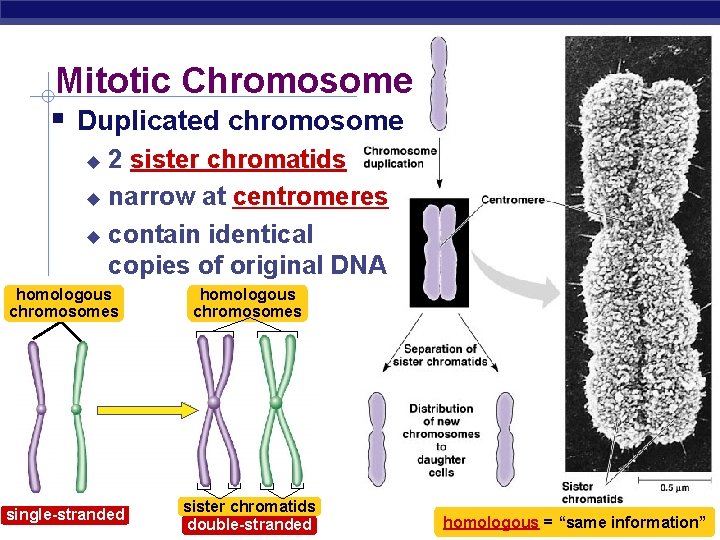
Mitotic Chromosome Duplicated chromosome 2 sister chromatids narrow at centromeres contain identical copies of original DNA homologous chromosomes single-stranded AP Biology sister chromatids double-stranded homologous = “same information”
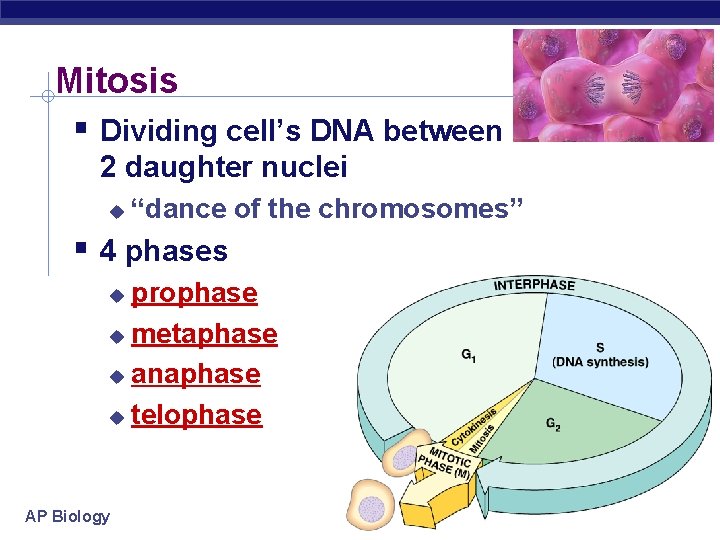
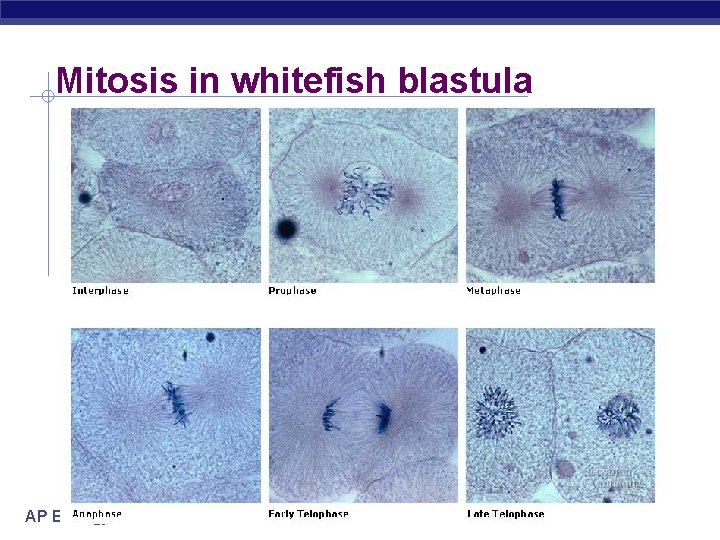
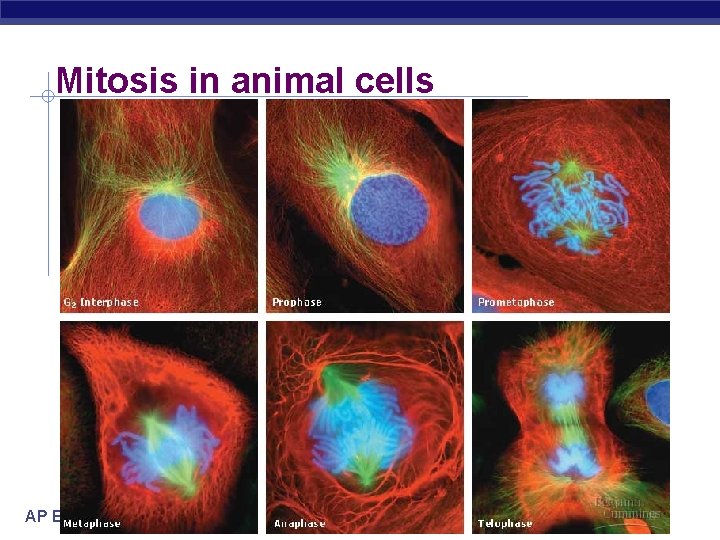
Mitosis Dividing cell’s DNA between 2 daughter nuclei “dance of the chromosomes” 4 phases prophase metaphase anaphase telophase AP Biology
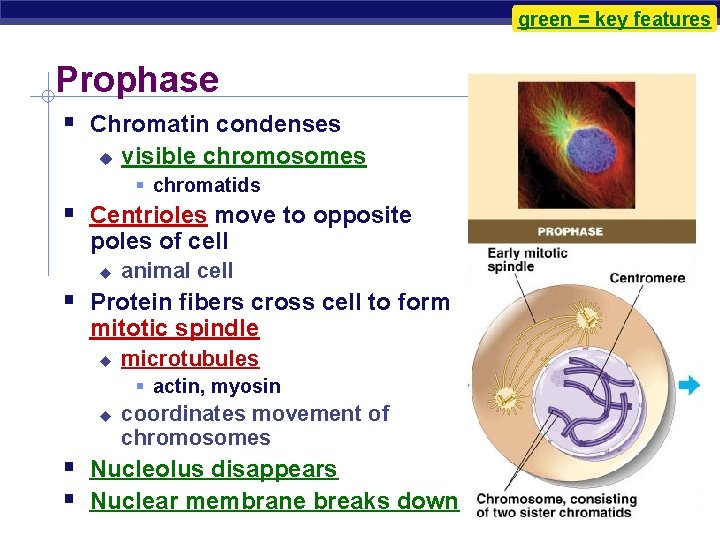
green = key features Prophase Chromatin condenses visible chromosomes chromatids Centrioles move to opposite poles of cell animal cell Protein fibers cross cell to form mitotic spindle microtubules actin, myosin coordinates movement of chromosomes Nucleolus disappears Nuclear membrane breaks down AP Biology
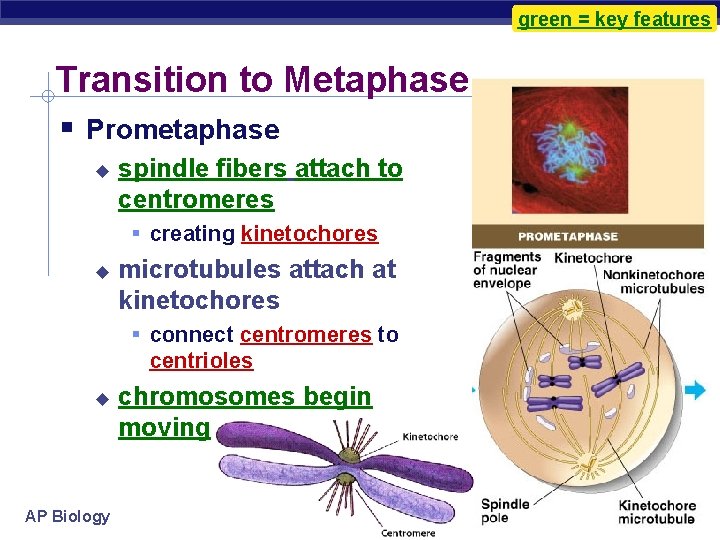
green = key features Transition to Metaphase Prometaphase spindle fibers attach to centromeres creating kinetochores microtubules attach at kinetochores connect centromeres to centrioles AP Biology chromosomes begin moving
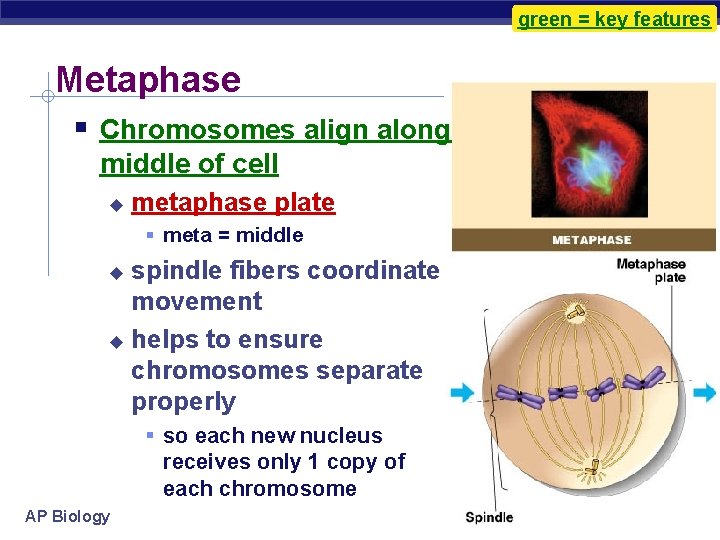
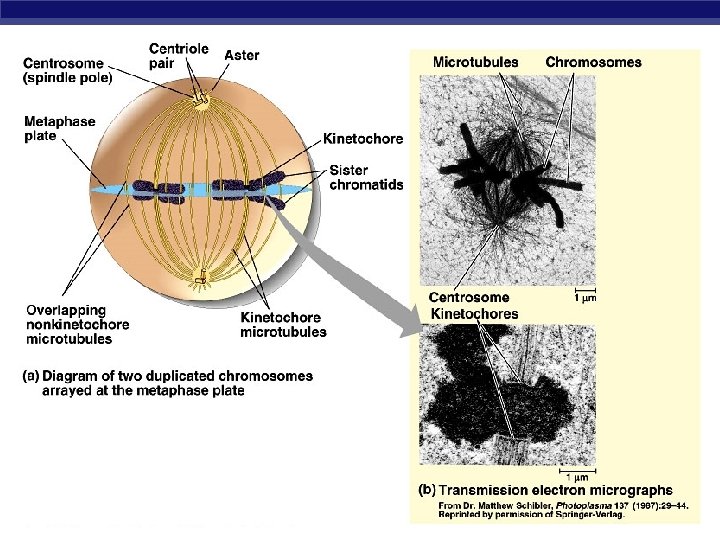
green = key features Metaphase Chromosomes align along middle of cell metaphase plate meta = middle spindle fibers coordinate movement helps to ensure chromosomes separate properly so each new nucleus receives only 1 copy of each chromosome AP Biology
AP Biology
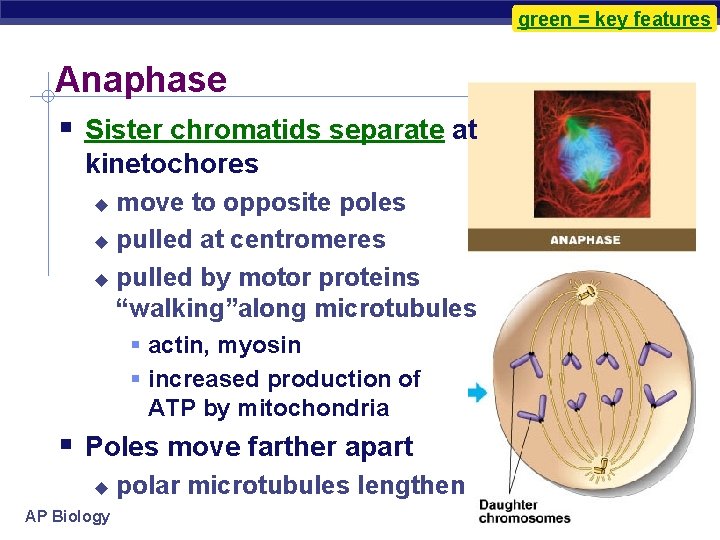
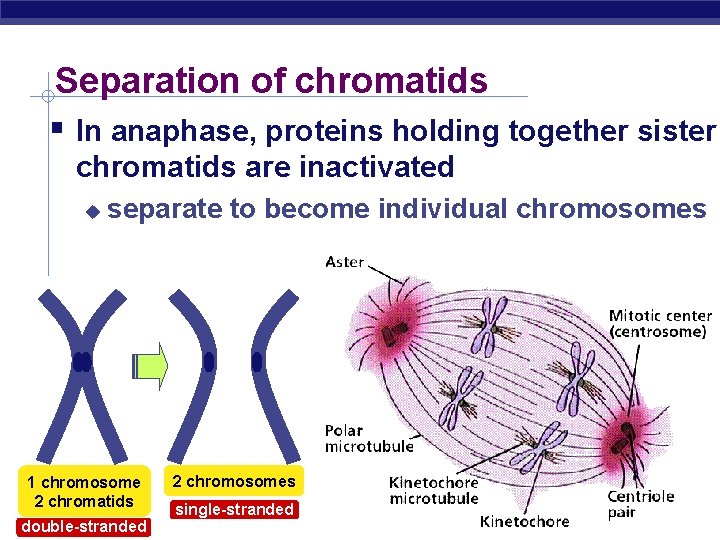
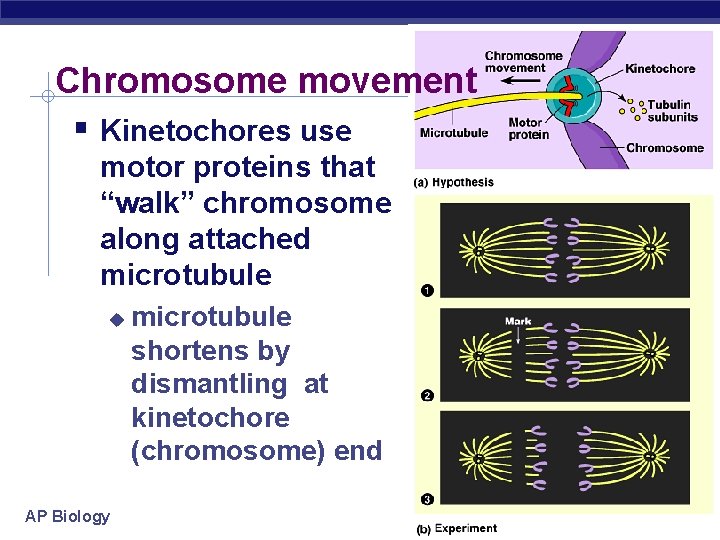
green = key features Anaphase Sister chromatids separate at kinetochores move to opposite poles pulled at centromeres pulled by motor proteins “walking”along microtubules actin, myosin increased production of ATP by mitochondria Poles move farther apart AP Biology polar microtubules lengthen
Separation of chromatids In anaphase, proteins holding together sister chromatids are inactivated separate to become individual chromosomes 1 chromosome 2 chromatids AP Biology double-stranded 2 chromosomes single-stranded
Chromosome movement Kinetochores use motor proteins that “walk” chromosome along attached microtubule AP Biology microtubule shortens by dismantling at kinetochore (chromosome) end
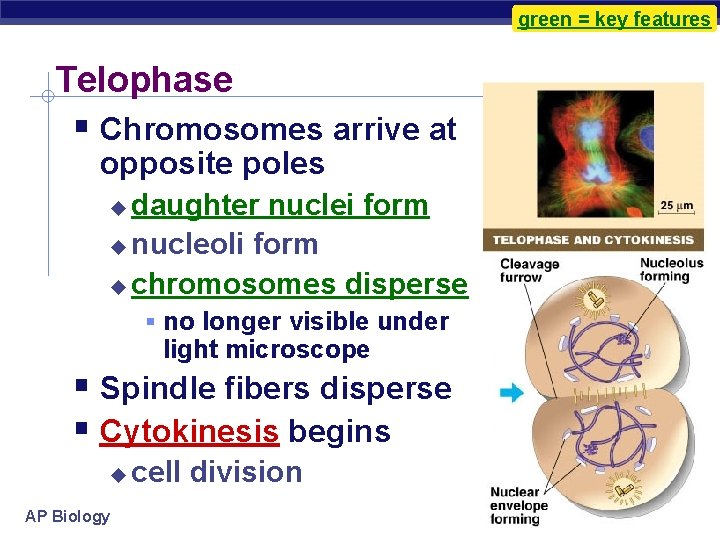
green = key features Telophase Chromosomes arrive at opposite poles daughter nuclei form nucleoli form chromosomes disperse no longer visible under light microscope Spindle fibers disperse Cytokinesis begins AP Biology cell division
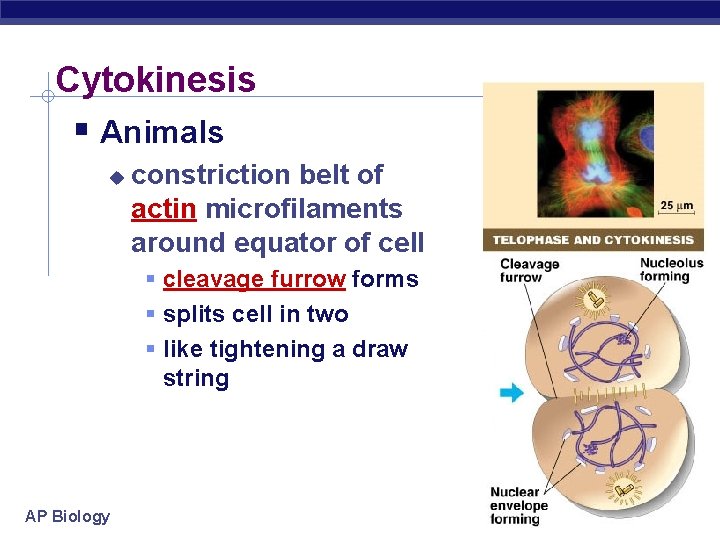
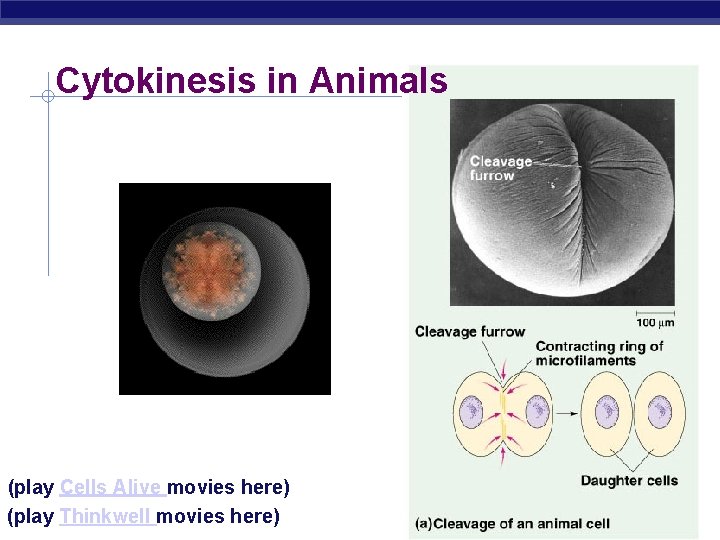
Cytokinesis Animals constriction belt of actin microfilaments around equator of cell cleavage furrow forms splits cell in two like tightening a draw string AP Biology
Cytokinesis in Animals (play Cells Alive movies here) AP Biology (play Thinkwell movies here)
Mitosis in whitefish blastula AP Biology
Mitosis in animal cells AP Biology
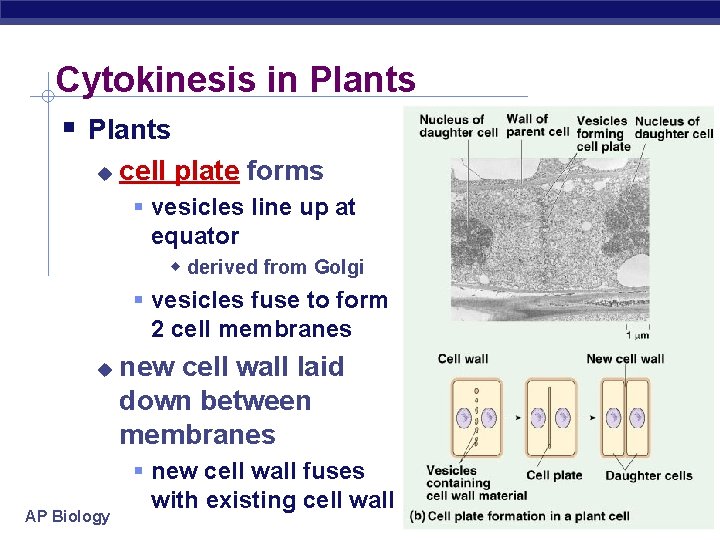
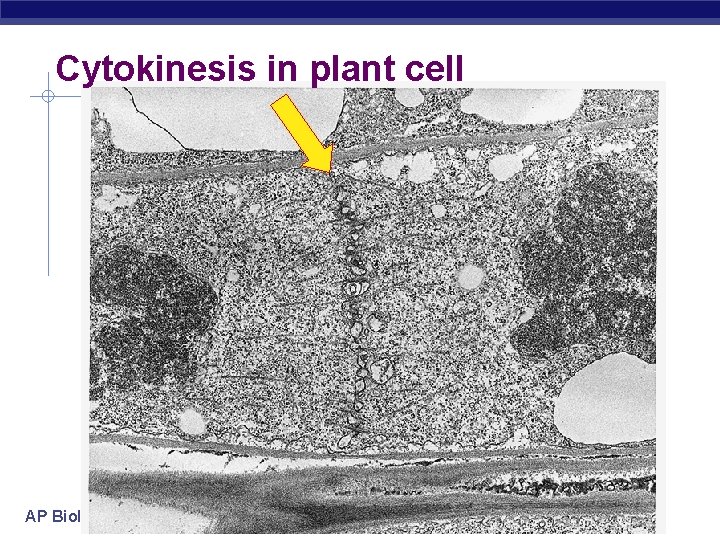
Cytokinesis in Plants cell plate forms vesicles line up at equator derived from Golgi vesicles fuse to form 2 cell membranes AP Biology new cell wall laid down between membranes new cell wall fuses with existing cell wall
Cytokinesis in plant cell AP Biology
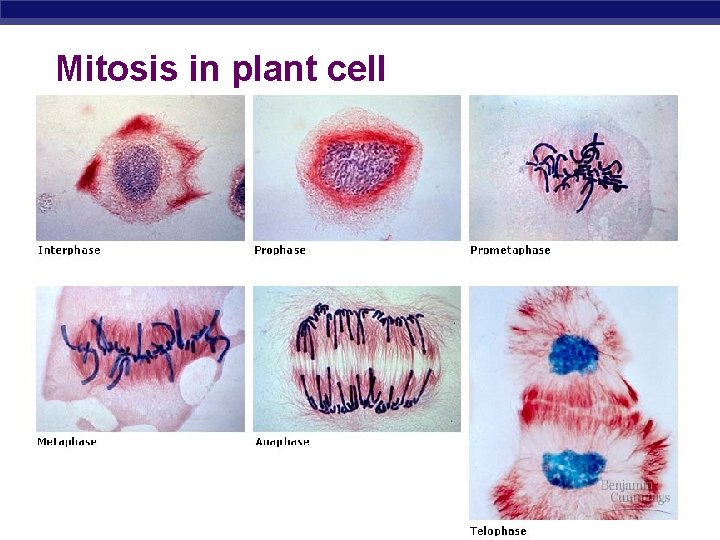
Mitosis in plant cell AP Biology
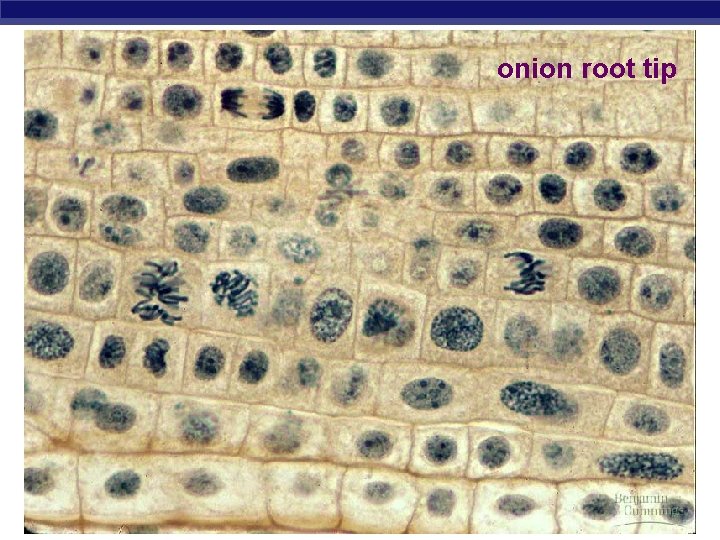
onion root tip AP Biology
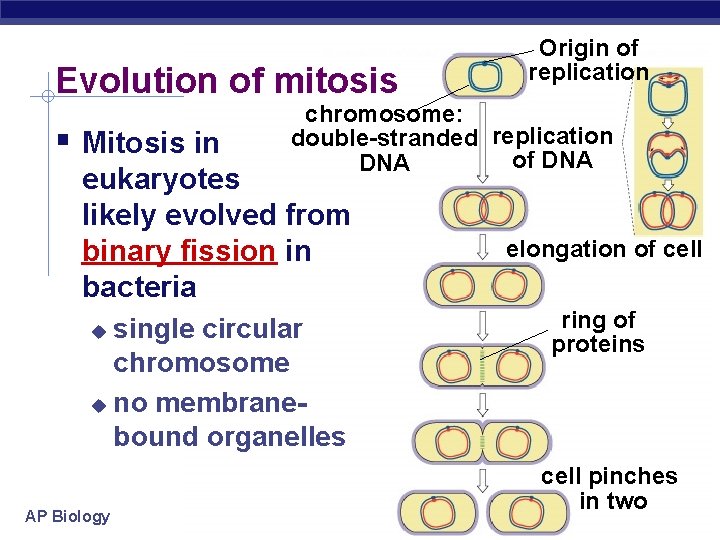
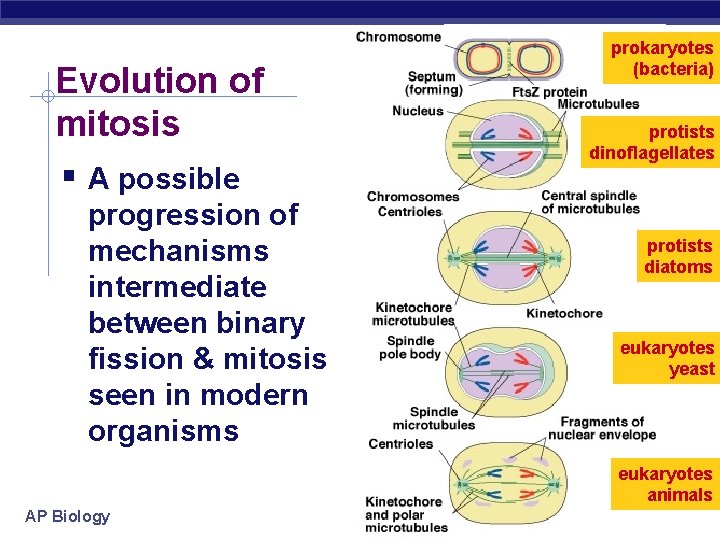
Evolution of mitosis Mitosis in chromosome: double-stranded replication of DNA eukaryotes likely evolved from binary fission in bacteria single circular chromosome no membranebound organelles AP Biology Origin of replication elongation of cell ring of proteins cell pinches in two
Evolution of mitosis A possible progression of mechanisms intermediate between binary fission & mitosis seen in modern organisms prokaryotes (bacteria) protists dinoflagellates protists diatoms eukaryotes yeast eukaryotes animals AP Biology
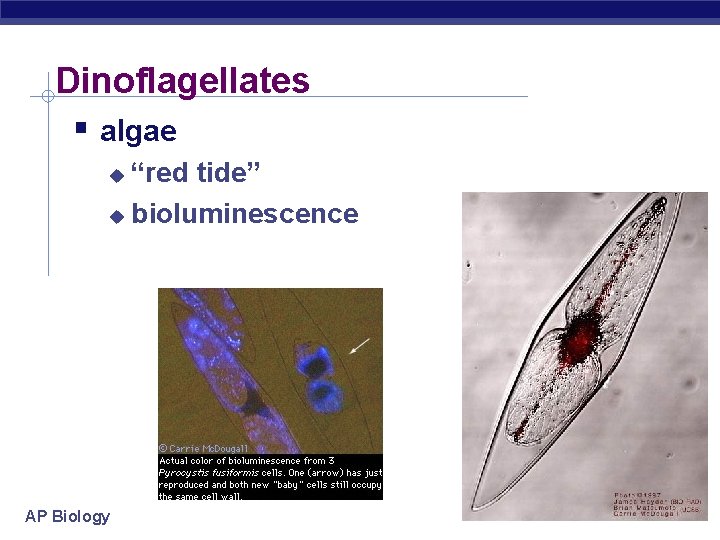
Dinoflagellates algae “red tide” bioluminescence AP Biology
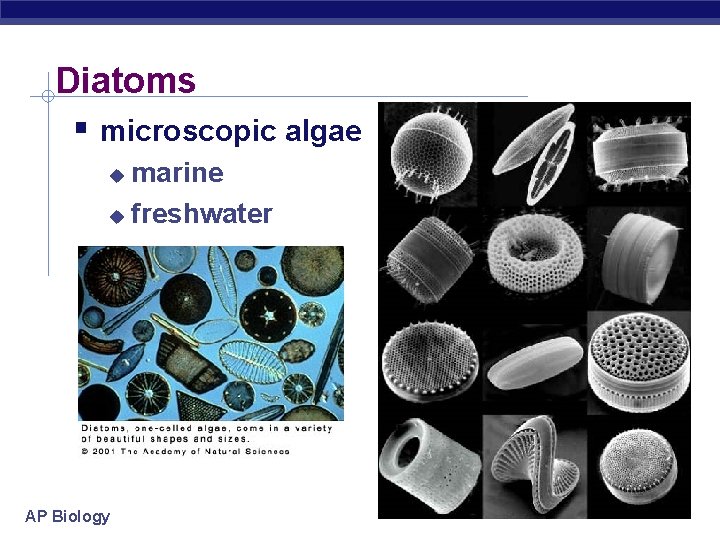
Diatoms microscopic algae marine freshwater AP Biology
REVIEW: Chromosome structure chromatin loop scaffold protein 30 rosettes of chromatin loops chromosome AP Biology nm DNA nucleosome histone DNA double helix