
Chapter 11 Work Stress ORGANISATIONAL BEHAVIOUR CHAPTER11 WORK
Chapter 11 Work Stress ORGANISATIONAL BEHAVIOUR CHAPTER-11 WORK STRESS Himalaya Publishing House Organisational Behaviour K. Aswathappa
Chapter 11 Work Stress LEARNING OBJECTIVES 1. 2. 2. 3. 4. 5. 6. Stress is one’s reaction to stressors and consequence of such reaction. Impact of stress varies from person to person. Stress originates at the individual, group, organisational or extraorganisational level. Outcomes of stress include physical and physiological problems of employees, increased absenteeism and reduced productivity for organisations. Burnout is the consequence of prolonged exposure to stress. There are individual and organisational strategies to cope with stress. Stress is negatively related to performance. Himalaya Publishing House Organisational Behaviour K. Aswathappa
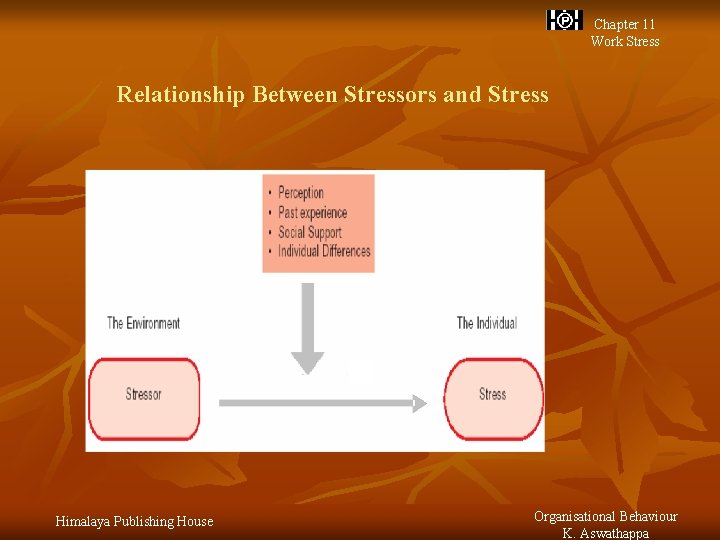
Chapter 11 Work Stress Relationship Between Stressors and Stress Himalaya Publishing House Organisational Behaviour K. Aswathappa
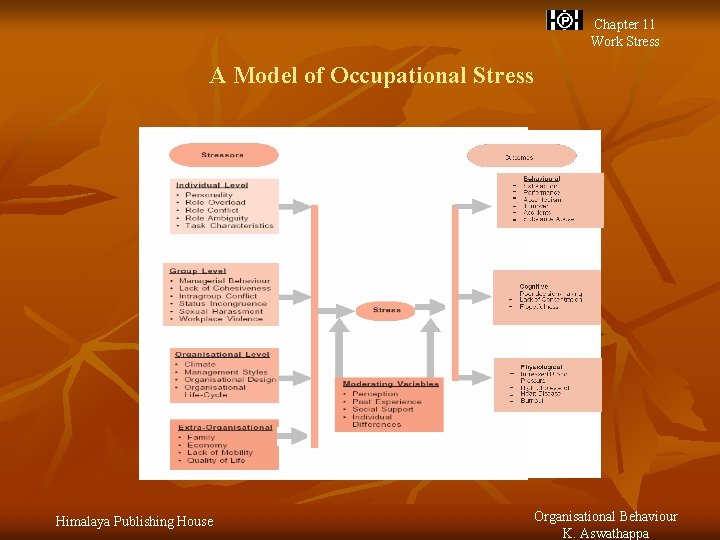
Chapter 11 Work Stress A Model of Occupational Stress Himalaya Publishing House Organisational Behaviour K. Aswathappa

Chapter 11 Work Stress Type A Personality n n n n Always moves, walks and eats rapidly. Feels impatient with the pace of things, hurries others, dislikes waiting. Does several things simultaneously. Feels guilty when relaxing. Tries to schedule more and more in less and less time. Uses nervous gestures such as clenched fist, banging the hand on the table. Does not have time to enjoy life. Himalaya Publishing House Organisational Behaviour K. Aswathappa
Type B Personality n n n n Chapter 11 Work Stress Is not concerned about time. Is patient. Does not brag Play to fun, not to win. Relaxes without feeling guilty. Has no pressing deadlines. Is mild-mannered. Is never in a hurry. 5 Himalaya Publishing House Organisational Behaviour K. Aswathappa
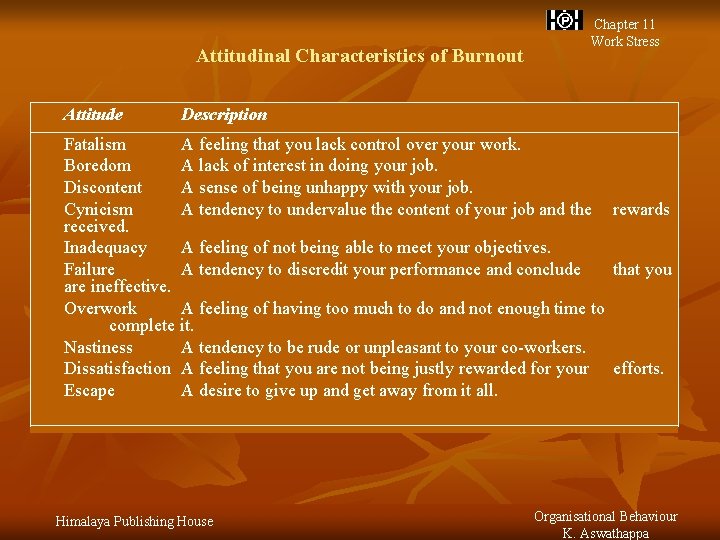
Attitudinal Characteristics of Burnout Attitude Chapter 11 Work Stress Description Fatalism A feeling that you lack control over your work. Boredom A lack of interest in doing your job. Discontent A sense of being unhappy with your job. Cynicism A tendency to undervalue the content of your job and the rewards received. Inadequacy A feeling of not being able to meet your objectives. Failure A tendency to discredit your performance and conclude that you are ineffective. Overwork A feeling of having too much to do and not enough time to complete it. Nastiness A tendency to be rude or unpleasant to your co-workers. Dissatisfaction A feeling that you are not being justly rewarded for your efforts. Escape A desire to give up and get away from it all. Himalaya Publishing House Organisational Behaviour K. Aswathappa
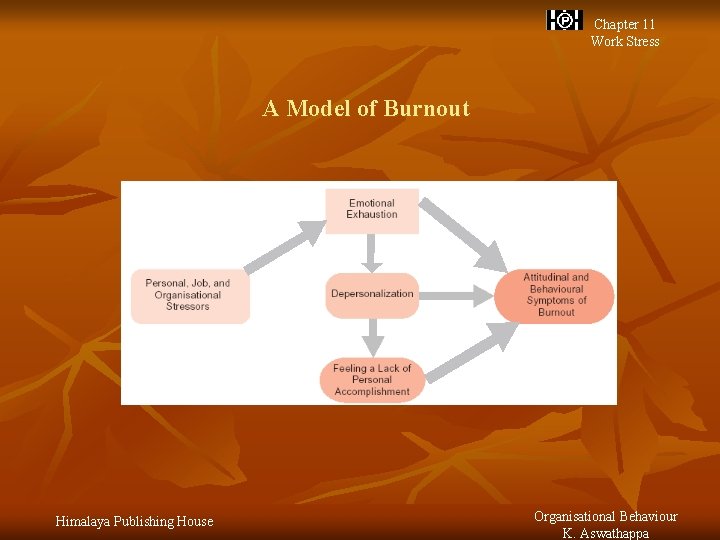
Chapter 11 Work Stress A Model of Burnout Himalaya Publishing House Organisational Behaviour K. Aswathappa
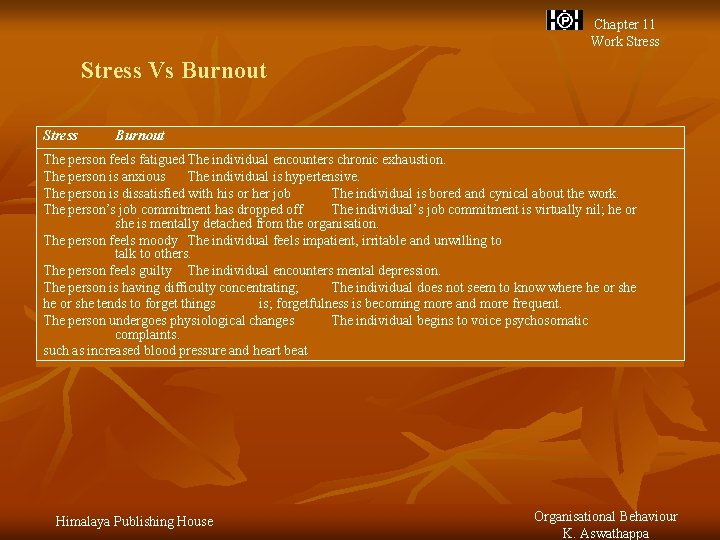
Chapter 11 Work Stress Vs Burnout Stress Burnout The person feels fatigued The individual encounters chronic exhaustion. The person is anxious The individual is hypertensive. The person is dissatisfied with his or her job The individual is bored and cynical about the work. The person’s job commitment has dropped off The individual’s job commitment is virtually nil; he or she is mentally detached from the organisation. The person feels moody The individual feels impatient, irritable and unwilling to talk to others. The person feels guilty The individual encounters mental depression. The person is having difficulty concentrating; The individual does not seem to know where he or she tends to forget things is; forgetfulness is becoming more and more frequent. The person undergoes physiological changes The individual begins to voice psychosomatic complaints. such as increased blood pressure and heart beat Himalaya Publishing House Organisational Behaviour K. Aswathappa
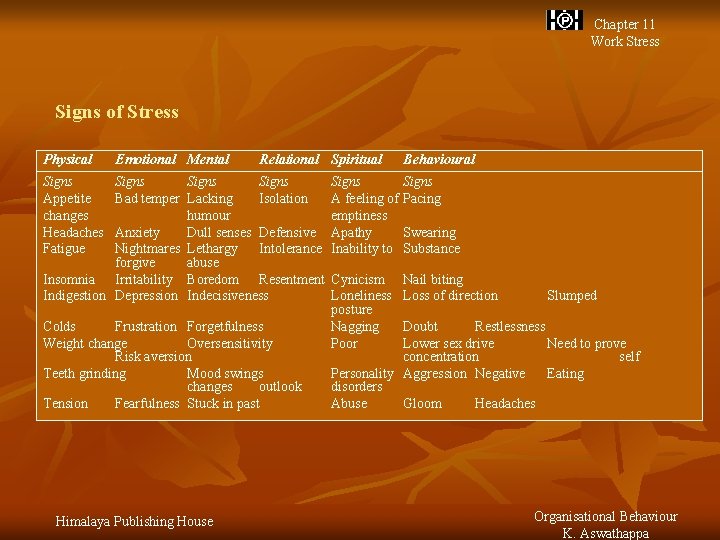
Chapter 11 Work Stress Signs of Stress Physical Emotional Mental Relational Spiritual Signs Appetite changes Headaches Fatigue Behavioural Signs Bad temper Lacking Isolation humour Anxiety Dull senses Defensive Nightmares Lethargy Intolerance forgive abuse Insomnia Irritability Boredom Resentment Indigestion Depression Indecisiveness Signs A feeling of emptiness Apathy Inability to Signs Pacing Nail biting Loss of direction Colds Frustration Forgetfulness Weight change Oversensitivity Risk aversion Teeth grinding Mood swings changes outlook Tension Fearfulness Stuck in past Cynicism Loneliness posture Nagging Poor Doubt Restlessness Lower sex drive Need to prove concentration self Personality Aggression Negative Eating disorders Abuse Gloom Headaches Himalaya Publishing House Swearing Substance Slumped Organisational Behaviour K. Aswathappa
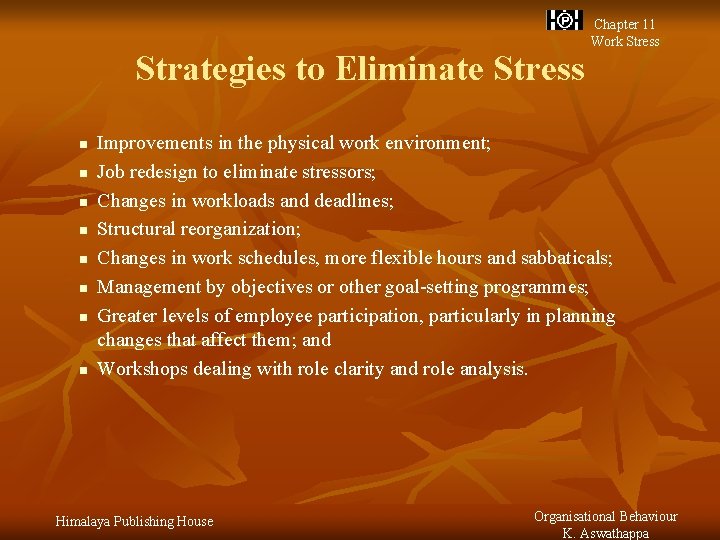
Strategies to Eliminate Stress n n n n Chapter 11 Work Stress Improvements in the physical work environment; Job redesign to eliminate stressors; Changes in workloads and deadlines; Structural reorganization; Changes in work schedules, more flexible hours and sabbaticals; Management by objectives or other goal-setting programmes; Greater levels of employee participation, particularly in planning changes that affect them; and Workshops dealing with role clarity and role analysis. Himalaya Publishing House Organisational Behaviour K. Aswathappa
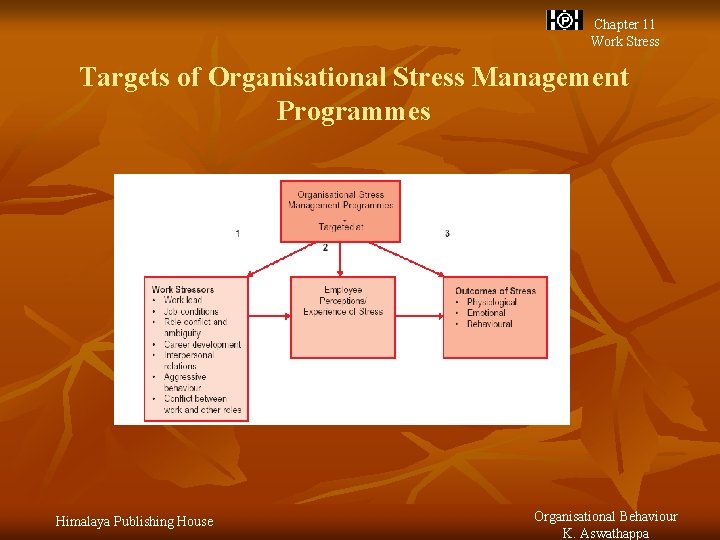
Chapter 11 Work Stress Targets of Organisational Stress Management Programmes Himalaya Publishing House Organisational Behaviour K. Aswathappa
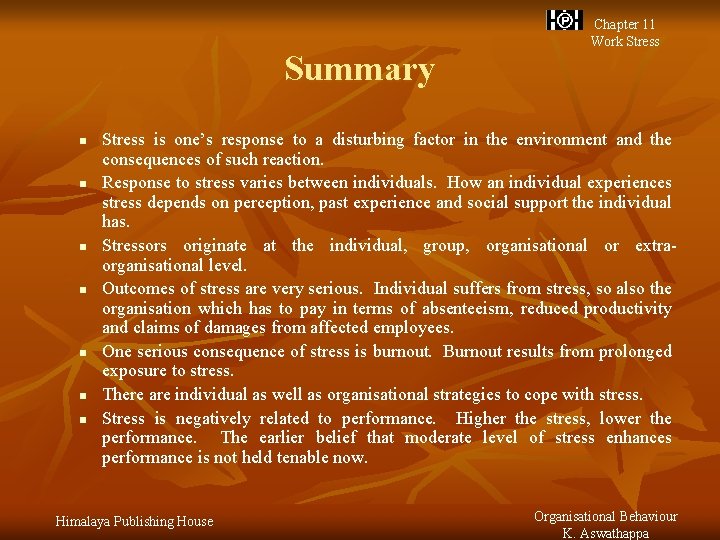
Summary n n n n Chapter 11 Work Stress is one’s response to a disturbing factor in the environment and the consequences of such reaction. Response to stress varies between individuals. How an individual experiences stress depends on perception, past experience and social support the individual has. Stressors originate at the individual, group, organisational or extraorganisational level. Outcomes of stress are very serious. Individual suffers from stress, so also the organisation which has to pay in terms of absenteeism, reduced productivity and claims of damages from affected employees. One serious consequence of stress is burnout. Burnout results from prolonged exposure to stress. There are individual as well as organisational strategies to cope with stress. Stress is negatively related to performance. Higher the stress, lower the performance. The earlier belief that moderate level of stress enhances performance is not held tenable now. Himalaya Publishing House Organisational Behaviour K. Aswathappa
Chapter 11 Work Stress Key Terms n n Work Stress Burnout Meditation Employee Assistance Programmes Himalaya Publishing House n n Stressors Social support Time management Wellness Programmes Organisational Behaviour K. Aswathappa
- Slides: 14