
Chapter 11 What is Marketing Chapter 11 Overview
- Slides: 34
Chapter 11 What is Marketing?
Chapter 11 - Overview u 11. 1 International Marketing u 11. 2 Global Marketing u 11. 3 International Marketing Mix u Trading Partners - Spain
11. 1 International Marketing: u All activities involved in planning, pricing, distributing and selling of a product or service u 4 Ps – Product, Price, Place, Promotion u Designed to fulfill human wants and needs
Marketing Strategies u Centralized or Decentralized u Push or Pull u Brand Acquisition or Development
Centralized Marketing Strategy u Production and sale from one central location - exports to other markets u Several marketing divisions – focus on particular export areas u Common marketing themes u Still considers cultural differences u Ex: Coca Cola – global brand, consistent packaging / product
Advantages of Centralized u Brand Building – create international brand equity – worldwide recognition u Synergy – extra positive benefits from larger marketing group vs. smaller local groups working alone u Cost Benefits – Economy of Scale – avoids duplication (R&D, advertising) of efforts – centralized expert focus saves time and money
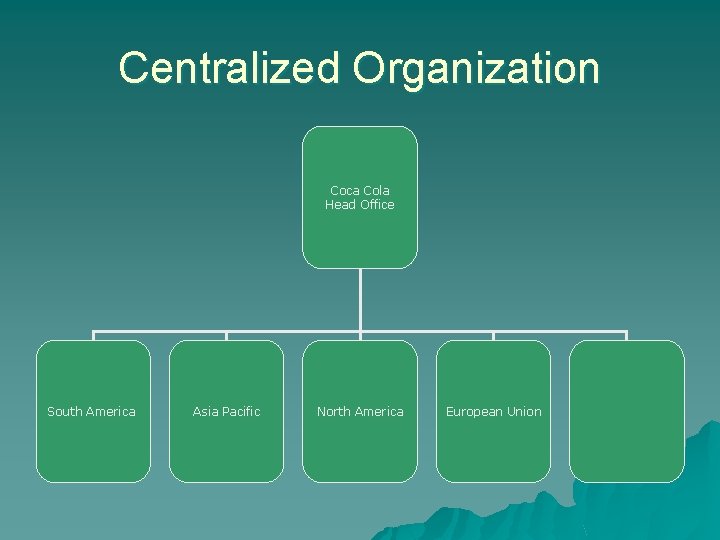
Centralized Organization Coca Cola Head Office South America Asia Pacific North America European Union
Decentralized Strategy u Think Global – Act Local u Local facilities – local decisions u ‘Glocal’ – global firm / local focus u Advantages – Proximity (closeness) to markets – Flexibility – spot trends quickly – Culturally sensitive – more knowledge of local customs and preferences
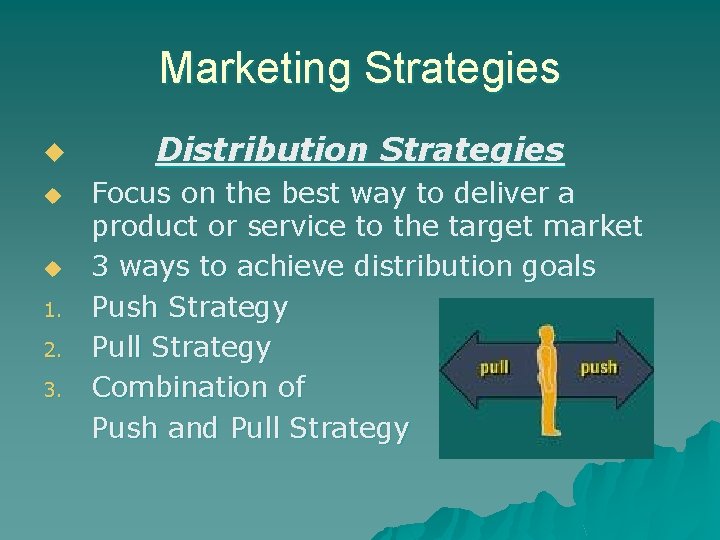
Marketing Strategies u u u 1. 2. 3. Distribution Strategies Focus on the best way to deliver a product or service to the target market 3 ways to achieve distribution goals Push Strategy Pull Strategy Combination of Push and Pull Strategy
International Organization u Marketing and distribution centers are set up in foreign markets u Buying habits and customer values are taken into account when responding to differences u Example: Automakers u Honda Canada u Honda USA
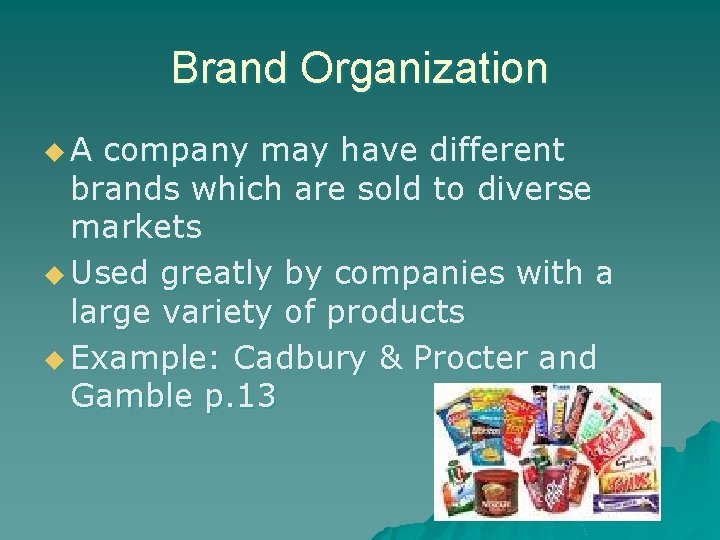
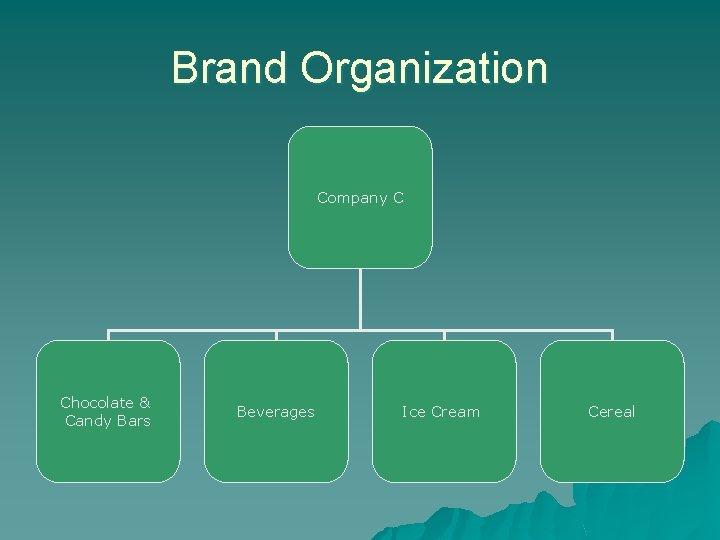
Brand Organization u. A company may have different brands which are sold to diverse markets u Used greatly by companies with a large variety of products u Example: Cadbury & Procter and Gamble p. 13
Brand Organization Company C Chocolate & Candy Bars Beverages Ice Cream Cereal
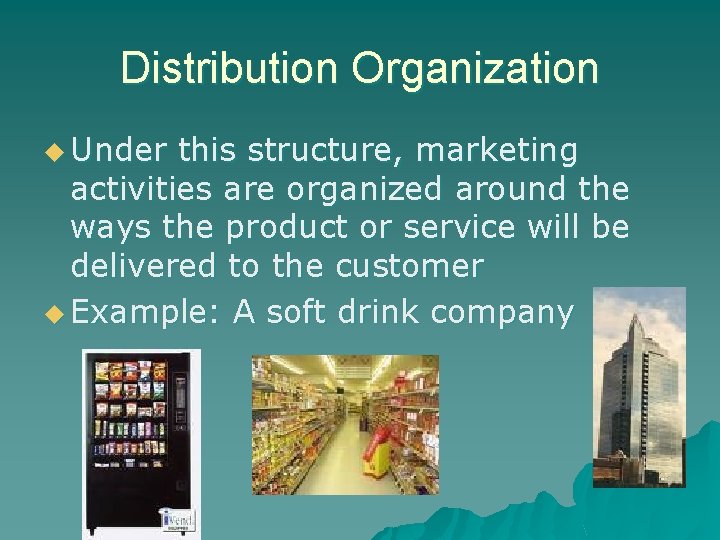
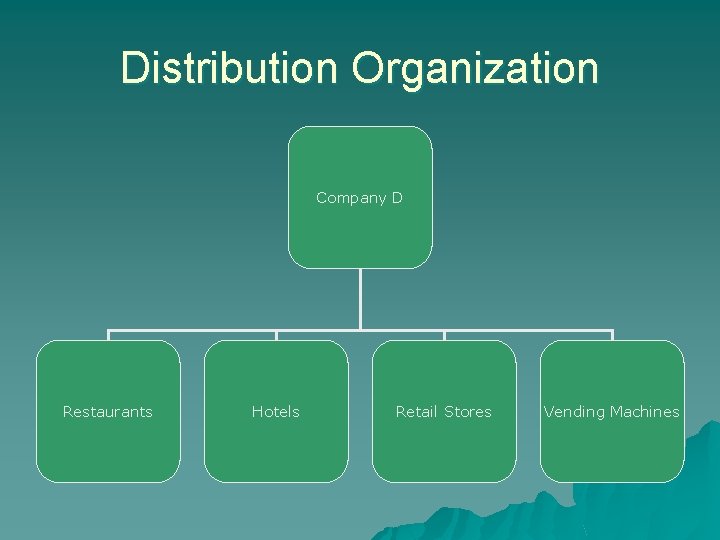
Distribution Organization u Under this structure, marketing activities are organized around the ways the product or service will be delivered to the customer u Example: A soft drink company
Distribution Organization Company D Restaurants Hotels Retail Stores Vending Machines
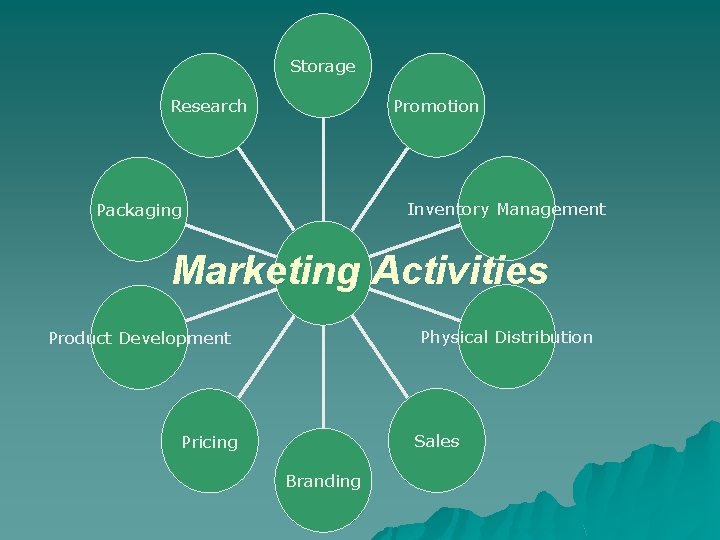
Storage Promotion Research Inventory Management Packaging Marketing Activities Physical Distribution Product Development Sales Pricing Branding
Marketing Activities Nonprofit organizations do not seek profit as primary motive but raise funds for a specific goal. u Ex: Canadian Breast Cancer Foundation u u Not-for-profit organizations, such as housing or child care cooperatives also do not seek profit. Extra funds are used to improve services offered to members
Consumer and Competitive Markets 1. 2. u u Markets are composed of 2 parts: Consumer Markets Competitive Markets Consumer Markets: All consumers who are or may become interested in the product or service and whom have the means to purchase it Includes current and future potential consumers
Consumer and Competitive Markets Competitive Market: Comprises of all of the products or services (within a specific category) that competes for the consumers money Ex: Toyota Corolla, Honda Civic, Hyundai Elantra, Chevy Colbalt 2.
Consumer and Competitive Markets u Target Market: All marketing efforts directed at a specific group of consumers that the marketer wants to attract (and ultimately sell their product or service to) u If the market is everybody, then it is called the Aggregate Market
Consumer and Competitive Markets u Differentiated Markets: These markets are characterized in a specific way such as age, income, gender, personal values and/or geographical location
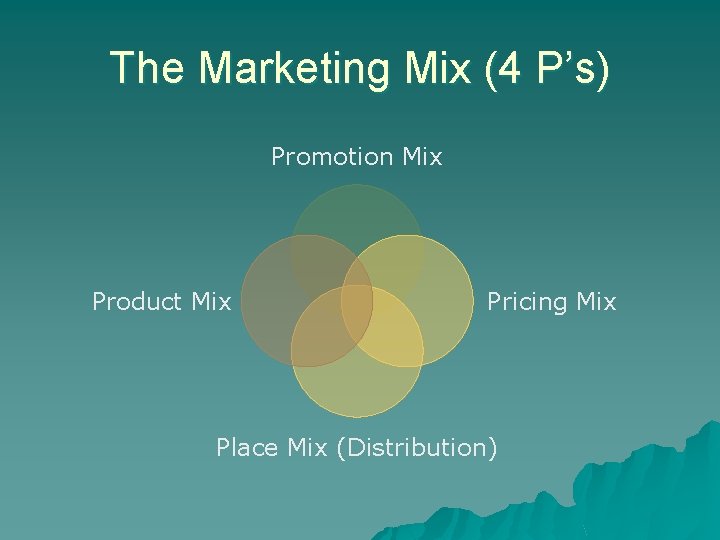
The Marketing Mix (4 P’s) Promotion Mix Product Mix Pricing Mix Place Mix (Distribution)
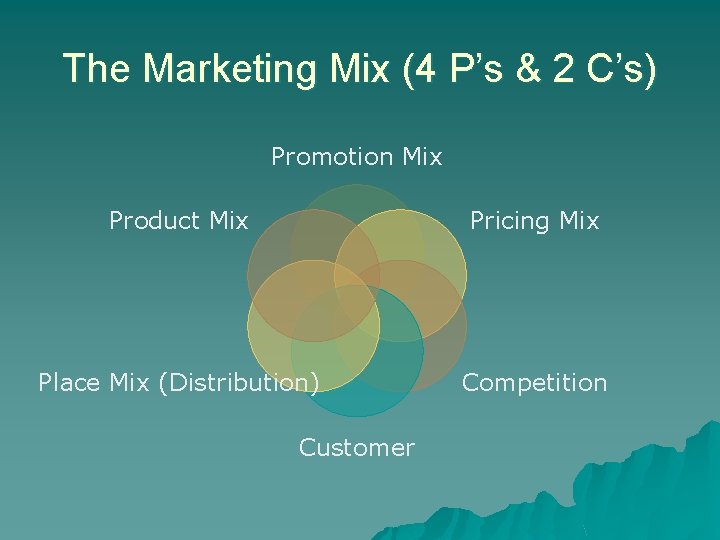
The Marketing Mix u The marketing mix is usually divided into 4 categories known as the 4 P’s: Product, Price, Promotion and Place (distribution) u Some marketers include 2 C’s: Customer and Competition u The effectiveness of the mix of these activities can make or break a marketing campaign
The Marketing Mix (4 P’s & 2 C’s) Promotion Mix Product Mix Pricing Mix Place Mix (Distribution) Competition Customer
Marketing Strategies Components of the Marketing Plan 1. 2. 3. 4. 5. 6. 7. 8. 9. 10. Marketing goals Identification of the target market Identification of competitors Research section Positioning of the product in the marketplace Pricing strategy Channels of distribution Promotional strategy/Advertising Sales forecast (based on new marketing plan) Process of monitoring plans success
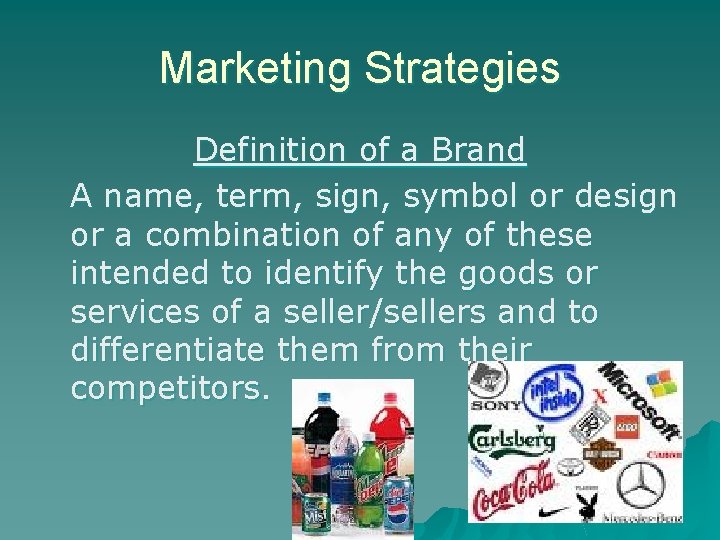
Marketing Strategies Definition of a Brand A name, term, sign, symbol or design or a combination of any of these intended to identify the goods or services of a seller/sellers and to differentiate them from their competitors.
Marketing Strategies u 1. 2. 2 Types of Marketing Strategies Brand Strategies Distribution Strategies
Marketing Strategies 1. u u Brand Strategies Primary goal is to communicate value of the good/service to the customer Brand strategies develop and communicate the benefits associated with the brand Brand strategies minimize costs and encourage the customer to set up a positive value equation Brand strategy attempts to POSITION the product or service (which means marketers try to create a value equation for the product in the consumers mind)
Marketing Strategies How do we define value? u u u Value is the difference between the perceived cost of the product and the perceived satisfaction derived from the product Costs are monetary but can expressed in terms of time spent looking for the product, energy spent setting it up, personal costs (prestige, status, reputation, etc) To establish the value equation, the brand uses packaging, brand names, slogans, and trademarks to develop a positive and identifiable image for each product or service
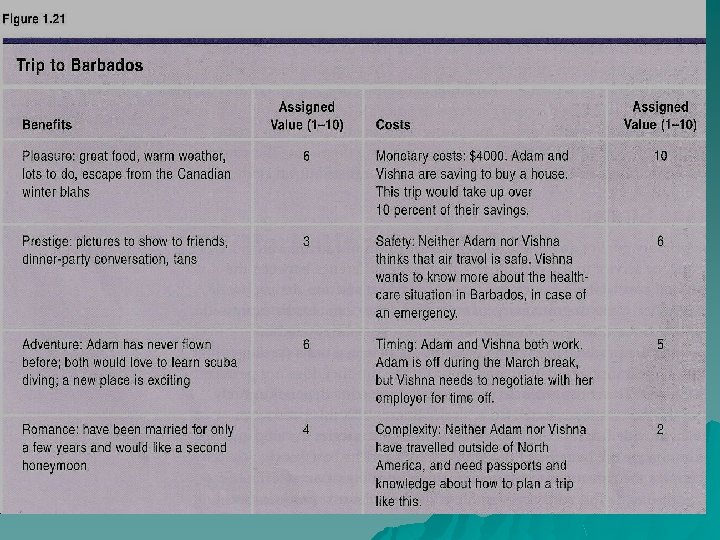
Marketing Strategies Value Equation: fig. 1. 21 (next slide) Trip to Barbados example u Adds together all of the benefits of a product (both real and imagined) and subtracts the costs in obtaining the product
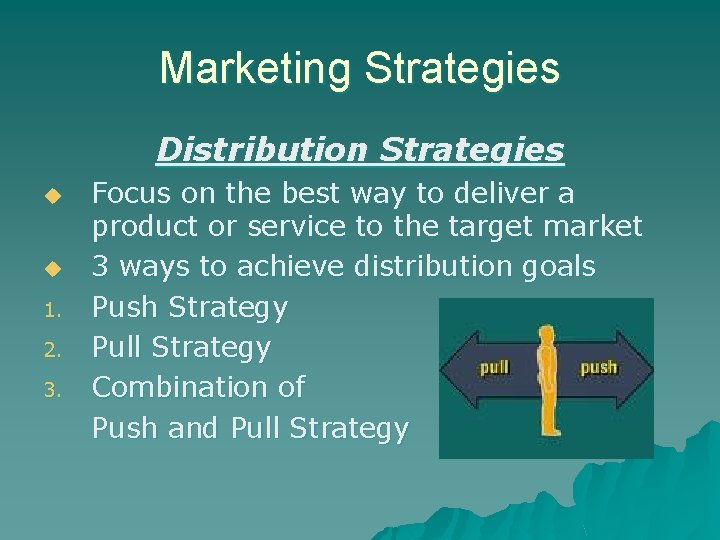
Marketing Strategies Distribution Strategies u u 1. 2. 3. Focus on the best way to deliver a product or service to the target market 3 ways to achieve distribution goals Push Strategy Pull Strategy Combination of Push and Pull Strategy
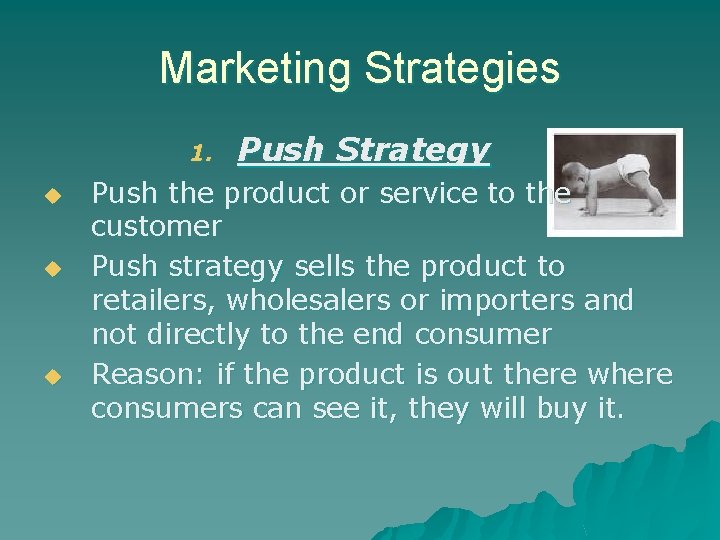
Marketing Strategies 1. u u u Push Strategy Push the product or service to the customer Push strategy sells the product to retailers, wholesalers or importers and not directly to the end consumer Reason: if the product is out there where consumers can see it, they will buy it.
Marketing Strategies 2. u u Pull Strategy Pull or attract the consumer to the product or service This is what most people think of when they think of marketing Attempts to increase the consumer demand directly instead of relying on retailers to sell the product to consumers Manufacturers and importers try to convince consumers that they need the product and should look for the product when they are shopping
Marketing Strategies 3. u u Combination of Push and Pull Use combination push and pull Pull strategy is difficult to use alone as it requires distribution partners Push strategy needs no partners, requires consumer awareness The push strategy needs to combine with the pull strategy to optimize effectiveness; however, the push strategy can stand alone