
Chapter 11 Waves Learning Objectives 1 Recognize that
Chapter 11 Waves Learning Objectives
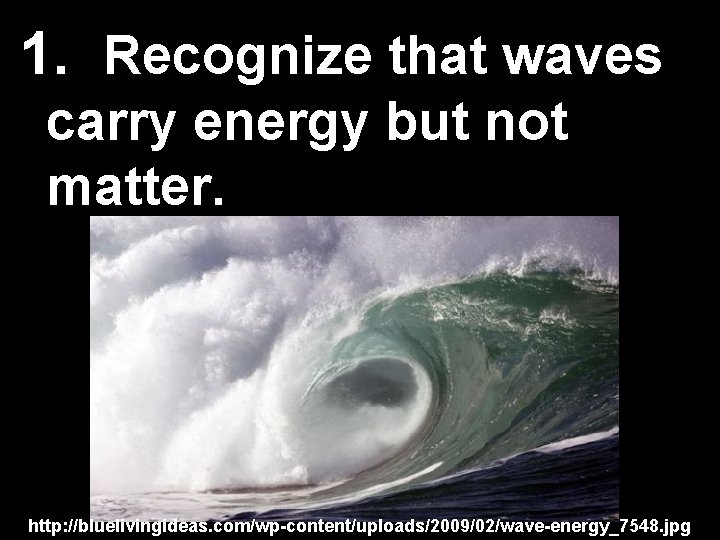
1. Recognize that waves carry energy but not matter. http: //bluelivingideas. com/wp-content/uploads/2009/02/wave-energy_7548. jpg
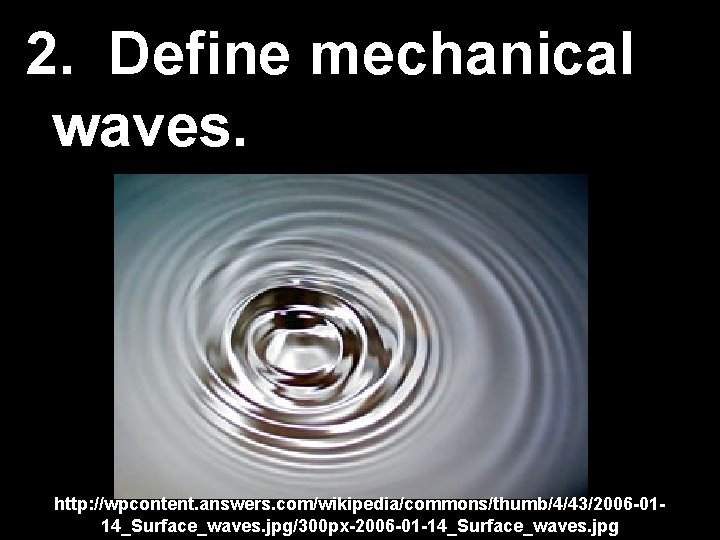
2. Define mechanical waves. http: //wpcontent. answers. com/wikipedia/commons/thumb/4/43/2006 -0114_Surface_waves. jpg/300 px-2006 -01 -14_Surface_waves. jpg
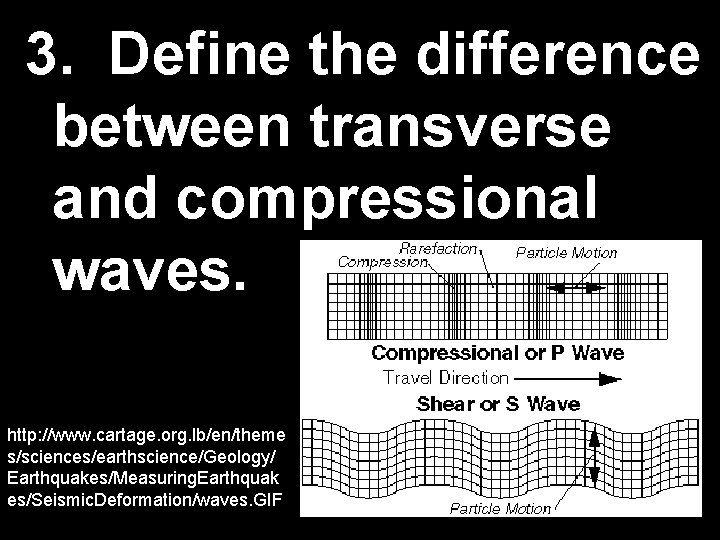
3. Define the difference between transverse and compressional waves. http: //www. cartage. org. lb/en/theme s/sciences/earthscience/Geology/ Earthquakes/Measuring. Earthquak es/Seismic. Deformation/waves. GIF
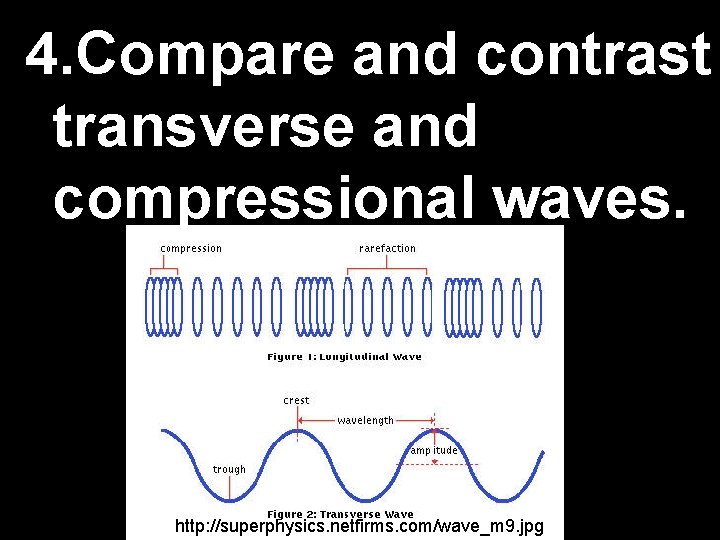
4. Compare and contrast transverse and compressional waves. http: //superphysics. netfirms. com/wave_m 9. jpg
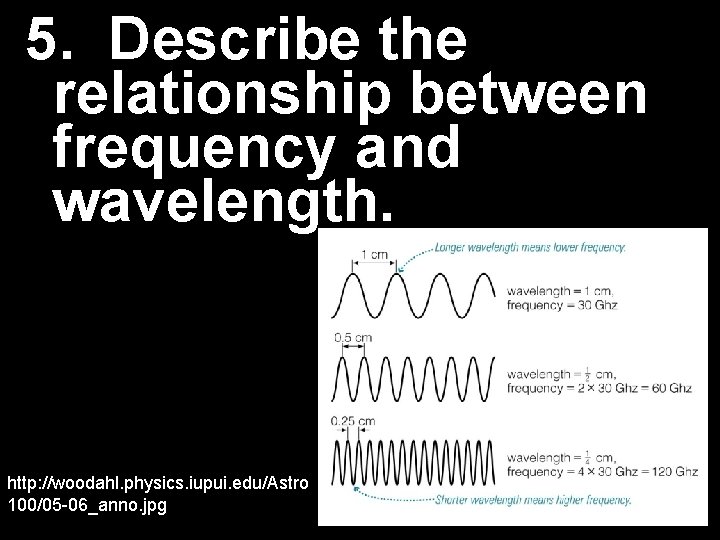
5. Describe the relationship between frequency and wavelength. http: //woodahl. physics. iupui. edu/Astro 100/05 -06_anno. jpg
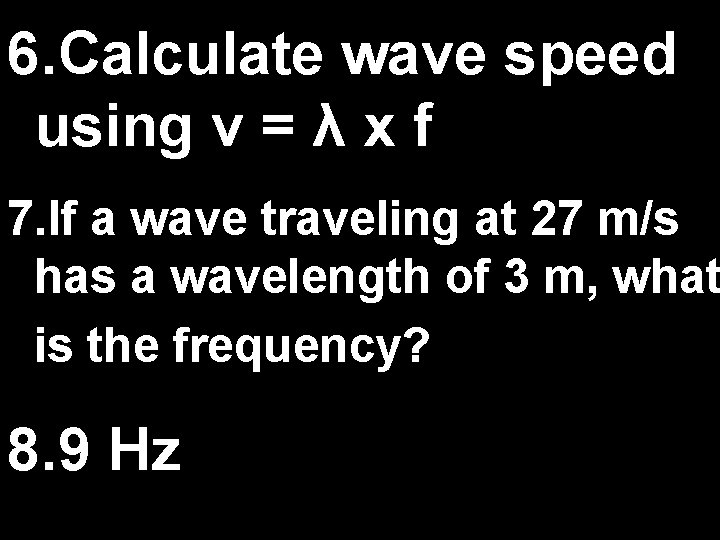
6. Calculate wave speed using v = λ x f 7. If a wave traveling at 27 m/s has a wavelength of 3 m, what is the frequency? 8. 9 Hz
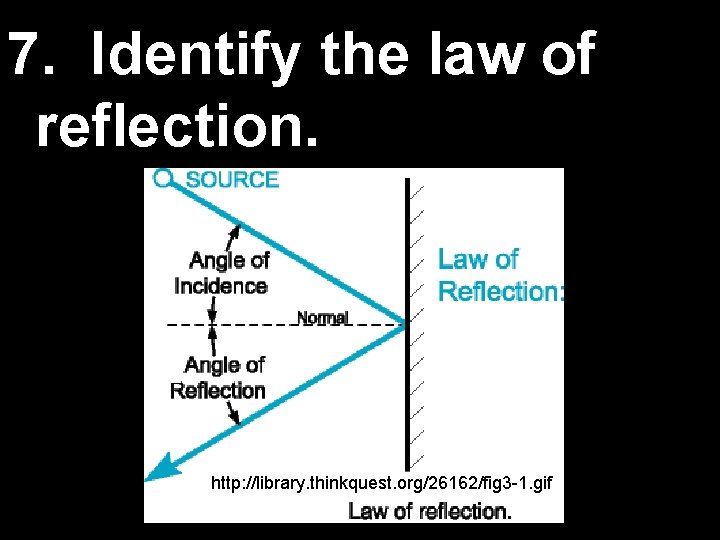
7. Identify the law of reflection. http: //library. thinkquest. org/26162/fig 3 -1. gif
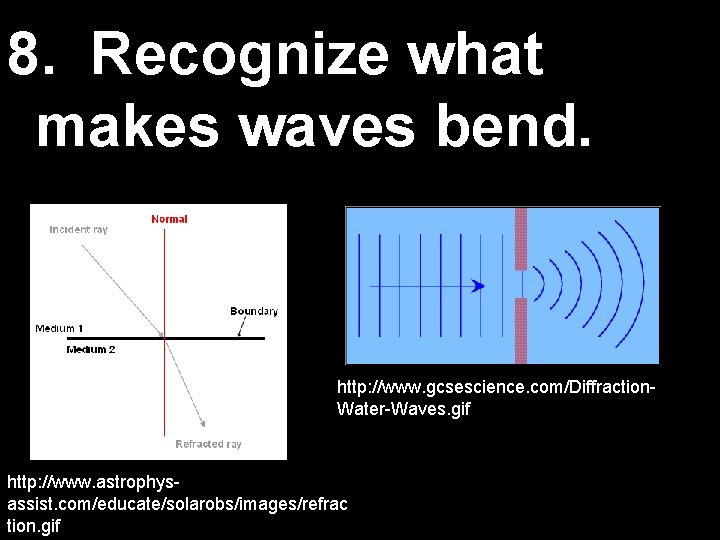
8. Recognize what makes waves bend. http: //www. gcsescience. com/Diffraction. Water-Waves. gif http: //www. astrophysassist. com/educate/solarobs/images/refrac tion. gif
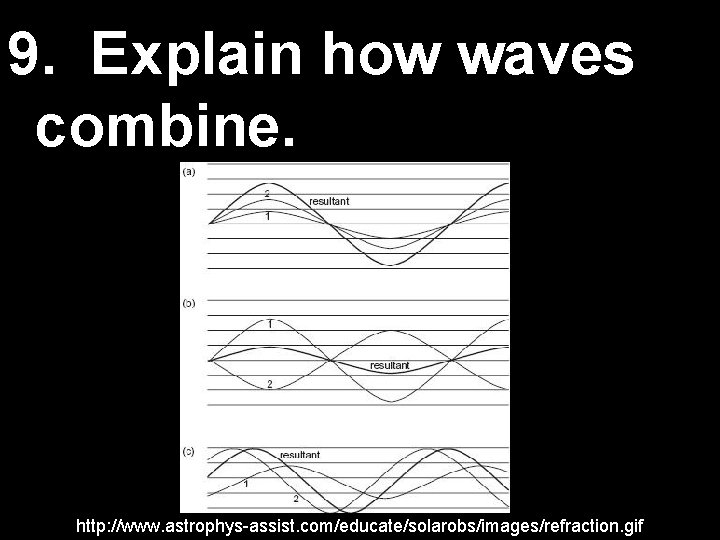
9. Explain how waves combine. http: //www. astrophys-assist. com/educate/solarobs/images/refraction. gif
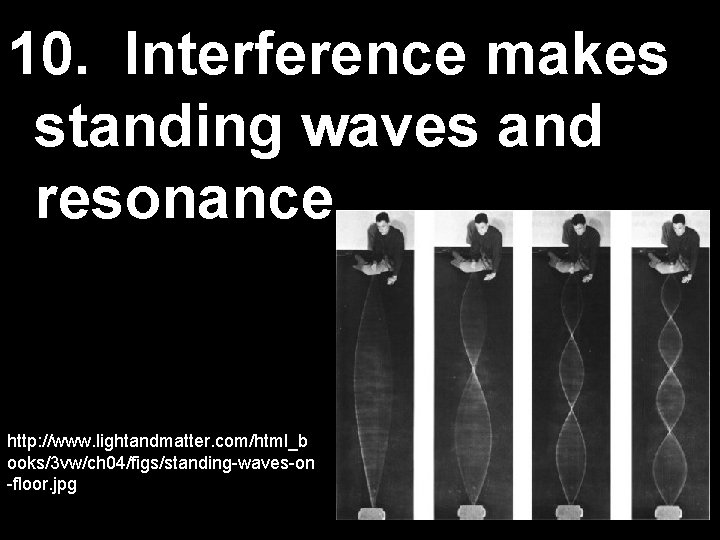
10. Interference makes standing waves and resonance. http: //www. lightandmatter. com/html_b ooks/3 vw/ch 04/figs/standing-waves-on -floor. jpg
- Slides: 11