
Chapter 11 Water Water Pollution Introduction of chemical
- Slides: 16
Chapter 11 Water
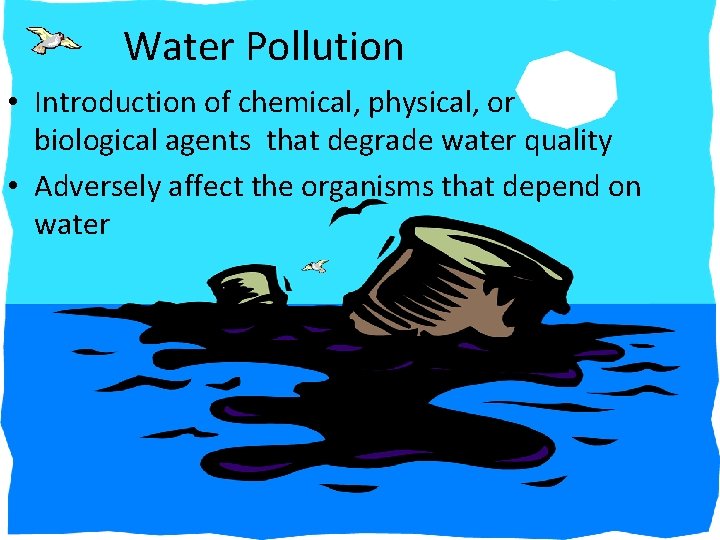
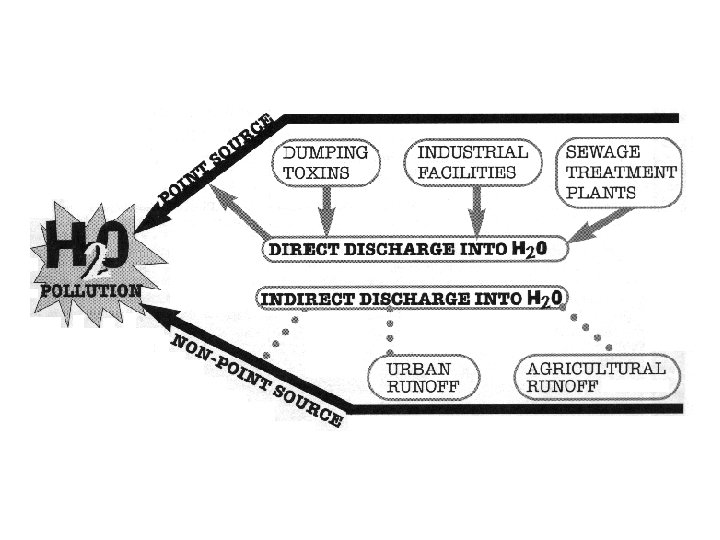
Water Pollution • Introduction of chemical, physical, or biological agents that degrade water quality • Adversely affect the organisms that depend on water
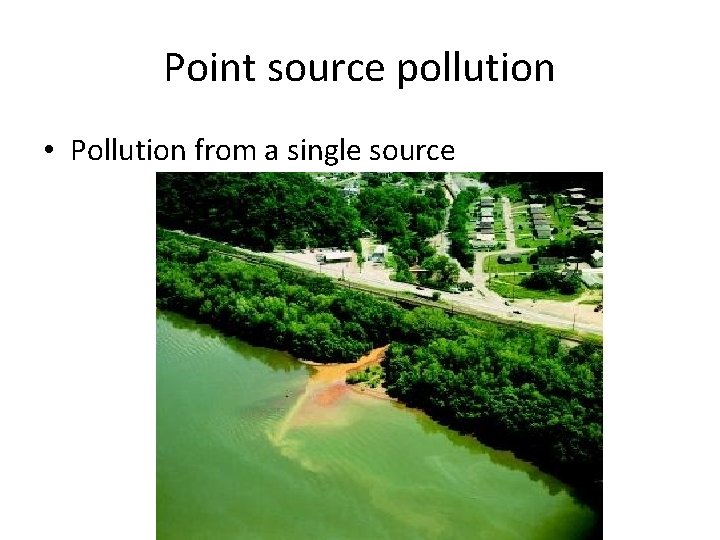
Point source pollution • Pollution from a single source
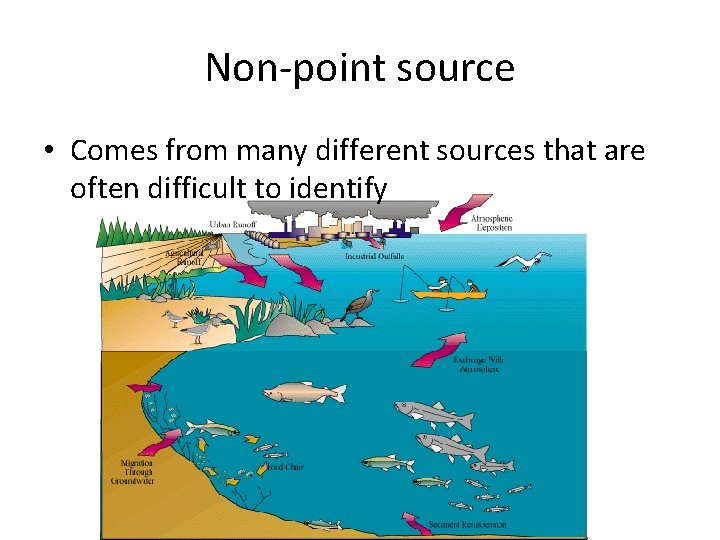
Non-point source • Comes from many different sources that are often difficult to identify
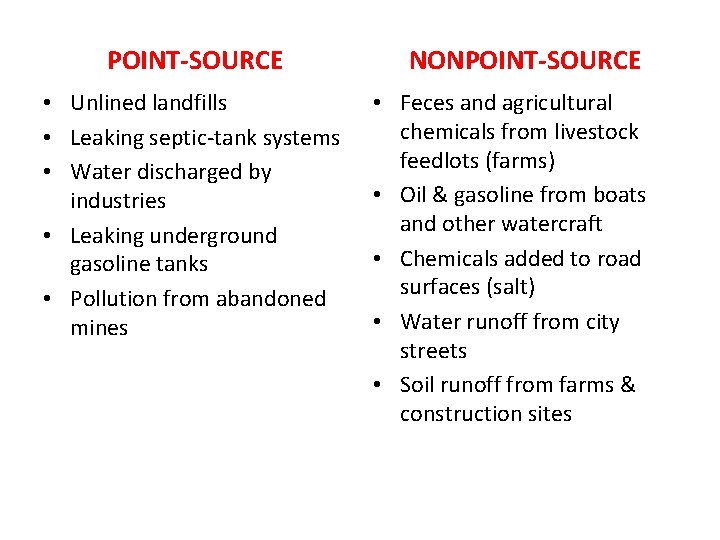
POINT-SOURCE • Unlined landfills • Leaking septic-tank systems • Water discharged by industries • Leaking underground gasoline tanks • Pollution from abandoned mines NONPOINT-SOURCE • Feces and agricultural chemicals from livestock feedlots (farms) • Oil & gasoline from boats and other watercraft • Chemicals added to road surfaces (salt) • Water runoff from city streets • Soil runoff from farms & construction sites
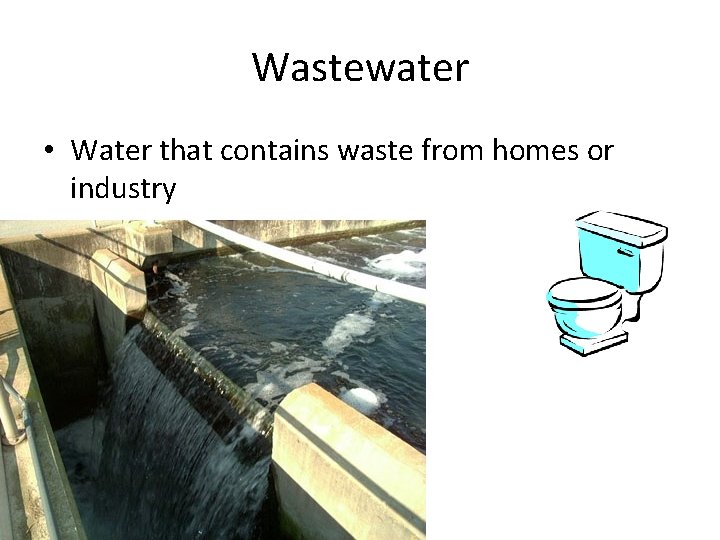
Wastewater • Water that contains waste from homes or industry
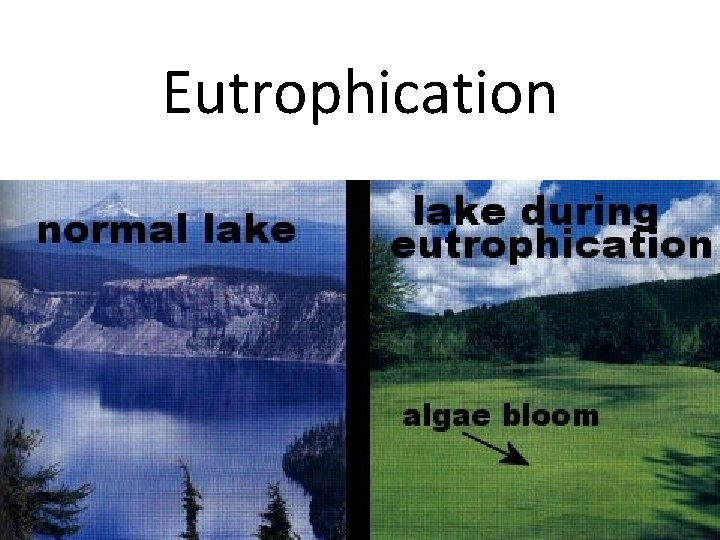
Artificial Eutrophication • Nutrients are good for water…. but… • TOO much can be bad: When nutrients break down or decompose, they use up oxygen. • Fertilizers cause excess phosphorus and nitrogen to enter surface water through sewage or runoff. • Algae form large floating mats, called algal blooms, and as the algae die and decompose, fish suffocate because the dissolved oxygen is used up.
Eutrophication
Thermal Pollution • Did you ever think warmth can be a pollutant? • It can, if a body of water rises just a few degrees, large amount of fish can die. • Aquatic organisms may suffocate and die as the temperature of a body of water rises because the amount of oxygen the water can hold decreases.
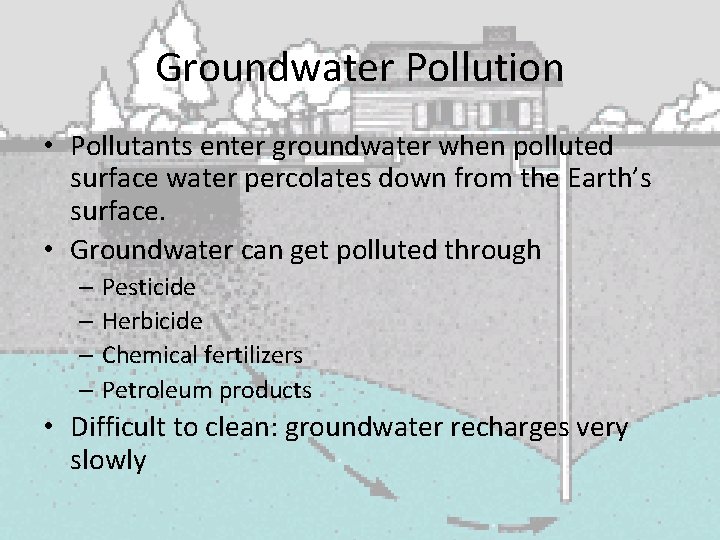
Groundwater Pollution • Pollutants enter groundwater when polluted surface water percolates down from the Earth’s surface. • Groundwater can get polluted through – Pesticide – Herbicide – Chemical fertilizers – Petroleum products • Difficult to clean: groundwater recharges very slowly
Ocean Pollution • Most of the pollution that occurs in the ocean comes from ACTIVITIES ON LAND. • Oil spills
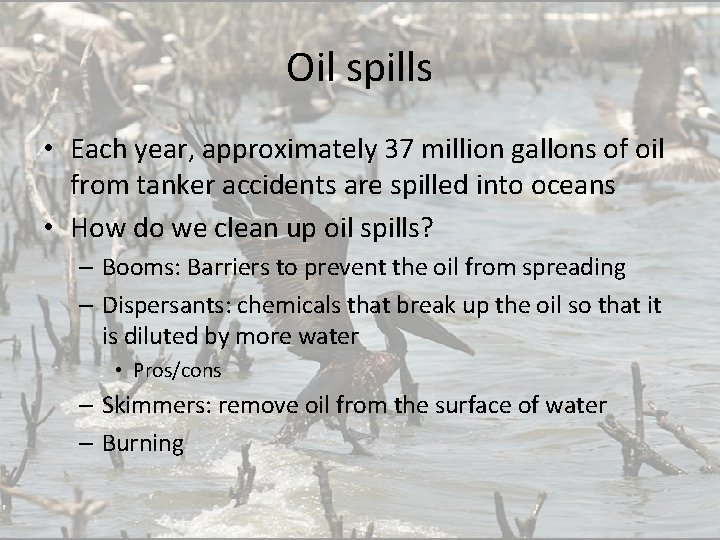
Oil spills • Each year, approximately 37 million gallons of oil from tanker accidents are spilled into oceans • How do we clean up oil spills? – Booms: Barriers to prevent the oil from spreading – Dispersants: chemicals that break up the oil so that it is diluted by more water • Pros/cons – Skimmers: remove oil from the surface of water – Burning
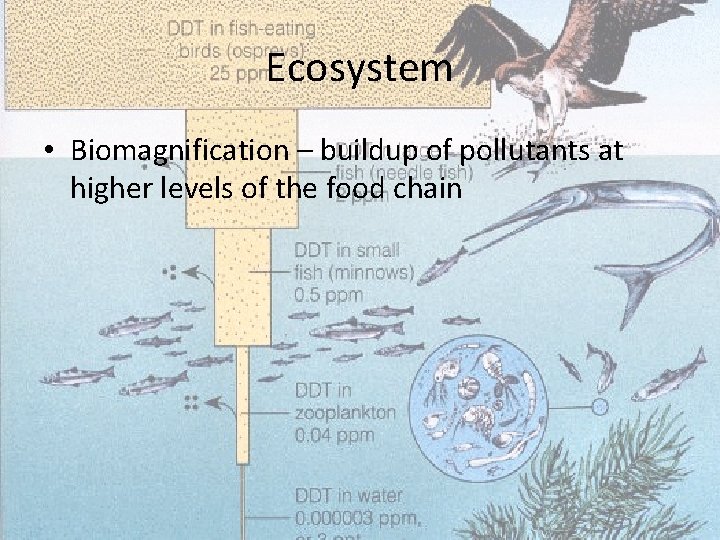
Ecosystem • Biomagnification – buildup of pollutants at higher levels of the food chain
Cleaning up • Cuyahoga River • Clean Water Act of 1972 – Goal was to make all surface water clean enough to swim and fish in by ’ 83. – Not met, but 30% increase • Oil Pollution Act of 1990 – requires oil tankers traveling US water to have double hulls • Legislation has improved water quality in the US, but the cooperation of individuals, businesses, and the government will be essential to maintaining a clean water supply in the future.