
CHAPTER 11 TRANSPORT IN PLANTS SUSTANCES TO BE
CHAPTER: 11 TRANSPORT IN PLANTS
SUSTANCES TO BE TRANSPORTED WITHIN PLANTS: Water Mineral nutrients Organic nutrients Hormones (Plant regulators/phytohormones) growth
Over small distances substances move by diffusion and by cytoplasmic streaming supplemented by active transport. Transport over longer distances is done by xylem and phloem and is called translocation. In Xylem: In Xylem there is transport of water and minerals and is unidirectional from roots to stems. In phloem: In Phloem there is transport of organic and mineral nutrients and hormones and is multidirectional.
MEANS Passive OF TRANSPORT: DIFFUSION process. It may be from one part of the cell to the other or from cell to cell, or over short distances (from the intercellular spaces of the cell to the outside. No expenditure of energy. Molecules move in random fashion. Substances moving from region of high concentration to region of lower concentration. It is a slow process and not dependent on a living system. Commonly seen in gases and liquids.
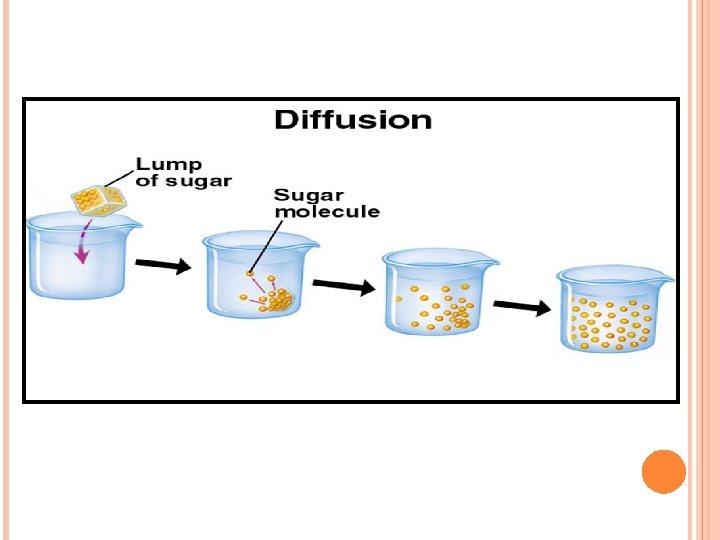

HOW The DIFFUSION GET AFFECTED? diffusion rates are affected due to: Ø Gradient of concentration Ø Permeability of the membrane separating them Ø Temperature Ø Pressure Ø Size of the substances.
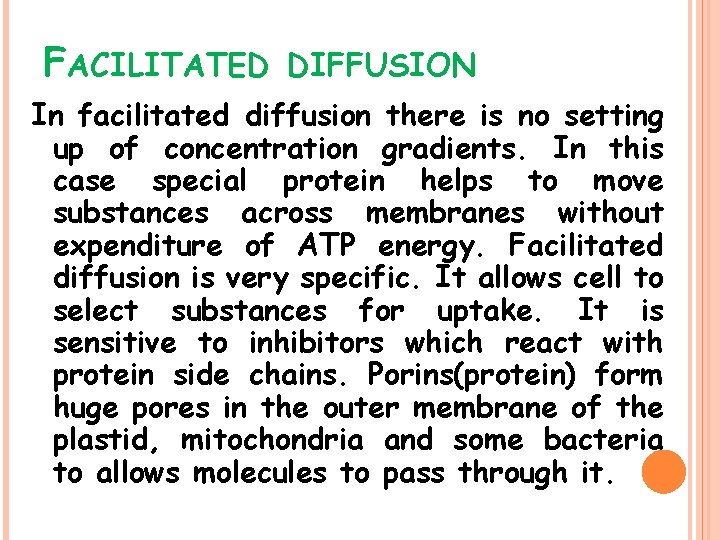
FACILITATED DIFFUSION In facilitated diffusion there is no setting up of concentration gradients. In this case special protein helps to move substances across membranes without expenditure of ATP energy. Facilitated diffusion is very specific. It allows cell to select substances for uptake. It is sensitive to inhibitors which react with protein side chains. Porins(protein) form huge pores in the outer membrane of the plastid, mitochondria and some bacteria to allows molecules to pass through it.
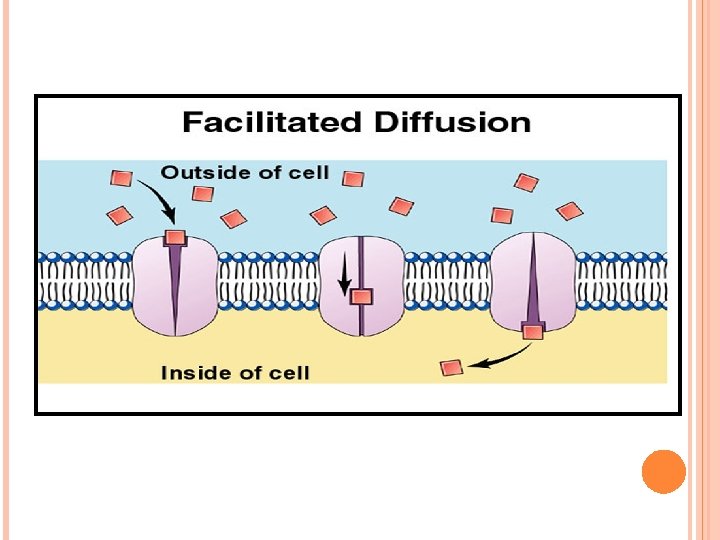

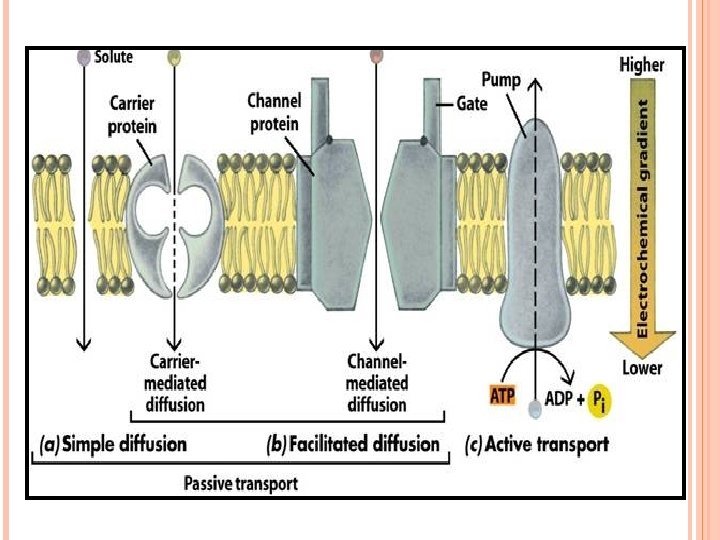
Porins: These are the proteins that forms large pores in the outer membrane of plastid, mitochondria, bacteria and allow molecules to pass (small sized proteins). Porins are extracellular molecule bound to transport protein then rotate and release the molecule to inside. Aqua-porins: Water channels made of 8 different types of porins.

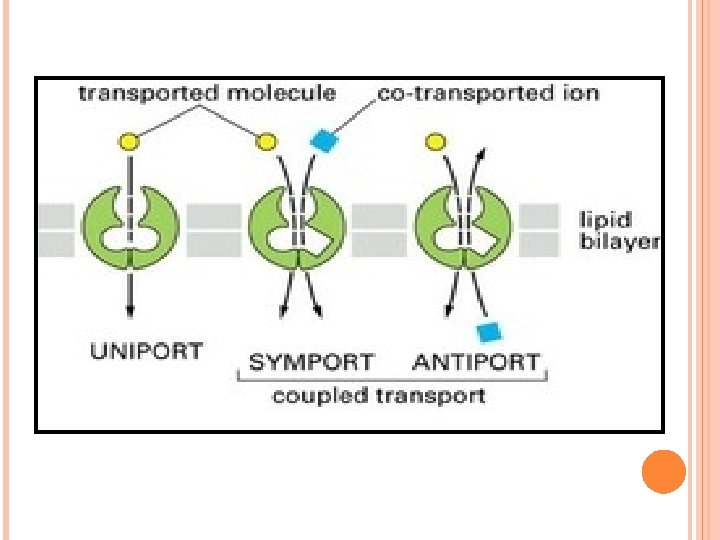
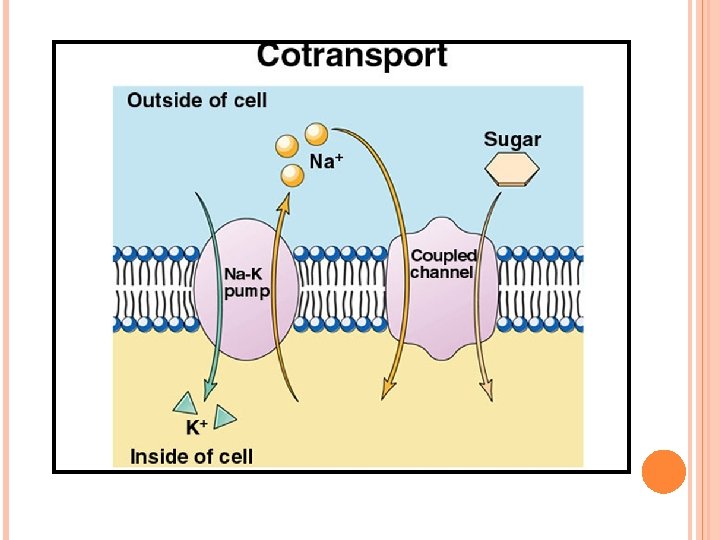
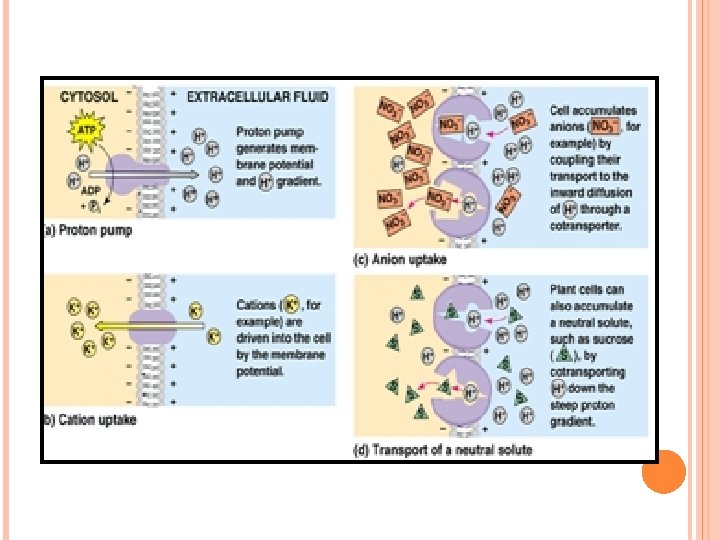
SYMPORT, ANTIPORT AND UNIPORT In a symport both molecules cross the membranes in the same direction. In an antiport they move in opposite directions. In uniport molecules moves across a membrane independent of other molecules.
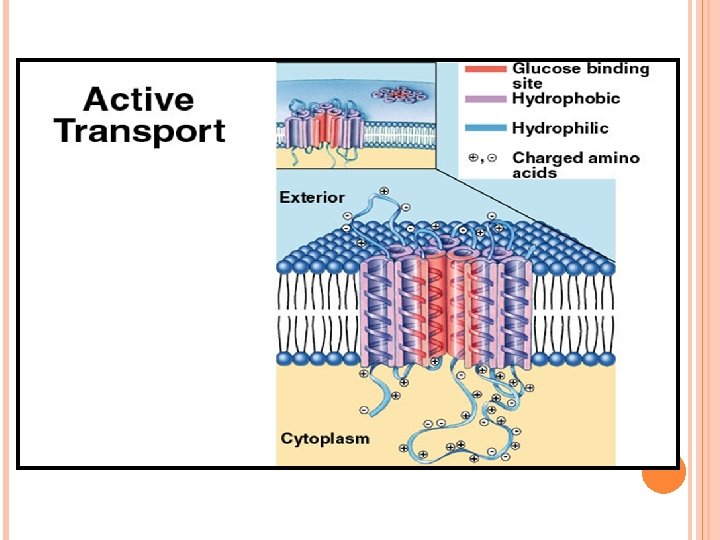
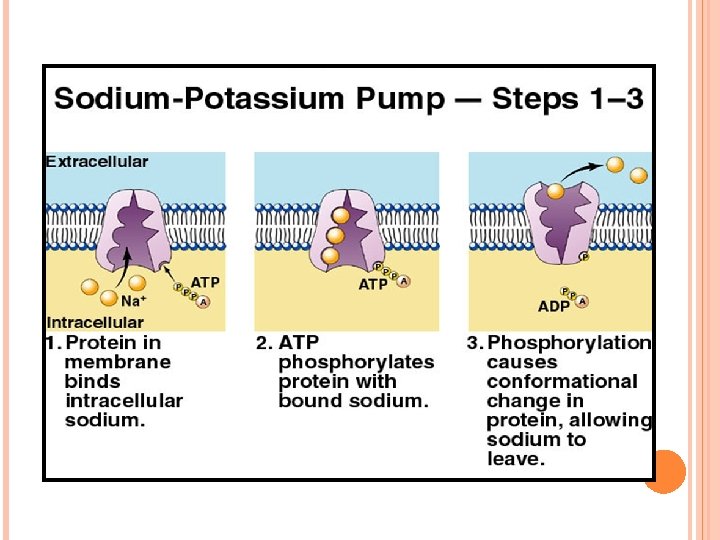
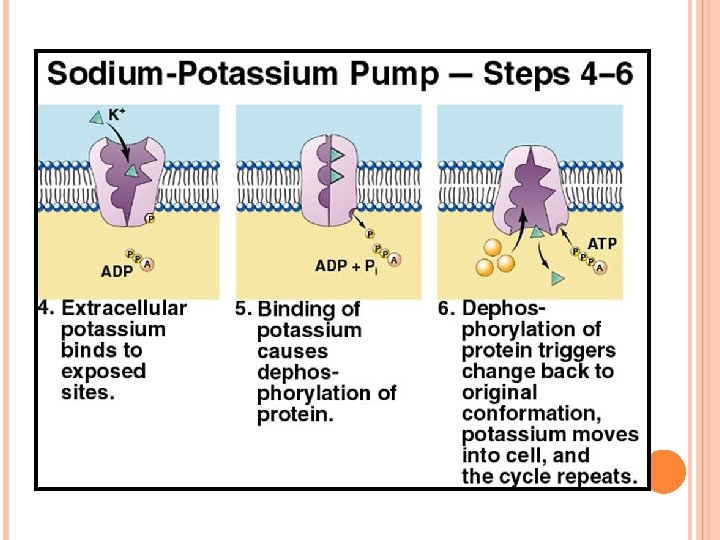
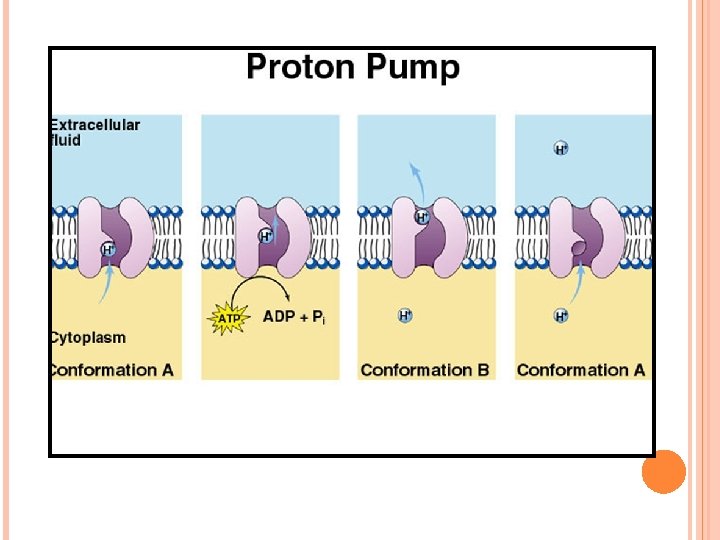
ACTIVE TRANSPORT It requires energy to pump molecules against a concentration gradients. Active transport is carried out by membrane protein from lower concentration to higher concentration (Uphill transport). Transport rate reaches a maximum when all the proteins transporters are being used or are saturated.
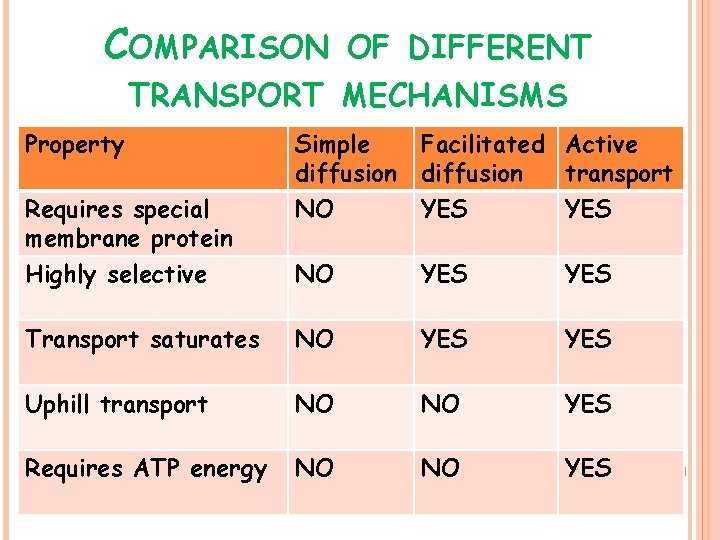
COMPARISON OF DIFFERENT TRANSPORT MECHANISMS Property Simple diffusion Facilitated Active diffusion transport Requires special membrane protein NO YES Highly selective NO YES Transport saturates NO YES Uphill transport NO NO YES Requires ATP energy NO NO YES
PLANT- WATER RELATION Water is essential for all physiological activities of plant. Plays an important role in all living organisms. Provides the medium in which various substances get dissolved. Protoplasm of the cell is mainly water in which different substances are dissolved and suspended. Distribution of water within a plant varies. It is a limiting factor for plant growth and productivity.
WATER POTENTIAL The movement of water in and out of plant cells is driven by water potential. The net uptake or loss of water by a cell occurs by osmosis, the passive transport of water across a membrane. Water usually moves from hypotonic (low solute concentration) to hypertonic (high solute concentration) – this is what happens in animal cells. But plants have a rigid cell wall that provides physical pressure.
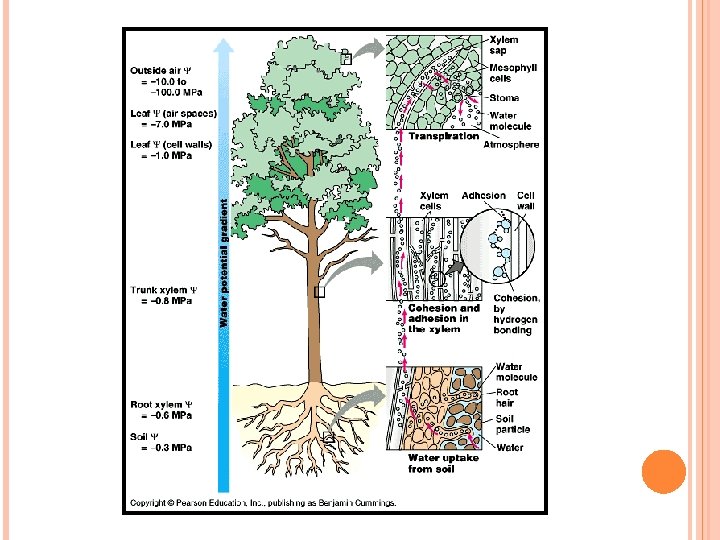
The difference between the free energy of water molecule in pure state and the energy of water in any other system is called as water potential. Unit Pascal. Determined by two factors: Solute potential. Pressure potential.
Water molecules has kinetic energy or water potential. If two systems containing water are in contact –higher to lower movement takes place by diffusion. So in plants the movement of water depends upon a combination of solute concentration and physical pressure known as water potential symbolized by the Greek letter psi Ψ
Water potential of pure water at standard temperature , not under any pressure is maximum taken as zero. If some solute is dissolve in pure water -reduce water potential. Solute potential-(osmotic potential)amount by which the water potential is reduce as a result of presence of solute. Ψs. For a solution at atmospheric pressure water potential =solute potential.
if pressure greater than atmospheric pressure is applied to pure water or a solution its water potential increases. Pressure can be built up in a plant system when water enters the plant by diffusion cell turgid (Increases pressure potential). Pressure potential-plant cell wall is elastic it exert pressure on cellular contents hydrostatic pressure is developed in vacuole , turgor pressure. Pressure potential is usually positive. Ψw = Ψs +Ψp.
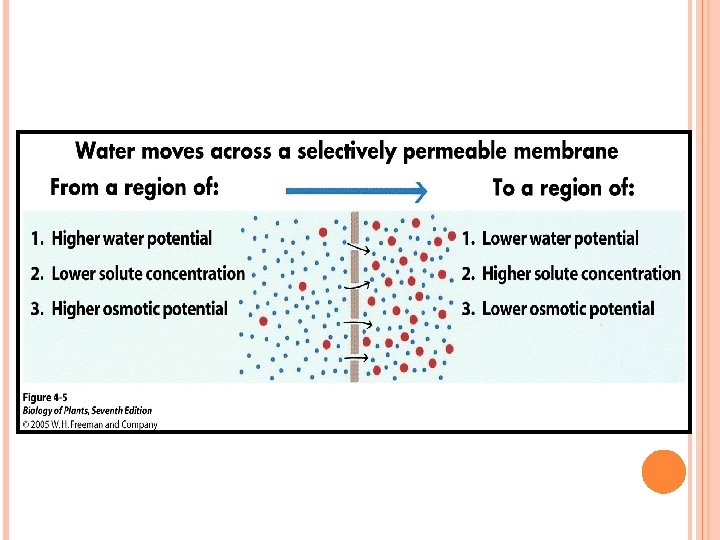
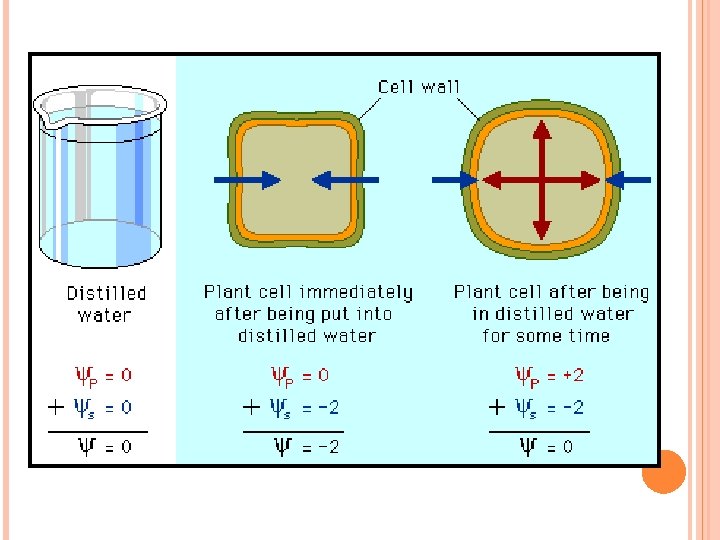
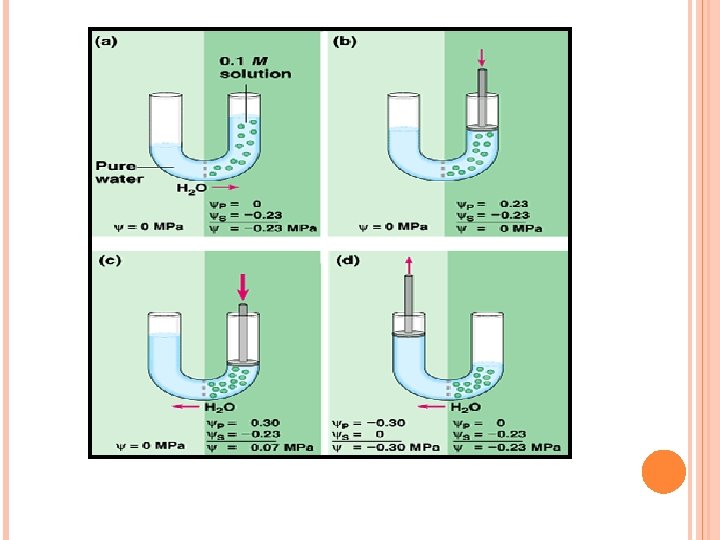
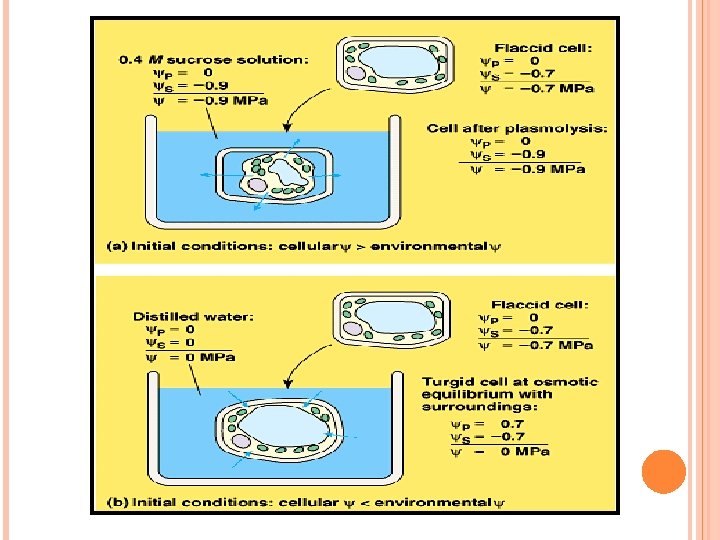
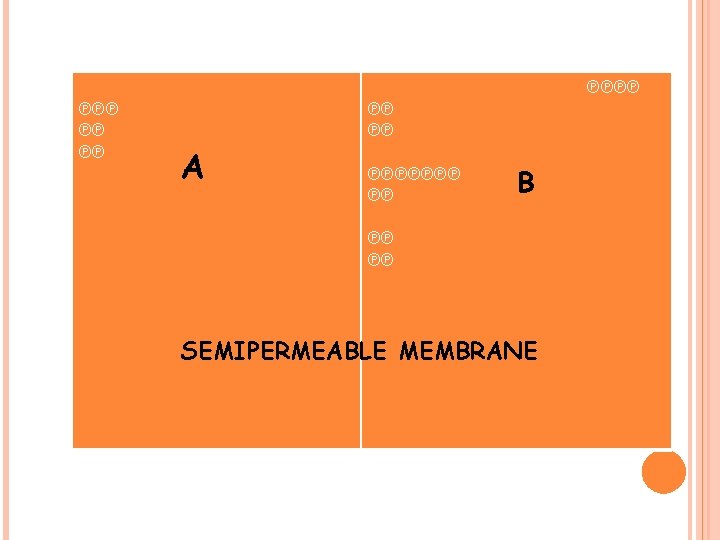
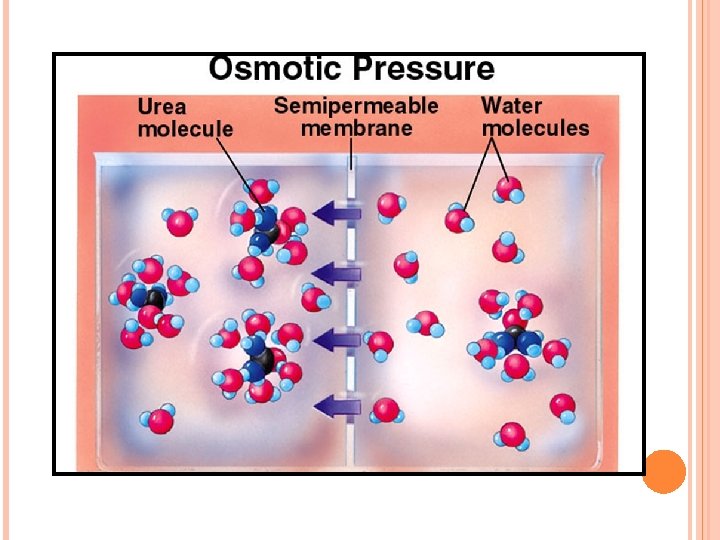
OSMOSIS: The movement of water molecules through a selectively permeable membrane is called osmosis. Osmosis takes place from a region of high water concentration to region of low water concentration through a semi permeable membrane. Thus, osmosis is a special case of diffusion. The net direction and rate of osmosis depends on both the pressure gradient and concentration gradient.
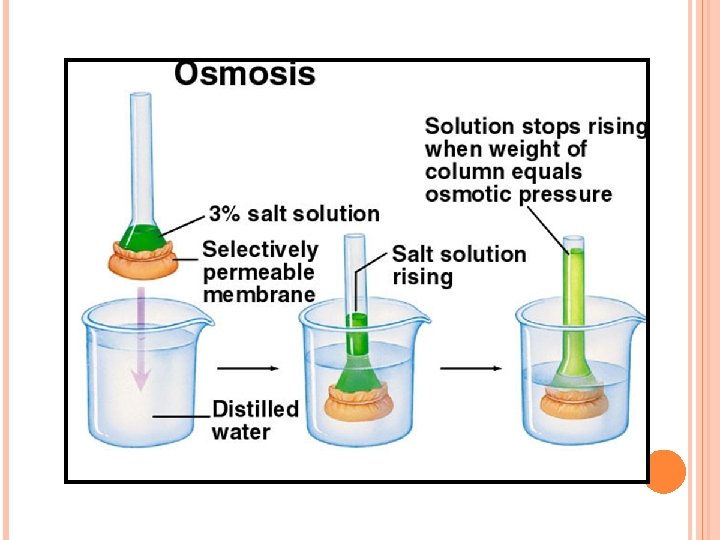
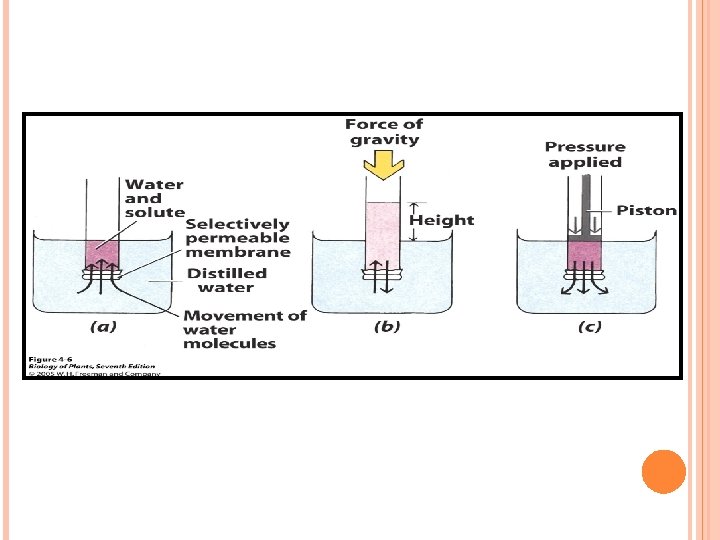
Osmotic pressure-external pressure can be applied from the upper part of funnel such that no water diffuses in to the funnel through the membrane. Or Osmotic pressure of a solution is equivalent to that pressure which must be applied to prevent the flow of water due to osmosis Or The maximum amount of pressure that can be developed in a solution separated from pure water by semi-permeable membrane. OSMOTIC PRESSURE = OSMOTIC POTENTIAL.
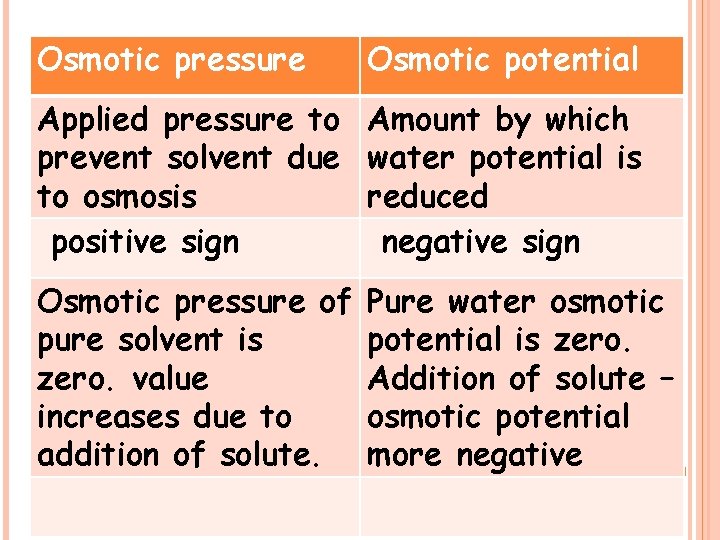
Osmotic pressure Osmotic potential Applied pressure to Amount by which prevent solvent due water potential is to osmosis reduced positive sign negative sign Osmotic pressure of pure solvent is zero. value increases due to addition of solute. Pure water osmotic potential is zero. Addition of solute – osmotic potential more negative
PLAMOLYSIS When a living plant cell looses water through osmosis then there is shrinkage or contraction of the contents of the cell away from the cell wall. This phenomenon is called plasmolysis.
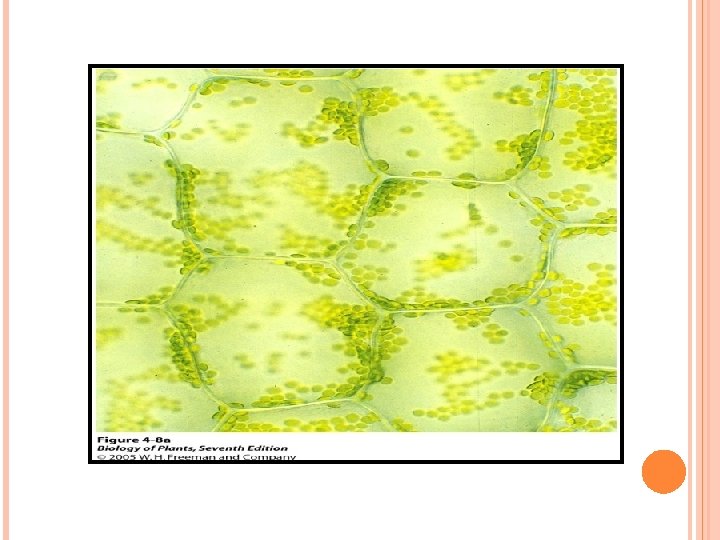
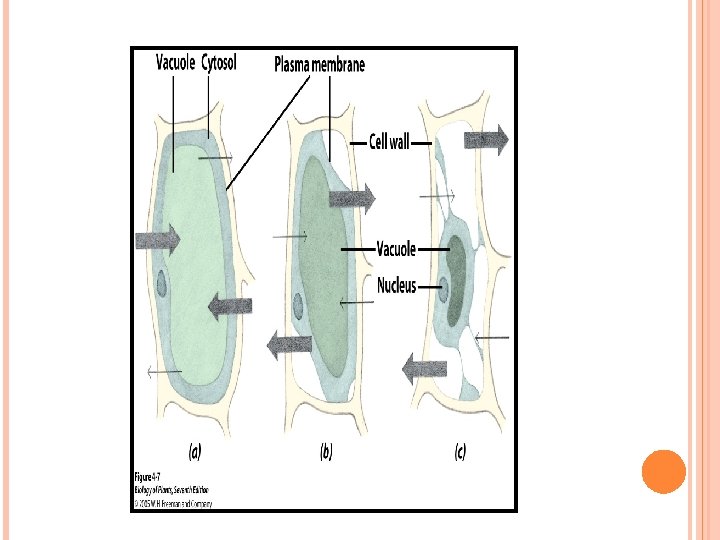
q. Hypotonic solution: If the medium surrounding the cell has a higher water concentration than the cell, meaning that the outside solution is very dilute, the cell will gain water by osmosis ( endosmosis ). Such a solution is called hypotonic solution. In this case the cell is likely to swell up.
Isotonic solution: If the medium surrounding the cell has exactly the same water concentration as the cell, there will be no net movement of water across the cell membrane. Such a solution is called isotonic solution. In this case there is no overall movement of water. The cell will stay the same size.
Hypertonic solution: If the medium surrounding the cell has a lower concentration of water than the cell, meaning that it is a very concentrated solution, the cell will lose water by osmosis(exoosmosis) Such a solution is called a hypertonic solution. In this case the cell will shrink.
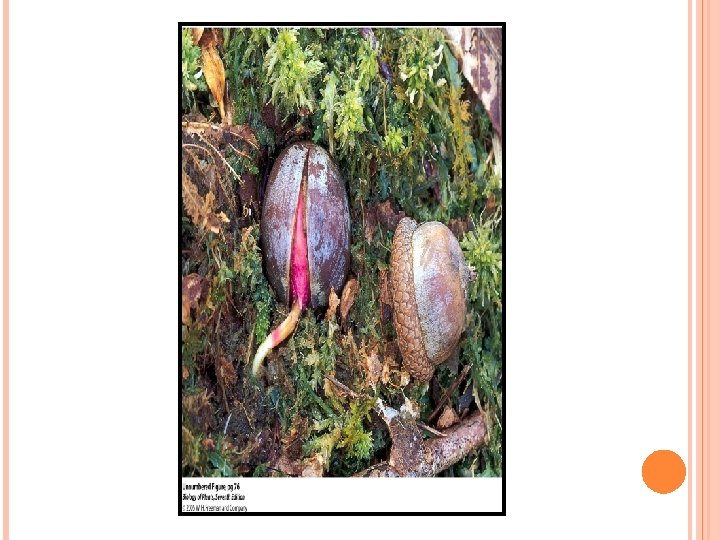
IMBIBITION Imbibition is a special diffusion when water is absorbed by solid colloids and causes increase in volume. e. g. seed germination. condition for Imbibition: water potential gradient between absorbent and liquid imbibed are essential. Affinity between liquid and adsorbent
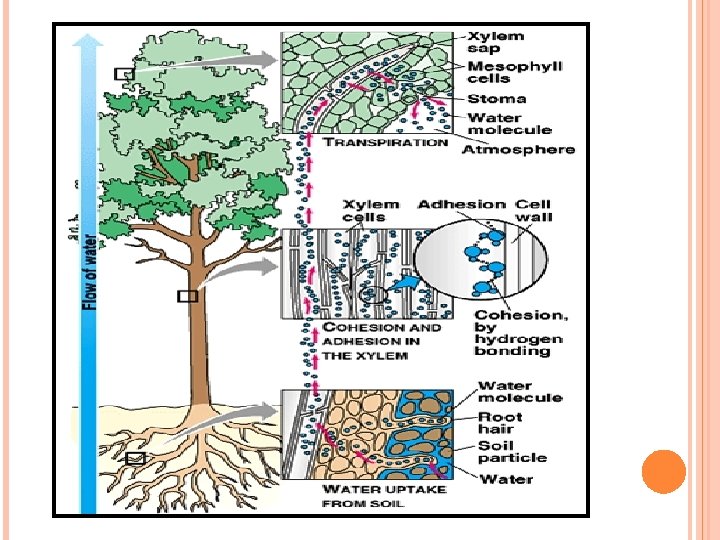
LONG-DISTANCE MOVEMENT OF WATER Twig bearing white flowers kept in coloured water. Path of water movement through vascular bundles- xylem. Long distance transport is not by diffusion, as it is slow process. eg movement of molecule across a typical plant cell about 50 micrometer need 2. 5 s
In large and complex organism substances moves across long distances. Site of absorption /or production and site of storage are too far. Water & minerals and food are generally moved by bulk flow. Mass flow is the movement of substances in bulk or in masses from one point to another as a result of pressure differences.
Translocation is the bulk movement of substances through conducting tissue. Movement of water depends on transpiration pull, cohesion & adhesion of water molecules, capillary forces, and strong cell walls. Xylem: Water, mineral, salt, nitrogen, hormone from root to aerial parts. Phloem: Organic and inorganic solute from leaves to other parts.
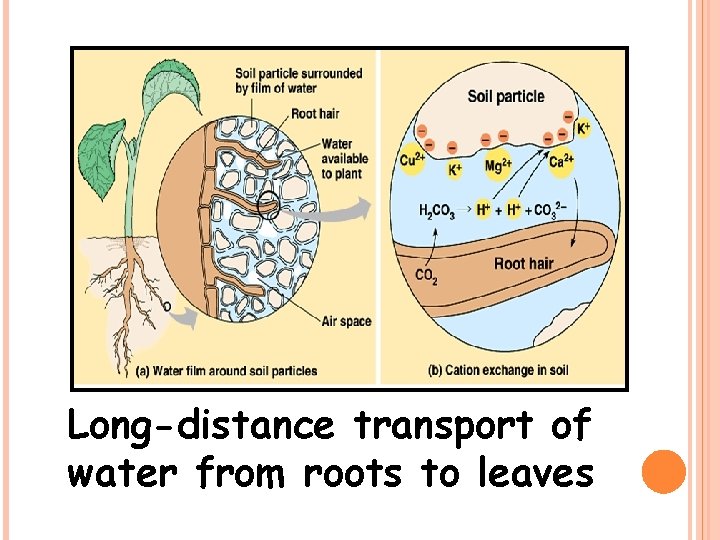
Long-distance transport of water from roots to leaves
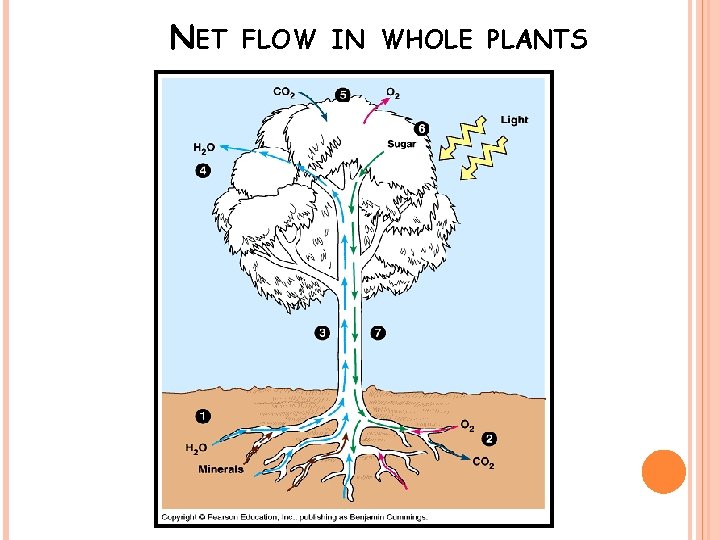
NET FLOW IN WHOLE PLANTS
HOW DO PLANT ABSORB WATER? Water is absorbed along with mineral solutes, by root hairs, purely by diffusion. But it can move deeper into root layers by two pathways: Apoplast pathway Symplast pathway
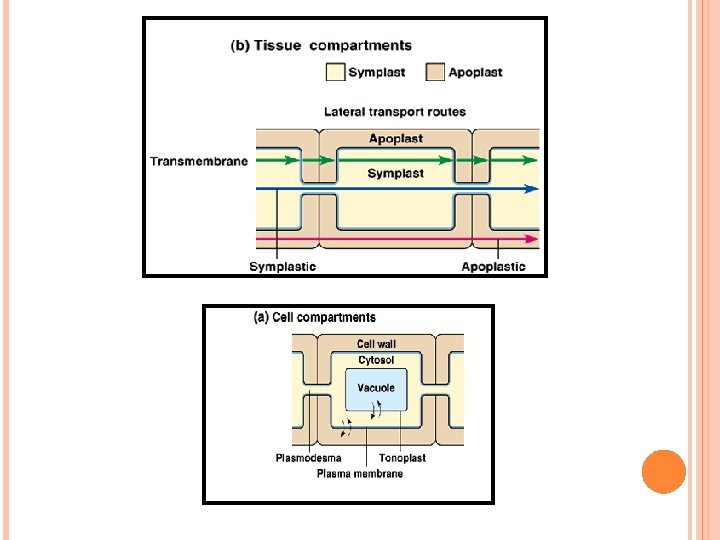
APOPLAST The PATHWAYS apoplast is the system of adjacent cell walls that is continuous throughout the plant, except at the casparian strips of the endodermis in the roots. It occurs exclusively through the intercellular spaces and the walls of the cells. Movement through the apoplast does not involve crossing the cell membrane. It is dependent on gradient
SYMPLAST PATHWAY This is the system of interconnected protoplasts. Neighboring cells are connected through cytoplasmic strands that extend through plasmodesmata. During symplastic movement, the water travels through the cells, their cytoplasm, intercellular movement is through the plasmodesmata.
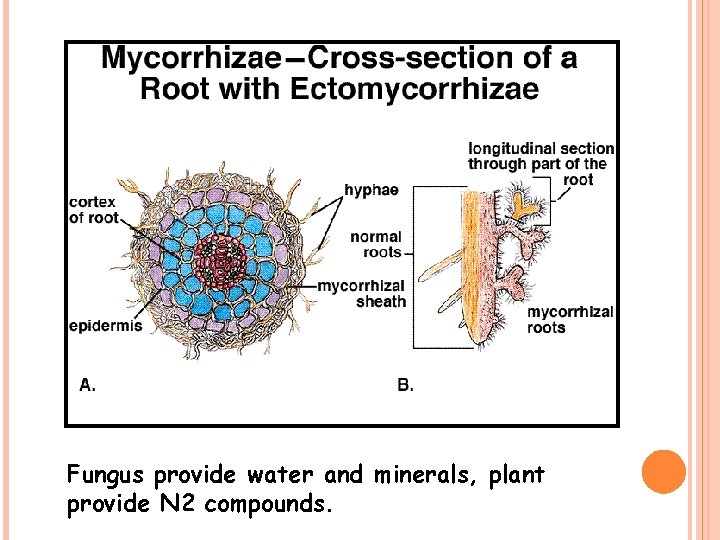
Fungus provide water and minerals, plant provide N 2 compounds.
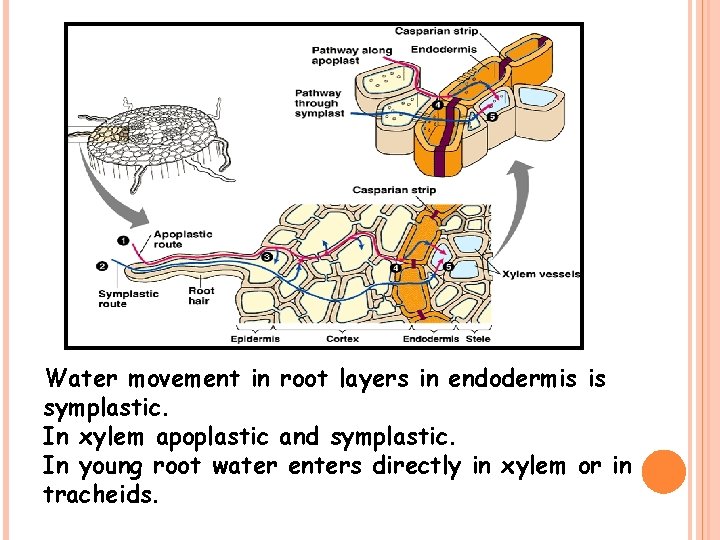
Water movement in root layers in endodermis is symplastic. In xylem apoplastic and symplastic. In young root water enters directly in xylem or in tracheids.
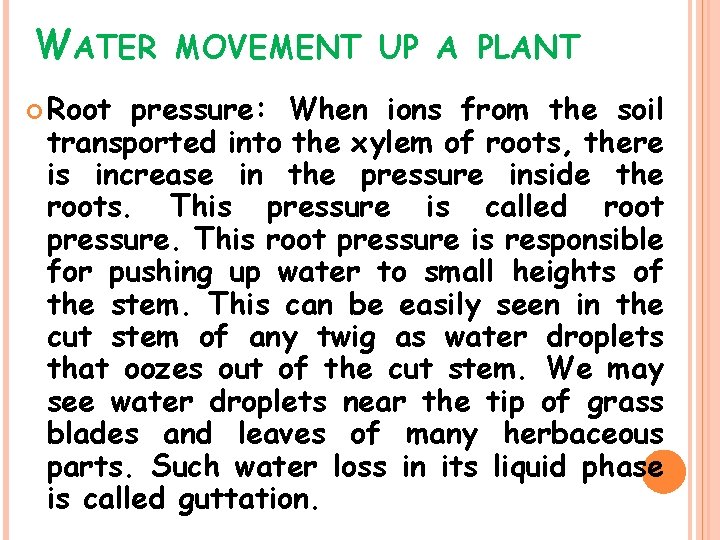
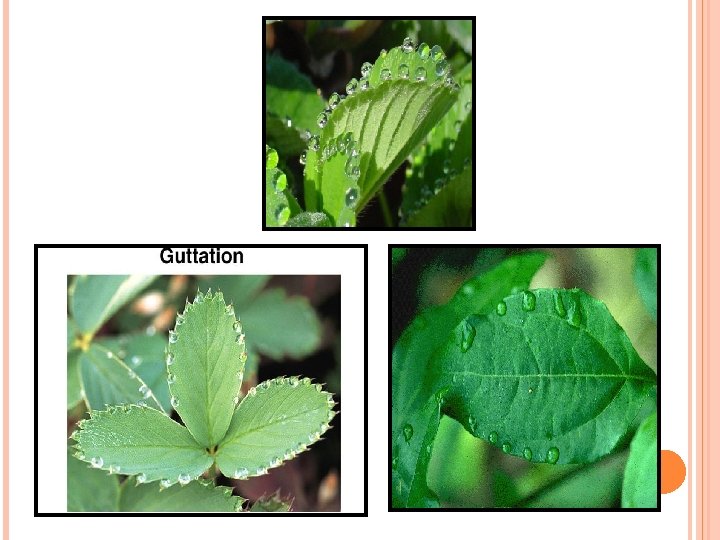
WATER Root MOVEMENT UP A PLANT pressure: When ions from the soil transported into the xylem of roots, there is increase in the pressure inside the roots. This pressure is called root pressure. This root pressure is responsible for pushing up water to small heights of the stem. This can be easily seen in the cut stem of any twig as water droplets that oozes out of the cut stem. We may see water droplets near the tip of grass blades and leaves of many herbaceous parts. Such water loss in its liquid phase is called guttation.
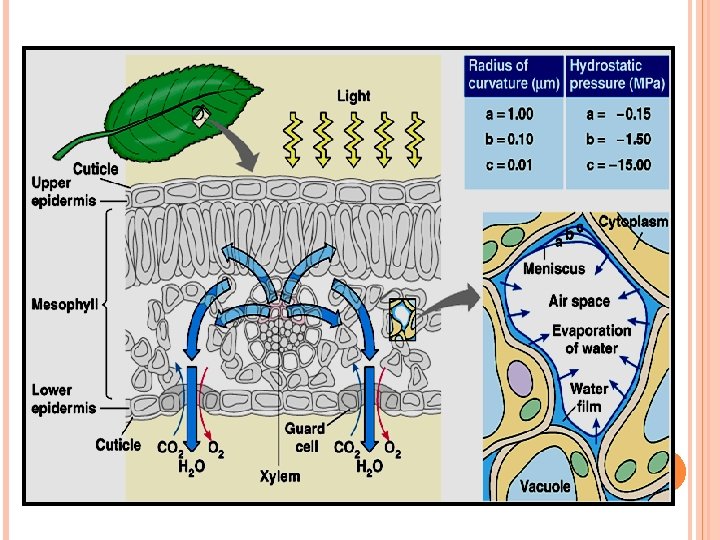
Transpiration pull: Transpiration (loss of water in the form of water vapour) plays an important role in the transportation of water and minerals in tall trees. Water is mainly pulled through the plant through transpiration. This process is called cohesion-tensiontranspiration pull model of water transport. Transpiration creates suction due to which movement of water takes place.
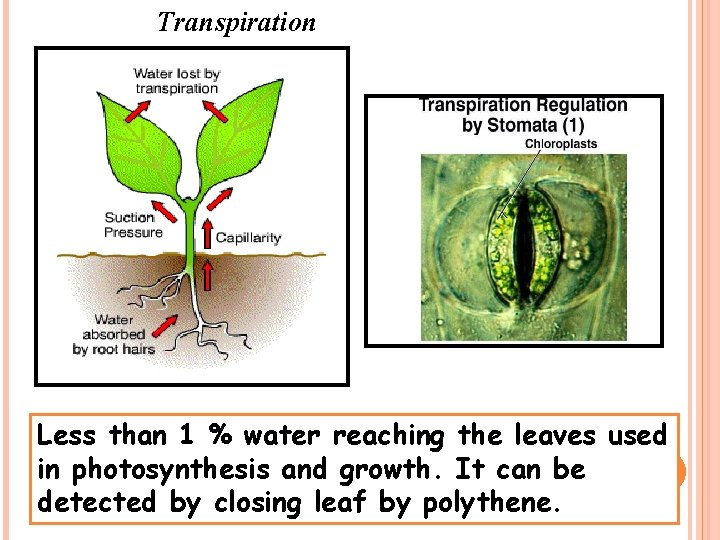
Transpiration Less than 1 % water reaching the leaves used in photosynthesis and growth. It can be detected by closing leaf by polythene.
opening and closing of stomata is an change in the turgidity of the guard cell. Inner wall of guard cell –thick and elastic. Thin outer wall bulge out and force the inner wall in to crescent shape. Opening of stoma aided by micro fibrils of guard cells. When guard cell loses water guard cell become flaccid & stomata close.
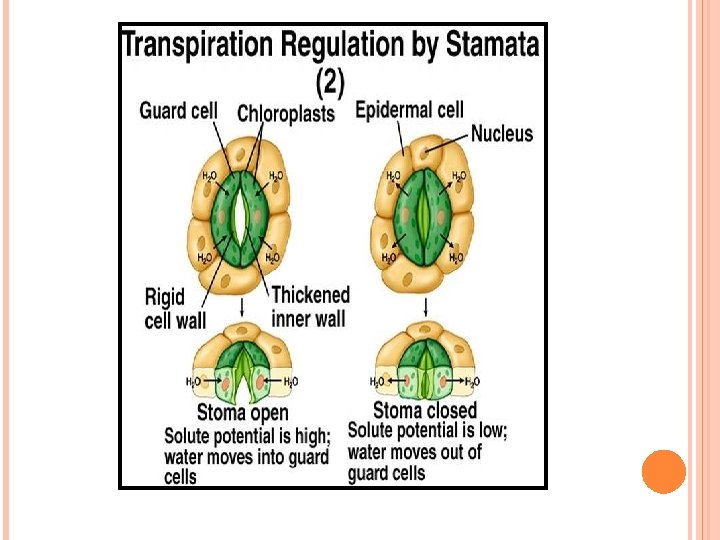
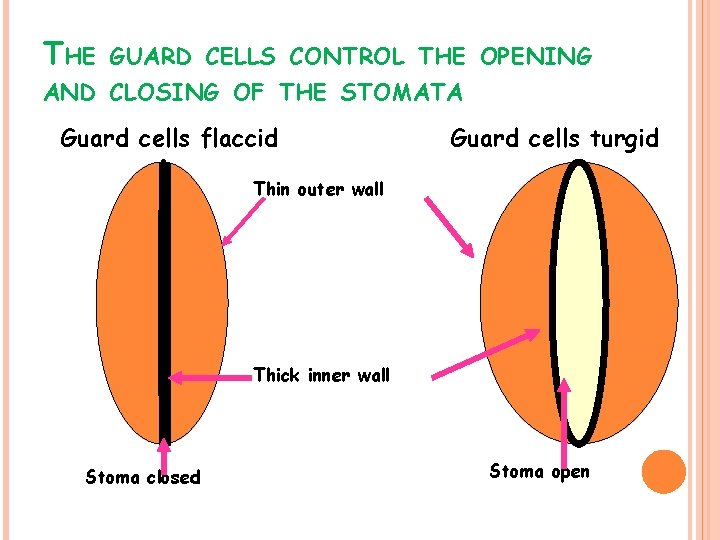
THE GUARD CELLS CONTROL THE OPENING AND CLOSING OF THE STOMATA Guard cells flaccid Guard cells turgid Thin outer wall Thick inner wall Stoma closed Stoma open
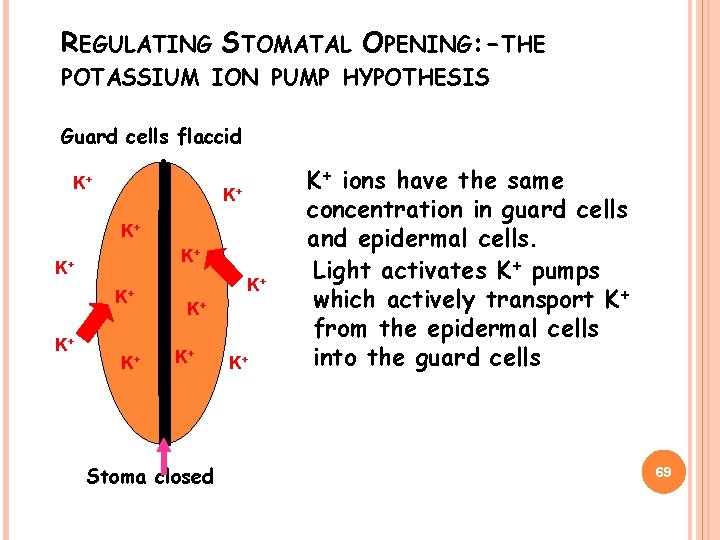
REGULATING STOMATAL OPENING: -THE POTASSIUM ION PUMP HYPOTHESIS Guard cells flaccid K+ K+ K+ Stoma closed K+ K+ ions have the same concentration in guard cells and epidermal cells. Light activates K+ pumps which actively transport K+ from the epidermal cells into the guard cells 69
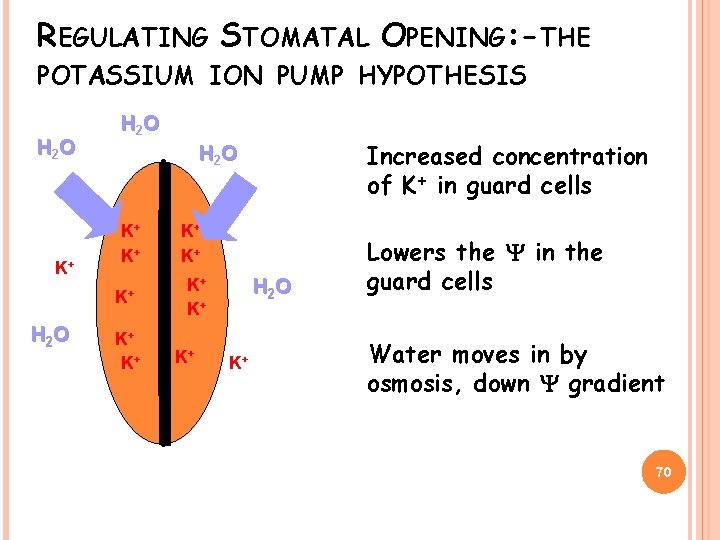
REGULATING STOMATAL OPENING: -THE POTASSIUM ION PUMP HYPOTHESIS H 2 O K+ K+ K+ H 2 O Increased concentration of K+ in guard cells H 2 O K+ K+ H 2 O K+ Lowers the in the guard cells Water moves in by osmosis, down gradient 70
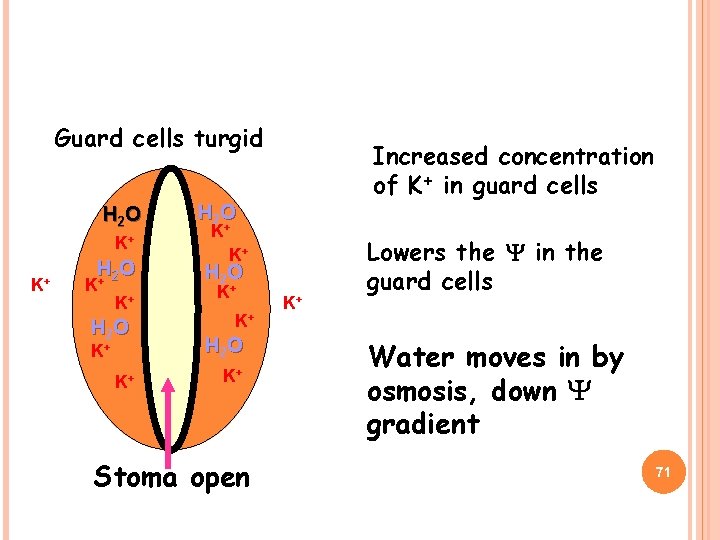
Guard cells turgid H 2 O K+ K+ H 2 O + K K+ H 2 O K+ K+ Increased concentration of K+ in guard cells H 2 O K+ K+ H 2 O K+ Stoma open K+ Lowers the in the guard cells Water moves in by osmosis, down gradient 71
TRANSPIRATION Loss of water in the form of water vapour is called transpiration. It is mainly through stomata of the leaves. Stomata generally open in the day time and close at night. The opening and closing of stomata is due to change in the turgidity of guard cells. When the guard cells become turgid then stomata open and when the guard cells become flaccid then it closes.
FACTORS THAT EFFECT TRANSPIRATION Stomata –number of stomata Temperature. Light. Humidity. Wind speed. Number and distribution of stomata. No of stomata open. Water status. Canopy structure etc.
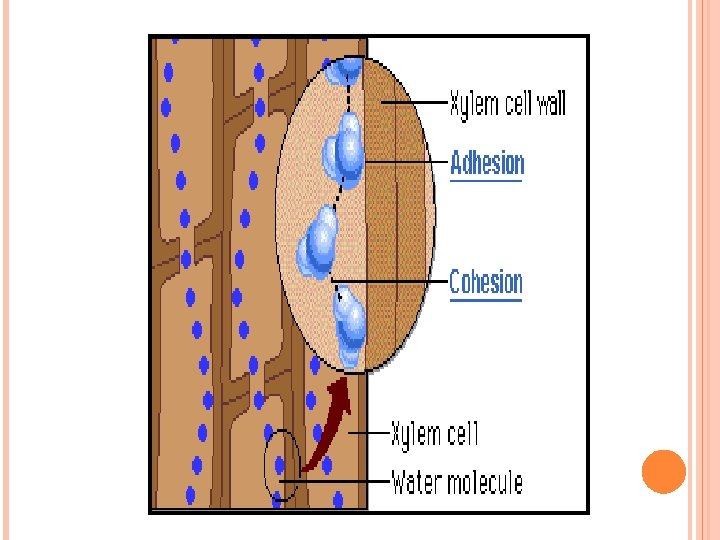
Movement of water and minerals (ascent of sap) of xylem by the process of transpiration depends on the following physical properties of water: Cohesion: Mutual attraction between water molecules Adhesion: Attraction of water molecules to polar surface (tracheary elements of xylem) Surface tension: Water molecules are attracted to each other in the liquid phase more than to water in the gas phase.
These properties give water high tensile strength i. e. an ability to resist a pulling force and high capillarity i. e. the ability to rise in this tubes. Movement of water takes through tracheids and vessels of xylem.
Transpiration and photosynthesis: a compromise: Transpiration has more than one function: Creates transpiration pull for absorption and transport of water and minerals to the plant. Supplies water for photosynthesis. Transports minerals from the soil to all parts of the plant. Cools leaf surface (sometimes 10 to 15 degree cool) Maintains the shape and structure of the plant by keeping cells turgid.
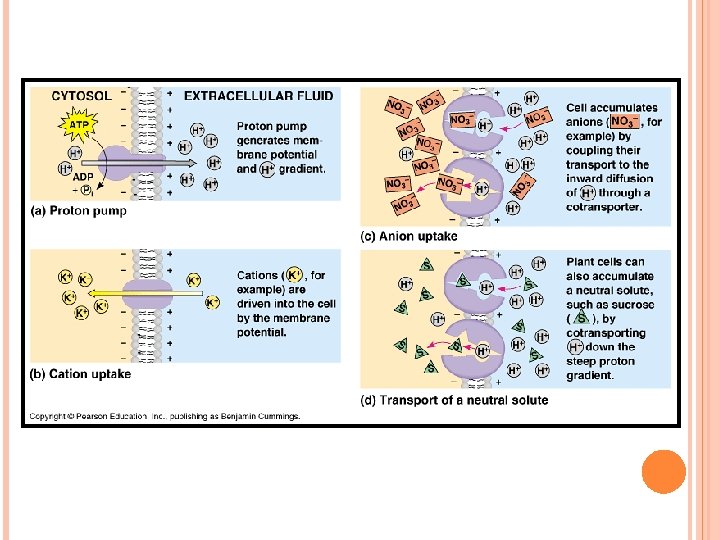
UPTAKE OF MINERAL IONS. Why minerals cannot be passively absorbed by the roots? Minerals are present in the soil as charged particles (ions) which cannot move across cell membranes. Concentration of minerals in the soil is usually lower than the concentration of minerals in the root.
Therefore most minerals enter the root by active absorption into the cytoplasm of epidermal cells. This require energy in the form of ATP. Ions are absorbed from the soil by both passive and active transport. Transport proteins are responsible for the active transport.
TRANSLOCATION OF MINERAL IONS This is done through transpiration. The mineral elements are generally moved to the growing regions of the plants, such as apical and lateral meristems, young leaves, developing flowers, fruits and seeds and storage organs. Mineral ions are frequently re mobilized from older part to the younger part. Elements mostly mobilized are P, S, N and K. Calcium are not re mobilized.
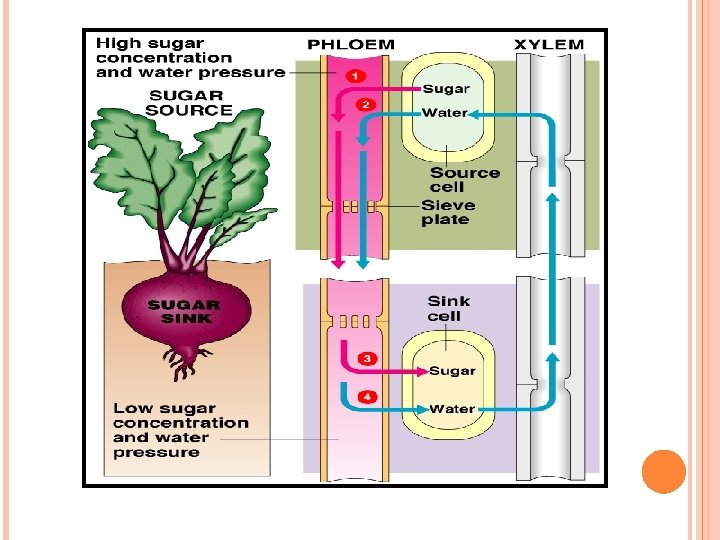
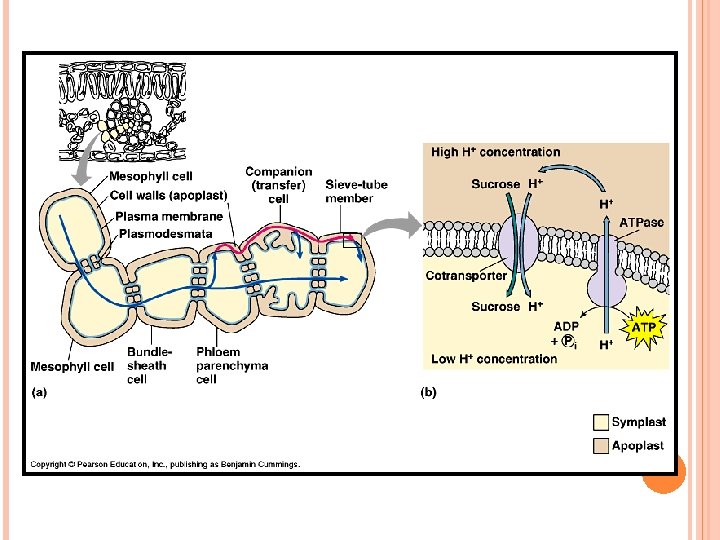
PHLOEM TRANSPORT: FLOW FROM SOURCE TO SINK Food (sucrose) is transported through phloem from ‘source’ to ‘sink’. Source means where the food is synthesised and sink means where the food is needed or stored. The direction of movement in the phloem can be upward or downward. Sugars, hormones, amino acids are also transported or translocated through phloem.
THE PRESSURE FLOW OR MASS FLOW HYPOTHESIS Sugars (etc. ) move from the source �Photosynthetic leaves �Storage organ To the sink �Growing organs �Developing storage tissue Through mass flow in phloem or Pressure Flow Hypothesis. Sieve tubes are responsible for this.
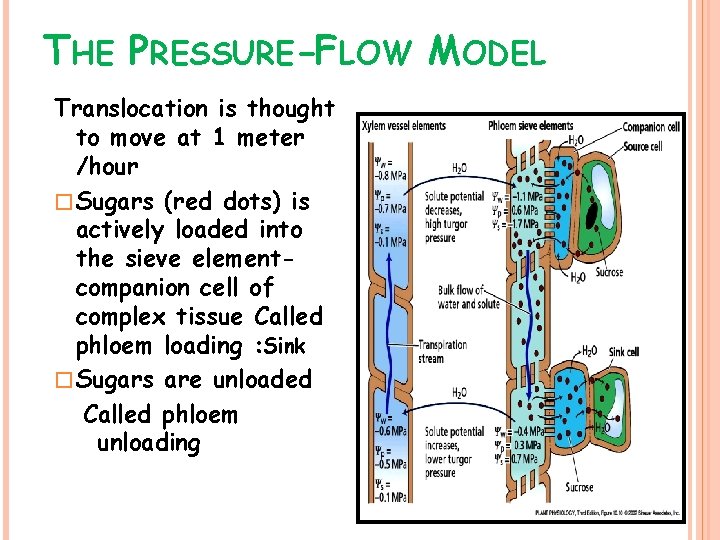
THE PRESSURE-FLOW MODEL Translocation is thought to move at 1 meter /hour � Sugars (red dots) is actively loaded into the sieve elementcompanion cell of complex tissue Called phloem loading : Sink � Sugars are unloaded Called phloem unloading
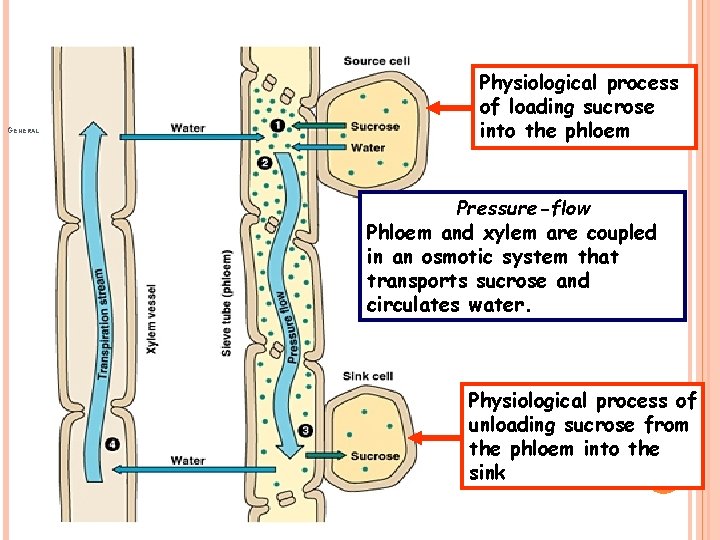
GENERAL DIAGRAM OF TRANSLOCATION Physiological process of loading sucrose into the phloem Pressure-flow Phloem and xylem are coupled in an osmotic system that transports sucrose and circulates water. Physiological process of unloading sucrose from the phloem into the sink
PHLOEM TRANSPORT REQUIRES SPECIALIZED, LIVING CELLS Sieve tubes elements join to form continuous tube. Pores in sieve plate between sieve tube elements are open channels for transport. Each sieve tube element is associated with one or more companion cells. �Many plasmodesmata penetrate walls between sieve tube elements and companion cells �Close relationship, have a ready exchange of solutes between the two cells.
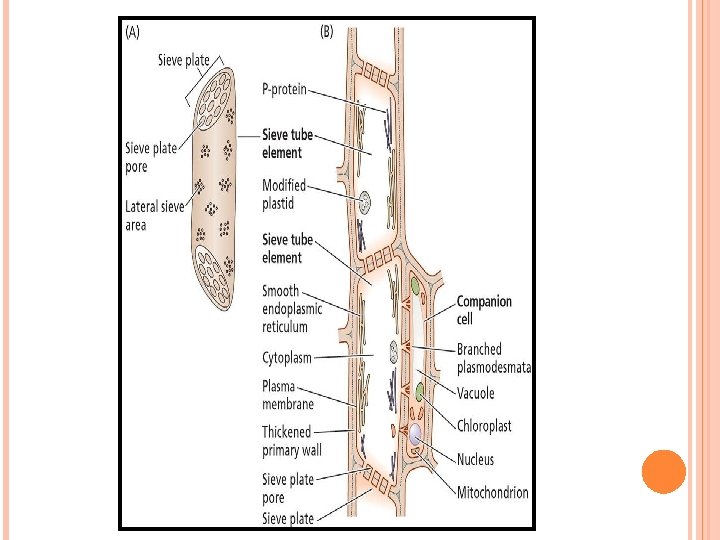
PHLOEM TRANSPORT REQUIRES SPECIALIZED, LIVING CELLS Companion cells: �Role in transport of photosynthesis products from producing cells in mature leaves to sieve plates of the small vein of the leaf. �Synthesis of the various proteins used in the phloem �Contain many mitochondria for cellular respiration to provide the cellular energy required for active transport �There are three types Ordinary companion cells Transfer cells Intermediary cells
- Slides: 91