
Chapter 11 Transport in Organism Importance of Water
- Slides: 15
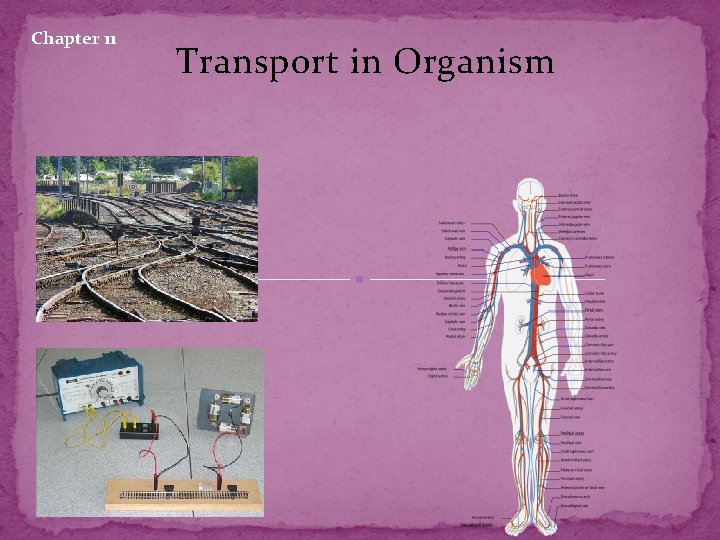
Chapter 11 Transport in Organism
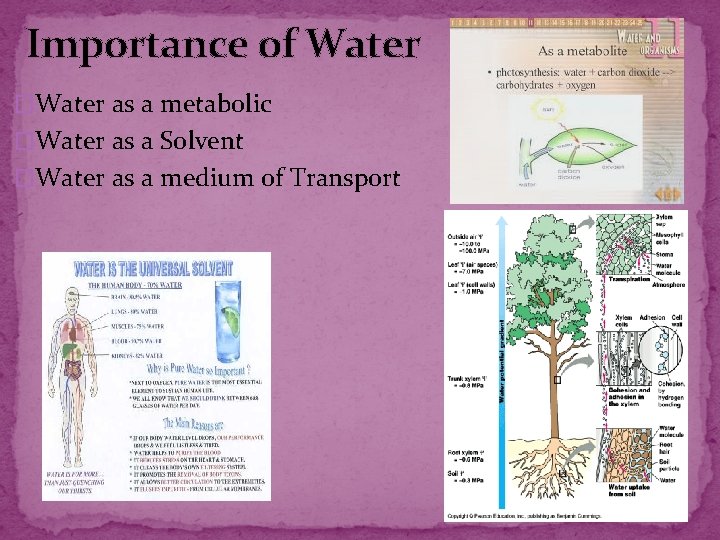
Importance of Water �Water as a metabolic �Water as a Solvent �Water as a medium of Transport
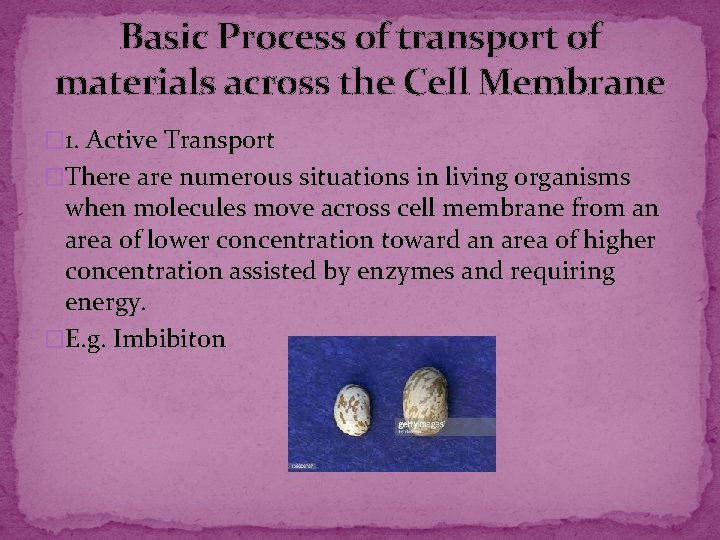
Basic Process of transport of materials across the Cell Membrane � 1. Active Transport �There are numerous situations in living organisms when molecules move across cell membrane from an area of lower concentration toward an area of higher concentration assisted by enzymes and requiring energy. �E. g. Imbibiton
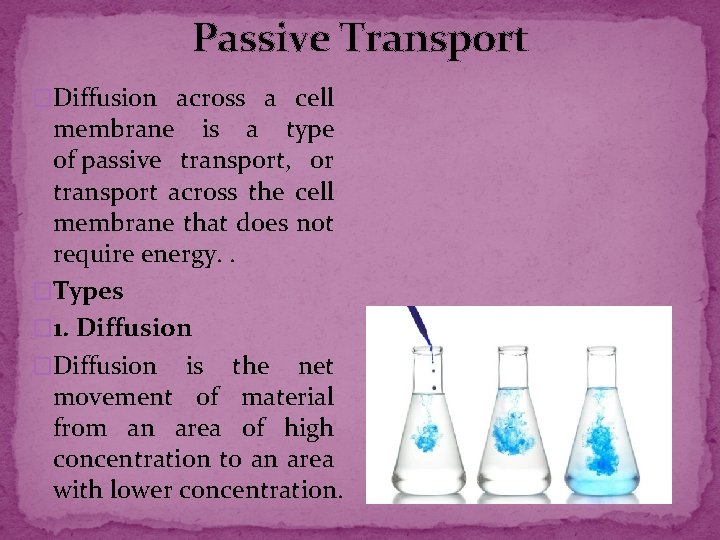
Passive Transport �Diffusion across a cell membrane is a type of passive transport, or transport across the cell membrane that does not require energy. . �Types � 1. Diffusion �Diffusion is the net movement of material from an area of high concentration to an area with lower concentration.
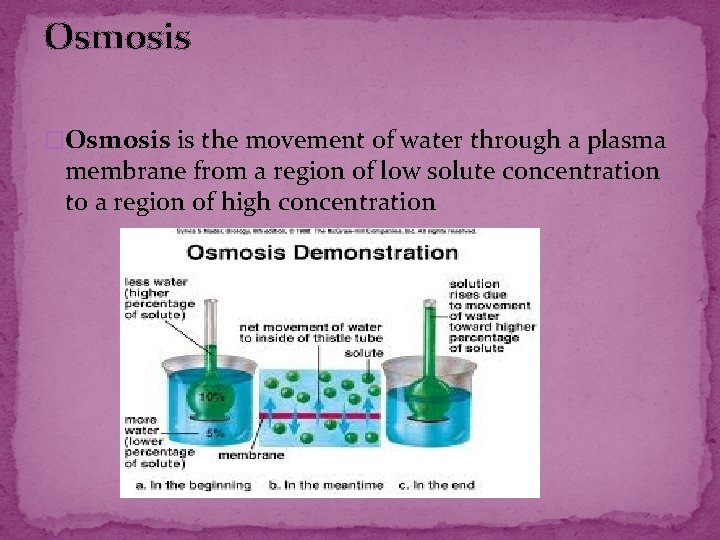
Osmosis �Osmosis is the movement of water through a plasma membrane from a region of low solute concentration to a region of high concentration
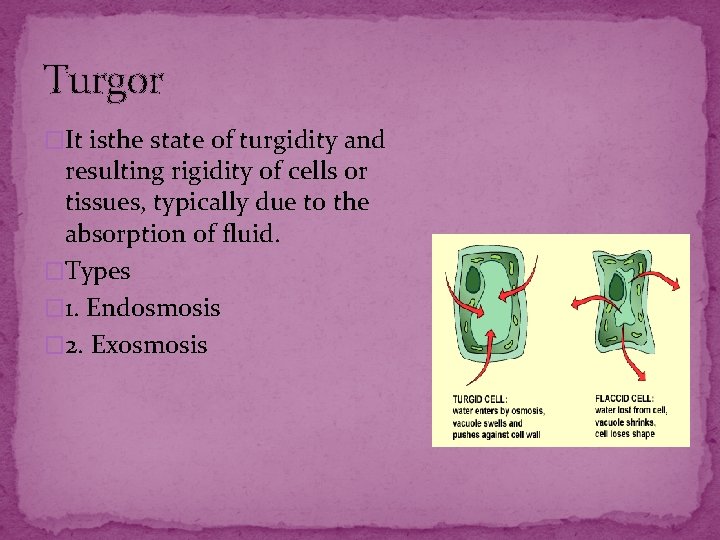
Turgor �It isthe state of turgidity and resulting rigidity of cells or tissues, typically due to the absorption of fluid. �Types � 1. Endosmosis � 2. Exosmosis
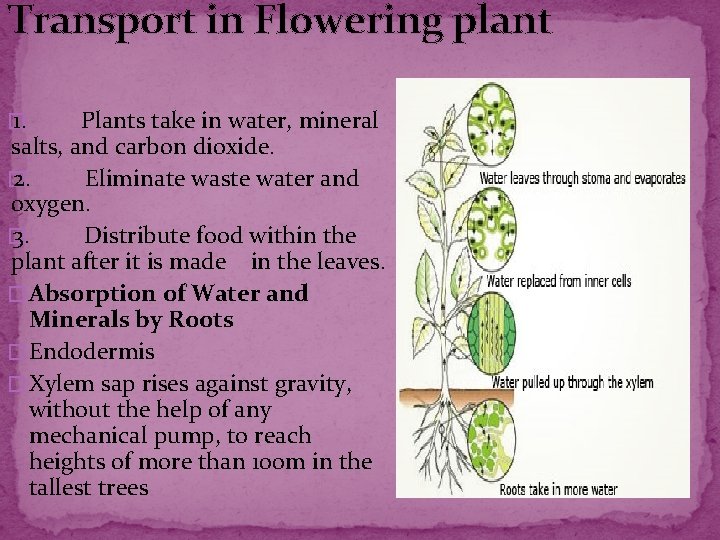
Transport in Flowering plant � 1. Plants take in water, mineral salts, and carbon dioxide. � 2. Eliminate waste water and oxygen. � 3. Distribute food within the plant after it is made in the leaves. � Absorption of Water and Minerals by Roots � Endodermis � Xylem sap rises against gravity, without the help of any mechanical pump, to reach heights of more than 100 m in the tallest trees
Up take of water and mineral by root �Water can now move from the root hair cells and across the parenchyma cells of the cortex in two major ways. Some water passes through the cells by osmosis. Most water travels either in, or between the cell walls (of the parenchyma cells) by simple diffusion. The water must pass through the endodermis to enter the xylem. Once water is in the xylem of the root, it will pass up the xylem of the stem.
Path of transport of organic materials in plant �The transport of carbohydrates, mostly in the form of sucrose (sugar), from the leaves to all other parts of the plant is called translocation. In addition to sugars, the phloem also transports amino acids, growth hormones, and vitamins. �According to the mass flow hypothesis, the sugars in solution can move freely through the Sieve tubes from the leaves to all non-photosynthetic parts of the plants �Consequently they have a high sugar pressure. Other parts of the plants have low concentration of sugar pressure. So the sugar will move from a region of high concentration (source) to the region of low
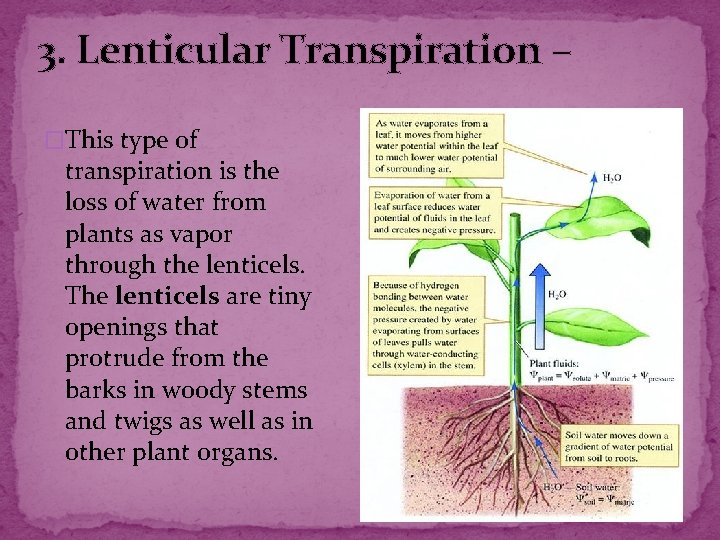
Transpiration �Transpiration is the process by which moisture is carried through plants from roots to small pores on the underside of leaves, where it changes to vapor and is released to the atmosphere. Transpiration is essentially evaporation of water from plant leaves
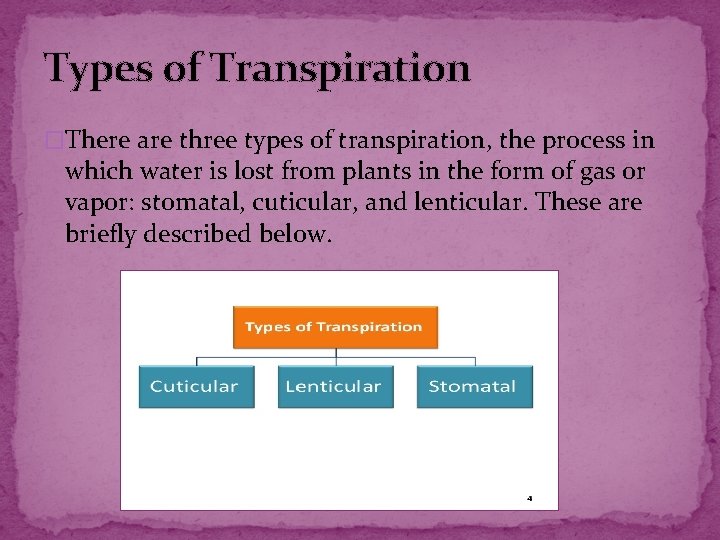
Types of Transpiration �There are three types of transpiration, the process in which water is lost from plants in the form of gas or vapor: stomatal, cuticular, and lenticular. These are briefly described below.
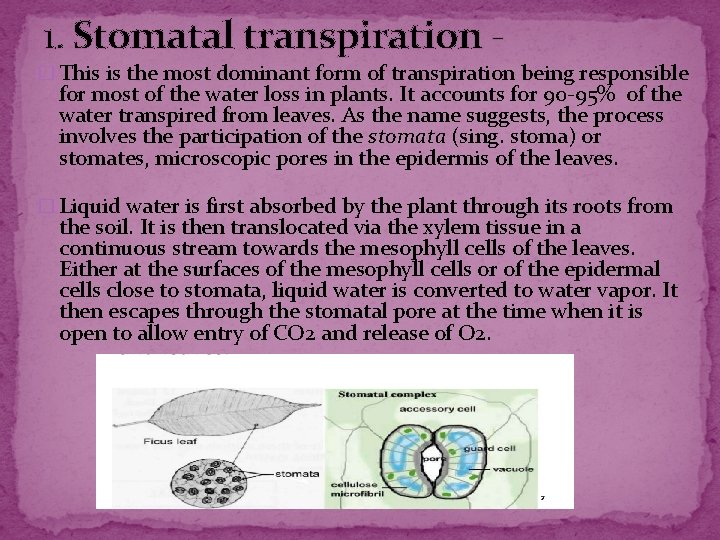
1. Stomatal transpiration � This is the most dominant form of transpiration being responsible for most of the water loss in plants. It accounts for 90 -95% of the water transpired from leaves. As the name suggests, the process involves the participation of the stomata (sing. stoma) or stomates, microscopic pores in the epidermis of the leaves. � Liquid water is first absorbed by the plant through its roots from the soil. It is then translocated via the xylem tissue in a continuous stream towards the mesophyll cells of the leaves. Either at the surfaces of the mesophyll cells or of the epidermal cells close to stomata, liquid water is converted to water vapor. It then escapes through the stomatal pore at the time when it is open to allow entry of CO 2 and release of O 2.
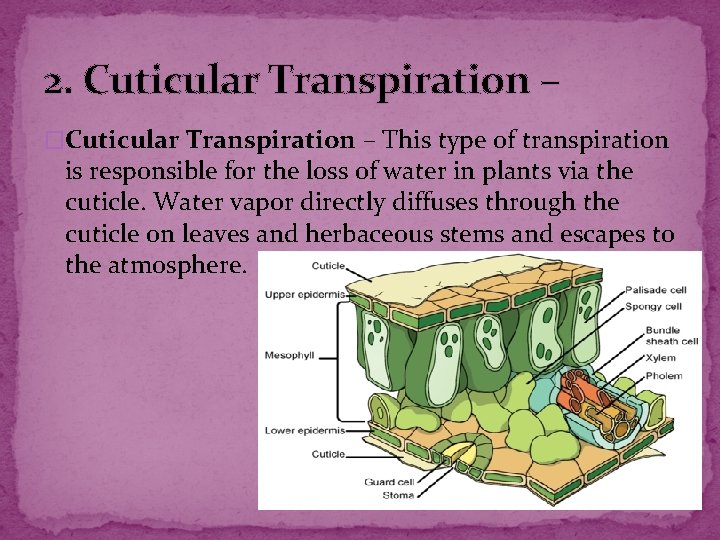
2. Cuticular Transpiration – �Cuticular Transpiration – This type of transpiration is responsible for the loss of water in plants via the cuticle. Water vapor directly diffuses through the cuticle on leaves and herbaceous stems and escapes to the atmosphere.
3. Lenticular Transpiration – �This type of transpiration is the loss of water from plants as vapor through the lenticels. The lenticels are tiny openings that protrude from the barks in woody stems and twigs as well as in other plant organs.
Factor effecting on Transpiration � Light intensity � � Light intensity stimulates stomata opening. This is because an increase in light intensity results in an increase of rate of photosynthesis. Photosynthesis requires gaseous exchange and the stomata is the pore in which gaseous exchange takes place. Therefore an increase in photosynthesis results in an increase in stomata opening (increased gaseous exchange). � � Evaporation of water from the plant occurs primarily through the stomata, so as you can understand, an increase in light intensity results in an increase in transpiration due to an increase stomata opening.