
CHAPTER 11 Total Rewards and Compensation SECTION 4

- Slides: 37
CHAPTER 11 Total Rewards and Compensation SECTION 4 Compensation Power. Point Presentation by Charlie Cook The University of West Alabama
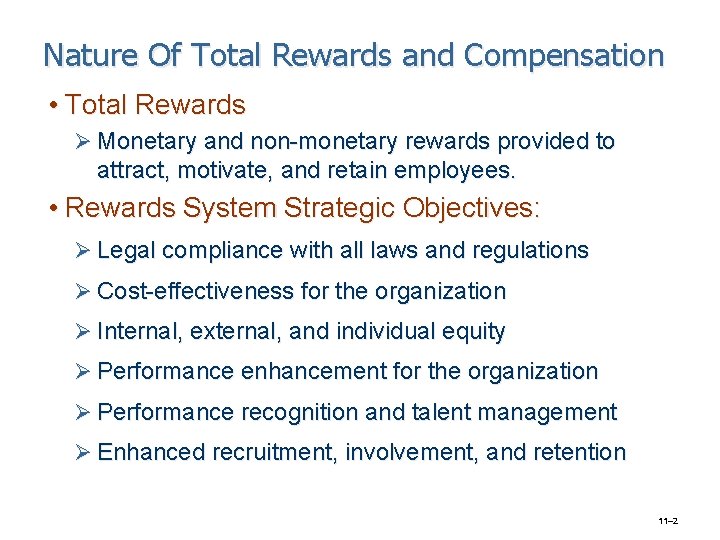
Nature Of Total Rewards and Compensation • Total Rewards Ø Monetary and non-monetary rewards provided to attract, motivate, and retain employees. • Rewards System Strategic Objectives: Ø Legal compliance with all laws and regulations Ø Cost-effectiveness for the organization Ø Internal, external, and individual equity Ø Performance enhancement for the organization Ø Performance recognition and talent management Ø Enhanced recruitment, involvement, and retention 11– 2
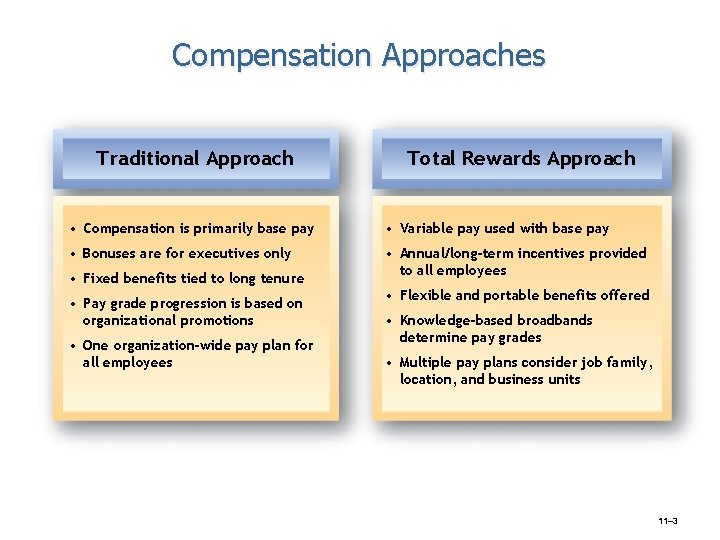
Compensation Approaches Traditional Approach Total Rewards Approach • Compensation is primarily base pay • Variable pay used with base pay • Bonuses are for executives only • Annual/long-term incentives provided to all employees • Fixed benefits tied to long tenure • Pay grade progression is based on organizational promotions • One organization-wide pay plan for all employees • Flexible and portable benefits offered • Knowledge-based broadbands determine pay grades • Multiple pay plans consider job family, location, and business units 11– 3
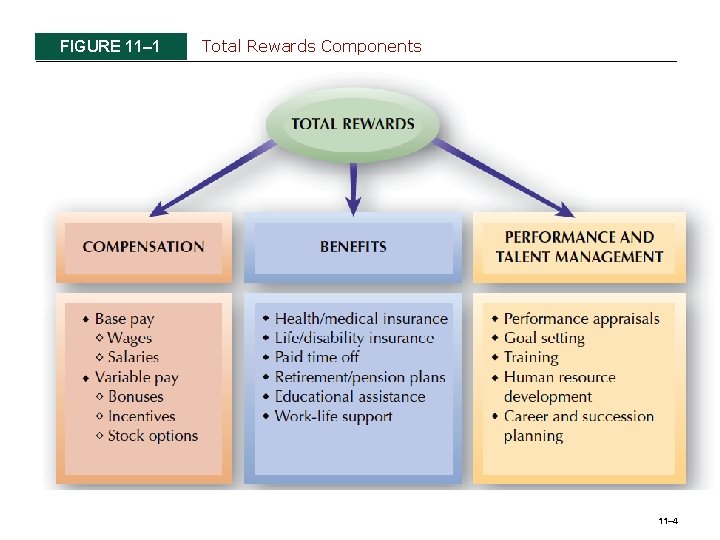
FIGURE 11– 1 Total Rewards Components 11– 4
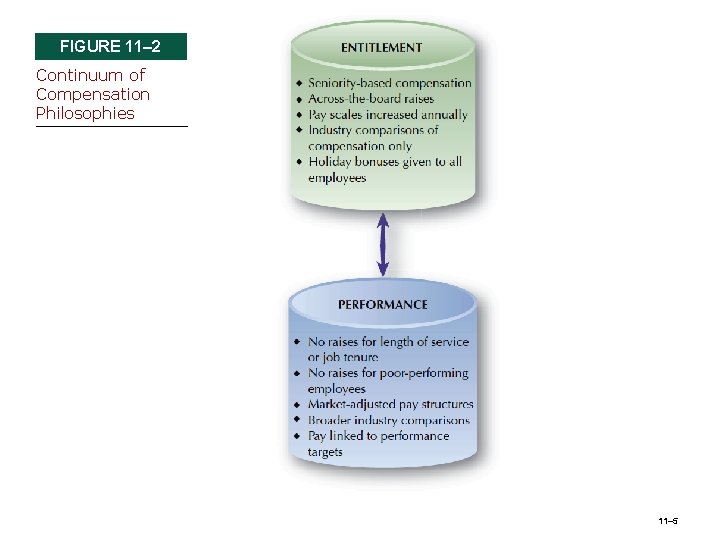
FIGURE 11– 2 Continuum of Compensation Philosophies 11– 5
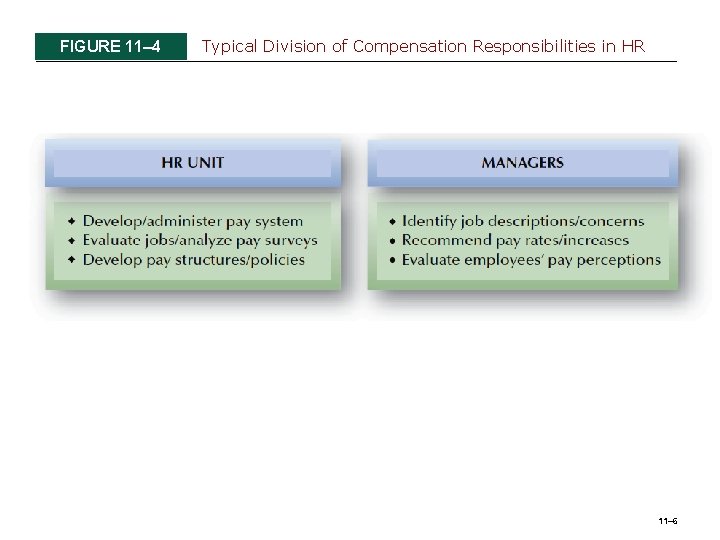
FIGURE 11– 4 Typical Division of Compensation Responsibilities in HR 11– 6
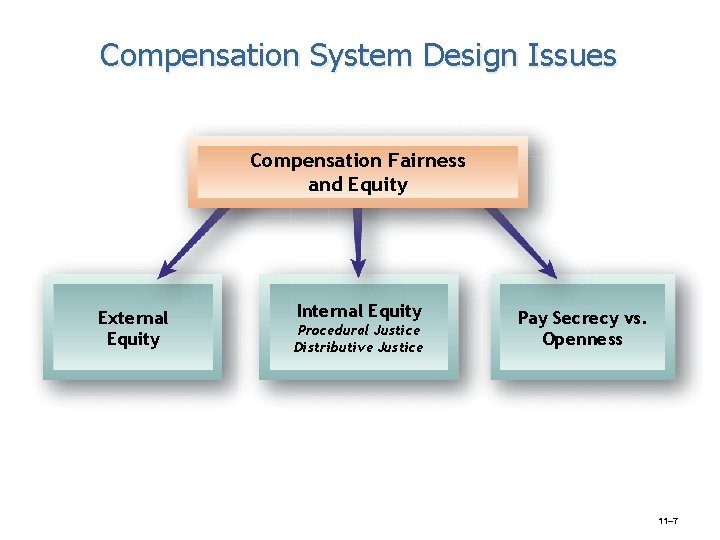
Compensation System Design Issues Compensation Fairness and Equity External Equity Internal Equity Procedural Justice Distributive Justice Pay Secrecy vs. Openness 11– 7
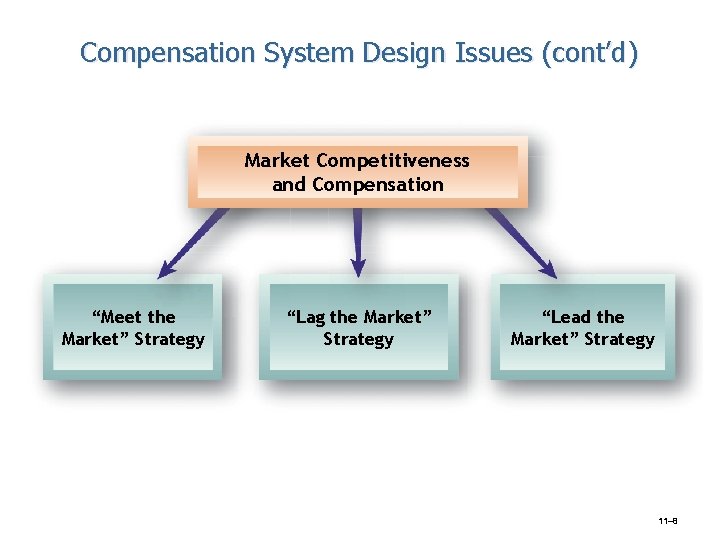
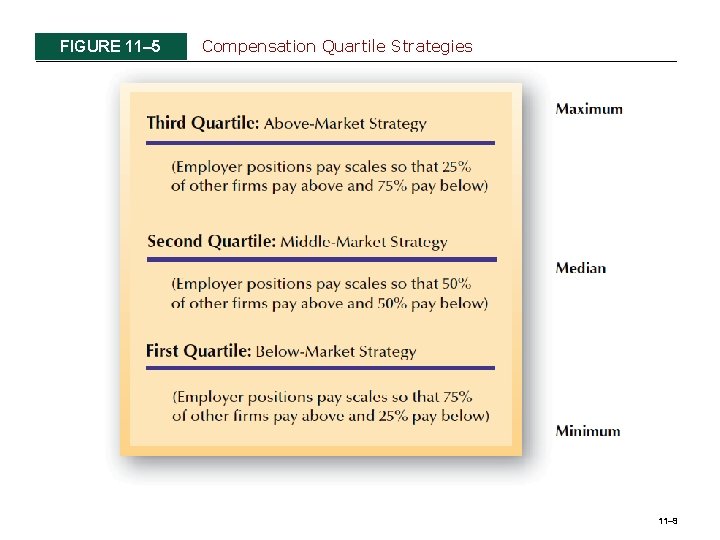
Compensation System Design Issues (cont’d) Market Competitiveness and Compensation “Meet the Market” Strategy “Lag the Market” Strategy “Lead the Market” Strategy 11– 8
FIGURE 11– 5 Compensation Quartile Strategies 11– 9
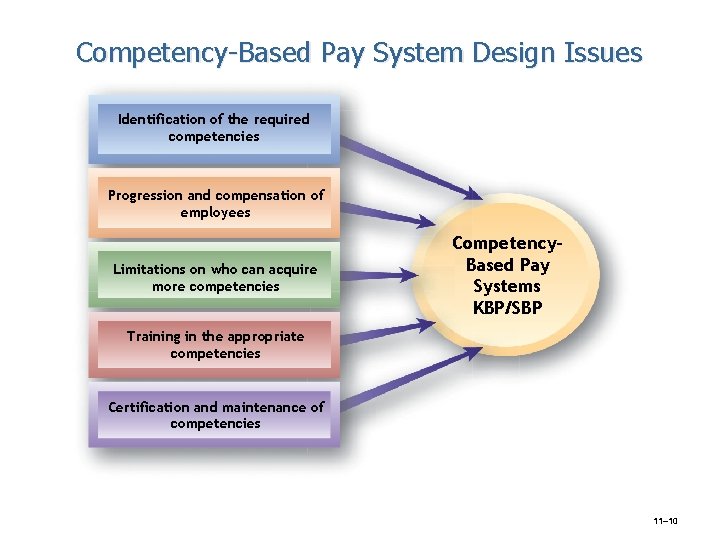
Competency-Based Pay System Design Issues Identification of the required competencies Progression and compensation of employees Limitations on who can acquire more competencies Competency. Based Pay Systems KBP/SBP Training in the appropriate competencies Certification and maintenance of competencies 11– 10
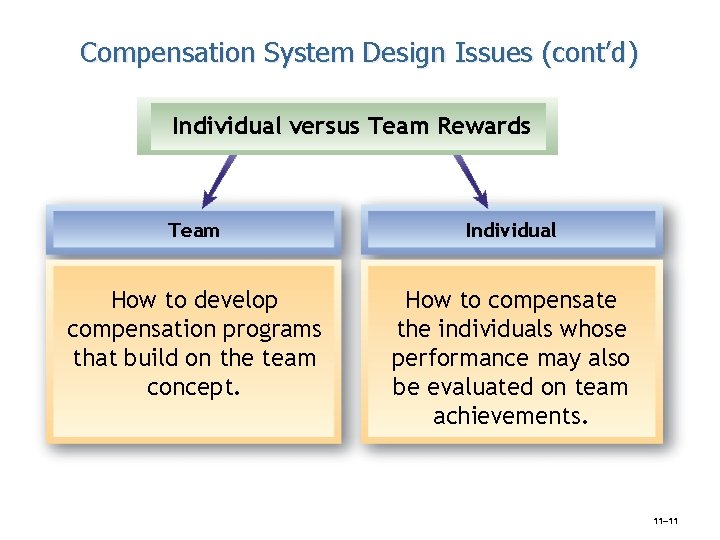
Compensation System Design Issues (cont’d) Individual versus Team Rewards Team Individual How to develop compensation programs that build on the team concept. How to compensate the individuals whose performance may also be evaluated on team achievements. 11– 11
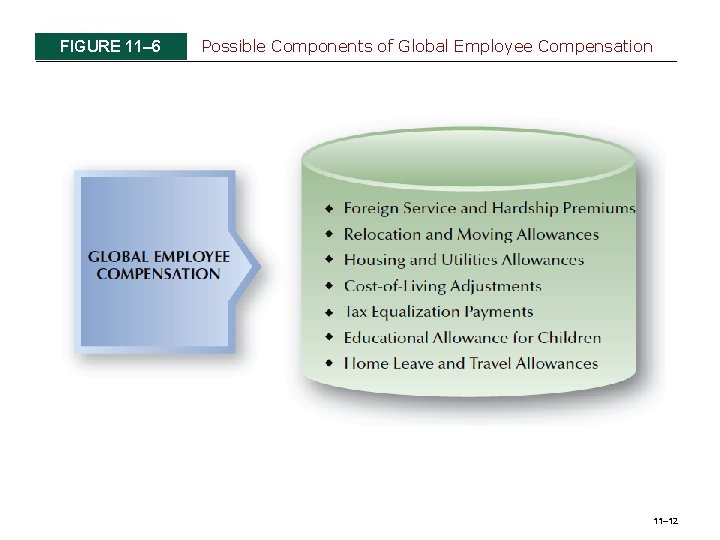
FIGURE 11– 6 Possible Components of Global Employee Compensation 11– 12
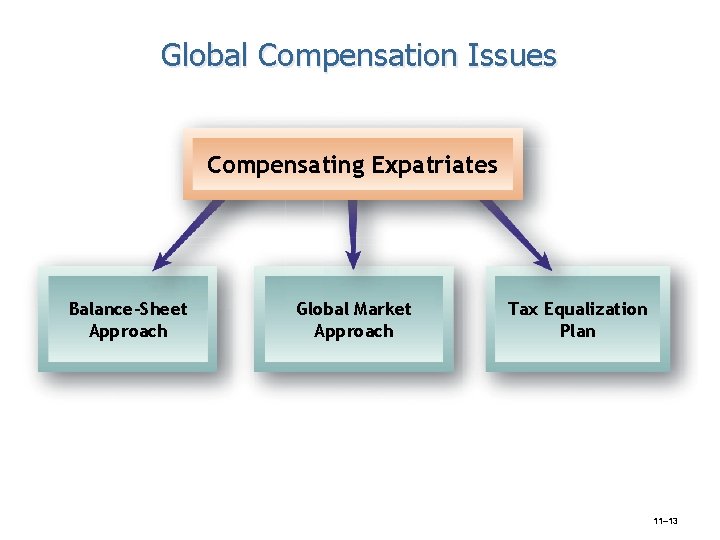
Global Compensation Issues Compensating Expatriates Balance-Sheet Approach Global Market Approach Tax Equalization Plan 11– 13
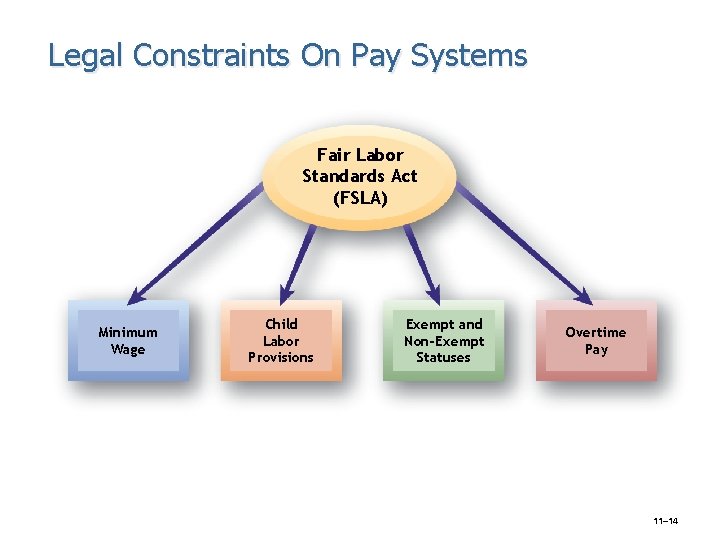
Legal Constraints On Pay Systems Fair Labor Standards Act (FSLA) Minimum Wage Child Labor Provisions Exempt and Non-Exempt Statuses Overtime Pay 11– 14
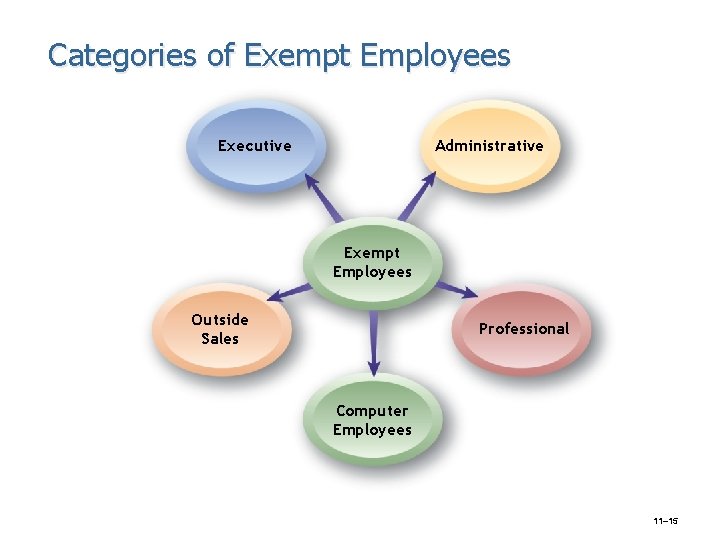
Categories of Exempt Employees Executive Administrative Exempt Employees Outside Sales Professional Computer Employees 11– 15
FIGURE 11– 7 Determining Exempt Status under the FLSA 11– 16
Wage/Hour Regulations • Fair Labor Standards Act (FLSA) ØTo qualify for an exemption from the overtime provisions of the act: v Employees must perform their primary duties as executive, administrative, professional, or outside sales employees. v Primary has been interpreted to mean occurring at least 50% of the time. 4– 17
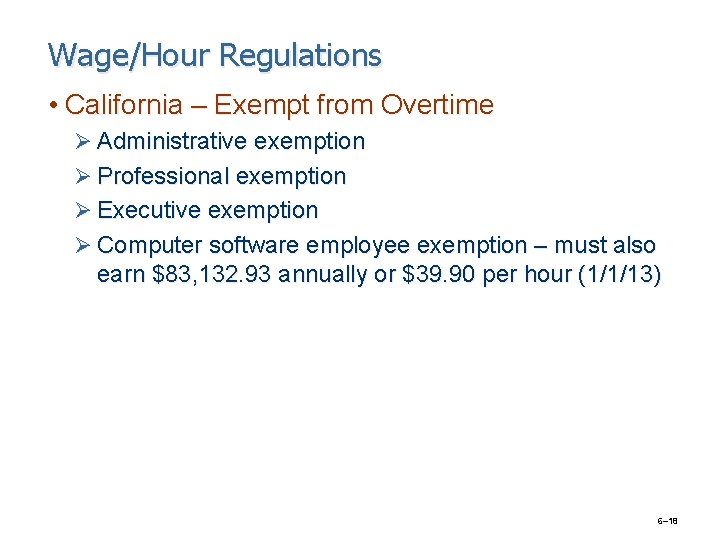
Wage/Hour Regulations • California – Exempt from Overtime Ø Administrative exemption Ø Professional exemption Ø Executive exemption Ø Computer software employee exemption – must also earn $83, 132. 93 annually or $39. 90 per hour (1/1/13) 6– 18
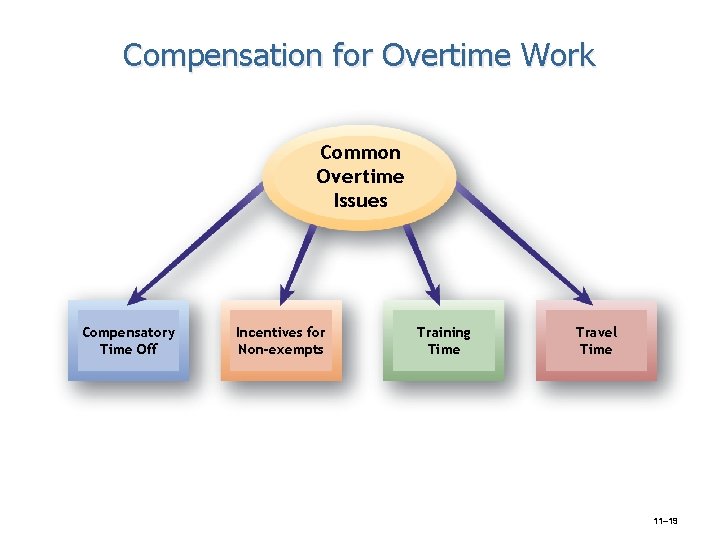
Compensation for Overtime Work Common Overtime Issues Compensatory Time Off Incentives for Non-exempts Training Time Travel Time 11– 19
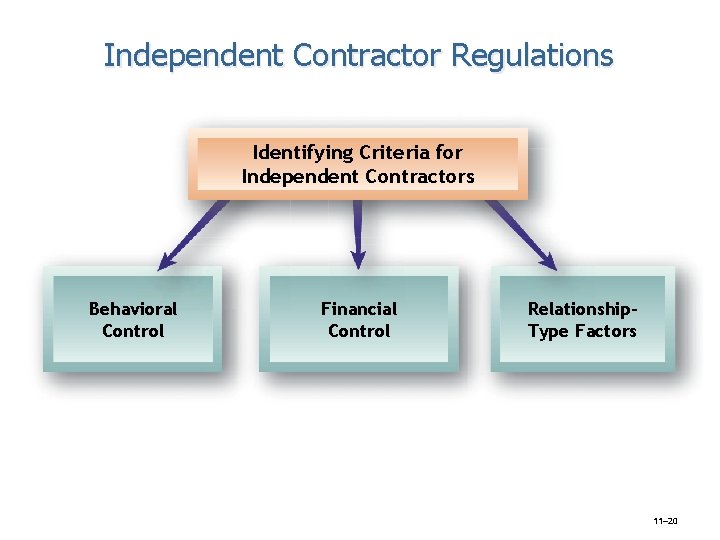
Independent Contractor Regulations Identifying Criteria for Independent Contractors Behavioral Control Financial Control Relationship. Type Factors 11– 20
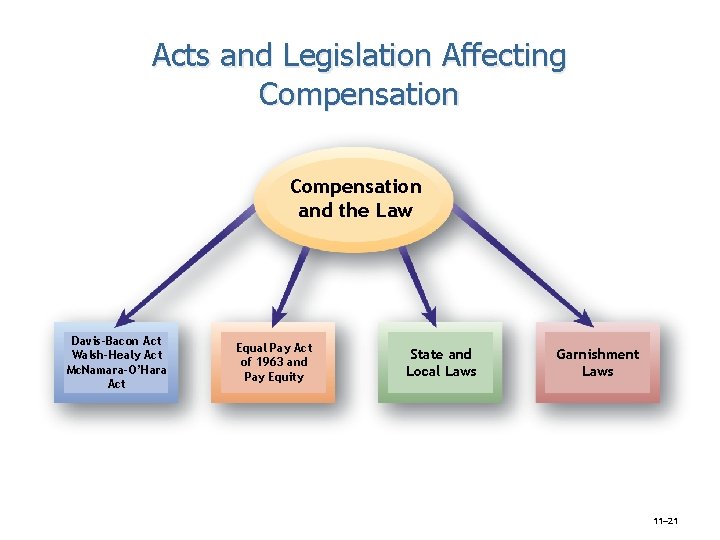
Acts and Legislation Affecting Compensation and the Law Davis-Bacon Act Walsh-Healy Act Mc. Namara-O’Hara Act Equal Pay Act of 1963 and Pay Equity State and Local Laws Garnishment Laws 11– 21
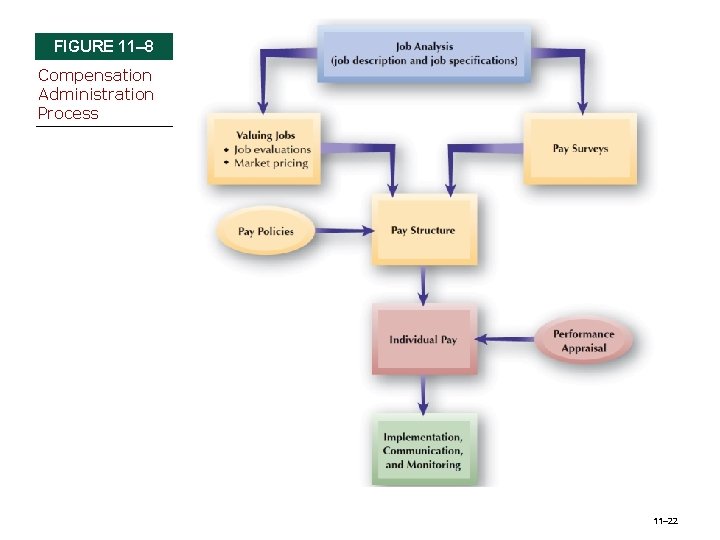
FIGURE 11– 8 Compensation Administration Process 11– 22
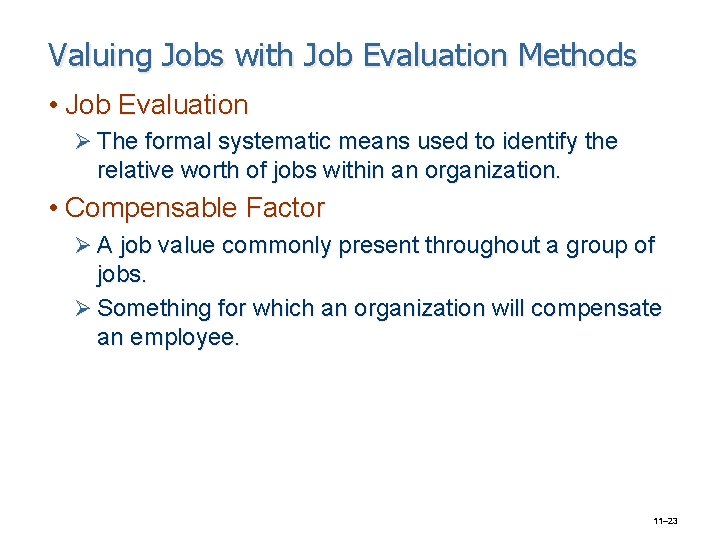
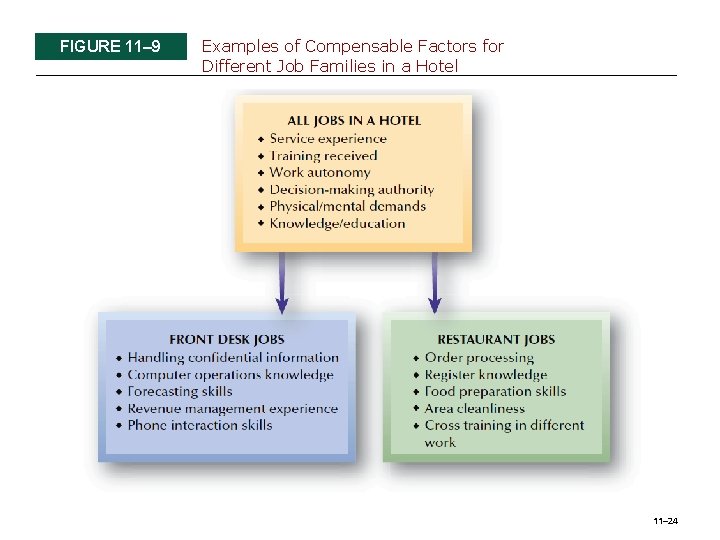
Valuing Jobs with Job Evaluation Methods • Job Evaluation Ø The formal systematic means used to identify the relative worth of jobs within an organization. • Compensable Factor Ø A job value commonly present throughout a group of jobs. Ø Something for which an organization will compensate an employee. 11– 23
FIGURE 11– 9 Examples of Compensable Factors for Different Job Families in a Hotel 11– 24
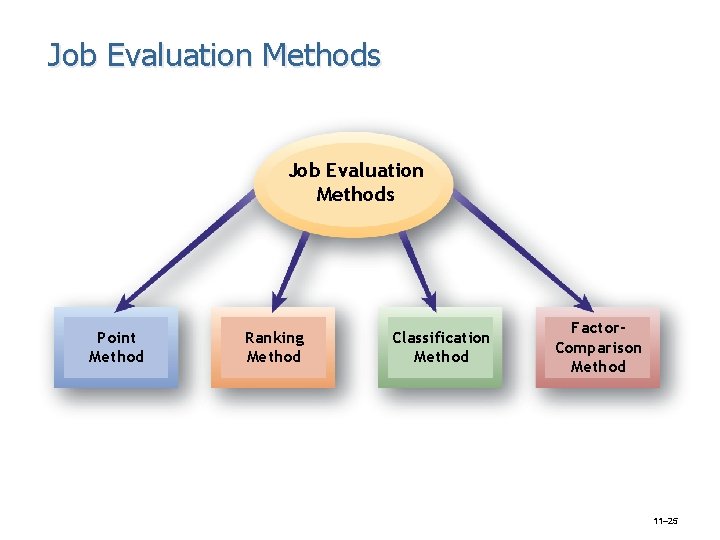
Job Evaluation Methods Point Method Ranking Method Classification Method Factor. Comparison Method 11– 25
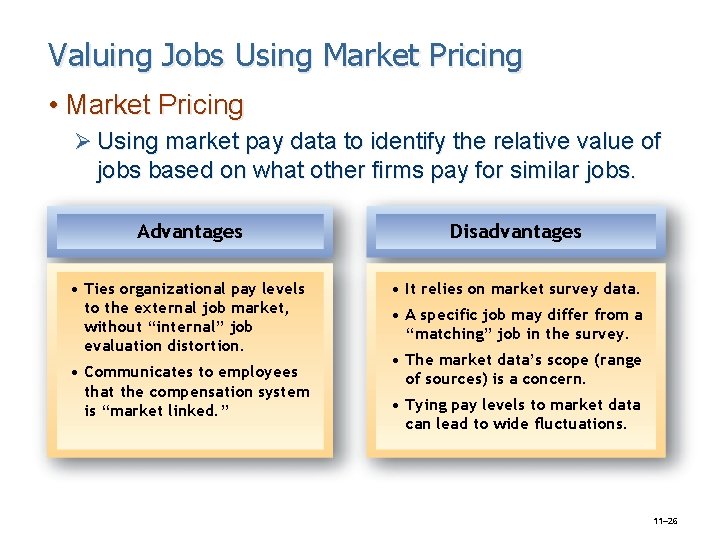
Valuing Jobs Using Market Pricing • Market Pricing Ø Using market pay data to identify the relative value of jobs based on what other firms pay for similar jobs. Advantages Disadvantages • Ties organizational pay levels to the external job market, without “internal” job evaluation distortion. • It relies on market survey data. • Communicates to employees that the compensation system is “market linked. ” • A specific job may differ from a “matching” job in the survey. • The market data’s scope (range of sources) is a concern. • Tying pay levels to market data can lead to wide fluctuations. 11– 26
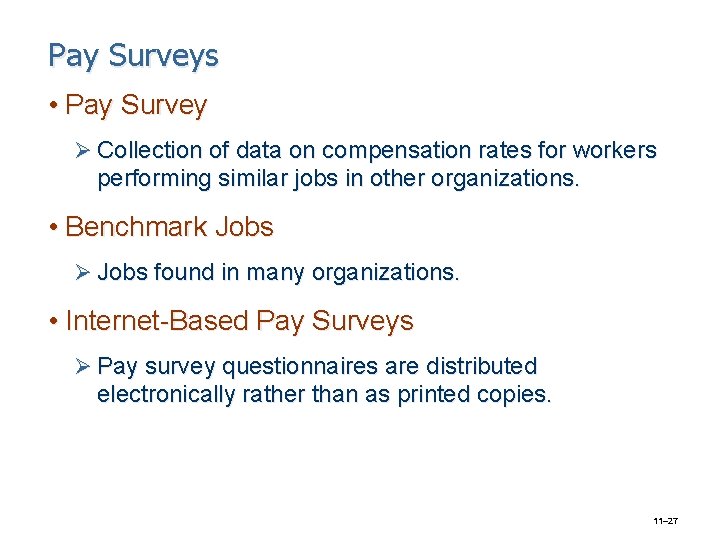
Pay Surveys • Pay Survey Ø Collection of data on compensation rates for workers performing similar jobs in other organizations. • Benchmark Jobs Ø Jobs found in many organizations. • Internet-Based Pay Surveys Ø Pay survey questionnaires are distributed electronically rather than as printed copies. 11– 27
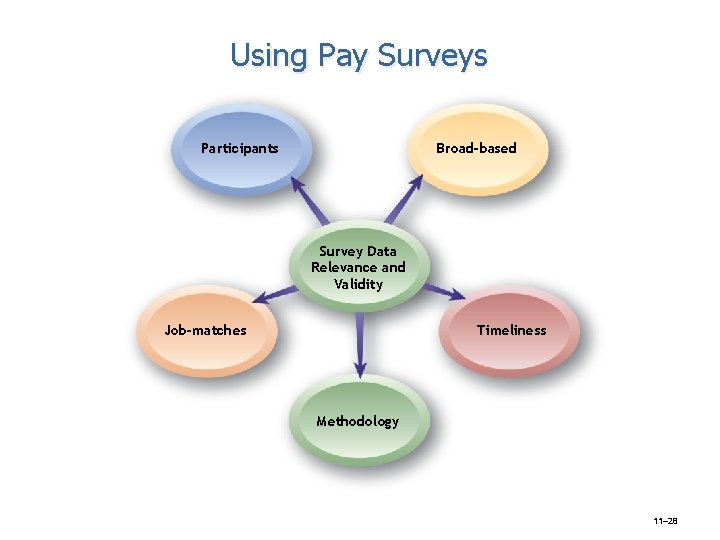
Using Pay Surveys Participants Broad-based Survey Data Relevance and Validity Job-matches Timeliness Methodology 11– 28
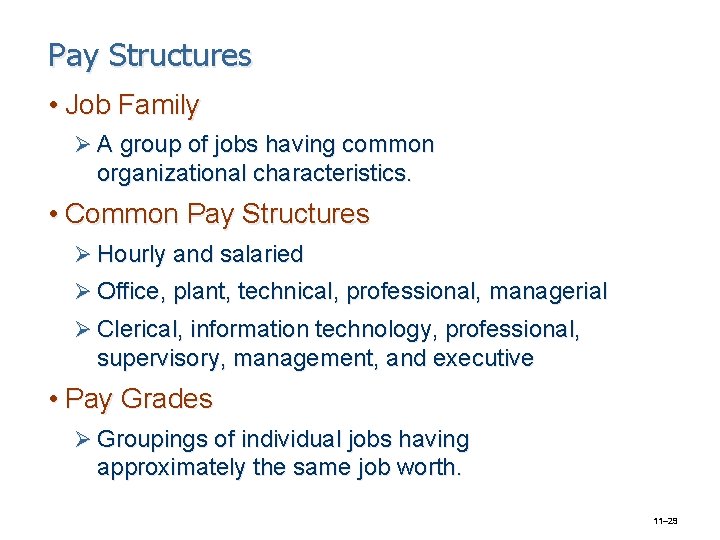
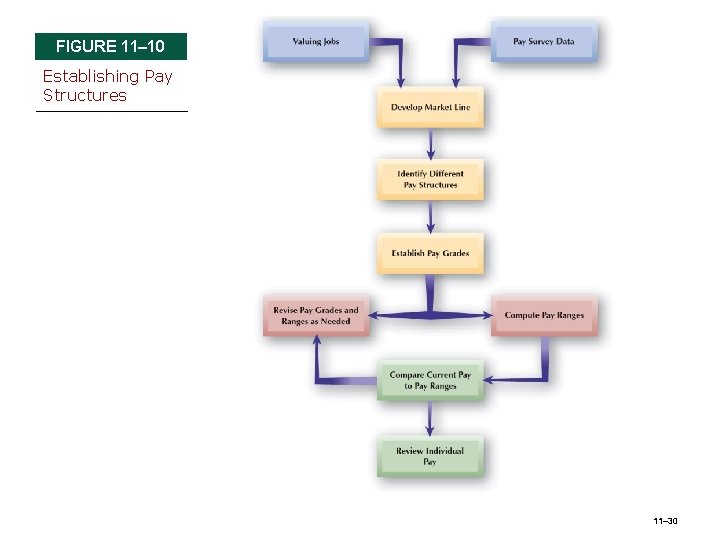
Pay Structures • Job Family Ø A group of jobs having common organizational characteristics. • Common Pay Structures Ø Hourly and salaried Ø Office, plant, technical, professional, managerial Ø Clerical, information technology, professional, supervisory, management, and executive • Pay Grades Ø Groupings of individual jobs having approximately the same job worth. 11– 29
FIGURE 11– 10 Establishing Pay Structures 11– 30
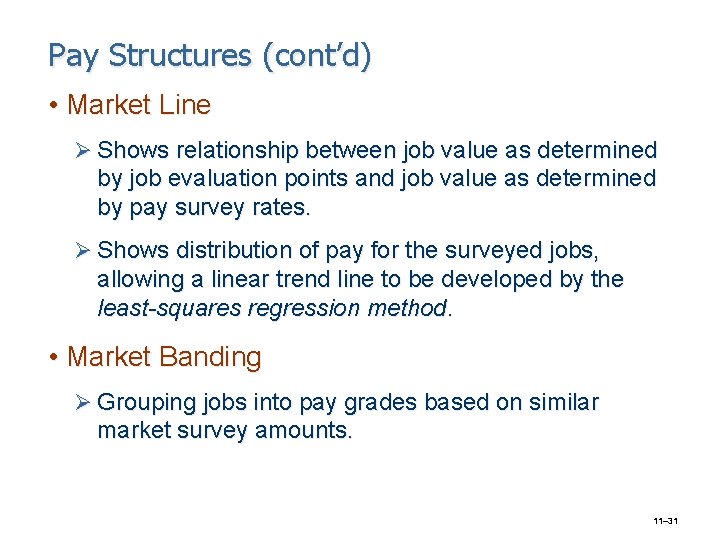
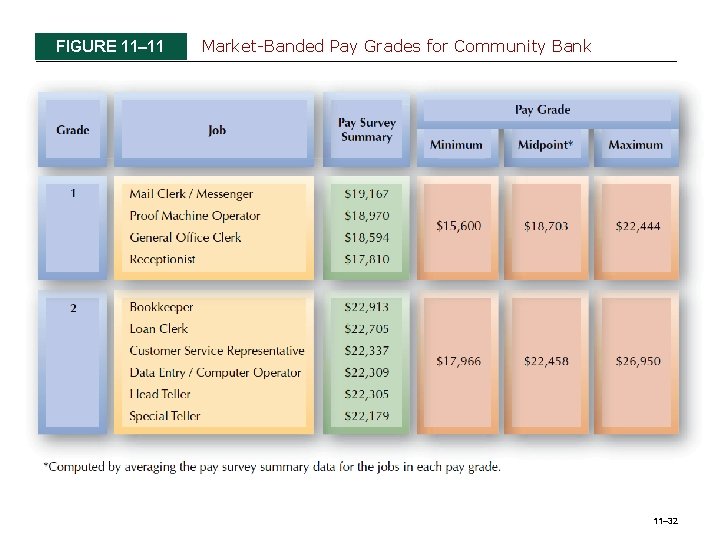
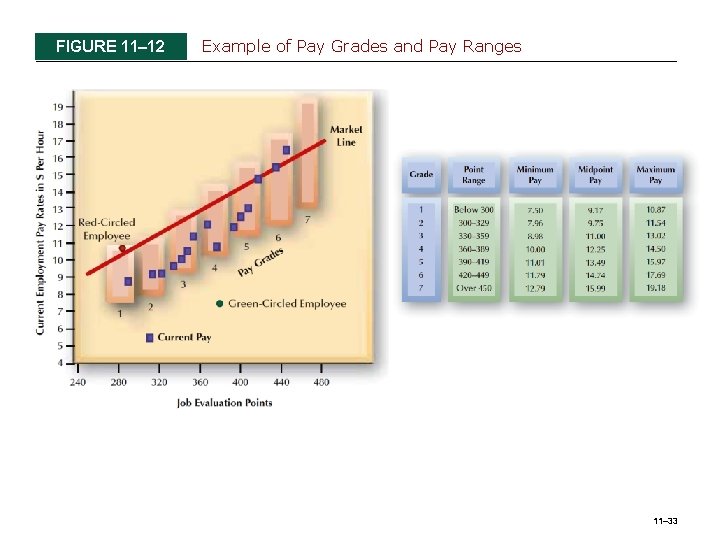
Pay Structures (cont’d) • Market Line Ø Shows relationship between job value as determined by job evaluation points and job value as determined by pay survey rates. Ø Shows distribution of pay for the surveyed jobs, allowing a linear trend line to be developed by the least-squares regression method. • Market Banding Ø Grouping jobs into pay grades based on similar market survey amounts. 11– 31
FIGURE 11– 11 Market-Banded Pay Grades for Community Bank 11– 32
FIGURE 11– 12 Example of Pay Grades and Pay Ranges 11– 33
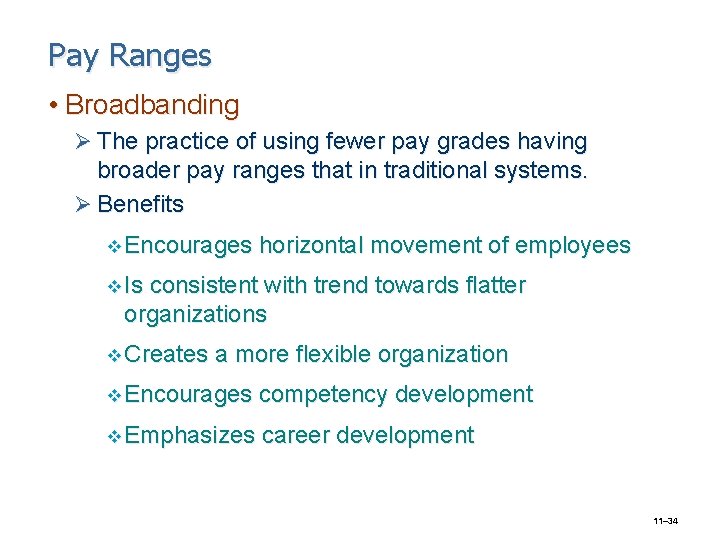
Pay Ranges • Broadbanding Ø The practice of using fewer pay grades having broader pay ranges that in traditional systems. Ø Benefits v Encourages horizontal movement of employees v Is consistent with trend towards flatter organizations v Creates a more flexible organization v Encourages competency development v Emphasizes career development 11– 34
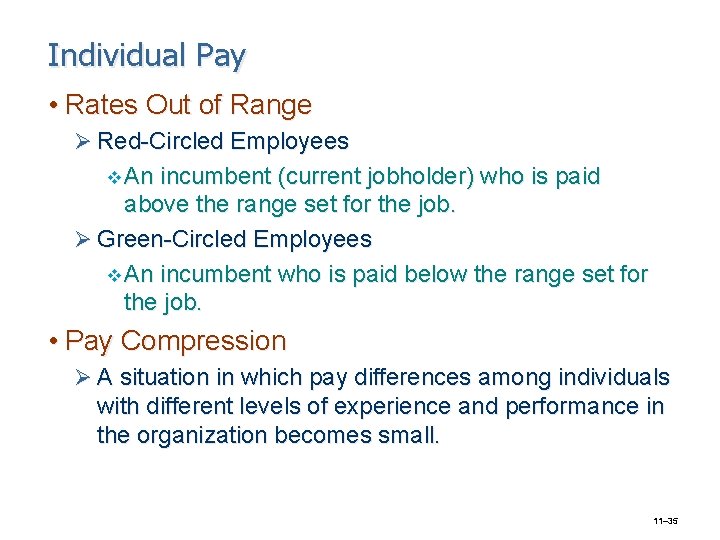
Individual Pay • Rates Out of Range Ø Red-Circled Employees v An incumbent (current jobholder) who is paid above the range set for the job. Ø Green-Circled Employees v An incumbent who is paid below the range set for the job. • Pay Compression Ø A situation in which pay differences among individuals with different levels of experience and performance in the organization becomes small. 11– 35
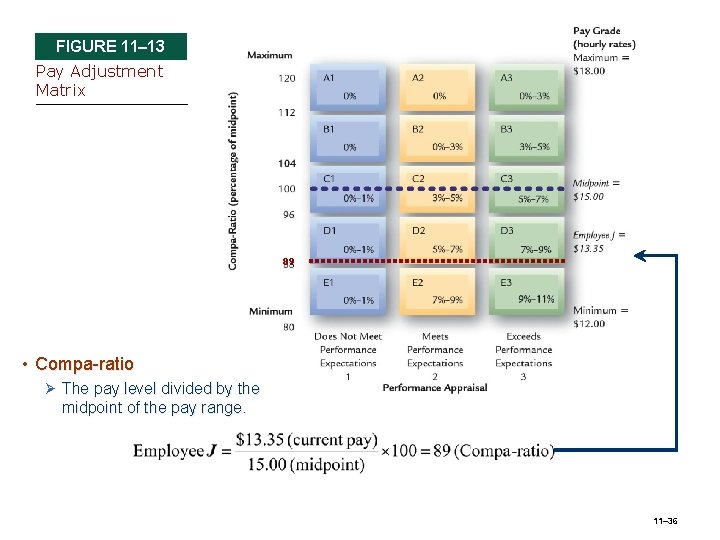
FIGURE 11– 13 Pay Adjustment Matrix 89 • Compa-ratio Ø The pay level divided by the midpoint of the pay range. 11– 36
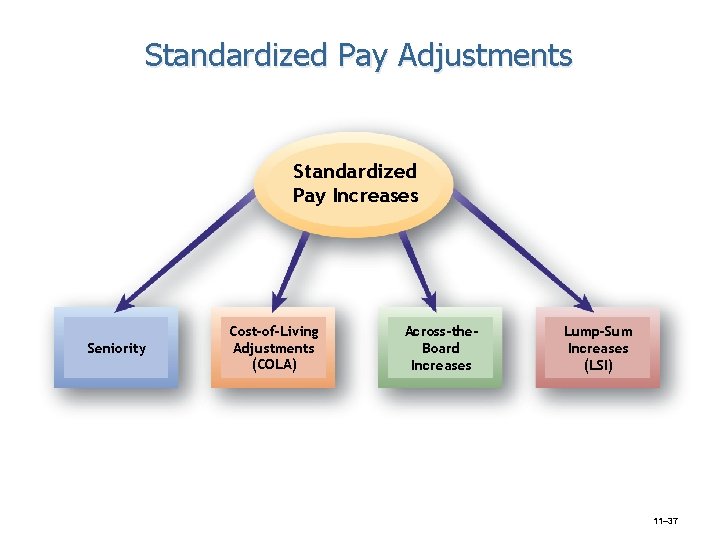
Standardized Pay Adjustments Standardized Pay Increases Seniority Cost-of-Living Adjustments (COLA) Across-the. Board Increases Lump-Sum Increases (LSI) 11– 37